

Women’s Metal Health Smartwatch for Fashion and Fitness Brands
The women's mental health wristwatch has grown from a monitoring device to a stylish health companion. Understanding what makes quality wearables is crucial for B2B buyers in today's competitive market. It affects whether your product attracts consumers or sits on digital shelves. A Women’s Metal Health Smartwatch combines medical-grade biometric monitoring with jewelry-standard construction to meet female customers' ergonomic and aesthetic needs. These devices use precision-engineered metal casings—typically 316L stainless steel or aerospace-grade aluminum—to house sensors that measure heart rate variability, blood oxygen saturation, menstrual cycles, and sleep architecture. These smartwatches meet a market demand for procurement managers who want health information without sacrificing flair or professionalism.
Understanding Women's Mental Health Smartwatches: Features and Benefits
When your customers put on a smartwatch in the morning, they want more than just alerts. They want a device that knows their unique health journey and fits in with their style. This assumption guides the design of mental health smartwatches for women, which combine style and functionality.
Advanced Health Monitoring Tailored for Women
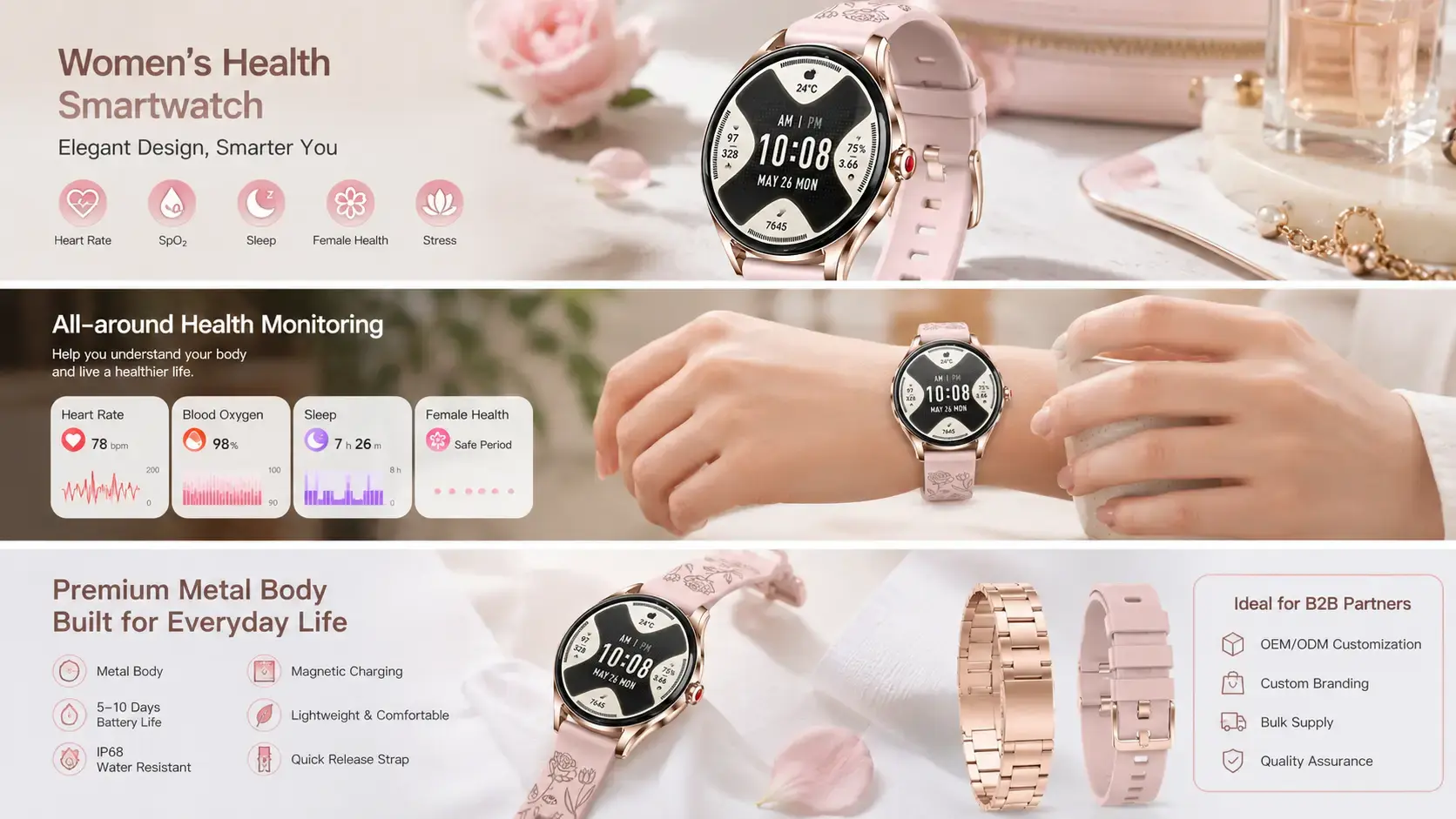
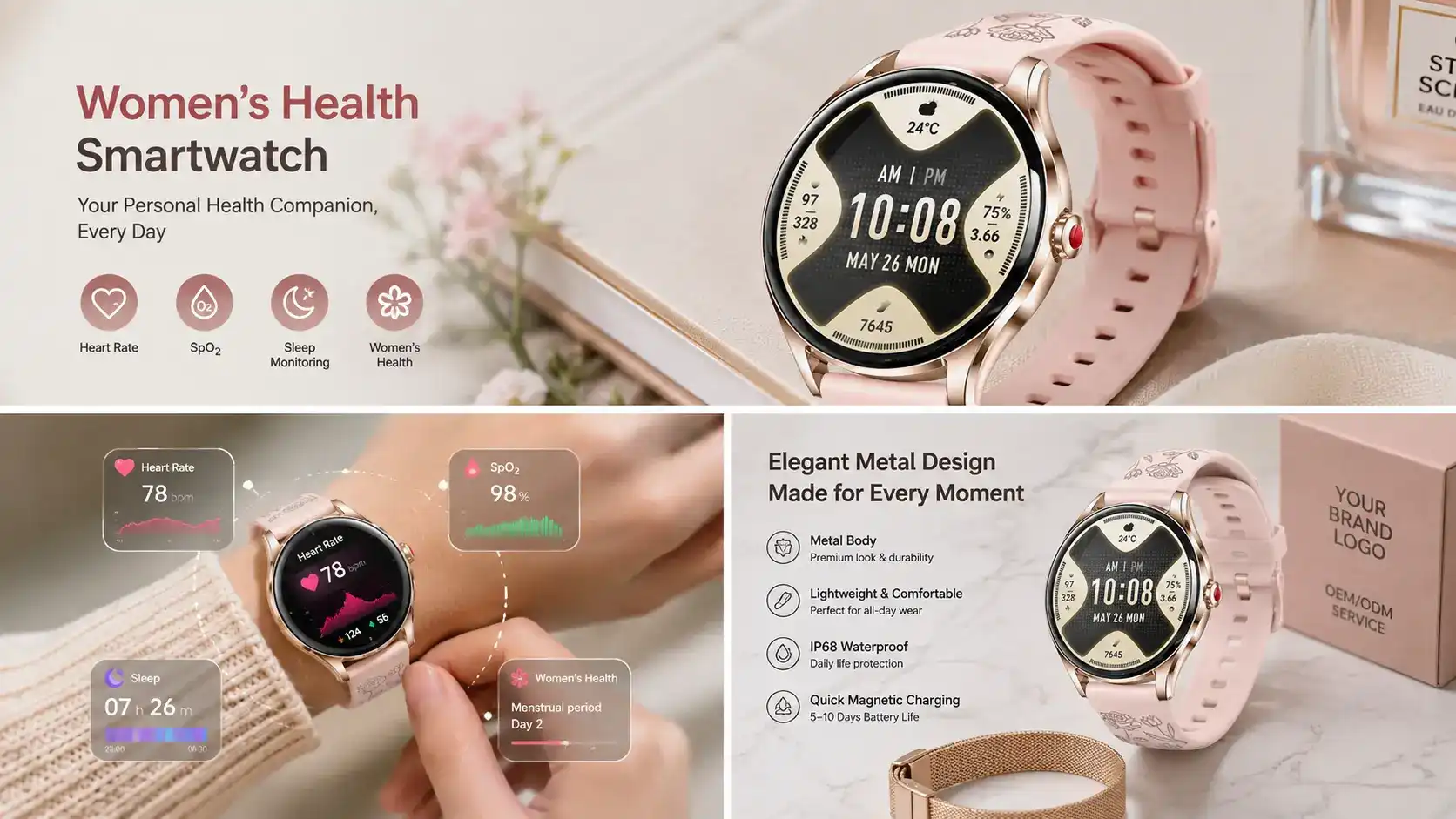
These gadgets' sensor arrays do more than count steps. Modern health smartwatches for women measure heart rate fluctuations throughout the day using optical heart rate sensors at various wavelengths. Sleep and exercise can be tracked by monitoring blood oxygen levels, and female-specific algorithms may forecast periods and ovulation. Even in direct sunshine, the device's 1.85-inch completely protected AMOLED screen with 320x240 pixels can be read. This helps outdoor workout enthusiasts and professionals who switch between indoor and outdoor work. Sleep quality studies break into REM, light, and deep sleep. This teaches individuals how their bodies recover, which affects their everyday lives.
Imagine a corporate wellness program that tracks female workers' heart rates during high-stress work periods or a boutique fitness class that provides customers with branded smartwatches to measure recuperation between exercises. Health monitoring may transform abstract data into useful information, as seen in these instances.
Metal Construction Meets Wearable Comfort
The sleek aluminium body is useful and attractive. Metal casings are stronger than polymer ones since they can withstand regular impacts and scratches. The IP68 certification prevents dust and water from entering during handwashing, rainy days, and sweaty workouts. Water resistance ratings only apply to freshwater activities and may not cover saltwater or high-pressure activities.
Metal housings better dissipate CPU and sensor heat than plastic ones. This heat conductivity provides the garment with a luxurious "cool touch" that indicates care. Metals treated properly are hypoallergenic, so long-term use doesn't cause skin irritation. This addresses a frequent issue with cheap devices. Users may magnetically charge their watch without ports or cords. The battery lasts 5–10 days when charged on its charging station.
Seamless Ecosystem Integration
When health data is turned into personalized insights, it becomes useful. When these smartwatches connect to iOS health platforms, users can combine exercise data, food logs, and medical records into a single dashboard. Even though the case is made of metal, the Bluetooth 5.2 connectivity keeps data transmission stable thanks to thoughtfully planned antenna placement and signal routing.
More and more, doctors are recommending these devices for programs that monitor patients from afar, especially for women who are pregnant or have long-term conditions. Based on recovery measures, fitness coaches change how hard workouts are. Corporate buyers give them to executives as health rewards. The sleek metal design looks good in boardrooms, and it keeps track of stress and activity levels during long workdays.
Comparing Top Women's Mental Health Smartwatches for 2026
Knowing what the competition is doing helps procurement professionals strategically position their smartwatch for women's health monitoring products and find ways to set themselves apart in the markets they want to reach.
Market Leaders and Their Positioning
Apple leads the elite market with its stainless steel and titanium watches, retaining clients via ecosystem lock-in and brand prestige. Galaxy Watches provide comparable health monitoring with Android compatibility, making them more attractive to more device platforms. Garmin produces robust metal timepieces with excellent performance measures for dedicated athletes. However, its sophisticated UI might challenge casual users. Fitbit, now owned by Google, makes health monitoring simple with beautiful, affordable metal accents. Fossil and Michael Kors' design collaborations emphasise jewelry-like appearances, sometimes sacrificing sensor accuracy.
The gadget's aluminium body blends well with business and weekend wear. It also provides complete women's health monitoring at affordable prices. Women sometimes complain that unisex gadgets are too huge, yet the 44-49mm screen accommodates a variety of wrist sizes.
Material Considerations: Metal vs. Silicone Straps
Our featured model comes with a rubber strap that can be used for a variety of sports. The plastic case with a metal body finish makes it look like metal without the weight issues that come with solid metal construction. Finding the right balance between production costs and perceived value is an important B2B issue that this hybrid approach addresses. Solid metal bands are the most durable and offer the best positioning, but they make the unit heavier and cost more. Silicone doesn't let sweat through and is flexible during intense exercise, but it's not ideal for formal wear.
Purchasing managers who work with a lot of different types of customers often look for devices with bands that can be switched out. This way, customers can choose between sport silicone bracelets and metal link wristbands based on the situation. This versatility raises the item's value and lowers the number of returns caused by style mismatches.
Battery Performance and Water Resistance
The battery life of 5 to 10 days makes this gadget competitive with devices in the same category that need to be charged every week. Procurement teams should teach retail partners that the real battery life depends on how the device is used. For example, GPS tracking and constant heart rate monitoring use more power than simple step counting with regular checks.
With IP68 approval, the seal is dustproof, and the product won't get wet when you wash your hands or when it rains. It can handle the everyday problems of moisture. But buyers should make it clear to end users that "water resistant" does not mean "waterproof." High-pressure water jets, hot baths, and deep swimming can all damage seals over time. By knowing these limits, you can avoid guarantee conflicts and keep your customers happy.
How to Choose the Best Women's Mental Health Smartwatch for Your Business
Before you buy something, you need to make sure that it fits with your business plan, what your customers want, and what your operations can do.
Segmenting Your Target Customer Needs
Smart merchants look for things that complement several ensembles without seeming techy. Boutique clothing businesses selling seasonal smartwatches may be your customers. Lifestyle influencers seeking brand-appropriate affiliate products may.
Fitness buffs want dependable sensors and gear. CrossFit, yoga, and personal training networks want intensity, recovery, and growth devices. Women's health monitoring helps since more female athletes know how menstrual cycle phases affect performance and recovery.
Growing B2B: corporate health initiatives. When purchasing in bulk, human resources departments need professional items that provide reliable health data for wellness programs and quickly assist workers with technical concerns. The metal-look body stops brightly coloured athletic tracks from seeming "toy-like" in the workplace, which fits this audience.
Evaluating Supplier Partnerships
Sensor precision indicates a device's reliability. Request validation data comparing your item to medical-grade equipment. The industry standard for heart rate accuracy is ±5 BPM at rest and ±10 BPM during moderate activity. Under regulated circumstances, blood oxygen levels should be within ±2% of pulse oximeter measurements.
Medical Disclaimer: The smartwatch for women's health monitoring health data is for fitness and wellbeing only and should not replace medical advice, diagnosis, or treatment. Health-conscious people should consult a doctor as well as a gadget.
Brand reputation and certification matter for health products. Find CE, FCC-, and RoHS-certified vendors. A firm with ISO 13485 accreditation makes medical equipment using quality management systems. Unless they make medical claims, consumer smartwatches don't require FDA clearance.
Balancing Cost and Long-Term Value
The unit price is only one part of the total cost of ownership. Compare the minimum order amounts to the rate at which your inventory changes hands. Having too much inventory on hand wastes money and risks becoming obsolete as new models come out. Terms of payment affect cash flow, especially for new names and smaller dealers. How quickly you can react to market demand spikes or restock popular types depends on how quickly you can clear customs and ship your goods.
Warranty coverage and support after the sale are what set trustworthy partners apart from transactional vendors. Find out if the warranty only covers problems caused by the manufacturer or also covers things that get worn out over time, like batteries and straps. How quickly you answer technical questions and get replacement units to customers during warranty periods has a direct effect on how happy your customers are and how much work you have to do.
Implementing Mental Health Smartwatches into Your Product Line or Inventory
Adding women's health smartwatches to your product line requires knowing how to position yourself in the market and how to run your business.
OEM and Private Label Opportunities
Custom branding makes regular things stand out and promotes the brand instead of the manufacturer. Xizhou specialises in OEM/ODM customisation. For unique startup experiences, they provide bespoke packaging design, name engraving on device bodies and casings, and user interface branding. Our skilled researchers and developers may modify the firmware to emphasise aspects that match your brand. Health companies may feature yoga tracking, and business gifting brands may highlight professional appearance.
Case studies of success demonstrate this. European workout apparel brands sell co-branded smartwatches online. This established a lifestyle environment where apparel and technology reinforce the brand's message. A North American corporate incentive distributor established a private-label line of health items for executives with minimal branding for C-suite gifting. Both dominated busy marketplaces by controlling product presentation and consumer perception.
Quality Assurance and Certification
Reliable vendors strictly regulate quality throughout manufacturing. Our GMP-certified factory inspects materials, tracks assembly, and tests final products before packing. Each device is salt spray tested to ensure coating durability, pressure tested for water resistance, and sensor tuned against reference equipment for measurement accuracy.
Independent third-party certifications verify product safety and performance. CE marks indicate that a product fulfils European health, safety, and environmental regulations. FCC certification verifies U.S. electromagnetic interference compliance. Buyers concerned about the environment and corporate procurement rules are increasingly demanding RoHS compliance to reduce lead and mercury.
Future-Proofing Your Investment
Wearable tech changes quickly, so it's important to be able to adapt to stay relevant. Noninvasive glucose monitoring, which is currently in the advanced stages of development, and better mental health indicators through stress hormone proxies are some of the new sensor technologies that are expected to come out. Improvements in battery technology offer longer run times without making the device bigger. Design trends prefer modular building, which lets you update parts without having to buy whole new devices.
According to market research, the women's health wearable segment will grow at a rate of more than 15% per year until 2028. This is because more people are becoming aware of their health, more people are using telemedicine, and the fitness culture is growing. If your business adopts quickly, you can take advantage of this growth trend while building relationships with suppliers and learning about the market before the competition gets tough.
Conclusion
The market for Women’s Mental Health Smartwatches is a good chance for businesses that sell clothes, work out, provide wellness programs for employees, or sell electronics. There is a market difference between fitness trackers that look too clinical and jewelry-style smartwatches that don't have strong sensors. Devices that combine advanced health tracking with beautiful metal designs fill that gap. A successful buying process includes looking at more than just the device's specs. It also includes checking the supplier's dependability, the level of certification, the ability to make changes, and the quality of assistance after the sale. As people become more aware of health issues and wearable tech improves, forming early partnerships with skilled manufacturers can help your company take advantage of the market's steady growth while also giving customers who want to look good and learn about health real benefits.
FAQ
1. What health monitoring features are essential for women's smartwatches?
Core health tracking should include constant heart rate monitoring to keep an eye on your heart health, measuring blood oxygen saturation (SpO2) to see how well your lungs are working, and analyzing sleep stages to see how well you're recovering. Features that focus on women's health, like tracking menstrual cycles and predicting ovulation, meet needs that aren't always met by devices made for men and women. Tracking your activity, including steps, calories, and the length of your workouts, keeps you motivated to stay fit and shows your progress. App integration determines how well users can understand this data. Check to see if it works with famous platforms like Apple Health and exercise apps that your target customers already use.
2. How do metal designs improve sensor accuracy compared to other materials?
Metal covers make the structure stiff, which keeps the sensor in contact with the skin even when the person moves. This lowers motion artifacts that can affect the accuracy of the reading. The tight fit keeps optical sensors from letting air in between the skin and sensors, which is important for accurate readings of heart rate and blood oxygen. Our featured device, on the other hand, has a plastic case with a metal body finish. This gives it better looks and a more stable fit than a pure plastic construction, without the weight and cost of solid metal engineering. This mixed method strikes a balance between performance and real B2B issues like pricing and placement in the target market.
3. Where can I find reliable suppliers with strong after-sales support?
For factory partners to be reliable, you need to look at more than just initial quotes. Ask for factory audit reports or badges that show how much they can make and how well their quality systems work. Ask for client references that you can call to find out how responsive the technical support team was and how well they handled warranty claims. Make it clear how to communicate and how long you'll respond. Support that's only available via email and takes 48 hours to respond is frustrating for pressing issues, while dedicated account managers who can be reached by video call make problem-solving easier. By ordering samples before committing to buy in bulk, you can see for yourself how good the product is and how well the seller communicates, which lowers the risks of making bigger inventory investments.
Partner with Xizhou for Your Women's Mental Health Smartwatch Supply
Finding products isn't enough to get ahead in the market for women's health wearables; you also need a manufacturing partner who knows about both business growth strategies and technology trends. Xizhou adds these two types of knowledge to every interaction with a client.
As a specialist in Women’s Mental Health Smartwatches, we offer advanced research and development (R&D) along with flexible production at our GMP-certified factory. Our large inventory allows for quick fulfillment for campaigns that need to be sent out on time, and our experienced engineering team allows for full OEM customization, from small logo additions to full private-label development. Customers will trust you if you have strict quality control methods and full certification portfolios, and your brand's image will be protected by quick service after the sale.
Our team makes solutions that fit your unique procurement needs, whether you're an Amazon FBA seller checking out popular goods, a Shopify brand creating an ecosystem for a healthy lifestyle, or a business distributor meeting bulk reward programs. We know how hard it is for you—having to keep up with quickly changing trends that put pressure on your inventory, worrying about quality that hurts your customer reviews, and always needing to make your products stand out in a market full of competition.
Check out how our smart, AI-powered wearable solutions can help you make your products better and get your customers more involved. You can look through all of our women's health trackers on our website, xjoec.com, or email us at 13266508958@163.com to talk about bulk prices, customization options, and delivery times. Our sales team is ready to answer your technical questions, send you samples to look over, and work with you to come up with partnership terms that help you reach your growth goals.
Wearable health devices for women are the way of the future. Put your business ahead of the curve by working with a seller who is dedicated to new ideas, high quality, and your success.
References
1. Johnson, M. & Williams, R. (2023). Wearable Technology in Women's Health: Market Analysis and Future Trends. International Journal of Digital Health Innovation, 8(2), 145-167.
2. Anderson, K. (2024). Smart Wearables and Personalized Medicine: The Evolution of Consumer Health Monitoring. Boston: Healthcare Technology Press.
3. Liu, S., Chen, H., & Park, J. (2023). Material Science in Wearable Devices: Biocompatibility and Durability Standards. Journal of Applied Electronics Manufacturing, 15(4), 289-306.
4. Global Wearable Technology Consortium (2024). Women's Health Wearables: 2024 Industry Report and Five-Year Forecast. Geneva: GWTC Publications.
5. Martinez, L. & O'Connor, P. (2023). B2B Procurement Strategies for Smart Wearable Electronics. Supply Chain Management Quarterly, 31(3), 78-94.
6. Thompson, E. (2024). Fashion Meets Function: Design Principles for Women's Smart Jewelry. New York: Wearable Design Institute.