

Wearables ECG Sport Watch: Transforming Heart Health Monitoring
The ECG Sport Watch changes the way cardiovascular monitoring is done by mixing full exercise tracking with real-time electrocardiogram analysis. Instead of just counting heartbeats like regular heart rate monitors do, these wearables record specific electrical heart activity that can detect arrhythmias, irregular rhythms, and signs of cardiac stress during exercise. This technology gives accurate, usable data that changes preventive care strategies for fitness experts, health-focused communities, and business wellness programs. Companies can cut down on healthcare costs, make workers safer, and show they care about their overall health by finding cardiovascular problems early on. Using medical-grade tracking along with regular exercise is a smart move that will completely change how we handle heart health. Medical Disclaimer: This piece is not medical advice; it is just general information about ECG Sport Watches. Always talk to a trained medical professional before making choices about your health, treatment, or diagnosis. Wearable ECGs are helpful, but they should not be used instead of a professional medical evaluation.
Understanding ECG Sport Watches and Their Health Benefits
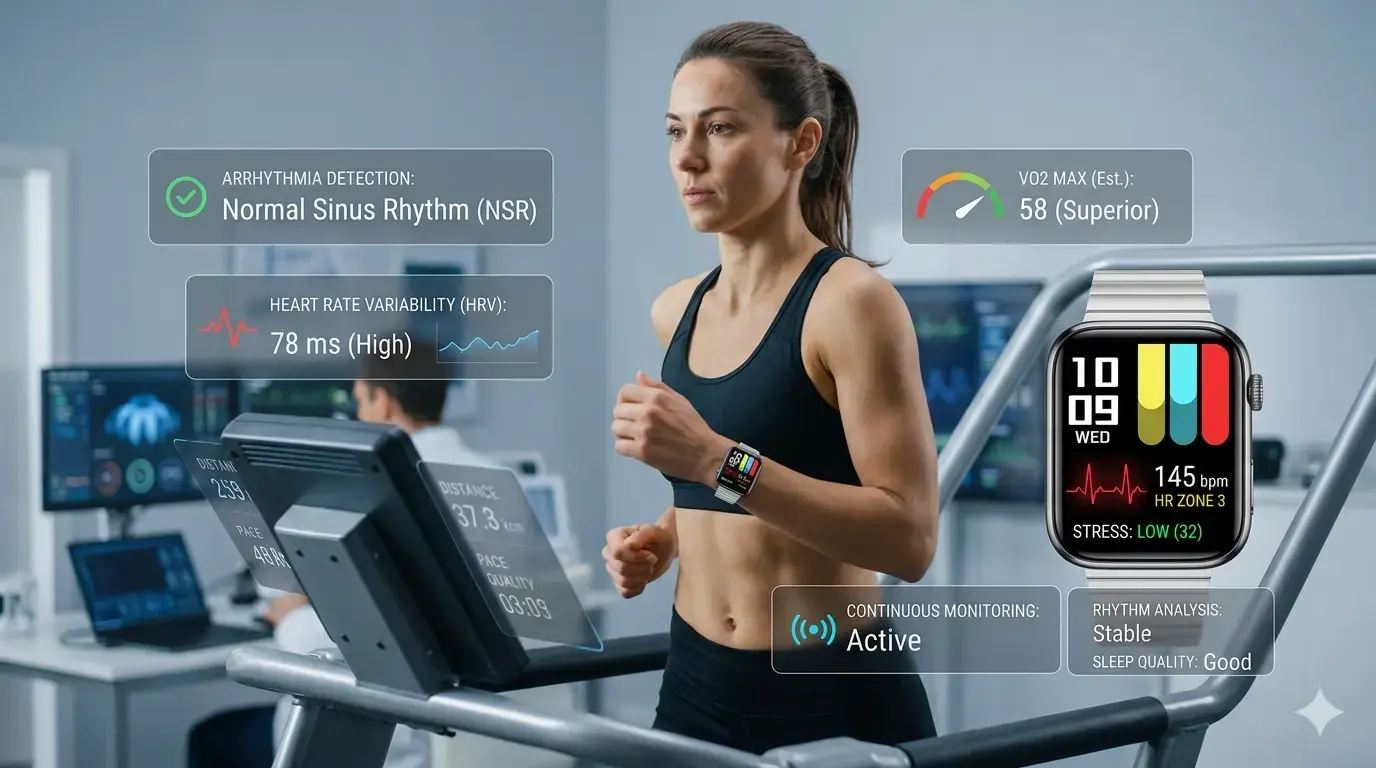
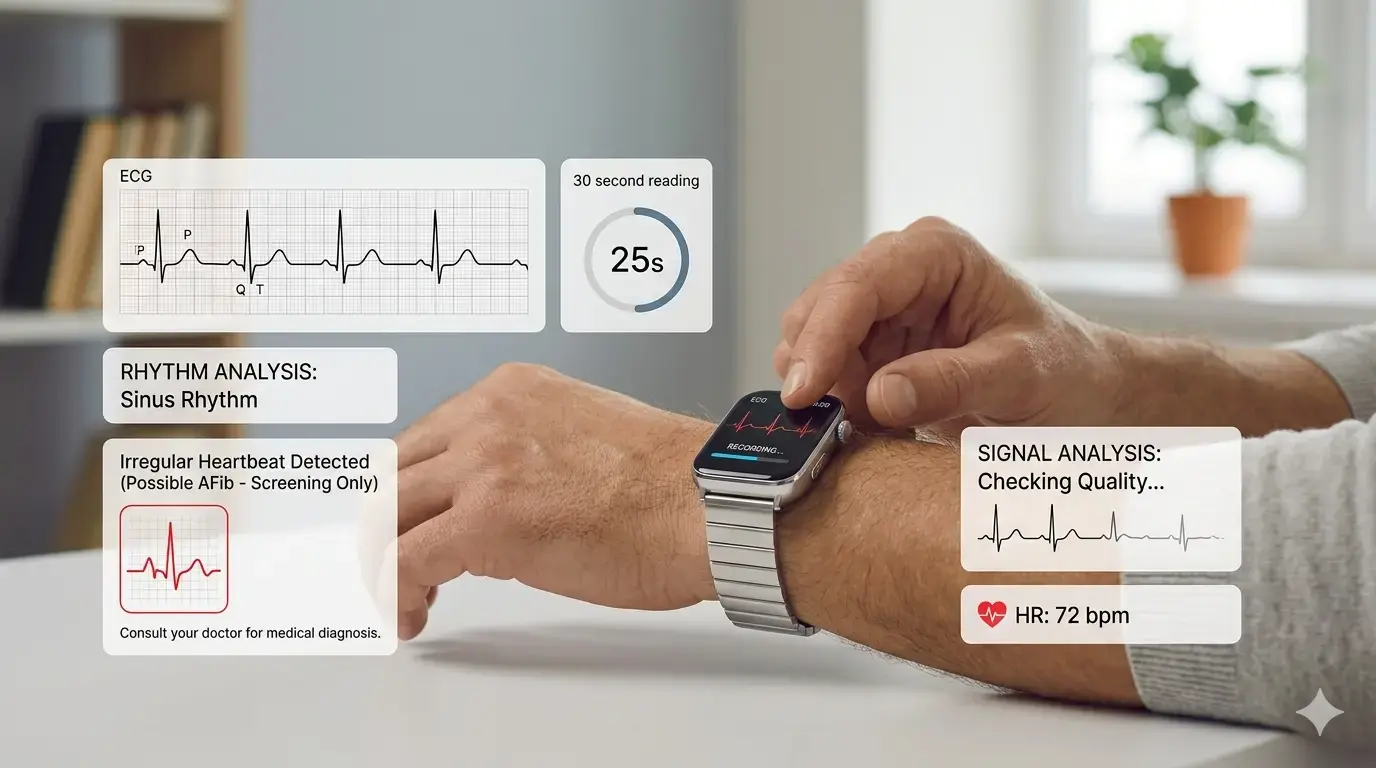
Most exercise wearables keep track of steps, calories, and simple changes in heart rate. ECG-enabled Sport Watches go a long way; they have electrodes built in that record the heart's electrical signals with professional accuracy. When a person puts their finger on the sensor on the watch, it records a single-lead electrocardiogram, which is similar to what doctors use in hospitals.
How ECG Technology Works in Wearable Devices
ECG monitors pick up the tiny electrical impulses that are sent by each heartbeat and turn them into patterns that can be read. These patterns are looked at by advanced algorithms to find abnormal beats like atrial fibrillation, ballroom bradycardia, or tachycardia. This skill is very important for workplace wellness programs because early discovery of heart problems can stop major health problems and cut down on absences.
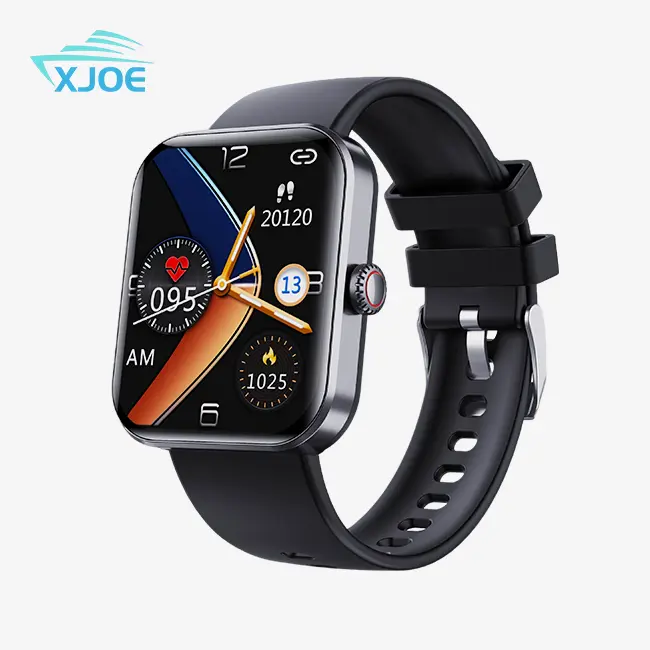
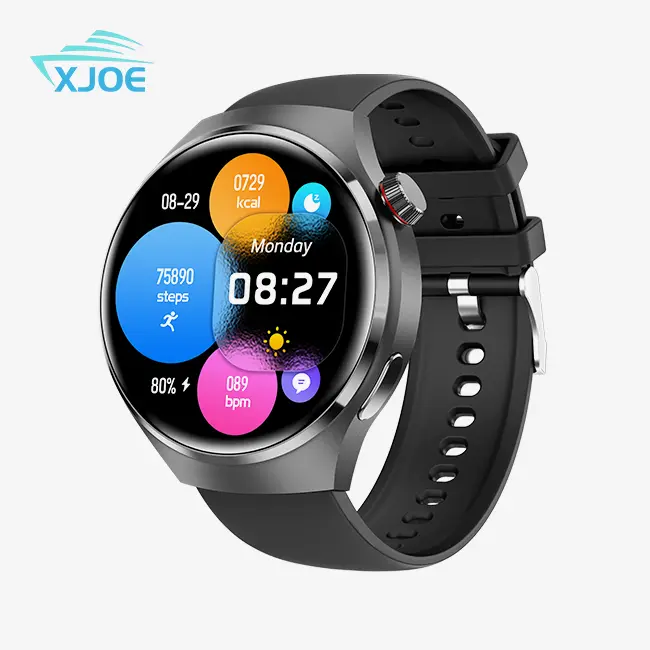
Our ECG Sport Watch has two Bluetooth connections (BLE5.1 and BT3.0), which makes sending data to workplace health management systems easy. The device works reliably when swimming, running, or doing high-intensity workouts. It has a 2.01-inch TFT monitor with a resolution of 240×296 and is waterproof up to IP67. The light metal case and TPU strap make it comfortable to wear for long periods of time, which is important for tracking heart rate 24/7.
Clinical Relevance Beyond Fitness Tracking
According to research, personal ECG monitors can find atrial fibrillation just as accurately as regular medical tools. Wearable tech is being used more and more in preventive screening programs at community health centers, especially for people who are at a high risk for heart disease. Companies that make things and move things use watches with ECG features to keep an eye on workers who do physically demanding jobs and make sure their heart stress stays within safe limits.
A battery life of 5–10 days allows for constant tracking during work weeks, which makes it easier for administrators to handle because the batteries don't need to be charged as often. It's easy to install across a wide range of organizational technology environments because it works with both Android and iOS.
Comparing ECG Sport Watches: Making an Informed Procurement Decision
To choose the right ECG wearables, you need to know how the different devices meet the goals of your company. Not all trackers that can do an ECG have the same level of speed, sensor accuracy, or ability to work with other devices.
Key Differentiation Factors
Compliance in business health programs is directly affected by how long batteries last. People are less likely to use devices that need to be charged every day because they forget to do the maintenance tasks. Our ECG Sport Watch solves this problem by having a battery life that lasts longer, so data collection can happen automatically without having to be changed often.
Ratings for water resistance decide how useful something is in many fields. The IP67 rating means that it can be submerged up to one meter for 30 minutes. This makes it ideal for food processing, restaurants, and outdoor jobs where people are often exposed to water. This long-lasting quality saves the value of an investment and lowers the cost of replacement.
Medical-grade features are different from general exercise tracking in terms of how accurate the sensors are. Devices should meet certification standards that prove the accuracy of ECG measurements. Before making big purchases, procurement teams should ask for proof of approval and test results from a third party.
Screen Readability and User Experience
The 2.01-inch screen makes it easy to see ECG waveforms, heart rate info, and smart messages in real time. Employees can quickly see their cardiovascular data without having to go through complicated choices, which makes them more interested in fitness programs. Intuitive interfaces cut down on training time and make it easier to quickly release software to workers with a range of professional skills.
There are different sports modes for different types of activities, such as strength training, yoga, riding, and swimming. This makes the device more appealing, which leads to regular use beyond required fitness tasks and real changes in health behaviors.
Procurement Guide for ECG Sport Watches in B2B Settings
When adding ECG gadgets to health programs, companies need to think about which source to go with, how to make sure the features work together, and how much the whole thing will cost. Strategic purchasing makes sure that gadgets meet current needs and help reach long-term wellness goals.
Identifying Corporate Use Cases
Adoption is driven by following the rules in fields that require health tracking. Continuous cardiac tracking helps with worker safety and incident investigation processes in the construction, transportation, and industrial industries. ECG data is added to workplace health records, which shows that proper care is taken to protect workers.
ECG Sport Watches are used in employee fitness programs to encourage people to do healthy things. People who take part get specific information that connects their circulatory health to the choices they make in their daily lives. This creates feedback loops that keep people interested and involved. Human resources departments get group data that shows how well the program is working without putting people's privacy at risk.
Traditional office health programs are harder to implement when people work from home. Giving ECG wearables to teams that work in different places keeps them connected to company wellness tools, so they can get regular help no matter where they are. Health management can be done outside of normal office hours with features like tracking sleep and setting exercise prompts.
Evaluating Pricing and Support Structures
The people who work in procurement should look at the total costs of ownership, which include buying the gadget, licensing the program, and getting ongoing technical help. Flexible minimum order amounts let you do trial testing before deploying the whole device, which lowers the financial risk of making sure the device works right.
Warranty terms and repair policies protect against problems with the way the product was made and breakdowns that happen too soon. Reliable sellers make it easy to understand how long warranties last, how to return items, and what the quality promises are. Our GMP-certified plant follows strict quality control standards that make sure all output batches work the same way.
Sourcing Strategy and Supplier Verification
Supply lines that are stable and have predictable wait times are provided by authorized distributors and long-term OEM partners. Verifying certifications, output capability, and customer references lowers the risk of buying something. Customizable ECG Sport Watches are what companies like Xizhou do best, and their mature R&D teams help them make the products fit the needs of each business.
Fast replenishment processes are important for businesses that want to grow their health programs or replace their fleets of old devices, including ECG watches. Suppliers who keep a lot of stock on hand can fill urgent orders quickly and without any delays, which keeps the program running smoothly. Technical problems are quickly fixed by responsive after-sales service, which keeps users' trust in the program and its trustworthiness.
Practical Usage and Integration of ECG Sport Watches
To make implementation work, you need to do more than just hand out devices. You also need to plan how to install them and connect them to your current health infrastructure.
Device Setup and User Onboarding
Calibration makes sure that measurements are accurate from the start. Organizations should come up with standard setup procedures for things like making user profiles, taking baseline ECGs, and setting up alerting options. Employee training workshops that teach them how to take an ECG improve the quality of the data and cut down on user mistakes.
Protections for data privacy must be in line with GDPR and local health information rules. Employees should know what information is being taken, how it is being kept, who can see it, and what their rights are when it comes to controlling information. Clear privacy rules help people trust each other and are more likely to take part in health programs honestly.
Integration with Corporate Health Systems
ECG Sport Watches produce large amounts of data that need to be organized and analyzed. When raw data are connected to workplace health platforms, electronic medical records, or wellness screens, they are turned into information that can be used. API connectivity and the ability to share data make it easy for data to move between wearables and corporate systems.
Health analytics using compiled ECG data show patterns at the population level that help guide focused actions. Companies could figure out which areas have a higher chance of heart disease, which would help them focus their resources. Predictive modeling can predict how much healthcare will be used in the future, which can help make proactive changes to fitness programs.
Integrating wearable data with city health tracking tools is good for community health projects. Public health offices can keep an eye on heart health trends in different neighborhoods, which can help with programs for preventive care and resource distribution. ECG trackers are now used to manage the health of whole populations, not just individual users.
The Future of ECG Sport Watches in Heart Health and Corporate Wellness
Heart tracking is changing all the time thanks to new technologies. For example, artificial intelligence and more biological sensors are opening up new ways to provide preventive care.
AI-Driven Predictive Analytics
More and more, machine learning systems based on large ECG datasets can predict cardiac events before they show up as signs. In the future, ECG Sport Watches will be able to spot small changes in patterns that could mean a health problem is starting, so users and doctors will know to act quickly. This change from reaction to preventive medicine cuts down on emergency care and makes people healthier in the long run.
Better sensor systems that combine ECG with tracking skin temperature, measuring breathing rate, and checking blood oxygen levels give complete physiological data. Our ECG Spo2 Smartwatch already has oxygen saturation monitoring built in. This shows links between heart health and breathing efficiency during exercise and recovery.
Strategic Value for B2B Buyers
When companies invest in advanced ECG wearables, they present themselves as health-conscious job-seekers' dream employers. Using cutting-edge fitness technology to show that you care about your employees' health makes it easier to hire new people and keep the ones you have.
Less money spent on health care justifies investments in digital programs. Finding cardiovascular problems early can save you a lot of money on expensive emergency care, hospital stays, and long unemployment breaks. Actuarial research supports the use of proactive health technology as a cost-effective way to lower risk more and more.
Wearable health programs using ECG watches help corporate social responsibility efforts get results that can be measured. Annual sustainability reports can show how the health of employees has improved, showing a real social effect along with environmental and governance promises. This all-around method works for stakeholders who value the organization's full duty.
Conclusion
In conclusion, ECG Sport Watches are game-changing tools that combine clinical-grade monitoring with everyday exercise tracking. When companies use these tools, they get detailed information about their employees' heart health. This lets them take action early, lowers healthcare costs, and shows a measurable commitment to wellness. As AI-powered predictive analytics and more biometric tracking are added to the technology, it will become even more useful for buying professionals who are looking to the future. Companies can set up long-lasting wellness programs that protect workers' health and give them a great return on their investment by choosing dependable providers that offer open customization, strict quality control, and quick support. As smart tech gets better, leaders in the industry who are committed to the overall health of their employees will be the ones who strategically adopt ECG-enabled gadgets.
FAQ
Q1: What distinguishes ECG sport watches from standard fitness trackers?
Optical sensors that record changes in blood flow are used by most fitness watches to measure heart rate. ECG Sport Watches have electrodes that pick up the heart's electrical activity. They then show detailed patterns that show rhythm problems and subtleties in heart function that normal heart rate monitors miss. This clinical-grade data lets doctors find conditions like atrial fibrillation that regular trackers can't.
Q2: Can ECG sport watches replace medical examinations?
Wearable ECG devices are helpful, but they should never be used instead of a skilled medical exam. Comprehensive cardiac assessments find problems that need medical care, but they need to be interpreted by a doctor, include more tests, and take the patient's general health into account. Wearable ECG data should be shared with healthcare providers by users to help with evaluation and treatment plans.
Q3: How do organizations ensure employee data privacy?
To protect privacy effectively, data must be sent securely, stored securely, access controlled by role, and clear rules must be set for how information is used. Employees should give consent after being fully told, know what rights they have over their data, and be able to choose how they want to share it. People and businesses are protected from legal trouble when they follow GDPR and area health information laws.
Partner with Xizhou for Your ECG Sport Watch Sourcing Needs
Xizhou is an expert at making high-quality ECG Sport Watches that are specifically designed for tough B2B uses in business wellness programs, healthcare systems, and retail sales channels. Our skilled research and development team creates adaptable products that include ECG monitoring in real time, heart rate tracking 24 hours a day, seven days a week, multiple sports modes, and smooth Android and iOS support. We have a GMP-certified plant with strict quality control, and we keep a lot of stock on hand so that we can quickly fill both test orders and large-scale deployments.
We are a maker and seller of ECG Sport Watches with a lot of experience. We support OEM/ODM partnerships by offering flexible branding, packaging customization, and engineering advice. Our quick after-sales service makes sure that your purchase goes smoothly from the first question to ongoing product help. Whether you're starting a new health program or making a current one bigger, Xizhou can provide you with reliable devices that are both clinically accurate and easy to use.
Contact us today at 13266508958@163.com to discuss your specific requirements.
References
1. Turakhia, M. P., et al. (2019). "Diagnostic Utility of a Novel Leadless Arrhythmia Monitoring Device." American Journal of Cardiology, 124(6), 813-820.
2. Perez, M. V., et al. (2019). "Large-Scale Assessment of a Smartwatch to Identify Atrial Fibrillation." New England Journal of Medicine, 381(20), 1909-1917.
3. Seshadri, D. R., et al. (2020). "Wearable Sensors for Monitoring Physical Activity." npj Digital Medicine, 3(1), 1-19.
4. Lobelo, F., et al. (2016). "The Evidence in Support of Physicians and Health Care Providers as Physical Activity Role Models." American Journal of Lifestyle Medicine, 10(1), 36-52.
5. Henriksen, A., et al. (2018). "Using Fitness Trackers and Smartwatches to Measure Physical Activity in Research: Analysis of Consumer Wrist-Worn Wearables." Journal of Medical Internet Research, 20(3), e110.
6. Dorr, D. A., et al. (2018). "Implementing a Multidisease Chronic Care Model in Primary Care Using People and Technology." Disease Management, 9(1), 1-15.