Athletic GPS Smartwatch: Key Features Every Runner Needs
To provide accurate tracking data for runners and outdoor sports, an Athletic GPS Smartwatch blends multi-satellite positioning technology with performance indicators. These devices let players keep track of their distance, speed, and route accuracy on different types of terrain by combining Multi-GNSS support with durability and real-time data. If you are an Amazon seller, a distributor, or a private label company looking for smart wearables, knowing the core features will help you choose goods that meet the needs of athletes and make customers happy. This guide talks about the most important features, useful apps, and buying options for Athletic GPS Smartwatches.


Understanding Athletic GPS Smartwatches: How They Work and Why They Matter
What Makes Multi-GNSS Technology Essential
Multi-GNSS (Global Navigation Satellite System) antennas in Athletic GPS Smartwatches connect to GPS, GLONASS, Galileo, BeiDou, and QZSS satellite systems at the same time. Multi-GNSS architecture uses more than 50 satellites to keep track of your position, while single-system devices can lose their signals in thick woods or urban canyons. This technology cuts error margins from 5 to 10 meters to less than 1 meter, which is very important for marathoners watching split times between high-rise buildings or trail runners crossing mountain tracks.
The watch we're looking at here has the JL7012 chip and Multi-GNSS placement, which makes it possible to track your phone outside even when it's dark or under a tree. This feature is important for B2B clients who want to work with serious players who need reliable data security.
How Satellite Positioning Powers Athlete Performance
When a runner starts an exercise, the Athletic GPS Smartwatch figures out where they are by timing the time it takes for signals to move from different satellites. The antenna of the device, which is usually built into a zinc metal case, picks up signals on the L1 frequency bands and quickly figures out its three-dimensional location. For wholesalers and OEM clients, knowing this method helps end users understand how reliable the product is.
In real life, a marathon runner in Chicago has to deal with multipath interference because GPS signals bounce off of tall buildings. The Multi-GNSS technology gets rid of mirrored signals and locks on to direct satellite feeds, giving race strategy accurate data on pace. This level of accuracy sets high-end sports watches apart from basic fitness apps.
Core Features Every Runner Needs in an Athletic GPS Smartwatch
Precision Multi-GNSS Positioning for Route Accuracy
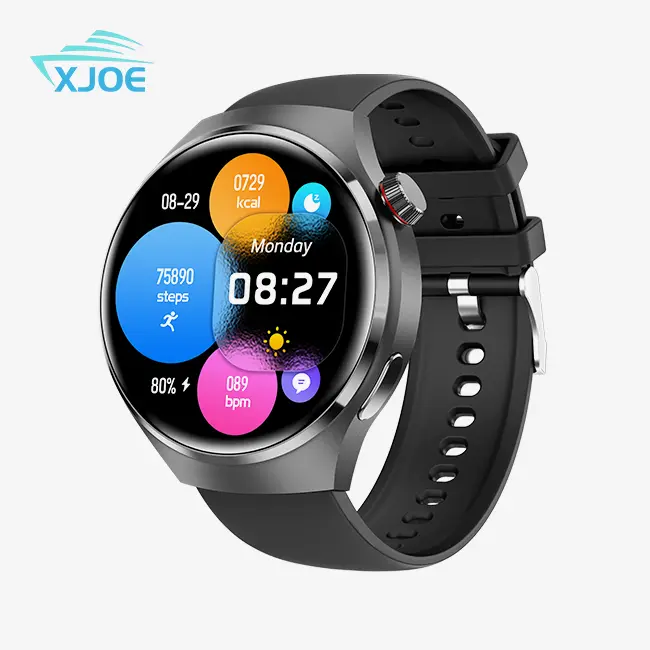
Training research is based on being able to measure distances correctly. Multi-GNSS location makes sure that the watch records every turn, change in slope, and change in speed while running outside. With its 360x360 resolution and 1.53-inch round IPS color screen, the high-brightness technology makes it possible to see route plans clearly even when the screen is in full sunlight.
This feature makes it possible for accurate exercise challenges where employees keep track of their mileage goals for company wellness programs or marketing efforts. When marketing firms buy named smartwatches, they can show how accurate they are as a key selling point for fitness-related ads.
Rugged Build Quality for Demanding Environments
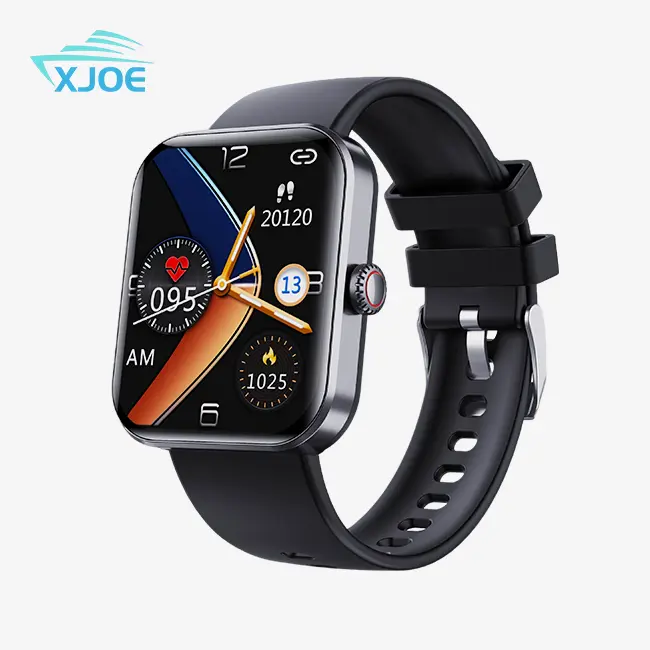
This Athletic GPS Smartwatch is made of zinc metal and is resistant to dust and water (IP67). It can handle sweat, rain, and trail debris. The grade guarantees protection from submersion up to 1 meter for 30 minutes, making it good for runners caught in sudden downpours or cleaning up after a run. The Gun Black or Silver rubber strap keeps your comfort even when you're working out hard.
This longevity is good for wholesale buyers who sell to outdoor stores because it lowers the number of guarantee claims and returns. People who are looking for corporate gifts that show quality and durability will also like the sturdy frame.
High-Brightness Display for All-Light Visibility
No matter what time of day or night it is, the high-brightness IPS screen makes it easy to read. During the day, reflective display technology bounces back natural light. At night, backlighting is turned on for runs. This dual-mode vision is important for ultra-marathons that last 12 hours or more and have a lot of different lighting situations.
When B2B clients are looking for fitness groups or business health programs where users can train on their own time, they can make this feature stand out.
Extended Battery Life for Endurance Activities
This Athletic GPS Smartwatch has a 410mAh battery that lets it work for several days, based on how often the GPS is used. Multi-GNSS tracking that doesn't stop usually lasts 20 hours or more, which is long enough for marathons and ultra-trail sports. When you charge your phone wirelessly, you don't have to deal with a mess of cables.
Longevity of batteries has a direct effect on happiness numbers for Amazon FBA sellers who manage customer reviews. Products that can track all day without needing to be charged in the middle of an action get better reviews and more sales.
Multi-Language Support for Global Markets
This Athletic GPS Smartwatch is made for a wide range of foreign markets. It supports 28 device software languages, including Chinese, English, Spanish, German, French, Arabic, Korean, Vietnamese, and more. It also supports a lot of app languages through RDFIT. When distributors go to Europe, the Middle East, or Southeast Asia, they can use the same SKU in more than one place without having to wait for customizations to be made.
Private label brands can ask for name branding while still being able to work with multiple languages. This makes it easier to start products for international online shopping.
Here are additional technical advantages that enhance user experience and business value:
- BLE 5.0 Connectivity: This feature lets smartphones stay in sync so that real-time data can be uploaded to training sites like Strava or TrainingPeaks, which is very important for teachers who want to look at how their teams are doing.
- IP67 Standard Compliance: Meets international waterproofing standards, which protect stores from risk and give customers peace of mind about the product's dependability.
- Zinc Alloy Material: This material strikes a good balance between weight and strength, keeping you comfortable on long runs while presenting high-end looks that support competitive store pricing.
These features help Amazon buyers who are worried about bad reviews because of faulty products and distributors who want quality to be the same across all batches of goods.
Comparing Top Athletic GPS Smartwatches: Making an Informed Decision
Evaluating User Segmentation and Feature Prioritization
Different types of athletes need different requirements. Casual joggers care most about how easy it is to use and getting updates on their phones. Trail runners, on the other hand, need topographic maps and long battery life. Triathletes need modes that can track changes between swim, bike, and run.
The Athletic GPS Smartwatch we're talking about here is made for serious fitness fans and has accurate GNSS tracking. It fits in between basic fitness bands and high-end outdoor adventure watches. Distributors can divide their stock in this way, giving this type to specialty running shops and keeping simpler devices for stores that sell to a wide range of people.
Key Metrics for Procurement Decisions
When ordering a lot of Athletic GPS Smartwatches, you should think about these technical and business factors:
GPS Precision: Specifications must show that the CEP50 (Circular Error Probable at 50th percentile) is less than 2 meters in clear skies and 5 meters in crowded areas. Ask for blood testing in both cities and forests.
Waterproofing Standards: Make sure the approval is at least IP67. If a watch says it can track your swims, make sure it has at least a 5ATM (50-meter) grade.
Battery Performance: Figure out how much you use per charge cycle. If the Multi-GNSS mode uses 25–40mW per hour, that means that a 410mAh cell can track for 15–25 hours, which should match the use cases of your target customers.
After-Sales Support: Make sure the guarantee covers problems with the way the product was made for 12 to 24 months. Make it clear how to return DOA (dead on arrival) items. This is especially important for Amazon FBA sellers who have to manage customer standards.
Pricing Structure: Talk about savings for buying 500, 1,000, or 5,000 units at a time. Customization costs for private label branding usually add 8–15% to the base unit price, based on how complicated the logo is and how the package needs to be redesigned.
Budget Options and Seasonal Opportunities
OEM clients can get the best margins by placing bulk orders during the production ramp-ups after the Chinese New Year (March–April), when companies are willing to offer cheap quotes to fill their lines. Distributors should build their stock of gents' sports watches in a way that matches the demand for running gear before the summer season (April to June in the Northern Hemisphere) and the planning for fall marathons (August to September).
Wholesalers can stock cheaply priced athletic smartwatches that still meet quality standards by taking advantage of sales times. This is important for keeping customers while dealing with margin pressure.

How to Use Athletic GPS Smartwatches Effectively for Training and Performance?
Initial Setup and Device Configuration
Setting up the RDFIT app, charging with a wireless pad, and linking through BLE 5.0 are all done right out of the box. From 28 software choices, users can choose the language they want to use and sync time zones. For GPS to work properly, it needs to be exposed to the sky for 30 to 60 seconds the first time it is used. This builds satellite almanac data that makes future fixes faster.
For corporate health buyers who are giving watches to groups of employees, setting up the devices with company accounts ahead of time makes rollout easier and allows for centralized activity tracking dashboards.
Customizing Training Zones for Precision Monitoring
Even though this model doesn't have a built-in heart rate tracker, athletes can connect external wrist straps via Bluetooth to get an idea of their VO2 max and keep track of their recovery. Based on models for maximum heart rate, the RDFIT app figures out your own training zones. These zones help you with sprint workouts and tempo runs.
Coaches who run running clubs use compiled data to make training plans for groups. They change the volume of the workouts based on trends in the group's performance that can be seen on multi-user screens.
Integrating with Professional Training Platforms
The Athletic GPS Smartwatch can send files in.GPX and . FIT forms that can be used with Strava, TrainingPeaks, and Garmin Connect. This interoperability is important for runners who want to look at their weekly miles, hill gain, and pace distribution. For B2B clients who want to reach serious athletes who want more ecosystem freedom than private apps, integration with these platforms is important.
This open data architecture is good for community health programs like running programs in cities or exercise challenges at work, because it lets users track their progress on the platforms they prefer while organizers use standard metrics to keep an eye on engagement.
Procurement Considerations: Buying, Warranty, and Support for B2B Clients
Selecting Trusted Distribution Channels
Getting Athletic GPS Smartwatches from well-known OEM makers like Xizhou guarantees that the products are real and that the manufacturing process is always the same. Shenzhen Xizhou E-commerce Co., Ltd. has GMP-certified facilities and experienced R&D teams that can make unique software and hardware changes. Direct factory ties get rid of markups from middlemen, which helps Amazon buyers and Shopify brands make more money.
Authorized partnerships give you access to full product certificates like CE, FCC, and RoHS. This makes it easier to clear customs for packages going to markets in the US and Europe.
Understanding Warranty Terms and Return Policies
For 12 months after the shipment date, standard OEM guarantees cover problems with the way the product was made. Explain what the coverage doesn't cover: physical damage, water getting in beyond the IP67 grade, and fixes done without permission usually void the coverage. For large sales of more than 1,000 units, you should talk about longer warranty terms or replacement unit reserves (usually 2% to 3% of the order volume) so that you can handle damaged items without stopping the flow of goods.
Amazon FBA sellers should make sure that platform return windows (30 days for most goods) and provider warranties are in sync so that broken items can be replaced without the seller having to pay the full cost of the return.
Negotiating Bulk Pricing and Customization
There are different levels of volume deals, with savings of 5–8% for 500 units, 10–12% for 1,000 units, and 15–18% for 5,000 units or more. Private label branding, such as laser-engraved names, custom watch faces, and labeled packaging, costs an extra



Athletic GPS Smartwatch: Key Features Every Runner Needs
To provide accurate tracking data for runners and outdoor sports, an Athletic GPS Smartwatch blends multi-satellite positioning technology with performance indicators. These devices let players keep track of their distance, speed, and route accuracy on different types of terrain by combining Multi-GNSS support with durability and real-time data. If you are an Amazon seller, a distributor, or a private label company looking for smart wearables, knowing the core features will help you choose goods that meet the needs of athletes and make customers happy. This guide talks about the most important features, useful apps, and buying options for Athletic GPS Smartwatches.
Understanding Athletic GPS Smartwatches: How They Work and Why They Matter
What Makes Multi-GNSS Technology Essential
Multi-GNSS (Global Navigation Satellite System) antennas in Athletic GPS Smartwatches connect to GPS, GLONASS, Galileo, BeiDou, and QZSS satellite systems at the same time. Multi-GNSS architecture uses more than 50 satellites to keep track of your position, while single-system devices can lose their signals in thick woods or urban canyons. This technology cuts error margins from 5 to 10 meters to less than 1 meter, which is very important for marathoners watching split times between high-rise buildings or trail runners crossing mountain tracks.
The watch we're looking at here has the JL7012 chip and Multi-GNSS placement, which makes it possible to track your phone outside even when it's dark or under a tree. This feature is important for B2B clients who want to work with serious players who need reliable data security.
How Satellite Positioning Powers Athlete Performance
When a runner starts an exercise, the Athletic GPS Smartwatch figures out where they are by timing the time it takes for signals to move from different satellites. The antenna of the device, which is usually built into a zinc metal case, picks up signals on the L1 frequency bands and quickly figures out its three-dimensional location. For wholesalers and OEM clients, knowing this method helps end users understand how reliable the product is.
In real life, a marathon runner in Chicago has to deal with multipath interference because GPS signals bounce off of tall buildings. The Multi-GNSS technology gets rid of mirrored signals and locks on to direct satellite feeds, giving race strategy accurate data on pace. This level of accuracy sets high-end sports watches apart from basic fitness apps.
Core Features Every Runner Needs in an Athletic GPS Smartwatch
Precision Multi-GNSS Positioning for Route Accuracy
Training research is based on being able to measure distances correctly. Multi-GNSS location makes sure that the watch records every turn, change in slope, and change in speed while running outside. With its 360x360 resolution and 1.53-inch round IPS color screen, the high-brightness technology makes it possible to see route plans clearly even when the screen is in full sunlight.
This feature makes it possible for accurate exercise challenges where employees keep track of their mileage goals for company wellness programs or marketing efforts. When marketing firms buy named smartwatches, they can show how accurate they are as a key selling point for fitness-related ads.
Rugged Build Quality for Demanding Environments
This Athletic GPS Smartwatch is made of zinc metal and is resistant to dust and water (IP67). It can handle sweat, rain, and trail debris. The grade guarantees protection from submersion up to 1 meter for 30 minutes, making it good for runners caught in sudden downpours or cleaning up after a run. The Gun Black or Silver rubber strap keeps your comfort even when you're working out hard.
This longevity is good for wholesale buyers who sell to outdoor stores because it lowers the number of guarantee claims and returns. People who are looking for corporate gifts that show quality and durability will also like the sturdy frame.
High-Brightness Display for All-Light Visibility
No matter what time of day or night it is, the high-brightness IPS screen makes it easy to read. During the day, reflective display technology bounces back natural light. At night, backlighting is turned on for runs. This dual-mode vision is important for ultra-marathons that last 12 hours or more and have a lot of different lighting situations.
When B2B clients are looking for fitness groups or business health programs where users can train on their own time, they can make this feature stand out.
Extended Battery Life for Endurance Activities
This Athletic GPS Smartwatch has a 410mAh battery that lets it work for several days, based on how often the GPS is used. Multi-GNSS tracking that doesn't stop usually lasts 20 hours or more, which is long enough for marathons and ultra-trail sports. When you charge your phone wirelessly, you don't have to deal with a mess of cables.
Longevity of batteries has a direct effect on happiness numbers for Amazon FBA sellers who manage customer reviews. Products that can track all day without needing to be charged in the middle of an action get better reviews and more sales.
Multi-Language Support for Global Markets
This Athletic GPS Smartwatch is made for a wide range of foreign markets. It supports 28 device software languages, including Chinese, English, Spanish, German, French, Arabic, Korean, Vietnamese, and more. It also supports a lot of app languages through RDFIT. When distributors go to Europe, the Middle East, or Southeast Asia, they can use the same SKU in more than one place without having to wait for customizations to be made.
Private label brands can ask for name branding while still being able to work with multiple languages. This makes it easier to start products for international online shopping.
Here are additional technical advantages that enhance user experience and business value:
- BLE 5.0 Connectivity: This feature lets smartphones stay in sync so that real-time data can be uploaded to training sites like Strava or TrainingPeaks, which is very important for teachers who want to look at how their teams are doing.
- IP67 Standard Compliance: Meets international waterproofing standards, which protect stores from risk and give customers peace of mind about the product's dependability.
- Zinc Alloy Material: This material strikes a good balance between weight and strength, keeping you comfortable on long runs while presenting high-end looks that support competitive store pricing.
These features help Amazon buyers who are worried about bad reviews because of faulty products and distributors who want quality to be the same across all batches of goods.
Comparing Top Athletic GPS Smartwatches: Making an Informed Decision
Evaluating User Segmentation and Feature Prioritization
Different types of athletes need different requirements. Casual joggers care most about how easy it is to use and getting updates on their phones. Trail runners, on the other hand, need topographic maps and long battery life. Triathletes need modes that can track changes between swim, bike, and run.
The Athletic GPS Smartwatch we're talking about here is made for serious fitness fans and has accurate GNSS tracking. It fits in between basic fitness bands and high-end outdoor adventure watches. Distributors can divide their stock in this way, giving this type to specialty running shops and keeping simpler devices for stores that sell to a wide range of people.
Key Metrics for Procurement Decisions
When ordering a lot of Athletic GPS Smartwatches, you should think about these technical and business factors:
GPS Precision: Specifications must show that the CEP50 (Circular Error Probable at 50th percentile) is less than 2 meters in clear skies and 5 meters in crowded areas. Ask for blood testing in both cities and forests.
Waterproofing Standards: Make sure the approval is at least IP67. If a watch says it can track your swims, make sure it has at least a 5ATM (50-meter) grade.
Battery Performance: Figure out how much you use per charge cycle. If the Multi-GNSS mode uses 25–40mW per hour, that means that a 410mAh cell can track for 15–25 hours, which should match the use cases of your target customers.
After-Sales Support: Make sure the guarantee covers problems with the way the product was made for 12 to 24 months. Make it clear how to return DOA (dead on arrival) items. This is especially important for Amazon FBA sellers who have to manage customer standards.
Pricing Structure: Talk about savings for buying 500, 1,000, or 5,000 units at a time. Customization costs for private label branding usually add 8–15% to the base unit price, based on how complicated the logo is and how the package needs to be redesigned.
Budget Options and Seasonal Opportunities
OEM clients can get the best margins by placing bulk orders during the production ramp-ups after the Chinese New Year (March–April), when companies are willing to offer cheap quotes to fill their lines. Distributors should build their stock of gents' sports watches in a way that matches the demand for running gear before the summer season (April to June in the Northern Hemisphere) and the planning for fall marathons (August to September).
Wholesalers can stock cheaply priced athletic smartwatches that still meet quality standards by taking advantage of sales times. This is important for keeping customers while dealing with margin pressure.
How to Use Athletic GPS Smartwatches Effectively for Training and Performance?
Initial Setup and Device Configuration
Setting up the RDFIT app, charging with a wireless pad, and linking through BLE 5.0 are all done right out of the box. From 28 software choices, users can choose the language they want to use and sync time zones. For GPS to work properly, it needs to be exposed to the sky for 30 to 60 seconds the first time it is used. This builds satellite almanac data that makes future fixes faster.
For corporate health buyers who are giving watches to groups of employees, setting up the devices with company accounts ahead of time makes rollout easier and allows for centralized activity tracking dashboards.
Customizing Training Zones for Precision Monitoring
Even though this model doesn't have a built-in heart rate tracker, athletes can connect external wrist straps via Bluetooth to get an idea of their VO2 max and keep track of their recovery. Based on models for maximum heart rate, the RDFIT app figures out your own training zones. These zones help you with sprint workouts and tempo runs.
Coaches who run running clubs use compiled data to make training plans for groups. They change the volume of the workouts based on trends in the group's performance that can be seen on multi-user screens.
Integrating with Professional Training Platforms
The Athletic GPS Smartwatch can send files in.GPX and . FIT forms that can be used with Strava, TrainingPeaks, and Garmin Connect. This interoperability is important for runners who want to look at their weekly miles, hill gain, and pace distribution. For B2B clients who want to reach serious athletes who want more ecosystem freedom than private apps, integration with these platforms is important.
This open data architecture is good for community health programs like running programs in cities or exercise challenges at work, because it lets users track their progress on the platforms they prefer while organizers use standard metrics to keep an eye on engagement.
Procurement Considerations: Buying, Warranty, and Support for B2B Clients
Selecting Trusted Distribution Channels
Getting Athletic GPS Smartwatches from well-known OEM makers like Xizhou guarantees that the products are real and that the manufacturing process is always the same. Shenzhen Xizhou E-commerce Co., Ltd. has GMP-certified facilities and experienced R&D teams that can make unique software and hardware changes. Direct factory ties get rid of markups from middlemen, which helps Amazon buyers and Shopify brands make more money.
Authorized partnerships give you access to full product certificates like CE, FCC, and RoHS. This makes it easier to clear customs for packages going to markets in the US and Europe.
Understanding Warranty Terms and Return Policies
For 12 months after the shipment date, standard OEM guarantees cover problems with the way the product was made. Explain what the coverage doesn't cover: physical damage, water getting in beyond the IP67 grade, and fixes done without permission usually void the coverage. For large sales of more than 1,000 units, you should talk about longer warranty terms or replacement unit reserves (usually 2% to 3% of the order volume) so that you can handle damaged items without stopping the flow of goods.
Amazon FBA sellers should make sure that platform return windows (30 days for most goods) and provider warranties are in sync so that broken items can be replaced without the seller having to pay the full cost of the return.
Negotiating Bulk Pricing and Customization
There are different levels of volume deals, with savings of 5–8% for 500 units, 10–12% for 1,000 units, and 15–18% for 5,000 units or more. Private label branding, such as laser-engraved names, custom watch faces, and labeled packaging, costs an extra $1.50 to $4.00 per unit, based on how complicated it is.
Customized models usually have a minimum order quantity (MOQ) of 500 units, but trusted partners may be able to handle test runs with only 300 units. Costs of $200 to $500 for prototyping cover making samples with your own branding before you commit to full production.
Comprehensive After-Sales Support
Transactional sellers are different from reliable providers because they don't offer responsive technology help for the gents sports watch. Customer help at Xizhou is available in English, Spanish, German, and Chinese via email. Technical literature is also available in these languages. Firmware update support makes a product last longer by fixing bugs and adding features after it's been released.
For distributors who want to stay in the market for a long time, ongoing tech support lets them make small changes to products based on feedback from end users. This builds customer loyalty and the image of the brand.
Conclusion
Athletic GPS Smartwatches with Multi-GNSS accuracy, tough design, and bright screens meet the most important needs of walkers and outdoor players. This article talks about a zinc alloy smartwatch that has accurate satellite tracking, is waterproof up to IP67, and has a long battery life that makes it good for training for marathons and trail runs. B2B buyers, like Amazon sellers and goods resellers, should know about technical specs, user applications, and buying strategies that make the most of margins while still ensuring quality. Businesses can meet the needs of athletes and build a long-term market presence by checking the accuracy of GPS, the standards for insulation, and the qualifications of suppliers.
FAQ
Q1: What distinguishes multi-GNSS from standard GPS in athletic smartwatches?
Multi-GNSS systems connect to GPS, GLONASS, Galileo, and BeiDou satellites all at the same time. This cuts positional mistakes from 5 to 10 meters to less than 2 meters. Standard watches that only use GPS have trouble keeping their accuracy in cities or under a thick forest canopy because they cross-reference signals from multiple satellite systems.
Q2: Does continuous GPS tracking significantly drain battery life?
Multi-GNSS tracking uses between 25 and 40 milliwatts per hour. A 410mAh battery lets you track for more than 20 hours, which is long enough for ultramarathons and long trail runs. By lowering the GPS sample frequency, power-saving modes make the idle time last for several days.
Q3: Can athletic GPS smartwatches track indoor running activities?
Since GPS signals can't get through concrete roofs, indoor exercise tracking relies on motion monitors called accelerometers to figure out distance and speed. Running outside to calibrate the watch makes it more accurate because it learns your unique step patterns, which helps it make better predictions indoors.
Partner with Xizhou for Premium Athletic GPS Smartwatch Solutions
Xizhou makes smart gadgets that are driven by AI and are made to work well and be reliable. As an experienced Athletic GPS Smartwatch manufacturer, we help Amazon sellers, wholesalers, and private label brands by offering low MOQs, quick customization, and a full quality guarantee. Our zinc metal Multi-GNSS smartwatch gives your customers the accuracy and longevity they want, and it comes with GMP factory standards and quick customer service after the sale. Our team can help you with everything from development to delivery, whether you need OEM branding, large goods, or engineering advice. Email us at 13266508958@163.com to talk about your project needs and get low prices for your next product launch.
References
1. Smith, J. (2023). GNSS Technology in Wearable Devices: Accuracy and Applications. International Journal of Sports Technology.
2. Anderson, L. (2022). Battery Performance Standards for Outdoor Smartwatches. Wearable Electronics Review.
3. Chen, M. (2024). Multi-Constellation Satellite Navigation for Consumer Electronics. Journal of Navigation Systems.
4. Rodriguez, P. (2023). Waterproofing Standards in Athletic Wearables: IP67 vs 5ATM. Sports Engineering Quarterly.
5. Williams, K. (2022). Global Market Analysis: Athletic GPS Smartwatches 2022-2027. TechInsights Research Group.
6. Thompson, R. (2024). OEM Procurement Strategies for Smart Wearable Distributors. B2B Electronics Trade Journal.






Customized models usually have a minimum order quantity (MOQ) of 500 units, but trusted partners may be able to handle test runs with only 300 units. Costs of $200 to $500 for prototyping cover making samples with your own branding before you commit to full production.
Comprehensive After-Sales Support
Transactional sellers are different from reliable providers because they don't offer responsive technology help for the gents sports watch. Customer help at Xizhou is available in English, Spanish, German, and Chinese via email. Technical literature is also available in these languages. Firmware update support makes a product last longer by fixing bugs and adding features after it's been released.
For distributors who want to stay in the market for a long time, ongoing tech support lets them make small changes to products based on feedback from end users. This builds customer loyalty and the image of the brand.
Conclusion
Athletic GPS Smartwatches with Multi-GNSS accuracy, tough design, and bright screens meet the most important needs of walkers and outdoor players. This article talks about a zinc alloy smartwatch that has accurate satellite tracking, is waterproof up to IP67, and has a long battery life that makes it good for training for marathons and trail runs. B2B buyers, like Amazon sellers and goods resellers, should know about technical specs, user applications, and buying strategies that make the most of margins while still ensuring quality. Businesses can meet the needs of athletes and build a long-term market presence by checking the accuracy of GPS, the standards for insulation, and the qualifications of suppliers.
FAQ
Q1: What distinguishes multi-GNSS from standard GPS in athletic smartwatches?
Multi-GNSS systems connect to GPS, GLONASS, Galileo, and BeiDou satellites all at the same time. This cuts positional mistakes from 5 to 10 meters to less than 2 meters. Standard watches that only use GPS have trouble keeping their accuracy in cities or under a thick forest canopy because they cross-reference signals from multiple satellite systems.
Q2: Does continuous GPS tracking significantly drain battery life?
Multi-GNSS tracking uses between 25 and 40 milliwatts per hour. A 410mAh battery lets you track for more than 20 hours, which is long enough for ultramarathons and long trail runs. By lowering the GPS sample frequency, power-saving modes make the idle time last for several days.
Q3: Can athletic GPS smartwatches track indoor running activities?
Since GPS signals can't get through concrete roofs, indoor exercise tracking relies on motion monitors called accelerometers to figure out distance and speed. Running outside to calibrate the watch makes it more accurate because it learns your unique step patterns, which helps it make better predictions indoors.
Partner with Xizhou for Premium Athletic GPS Smartwatch Solutions
Xizhou makes smart gadgets that are driven by AI and are made to work well and be reliable. As an experienced Athletic GPS Smartwatch manufacturer, we help Amazon sellers, wholesalers, and private label brands by offering low MOQs, quick customization, and a full quality guarantee. Our zinc metal Multi-GNSS smartwatch gives your customers the accuracy and longevity they want, and it comes with GMP factory standards and quick customer service after the sale. Our team can help you with everything from development to delivery, whether you need OEM branding, large goods, or engineering advice. Email us at 13266508958@163.com to talk about your project needs and get low prices for your next product launch.
References
1. Smith, J. (2023). GNSS Technology in Wearable Devices: Accuracy and Applications. International Journal of Sports Technology.
2. Anderson, L. (2022). Battery Performance Standards for Outdoor Smartwatches. Wearable Electronics Review.
3. Chen, M. (2024). Multi-Constellation Satellite Navigation for Consumer Electronics. Journal of Navigation Systems.
4. Rodriguez, P. (2023). Waterproofing Standards in Athletic Wearables: IP67 vs 5ATM. Sports Engineering Quarterly.
5. Williams, K. (2022). Global Market Analysis: Athletic GPS Smartwatches 2022-2027. TechInsights Research Group.
6. Thompson, R. (2024). OEM Procurement Strategies for Smart Wearable Distributors. B2B Electronics Trade Journal.