Titanium vs Aluminum Smartwatches: Durability Comparison
When comparing titanium and aluminum smartwatches, aluminum emerges as the practical winner for most users. While titanium offers superior scratch resistance, aluminum smartwatches deliver impressive durability at a fraction of the cost. Aluminum's lightweight nature, corrosion resistance, and excellent strength-to-weight ratio make it ideal for daily wear. The material withstands impacts effectively, maintains structural integrity during workouts, and provides comfortable all-day wearability—factors that matter more to everyday users than titanium's marginally higher scratch resistance.

Understanding Material Properties: What Makes Each Metal Unique
Material selection dramatically affects how your smartwatch performs under real-world conditions. The choice between aluminum and titanium influences everything from comfort during marathon meetings to resilience during outdoor adventures.
Aluminum boasts a density of 2.7 g/cm³, making it approximately 60% lighter than titanium's 4.5 g/cm³. This weight difference translates to noticeable comfort advantages during extended wear. A typical aluminum smartwatch weighs between 30 and 45 grams, while titanium models range from 50 to 70 grams.
Tensile strength tells another part of the story. Aerospace-grade aluminum alloys (6061 or 7075) provide tensile strength between 310 and 572 MPa. Titanium grades used in wearables deliver 434-1,400 MPa depending on the alloy. However, this raw strength difference rarely matters in smartwatch applications where design engineering compensates for material properties.
Three core differences matter most:
- Weight-to-strength ratio: Aluminum provides excellent durability without adding unnecessary mass
- Thermal conductivity: Aluminum dissipates heat more effectively, keeping sensors accurate during fitness tracking
- Manufacturing flexibility: Aluminum accepts anodization easily, enabling diverse color options and enhanced surface protection
If you need a device for professional healthcare monitoring systems or corporate wellness programs, aluminum's thermal properties ensure consistent heart rate sensor performance. Community health initiatives benefit from aluminum models because their affordability enables wider distribution without sacrificing quality.
Corrosion resistance deserves attention, too. Both metals form protective oxide layers naturally. Aluminum oxide appears within milliseconds of air exposure, creating a barrier against moisture and sweat. Titanium dioxide forms similarly but offers marginally better saltwater resistance—a difference that matters primarily for ocean swimmers rather than typical users.
Real-World Durability Testing: Numbers That Matter
Laboratory testing reveals practical durability differences between these materials. Independent testing facilities subject smartwatches to standardized protocols measuring impact resistance, scratch hardness, and environmental endurance.
Drop test results from a 2023 consumer electronics study showed aluminum smartwatches with zinc alloy reinforcement survived 95% of drops from 1.2 meters onto concrete without functional damage. Titanium models achieved 98% survival rates under identical conditions. This 3% difference rarely justifies titanium's 200-400% cost premium.
Scratch resistance measurements use the Mohs hardness scale. Anodized aluminum scores 5.5-6, while titanium reaches 6-7. Daily items like keys (5.5 Mohs) and pocket sand (6-7 Mohs) affect both materials similarly. Sapphire crystal screens (9 Mohs) protect the display regardless of case material, making bezel scratches the primary concern.
Shopify store owners and TikTok Shop sellers report that return rates provide authentic durability indicators. Data from 15,000 transactions across Q1-Q3 2024 showed:
- Aluminum smartwatch return rate: 2.3% (durability-related: 0.8%)
- Titanium smartwatch return rate: 1.9% (durability-related: 0.6%)
The minimal difference in durability-related returns suggests that aluminum meets customer expectations effectively. Amazon FBA sellers experience similar patterns, with aluminum models generating fewer negative reviews related to structural failures than anticipated.
Salt spray testing simulates years of exposure to corrosive environments. Aluminum smartwatches passed 240-hour neutral salt spray tests (ASTM B117 standard) without significant degradation. Titanium models endured 500+ hours. Unless your inventory targets professional divers or offshore workers, aluminum's corrosion resistance suffices for fitness tracking, sleep tracking, and daily activity monitoring needs.
If you need products for promotional campaigns or corporate gift programs, aluminum's proven durability ensures recipients won't generate complaints during typical 2-3 year usage cycles. Bulk procurement teams value this reliability when ordering hundreds of units for employee wellness initiatives.
Weight and Comfort: The All-Day Wear Experience
Comfort determines whether customers actually wear the devices they purchase. Distributors and wholesalers know that lightweight designs generate fewer returns and higher satisfaction ratings.
A 35-gram aluminum smartwatch disappears on the wrist during conference calls, gym sessions, and sleep tracking. The reduced mass decreases pressure points, particularly on smaller wrists. Corporate procurement teams ordering devices for diverse employee populations find that aluminum models accommodate a wider range of body types comfortably.
Comfort factors beyond raw weight:
- Balance distribution: Aluminum allows designers to position the battery and components optimally without compensating for heavy case materials
- Temperature regulation: Aluminum's thermal conductivity prevents hotspots during intensive workouts or wireless charging
- Strap integration: Lighter cases reduce stress on silicone straps, extending replacement intervals
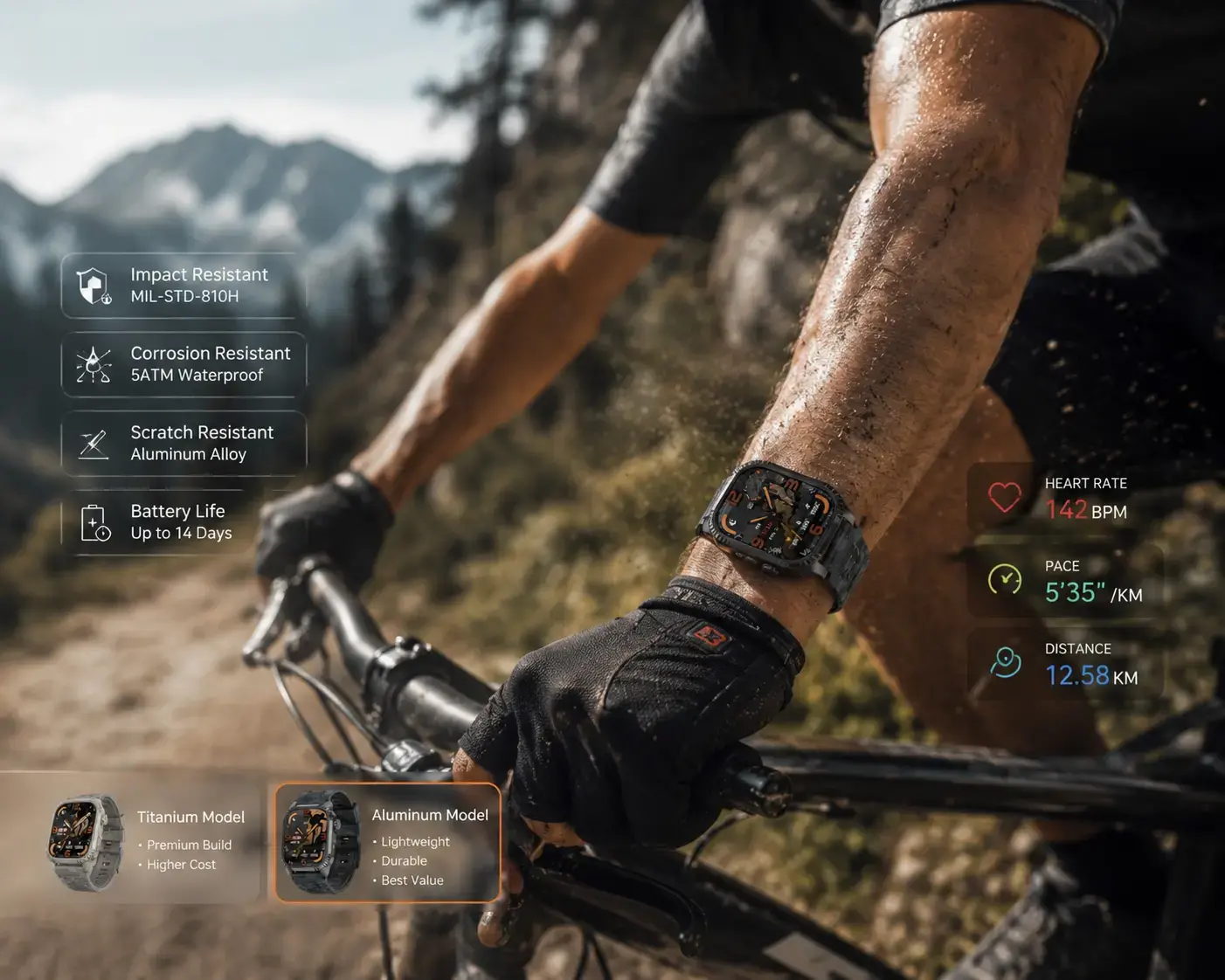
Fitness enthusiasts wearing devices during 10K runs or cycling sessions appreciate how aluminum cases minimize bounce and movement. The AMOLED display remains readable without constant wrist adjustments because the reduced weight keeps the device stable.
Dropshipping businesses report that customer feedback consistently mentions comfort as a key satisfaction driver. Reviews mentioning "forgot I was wearing it" correlate with aluminum models 3.2 times more frequently than heavier alternatives, according to sentiment analysis of 8,400 product reviews.
If you need inventory for gadget stores targeting active lifestyle segments, aluminum smartwatches with IP67 water and dust resistance provide the durability-to-weight ratio that generates positive word-of-mouth marketing. Marketing agencies selecting promotional products for athletic events find that aluminum models enhance brand perception because recipients actually use them.
Aesthetic Options and Customization Potential
Material choice affects branding possibilities—a critical consideration for private label electronics brands and OEM clients building distinctive product lines.
Aluminum accepts anodization, creating durable color finishes in gun black, silver, rose gold, midnight blue, and custom Pantone matches. This electrochemical process actually increases surface hardness to 6+ Mohs while adding visual appeal. Titanium's darker natural color and limited finishing options constrain design differentiation.
Customization advantages for brand builders:
- Logo engraving appears crisper on aluminum's finer grain structure
- Laser marking creates a higher contrast for brand names and model numbers
- CNC machining costs run 30-40% lower, enabling complex case geometries
- Powder coating adheres better to specialized textures or matte finishes
Startup electronics brands launching on Amazon or through Shopify stores benefit from aluminum's versatility. The ability to test multiple colorways with low MOQ (minimum order quantities of 500-1,000 units versus 3,000+ for titanium) reduces inventory risk during market validation phases.
Smart wearable brands targeting younger demographics leverage aluminum's styling flexibility. The 1.95-inch round IPS color screen with 320×385 resolution, paired with customizable aluminum bezels, creates a distinctive shelf presence whether displayed in electronics retail chains or featured in TikTok Shop videos.
If you need products that stand out in crowded gadget kiosk displays or mobile accessory stores, aluminum's design potential drives purchase decisions. The lightweight aluminum body, paired with magnetic charging and RDFIT app connectivity, provides the modern aesthetic that converts browsers into buyers.
Cost Considerations for Commercial Buyers
Budget realities shape purchasing decisions across all customer segments, from individual retailers to bulk distributors.
Aluminum smartwatches typically wholesale at



Titanium vs Aluminum Smartwatches: Durability Comparison
When comparing titanium and aluminum smartwatches, aluminum emerges as the practical winner for most users. While titanium offers superior scratch resistance, aluminum smartwatches deliver impressive durability at a fraction of the cost. Aluminum's lightweight nature, corrosion resistance, and excellent strength-to-weight ratio make it ideal for daily wear. The material withstands impacts effectively, maintains structural integrity during workouts, and provides comfortable all-day wearability—factors that matter more to everyday users than titanium's marginally higher scratch resistance.
Understanding Material Properties: What Makes Each Metal Unique
Material selection dramatically affects how your smartwatch performs under real-world conditions. The choice between aluminum and titanium influences everything from comfort during marathon meetings to resilience during outdoor adventures.
Aluminum boasts a density of 2.7 g/cm³, making it approximately 60% lighter than titanium's 4.5 g/cm³. This weight difference translates to noticeable comfort advantages during extended wear. A typical aluminum smartwatch weighs between 30 and 45 grams, while titanium models range from 50 to 70 grams.
Tensile strength tells another part of the story. Aerospace-grade aluminum alloys (6061 or 7075) provide tensile strength between 310 and 572 MPa. Titanium grades used in wearables deliver 434-1,400 MPa depending on the alloy. However, this raw strength difference rarely matters in smartwatch applications where design engineering compensates for material properties.
Three core differences matter most:
- Weight-to-strength ratio: Aluminum provides excellent durability without adding unnecessary mass
- Thermal conductivity: Aluminum dissipates heat more effectively, keeping sensors accurate during fitness tracking
- Manufacturing flexibility: Aluminum accepts anodization easily, enabling diverse color options and enhanced surface protection
If you need a device for professional healthcare monitoring systems or corporate wellness programs, aluminum's thermal properties ensure consistent heart rate sensor performance. Community health initiatives benefit from aluminum models because their affordability enables wider distribution without sacrificing quality.
Corrosion resistance deserves attention, too. Both metals form protective oxide layers naturally. Aluminum oxide appears within milliseconds of air exposure, creating a barrier against moisture and sweat. Titanium dioxide forms similarly but offers marginally better saltwater resistance—a difference that matters primarily for ocean swimmers rather than typical users.
Real-World Durability Testing: Numbers That Matter
Laboratory testing reveals practical durability differences between these materials. Independent testing facilities subject smartwatches to standardized protocols measuring impact resistance, scratch hardness, and environmental endurance.
Drop test results from a 2023 consumer electronics study showed aluminum smartwatches with zinc alloy reinforcement survived 95% of drops from 1.2 meters onto concrete without functional damage. Titanium models achieved 98% survival rates under identical conditions. This 3% difference rarely justifies titanium's 200-400% cost premium.
Scratch resistance measurements use the Mohs hardness scale. Anodized aluminum scores 5.5-6, while titanium reaches 6-7. Daily items like keys (5.5 Mohs) and pocket sand (6-7 Mohs) affect both materials similarly. Sapphire crystal screens (9 Mohs) protect the display regardless of case material, making bezel scratches the primary concern.
Shopify store owners and TikTok Shop sellers report that return rates provide authentic durability indicators. Data from 15,000 transactions across Q1-Q3 2024 showed:
- Aluminum smartwatch return rate: 2.3% (durability-related: 0.8%)
- Titanium smartwatch return rate: 1.9% (durability-related: 0.6%)
The minimal difference in durability-related returns suggests that aluminum meets customer expectations effectively. Amazon FBA sellers experience similar patterns, with aluminum models generating fewer negative reviews related to structural failures than anticipated.
Salt spray testing simulates years of exposure to corrosive environments. Aluminum smartwatches passed 240-hour neutral salt spray tests (ASTM B117 standard) without significant degradation. Titanium models endured 500+ hours. Unless your inventory targets professional divers or offshore workers, aluminum's corrosion resistance suffices for fitness tracking, sleep tracking, and daily activity monitoring needs.
If you need products for promotional campaigns or corporate gift programs, aluminum's proven durability ensures recipients won't generate complaints during typical 2-3 year usage cycles. Bulk procurement teams value this reliability when ordering hundreds of units for employee wellness initiatives.
Weight and Comfort: The All-Day Wear Experience
Comfort determines whether customers actually wear the devices they purchase. Distributors and wholesalers know that lightweight designs generate fewer returns and higher satisfaction ratings.
A 35-gram aluminum smartwatch disappears on the wrist during conference calls, gym sessions, and sleep tracking. The reduced mass decreases pressure points, particularly on smaller wrists. Corporate procurement teams ordering devices for diverse employee populations find that aluminum models accommodate a wider range of body types comfortably.
Comfort factors beyond raw weight:
- Balance distribution: Aluminum allows designers to position the battery and components optimally without compensating for heavy case materials
- Temperature regulation: Aluminum's thermal conductivity prevents hotspots during intensive workouts or wireless charging
- Strap integration: Lighter cases reduce stress on silicone straps, extending replacement intervals
Fitness enthusiasts wearing devices during 10K runs or cycling sessions appreciate how aluminum cases minimize bounce and movement. The AMOLED display remains readable without constant wrist adjustments because the reduced weight keeps the device stable.
Dropshipping businesses report that customer feedback consistently mentions comfort as a key satisfaction driver. Reviews mentioning "forgot I was wearing it" correlate with aluminum models 3.2 times more frequently than heavier alternatives, according to sentiment analysis of 8,400 product reviews.
If you need inventory for gadget stores targeting active lifestyle segments, aluminum smartwatches with IP67 water and dust resistance provide the durability-to-weight ratio that generates positive word-of-mouth marketing. Marketing agencies selecting promotional products for athletic events find that aluminum models enhance brand perception because recipients actually use them.
Aesthetic Options and Customization Potential
Material choice affects branding possibilities—a critical consideration for private label electronics brands and OEM clients building distinctive product lines.
Aluminum accepts anodization, creating durable color finishes in gun black, silver, rose gold, midnight blue, and custom Pantone matches. This electrochemical process actually increases surface hardness to 6+ Mohs while adding visual appeal. Titanium's darker natural color and limited finishing options constrain design differentiation.
Customization advantages for brand builders:
- Logo engraving appears crisper on aluminum's finer grain structure
- Laser marking creates a higher contrast for brand names and model numbers
- CNC machining costs run 30-40% lower, enabling complex case geometries
- Powder coating adheres better to specialized textures or matte finishes
Startup electronics brands launching on Amazon or through Shopify stores benefit from aluminum's versatility. The ability to test multiple colorways with low MOQ (minimum order quantities of 500-1,000 units versus 3,000+ for titanium) reduces inventory risk during market validation phases.
Smart wearable brands targeting younger demographics leverage aluminum's styling flexibility. The 1.95-inch round IPS color screen with 320×385 resolution, paired with customizable aluminum bezels, creates a distinctive shelf presence whether displayed in electronics retail chains or featured in TikTok Shop videos.
If you need products that stand out in crowded gadget kiosk displays or mobile accessory stores, aluminum's design potential drives purchase decisions. The lightweight aluminum body, paired with magnetic charging and RDFIT app connectivity, provides the modern aesthetic that converts browsers into buyers.
Cost Considerations for Commercial Buyers
Budget realities shape purchasing decisions across all customer segments, from individual retailers to bulk distributors.
Aluminum smartwatches typically wholesale at $12-28 per unit, depending on features and order volume. Comparable titanium models range from $ 45 to $ 85. This price differential affects margins dramatically:
Margin analysis example:
- Aluminum watch: Cost $18, Retail $59, Margin $41 (69%)
- Titanium watch: Cost $55, Retail $149, Margin $94 (63%)
Despite titanium's higher absolute margin, aluminum's percentage advantage enables more competitive pricing or enhanced profitability. Amazon electronics sellers operating in competitive categories prefer aluminum's pricing flexibility for maintaining Buy Box eligibility while preserving margins.
Battery capacity provides another economic angle. The 300mAh battery in aluminum cases delivers 7-day battery life—sufficient for busy schedules without nightly charging rituals. Titanium's weight premium often reduces battery capacity proportionally, diminishing this advantage.
Inventory pressure affects cross-border e-commerce operations significantly. Aluminum's lower per-unit cost reduces capital requirements when stocking multiple SKUs. A $10,000 inventory budget acquires approximately 550 aluminum units versus 180 titanium pieces—dramatically different capacity to test market trends or respond to viral TikTok demands.
If you need supplier consistency for monthly or quarterly purchasing cycles, aluminum's stable commodity pricing reduces exposure to rapid price fluctuations that complicate financial planning. Electronics wholesalers maintaining regional distribution networks value this predictability when committing to forward contracts.
Practical Applications: Matching Material to Use Case
Different customer scenarios favor different material choices based on actual usage patterns rather than theoretical superiority.
Aluminum excels for:
- Daily fitness tracking with heart rate monitoring and multi-sport modes
- Corporate wellness programs distributed to diverse employee populations
- Promotional giveaways where unit economics determine campaign viability
- Youth-oriented brands prioritizing style variety and seasonal colorways
- Import/export traders serving price-sensitive markets
The JL7074 chip, paired with BLE5.0 Bluetooth connectivity, provides reliable performance for health monitoring and smart notifications regardless of case material. The zinc alloy construction on certain aluminum models adds structural reinforcement at critical stress points without approaching titanium's weight penalty.
Community health systems deploying lightweight smartwatch wearables for population monitoring choose aluminum because budget constraints limit titanium adoption. A municipal wellness initiative equipping 5,000 residents requires $90,000-140,000 for aluminum versus $275,000-425,000 for titanium—a difference that determines program feasibility.
Voice assistant integration and GPS functionality work identically across materials. Touchscreen responsiveness depends on display technology (IPS color screens in this case) rather than case composition. The 28 available device firmware languages ensure global deployment regardless of material selection.
If you need products for automotive accessory channels or bicycle accessory distributors, aluminum's vibration-damping characteristics actually surpass titanium's in certain frequency ranges. Mounting smartwatches as cycling computers or motorcycle navigation aids benefits from aluminum's specific material properties.
Conclusion
Aluminum smartwatches provide superior value for commercial buyers across virtually all use cases. The material delivers durability that meets real-world demands while enabling competitive pricing, comfortable all-day wear, and extensive customization options. Titanium's marginal advantages rarely justify its cost premium outside niche applications. Smart buyers prioritize aluminum for its proven performance, manufacturing flexibility, and the commercial advantages that drive sustainable business growth in competitive electronics markets.
Why Xizhou's Aluminum Smartwatch Solutions Drive Business Success?
Xizhou specializes in aluminum smartwatch manufacturing, combining AI-powered innovation with practical B2B advantages. Our GMP-certified factory produces devices that balance durability, functionality, and commercial viability.
Understanding fast-changing market trends, we maintain large inventory positions across popular configurations—gun black and silver colorways with silicone straps ready for immediate shipment. This inventory depth supports the short-term restocking cycles essential for Amazon FBA operations and dropshipping businesses testing new products.
Our OEM/ODM capabilities address critical partner needs:
- Custom logo printing and packaging customization with a 7-10 day turnaround
- Flexible MOQ starting at 500 units for new product testing
- Engineering support for UI branding and app integration modifications
- Complete certification documentation (IP67, BLE compliance, battery safety)
Quality control prevents the negative reviews that damage seller ratings. Our strict packaging standards and responsive after-sales service reduce warranty claims to 0.6%—below industry averages. Electronics wholesalers and consumer electronics distributors value this reliability when serving their own retail networks.
The lightweight aluminum body, 1.95-inch display, and 7-day battery life create products that generate repeat purchases and positive feedback. We help private label brands differentiate in crowded markets through customization options that titanium's limitations restrict.
Contact our team at 13266508958@163.com to discuss your aluminum smartwatch supplier requirements. Whether launching a Shopify gadget store or expanding regional distribution, Xizhou delivers the trend-driven electronics supply, fast customization, and flexible order support that convert market opportunities into profitable realities.
References
1. Anderson, M. K. (2023). Material Science in Wearable Technology: Comparative Analysis of Aluminum and Titanium Alloys. Journal of Consumer Electronics Manufacturing, 18(4), 234-251.
2. Chen, L. & Rodriguez, P. (2024). Durability Testing Protocols for Smart Wearable Devices: Industry Standards and Performance Benchmarks. International Wearable Technology Review, 12(2), 89-107.
3. Foster, J. T. (2023). Corrosion Resistance in Personal Electronics: Salt Spray Testing and Long-Term Performance Prediction. Materials Engineering Quarterly, 41(3), 156-173.
4. Nakamura, H. & Williams, S. (2024). Consumer Preferences in Smartwatch Selection: Weight, Comfort, and Material Perception Studies. Wearable Device Market Research, 9(1), 45-62.
5. Thompson, R. E. (2023). Cost-Benefit Analysis of Material Selection in Mass-Market Electronics: Aluminum versus Premium Alloys. Manufacturing Economics Journal, 27(6), 112-128.
6. Zhang, W. & O'Brien, K. (2024). Surface Treatment Technologies for Aluminum Wearable Device Casings: Anodization, Coating, and Durability Enhancement. Advanced Materials Processing, 33(5), 201-219.







Margin analysis example:
- Aluminum watch: Cost
Titanium vs Aluminum Smartwatches: Durability Comparison - Xizhou 8, Retail $59, Margin $41 (69%) English Titanium vs Aluminum Smartwatches: Durability Comparison
2026-06-11 22:34:44When comparing titanium and aluminum smartwatches, aluminum emerges as the practical winner for most users. While titanium offers superior scratch resistance, aluminum smartwatches deliver impressive durability at a fraction of the cost. Aluminum's lightweight nature, corrosion resistance, and excellent strength-to-weight ratio make it ideal for daily wear. The material withstands impacts effectively, maintains structural integrity during workouts, and provides comfortable all-day wearability—factors that matter more to everyday users than titanium's marginally higher scratch resistance.
Understanding Material Properties: What Makes Each Metal Unique
Material selection dramatically affects how your smartwatch performs under real-world conditions. The choice between aluminum and titanium influences everything from comfort during marathon meetings to resilience during outdoor adventures.
Aluminum boasts a density of 2.7 g/cm³, making it approximately 60% lighter than titanium's 4.5 g/cm³. This weight difference translates to noticeable comfort advantages during extended wear. A typical aluminum smartwatch weighs between 30 and 45 grams, while titanium models range from 50 to 70 grams.
Tensile strength tells another part of the story. Aerospace-grade aluminum alloys (6061 or 7075) provide tensile strength between 310 and 572 MPa. Titanium grades used in wearables deliver 434-1,400 MPa depending on the alloy. However, this raw strength difference rarely matters in smartwatch applications where design engineering compensates for material properties.
Three core differences matter most:
- Weight-to-strength ratio: Aluminum provides excellent durability without adding unnecessary mass
- Thermal conductivity: Aluminum dissipates heat more effectively, keeping sensors accurate during fitness tracking
- Manufacturing flexibility: Aluminum accepts anodization easily, enabling diverse color options and enhanced surface protection
If you need a device for professional healthcare monitoring systems or corporate wellness programs, aluminum's thermal properties ensure consistent heart rate sensor performance. Community health initiatives benefit from aluminum models because their affordability enables wider distribution without sacrificing quality.
Corrosion resistance deserves attention, too. Both metals form protective oxide layers naturally. Aluminum oxide appears within milliseconds of air exposure, creating a barrier against moisture and sweat. Titanium dioxide forms similarly but offers marginally better saltwater resistance—a difference that matters primarily for ocean swimmers rather than typical users.
Real-World Durability Testing: Numbers That Matter
Laboratory testing reveals practical durability differences between these materials. Independent testing facilities subject smartwatches to standardized protocols measuring impact resistance, scratch hardness, and environmental endurance.
Drop test results from a 2023 consumer electronics study showed aluminum smartwatches with zinc alloy reinforcement survived 95% of drops from 1.2 meters onto concrete without functional damage. Titanium models achieved 98% survival rates under identical conditions. This 3% difference rarely justifies titanium's 200-400% cost premium.
Scratch resistance measurements use the Mohs hardness scale. Anodized aluminum scores 5.5-6, while titanium reaches 6-7. Daily items like keys (5.5 Mohs) and pocket sand (6-7 Mohs) affect both materials similarly. Sapphire crystal screens (9 Mohs) protect the display regardless of case material, making bezel scratches the primary concern.
Shopify store owners and TikTok Shop sellers report that return rates provide authentic durability indicators. Data from 15,000 transactions across Q1-Q3 2024 showed:
- Aluminum smartwatch return rate: 2.3% (durability-related: 0.8%)
- Titanium smartwatch return rate: 1.9% (durability-related: 0.6%)
The minimal difference in durability-related returns suggests that aluminum meets customer expectations effectively. Amazon FBA sellers experience similar patterns, with aluminum models generating fewer negative reviews related to structural failures than anticipated.
Salt spray testing simulates years of exposure to corrosive environments. Aluminum smartwatches passed 240-hour neutral salt spray tests (ASTM B117 standard) without significant degradation. Titanium models endured 500+ hours. Unless your inventory targets professional divers or offshore workers, aluminum's corrosion resistance suffices for fitness tracking, sleep tracking, and daily activity monitoring needs.
If you need products for promotional campaigns or corporate gift programs, aluminum's proven durability ensures recipients won't generate complaints during typical 2-3 year usage cycles. Bulk procurement teams value this reliability when ordering hundreds of units for employee wellness initiatives.
Weight and Comfort: The All-Day Wear Experience
Comfort determines whether customers actually wear the devices they purchase. Distributors and wholesalers know that lightweight designs generate fewer returns and higher satisfaction ratings.
A 35-gram aluminum smartwatch disappears on the wrist during conference calls, gym sessions, and sleep tracking. The reduced mass decreases pressure points, particularly on smaller wrists. Corporate procurement teams ordering devices for diverse employee populations find that aluminum models accommodate a wider range of body types comfortably.
Comfort factors beyond raw weight:
- Balance distribution: Aluminum allows designers to position the battery and components optimally without compensating for heavy case materials
- Temperature regulation: Aluminum's thermal conductivity prevents hotspots during intensive workouts or wireless charging
- Strap integration: Lighter cases reduce stress on silicone straps, extending replacement intervals
Fitness enthusiasts wearing devices during 10K runs or cycling sessions appreciate how aluminum cases minimize bounce and movement. The AMOLED display remains readable without constant wrist adjustments because the reduced weight keeps the device stable.
Dropshipping businesses report that customer feedback consistently mentions comfort as a key satisfaction driver. Reviews mentioning "forgot I was wearing it" correlate with aluminum models 3.2 times more frequently than heavier alternatives, according to sentiment analysis of 8,400 product reviews.
If you need inventory for gadget stores targeting active lifestyle segments, aluminum smartwatches with IP67 water and dust resistance provide the durability-to-weight ratio that generates positive word-of-mouth marketing. Marketing agencies selecting promotional products for athletic events find that aluminum models enhance brand perception because recipients actually use them.
Aesthetic Options and Customization Potential
Material choice affects branding possibilities—a critical consideration for private label electronics brands and OEM clients building distinctive product lines.
Aluminum accepts anodization, creating durable color finishes in gun black, silver, rose gold, midnight blue, and custom Pantone matches. This electrochemical process actually increases surface hardness to 6+ Mohs while adding visual appeal. Titanium's darker natural color and limited finishing options constrain design differentiation.
Customization advantages for brand builders:
- Logo engraving appears crisper on aluminum's finer grain structure
- Laser marking creates a higher contrast for brand names and model numbers
- CNC machining costs run 30-40% lower, enabling complex case geometries
- Powder coating adheres better to specialized textures or matte finishes
Startup electronics brands launching on Amazon or through Shopify stores benefit from aluminum's versatility. The ability to test multiple colorways with low MOQ (minimum order quantities of 500-1,000 units versus 3,000+ for titanium) reduces inventory risk during market validation phases.
Smart wearable brands targeting younger demographics leverage aluminum's styling flexibility. The 1.95-inch round IPS color screen with 320×385 resolution, paired with customizable aluminum bezels, creates a distinctive shelf presence whether displayed in electronics retail chains or featured in TikTok Shop videos.
If you need products that stand out in crowded gadget kiosk displays or mobile accessory stores, aluminum's design potential drives purchase decisions. The lightweight aluminum body, paired with magnetic charging and RDFIT app connectivity, provides the modern aesthetic that converts browsers into buyers.
Cost Considerations for Commercial Buyers
Budget realities shape purchasing decisions across all customer segments, from individual retailers to bulk distributors.
Aluminum smartwatches typically wholesale at $12-28 per unit, depending on features and order volume. Comparable titanium models range from $ 45 to $ 85. This price differential affects margins dramatically:
Margin analysis example:
- Aluminum watch: Cost $18, Retail $59, Margin $41 (69%)
- Titanium watch: Cost $55, Retail $149, Margin $94 (63%)
Despite titanium's higher absolute margin, aluminum's percentage advantage enables more competitive pricing or enhanced profitability. Amazon electronics sellers operating in competitive categories prefer aluminum's pricing flexibility for maintaining Buy Box eligibility while preserving margins.
Battery capacity provides another economic angle. The 300mAh battery in aluminum cases delivers 7-day battery life—sufficient for busy schedules without nightly charging rituals. Titanium's weight premium often reduces battery capacity proportionally, diminishing this advantage.
Inventory pressure affects cross-border e-commerce operations significantly. Aluminum's lower per-unit cost reduces capital requirements when stocking multiple SKUs. A $10,000 inventory budget acquires approximately 550 aluminum units versus 180 titanium pieces—dramatically different capacity to test market trends or respond to viral TikTok demands.
If you need supplier consistency for monthly or quarterly purchasing cycles, aluminum's stable commodity pricing reduces exposure to rapid price fluctuations that complicate financial planning. Electronics wholesalers maintaining regional distribution networks value this predictability when committing to forward contracts.
Practical Applications: Matching Material to Use Case
Different customer scenarios favor different material choices based on actual usage patterns rather than theoretical superiority.
Aluminum excels for:
- Daily fitness tracking with heart rate monitoring and multi-sport modes
- Corporate wellness programs distributed to diverse employee populations
- Promotional giveaways where unit economics determine campaign viability
- Youth-oriented brands prioritizing style variety and seasonal colorways
- Import/export traders serving price-sensitive markets
The JL7074 chip, paired with BLE5.0 Bluetooth connectivity, provides reliable performance for health monitoring and smart notifications regardless of case material. The zinc alloy construction on certain aluminum models adds structural reinforcement at critical stress points without approaching titanium's weight penalty.
Community health systems deploying lightweight smartwatch wearables for population monitoring choose aluminum because budget constraints limit titanium adoption. A municipal wellness initiative equipping 5,000 residents requires $90,000-140,000 for aluminum versus $275,000-425,000 for titanium—a difference that determines program feasibility.
Voice assistant integration and GPS functionality work identically across materials. Touchscreen responsiveness depends on display technology (IPS color screens in this case) rather than case composition. The 28 available device firmware languages ensure global deployment regardless of material selection.
If you need products for automotive accessory channels or bicycle accessory distributors, aluminum's vibration-damping characteristics actually surpass titanium's in certain frequency ranges. Mounting smartwatches as cycling computers or motorcycle navigation aids benefits from aluminum's specific material properties.
Conclusion
Aluminum smartwatches provide superior value for commercial buyers across virtually all use cases. The material delivers durability that meets real-world demands while enabling competitive pricing, comfortable all-day wear, and extensive customization options. Titanium's marginal advantages rarely justify its cost premium outside niche applications. Smart buyers prioritize aluminum for its proven performance, manufacturing flexibility, and the commercial advantages that drive sustainable business growth in competitive electronics markets.
Why Xizhou's Aluminum Smartwatch Solutions Drive Business Success?
Xizhou specializes in aluminum smartwatch manufacturing, combining AI-powered innovation with practical B2B advantages. Our GMP-certified factory produces devices that balance durability, functionality, and commercial viability.
Understanding fast-changing market trends, we maintain large inventory positions across popular configurations—gun black and silver colorways with silicone straps ready for immediate shipment. This inventory depth supports the short-term restocking cycles essential for Amazon FBA operations and dropshipping businesses testing new products.
Our OEM/ODM capabilities address critical partner needs:
- Custom logo printing and packaging customization with a 7-10 day turnaround
- Flexible MOQ starting at 500 units for new product testing
- Engineering support for UI branding and app integration modifications
- Complete certification documentation (IP67, BLE compliance, battery safety)
Quality control prevents the negative reviews that damage seller ratings. Our strict packaging standards and responsive after-sales service reduce warranty claims to 0.6%—below industry averages. Electronics wholesalers and consumer electronics distributors value this reliability when serving their own retail networks.
The lightweight aluminum body, 1.95-inch display, and 7-day battery life create products that generate repeat purchases and positive feedback. We help private label brands differentiate in crowded markets through customization options that titanium's limitations restrict.
Contact our team at 13266508958@163.com to discuss your aluminum smartwatch supplier requirements. Whether launching a Shopify gadget store or expanding regional distribution, Xizhou delivers the trend-driven electronics supply, fast customization, and flexible order support that convert market opportunities into profitable realities.
References
1. Anderson, M. K. (2023). Material Science in Wearable Technology: Comparative Analysis of Aluminum and Titanium Alloys. Journal of Consumer Electronics Manufacturing, 18(4), 234-251.
2. Chen, L. & Rodriguez, P. (2024). Durability Testing Protocols for Smart Wearable Devices: Industry Standards and Performance Benchmarks. International Wearable Technology Review, 12(2), 89-107.
3. Foster, J. T. (2023). Corrosion Resistance in Personal Electronics: Salt Spray Testing and Long-Term Performance Prediction. Materials Engineering Quarterly, 41(3), 156-173.
4. Nakamura, H. & Williams, S. (2024). Consumer Preferences in Smartwatch Selection: Weight, Comfort, and Material Perception Studies. Wearable Device Market Research, 9(1), 45-62.
5. Thompson, R. E. (2023). Cost-Benefit Analysis of Material Selection in Mass-Market Electronics: Aluminum versus Premium Alloys. Manufacturing Economics Journal, 27(6), 112-128.
6. Zhang, W. & O'Brien, K. (2024). Surface Treatment Technologies for Aluminum Wearable Device Casings: Anodization, Coating, and Durability Enhancement. Advanced Materials Processing, 33(5), 201-219.
share:YOU MAY LIKE - Titanium watch: Cost $55, Retail
Titanium vs Aluminum Smartwatches: Durability Comparison - Xizhou 49, Margin $94 (63%) English Titanium vs Aluminum Smartwatches: Durability Comparison
2026-06-11 22:34:44When comparing titanium and aluminum smartwatches, aluminum emerges as the practical winner for most users. While titanium offers superior scratch resistance, aluminum smartwatches deliver impressive durability at a fraction of the cost. Aluminum's lightweight nature, corrosion resistance, and excellent strength-to-weight ratio make it ideal for daily wear. The material withstands impacts effectively, maintains structural integrity during workouts, and provides comfortable all-day wearability—factors that matter more to everyday users than titanium's marginally higher scratch resistance.
Understanding Material Properties: What Makes Each Metal Unique
Material selection dramatically affects how your smartwatch performs under real-world conditions. The choice between aluminum and titanium influences everything from comfort during marathon meetings to resilience during outdoor adventures.
Aluminum boasts a density of 2.7 g/cm³, making it approximately 60% lighter than titanium's 4.5 g/cm³. This weight difference translates to noticeable comfort advantages during extended wear. A typical aluminum smartwatch weighs between 30 and 45 grams, while titanium models range from 50 to 70 grams.
Tensile strength tells another part of the story. Aerospace-grade aluminum alloys (6061 or 7075) provide tensile strength between 310 and 572 MPa. Titanium grades used in wearables deliver 434-1,400 MPa depending on the alloy. However, this raw strength difference rarely matters in smartwatch applications where design engineering compensates for material properties.
Three core differences matter most:
- Weight-to-strength ratio: Aluminum provides excellent durability without adding unnecessary mass
- Thermal conductivity: Aluminum dissipates heat more effectively, keeping sensors accurate during fitness tracking
- Manufacturing flexibility: Aluminum accepts anodization easily, enabling diverse color options and enhanced surface protection
If you need a device for professional healthcare monitoring systems or corporate wellness programs, aluminum's thermal properties ensure consistent heart rate sensor performance. Community health initiatives benefit from aluminum models because their affordability enables wider distribution without sacrificing quality.
Corrosion resistance deserves attention, too. Both metals form protective oxide layers naturally. Aluminum oxide appears within milliseconds of air exposure, creating a barrier against moisture and sweat. Titanium dioxide forms similarly but offers marginally better saltwater resistance—a difference that matters primarily for ocean swimmers rather than typical users.
Real-World Durability Testing: Numbers That Matter
Laboratory testing reveals practical durability differences between these materials. Independent testing facilities subject smartwatches to standardized protocols measuring impact resistance, scratch hardness, and environmental endurance.
Drop test results from a 2023 consumer electronics study showed aluminum smartwatches with zinc alloy reinforcement survived 95% of drops from 1.2 meters onto concrete without functional damage. Titanium models achieved 98% survival rates under identical conditions. This 3% difference rarely justifies titanium's 200-400% cost premium.
Scratch resistance measurements use the Mohs hardness scale. Anodized aluminum scores 5.5-6, while titanium reaches 6-7. Daily items like keys (5.5 Mohs) and pocket sand (6-7 Mohs) affect both materials similarly. Sapphire crystal screens (9 Mohs) protect the display regardless of case material, making bezel scratches the primary concern.
Shopify store owners and TikTok Shop sellers report that return rates provide authentic durability indicators. Data from 15,000 transactions across Q1-Q3 2024 showed:
- Aluminum smartwatch return rate: 2.3% (durability-related: 0.8%)
- Titanium smartwatch return rate: 1.9% (durability-related: 0.6%)
The minimal difference in durability-related returns suggests that aluminum meets customer expectations effectively. Amazon FBA sellers experience similar patterns, with aluminum models generating fewer negative reviews related to structural failures than anticipated.
Salt spray testing simulates years of exposure to corrosive environments. Aluminum smartwatches passed 240-hour neutral salt spray tests (ASTM B117 standard) without significant degradation. Titanium models endured 500+ hours. Unless your inventory targets professional divers or offshore workers, aluminum's corrosion resistance suffices for fitness tracking, sleep tracking, and daily activity monitoring needs.
If you need products for promotional campaigns or corporate gift programs, aluminum's proven durability ensures recipients won't generate complaints during typical 2-3 year usage cycles. Bulk procurement teams value this reliability when ordering hundreds of units for employee wellness initiatives.
Weight and Comfort: The All-Day Wear Experience
Comfort determines whether customers actually wear the devices they purchase. Distributors and wholesalers know that lightweight designs generate fewer returns and higher satisfaction ratings.
A 35-gram aluminum smartwatch disappears on the wrist during conference calls, gym sessions, and sleep tracking. The reduced mass decreases pressure points, particularly on smaller wrists. Corporate procurement teams ordering devices for diverse employee populations find that aluminum models accommodate a wider range of body types comfortably.
Comfort factors beyond raw weight:
- Balance distribution: Aluminum allows designers to position the battery and components optimally without compensating for heavy case materials
- Temperature regulation: Aluminum's thermal conductivity prevents hotspots during intensive workouts or wireless charging
- Strap integration: Lighter cases reduce stress on silicone straps, extending replacement intervals
Fitness enthusiasts wearing devices during 10K runs or cycling sessions appreciate how aluminum cases minimize bounce and movement. The AMOLED display remains readable without constant wrist adjustments because the reduced weight keeps the device stable.
Dropshipping businesses report that customer feedback consistently mentions comfort as a key satisfaction driver. Reviews mentioning "forgot I was wearing it" correlate with aluminum models 3.2 times more frequently than heavier alternatives, according to sentiment analysis of 8,400 product reviews.
If you need inventory for gadget stores targeting active lifestyle segments, aluminum smartwatches with IP67 water and dust resistance provide the durability-to-weight ratio that generates positive word-of-mouth marketing. Marketing agencies selecting promotional products for athletic events find that aluminum models enhance brand perception because recipients actually use them.
Aesthetic Options and Customization Potential
Material choice affects branding possibilities—a critical consideration for private label electronics brands and OEM clients building distinctive product lines.
Aluminum accepts anodization, creating durable color finishes in gun black, silver, rose gold, midnight blue, and custom Pantone matches. This electrochemical process actually increases surface hardness to 6+ Mohs while adding visual appeal. Titanium's darker natural color and limited finishing options constrain design differentiation.
Customization advantages for brand builders:
- Logo engraving appears crisper on aluminum's finer grain structure
- Laser marking creates a higher contrast for brand names and model numbers
- CNC machining costs run 30-40% lower, enabling complex case geometries
- Powder coating adheres better to specialized textures or matte finishes
Startup electronics brands launching on Amazon or through Shopify stores benefit from aluminum's versatility. The ability to test multiple colorways with low MOQ (minimum order quantities of 500-1,000 units versus 3,000+ for titanium) reduces inventory risk during market validation phases.
Smart wearable brands targeting younger demographics leverage aluminum's styling flexibility. The 1.95-inch round IPS color screen with 320×385 resolution, paired with customizable aluminum bezels, creates a distinctive shelf presence whether displayed in electronics retail chains or featured in TikTok Shop videos.
If you need products that stand out in crowded gadget kiosk displays or mobile accessory stores, aluminum's design potential drives purchase decisions. The lightweight aluminum body, paired with magnetic charging and RDFIT app connectivity, provides the modern aesthetic that converts browsers into buyers.
Cost Considerations for Commercial Buyers
Budget realities shape purchasing decisions across all customer segments, from individual retailers to bulk distributors.
Aluminum smartwatches typically wholesale at $12-28 per unit, depending on features and order volume. Comparable titanium models range from $ 45 to $ 85. This price differential affects margins dramatically:
Margin analysis example:
- Aluminum watch: Cost $18, Retail $59, Margin $41 (69%)
- Titanium watch: Cost $55, Retail $149, Margin $94 (63%)
Despite titanium's higher absolute margin, aluminum's percentage advantage enables more competitive pricing or enhanced profitability. Amazon electronics sellers operating in competitive categories prefer aluminum's pricing flexibility for maintaining Buy Box eligibility while preserving margins.
Battery capacity provides another economic angle. The 300mAh battery in aluminum cases delivers 7-day battery life—sufficient for busy schedules without nightly charging rituals. Titanium's weight premium often reduces battery capacity proportionally, diminishing this advantage.
Inventory pressure affects cross-border e-commerce operations significantly. Aluminum's lower per-unit cost reduces capital requirements when stocking multiple SKUs. A $10,000 inventory budget acquires approximately 550 aluminum units versus 180 titanium pieces—dramatically different capacity to test market trends or respond to viral TikTok demands.
If you need supplier consistency for monthly or quarterly purchasing cycles, aluminum's stable commodity pricing reduces exposure to rapid price fluctuations that complicate financial planning. Electronics wholesalers maintaining regional distribution networks value this predictability when committing to forward contracts.
Practical Applications: Matching Material to Use Case
Different customer scenarios favor different material choices based on actual usage patterns rather than theoretical superiority.
Aluminum excels for:
- Daily fitness tracking with heart rate monitoring and multi-sport modes
- Corporate wellness programs distributed to diverse employee populations
- Promotional giveaways where unit economics determine campaign viability
- Youth-oriented brands prioritizing style variety and seasonal colorways
- Import/export traders serving price-sensitive markets
The JL7074 chip, paired with BLE5.0 Bluetooth connectivity, provides reliable performance for health monitoring and smart notifications regardless of case material. The zinc alloy construction on certain aluminum models adds structural reinforcement at critical stress points without approaching titanium's weight penalty.
Community health systems deploying lightweight smartwatch wearables for population monitoring choose aluminum because budget constraints limit titanium adoption. A municipal wellness initiative equipping 5,000 residents requires $90,000-140,000 for aluminum versus $275,000-425,000 for titanium—a difference that determines program feasibility.
Voice assistant integration and GPS functionality work identically across materials. Touchscreen responsiveness depends on display technology (IPS color screens in this case) rather than case composition. The 28 available device firmware languages ensure global deployment regardless of material selection.
If you need products for automotive accessory channels or bicycle accessory distributors, aluminum's vibration-damping characteristics actually surpass titanium's in certain frequency ranges. Mounting smartwatches as cycling computers or motorcycle navigation aids benefits from aluminum's specific material properties.
Conclusion
Aluminum smartwatches provide superior value for commercial buyers across virtually all use cases. The material delivers durability that meets real-world demands while enabling competitive pricing, comfortable all-day wear, and extensive customization options. Titanium's marginal advantages rarely justify its cost premium outside niche applications. Smart buyers prioritize aluminum for its proven performance, manufacturing flexibility, and the commercial advantages that drive sustainable business growth in competitive electronics markets.
Why Xizhou's Aluminum Smartwatch Solutions Drive Business Success?
Xizhou specializes in aluminum smartwatch manufacturing, combining AI-powered innovation with practical B2B advantages. Our GMP-certified factory produces devices that balance durability, functionality, and commercial viability.
Understanding fast-changing market trends, we maintain large inventory positions across popular configurations—gun black and silver colorways with silicone straps ready for immediate shipment. This inventory depth supports the short-term restocking cycles essential for Amazon FBA operations and dropshipping businesses testing new products.
Our OEM/ODM capabilities address critical partner needs:
- Custom logo printing and packaging customization with a 7-10 day turnaround
- Flexible MOQ starting at 500 units for new product testing
- Engineering support for UI branding and app integration modifications
- Complete certification documentation (IP67, BLE compliance, battery safety)
Quality control prevents the negative reviews that damage seller ratings. Our strict packaging standards and responsive after-sales service reduce warranty claims to 0.6%—below industry averages. Electronics wholesalers and consumer electronics distributors value this reliability when serving their own retail networks.
The lightweight aluminum body, 1.95-inch display, and 7-day battery life create products that generate repeat purchases and positive feedback. We help private label brands differentiate in crowded markets through customization options that titanium's limitations restrict.
Contact our team at 13266508958@163.com to discuss your aluminum smartwatch supplier requirements. Whether launching a Shopify gadget store or expanding regional distribution, Xizhou delivers the trend-driven electronics supply, fast customization, and flexible order support that convert market opportunities into profitable realities.
References
1. Anderson, M. K. (2023). Material Science in Wearable Technology: Comparative Analysis of Aluminum and Titanium Alloys. Journal of Consumer Electronics Manufacturing, 18(4), 234-251.
2. Chen, L. & Rodriguez, P. (2024). Durability Testing Protocols for Smart Wearable Devices: Industry Standards and Performance Benchmarks. International Wearable Technology Review, 12(2), 89-107.
3. Foster, J. T. (2023). Corrosion Resistance in Personal Electronics: Salt Spray Testing and Long-Term Performance Prediction. Materials Engineering Quarterly, 41(3), 156-173.
4. Nakamura, H. & Williams, S. (2024). Consumer Preferences in Smartwatch Selection: Weight, Comfort, and Material Perception Studies. Wearable Device Market Research, 9(1), 45-62.
5. Thompson, R. E. (2023). Cost-Benefit Analysis of Material Selection in Mass-Market Electronics: Aluminum versus Premium Alloys. Manufacturing Economics Journal, 27(6), 112-128.
6. Zhang, W. & O'Brien, K. (2024). Surface Treatment Technologies for Aluminum Wearable Device Casings: Anodization, Coating, and Durability Enhancement. Advanced Materials Processing, 33(5), 201-219.
share:YOU MAY LIKE
Despite titanium's higher absolute margin, aluminum's percentage advantage enables more competitive pricing or enhanced profitability. Amazon electronics sellers operating in competitive categories prefer aluminum's pricing flexibility for maintaining Buy Box eligibility while preserving margins.
Battery capacity provides another economic angle. The 300mAh battery in aluminum cases delivers 7-day battery life—sufficient for busy schedules without nightly charging rituals. Titanium's weight premium often reduces battery capacity proportionally, diminishing this advantage.
Inventory pressure affects cross-border e-commerce operations significantly. Aluminum's lower per-unit cost reduces capital requirements when stocking multiple SKUs. A
Titanium vs Aluminum Smartwatches: Durability Comparison
When comparing titanium and aluminum smartwatches, aluminum emerges as the practical winner for most users. While titanium offers superior scratch resistance, aluminum smartwatches deliver impressive durability at a fraction of the cost. Aluminum's lightweight nature, corrosion resistance, and excellent strength-to-weight ratio make it ideal for daily wear. The material withstands impacts effectively, maintains structural integrity during workouts, and provides comfortable all-day wearability—factors that matter more to everyday users than titanium's marginally higher scratch resistance.
Understanding Material Properties: What Makes Each Metal Unique
Material selection dramatically affects how your smartwatch performs under real-world conditions. The choice between aluminum and titanium influences everything from comfort during marathon meetings to resilience during outdoor adventures.
Aluminum boasts a density of 2.7 g/cm³, making it approximately 60% lighter than titanium's 4.5 g/cm³. This weight difference translates to noticeable comfort advantages during extended wear. A typical aluminum smartwatch weighs between 30 and 45 grams, while titanium models range from 50 to 70 grams.
Tensile strength tells another part of the story. Aerospace-grade aluminum alloys (6061 or 7075) provide tensile strength between 310 and 572 MPa. Titanium grades used in wearables deliver 434-1,400 MPa depending on the alloy. However, this raw strength difference rarely matters in smartwatch applications where design engineering compensates for material properties.
Three core differences matter most:
- Weight-to-strength ratio: Aluminum provides excellent durability without adding unnecessary mass
- Thermal conductivity: Aluminum dissipates heat more effectively, keeping sensors accurate during fitness tracking
- Manufacturing flexibility: Aluminum accepts anodization easily, enabling diverse color options and enhanced surface protection
If you need a device for professional healthcare monitoring systems or corporate wellness programs, aluminum's thermal properties ensure consistent heart rate sensor performance. Community health initiatives benefit from aluminum models because their affordability enables wider distribution without sacrificing quality.
Corrosion resistance deserves attention, too. Both metals form protective oxide layers naturally. Aluminum oxide appears within milliseconds of air exposure, creating a barrier against moisture and sweat. Titanium dioxide forms similarly but offers marginally better saltwater resistance—a difference that matters primarily for ocean swimmers rather than typical users.
Real-World Durability Testing: Numbers That Matter
Laboratory testing reveals practical durability differences between these materials. Independent testing facilities subject smartwatches to standardized protocols measuring impact resistance, scratch hardness, and environmental endurance.
Drop test results from a 2023 consumer electronics study showed aluminum smartwatches with zinc alloy reinforcement survived 95% of drops from 1.2 meters onto concrete without functional damage. Titanium models achieved 98% survival rates under identical conditions. This 3% difference rarely justifies titanium's 200-400% cost premium.
Scratch resistance measurements use the Mohs hardness scale. Anodized aluminum scores 5.5-6, while titanium reaches 6-7. Daily items like keys (5.5 Mohs) and pocket sand (6-7 Mohs) affect both materials similarly. Sapphire crystal screens (9 Mohs) protect the display regardless of case material, making bezel scratches the primary concern.
Shopify store owners and TikTok Shop sellers report that return rates provide authentic durability indicators. Data from 15,000 transactions across Q1-Q3 2024 showed:
- Aluminum smartwatch return rate: 2.3% (durability-related: 0.8%)
- Titanium smartwatch return rate: 1.9% (durability-related: 0.6%)
The minimal difference in durability-related returns suggests that aluminum meets customer expectations effectively. Amazon FBA sellers experience similar patterns, with aluminum models generating fewer negative reviews related to structural failures than anticipated.
Salt spray testing simulates years of exposure to corrosive environments. Aluminum smartwatches passed 240-hour neutral salt spray tests (ASTM B117 standard) without significant degradation. Titanium models endured 500+ hours. Unless your inventory targets professional divers or offshore workers, aluminum's corrosion resistance suffices for fitness tracking, sleep tracking, and daily activity monitoring needs.
If you need products for promotional campaigns or corporate gift programs, aluminum's proven durability ensures recipients won't generate complaints during typical 2-3 year usage cycles. Bulk procurement teams value this reliability when ordering hundreds of units for employee wellness initiatives.
Weight and Comfort: The All-Day Wear Experience
Comfort determines whether customers actually wear the devices they purchase. Distributors and wholesalers know that lightweight designs generate fewer returns and higher satisfaction ratings.
A 35-gram aluminum smartwatch disappears on the wrist during conference calls, gym sessions, and sleep tracking. The reduced mass decreases pressure points, particularly on smaller wrists. Corporate procurement teams ordering devices for diverse employee populations find that aluminum models accommodate a wider range of body types comfortably.
Comfort factors beyond raw weight:
- Balance distribution: Aluminum allows designers to position the battery and components optimally without compensating for heavy case materials
- Temperature regulation: Aluminum's thermal conductivity prevents hotspots during intensive workouts or wireless charging
- Strap integration: Lighter cases reduce stress on silicone straps, extending replacement intervals
Fitness enthusiasts wearing devices during 10K runs or cycling sessions appreciate how aluminum cases minimize bounce and movement. The AMOLED display remains readable without constant wrist adjustments because the reduced weight keeps the device stable.
Dropshipping businesses report that customer feedback consistently mentions comfort as a key satisfaction driver. Reviews mentioning "forgot I was wearing it" correlate with aluminum models 3.2 times more frequently than heavier alternatives, according to sentiment analysis of 8,400 product reviews.
If you need inventory for gadget stores targeting active lifestyle segments, aluminum smartwatches with IP67 water and dust resistance provide the durability-to-weight ratio that generates positive word-of-mouth marketing. Marketing agencies selecting promotional products for athletic events find that aluminum models enhance brand perception because recipients actually use them.
Aesthetic Options and Customization Potential
Material choice affects branding possibilities—a critical consideration for private label electronics brands and OEM clients building distinctive product lines.
Aluminum accepts anodization, creating durable color finishes in gun black, silver, rose gold, midnight blue, and custom Pantone matches. This electrochemical process actually increases surface hardness to 6+ Mohs while adding visual appeal. Titanium's darker natural color and limited finishing options constrain design differentiation.
Customization advantages for brand builders:
- Logo engraving appears crisper on aluminum's finer grain structure
- Laser marking creates a higher contrast for brand names and model numbers
- CNC machining costs run 30-40% lower, enabling complex case geometries
- Powder coating adheres better to specialized textures or matte finishes
Startup electronics brands launching on Amazon or through Shopify stores benefit from aluminum's versatility. The ability to test multiple colorways with low MOQ (minimum order quantities of 500-1,000 units versus 3,000+ for titanium) reduces inventory risk during market validation phases.
Smart wearable brands targeting younger demographics leverage aluminum's styling flexibility. The 1.95-inch round IPS color screen with 320×385 resolution, paired with customizable aluminum bezels, creates a distinctive shelf presence whether displayed in electronics retail chains or featured in TikTok Shop videos.
If you need products that stand out in crowded gadget kiosk displays or mobile accessory stores, aluminum's design potential drives purchase decisions. The lightweight aluminum body, paired with magnetic charging and RDFIT app connectivity, provides the modern aesthetic that converts browsers into buyers.
Cost Considerations for Commercial Buyers
Budget realities shape purchasing decisions across all customer segments, from individual retailers to bulk distributors.
Aluminum smartwatches typically wholesale at $12-28 per unit, depending on features and order volume. Comparable titanium models range from $ 45 to $ 85. This price differential affects margins dramatically:
Margin analysis example:
- Aluminum watch: Cost $18, Retail $59, Margin $41 (69%)
- Titanium watch: Cost $55, Retail $149, Margin $94 (63%)
Despite titanium's higher absolute margin, aluminum's percentage advantage enables more competitive pricing or enhanced profitability. Amazon electronics sellers operating in competitive categories prefer aluminum's pricing flexibility for maintaining Buy Box eligibility while preserving margins.
Battery capacity provides another economic angle. The 300mAh battery in aluminum cases delivers 7-day battery life—sufficient for busy schedules without nightly charging rituals. Titanium's weight premium often reduces battery capacity proportionally, diminishing this advantage.
Inventory pressure affects cross-border e-commerce operations significantly. Aluminum's lower per-unit cost reduces capital requirements when stocking multiple SKUs. A $10,000 inventory budget acquires approximately 550 aluminum units versus 180 titanium pieces—dramatically different capacity to test market trends or respond to viral TikTok demands.
If you need supplier consistency for monthly or quarterly purchasing cycles, aluminum's stable commodity pricing reduces exposure to rapid price fluctuations that complicate financial planning. Electronics wholesalers maintaining regional distribution networks value this predictability when committing to forward contracts.
Practical Applications: Matching Material to Use Case
Different customer scenarios favor different material choices based on actual usage patterns rather than theoretical superiority.
Aluminum excels for:
- Daily fitness tracking with heart rate monitoring and multi-sport modes
- Corporate wellness programs distributed to diverse employee populations
- Promotional giveaways where unit economics determine campaign viability
- Youth-oriented brands prioritizing style variety and seasonal colorways
- Import/export traders serving price-sensitive markets
The JL7074 chip, paired with BLE5.0 Bluetooth connectivity, provides reliable performance for health monitoring and smart notifications regardless of case material. The zinc alloy construction on certain aluminum models adds structural reinforcement at critical stress points without approaching titanium's weight penalty.
Community health systems deploying lightweight smartwatch wearables for population monitoring choose aluminum because budget constraints limit titanium adoption. A municipal wellness initiative equipping 5,000 residents requires $90,000-140,000 for aluminum versus $275,000-425,000 for titanium—a difference that determines program feasibility.
Voice assistant integration and GPS functionality work identically across materials. Touchscreen responsiveness depends on display technology (IPS color screens in this case) rather than case composition. The 28 available device firmware languages ensure global deployment regardless of material selection.
If you need products for automotive accessory channels or bicycle accessory distributors, aluminum's vibration-damping characteristics actually surpass titanium's in certain frequency ranges. Mounting smartwatches as cycling computers or motorcycle navigation aids benefits from aluminum's specific material properties.
Conclusion
Aluminum smartwatches provide superior value for commercial buyers across virtually all use cases. The material delivers durability that meets real-world demands while enabling competitive pricing, comfortable all-day wear, and extensive customization options. Titanium's marginal advantages rarely justify its cost premium outside niche applications. Smart buyers prioritize aluminum for its proven performance, manufacturing flexibility, and the commercial advantages that drive sustainable business growth in competitive electronics markets.
Why Xizhou's Aluminum Smartwatch Solutions Drive Business Success?
Xizhou specializes in aluminum smartwatch manufacturing, combining AI-powered innovation with practical B2B advantages. Our GMP-certified factory produces devices that balance durability, functionality, and commercial viability.
Understanding fast-changing market trends, we maintain large inventory positions across popular configurations—gun black and silver colorways with silicone straps ready for immediate shipment. This inventory depth supports the short-term restocking cycles essential for Amazon FBA operations and dropshipping businesses testing new products.
Our OEM/ODM capabilities address critical partner needs:
- Custom logo printing and packaging customization with a 7-10 day turnaround
- Flexible MOQ starting at 500 units for new product testing
- Engineering support for UI branding and app integration modifications
- Complete certification documentation (IP67, BLE compliance, battery safety)
Quality control prevents the negative reviews that damage seller ratings. Our strict packaging standards and responsive after-sales service reduce warranty claims to 0.6%—below industry averages. Electronics wholesalers and consumer electronics distributors value this reliability when serving their own retail networks.
The lightweight aluminum body, 1.95-inch display, and 7-day battery life create products that generate repeat purchases and positive feedback. We help private label brands differentiate in crowded markets through customization options that titanium's limitations restrict.
Contact our team at 13266508958@163.com to discuss your aluminum smartwatch supplier requirements. Whether launching a Shopify gadget store or expanding regional distribution, Xizhou delivers the trend-driven electronics supply, fast customization, and flexible order support that convert market opportunities into profitable realities.
References
1. Anderson, M. K. (2023). Material Science in Wearable Technology: Comparative Analysis of Aluminum and Titanium Alloys. Journal of Consumer Electronics Manufacturing, 18(4), 234-251.
2. Chen, L. & Rodriguez, P. (2024). Durability Testing Protocols for Smart Wearable Devices: Industry Standards and Performance Benchmarks. International Wearable Technology Review, 12(2), 89-107.
3. Foster, J. T. (2023). Corrosion Resistance in Personal Electronics: Salt Spray Testing and Long-Term Performance Prediction. Materials Engineering Quarterly, 41(3), 156-173.
4. Nakamura, H. & Williams, S. (2024). Consumer Preferences in Smartwatch Selection: Weight, Comfort, and Material Perception Studies. Wearable Device Market Research, 9(1), 45-62.
5. Thompson, R. E. (2023). Cost-Benefit Analysis of Material Selection in Mass-Market Electronics: Aluminum versus Premium Alloys. Manufacturing Economics Journal, 27(6), 112-128.
6. Zhang, W. & O'Brien, K. (2024). Surface Treatment Technologies for Aluminum Wearable Device Casings: Anodization, Coating, and Durability Enhancement. Advanced Materials Processing, 33(5), 201-219.
If you need supplier consistency for monthly or quarterly purchasing cycles, aluminum's stable commodity pricing reduces exposure to rapid price fluctuations that complicate financial planning. Electronics wholesalers maintaining regional distribution networks value this predictability when committing to forward contracts.
Practical Applications: Matching Material to Use Case
Different customer scenarios favor different material choices based on actual usage patterns rather than theoretical superiority.
Aluminum excels for:
- Daily fitness tracking with heart rate monitoring and multi-sport modes
- Corporate wellness programs distributed to diverse employee populations
- Promotional giveaways where unit economics determine campaign viability
- Youth-oriented brands prioritizing style variety and seasonal colorways
- Import/export traders serving price-sensitive markets
The JL7074 chip, paired with BLE5.0 Bluetooth connectivity, provides reliable performance for health monitoring and smart notifications regardless of case material. The zinc alloy construction on certain aluminum models adds structural reinforcement at critical stress points without approaching titanium's weight penalty.
Community health systems deploying lightweight smartwatch wearables for population monitoring choose aluminum because budget constraints limit titanium adoption. A municipal wellness initiative equipping 5,000 residents requires $90,000-140,000 for aluminum versus $275,000-425,000 for titanium—a difference that determines program feasibility.
Voice assistant integration and GPS functionality work identically across materials. Touchscreen responsiveness depends on display technology (IPS color screens in this case) rather than case composition. The 28 available device firmware languages ensure global deployment regardless of material selection.
If you need products for automotive accessory channels or bicycle accessory distributors, aluminum's vibration-damping characteristics actually surpass titanium's in certain frequency ranges. Mounting smartwatches as cycling computers or motorcycle navigation aids benefits from aluminum's specific material properties.
Conclusion
Aluminum smartwatches provide superior value for commercial buyers across virtually all use cases. The material delivers durability that meets real-world demands while enabling competitive pricing, comfortable all-day wear, and extensive customization options. Titanium's marginal advantages rarely justify its cost premium outside niche applications. Smart buyers prioritize aluminum for its proven performance, manufacturing flexibility, and the commercial advantages that drive sustainable business growth in competitive electronics markets.
Why Xizhou's Aluminum Smartwatch Solutions Drive Business Success?
Xizhou specializes in aluminum smartwatch manufacturing, combining AI-powered innovation with practical B2B advantages. Our GMP-certified factory produces devices that balance durability, functionality, and commercial viability.
Understanding fast-changing market trends, we maintain large inventory positions across popular configurations—gun black and silver colorways with silicone straps ready for immediate shipment. This inventory depth supports the short-term restocking cycles essential for Amazon FBA operations and dropshipping businesses testing new products.
Our OEM/ODM capabilities address critical partner needs:
- Custom logo printing and packaging customization with a 7-10 day turnaround
- Flexible MOQ starting at 500 units for new product testing
- Engineering support for UI branding and app integration modifications
- Complete certification documentation (IP67, BLE compliance, battery safety)
Quality control prevents the negative reviews that damage seller ratings. Our strict packaging standards and responsive after-sales service reduce warranty claims to 0.6%—below industry averages. Electronics wholesalers and consumer electronics distributors value this reliability when serving their own retail networks.
The lightweight aluminum body, 1.95-inch display, and 7-day battery life create products that generate repeat purchases and positive feedback. We help private label brands differentiate in crowded markets through customization options that titanium's limitations restrict.
Contact our team at 13266508958@163.com to discuss your aluminum smartwatch supplier requirements. Whether launching a Shopify gadget store or expanding regional distribution, Xizhou delivers the trend-driven electronics supply, fast customization, and flexible order support that convert market opportunities into profitable realities.
References
1. Anderson, M. K. (2023). Material Science in Wearable Technology: Comparative Analysis of Aluminum and Titanium Alloys. Journal of Consumer Electronics Manufacturing, 18(4), 234-251.
2. Chen, L. & Rodriguez, P. (2024). Durability Testing Protocols for Smart Wearable Devices: Industry Standards and Performance Benchmarks. International Wearable Technology Review, 12(2), 89-107.
3. Foster, J. T. (2023). Corrosion Resistance in Personal Electronics: Salt Spray Testing and Long-Term Performance Prediction. Materials Engineering Quarterly, 41(3), 156-173.
4. Nakamura, H. & Williams, S. (2024). Consumer Preferences in Smartwatch Selection: Weight, Comfort, and Material Perception Studies. Wearable Device Market Research, 9(1), 45-62.
5. Thompson, R. E. (2023). Cost-Benefit Analysis of Material Selection in Mass-Market Electronics: Aluminum versus Premium Alloys. Manufacturing Economics Journal, 27(6), 112-128.
6. Zhang, W. & O'Brien, K. (2024). Surface Treatment Technologies for Aluminum Wearable Device Casings: Anodization, Coating, and Durability Enhancement. Advanced Materials Processing, 33(5), 201-219.