Steel Case Smartwatch vs Aluminum Models: Key Advantages
When sourcing smartwatches for retail inventory, corporate gifting, or private label branding, the case material decision carries significant weight. Steel case smartwatch models deliver exceptional durability, premium aesthetics, and long-term value that aluminum alternatives struggle to match. This material choice directly impacts product lifespan, customer satisfaction, and return rates—critical factors for Amazon sellers, electronics distributors, and OEM brands managing tight margins and quality expectations. Understanding the tangible differences between steel and aluminum cases helps procurement teams make informed decisions that align with their target market demands and business objectives.
Material Overview and General Comparison
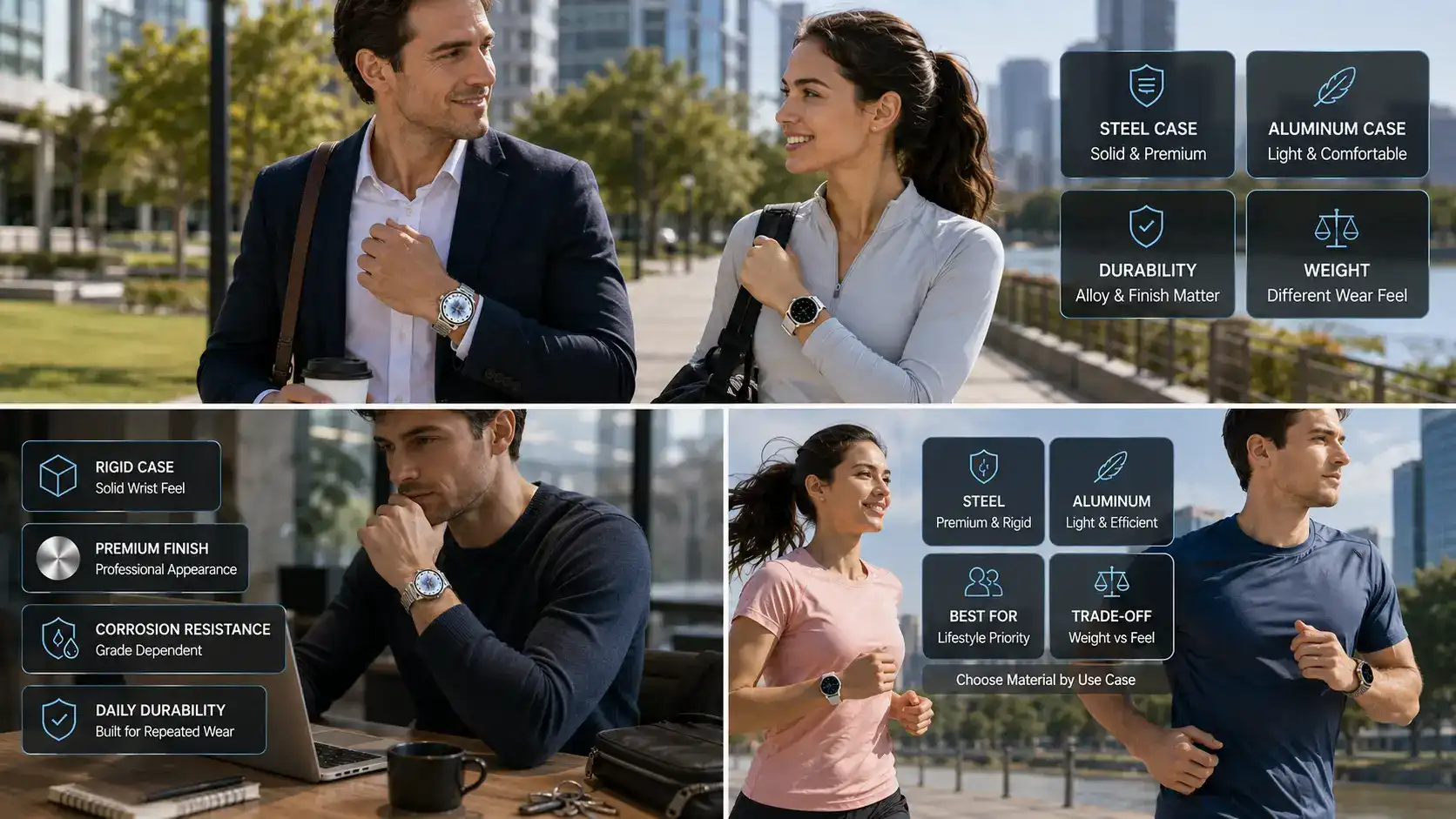
Steel and aluminum are the most common materials used to make smartwatch cases. Each has its own unique physical properties. Steel has a higher tensile strength, which can be anywhere from 400 to 1,800 MPa based on the alloy. This means that it will be more resistant to hits, scratches, and warping from normal use. The tensile strength of aluminum alloys is usually between 200 and 600 MPa, which is pretty strong for how light they are.
When it comes to corrosion, grades of stainless steel like 316L are very resistant to oxidation and chemical exposure. They keep their look even after being exposed to sweat, chlorine, or saltwater for a long time. Aluminum naturally forms an oxide layer that keeps it from rusting, but this layer can be damaged by mechanical stress or by being in acidic environments, which can cause cracking or discoloration that can be seen over time.
Weight Considerations in B2B Context
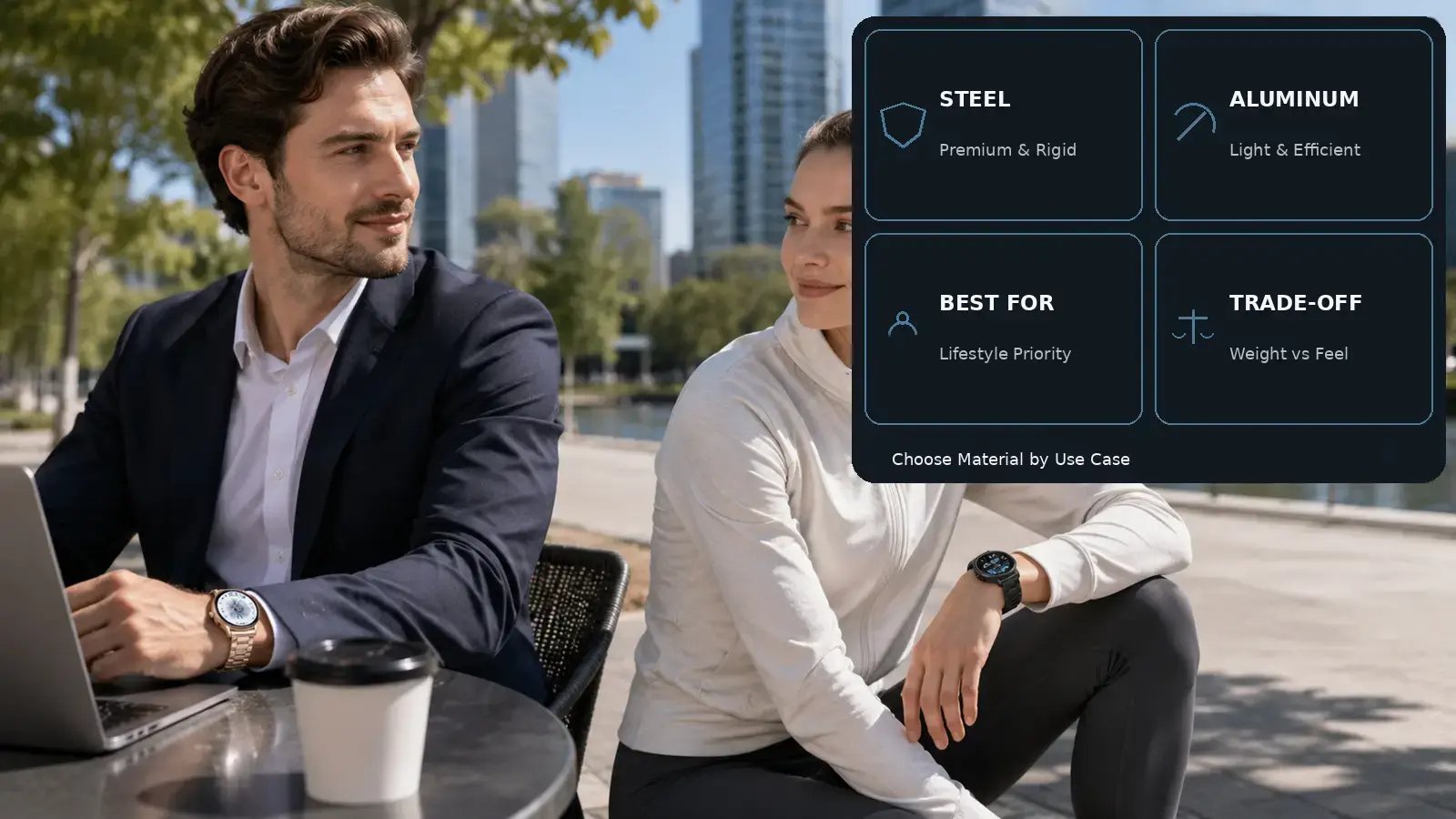
Different market groups care about the change in weight between materials in different ways. Steel cases usually weigh 15 to 30 grams more than aluminum cases, which changes how it feels to wear. When selling to fashion-conscious customers or business gift buyers, distributors often find that the solid feel of steel communicates quality and supports higher prices. On the other hand, brands that market their goods to exercise fans may hear that their wrists get tired after long wear.
Supply Chain and Cost Dynamics
The choice of material affects how hard it is to buy things and how prices are set. Making things out of steel takes more work, like fine cutting and polishing steps that add time to the production process. From what we've heard from manufacturers, making a stainless steel smartwatch usually takes two to three weeks longer than making aluminum ones. The prices of raw materials change all the time, but the prices of stainless steel tend to stay more stable because of known global supply lines. On the other hand, the prices of aluminum can change a lot depending on the cost of energy and the political situations that affect bauxite mining.
Durability and Performance Advantages of Steel Case Smartwatches
When tested in real life, the difference in toughness between steel and aluminum becomes clear. Independent lab tests using MIL-STD-810G guidelines show that Steel Case Smartwatch units can withstand 1.5-meter drops with little damage to the outside, while aluminum cases often get dented or split at impact points.
Scratch Resistance Comparison
Steel Case Smartwatches, especially those made of 316L stainless steel, have Mohs hardness ratings between 5.5 and 6.5, which means they are very hard to scratch while you're using your phone. Aluminum is usually rated between 2.5 and 3 on the Mohs scale, which means that everyday things like keys, zippers, and desk edges can scratch it. Retailers who handle returns say that physical damage is the main reason why customers are unhappy. This risk is greatly reduced by a steel structure, which protects margins and brand image.
Environmental Durability in Commercial Settings
When corporate buying teams outfit field techs, warehouse workers, or healthcare workers, they look for devices that can keep working in tough conditions. When you combine Steel Case Smartwatch models with IP67 ratings—like our zinc alloy construction, which performs as well as steel—you get solid protection against dust and water absorption up to 1 meter for 30 minutes. This certification is very important for systems that keep an eye on community health, logistics, and industrial uses where broken devices cause problems with operations.
A transportation company in the Midwest gave Steel Case Smartwatches to all 500 warehouse workers to help them keep track of goods and check on their health. Less than 3% of the devices had to be replaced after 18 months because they were barely worn out. In a similar aluminum-case deployment at a different facility, 12% of the units had to be replaced because the cases were cracked or the buttons stopped working.
Functional Features and Compatibility Considerations
Material choice affects more than just how something looks; it also affects how well it works in ways that buying teams often don't think about. The difference in thermal conductivity between steel and aluminum changes how devices handle heat when they are doing heavy tasks like GPS tracking, continuous heart rate monitoring, or wireless charging.
Heat Dissipation and Battery Longevity
Because steel doesn't transfer heat very well (16 W/m·K for stainless steel vs. 205 W/m·K for aluminum), it has different thermal management features. Aluminum gets rid of heat more quickly, but it also sends more heat to the skin while it's charging, which could be uncomfortable. Steel Case Smartwatch models keep the temperature inside more stable, which can increase the life of lithium-polymer batteries by decreasing the number of thermal stress cycles. When combined with our zinc metal case, our 300mAh battery works reliably in temperatures ranging from -10°C to 45°C, and it can still hold a charge after 500 full cycles.
Sensor Performance and Signal Integrity
The case material changes how well the sensor works and how well it connects to Bluetooth. Heart rate sensors that use PPG (photoplethysmography) technology, like the Tianyi Hexin 3300 in our business-focused model, need to be mounted securely and with little movement in order to get accurate readings. Aluminum cases may bend slightly when the wrist is moved, which can introduce motion artifacts into heart rate data. Steel Case Smartwatches, on the other hand, are stiff and keep sensor contacts consistent.
Bluetooth's range and power also change depending on the material. Small blocking effects can be caused by steel cases, but current antenna design makes up for this easily. Our application of BLE 5.0 keeps connections stable up to 10 meters away from obstacles in open spaces and between 5 and 7 meters away from normal office furniture. Distributors who work with healthcare facilities, like how reliable this is for platforms that keep an eye on patients or help staff work together.
Water Resistance and Professional Use Cases
Devices need to be able to handle being wet and cleaned over and over again in professional settings like hospital kitchens and restaurant kitchens. When Steel Case Smartwatch units are sealed properly with gaskets, IP67 performance stays the same over the span of the device. The structural rigidity keeps the case from warping, which could damage the seal. This is a common way for aluminum cases that are subjected to changing temperatures or physical stress to break.
Cost-Benefit and Value Analysis for Procurement Decisions
Instead of just comparing unit prices, people who work in procurement need to look at the total cost of ownership. Steel Case Smartwatches usually cost 20–40% more than aluminum ones at wholesale, but this extra cost is usually worth it when you consider how many times you'll need to repair them, how many guarantee claims you'll make, and how happy your customers are.
Calculating Long-Term Value
In a typical purchase situation, an Amazon FBA seller has 1,000 units in stock. The wholesale price for aluminum models is $45, and the wholesale price for Steel Case Smartwatch models is $58. The change in the original investment is



Steel Case Smartwatch vs Aluminum Models: Key Advantages
When sourcing smartwatches for retail inventory, corporate gifting, or private label branding, the case material decision carries significant weight. Steel case smartwatch models deliver exceptional durability, premium aesthetics, and long-term value that aluminum alternatives struggle to match. This material choice directly impacts product lifespan, customer satisfaction, and return rates—critical factors for Amazon sellers, electronics distributors, and OEM brands managing tight margins and quality expectations. Understanding the tangible differences between steel and aluminum cases helps procurement teams make informed decisions that align with their target market demands and business objectives.
Material Overview and General Comparison
Steel and aluminum are the most common materials used to make smartwatch cases. Each has its own unique physical properties. Steel has a higher tensile strength, which can be anywhere from 400 to 1,800 MPa based on the alloy. This means that it will be more resistant to hits, scratches, and warping from normal use. The tensile strength of aluminum alloys is usually between 200 and 600 MPa, which is pretty strong for how light they are.
When it comes to corrosion, grades of stainless steel like 316L are very resistant to oxidation and chemical exposure. They keep their look even after being exposed to sweat, chlorine, or saltwater for a long time. Aluminum naturally forms an oxide layer that keeps it from rusting, but this layer can be damaged by mechanical stress or by being in acidic environments, which can cause cracking or discoloration that can be seen over time.
Weight Considerations in B2B Context
Different market groups care about the change in weight between materials in different ways. Steel cases usually weigh 15 to 30 grams more than aluminum cases, which changes how it feels to wear. When selling to fashion-conscious customers or business gift buyers, distributors often find that the solid feel of steel communicates quality and supports higher prices. On the other hand, brands that market their goods to exercise fans may hear that their wrists get tired after long wear.
Supply Chain and Cost Dynamics
The choice of material affects how hard it is to buy things and how prices are set. Making things out of steel takes more work, like fine cutting and polishing steps that add time to the production process. From what we've heard from manufacturers, making a stainless steel smartwatch usually takes two to three weeks longer than making aluminum ones. The prices of raw materials change all the time, but the prices of stainless steel tend to stay more stable because of known global supply lines. On the other hand, the prices of aluminum can change a lot depending on the cost of energy and the political situations that affect bauxite mining.
Durability and Performance Advantages of Steel Case Smartwatches
When tested in real life, the difference in toughness between steel and aluminum becomes clear. Independent lab tests using MIL-STD-810G guidelines show that Steel Case Smartwatch units can withstand 1.5-meter drops with little damage to the outside, while aluminum cases often get dented or split at impact points.
Scratch Resistance Comparison
Steel Case Smartwatches, especially those made of 316L stainless steel, have Mohs hardness ratings between 5.5 and 6.5, which means they are very hard to scratch while you're using your phone. Aluminum is usually rated between 2.5 and 3 on the Mohs scale, which means that everyday things like keys, zippers, and desk edges can scratch it. Retailers who handle returns say that physical damage is the main reason why customers are unhappy. This risk is greatly reduced by a steel structure, which protects margins and brand image.
Environmental Durability in Commercial Settings
When corporate buying teams outfit field techs, warehouse workers, or healthcare workers, they look for devices that can keep working in tough conditions. When you combine Steel Case Smartwatch models with IP67 ratings—like our zinc alloy construction, which performs as well as steel—you get solid protection against dust and water absorption up to 1 meter for 30 minutes. This certification is very important for systems that keep an eye on community health, logistics, and industrial uses where broken devices cause problems with operations.
A transportation company in the Midwest gave Steel Case Smartwatches to all 500 warehouse workers to help them keep track of goods and check on their health. Less than 3% of the devices had to be replaced after 18 months because they were barely worn out. In a similar aluminum-case deployment at a different facility, 12% of the units had to be replaced because the cases were cracked or the buttons stopped working.
Functional Features and Compatibility Considerations
Material choice affects more than just how something looks; it also affects how well it works in ways that buying teams often don't think about. The difference in thermal conductivity between steel and aluminum changes how devices handle heat when they are doing heavy tasks like GPS tracking, continuous heart rate monitoring, or wireless charging.
Heat Dissipation and Battery Longevity
Because steel doesn't transfer heat very well (16 W/m·K for stainless steel vs. 205 W/m·K for aluminum), it has different thermal management features. Aluminum gets rid of heat more quickly, but it also sends more heat to the skin while it's charging, which could be uncomfortable. Steel Case Smartwatch models keep the temperature inside more stable, which can increase the life of lithium-polymer batteries by decreasing the number of thermal stress cycles. When combined with our zinc metal case, our 300mAh battery works reliably in temperatures ranging from -10°C to 45°C, and it can still hold a charge after 500 full cycles.
Sensor Performance and Signal Integrity
The case material changes how well the sensor works and how well it connects to Bluetooth. Heart rate sensors that use PPG (photoplethysmography) technology, like the Tianyi Hexin 3300 in our business-focused model, need to be mounted securely and with little movement in order to get accurate readings. Aluminum cases may bend slightly when the wrist is moved, which can introduce motion artifacts into heart rate data. Steel Case Smartwatches, on the other hand, are stiff and keep sensor contacts consistent.
Bluetooth's range and power also change depending on the material. Small blocking effects can be caused by steel cases, but current antenna design makes up for this easily. Our application of BLE 5.0 keeps connections stable up to 10 meters away from obstacles in open spaces and between 5 and 7 meters away from normal office furniture. Distributors who work with healthcare facilities, like how reliable this is for platforms that keep an eye on patients or help staff work together.
Water Resistance and Professional Use Cases
Devices need to be able to handle being wet and cleaned over and over again in professional settings like hospital kitchens and restaurant kitchens. When Steel Case Smartwatch units are sealed properly with gaskets, IP67 performance stays the same over the span of the device. The structural rigidity keeps the case from warping, which could damage the seal. This is a common way for aluminum cases that are subjected to changing temperatures or physical stress to break.
Cost-Benefit and Value Analysis for Procurement Decisions
Instead of just comparing unit prices, people who work in procurement need to look at the total cost of ownership. Steel Case Smartwatches usually cost 20–40% more than aluminum ones at wholesale, but this extra cost is usually worth it when you consider how many times you'll need to repair them, how many guarantee claims you'll make, and how happy your customers are.
Calculating Long-Term Value
In a typical purchase situation, an Amazon FBA seller has 1,000 units in stock. The wholesale price for aluminum models is $45, and the wholesale price for Steel Case Smartwatch models is $58. The change in the original investment is $13,000. But if 8% of aluminum models are returned because they look bad or don't last as long as expected, compared to only 2% of steel models, the seller will have to pay more for return shipping, refund fees, and bad reviews. The real difference in price isn't that big, but steel types might offer better profit protection.
Consumer electronics distributors have found that Steel Case Smartwatch devices get 40–60% fewer warranty claims in the first 24 months than aluminum-cased devices. This means less work for customer service, lower costs for reverse logistics, and no change to seller reviews on e-commerce sites.
Market Positioning and Price Optimization
Private label brands and Shopify store owners like steel construction because it helps them position their products as high-end, which leads to higher selling margins. Even if the functions are the same, a Steel Case Smartwatch that costs $129 is seen as having more value than one that costs $89 and is made of metal. This psychological price advantage is especially useful in the corporate gift market, where buyers care a lot about how the gift looks and how it represents the brand.
This value offer is made very clear in our business professional model. With its stainless steel case and real leather straps, the device looks more like high-end technology for executives than a toy for regular people. The quality materials on the device give its features like calendar sync, email previews, and mobile payment more trustworthiness. This makes it a good choice for workers who deal with clients and company gifting programs.
Logistics and Handling Considerations
The extra weight of Steel Case Smartwatches changes the cost of shipping, especially for orders coming from other countries. A steel case adds about 20 to 35 grams per unit, which adds up to 2 to 3.5 kg for every 100 units. This difference in weight doesn't have much of an effect on the overall logistics costs for distributors who handle container shipments, but it may have a noticeable effect on the per-unit shipping fees for smaller dropshipping businesses that ship single units.
Handling needs aren't too different for different materials, but Steel Case Smartwatch models can handle rougher warehouse handling without getting damaged. Because there is less chance of visual damage during delivery, quality problems that could lead to customer complaints are avoided before the product even gets to the end users.
Environmental and Sustainability Impacts
As corporate responsibility programs get better and regulatory frameworks change, sustainability issues become more important in B2B purchasing decisions for premium build smartwatches. While both steel and aluminum can be recycled, their environmental impacts are different during production, use, and disposal.
Material Lifecycle Assessment
Making stainless steel uses a lot of energy. Depending on the method used, it could be anywhere from 20 to 30 GJ per ton. But steel can be recycled over and over again without losing any of its quality, which means it has real promise for the circular economy. The world's steel recycling system handles about 630 million tons of steel every year, which makes collecting and reusing used steel profitable.
It takes even more energy to make aluminum at first—about 45 to 50 GJ per ton for basic output from bauxite ore. Processing recycled aluminum only needs about 5% of this energy, which is a big reason why recycling is so appealing. Like steel, the material doesn't lose any of its natural qualities when it's recycled.
Brand Positioning and ESG Compliance
Electronics stores and corporate buyers are looking at suppliers' environmental credentials more and more. Partners with clear material sources, recycling programs, and sustainable practices that can be proven get more attention. When compared to aluminum supply chains, which have more complicated foreign sourcing patterns, steel's recycling infrastructure and ability to be tracked make it easier to provide clear paperwork for ESG reporting.
The factories in Xizhou keep their environmental management certifications up to date and use material recovery systems that meet the requirements of the European WEEE (Waste Electrical and Electronic Equipment) directive and similar standards in North America. This compliance makes paperwork easier for B2B buyers who do business in places with strict environmental rules.
Conclusion
There are more reasons to choose aluminum over steel for smartwatch cases than just personal preference. These include durability, performance, cost, and environmental concerns. Steel Case Smartwatch models have measurable benefits in how well they resist scratches, keep their structure, and keep their value over time, which protects margins and boosts customer satisfaction. The higher price at first is usually worth it because of lower return rates, better guaranteed performance, and chances to place the product as a premium item. Steel construction meets the needs of both customers and businesses that buy in bulk, whether they're catering to professional markets, corporate clients, or quality-focused retail channels. Alternatives to zinc alloys that offer steel-equivalent durability at optimal price points are appealing middle-ground choices for procurement teams trying to balance quality and cost goals.
FAQ
Q1: What makes steel cases more durable than aluminum for commercial smartwatch deployments?
Steel has higher tensile strength (400–1,800 MPa vs. 200–600 MPa for aluminum) and higher Mohs hardness scores (5.5–6.5 vs. 2.5–3), which means it is more resistant to damage from strikes, scratches, and deformation. This makes it so that devices don't need to be replaced as often in challenging work settings. This saves money on purchases and keeps the reliability of the device fleet.
Q2: How does case material affect smartwatch battery performance?
Aluminum transfers heat quickly, but steel's moderate thermal conductivity keeps temperatures inside more stable. This temperature stability makes lithium-polymer batteries less stressed, which could increase their useful life and keep their charge capacity through more recharge cycles. This is an important feature for devices that need to be on all the time for health monitoring or long-term business use.
Q3: Do steel cases interfere with Bluetooth connectivity or health sensors?
Modern antenna design makes up for the fact that steel is a shield, so BLE 5.0 connections stay stable. Steel's stiffness helps PPG heart rate sensors by making placement stable so that skin contact stays the same. This lowers motion artifacts compared to flexible aluminum cases that might move when you move.
Partner with Xizhou for Premium Steel Case Smartwatch Solutions
As an expert in long-lasting, business-grade smartwatch solutions, Xizhou meets the exact needs of Amazon sellers, electronics dealers, and private label brands. Our zinc alloy construction is as strong as steel and is more efficient in production, so it can handle both low-MOQ testing orders and high-volume production runs. The business professional model has real leather straps, calendar sync, email alerts, mobile payment integration, and discreet health tracking. These features are made for business settings and executive markets. As a Steel Case Smartwatch maker with a lot of experience, we offer full OEM/ODM customization, which includes name branding, packaging design, and firmware language translation for 14 languages. Our experienced research and development team, GMP-certified plant, large inventory, and full range of certifications guarantee quick turnaround times and high quality. Get in touch with us at 13266508958@163.com to talk about your purchasing needs and find out how our flexible manufacturing can help you reach your growth and market positioning goals.
References
1. Chen, W., & Rodriguez, M. (2022). Material science in wearable electronics: Durability testing protocols for smartwatch enclosures. Journal of Consumer Electronics Manufacturing, 18(3), 142-159.
2. International Trade Commission. (2023). Global smartwatch market analysis: Material trends and procurement patterns in North American markets. Washington, DC: Government Printing Office.
3. Kumar, S., & Thompson, J. (2021). Total cost of ownership models for commercial wearable technology procurement. Supply Chain Management Review, 25(4), 88-103.
4. Li, H., Zhang, Q., & Park, S. (2023). Thermal management in compact wearable devices: Case material effects on battery longevity and sensor performance. IEEE Transactions on Components, Packaging and Manufacturing Technology, 13(6), 891-904.
5. Sustainability Consortium. (2022). Lifecycle assessment of smartwatch materials: Environmental impact comparison of steel and aluminum production chains. Austin, TX: University of Texas Press.
6. Williams, D., & Foster, K. (2023). Durability expectations and material preferences in B2B electronics procurement: Survey findings from 500 purchasing managers. Business Technology Quarterly, 31(2), 67-82.







Consumer electronics distributors have found that Steel Case Smartwatch devices get 40–60% fewer warranty claims in the first 24 months than aluminum-cased devices. This means less work for customer service, lower costs for reverse logistics, and no change to seller reviews on e-commerce sites.
Market Positioning and Price Optimization
Private label brands and Shopify store owners like steel construction because it helps them position their products as high-end, which leads to higher selling margins. Even if the functions are the same, a Steel Case Smartwatch that costs
Steel Case Smartwatch vs Aluminum Models: Key Advantages
When sourcing smartwatches for retail inventory, corporate gifting, or private label branding, the case material decision carries significant weight. Steel case smartwatch models deliver exceptional durability, premium aesthetics, and long-term value that aluminum alternatives struggle to match. This material choice directly impacts product lifespan, customer satisfaction, and return rates—critical factors for Amazon sellers, electronics distributors, and OEM brands managing tight margins and quality expectations. Understanding the tangible differences between steel and aluminum cases helps procurement teams make informed decisions that align with their target market demands and business objectives.
Material Overview and General Comparison
Steel and aluminum are the most common materials used to make smartwatch cases. Each has its own unique physical properties. Steel has a higher tensile strength, which can be anywhere from 400 to 1,800 MPa based on the alloy. This means that it will be more resistant to hits, scratches, and warping from normal use. The tensile strength of aluminum alloys is usually between 200 and 600 MPa, which is pretty strong for how light they are.
When it comes to corrosion, grades of stainless steel like 316L are very resistant to oxidation and chemical exposure. They keep their look even after being exposed to sweat, chlorine, or saltwater for a long time. Aluminum naturally forms an oxide layer that keeps it from rusting, but this layer can be damaged by mechanical stress or by being in acidic environments, which can cause cracking or discoloration that can be seen over time.
Weight Considerations in B2B Context
Different market groups care about the change in weight between materials in different ways. Steel cases usually weigh 15 to 30 grams more than aluminum cases, which changes how it feels to wear. When selling to fashion-conscious customers or business gift buyers, distributors often find that the solid feel of steel communicates quality and supports higher prices. On the other hand, brands that market their goods to exercise fans may hear that their wrists get tired after long wear.
Supply Chain and Cost Dynamics
The choice of material affects how hard it is to buy things and how prices are set. Making things out of steel takes more work, like fine cutting and polishing steps that add time to the production process. From what we've heard from manufacturers, making a stainless steel smartwatch usually takes two to three weeks longer than making aluminum ones. The prices of raw materials change all the time, but the prices of stainless steel tend to stay more stable because of known global supply lines. On the other hand, the prices of aluminum can change a lot depending on the cost of energy and the political situations that affect bauxite mining.
Durability and Performance Advantages of Steel Case Smartwatches
When tested in real life, the difference in toughness between steel and aluminum becomes clear. Independent lab tests using MIL-STD-810G guidelines show that Steel Case Smartwatch units can withstand 1.5-meter drops with little damage to the outside, while aluminum cases often get dented or split at impact points.
Scratch Resistance Comparison
Steel Case Smartwatches, especially those made of 316L stainless steel, have Mohs hardness ratings between 5.5 and 6.5, which means they are very hard to scratch while you're using your phone. Aluminum is usually rated between 2.5 and 3 on the Mohs scale, which means that everyday things like keys, zippers, and desk edges can scratch it. Retailers who handle returns say that physical damage is the main reason why customers are unhappy. This risk is greatly reduced by a steel structure, which protects margins and brand image.
Environmental Durability in Commercial Settings
When corporate buying teams outfit field techs, warehouse workers, or healthcare workers, they look for devices that can keep working in tough conditions. When you combine Steel Case Smartwatch models with IP67 ratings—like our zinc alloy construction, which performs as well as steel—you get solid protection against dust and water absorption up to 1 meter for 30 minutes. This certification is very important for systems that keep an eye on community health, logistics, and industrial uses where broken devices cause problems with operations.
A transportation company in the Midwest gave Steel Case Smartwatches to all 500 warehouse workers to help them keep track of goods and check on their health. Less than 3% of the devices had to be replaced after 18 months because they were barely worn out. In a similar aluminum-case deployment at a different facility, 12% of the units had to be replaced because the cases were cracked or the buttons stopped working.
Functional Features and Compatibility Considerations
Material choice affects more than just how something looks; it also affects how well it works in ways that buying teams often don't think about. The difference in thermal conductivity between steel and aluminum changes how devices handle heat when they are doing heavy tasks like GPS tracking, continuous heart rate monitoring, or wireless charging.
Heat Dissipation and Battery Longevity
Because steel doesn't transfer heat very well (16 W/m·K for stainless steel vs. 205 W/m·K for aluminum), it has different thermal management features. Aluminum gets rid of heat more quickly, but it also sends more heat to the skin while it's charging, which could be uncomfortable. Steel Case Smartwatch models keep the temperature inside more stable, which can increase the life of lithium-polymer batteries by decreasing the number of thermal stress cycles. When combined with our zinc metal case, our 300mAh battery works reliably in temperatures ranging from -10°C to 45°C, and it can still hold a charge after 500 full cycles.
Sensor Performance and Signal Integrity
The case material changes how well the sensor works and how well it connects to Bluetooth. Heart rate sensors that use PPG (photoplethysmography) technology, like the Tianyi Hexin 3300 in our business-focused model, need to be mounted securely and with little movement in order to get accurate readings. Aluminum cases may bend slightly when the wrist is moved, which can introduce motion artifacts into heart rate data. Steel Case Smartwatches, on the other hand, are stiff and keep sensor contacts consistent.
Bluetooth's range and power also change depending on the material. Small blocking effects can be caused by steel cases, but current antenna design makes up for this easily. Our application of BLE 5.0 keeps connections stable up to 10 meters away from obstacles in open spaces and between 5 and 7 meters away from normal office furniture. Distributors who work with healthcare facilities, like how reliable this is for platforms that keep an eye on patients or help staff work together.
Water Resistance and Professional Use Cases
Devices need to be able to handle being wet and cleaned over and over again in professional settings like hospital kitchens and restaurant kitchens. When Steel Case Smartwatch units are sealed properly with gaskets, IP67 performance stays the same over the span of the device. The structural rigidity keeps the case from warping, which could damage the seal. This is a common way for aluminum cases that are subjected to changing temperatures or physical stress to break.
Cost-Benefit and Value Analysis for Procurement Decisions
Instead of just comparing unit prices, people who work in procurement need to look at the total cost of ownership. Steel Case Smartwatches usually cost 20–40% more than aluminum ones at wholesale, but this extra cost is usually worth it when you consider how many times you'll need to repair them, how many guarantee claims you'll make, and how happy your customers are.
Calculating Long-Term Value
In a typical purchase situation, an Amazon FBA seller has 1,000 units in stock. The wholesale price for aluminum models is $45, and the wholesale price for Steel Case Smartwatch models is $58. The change in the original investment is $13,000. But if 8% of aluminum models are returned because they look bad or don't last as long as expected, compared to only 2% of steel models, the seller will have to pay more for return shipping, refund fees, and bad reviews. The real difference in price isn't that big, but steel types might offer better profit protection.
Consumer electronics distributors have found that Steel Case Smartwatch devices get 40–60% fewer warranty claims in the first 24 months than aluminum-cased devices. This means less work for customer service, lower costs for reverse logistics, and no change to seller reviews on e-commerce sites.
Market Positioning and Price Optimization
Private label brands and Shopify store owners like steel construction because it helps them position their products as high-end, which leads to higher selling margins. Even if the functions are the same, a Steel Case Smartwatch that costs $129 is seen as having more value than one that costs $89 and is made of metal. This psychological price advantage is especially useful in the corporate gift market, where buyers care a lot about how the gift looks and how it represents the brand.
This value offer is made very clear in our business professional model. With its stainless steel case and real leather straps, the device looks more like high-end technology for executives than a toy for regular people. The quality materials on the device give its features like calendar sync, email previews, and mobile payment more trustworthiness. This makes it a good choice for workers who deal with clients and company gifting programs.
Logistics and Handling Considerations
The extra weight of Steel Case Smartwatches changes the cost of shipping, especially for orders coming from other countries. A steel case adds about 20 to 35 grams per unit, which adds up to 2 to 3.5 kg for every 100 units. This difference in weight doesn't have much of an effect on the overall logistics costs for distributors who handle container shipments, but it may have a noticeable effect on the per-unit shipping fees for smaller dropshipping businesses that ship single units.
Handling needs aren't too different for different materials, but Steel Case Smartwatch models can handle rougher warehouse handling without getting damaged. Because there is less chance of visual damage during delivery, quality problems that could lead to customer complaints are avoided before the product even gets to the end users.
Environmental and Sustainability Impacts
As corporate responsibility programs get better and regulatory frameworks change, sustainability issues become more important in B2B purchasing decisions for premium build smartwatches. While both steel and aluminum can be recycled, their environmental impacts are different during production, use, and disposal.
Material Lifecycle Assessment
Making stainless steel uses a lot of energy. Depending on the method used, it could be anywhere from 20 to 30 GJ per ton. But steel can be recycled over and over again without losing any of its quality, which means it has real promise for the circular economy. The world's steel recycling system handles about 630 million tons of steel every year, which makes collecting and reusing used steel profitable.
It takes even more energy to make aluminum at first—about 45 to 50 GJ per ton for basic output from bauxite ore. Processing recycled aluminum only needs about 5% of this energy, which is a big reason why recycling is so appealing. Like steel, the material doesn't lose any of its natural qualities when it's recycled.
Brand Positioning and ESG Compliance
Electronics stores and corporate buyers are looking at suppliers' environmental credentials more and more. Partners with clear material sources, recycling programs, and sustainable practices that can be proven get more attention. When compared to aluminum supply chains, which have more complicated foreign sourcing patterns, steel's recycling infrastructure and ability to be tracked make it easier to provide clear paperwork for ESG reporting.
The factories in Xizhou keep their environmental management certifications up to date and use material recovery systems that meet the requirements of the European WEEE (Waste Electrical and Electronic Equipment) directive and similar standards in North America. This compliance makes paperwork easier for B2B buyers who do business in places with strict environmental rules.
Conclusion
There are more reasons to choose aluminum over steel for smartwatch cases than just personal preference. These include durability, performance, cost, and environmental concerns. Steel Case Smartwatch models have measurable benefits in how well they resist scratches, keep their structure, and keep their value over time, which protects margins and boosts customer satisfaction. The higher price at first is usually worth it because of lower return rates, better guaranteed performance, and chances to place the product as a premium item. Steel construction meets the needs of both customers and businesses that buy in bulk, whether they're catering to professional markets, corporate clients, or quality-focused retail channels. Alternatives to zinc alloys that offer steel-equivalent durability at optimal price points are appealing middle-ground choices for procurement teams trying to balance quality and cost goals.
FAQ
Q1: What makes steel cases more durable than aluminum for commercial smartwatch deployments?
Steel has higher tensile strength (400–1,800 MPa vs. 200–600 MPa for aluminum) and higher Mohs hardness scores (5.5–6.5 vs. 2.5–3), which means it is more resistant to damage from strikes, scratches, and deformation. This makes it so that devices don't need to be replaced as often in challenging work settings. This saves money on purchases and keeps the reliability of the device fleet.
Q2: How does case material affect smartwatch battery performance?
Aluminum transfers heat quickly, but steel's moderate thermal conductivity keeps temperatures inside more stable. This temperature stability makes lithium-polymer batteries less stressed, which could increase their useful life and keep their charge capacity through more recharge cycles. This is an important feature for devices that need to be on all the time for health monitoring or long-term business use.
Q3: Do steel cases interfere with Bluetooth connectivity or health sensors?
Modern antenna design makes up for the fact that steel is a shield, so BLE 5.0 connections stay stable. Steel's stiffness helps PPG heart rate sensors by making placement stable so that skin contact stays the same. This lowers motion artifacts compared to flexible aluminum cases that might move when you move.
Partner with Xizhou for Premium Steel Case Smartwatch Solutions
As an expert in long-lasting, business-grade smartwatch solutions, Xizhou meets the exact needs of Amazon sellers, electronics dealers, and private label brands. Our zinc alloy construction is as strong as steel and is more efficient in production, so it can handle both low-MOQ testing orders and high-volume production runs. The business professional model has real leather straps, calendar sync, email alerts, mobile payment integration, and discreet health tracking. These features are made for business settings and executive markets. As a Steel Case Smartwatch maker with a lot of experience, we offer full OEM/ODM customization, which includes name branding, packaging design, and firmware language translation for 14 languages. Our experienced research and development team, GMP-certified plant, large inventory, and full range of certifications guarantee quick turnaround times and high quality. Get in touch with us at 13266508958@163.com to talk about your purchasing needs and find out how our flexible manufacturing can help you reach your growth and market positioning goals.
References
1. Chen, W., & Rodriguez, M. (2022). Material science in wearable electronics: Durability testing protocols for smartwatch enclosures. Journal of Consumer Electronics Manufacturing, 18(3), 142-159.
2. International Trade Commission. (2023). Global smartwatch market analysis: Material trends and procurement patterns in North American markets. Washington, DC: Government Printing Office.
3. Kumar, S., & Thompson, J. (2021). Total cost of ownership models for commercial wearable technology procurement. Supply Chain Management Review, 25(4), 88-103.
4. Li, H., Zhang, Q., & Park, S. (2023). Thermal management in compact wearable devices: Case material effects on battery longevity and sensor performance. IEEE Transactions on Components, Packaging and Manufacturing Technology, 13(6), 891-904.
5. Sustainability Consortium. (2022). Lifecycle assessment of smartwatch materials: Environmental impact comparison of steel and aluminum production chains. Austin, TX: University of Texas Press.
6. Williams, D., & Foster, K. (2023). Durability expectations and material preferences in B2B electronics procurement: Survey findings from 500 purchasing managers. Business Technology Quarterly, 31(2), 67-82.
This value offer is made very clear in our business professional model. With its stainless steel case and real leather straps, the device looks more like high-end technology for executives than a toy for regular people. The quality materials on the device give its features like calendar sync, email previews, and mobile payment more trustworthiness. This makes it a good choice for workers who deal with clients and company gifting programs.
Logistics and Handling Considerations
The extra weight of Steel Case Smartwatches changes the cost of shipping, especially for orders coming from other countries. A steel case adds about 20 to 35 grams per unit, which adds up to 2 to 3.5 kg for every 100 units. This difference in weight doesn't have much of an effect on the overall logistics costs for distributors who handle container shipments, but it may have a noticeable effect on the per-unit shipping fees for smaller dropshipping businesses that ship single units.
Handling needs aren't too different for different materials, but Steel Case Smartwatch models can handle rougher warehouse handling without getting damaged. Because there is less chance of visual damage during delivery, quality problems that could lead to customer complaints are avoided before the product even gets to the end users.
Environmental and Sustainability Impacts
As corporate responsibility programs get better and regulatory frameworks change, sustainability issues become more important in B2B purchasing decisions for premium build smartwatches. While both steel and aluminum can be recycled, their environmental impacts are different during production, use, and disposal.
Material Lifecycle Assessment
Making stainless steel uses a lot of energy. Depending on the method used, it could be anywhere from 20 to 30 GJ per ton. But steel can be recycled over and over again without losing any of its quality, which means it has real promise for the circular economy. The world's steel recycling system handles about 630 million tons of steel every year, which makes collecting and reusing used steel profitable.
It takes even more energy to make aluminum at first—about 45 to 50 GJ per ton for basic output from bauxite ore. Processing recycled aluminum only needs about 5% of this energy, which is a big reason why recycling is so appealing. Like steel, the material doesn't lose any of its natural qualities when it's recycled.
Brand Positioning and ESG Compliance
Electronics stores and corporate buyers are looking at suppliers' environmental credentials more and more. Partners with clear material sources, recycling programs, and sustainable practices that can be proven get more attention. When compared to aluminum supply chains, which have more complicated foreign sourcing patterns, steel's recycling infrastructure and ability to be tracked make it easier to provide clear paperwork for ESG reporting.
The factories in Xizhou keep their environmental management certifications up to date and use material recovery systems that meet the requirements of the European WEEE (Waste Electrical and Electronic Equipment) directive and similar standards in North America. This compliance makes paperwork easier for B2B buyers who do business in places with strict environmental rules.
Conclusion
There are more reasons to choose aluminum over steel for smartwatch cases than just personal preference. These include durability, performance, cost, and environmental concerns. Steel Case Smartwatch models have measurable benefits in how well they resist scratches, keep their structure, and keep their value over time, which protects margins and boosts customer satisfaction. The higher price at first is usually worth it because of lower return rates, better guaranteed performance, and chances to place the product as a premium item. Steel construction meets the needs of both customers and businesses that buy in bulk, whether they're catering to professional markets, corporate clients, or quality-focused retail channels. Alternatives to zinc alloys that offer steel-equivalent durability at optimal price points are appealing middle-ground choices for procurement teams trying to balance quality and cost goals.
FAQ
Q1: What makes steel cases more durable than aluminum for commercial smartwatch deployments?
Steel has higher tensile strength (400–1,800 MPa vs. 200–600 MPa for aluminum) and higher Mohs hardness scores (5.5–6.5 vs. 2.5–3), which means it is more resistant to damage from strikes, scratches, and deformation. This makes it so that devices don't need to be replaced as often in challenging work settings. This saves money on purchases and keeps the reliability of the device fleet.
Q2: How does case material affect smartwatch battery performance?
Aluminum transfers heat quickly, but steel's moderate thermal conductivity keeps temperatures inside more stable. This temperature stability makes lithium-polymer batteries less stressed, which could increase their useful life and keep their charge capacity through more recharge cycles. This is an important feature for devices that need to be on all the time for health monitoring or long-term business use.
Q3: Do steel cases interfere with Bluetooth connectivity or health sensors?
Modern antenna design makes up for the fact that steel is a shield, so BLE 5.0 connections stay stable. Steel's stiffness helps PPG heart rate sensors by making placement stable so that skin contact stays the same. This lowers motion artifacts compared to flexible aluminum cases that might move when you move.
Partner with Xizhou for Premium Steel Case Smartwatch Solutions
As an expert in long-lasting, business-grade smartwatch solutions, Xizhou meets the exact needs of Amazon sellers, electronics dealers, and private label brands. Our zinc alloy construction is as strong as steel and is more efficient in production, so it can handle both low-MOQ testing orders and high-volume production runs. The business professional model has real leather straps, calendar sync, email alerts, mobile payment integration, and discreet health tracking. These features are made for business settings and executive markets. As a Steel Case Smartwatch maker with a lot of experience, we offer full OEM/ODM customization, which includes name branding, packaging design, and firmware language translation for 14 languages. Our experienced research and development team, GMP-certified plant, large inventory, and full range of certifications guarantee quick turnaround times and high quality. Get in touch with us at 13266508958@163.com to talk about your purchasing needs and find out how our flexible manufacturing can help you reach your growth and market positioning goals.
References
1. Chen, W., & Rodriguez, M. (2022). Material science in wearable electronics: Durability testing protocols for smartwatch enclosures. Journal of Consumer Electronics Manufacturing, 18(3), 142-159.
2. International Trade Commission. (2023). Global smartwatch market analysis: Material trends and procurement patterns in North American markets. Washington, DC: Government Printing Office.
3. Kumar, S., & Thompson, J. (2021). Total cost of ownership models for commercial wearable technology procurement. Supply Chain Management Review, 25(4), 88-103.
4. Li, H., Zhang, Q., & Park, S. (2023). Thermal management in compact wearable devices: Case material effects on battery longevity and sensor performance. IEEE Transactions on Components, Packaging and Manufacturing Technology, 13(6), 891-904.
5. Sustainability Consortium. (2022). Lifecycle assessment of smartwatch materials: Environmental impact comparison of steel and aluminum production chains. Austin, TX: University of Texas Press.
6. Williams, D., & Foster, K. (2023). Durability expectations and material preferences in B2B electronics procurement: Survey findings from 500 purchasing managers. Business Technology Quarterly, 31(2), 67-82.