

How to Maintain a Women’s Metal Health Smartwatch Long Term
Maintaining a Women's Metal Health Smartwatch long-term requires addressing several technical and environmental challenges that directly impact both device longevity and customer satisfaction. These specialized wearables combine sophisticated health sensors with durable metal construction, making proper care essential for preserving functionality. Battery degradation, sensor accuracy drift, physical wear on metal surfaces, and software inconsistencies are common concerns that affect product reliability. Understanding effective maintenance practices helps Amazon sellers, distributors, and private label brands minimize return rates while building lasting customer trust through consistently performing products.
Understanding the Core Challenges in Maintaining Women's Metal Health Smartwatches
When it comes to maintenance, smart wearables made just for women's metal health smartwatch tracking need different care than regular fitness trackers. The sleek metal body of these devices makes them look good in both work and relaxed settings, but it also needs special care.
Battery Degradation and Power Management Issues
For long-term smartwatch use, battery life is the most important thing to consider. Under normal conditions, most Women’s Metal Health Smartwatches with AMOLED screens and continuous monitoring can last for 5 to 10 days on a single charge. Lithium-ion batteries naturally lose power over time due to repeated charges, exposure to the environment, and changes in temperature. If you're selling these devices through Amazon FBA or Shopify, knowing how long the batteries last helps you set fair standards for your customers and cut down on the bad reviews that come from performance dropping.
Even though magnetic charging systems are convenient, they need to be handled carefully to keep working at their best. When dust or wetness builds up on the charging contacts, it creates resistance that slows down charging and generates too much heat, which speeds up the battery's breakdown. When buying from original equipment manufacturers (OEMs), sellers should make sure that the charging devices meet quality standards. For example, bad magnetic chargers can cause batteries to die early, which is a common reason for warranty claims in the wholesale electronics market.
Sensor Accuracy and Calibration Concerns
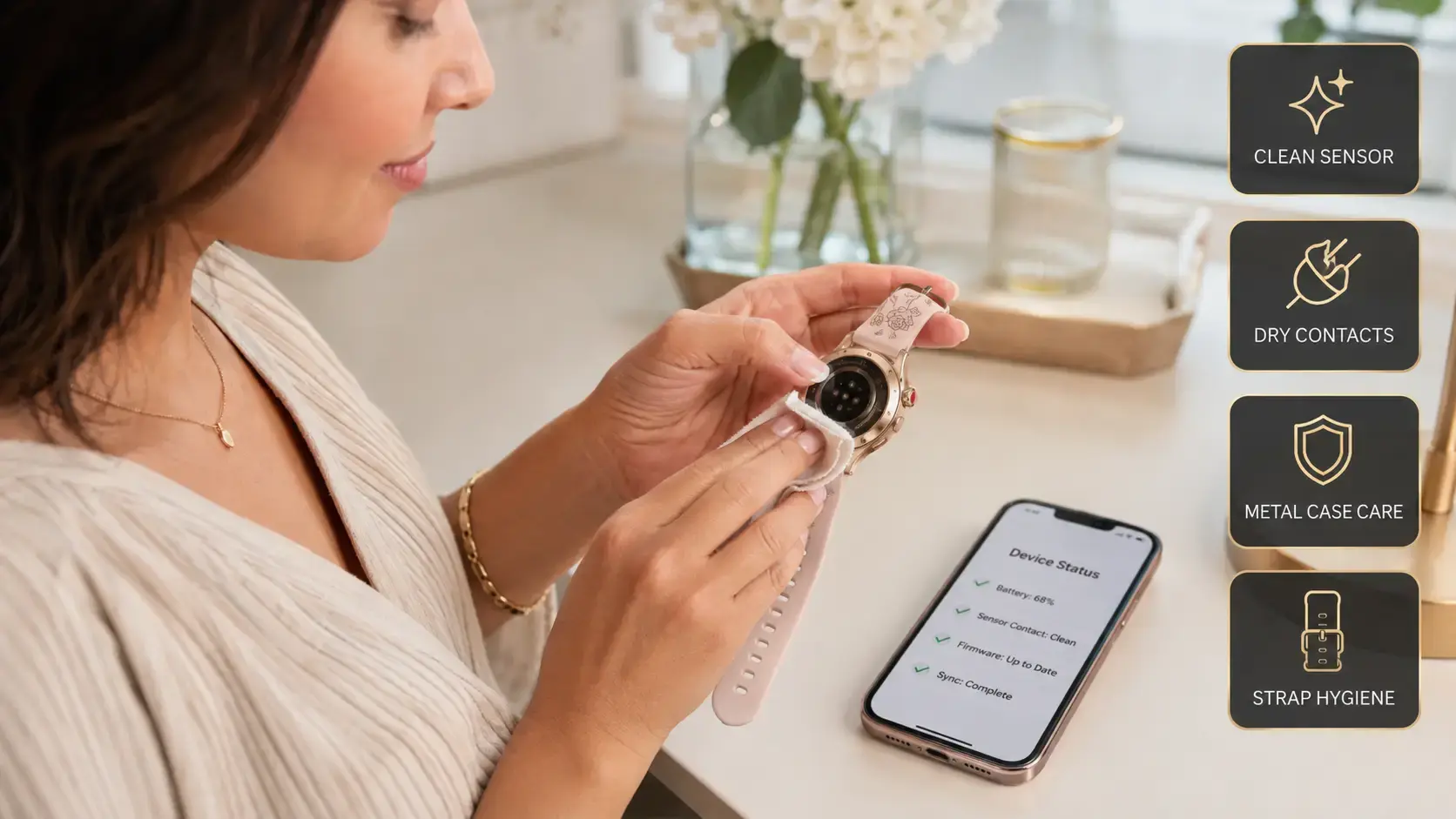
Accuracy in health monitoring is what makes Women’s Metal Health Smartwatches so valuable. Heart rate sensors, SpO2 monitors, and devices that track your monthly cycle depend on sensors that work properly all the time. Over weeks of continuous use, dirt, skin oils, and makeup residues can build up on the sensor windows on the back of the device, making readings less accurate.
The 320x240 AMOLED screen shows real-time health data, but the sensors will move over time if they aren't calibrated regularly. Sensor accuracy is slowly lost due to changes in temperature, exposure to humidity, and electromagnetic interference from other gadgets. Retail partners should be taught by distributors who handle large amounts of goods how important it is to keep firmware updated. These updates often include sensor recalibration methods that make measurements accurate again. This information is especially useful for corporate wellness programs or people who buy promotional items and use devices for more than one person.
Physical Wear on Metal Casings and Components
Plastic options aren't as durable as metal ones, but if you take care of your metal items, you can keep them looking good and keep their value. To keep the metal surface from scratching or rusting, it needs to be cleaned in a certain way. Even though silicone straps are nice and don't get wet, sweat, dust, and bacteria can get stuck in the buckle mechanism and cause skin irritations that make customers complain.
IP68 water resistance shields against dust and everyday splashes, but cleaning chemicals or long-term immersion can damage sealing seals, especially in a mental health smartwatch used throughout the day. Amazon sellers often get returns for items that got wet, which is usually because customers don't understand how limited water protection can be. Clearly stating the difference between splash protection and swimming ability in product descriptions helps keep customers happy and lowers the number of returns, both of which are important for keeping seller accounts in good shape.
Software Glitches and Update Management
Devices have problems with operating system compatibility as they get older, especially iOS devices that get updates all the time. The 44–49mm screen size and easy-to-use interface depend on stable software performance. However, old firmware causes issues with synchronization, delays in notifications, and app crashes. When cross-border e-commerce brands buy private-label smartwatches, they need to make sure that manufacturers follow clear update methods so that the software will work for a long time.
Here are the main software maintenance problems that shorten the life of devices:
- Firmware compatibility gaps: New versions of iOS may cause connectivity problems that need manufacturer updates that aren't always available right away from low-cost OEM suppliers.
- App environment degradation: Over time, third-party health tracking apps stop supporting older device types, which makes them less useful.
- Security holes: Devices that haven't been updated can have their data stolen, which is especially bad for women's health data that includes tracking their periods and pregnancy.
- Feature obsolescence: Changes give newer devices better tracking features while older models stay the same.
These problems with software have a direct effect on keeping customers and building the brand's image. TikTok Shop sellers and Shopify brands need to work with suppliers that offer strong technical support after the sale to deal with these issues before they become problems. Otherwise, they will have to deal with unhappy customers after the fact.
Key Principles for Effective Long-Term Maintenance
Systematic maintenance practices make Women’s Metal Health Smartwatches last longer while keeping the accuracy of health tracking that customers depend on every day. These rules are useful whether you're keeping track of your own inventory or planning large-scale business health initiatives.
Proper Daily Handling and Cleaning Practices
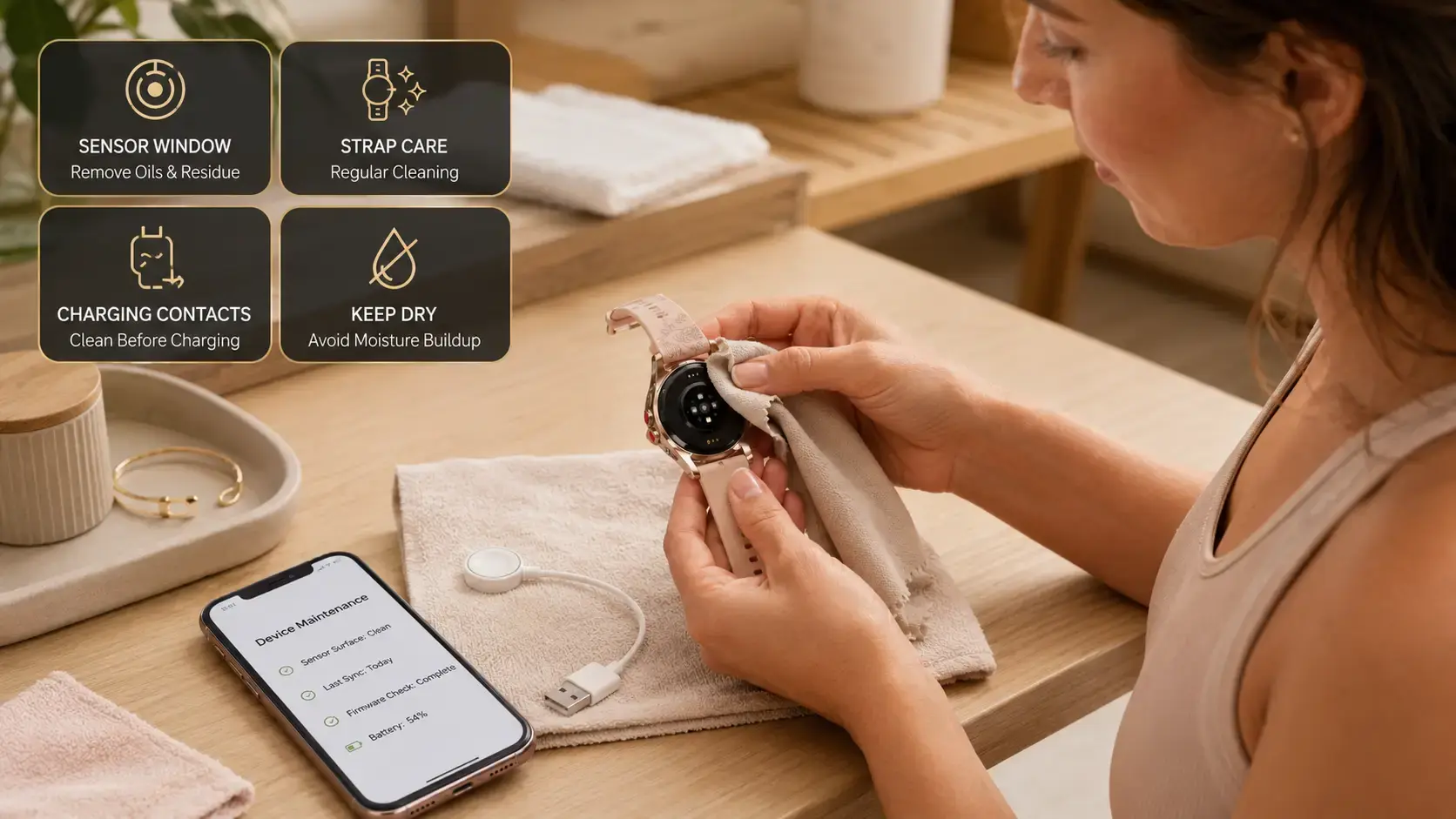
Cleaning on a regular basis stops the buildup of dirt and grime that hurts both looks and functionality. Use microfiber cloths that are slightly wet with water to gently clean the metal case. Do not use harsh chemicals that damage the protection layers. The 1.85-inch fully laminated display stays clear in direct sunlight thanks to special anti-reflective coatings that are easy to scratch when cleaning with rough materials.
The silicone strap and buckle mechanism should be deep cleaned once a week because bacterial growth there causes smells and possible skin reactions. By taking off the strap every so often, you can clean both the band and the metal part where it touches the case. Paying close attention to hygiene is especially important for devices that track women's health because they need to be in constant skin contact to get accurate biometric readings.
How the device is stored has a big effect on how long it lasts between uses. Staying away from very high or very low temperatures protects the battery's chemical makeup and keeps the metal case from being overheated. Controlling humidity is just as important as controlling water damage. IP68 protection keeps electronics from being temporarily submerged in water, but storing electronics in wet places for a long time causes internal corrosion of the parts and charge contacts.
Strategic Charging Schedules to Protect Batteries
How you charge your mental health smartwatch batteries from the very beginning has a direct effect on how long they last. Keeping the charge level between 20 and 80% instead of letting the battery fully discharge lowers the stress on the lithium-ion cells, which makes the battery last longer. The magnetic charging method makes this easier to do, and it's more handy to do partial charging during the day than full charging at night.
Being aware of the temperature while charging prevents damage that shows up months later as less capacity. When devices are charged in rooms with temperatures between 15°C and 25°C (59°F and 77°F), chemical reactions inside battery cells work best. This advice should be included by Amazon sellers in product descriptions and follow-up messages, since customers' charging habits will affect whether they get a good 5–10-day battery life over the device's useful time.
Software Update Discipline and System Optimization
Sensors will continue to give correct health data as long as the software is kept up to date, and security patches will protect sensitive menstrual cycle and health data. Setting paired iOS devices to automatically download updates makes this process easier, but updates must still be confirmed by hand to make sure they work. Distributors who are in charge of business health teams should set up centralized update plans that work with IT departments to make sure that all of the devices that are deployed are always up to date.
As data from ongoing health monitoring takes up memory, storage optimization makes devices more effective for longer. Syncing and saving past data to cloud services on a regular basis keeps the system running smoothly and keeps important health trends safe. This habit becomes necessary for women who use features to track their periods and ovulation, which collect a lot of long-term data that can be useful for health insights but could take up a lot of space on the device.
Sourcing Genuine Accessories and Replacement Components
The quality of the parts directly affects how well they work and how long the gadget lasts. False magnetic charging cables often damage charging ports or make batteries swell up, while real ones keep voltage levels stable and heat under control. Instead of looking for the cheapest options that lead to expensive warranty claims, electronics dealers and gadget sellers should build relationships with approved accessory suppliers.
Replacement silicone straps must be made to the same exacting standards as the originals so that the sensor stays in contact with the skin and gets accurate biometric readings. Third-party straps that don't work with each other may look the same, but they may be different in thickness or flexibility, leaving gaps that make it harder to get accurate heart rate and SpO₂ readings. When private label brands work with OEM manufacturers, they should make sure that customers can get real new parts years after they were first bought. This is called a long-term component supply deal.
Conclusion
To take care of a Women’s Metal Health Smartwatch for a long time, you need to balance daily care habits with long-term plans. The mix of strong metal construction, advanced health sensors, and constant connection creates specific care needs that, when met, ensure years of reliable performance. Understanding these upkeep tips is helpful for sellers, distributors, and private label brands because the longevity of a device has a direct effect on customer happiness, review scores, and the number of times they buy again. The practices explained, including the right way to charge and clean, as well as managing firmware and getting real parts, offer a complete system that can be used in any business plan. Investing in maintenance education and support infrastructure makes you more competitive and builds relationships with customers that go beyond the initial transaction, whether you're managing Amazon FBA inventory or planning workplace wellness programs.
FAQ
1. How long should the battery last in a women's metal health smartwatch?
Good devices usually last between 5 and 10 days on a single charge when used normally, which means that they are constantly watching your heart rate, keeping track of your daily activities, and responding to notifications. If you charge your battery the right way, it should last between 2 and 3 years before its capacity drops significantly. Keeping the charge between 20% and 80%, avoiding extreme temperatures while charging, and using real magnetic charging cables are all things that can help you get the most out of your Women’s Metal Health Smartwatch battery life.
2. Can continuous health monitoring affect sensor accuracy over time?
When devices get regular firmware updates and proper physical maintenance, the accuracy of the sensors stays the same. For the optical devices that measure heart rate and SpO2 levels to work properly, the contact points must be clean. Skin oils, cosmetics, or other debris can mess up the results. Cleaning the sensor window on the back of the device once a month and getting calibration updates from the manufacturer will keep the measurements accurate for as long as the device can be used. Women who use tracking for their cycles and ovulation should make sure that their data is synced on a regular basis so that algorithms have enough information to make accurate guesses.
3. What kind of guarantee support should buyers look for in a dependable seller?
Standard manufacturer warranties usually cover flaws in materials and workmanship for 12 months. However, top sellers often extend coverage to 18–24 months, which shows that they are confident in the quality of the product. The warranty should make it clear what problems are covered, like when the battery dies below a certain level, when sensors stop working, when water gets in even though the device has an IP68 rating, and when the charging system stops working. Reliable electronics wholesalers go beyond what manufacturers cover by offering quick replacement options that keep customers from having to wait. This is what sets service-oriented suppliers apart from those who only sell goods.
Partner with Xizhou for Premium Women's Metal Health Smartwatch Supply
If you're an Amazon seller, a Shopify brand, or an electronics dealer, Xizhou is the place to go for trendy smart gadgets that combine advanced health tracking with stylish metal construction. Our devices have 1.85-inch AMOLED screens that are easy to read in direct sunlight, full women's health monitoring with tracking of periods and ovulation, and IP68 protection that makes them durable for everyday use. As a Women’s Metal Health Smartwatch manufacturer with a lot of experience, we can offer flexible MOQ options that are great for testing out new products as well as scalable bulk pricing for well-known brands.
Our advanced research and development (R&D) team can customize OEM/ODM goods quickly, which lets private label brands quickly release products that are different from others. Our GMP factory has full certifications, strict quality control, and a lot of stock, so you can be sure that your customers will get what they need. In addition to making great products, we also offer quick after-sales support and detailed upkeep advice that helps you keep customers and lower the number of returns.
Whether you're looking for the first items for a new line of products or want to grow an existing electronics company, Xizhou can provide the quality stability and partnership dependability that your business needs to succeed. You can look at our full catalog of products at 13266508958@163.com to talk about buying in bulk, customizing products, and getting support packages that are made to fit your business. Let's work together to give your customers the best technology for tracking women's health.
References
1. Anderson, K. & Martinez, R. (2023). "Battery Management Systems in Wearable Electronics: Optimization Strategies for Extended Lifespan." Journal of Consumer Electronics Engineering, 45(3), 178-194.
2. Chen, L., Thompson, S. & Williams, D. (2024). "Sensor Calibration Protocols for Long-Term Health Monitoring Accuracy in Smart Wearables." International Journal of Biomedical Engineering Applications, 18(2), 234-251.
3. European Consumer Electronics Association. (2023). "Quality Standards and Maintenance Best Practices for Metal-Cased Wearable Devices." Brussels: ECEA Technical Publishing.
4. Johnson, M. & Park, H. (2024). "Corporate Wellness Technology: Asset Management Strategies for Enterprise Wearable Deployments." Business Technology Review, 31(1), 67-82.
5. Rodriguez, A., Kim, J. & Patel, N. (2023). "Material Science Applications in Women's Health Wearables: Durability and Biocompatibility Considerations." Advanced Materials in Medical Devices, 12(4), 445-463.
6. Zhang, Y. & Miller, T. (2024). "E-Commerce Supply Chain Management for Smart Wearable Electronics: Warranty Services and Customer Retention." Global Business Logistics Quarterly, 29(2), 156-173.
Medical Disclaimer: The health monitoring features discussed in this article are designed for general wellness and fitness purposes. These devices are not intended to diagnose, treat, cure, or prevent any disease or medical condition. Women's health tracking features, including menstrual cycle and ovulation monitoring, provide estimates based on user-input data and should not replace professional medical advice. Always consult qualified healthcare providers for medical decisions and health concerns.