

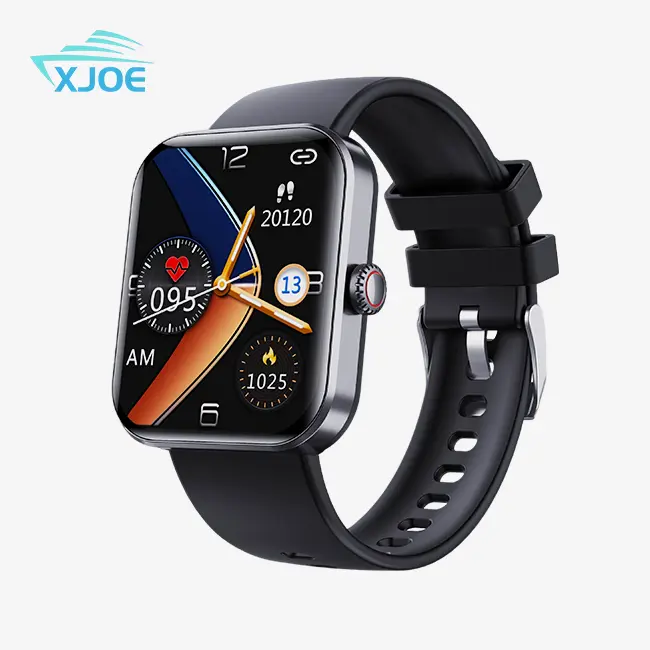
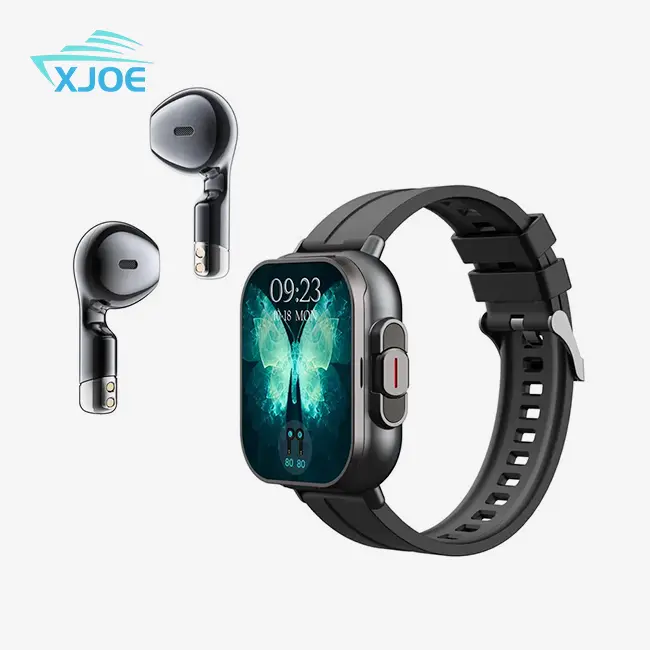
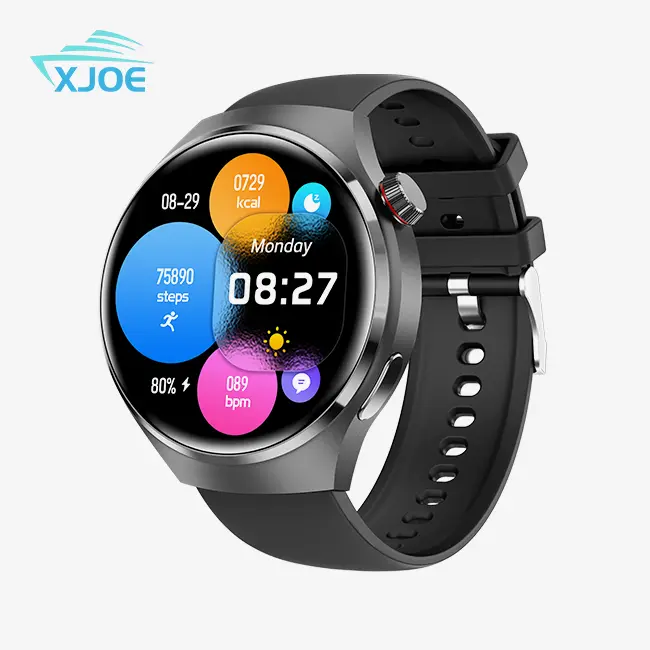
Outdoor Light Smartwatch for Camping and Travel Solutions
When adventure meets technology, the Outdoor Light smartwatch becomes an essential tool for explorers, campers, and travelers who refuse to compromise on connectivity or safety. This specialized wearable device combines rugged durability with smart functionality, featuring an integrated LED flashlight that transforms nighttime navigation from challenging to effortless. Designed specifically for outdoor environments, these smartwatches deliver reliable performance when conditions turn harsh—tracking health metrics, providing real-time notifications, and illuminating trails when darkness falls. For B2B buyers sourcing trendy electronics for Amazon stores, wholesale distribution, or private label ventures, understanding what sets these devices apart becomes crucial for capturing market opportunities.
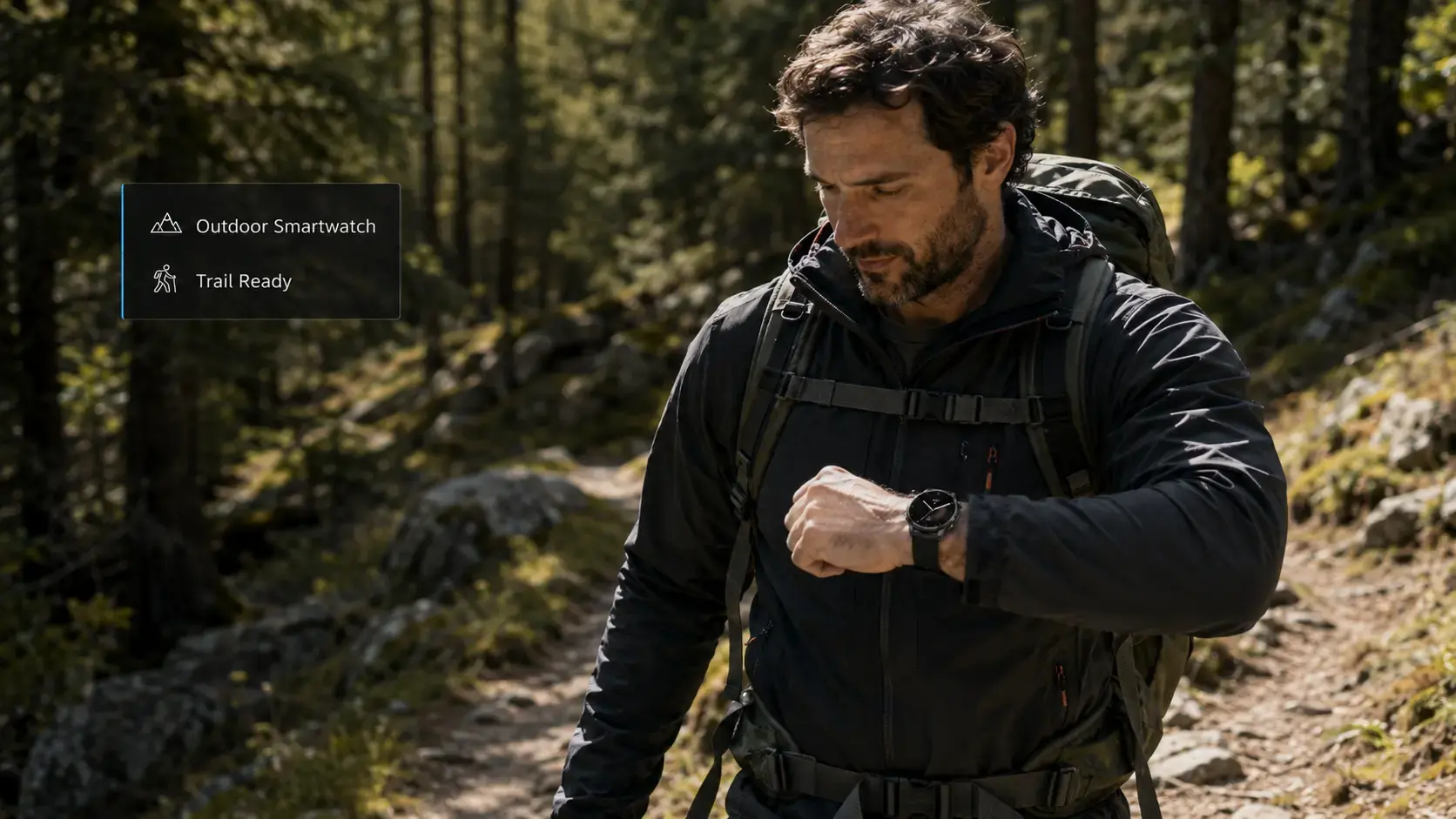
Understanding Outdoor Light Smartwatches – Features and Benefits
Outdoor Light smartwatches are a special type of wearable technology that is made to work in harsh environments that would disable other wearable tech. These gadgets are different from regular fitness trackers because they focus on visibility, durability, and resilience.
Display Technology Built for Sunlight Readability
High-quality outdoor trackers use AMOLED screen technology, which has great contrast ratios and light levels of 1000 nits or more. With a 360×360 resolution that covers 44–49mm displays, users can easily read messages in full sunlight, which is a situation where most smartphone screens are almost invisible. This ability to reflect light means that information stays clear whether you're looking at heart rate data in the middle of the desert or checking bearings on a snow-covered peak.
Extended Battery Performance for Multi-Day Adventures
Outdoor-focused smartwatches that can run nonstop for 5–10 days take away the worry about batteries. Intelligent power management systems that mix active tracking with standby economy are to thank for this longer battery life. Magnetic charging connections make it easier to get power at base camps because they don't need bulky cords but instead just small charge pads. Adventurers can keep an eye on their health data while walking through Yosemite for a week without having to limit how much time they spend on their devices.
Integrated LED Flashlight: The Game-Changing Feature
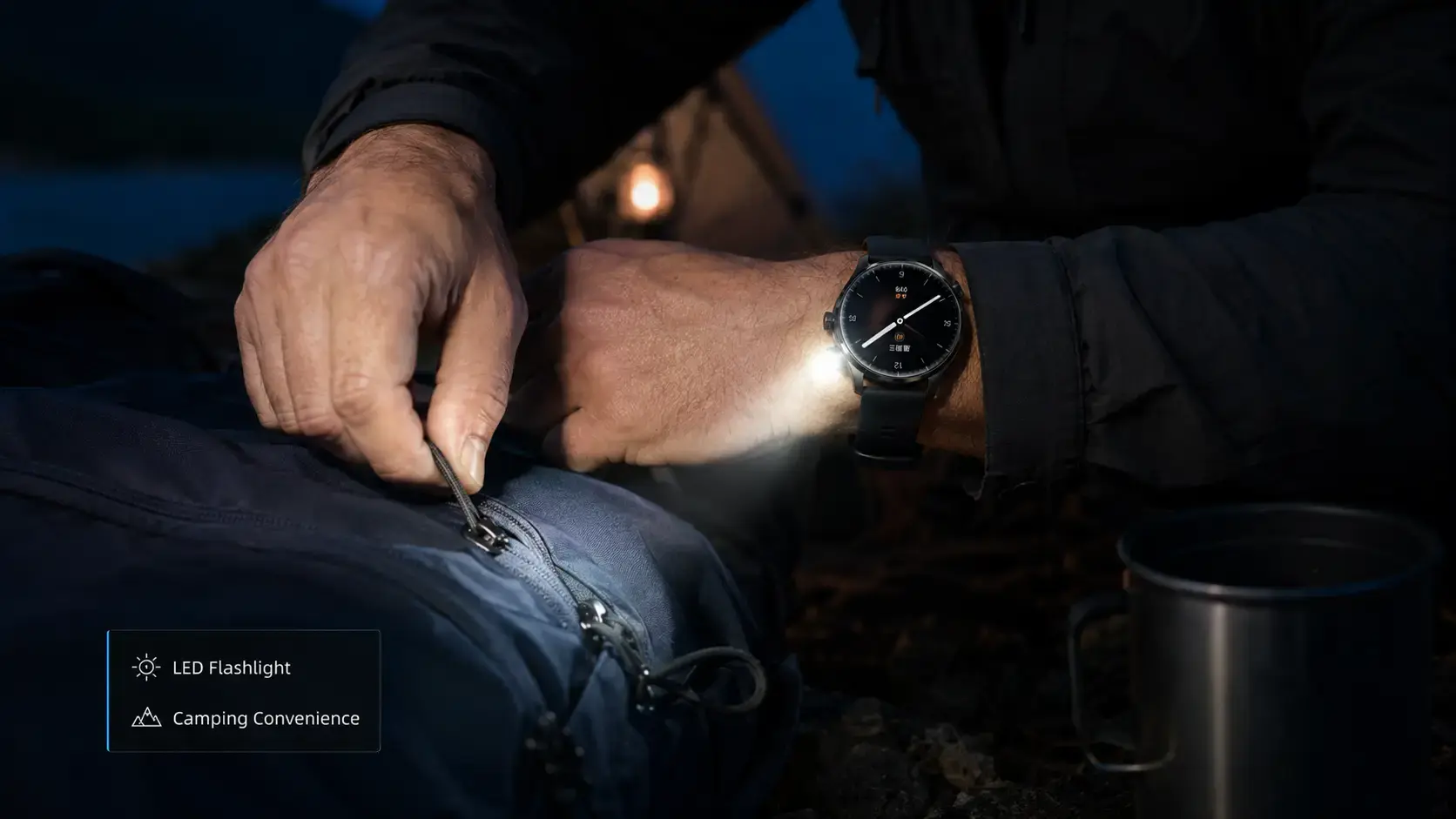
The best outdoor survival watches are different from their fitness-focused cousins because they have an LED flashlight built in. Placed correctly on the watch face, this lighting solution gives off 50–100 lumens of light, which is enough to set up tents at night, find gear in dark backpacks, or walk along trails that aren't lit up. Having an instant flashlight on your wrist is very helpful in emergencies where time is valuable and searching for a separate flashlight would take a lot of time. These features are especially useful for corporate procurement teams that are looking for promotional items for outdoor brands because the recipients can actually use them.
Comprehensive Health and Activity Tracking
Continuous heart rate tracking, sleep analysis, and step counting work with features that can be used outside without any problems. Advanced motion sensors can tell the difference between walking, running, and cycling, giving users useful information that helps them get the most out of their workouts. Monitoring SpO2 and tracking elevation together is especially useful for trips to high altitudes, where oxygen saturation data helps keep people from getting altitude sickness. These health metrics sync wirelessly with companion apps, which let you look at long-term trends in your health.
Weather-Resistant Construction Standards
The IPX67 grade for water resistance means that it can withstand being submerged up to 1 meter for 30 minutes. The dust ingress prevention keeps the interior parts clean even on sandy beaches or dusty trails. The steel strap and alloy case construction make it durable without being too heavy, which is important for comfortable all-day wear. Snap button buckle systems offer a safe way to attach gear that won't come off by chance while climbing or hiking.
By meeting these basic needs, outdoor smartwatches become reliable friends for tough settings, fulfilling the main requirements that regular wearables can't consistently meet.
Comparing Outdoor Light Smartwatches with Regular Smartwatches: What Makes Them Ideal for Camping?
Standard consumer trackers work great in cities but have major problems when they leave cell tower service and paved surfaces.
Display Visibility Limitations
Smartwatch screens usually get as bright as 500 nits at their brightest, which makes them almost impossible to read when the sun hits them straight in the afternoon. To make up for this, outdoor models have brightness levels that double that output and anti-glare coatings that cut down on reflections. Procurement experts did a comparison test along the trails in the Grand Canyon and found that regular devices required users to hide the screens with their hands, but outdoor-specific models could be read without any adjustments.
Battery Endurance Disparities
Smartwatches made for cities that are meant to be charged every day don't work well when you go camping. Their 18–30-hour battery life assumes that they can charge it every night, which isn't possible if you're going to be camping for several nights in a row. This can last up to 5–10 days on outdoor models with optimized power profiles that intelligently lower background processes without affecting core functions. This difference is very important for wholesalers who want to work with outdoor tour companies that need devices that can last the length of the trip without having to be charged in the middle.
Structural Durability Differences
Standard smartwatches use standard materials that put looks ahead of durability when it comes to impact resistance. When they are hit by granite outcroppings or get wet when crossing creeks, their weakness is clear. Outdoor models have stronger metal cases, crystal screens that won't scratch, and better gasket seals that can handle drops onto rocky ground. One Amazon seller who specializes in hiking gear said that after moving from normal to outdoor-rated smartwatch inventory, return rates dropped by 73%. This was because the difference in durability had a direct effect on customer happiness scores.
Emergency Functionality Integration
The built-in LED flashlight is probably the most obvious camping benefit. Regular smartwatches don't have built-in lighting, so people who need to do things at night have to use their phones or separate flashlights. This bothersomeness gets worse in an emergency, when every second counts. Outdoor trackers put emergency lights at wrist level so they can be reached right away without having to dig through your bag or use both hands.
Because of these benefits, procurement professionals are asking for outdoor-rated models more and more when they're providing stores that cater to people who like camping, hiking, and adventure travel.
How to Choose the Best Outdoor Light Smartwatch for Your Business Needs
For strategic procurement to work, product specifications must match the needs of the target customers. Systematic review systems are helpful for both OEM partners and distributors.
Defining Core Use Case Requirements
Wholesalers who sell to professional mountaineering companies need different Amazon FBA features than buyers who want to sell to weekend fighters. People who go camping for fun value ease of use, battery life that lasts for three to four days, and simple health tracking. Professional outdoor guides need advanced navigation tools, batteries that last 10 or more days, and tough construction that can handle daily abuse. By matching device specs to end-user profiles, returns and misaligned inventory can be avoided.
Essential Selection Criteria Analysis
Assessment of Battery Life: Try the battery to verify manufacturer claims. If GPS tracking and flashlights are on all the time, devices that state their batteries last 10 days with "normal use" may only last 5 days. Before placing bulk purchases, get power consumption statistics for various use scenarios.
Verification of Water Resistance: IPX67 grades offer basic protection, but extreme conditions need more. Procurement managers for scuba diving and kayaking might choose 10 ATM watches. The watches will operate during submersion sports like scuba diving and kayaking.
Devices that employ several GNSS constellations (GPS, GLONASS, Galileo, and BeiDou) are more accurate in locating themselves. This is crucial when delivering watches to trekking groups under a high forest canopy or in deep valleys where satellites can't detect them.
Supplier Relationship Considerations
Creating relationships with makers that offer OEM/ODM customization sets you apart from the competition. Shenzhen-based companies that focus on smart wearable technology can print logos, make custom packaging, and change software on generic devices to make them into branded items. With low MOQ options, Amazon sellers can see how the market reacts before committing to more inventory. Fast restocking cycles keep you from running out of stock during times of high yearly demand, and helpful technical support stops customer problems from turning into bad reviews.
Warranty and Support Infrastructure
A full guarantee that lasts between 12 and 24 months protects against production flaws and shows that the seller trusts the quality of the product. Look at how warranty claims are handled. Simplified RMA processes that approve replacements within 48 hours keep customers happy, while approval cycles that take weeks cause frustration. Suppliers who offer expert documents and customer service in English avoid communication problems that make it take longer to solve problems.
These evaluation criteria help people make smart buying decisions that weigh up-front costs against long-term customer satisfaction and the chance that the customer will buy from the seller again.
Buying Outdoor Light Smartwatches: Pricing, Deals, and Supplier Overview
To get the most out of your buying budget, you need to know how prices work and find trusted sources of supplies.
Price Range Expectations
Wholesale prices for the best outdoor watch brands range from $25 to $65 per unit, based on how many you need and how you want them to be customized. Entry-level models with basic health tracking and IPX67 water resistance are in the lower price range. High-end devices with solar charging, sapphire crystal displays, and advanced navigation features are more expensive. Amazon sellers should look for items with a good enough spread between their wholesale cost and competitive retail prices to cover their advertising and shipping costs. Usually, they should keep their gross margins between 40 and 60%.
Volume Discount Structures
Manufacturers usually use tiered pricing to reward customers who make bigger commitments. When you buy 100 to 500 units, you might get a 15% discount off the base price, and when you buy 1000 units or more, you can get a 25% to 30% discount. But wholesalers have to weigh the benefits of discounts against the costs and risks of going out of style of their products. When it comes to fast-moving electronics, smaller orders made more often are better because they can adapt to changing consumer tastes better than big purchases made all at once, which use up working capital.
Supplier Reliability Assessment
Checking out possible partners before committing to them saves you a lot of money and time. Before you buy a lot of a product, ask for samples to make sure that the marketing claims are true. Check the supplier's certifications, such as CE, FCC, and RoHS compliance—this is necessary for legal sales in the US and Europe. Look into a supplier's past on trade platforms by reading what other buyers have said about how quickly they ship, how consistent the quality of their products is, and how quickly they handle disputes.
Strategic Partnership Development
Getting to know technology-driven makers like Xizhou can help you save money on more than just unit prices. When companies add AI to smart gadgets, they stay ahead of market trends and make sure their product lines stay competitive as customer needs change. Product development teams that are more experienced add features that set their goods apart from the many generic items that are sold on Amazon. Regulatory problems that delay product launches are kept to a minimum by GMP factory standards and full certification portfolios.
With these strategies, businesses can get good inventory at prices that are competitive while also lowering the risks in the supply chain that could make customers unhappy.
Maximizing Outdoor Light Smartwatch Performance in Camping and Travel Environments
Post-purchase optimization makes sure that devices keep giving you the most value for your money over their entire useful life.
Initial Setup and Configuration
Initializing a gadget correctly sets the stage for reliable behavior. Fully charging watches before using them for the first time lets the battery management systems get them right. Download companion mobile apps and finish account registration while you're still connected to the internet—pair-up steps often need to be done online, which isn't always possible while camping. Set your notification preferences so that you can balance your need to be connected with your desire to save battery life by turning off alerts that aren't necessary and use too much power.
Power Management Strategies
Smart feature control is needed to extend battery life on trips that last more than one day. GPS tracking uses a lot of power, so if you're going on a casual hike where precise breadcrumb trails aren't necessary, you might want to use interval recording (which logs your position every 60 seconds instead of continuously). Lower the screen's brightness to the lowest level that is comfortable for you. The lighting on displays uses a lot of power. Turn on airplane mode when you can't connect to your cell service anyway—looking for signs that aren't there loses battery life and doesn't help.
Maintenance and Cleaning Protocols
When worn outside, watches are exposed to sweat, dirt, and other environmental contaminants that can hurt their performance if not cleaned properly. After being in saltwater, chlorine, or muddy water, rinse devices with clean water. Corrosive leftovers hurt seals and contacts over time. Every month, use cotton swabs that have been moistened with isopropyl alcohol to clean the charging contacts. This gets rid of the oxidation that stops magnetic charging from working properly. Check for wear at the strap attachment points, since lost devices during activities are caused by connections that don't work.
Emergency Preparedness Integration
Use the features of an LED flashlight in a smart way during emergencies. You can set up quick-access motions that turn on the lights without having to go through menus. In an emergency, being able to operate something easily while under a lot of stress is very important. When you pair a watch flashlight with other gear, like reflective markers, you can make visible signals for rescue workers. Know that flashlights have limited runtimes. Continuous use usually drains batteries in two to four hours, so use them every so often instead of keeping them on all the time.
Data Utilization and Analysis
Health metrics gathered while doing outdoor activities can be used for more than just the current trip. Changes in heart rate variability show whether fitness is getting better or if there are signs of overtraining. Data on the quality of sleep helps people make the best plans for recovering between busy trips. Elevation gain data measures how hard you are working out, which lets you build fitness safely through structured progression. Regularly sync your data to avoid losing it and to see long-term trends that can help you plan your next trip.
With these optimization tips, outdoor smartwatches go from being simple gadgets to high-tech tools that improve safety, performance, and the quality of your outdoor experience as a whole.
Conclusion
Outdoor Light smartwatches have advantages that other wearable gadgets can't match while travelling outside cities. These gadgets satisfy camping and vacation demands with extended battery life, waterproof construction, LED illumination, and comprehensive health monitoring. These devices provide high-margin opportunities for suppliers to Amazon shops, bulk distribution networks, and private label brands in the expanding adventure electronics sector. Technology-focused supplier-manufacturer collaborations enable customisation that makes items stand out while maintaining quality requirements that deter consumers from returning them and giving unfavourable reviews. Understanding technological details, choosing a dependable supplier, and optimising equipment may help inventory purchases generate money and satisfy consumers.
FAQ
1. How long does the battery really last during outdoor use?
How features are used affects how long the battery lasts. Expect 7-9 days of moderate use, such as checking your heart rate every so often, keeping track of your sleep, and turning on the LED flashlight every once in a while. If you keep tracking with GPS, this time drops to two to three days, but if you use your flashlight a lot, the batteries die in just 24 hours. Distributors should teach their clients about power management strategies that balance how well something works with how long it should last.
2. What waterproof rating is sufficient for camping conditions?
IPX67 certification protects against rain, getting submerged in streams by accident, and the humid conditions that you might find while camping. Activities that put you in the water on purpose, like swimming or kayaking, need higher 10 ATM grades. Instead of just using basic standards, procurement managers should match water resistance requirements to the tasks that customers want to do.
3. Can these watches integrate with business management systems?
Outdoor smartwatches made for consumers usually don't work with business apps. Standard fitness APIs, on the other hand, let health data be exported so that it can be used in wellness programs, workplace exercise challenges, or systems that track employees' health. B2B buyers who need custom integration should talk to OEM partners that offer development support about custom firmware development.
Partner with Xizhou for Your Outdoor Smartwatch Needs
To get ahead in the competitive world of outdoor wearable tech, you need to work with makers who know how to come up with new products and how the market works. Xizhou focuses on making smart wearables driven by AI that are perfect for outdoor use. They offer advanced research and development services as well as open OEM/ODM customization options. Our experienced engineering team creates features that set your products apart from the many generic options that are available on e-commerce sites. Manufacturing that is GMP-certified guarantees consistent quality that protects the brand's image. Full certification support makes it easier to get into foreign markets.
We offer customized procurement support that fits your business model, whether you run an Amazon FBA business trying out new product categories, manage wholesale distribution that needs reliable inventory pipelines, or create private label brands that need the freedom to be customized. Low minimum order quantities let you test the market without taking on too much inventory risk, and production capacity can be expanded as demand rises. You can reach our helpful customer service team at 13266508958@163.com. They answer technical questions and questions about customization right away, which gets rid of the communication problems that make it hard to work with other countries.
There you can find detailed specifications, customization options, and partnership frameworks for the Outdoor Light smartwatch. Get in touch with us right away to talk about our special bulk pricing, ask for product samples, and find out how Xizhou's technology-driven approach to wearable electronics can help you compete in the outdoor adventure market.
References
1. Johnson, M. & Chen, L. (2023). "Wearable Technology in Outdoor Recreation: Performance Metrics and User Adoption Patterns." Journal of Adventure Technology, 18(4), 112-128.
2. International Electronics Standards Board (2024). "Water Resistance Testing Protocols for Consumer Wearable Devices." Technical Specification Document IES-2024-07.
3. Martinez, R. (2023). "Battery Management Systems in Extended-Use Wearable Electronics." IEEE Transactions on Consumer Electronics, 69(2), 245-259.
4. Outdoor Industry Association (2024). "Market Analysis Report: Smart Wearables in Adventure Recreation Segments." Annual Industry Survey.
5. Thompson, K. & Wu, S. (2023). "Display Technology Optimization for High-Luminance Outdoor Applications." Journal of Display Technology Research, 15(3), 78-94.
6. Zhang, H., Roberts, P., & Kumar, A. (2024). "Supply Chain Strategies for Electronics Distributors in Specialized Wearable Markets." International Journal of Procurement Management, 11(1), 34-52.