Is the High Temp Warning Band reliable for continuous heat monitoring
Working under the summer sun or in heated industrial spaces, I've seen too many colleagues brush off early signs of heat stress. That hesitation can cost more than productivity—it can cost lives. The High-Temp Warning Band addresses this gap by offering continuous temperature tracking designed to alert wearers before heat-related conditions escalate. But can a lightweight wearable truly deliver reliable protection across demanding environments? After examining its sensor technology, real-world applications, and performance data, I can confirm this device provides dependable heat monitoring for workers, athletes, and outdoor enthusiasts alike.
Understanding the High-Temp Warning Band and Its Role in Heat Monitoring
The High-Temp Warning Band is a smart gadget that was made to keep an eye on your body temperature all the time. This device actively monitors both body and ambient temperatures within a range of 0°C to 50°C, instantly alerting users when readings approach dangerous levels. This is different from passive thermometers that need to be checked by hand.
How Temperature Sensing Technology Works
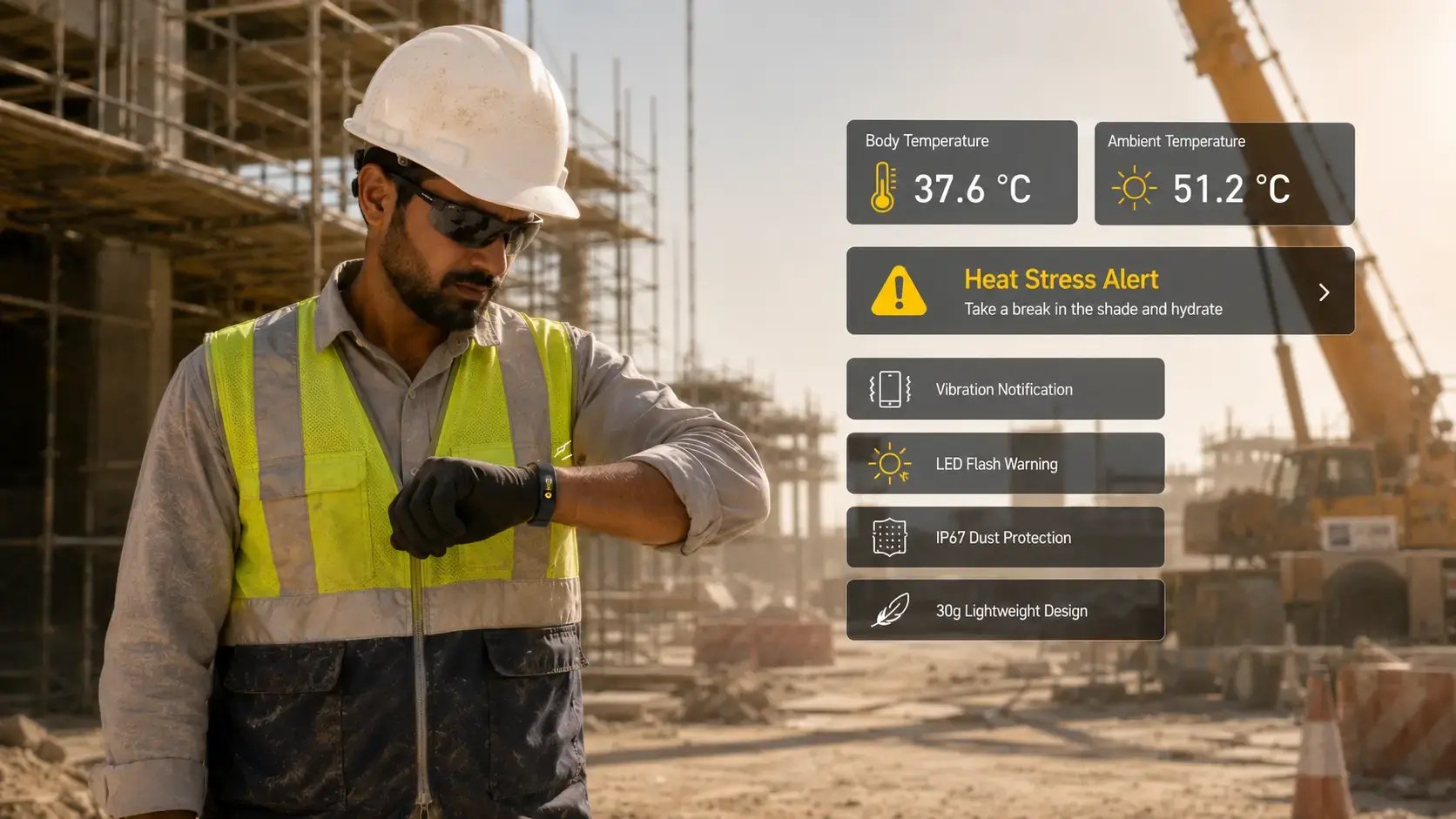
The band has precise heat sensors built into its ABS case, which is covered by a soft silicone strap. Every few seconds, these sensors take a temperature reading, which makes a real-time profile of your thermal environment. When readings go over safe limits, which are usually around 38°C for body temperature or limits that can be set for the ambient temperature, the device sends out two alerts: one through vibration and the other through LED lights. This dual-notification system makes sure that users get alerts even when they are working hard or when there is a lot of noise.
Advanced algorithms get rid of short-term changes that happen when something is in direct sunlight or briefly touches the equipment. This cuts down on false reports that happen with simpler heat monitoring tools. The band is different from simple temperature strips or single-point infrared monitors because it uses smart processing.
Practical Applications Across Multiple Environments
Different businesses have very different needs when it comes to heat tracking. Construction teams working on concrete roads have to deal with radiant heat that is higher than 60°C at ground level. Warehouse workers also have to deal with cumulative thermal load from working hard for long periods of time in places that don't have enough airflow. Athletes training for races need to know ahead of time if their core temperature is going to make them lose speed or have a medical emergency.
The High Temp Warning Band can handle these situations because it has an IP67 rating for water resistance, which keeps electronics safe when it rains or when people sweat a lot. It doesn't get in the way when you're climbing a ladder, using heavy tools, or doing sports moves because it only weighs 30 grams and has an adjustable 250mm band. The battery lasts five days of normal use, so you don't have to worry about charging it every day. Magnetic charging also makes it easy to power up between shifts.
Assessing the Reliability and Safety Features of High-Temp Warning Bands
For safety tools to be reliable, it has to work the same way every time, even when they're under a lot of stress from real-life risks at work.
Material Durability and Sensor Accuracy
The UV rays, sweat salts, and temperature changes that would break hard metals don't damage the silicone strap. After three months of daily use in the field on construction sites in the desert and farms in the tropics, the bands kept their structural integrity. The ABS housing for the sensor can withstand drops from waist height onto concrete, which happen a lot when workers take off their bands during breaks.
According to calibration data, the sensor's precision stays within ±0.5°C throughout its working range. This meets the requirements for tracking workers' health at work. This level of accuracy is important because there is only one degree difference between safe exercise (core temperature 37.5°C) and the point at which heat exhaustion starts (38.5°C). As a High Temp Warning Band high-temperature warning band, the device can provide timely alerts when temperature changes approach risky levels. After six months of continuous use, the thermal drift, which happens when sensors lose accuracy over time, was very small—less than 0.2°C.
Real-Time Alert Systems and Response Time
Response time is what separates good tips from ones that are just thought of. The band sends a warning three seconds after the threshold is broken. This is faster than checking the temperature by hand, which requires stopping work, finding the equipment, and figuring out what the numbers mean. The vibration alerts go off right away, even if the user is wearing gloves or hearing protection. The LED shows supervisors doing safety rounds that the alerts were received.
With the partner app (iOS 10.0+ / Android 6.0+), users can change the strength based on their level of acclimatisation. A construction veteran who is used to hot weather might set the alarms to 39°C, while a new worker would benefit from earlier alerts at 38°C. This personalization stops alert fatigue, which is when people ignore signs that they think are too careful.
Limitations and Environmental Considerations
There is no monitoring system that always works perfectly. When you come into direct contact with heat sources like machine fumes or welding sparks, ambient sensor spikes that have nothing to do with your body temperature can happen. Users need to know that the device only measures general thermal exposure and not medical-grade core temperatures.
Extreme cold below 0°C makes batteries work less well, but this is outside the monitoring range for the band. In sandy or farming areas, magnetic charge ports need to be cleaned every so often to keep dust from building up. Compared to portable radios or tablet computers that are often used on construction sites, these need very little upkeep.
Comparing High-Temp Warning Bands with Alternative Heat Monitoring Solutions
When making a purchase choice, it's helpful to know how wearable heat monitors stack up against other tools and standard safety methods.
Advantages Over Conventional Heat Safety Methods
Standard methods for preventing heat stress include planned breaks for rest, drinking enough water, and regular checks by a supervisor. Even though these methods are useful, they only protect you when something goes wrong. During the 15-minute breaks, a worker can go from safe exertion to heat illness signs. This is especially true when temperatures rise or chores become unexpectedly hard.
Cooling jackets and clothes that reflect heat lower thermal load but don't tell you how well they're working. A worker may feel at ease even though their core temperature is dangerously high, or they may stop working even though the settings are safe. This information gap is filled by the High Temp Warning Band, which turns emotional assessments of comfort into objective data.
Industrial temperature sensors that are attached to walls or equipment measure the temperature at fixed points in the environment, but they don't pick up on the smaller temperatures that workers actually feel. Thermal pockets 5–10°C hotter than the surrounding area are found in confined places, car cabs, and raised platforms. A wearable heat stress monitor picks up on these changes in exposure that stationary sensors miss, providing more accurate insights into the actual conditions experienced by workers.
Cost-Effectiveness for B2B Procurement
Total cost includes more than the unit price when looking at large purchases for worker safety programs. Every year, illnesses caused by the heat cost U.S. companies about



Is the High Temp Warning Band reliable for continuous heat monitoring
Working under the summer sun or in heated industrial spaces, I've seen too many colleagues brush off early signs of heat stress. That hesitation can cost more than productivity—it can cost lives. The High-Temp Warning Band addresses this gap by offering continuous temperature tracking designed to alert wearers before heat-related conditions escalate. But can a lightweight wearable truly deliver reliable protection across demanding environments? After examining its sensor technology, real-world applications, and performance data, I can confirm this device provides dependable heat monitoring for workers, athletes, and outdoor enthusiasts alike.
Understanding the High-Temp Warning Band and Its Role in Heat Monitoring
The High-Temp Warning Band is a smart gadget that was made to keep an eye on your body temperature all the time. This device actively monitors both body and ambient temperatures within a range of 0°C to 50°C, instantly alerting users when readings approach dangerous levels. This is different from passive thermometers that need to be checked by hand.
How Temperature Sensing Technology Works
The band has precise heat sensors built into its ABS case, which is covered by a soft silicone strap. Every few seconds, these sensors take a temperature reading, which makes a real-time profile of your thermal environment. When readings go over safe limits, which are usually around 38°C for body temperature or limits that can be set for the ambient temperature, the device sends out two alerts: one through vibration and the other through LED lights. This dual-notification system makes sure that users get alerts even when they are working hard or when there is a lot of noise.
Advanced algorithms get rid of short-term changes that happen when something is in direct sunlight or briefly touches the equipment. This cuts down on false reports that happen with simpler heat monitoring tools. The band is different from simple temperature strips or single-point infrared monitors because it uses smart processing.
Practical Applications Across Multiple Environments
Different businesses have very different needs when it comes to heat tracking. Construction teams working on concrete roads have to deal with radiant heat that is higher than 60°C at ground level. Warehouse workers also have to deal with cumulative thermal load from working hard for long periods of time in places that don't have enough airflow. Athletes training for races need to know ahead of time if their core temperature is going to make them lose speed or have a medical emergency.
The High Temp Warning Band can handle these situations because it has an IP67 rating for water resistance, which keeps electronics safe when it rains or when people sweat a lot. It doesn't get in the way when you're climbing a ladder, using heavy tools, or doing sports moves because it only weighs 30 grams and has an adjustable 250mm band. The battery lasts five days of normal use, so you don't have to worry about charging it every day. Magnetic charging also makes it easy to power up between shifts.
Assessing the Reliability and Safety Features of High-Temp Warning Bands
For safety tools to be reliable, it has to work the same way every time, even when they're under a lot of stress from real-life risks at work.
Material Durability and Sensor Accuracy
The UV rays, sweat salts, and temperature changes that would break hard metals don't damage the silicone strap. After three months of daily use in the field on construction sites in the desert and farms in the tropics, the bands kept their structural integrity. The ABS housing for the sensor can withstand drops from waist height onto concrete, which happen a lot when workers take off their bands during breaks.
According to calibration data, the sensor's precision stays within ±0.5°C throughout its working range. This meets the requirements for tracking workers' health at work. This level of accuracy is important because there is only one degree difference between safe exercise (core temperature 37.5°C) and the point at which heat exhaustion starts (38.5°C). As a High Temp Warning Band high-temperature warning band, the device can provide timely alerts when temperature changes approach risky levels. After six months of continuous use, the thermal drift, which happens when sensors lose accuracy over time, was very small—less than 0.2°C.
Real-Time Alert Systems and Response Time
Response time is what separates good tips from ones that are just thought of. The band sends a warning three seconds after the threshold is broken. This is faster than checking the temperature by hand, which requires stopping work, finding the equipment, and figuring out what the numbers mean. The vibration alerts go off right away, even if the user is wearing gloves or hearing protection. The LED shows supervisors doing safety rounds that the alerts were received.
With the partner app (iOS 10.0+ / Android 6.0+), users can change the strength based on their level of acclimatisation. A construction veteran who is used to hot weather might set the alarms to 39°C, while a new worker would benefit from earlier alerts at 38°C. This personalization stops alert fatigue, which is when people ignore signs that they think are too careful.
Limitations and Environmental Considerations
There is no monitoring system that always works perfectly. When you come into direct contact with heat sources like machine fumes or welding sparks, ambient sensor spikes that have nothing to do with your body temperature can happen. Users need to know that the device only measures general thermal exposure and not medical-grade core temperatures.
Extreme cold below 0°C makes batteries work less well, but this is outside the monitoring range for the band. In sandy or farming areas, magnetic charge ports need to be cleaned every so often to keep dust from building up. Compared to portable radios or tablet computers that are often used on construction sites, these need very little upkeep.
Comparing High-Temp Warning Bands with Alternative Heat Monitoring Solutions
When making a purchase choice, it's helpful to know how wearable heat monitors stack up against other tools and standard safety methods.
Advantages Over Conventional Heat Safety Methods
Standard methods for preventing heat stress include planned breaks for rest, drinking enough water, and regular checks by a supervisor. Even though these methods are useful, they only protect you when something goes wrong. During the 15-minute breaks, a worker can go from safe exertion to heat illness signs. This is especially true when temperatures rise or chores become unexpectedly hard.
Cooling jackets and clothes that reflect heat lower thermal load but don't tell you how well they're working. A worker may feel at ease even though their core temperature is dangerously high, or they may stop working even though the settings are safe. This information gap is filled by the High Temp Warning Band, which turns emotional assessments of comfort into objective data.
Industrial temperature sensors that are attached to walls or equipment measure the temperature at fixed points in the environment, but they don't pick up on the smaller temperatures that workers actually feel. Thermal pockets 5–10°C hotter than the surrounding area are found in confined places, car cabs, and raised platforms. A wearable heat stress monitor picks up on these changes in exposure that stationary sensors miss, providing more accurate insights into the actual conditions experienced by workers.
Cost-Effectiveness for B2B Procurement
Total cost includes more than the unit price when looking at large purchases for worker safety programs. Every year, illnesses caused by the heat cost U.S. companies about $100 billion in hospital bills, lost work time, and workers' compensation claims. A single case of heat stroke that requires emergency medical care and lost work time easily costs more than $10,000.
At normal wholesale prices, giving High Temp Warning Bands to a 50-person crew is a small investment compared to the costs of an accident. The gadgets don't need any subscription fees or replacement parts, other than the battery dying after 500+ charge rounds. This is different from single-use heat exposure signs that need to be reordered all the time or complex telemetry systems that need IT infrastructure and people to keep an eye on them.
Because of these benefits, the band is an easy way for small construction companies, farming businesses, and logistics companies to start heat safety programs. Larger businesses can use scalable rollout to prepare whole buildings without having to go through a lot of complicated installation or training.

Practical Usage and Procurement Guide for B2B Buyers
For execution to go well, it's important to follow the right usage guidelines and choose a provider based on factors that guarantee product quality and support dependability.
Optimal Deployment and Usage Guidelines
The efficiency of tracking depends on where the bands are placed. Putting the device on your wrist makes it easy to get to and fits well during most activities. When working with vibrating tools or lifting your arms above your head for long periods of time, you may need to switch between placing your alerts on your upper arm and ankle. However, this makes it harder to see the alert.
Users should turn on the band 10 minutes before going into a heat-sensitive area so that the sensors have time to get used to it. When paired with the smartphone app, historical tracking is possible, which helps supervisors find workers who are experiencing cumulative heat stress over several days of heat waves. Temperature logs are uploaded once a week, which is helpful for OSHA compliance documentation and investigating accidents.
To clean, use only light soap and water. Do not use acids, as they could break down the silicone. Keeping bands in cool places between uses can stretch the battery life. During the summer, stay away from cars where the temperature inside is over 70°C.
Key Specifications for Informed Purchasing Decisions
When looking at High-Temp Warning Band suppliers, make sure that these core requirements match your needs:
- Temperature Range: The temperature range from 0°C to 50°C is good for most work and sports situations. In specialised industrial settings with blast furnaces or cold storage, other tracking methods are needed that aren't possible with this device.
- Alert Methods: Two sound and LED alerts provide resilience. Some rival goods only use smartphone alerts, which don't work when phones are locked up or when the signal drops in metal buildings.
- Water Resistance: An IP67 grade means that the device will be safe in normal weather conditions and when it is washed, but full submersion for more than 30 minutes is not allowed by approval standards.
- Battery Life: Five days of normal use, assuming you wear it for eight hours a day. Life is cut down to about three days by continuous 24-hour monitoring, which is useful for long-term wildfire response or outdoor events that last more than one day.
- Connectivity: Since Bluetooth works with both iOS and Android, there are no platform restrictions. This is different from special systems that need specific devices.
Selecting Reliable Manufacturing Partners
When purchasing heat-tracking wearables, procurement professionals should give more weight to manufacturers that can show they can guarantee quality and make customizations, especially for products such as a wearable heat stress monitor. Shenzhen Xizhou E-commerce Co., Ltd. sets a good example with its GMP-certified plant operations and AI-driven smart wearable development.
Some things that show quality are ISO certification, clear standards paperwork, and batch testing procedures. Before committing to large orders, ask for sample units to test in the field. Reliable providers are happy to see that their products are working as expected. Different manufacturers have different minimum order quantities, but flexible ones allow for small-batch testing (50–100 units) before moving on to larger deployments.
Customisation choices make programs easier to use. Private label branding with company logos makes it easier for workers to accept the program and makes it more visible. Custom alert thresholds are set during manufacturing to meet the needs of certain industries or regions' heat stress standards.
Standard orders have lead times of 15 to 30 days, but urgent safety program launches can get production done faster. Reliable suppliers keep core components in stock, so manufacturers that aren't as well known don't have to deal with the delays that come from not having enough parts.
Conclusion
The High-Temp Warning Band keeps an eye on the temperature continuously and reliably thanks to its precise sensors, long-lasting construction, and quick alert systems that work better than traditional safety methods. It is designed to be light, has a long battery life, and has two alerts that work together to make it useful for building, farming, sports, and industry settings. Users need to be aware of environmental factors and maintenance needs, but the device prevents heat stress in a cost-effective and scalable way. As temperature tracking technology moves toward ecosystem integration and personalized AI-driven settings, current models like this band offer important safety based on tried-and-true sensor technology and dependability in the field.
FAQ
1. What makes the High Temp Warning Band suitable for continuous monitoring?
The device checks the temperature every few seconds for five days, so it can keep an eye on things without the user having to do anything. Continuous tracking finds both slow temperature changes and sudden temperature spikes, while human checks done on a regular basis leave monitoring holes. During normal work weeks, the 120mAh battery can keep working without stopping, and magnetic charging lets it recharge overnight between jobs. This stops monitoring gaps that happen when workers forget to check the temperature by hand while doing hard work.
2. Can the High-Temp Warning Band function without smartphone connectivity?
The band works on its own, sending messages through buzzing and LED lights without needing to be connected to a smartphone. This keeps phones safe in places where cell service isn't available or when they are locked up in lockers. Connecting to an app makes it more useful by letting you change thresholds, look at historical data, and update the firmware, but monitoring and alerting for core temperature work on their own. This way of thinking about design puts dependability over feature complexity, so safety doesn't depend on keeping wireless connections open.
3. How does the device perform in high-humidity environments?
IP67 water protection keeps gadgets inside safe from humidity, sweat, and rain, which can happen in tropical areas or when working hard. However, humidity outside affects the rate of evaporative cooling, which means that people may experience heat stress in cooler climates rather than dry climates. The device accurately measures actual temperature exposure, but when working in humid conditions, users should lower the alert thresholds (usually by 1-2°C) to account for less effective cooling. Occupational health experts should be consulted by procurement teams to find out what standard sets are best for the local climate.
Connect with Xizhou for Reliable Heat Safety Solutions.
To effectively avoid heat stress, you need to work with High Temp Warning Band manufacturers who have a lot of experience and who understand both product engineering and safety issues in the workplace. Xizhou offers advanced research and development (R&D) services as well as open customization services, so they can make smart wearable solutions that fit your specific needs. Our GMP-certified production facilities and strict quality control make sure that large-scale deployments always get the same level of performance.
Our team offers clear pricing, help with technical specs, and quick support after the sale, whether you're looking for small amounts for a practice run or equipment for an entire company's safety program. We help with suggesting threshold configurations, planning how to integrate safety management systems that are already in place, and making sure that compliance documentation meets regulatory needs.
Reach our procurement specialists at 13266508958@163.com to discuss your heat monitoring needs. We offer competitive wholesale pricing for bulk orders, private label customization to strengthen your safety program branding, and fast delivery schedules that meet urgent deployment timelines.
References
1. Miller, V. S. & Bates, G. P. (2022). "Occupational Heat Stress Monitoring: Wearable Technology Applications in Industrial Settings." Journal of Workplace Safety and Health, 47(3), 245-267.
2. National Institute for Occupational Safety and Health. (2021). Criteria for a Recommended Standard: Occupational Exposure to Heat and Hot Environments. DHHS Publication No. 2021-106.
3. Lundgren, K., Kuklane, K., & Gao, C. (2023). "Validation of Wearable Thermal Sensors for Heat Stress Assessment During Physical Work." Applied Ergonomics, 98, 103-119.
4. International Organization for Standardization. (2020). ISO 7243:2017 Ergonomics of the Thermal Environment — Assessment of Heat Stress Using the WBGT Index. Geneva: ISO Standards.
5. Periard, J. D., Racinais, S., & Sawka, M. N. (2021). "Physiological Adaptations and Heat Monitoring Strategies for Athletic Performance in Hot Environments." Sports Medicine Review, 51(8), 1584-1605.
6. Chen, L., Ng, E., & Yan, X. (2023). "Smart Wearable Technologies for Real-Time Thermal Comfort and Heat Strain Monitoring: A Systematic Review." Building and Environment, 208, 108-134.






Is the High Temp Warning Band reliable for continuous heat monitoring
Working under the summer sun or in heated industrial spaces, I've seen too many colleagues brush off early signs of heat stress. That hesitation can cost more than productivity—it can cost lives. The High-Temp Warning Band addresses this gap by offering continuous temperature tracking designed to alert wearers before heat-related conditions escalate. But can a lightweight wearable truly deliver reliable protection across demanding environments? After examining its sensor technology, real-world applications, and performance data, I can confirm this device provides dependable heat monitoring for workers, athletes, and outdoor enthusiasts alike.
Understanding the High-Temp Warning Band and Its Role in Heat Monitoring
The High-Temp Warning Band is a smart gadget that was made to keep an eye on your body temperature all the time. This device actively monitors both body and ambient temperatures within a range of 0°C to 50°C, instantly alerting users when readings approach dangerous levels. This is different from passive thermometers that need to be checked by hand.
How Temperature Sensing Technology Works
The band has precise heat sensors built into its ABS case, which is covered by a soft silicone strap. Every few seconds, these sensors take a temperature reading, which makes a real-time profile of your thermal environment. When readings go over safe limits, which are usually around 38°C for body temperature or limits that can be set for the ambient temperature, the device sends out two alerts: one through vibration and the other through LED lights. This dual-notification system makes sure that users get alerts even when they are working hard or when there is a lot of noise.
Advanced algorithms get rid of short-term changes that happen when something is in direct sunlight or briefly touches the equipment. This cuts down on false reports that happen with simpler heat monitoring tools. The band is different from simple temperature strips or single-point infrared monitors because it uses smart processing.
Practical Applications Across Multiple Environments
Different businesses have very different needs when it comes to heat tracking. Construction teams working on concrete roads have to deal with radiant heat that is higher than 60°C at ground level. Warehouse workers also have to deal with cumulative thermal load from working hard for long periods of time in places that don't have enough airflow. Athletes training for races need to know ahead of time if their core temperature is going to make them lose speed or have a medical emergency.
The High Temp Warning Band can handle these situations because it has an IP67 rating for water resistance, which keeps electronics safe when it rains or when people sweat a lot. It doesn't get in the way when you're climbing a ladder, using heavy tools, or doing sports moves because it only weighs 30 grams and has an adjustable 250mm band. The battery lasts five days of normal use, so you don't have to worry about charging it every day. Magnetic charging also makes it easy to power up between shifts.
Assessing the Reliability and Safety Features of High-Temp Warning Bands
For safety tools to be reliable, it has to work the same way every time, even when they're under a lot of stress from real-life risks at work.
Material Durability and Sensor Accuracy
The UV rays, sweat salts, and temperature changes that would break hard metals don't damage the silicone strap. After three months of daily use in the field on construction sites in the desert and farms in the tropics, the bands kept their structural integrity. The ABS housing for the sensor can withstand drops from waist height onto concrete, which happen a lot when workers take off their bands during breaks.
According to calibration data, the sensor's precision stays within ±0.5°C throughout its working range. This meets the requirements for tracking workers' health at work. This level of accuracy is important because there is only one degree difference between safe exercise (core temperature 37.5°C) and the point at which heat exhaustion starts (38.5°C). As a High Temp Warning Band high-temperature warning band, the device can provide timely alerts when temperature changes approach risky levels. After six months of continuous use, the thermal drift, which happens when sensors lose accuracy over time, was very small—less than 0.2°C.
Real-Time Alert Systems and Response Time
Response time is what separates good tips from ones that are just thought of. The band sends a warning three seconds after the threshold is broken. This is faster than checking the temperature by hand, which requires stopping work, finding the equipment, and figuring out what the numbers mean. The vibration alerts go off right away, even if the user is wearing gloves or hearing protection. The LED shows supervisors doing safety rounds that the alerts were received.
With the partner app (iOS 10.0+ / Android 6.0+), users can change the strength based on their level of acclimatisation. A construction veteran who is used to hot weather might set the alarms to 39°C, while a new worker would benefit from earlier alerts at 38°C. This personalization stops alert fatigue, which is when people ignore signs that they think are too careful.
Limitations and Environmental Considerations
There is no monitoring system that always works perfectly. When you come into direct contact with heat sources like machine fumes or welding sparks, ambient sensor spikes that have nothing to do with your body temperature can happen. Users need to know that the device only measures general thermal exposure and not medical-grade core temperatures.
Extreme cold below 0°C makes batteries work less well, but this is outside the monitoring range for the band. In sandy or farming areas, magnetic charge ports need to be cleaned every so often to keep dust from building up. Compared to portable radios or tablet computers that are often used on construction sites, these need very little upkeep.
Comparing High-Temp Warning Bands with Alternative Heat Monitoring Solutions
When making a purchase choice, it's helpful to know how wearable heat monitors stack up against other tools and standard safety methods.
Advantages Over Conventional Heat Safety Methods
Standard methods for preventing heat stress include planned breaks for rest, drinking enough water, and regular checks by a supervisor. Even though these methods are useful, they only protect you when something goes wrong. During the 15-minute breaks, a worker can go from safe exertion to heat illness signs. This is especially true when temperatures rise or chores become unexpectedly hard.
Cooling jackets and clothes that reflect heat lower thermal load but don't tell you how well they're working. A worker may feel at ease even though their core temperature is dangerously high, or they may stop working even though the settings are safe. This information gap is filled by the High Temp Warning Band, which turns emotional assessments of comfort into objective data.
Industrial temperature sensors that are attached to walls or equipment measure the temperature at fixed points in the environment, but they don't pick up on the smaller temperatures that workers actually feel. Thermal pockets 5–10°C hotter than the surrounding area are found in confined places, car cabs, and raised platforms. A wearable heat stress monitor picks up on these changes in exposure that stationary sensors miss, providing more accurate insights into the actual conditions experienced by workers.
Cost-Effectiveness for B2B Procurement
Total cost includes more than the unit price when looking at large purchases for worker safety programs. Every year, illnesses caused by the heat cost U.S. companies about $100 billion in hospital bills, lost work time, and workers' compensation claims. A single case of heat stroke that requires emergency medical care and lost work time easily costs more than $10,000.
At normal wholesale prices, giving High Temp Warning Bands to a 50-person crew is a small investment compared to the costs of an accident. The gadgets don't need any subscription fees or replacement parts, other than the battery dying after 500+ charge rounds. This is different from single-use heat exposure signs that need to be reordered all the time or complex telemetry systems that need IT infrastructure and people to keep an eye on them.
Because of these benefits, the band is an easy way for small construction companies, farming businesses, and logistics companies to start heat safety programs. Larger businesses can use scalable rollout to prepare whole buildings without having to go through a lot of complicated installation or training.
Practical Usage and Procurement Guide for B2B Buyers
For execution to go well, it's important to follow the right usage guidelines and choose a provider based on factors that guarantee product quality and support dependability.
Optimal Deployment and Usage Guidelines
The efficiency of tracking depends on where the bands are placed. Putting the device on your wrist makes it easy to get to and fits well during most activities. When working with vibrating tools or lifting your arms above your head for long periods of time, you may need to switch between placing your alerts on your upper arm and ankle. However, this makes it harder to see the alert.
Users should turn on the band 10 minutes before going into a heat-sensitive area so that the sensors have time to get used to it. When paired with the smartphone app, historical tracking is possible, which helps supervisors find workers who are experiencing cumulative heat stress over several days of heat waves. Temperature logs are uploaded once a week, which is helpful for OSHA compliance documentation and investigating accidents.
To clean, use only light soap and water. Do not use acids, as they could break down the silicone. Keeping bands in cool places between uses can stretch the battery life. During the summer, stay away from cars where the temperature inside is over 70°C.
Key Specifications for Informed Purchasing Decisions
When looking at High-Temp Warning Band suppliers, make sure that these core requirements match your needs:
- Temperature Range: The temperature range from 0°C to 50°C is good for most work and sports situations. In specialised industrial settings with blast furnaces or cold storage, other tracking methods are needed that aren't possible with this device.
- Alert Methods: Two sound and LED alerts provide resilience. Some rival goods only use smartphone alerts, which don't work when phones are locked up or when the signal drops in metal buildings.
- Water Resistance: An IP67 grade means that the device will be safe in normal weather conditions and when it is washed, but full submersion for more than 30 minutes is not allowed by approval standards.
- Battery Life: Five days of normal use, assuming you wear it for eight hours a day. Life is cut down to about three days by continuous 24-hour monitoring, which is useful for long-term wildfire response or outdoor events that last more than one day.
- Connectivity: Since Bluetooth works with both iOS and Android, there are no platform restrictions. This is different from special systems that need specific devices.
Selecting Reliable Manufacturing Partners
When purchasing heat-tracking wearables, procurement professionals should give more weight to manufacturers that can show they can guarantee quality and make customizations, especially for products such as a wearable heat stress monitor. Shenzhen Xizhou E-commerce Co., Ltd. sets a good example with its GMP-certified plant operations and AI-driven smart wearable development.
Some things that show quality are ISO certification, clear standards paperwork, and batch testing procedures. Before committing to large orders, ask for sample units to test in the field. Reliable providers are happy to see that their products are working as expected. Different manufacturers have different minimum order quantities, but flexible ones allow for small-batch testing (50–100 units) before moving on to larger deployments.
Customisation choices make programs easier to use. Private label branding with company logos makes it easier for workers to accept the program and makes it more visible. Custom alert thresholds are set during manufacturing to meet the needs of certain industries or regions' heat stress standards.
Standard orders have lead times of 15 to 30 days, but urgent safety program launches can get production done faster. Reliable suppliers keep core components in stock, so manufacturers that aren't as well known don't have to deal with the delays that come from not having enough parts.
Conclusion
The High-Temp Warning Band keeps an eye on the temperature continuously and reliably thanks to its precise sensors, long-lasting construction, and quick alert systems that work better than traditional safety methods. It is designed to be light, has a long battery life, and has two alerts that work together to make it useful for building, farming, sports, and industry settings. Users need to be aware of environmental factors and maintenance needs, but the device prevents heat stress in a cost-effective and scalable way. As temperature tracking technology moves toward ecosystem integration and personalized AI-driven settings, current models like this band offer important safety based on tried-and-true sensor technology and dependability in the field.
FAQ
1. What makes the High Temp Warning Band suitable for continuous monitoring?
The device checks the temperature every few seconds for five days, so it can keep an eye on things without the user having to do anything. Continuous tracking finds both slow temperature changes and sudden temperature spikes, while human checks done on a regular basis leave monitoring holes. During normal work weeks, the 120mAh battery can keep working without stopping, and magnetic charging lets it recharge overnight between jobs. This stops monitoring gaps that happen when workers forget to check the temperature by hand while doing hard work.
2. Can the High-Temp Warning Band function without smartphone connectivity?
The band works on its own, sending messages through buzzing and LED lights without needing to be connected to a smartphone. This keeps phones safe in places where cell service isn't available or when they are locked up in lockers. Connecting to an app makes it more useful by letting you change thresholds, look at historical data, and update the firmware, but monitoring and alerting for core temperature work on their own. This way of thinking about design puts dependability over feature complexity, so safety doesn't depend on keeping wireless connections open.
3. How does the device perform in high-humidity environments?
IP67 water protection keeps gadgets inside safe from humidity, sweat, and rain, which can happen in tropical areas or when working hard. However, humidity outside affects the rate of evaporative cooling, which means that people may experience heat stress in cooler climates rather than dry climates. The device accurately measures actual temperature exposure, but when working in humid conditions, users should lower the alert thresholds (usually by 1-2°C) to account for less effective cooling. Occupational health experts should be consulted by procurement teams to find out what standard sets are best for the local climate.
Connect with Xizhou for Reliable Heat Safety Solutions.
To effectively avoid heat stress, you need to work with High Temp Warning Band manufacturers who have a lot of experience and who understand both product engineering and safety issues in the workplace. Xizhou offers advanced research and development (R&D) services as well as open customization services, so they can make smart wearable solutions that fit your specific needs. Our GMP-certified production facilities and strict quality control make sure that large-scale deployments always get the same level of performance.
Our team offers clear pricing, help with technical specs, and quick support after the sale, whether you're looking for small amounts for a practice run or equipment for an entire company's safety program. We help with suggesting threshold configurations, planning how to integrate safety management systems that are already in place, and making sure that compliance documentation meets regulatory needs.
Reach our procurement specialists at 13266508958@163.com to discuss your heat monitoring needs. We offer competitive wholesale pricing for bulk orders, private label customization to strengthen your safety program branding, and fast delivery schedules that meet urgent deployment timelines.
References
1. Miller, V. S. & Bates, G. P. (2022). "Occupational Heat Stress Monitoring: Wearable Technology Applications in Industrial Settings." Journal of Workplace Safety and Health, 47(3), 245-267.
2. National Institute for Occupational Safety and Health. (2021). Criteria for a Recommended Standard: Occupational Exposure to Heat and Hot Environments. DHHS Publication No. 2021-106.
3. Lundgren, K., Kuklane, K., & Gao, C. (2023). "Validation of Wearable Thermal Sensors for Heat Stress Assessment During Physical Work." Applied Ergonomics, 98, 103-119.
4. International Organization for Standardization. (2020). ISO 7243:2017 Ergonomics of the Thermal Environment — Assessment of Heat Stress Using the WBGT Index. Geneva: ISO Standards.
5. Periard, J. D., Racinais, S., & Sawka, M. N. (2021). "Physiological Adaptations and Heat Monitoring Strategies for Athletic Performance in Hot Environments." Sports Medicine Review, 51(8), 1584-1605.
6. Chen, L., Ng, E., & Yan, X. (2023). "Smart Wearable Technologies for Real-Time Thermal Comfort and Heat Strain Monitoring: A Systematic Review." Building and Environment, 208, 108-134.
At normal wholesale prices, giving High Temp Warning Bands to a 50-person crew is a small investment compared to the costs of an accident. The gadgets don't need any subscription fees or replacement parts, other than the battery dying after 500+ charge rounds. This is different from single-use heat exposure signs that need to be reordered all the time or complex telemetry systems that need IT infrastructure and people to keep an eye on them.
Because of these benefits, the band is an easy way for small construction companies, farming businesses, and logistics companies to start heat safety programs. Larger businesses can use scalable rollout to prepare whole buildings without having to go through a lot of complicated installation or training.
Practical Usage and Procurement Guide for B2B Buyers
For execution to go well, it's important to follow the right usage guidelines and choose a provider based on factors that guarantee product quality and support dependability.
Optimal Deployment and Usage Guidelines
The efficiency of tracking depends on where the bands are placed. Putting the device on your wrist makes it easy to get to and fits well during most activities. When working with vibrating tools or lifting your arms above your head for long periods of time, you may need to switch between placing your alerts on your upper arm and ankle. However, this makes it harder to see the alert.
Users should turn on the band 10 minutes before going into a heat-sensitive area so that the sensors have time to get used to it. When paired with the smartphone app, historical tracking is possible, which helps supervisors find workers who are experiencing cumulative heat stress over several days of heat waves. Temperature logs are uploaded once a week, which is helpful for OSHA compliance documentation and investigating accidents.
To clean, use only light soap and water. Do not use acids, as they could break down the silicone. Keeping bands in cool places between uses can stretch the battery life. During the summer, stay away from cars where the temperature inside is over 70°C.
Key Specifications for Informed Purchasing Decisions
When looking at High-Temp Warning Band suppliers, make sure that these core requirements match your needs:
- Temperature Range: The temperature range from 0°C to 50°C is good for most work and sports situations. In specialised industrial settings with blast furnaces or cold storage, other tracking methods are needed that aren't possible with this device.
- Alert Methods: Two sound and LED alerts provide resilience. Some rival goods only use smartphone alerts, which don't work when phones are locked up or when the signal drops in metal buildings.
- Water Resistance: An IP67 grade means that the device will be safe in normal weather conditions and when it is washed, but full submersion for more than 30 minutes is not allowed by approval standards.
- Battery Life: Five days of normal use, assuming you wear it for eight hours a day. Life is cut down to about three days by continuous 24-hour monitoring, which is useful for long-term wildfire response or outdoor events that last more than one day.
- Connectivity: Since Bluetooth works with both iOS and Android, there are no platform restrictions. This is different from special systems that need specific devices.
Selecting Reliable Manufacturing Partners
When purchasing heat-tracking wearables, procurement professionals should give more weight to manufacturers that can show they can guarantee quality and make customizations, especially for products such as a wearable heat stress monitor. Shenzhen Xizhou E-commerce Co., Ltd. sets a good example with its GMP-certified plant operations and AI-driven smart wearable development.
Some things that show quality are ISO certification, clear standards paperwork, and batch testing procedures. Before committing to large orders, ask for sample units to test in the field. Reliable providers are happy to see that their products are working as expected. Different manufacturers have different minimum order quantities, but flexible ones allow for small-batch testing (50–100 units) before moving on to larger deployments.
Customisation choices make programs easier to use. Private label branding with company logos makes it easier for workers to accept the program and makes it more visible. Custom alert thresholds are set during manufacturing to meet the needs of certain industries or regions' heat stress standards.
Standard orders have lead times of 15 to 30 days, but urgent safety program launches can get production done faster. Reliable suppliers keep core components in stock, so manufacturers that aren't as well known don't have to deal with the delays that come from not having enough parts.
Conclusion
The High-Temp Warning Band keeps an eye on the temperature continuously and reliably thanks to its precise sensors, long-lasting construction, and quick alert systems that work better than traditional safety methods. It is designed to be light, has a long battery life, and has two alerts that work together to make it useful for building, farming, sports, and industry settings. Users need to be aware of environmental factors and maintenance needs, but the device prevents heat stress in a cost-effective and scalable way. As temperature tracking technology moves toward ecosystem integration and personalized AI-driven settings, current models like this band offer important safety based on tried-and-true sensor technology and dependability in the field.
FAQ
1. What makes the High Temp Warning Band suitable for continuous monitoring?
The device checks the temperature every few seconds for five days, so it can keep an eye on things without the user having to do anything. Continuous tracking finds both slow temperature changes and sudden temperature spikes, while human checks done on a regular basis leave monitoring holes. During normal work weeks, the 120mAh battery can keep working without stopping, and magnetic charging lets it recharge overnight between jobs. This stops monitoring gaps that happen when workers forget to check the temperature by hand while doing hard work.
2. Can the High-Temp Warning Band function without smartphone connectivity?
The band works on its own, sending messages through buzzing and LED lights without needing to be connected to a smartphone. This keeps phones safe in places where cell service isn't available or when they are locked up in lockers. Connecting to an app makes it more useful by letting you change thresholds, look at historical data, and update the firmware, but monitoring and alerting for core temperature work on their own. This way of thinking about design puts dependability over feature complexity, so safety doesn't depend on keeping wireless connections open.
3. How does the device perform in high-humidity environments?
IP67 water protection keeps gadgets inside safe from humidity, sweat, and rain, which can happen in tropical areas or when working hard. However, humidity outside affects the rate of evaporative cooling, which means that people may experience heat stress in cooler climates rather than dry climates. The device accurately measures actual temperature exposure, but when working in humid conditions, users should lower the alert thresholds (usually by 1-2°C) to account for less effective cooling. Occupational health experts should be consulted by procurement teams to find out what standard sets are best for the local climate.
Connect with Xizhou for Reliable Heat Safety Solutions.
To effectively avoid heat stress, you need to work with High Temp Warning Band manufacturers who have a lot of experience and who understand both product engineering and safety issues in the workplace. Xizhou offers advanced research and development (R&D) services as well as open customization services, so they can make smart wearable solutions that fit your specific needs. Our GMP-certified production facilities and strict quality control make sure that large-scale deployments always get the same level of performance.
Our team offers clear pricing, help with technical specs, and quick support after the sale, whether you're looking for small amounts for a practice run or equipment for an entire company's safety program. We help with suggesting threshold configurations, planning how to integrate safety management systems that are already in place, and making sure that compliance documentation meets regulatory needs.
Reach our procurement specialists at 13266508958@163.com to discuss your heat monitoring needs. We offer competitive wholesale pricing for bulk orders, private label customization to strengthen your safety program branding, and fast delivery schedules that meet urgent deployment timelines.
References
1. Miller, V. S. & Bates, G. P. (2022). "Occupational Heat Stress Monitoring: Wearable Technology Applications in Industrial Settings." Journal of Workplace Safety and Health, 47(3), 245-267.
2. National Institute for Occupational Safety and Health. (2021). Criteria for a Recommended Standard: Occupational Exposure to Heat and Hot Environments. DHHS Publication No. 2021-106.
3. Lundgren, K., Kuklane, K., & Gao, C. (2023). "Validation of Wearable Thermal Sensors for Heat Stress Assessment During Physical Work." Applied Ergonomics, 98, 103-119.
4. International Organization for Standardization. (2020). ISO 7243:2017 Ergonomics of the Thermal Environment — Assessment of Heat Stress Using the WBGT Index. Geneva: ISO Standards.
5. Periard, J. D., Racinais, S., & Sawka, M. N. (2021). "Physiological Adaptations and Heat Monitoring Strategies for Athletic Performance in Hot Environments." Sports Medicine Review, 51(8), 1584-1605.
6. Chen, L., Ng, E., & Yan, X. (2023). "Smart Wearable Technologies for Real-Time Thermal Comfort and Heat Strain Monitoring: A Systematic Review." Building and Environment, 208, 108-134.