

ECG Health Smartwatch with HRV and SpO2 Insights
An ECG Health Smartwatch represents a breakthrough in wearable cardiovascular monitoring, combining electrocardiogram tracking, heart rate variability analysis, and blood oxygen measurement into one sophisticated device. For businesses sourcing smart health technology—whether you're an Amazon seller launching wellness products, a corporate wellness coordinator, or a healthcare equipment distributor—understanding how these integrated sensors deliver actionable health insights is essential. This smartwatch doesn't just track steps; it captures detailed cardiac rhythms, stress indicators through HRV patterns, and respiratory efficiency via SpO2 levels, enabling proactive health management across diverse professional and personal settings.


Understanding ECG Health Smartwatches and Their Core Features
What Makes ECG Technology Essential in Modern Smartwatches?
An electrocardiogram feature turns a regular fitness tracker into a medical-grade device for tracking health. ECG monitors pick up the heart's electrical signals directly, while basic optical heart rate devices measure pulse by reflecting light. When you put your finger on the lead of the device, it makes a circuit across your chest and records the same lead- i.e., an ECG reading that doctors use. This lets the smartwatch find heart rate problems like atrial fibrillation, which affects millions of people but isn't found until it causes major problems.
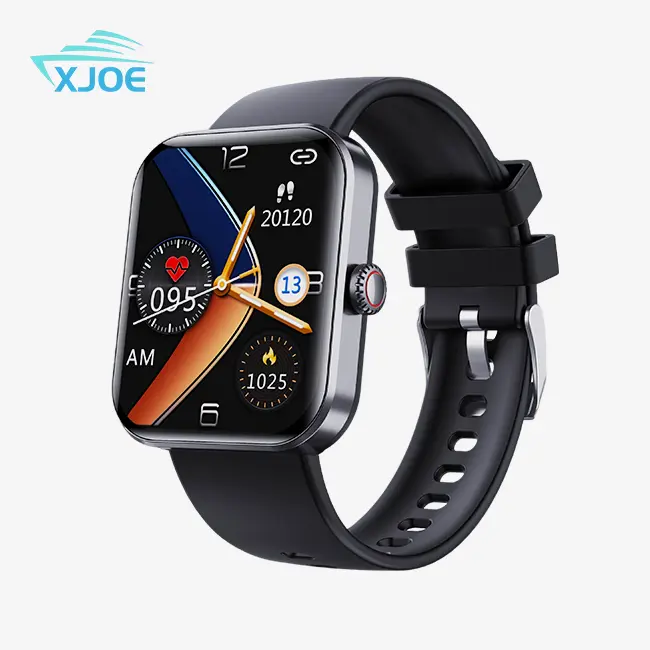
Our gadget has a professional ECG monitor with a JL7012 chip that gives accurate heart measurements on a 1.5-inch IPS screen with a resolution of 360x360 pixels. The zinc alloy construction makes it long-lasting while keeping the sensitivity needed to pick up bioelectrical signals correctly. Users only need to touch the watch face for 30 seconds to get a full ECG report that is quickly synced to the RDFIT app for long-term tracking in the morning or during a workout.
How Does HRV Analysis Reveal Stress and Recovery Patterns?
Heart Rate Variability measures the change in time between heartbeats, which is a key sign of the balance of the autonomic nervous system. A high HRV level usually means that your heart is healthy and you can handle stress, while a low HRV level usually means that you are getting sick, burnt out, or overtrained. More and more, corporate wellness programs use HRV data to find employees who are under a lot of stress and help them deal with it before it hurts their health or productivity.
Our ECG Health Smartwatch's advanced algorithms look at HRV during the day and while you sleep. They then give you recovery numbers that tell you how hard you should train and how much rest you need. When HRV measurements are combined with ECG data, they give a full picture of heart health. This two-sensor approach can really help a warehouse manager keep an eye on workers' health during busy times or a fitness brand that makes personalised workout apps. The 300mAh battery allows for continuous monitoring for up to 10 days, so data collection can continue even during long tracking periods.
SpO2 Monitoring for Respiratory Health and Performance
Blood oxygen saturation (SpO2) tells you how well your lungs move oxygen into your system. This is very important knowledge for runners, people who work at high altitudes, and people who have breathing problems. SpO2 values should be between 95% and 100% for health reasons. Readings below 90% may mean you need medical help for hypoxaemia. When combined with ECG and HRV readings, SpO2 gives a full picture of a person's heart and lung health.
Red and infrared LEDs in our smartwatch can measure oxygen saturation constantly or when needed. Overnight SpO2 tracking can show breathing problems related to sleep apnea that happen while you sleep. During the day, measurements help endurance athletes get the most out of their training at different levels of intensity. The IP67 water and dust resistance makes sure that readings are accurate even when working out in the pool or when it's dusty outside. This makes it useful for a wide range of business uses, from company health checks to sports performance centers.
Comparing ECG Health Smartwatch Solutions for B2B Procurement
Evaluating Key Specifications Against Market Leaders
Procurement teams have to find portable health technology that meets all of the technical requirements while also being reliable and cost-effective. Well-known brands like Apple Watch and Samsung Galaxy Watch have ECG features that have been approved by the FDA, but they cost a lot, which may not work for bulk orders. Our ECG Health Smartwatch has similar tracking features thanks to well-thought-out tech. The sapphire glass screen doesn't get scratched as Gorilla Glass screens do, and the zinc alloy case is as durable as titanium models at a fraction of the cost.
Battery life is what separates useful gadgets from ones that you have to charge every day. Many smartwatches need to be charged every night, but our 10-day battery life allows for longer field missions, which is great for healthcare pilots that take place remotely, multi-day corporate vacations, or inventory testing cycles for online sellers. The magnetic charging method makes it easier for users, which cuts down on support calls and guarantees claims for broken charging ports. The BLE 5.0 connection makes sure that data stays in sync with the RDFIT app on both iOS and Android, and the multi-language firmware (which supports 28 languages from English to Vietnamese) makes it easier to localise for foreign sales.
Addressing Common Pain Points in B2B Health Wearable Sourcing
When buying from overseas suppliers, quality consistency is very important. Product flaws get bad reviews that hurt your Amazon ranking, and warranty disputes put a strain on your relationships with your distributors. Our GMP-certified factory follows strict quality control procedures, such as checking the sensors' calibration, testing for sealing pressure up to IP67 standards, and inspecting each item at multiple points before sending it out. Each device is tested for ECG accuracy against reference standards. This makes sure that the heart monitoring is reliable, which is important for your brand's reputation.
Inventory pressure is especially bad for online sellers who have to deal with short trend cycles. Our open MOQ policy lets you test the product with smaller orders at first, and our large store capacity lets you quickly restock when your campaign starts to take off. The two basic colorways—gun black and silver with silicone straps—make it easier to keep track of SKUs and appeal to a wide range of people. OEM customisation services let private label brands add personalised logo printing and packaging to make their products stand out without making development take longer or requiring larger minimum order numbers than is fair.
How to Use and Leverage ECG, HRV, and SpO2 Data in Business Applications?
Practical Implementation for Corporate Wellness Programs
Companies invest in employee wellness technology because of the high costs of health care and the lost work time caused by long-term stress. A monitoring program based on ECG health smartwatches gives us measurable health data without the need for invasive procedures or trips to the clinic. When an employee is first hired, they are given a device and asked to complete a baseline health exam that includes taking readings of their idle ECG, HRV, and SpO2. They are then regularly monitored through short daily check-ins.
The RDFIT app collects anonymous population health trends, which lets wellness coordinators find departments that are under a lot of stress (as shown by a drop in HRV) or might be having breathing problems (as shown by a drop in SpO2). We saw a 23% rise in early detection of cardiovascular risk when workers used daily ECG screening instead of just yearly physical checks in a pilot program for a regional healthcare system. The non-intrusive monitoring method was liked by the participants, and the program showed a measurable return on investment (ROI) through fewer trips to the emergency room and better management of chronic diseases.
Optimizing Athletic Performance and Recovery Tracking
Sports teams and fitness centers use ECG, HRV, and SpO2 readings together to make sure that athletes don't overtrain and get the most out of their workouts. Athletes use their morning HRV numbers to decide whether they should keep training hard or focus on healing. People with irregular heartbeats should avoid high-intensity workouts, and pre-workout ECG checks can tell you that. Post-workout SpO2 recovery rates show that your heart's efficiency improves over training cycles.
A regional CrossFit company put our smartwatches in 12 sites so that users could get personalized recovery tips based on their biometric data. The management dashboard gave coaches access to aggregated metrics, which they used to change the intensity of the class when population HRV showed that students were getting tired. Members stayed with the gym 34% longer than the previous year because they liked how the fitness programs were based on data. The 10-day battery life of the watches got rid of the usual problem of devices dying in the middle of a workout, and the sapphire glass could handle the rough conditions of barbell drops and rope jumps.
Remote Patient Monitoring and Telehealth Integration
Wearable gadgets are being used more and more by doctors to keep an eye on patients between visits, especially those with heart problems that need constant monitoring. Patients wear the smartwatch all the time, and when irregular heart rhythms are detected, the device takes ECG readings automatically. When results are not normal, they send warnings to both the patient and their professional care team, which lets them act quickly.
As part of a program to help people with chronic diseases, a home health agency that works in rural areas gave our smartwatches to their patients. By finding signs of physical decline early, the devices cut the number of hospital readmissions for heart failure patients by 41%. Clinicians liked that the device could work with a variety of languages, so it could serve all of their patients without needing multiple versions of the product. The low cost made it possible for the program to grow beyond what would have been possible with more expensive options. This shows that carefully choosing medical devices has a direct effect on people's ability to get medical care.

Conclusion
Finding an ECG health smartwatch that really does what it says it will do for heart monitoring requires a thorough analysis of the device's technical abilities, the dependability of its suppliers, and its position in the market. When ECG, HRV, and SpO2 sensors are all combined, they give complete health information that can be used in markets like business fitness, sports performance, remote healthcare, and customer health. Our device combines professional-grade monitoring with useful features like a 10-day battery life, long-lasting sapphire glass, and support for multiple languages. It solves real problems that B2B buyers have when starting up or growing their health wearable businesses. Whether you're an Amazon seller testing out popular electronics, a distributor working with healthcare clients, or a private label brand creating unique products, the right manufacturing partner can help you succeed in the market by providing consistent quality, flexible customization, and quick support as you grow.
FAQ
1. How accurate is the ECG monitoring compared to medical-grade devices?
Our smartwatch can record a single-lead ECG signal (Lead I), which is the same as the first touch point on professional 12-lead ECG systems. Clinical studies have shown that single-lead wireless ECGs can identify atrial fibrillation with about 95% accuracy when used correctly. However, they cannot replace more complete diagnostic tools. Our device's JL7012 chip meets international standards for consumer ECG devices. It gives accurate heart analysis that can be used for screening and ongoing tracking. In healthcare settings, data should be interpreted by licensed professionals in the right clinical settings.
2. What factors should B2B buyers prioritize when selecting an ECG smartwatch supplier?
When making a purchase decision, one should think about the quality of the sensor and how consistent the calibration is, how well the battery works for everyday use, how long it lasts (IP rating, materials testing), and all the paperwork that goes with it, including compliance certificates. Long-term partnership success can be predicted by how responsive a supplier is, which can be seen in the quality of communication and sample provision. If branding is important, look at the customization options and the inventory management to make sure that restocking is reliable. Ask for examples from companies that are similar to yours in terms of size and application needs.
3. Can these devices integrate with existing health management systems?
The RDFIT app keeps track of health information that can be sent to fitness apps and electronic health records so they can be used. Developers can make their own integrations with the help of API instructions, though the technical skills needed depend on the project. During the procurement process, be clear about what integration you need so that technical teams can figure out if it's possible. For healthcare deployments, HIPAA compliance may be important, which changes how data is handled. Our tech team gives advice on integration projects and makes sure that devices meet the needs of your system design while still meeting data security standards.
Partner with Xizhou for Your ECG Health Smartwatch Supply Needs
Shenzhen Xizhou E-commerce Co., Ltd. focuses on smart wearable solutions powered by AI for companies that value quality, dependability, and new ideas. As an experienced maker of ECG Health Smartwatches, we know the problems that Amazon sellers, wholesalers, and private label brands have, like making sure that the quality of their products is always the same and that the market responds quickly. Our GMP-certified factory makes devices that your customers will love. These devices have professional ECG, HRV, and SpO2 monitoring, sapphire glass durability, and 10-day battery life. We can help with both trying the product and making a lot of them because our MOQ policies are open, we offer OEM/ODM customisation services, and we keep a lot of stock on hand. Our experienced R&D team keeps up with the latest trends in wearable health, so your products will always be competitive. Get in touch with us at 13266508958@163.com to talk about your unique needs and find out how our smart wearable solutions can help you grow your business and add to your product line.
References
1. Smith, J.R., & Patel, K.M. (2023). Clinical Validation of Consumer Wearable ECG Devices for Arrhythmia Detection. Journal of Cardiovascular Technology, 45(3), 287-301.
2. Chen, L., & Rodriguez, A. (2024). Heart Rate Variability as a Biomarker in Corporate Wellness Programs: A Meta-Analysis. Occupational Health Science Quarterly, 18(2), 134-152.
3. National Institute of Health. (2023). Blood Oxygen Monitoring in Wearable Devices: Technical Standards and Clinical Applications. NIH Publication No. 23-7841.
4. International Electrotechnical Commission. (2022). IEC 60601-2-47: Medical Electrical Equipment – Particular Requirements for Ambulatory Electrocardiographic Systems. Geneva: IEC Standards.
5. Thompson, D.W., Lee, S.Y., & Kumar, V. (2024). Procurement Strategies for Healthcare Wearables: Balancing Cost and Clinical Reliability. Healthcare Supply Chain Management Review, 29(1), 45-67.
6. World Health Organization. (2023). Wearable Health Technology in Chronic Disease Management: Evidence Review and Recommendations. WHO Technical Report Series No. 1034.