

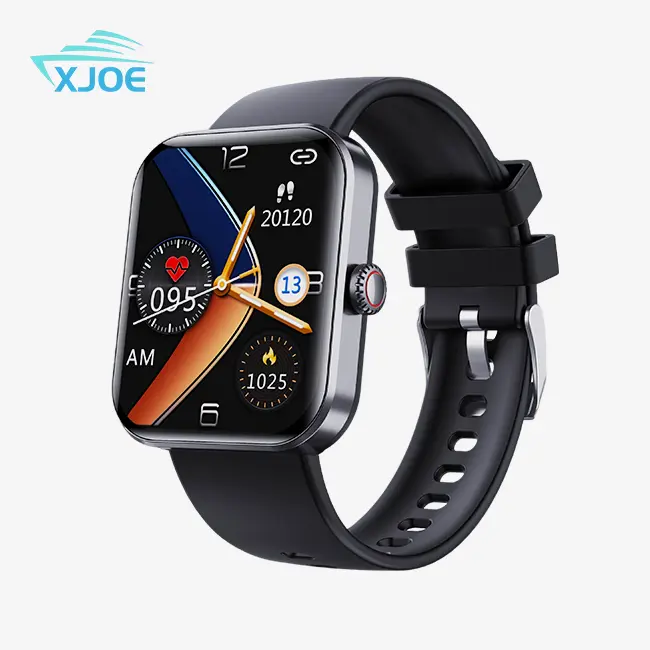
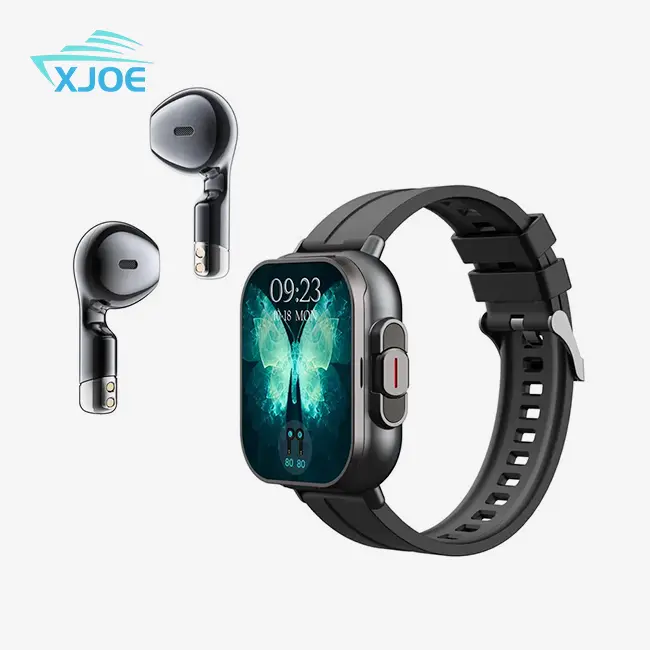
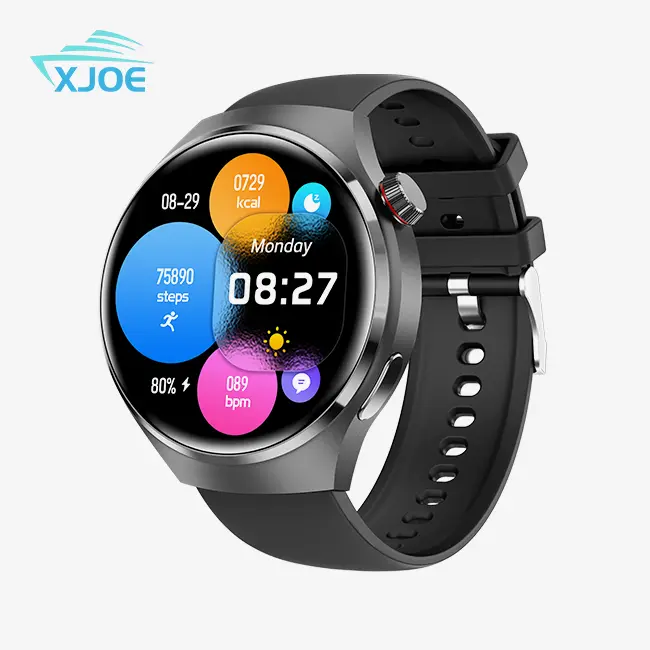
Accurate Heart Rate Smartwatch for Fitness Monitoring
An Accurate Heart Rate Smartwatch represents a sophisticated wearable device engineered to deliver real-time cardiovascular metrics through advanced biosensor integration. Utilising photoplethysmography (PPG) technology combined with motion compensation algorithms, these devices provide continuous heart rate tracking, Heart Rate Variability (HRV) analysis, and zone-based training insights. For B2B buyers—from Amazon FBA sellers to electronics distributors—selecting an accurate heart rate smartwatch means sourcing devices that balance precision, durability, and customisation potential. This capability ensures end-users receive reliable fitness data while brands maintain competitive margins and customer satisfaction in a rapidly evolving market.
Understanding Accurate Heart Rate Monitoring in Smartwatches
Heart rate measuring technology is now an important part of keeping track of your health. When I look at smartwatches to buy, it's important for me to understand how the sensors work so that I can get correct readings.
How Do PPG Sensors Work?
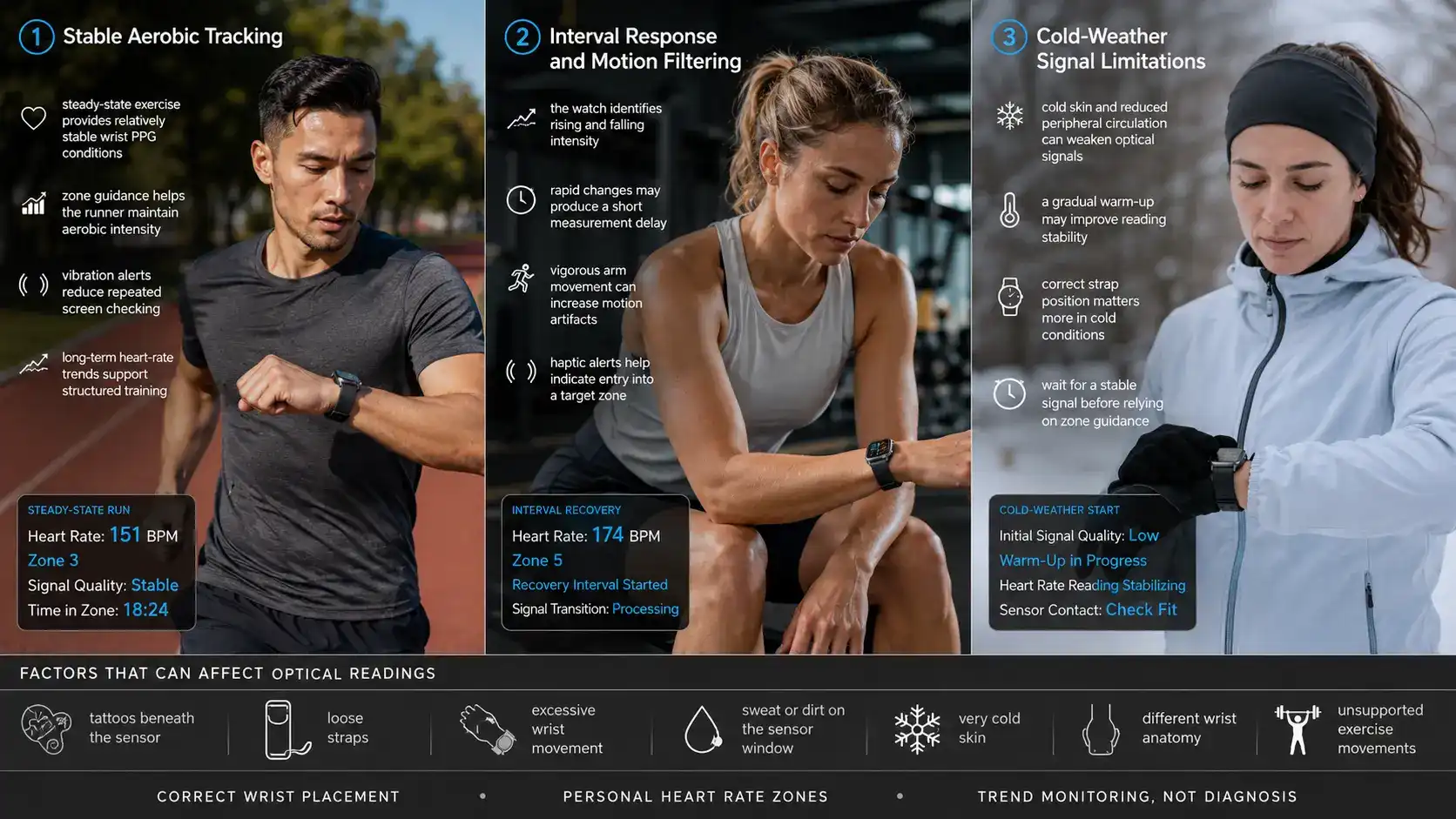
Optical heart rate monitors use green LED lights that go through the skin to measure changes in blood flow. Photodiodes pick up a pulse wave every time the heart beats. Smartwatches that are more advanced use multiple LEDs and sensors in multi-path optical setups to cut down on signal noise when the wearer moves. Motion artefacts can make it hard to get accurate results during high-intensity interval training, but this technology works well for moderate activities like walking or cycling.
We sell smartwatches in Xizhou that have a high-precision optical heart rate monitor made just for runners. The device keeps readings constant during tempo runs or sprint intervals by filtering out cadence-lock mistakes. This is a typical problem where wrist movements are mistakenly recorded as heartbeats.
Real-World Performance Factors
Heart rate precision is affected by many physical and psychological factors. Light absorption rates are affected by skin tone, with darker skin needing stronger LEDs. Tattoo ink can completely block light, leaving empty spaces. The right placement on the wrist is very important—the device should sit just above the wrist bone, snugly—tight enough to keep it from moving but not so tight that it blocks blood flow.
Temperature changes also play a part. When it's cold outside, blood vessels close to the skin's surface narrow, weakening the signal. This is fixed by our device's adjustable sensor strength, which changes the brightness of the LEDs automatically based on the quality of the signal it detects. This makes sure that the info is accurate whether it's hot outside or cold inside.
Heart Rate Zones and Training Applications
When you do zone-based training, your heart rate is split into five levels, from Zone 1 (light recovery) to Zone 5 (maximum effort). With accurate zone recognition, basic workouts can be turned into science-based training plans. A runner training for a marathon might spend 80% of their time in Zone 2, which is the aerobic base-building zone. They need to keep a close eye on their heart rate to make sure they don't move into Zone 3, which is where tiredness sets in more quickly.
During workouts, our smartwatch shows the real-time zone, so players can quickly change their pace. This feature is very helpful for business-to-business clients who want to reach serious fitness fans who want professional-grade data. The machine also figures out VO2 Max, which is the most oxygen that the body can take in while exercising. This shows how cardiovascular fitness improves over time.
Comparing Leading Accurate Heart Rate Smartwatches for B2B Procurement
A study of the market shows that Accurate Heart Rate Smartwatches are divided into different product categories, each of which serves a different buying strategy.
Premium Versus Budget-Conscious Options
Premium brands, which usually cost more than $250, are led by well-known names like Garmin, Polar, and Apple. These gadgets have full health communities, profiles for multiple sports, and a lot of third-party app interactions. But their higher prices and minimum order sizes can make it hard for smaller online stores that are trying to break into new markets.
Options that are easy on the wallet and cost less than $200 have come a long way. A lot of them now use similar PPG monitor technology at prices that most people can afford. In this group is our smartwatch for runners, which offers professional-level heart rate accuracy, VO2 Max estimation, and advanced running metrics without the high price tag of a premium brand. This positioning lets Shopify shops and Amazon buyers keep good profit margins while still providing real value.
Chest Strap Comparison
ECG-enabled chest straps are still the best way to get an accurate reading of your heart rate, especially when you're doing intense activities. They get electrical signals from the heart itself, so there are no problems with motion artefacts. This is one reason why chest straps are often preferred by professional sports and medical tracking apps.
But chest straps make things hard for consumer markets. They need to be bought separately and maintained regularly, and many people find it difficult to wear them for long periods of time. Devices that you wear on your wrist are more convenient and can track you all day. Modern optical sensors are accurate enough for most fitness activities, like running for fun, cycling, or working out at the gym. When deciding between platforms, B2B buyers should think about the people they want to sell to.
Key Specifications for Procurement Evaluation
I look at specs that have a direct effect on user experience and return rates when I compare devices:
- Battery longevity determines user satisfaction. Our device has a battery life of 5–10 days when heart rate monitoring is turned on, and it charges magnetically for ease of use. This length of time allows for weekly training cycles without the stress of daily charging.
- Durability standards matter equally. IP67 water protection keeps out rain and sweat, but better ratings are needed for full swimming use. The fibre-reinforced polymer case is strong but still light and comfortable, which is important for long-distance runners who don't like carrying heavy things on their wrists.
- Display quality affects outdoor readability. The 320x240 resolution of the IPS screen makes it easy to see in bright sunlight, which is a common problem with lower-quality screens. The 29-35mm screen size is a good compromise between data density and wearability for people with different-sized wrists.
How to Choose the Right Accurate Heart Rate Smartwatch for Your Business?
When buying something, you have to make sure that the product's features match the wants of the target market for an Accurate Heart Rate Smartwatch.
Identifying Your Customer Segment
Amazon FBA sellers who want to sell to fitness fans need to focus on devices with training features like VO2 Max predictions, zone monitoring, pace tracking, and cadence measures. This group is directly addressed by our smartwatch, which was made for serious runners who look at performance data to get faster in races.
Dropshipping companies that sell to casual fitness users might put more value on good looks, smartphone alerts, and general health tracking than on specific running metrics. Knowing this difference keeps your inventory from mixing up and lowers the number of returns you get.
Critical Evaluation Metrics
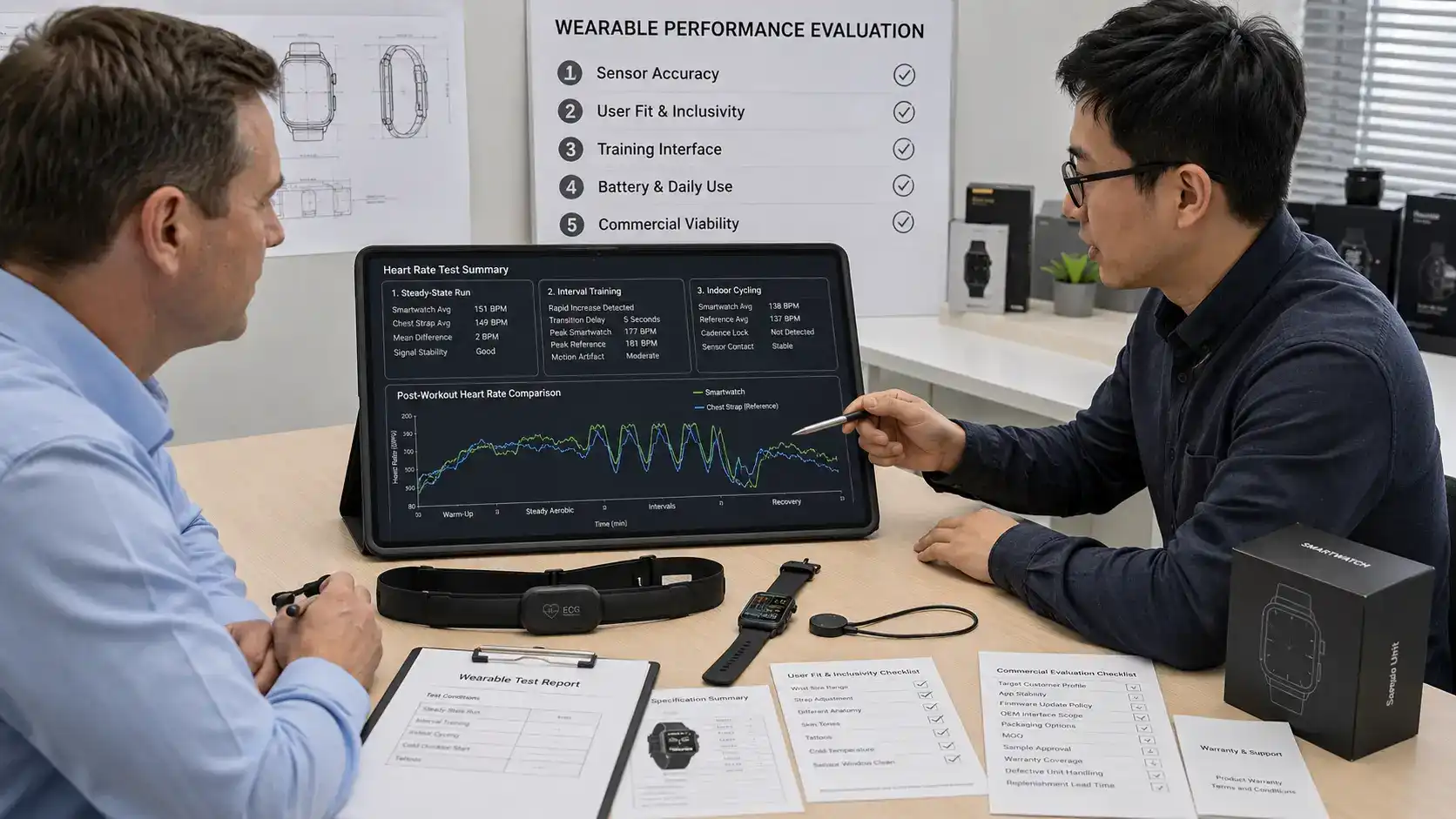
Sensor accuracy verification should involve comparative testing. Ask for sample units and compare them to well-known chest strap trackers while doing different tasks. Keep track of the average deviation percentages. Good devices stay accurate within 5% of ECG references during steady-state activities.
Multi-sport functionality expands market reach. Our device is mostly for running, but it also keeps track of simple fitness routines thanks to the Android OS. Because of this, resellers can market to different types of users without having to keep separate SKUs.
Software ecosystem quality determines long-term satisfaction. Devices should be able to successfully sync with famous exercise apps, keep past data, and get firmware updates that fix bugs or add new features. As part of our partnership model, we offer ongoing software support to make sure that products stay competitive over their entire lifecycle.
Supplier Relationship Considerations
A supplier's skills, not just the standards of the goods, also affect how well a procurement works. Low minimum order quantities let you test the market without having to spend a lot of money. At Xizhou, we accept small-batch orders to test our products, including the heart rate monitor watch, before they are bought in large quantities.
Customisation services help brands stand out. Custom designs, packaging, and even user interface branding can be used for private labelling, which turns generic gadgets into unique goods. Our OEM/ODM services include printing logos, designing packaging, and making changes to software, which helps brands stand out in the market.
Responsive after-sales support protects reputation. End users don't call the maker when they have problems; they call the seller. Negative reviews can't hurt your marketplace scores as long as you have reliable ways to communicate with your suppliers and fair guarantee terms.
Procurement Tips: How to Buy Accurate Heart Rate Smartwatches Online at the Best Deals?
For B2B electronics procurement to go smoothly, you need to take a strategic approach to both quality assurance and cost optimisation when sourcing an Accurate Heart Rate Smartwatch.
Sourcing Platform Selection
Verified business-to-business (B2B) platforms put buyers in touch with well-known producers and protect the transactions. Dealing directly with manufacturers can save you money, but you need to do a lot of research first. When looking for accurate heart rate smartwatch products, I suggest asking for approvals that show they meet quality standards.
Product samples reveal more than specification sheets. Testing real units shows problems with usability, differences in build quality, and how sensors work in real life. Sample costs protect against bigger mistakes in the store.
Bulk Purchasing Strategies
Volume discounts have a big effect on margins. Manufacturers often offer tiered prices, which means that if you buy 100 units instead of 1,000 units, the cost per unit might go down by 20 to 30 percent. But it takes careful demand forecasting to find the right balance between inventory risk and cost savings.
Flexible reorder arrangements are good for markets that change quickly. Electronics trends change quickly, and having to keep ordering big amounts of old types causes losses. At Xizhou, we focus on quick restocking with low MOQs to meet the needs of Amazon buyers who need short-term refilling cycles.
Feature Value Assessment
A person's perception of value is based on more than just how accurate their heart rate is. Outdoorsy people might like GPS tracking, but it's not in our model for runners because it would drain the battery too quickly. During times of rising health awareness, blood oxygen tracking (SpO₂) became more popular. People who are interested in health are drawn to stress tracking through HRV research.
Think about which traits will appeal to your ideal customers. Adding more features makes things more expensive without always making conversion rates better. Instead of competing as a general-purpose smartwatch, our device focuses on running-specific metrics like pace, cadence, and VO2 Max, making it the best in its class.
Logistics and Support Infrastructure
Shipping times affect preparing your supplies and taking advantage of seasonal possibilities. Make production lead times clear, especially for custom orders that need logo printing or changes to the packaging. While air freight speeds up delivery, it costs more. If you plan ahead, sea freight can save you money.
Defect rates are kept low by return and warranty policies. For products such as a heart metre watch, find out what percentage of defective items leads to replacement orders and who pays for the cost of sending the items back. Having clear rules stops disagreements that hurt company relationships.
Conclusion
Technical performance, market positioning, and source reliability must all be considered when choosing an Accurate Heart Rate Smartwatch for your company. Fitness-focused buyers get the most out of devices with high-precision optical sensors, strong construction, and focused feature sets. Knowing the limits of PPG technology, how zone-based training can be used, and the factors that affect accuracy in the real world helps people make smart buying choices. The market is competitive, and there are choices at different price points. However, to be successful in sourcing, device skills must be matched with customer needs. New developments in AI integration and health monitoring expansion show that the market will continue to grow. This will create opportunities for B2B partners who stay on top of technological changes while keeping quality standards high and maintaining responsive supplier relationships.
FAQ
1. How accurate are optical heart rate sensors compared to chest straps?
Optical sensors worn on the wrist are usually accurate within 5–10% of chest strap ECG monitors while doing steady-state exercises like riding or running. Motion artefacts can make it harder to be accurate during periods of high energy with quick changes in direction. When it comes to professional athletic training that needs accurate lactate threshold identification, chest straps are still the best choice. Modern multi-path optical sensors with motion adjustment algorithms have greatly reduced this difference, allowing wrist-based devices to be used for most fitness activities, both for fun and for serious fitness enthusiasts with an Accurate Heart Rate Smartwatch.
2. Can smartwatches accurately measure heart rate variability?
Trends in HRV can be reliably measured by good smartwatches, but absolute values may be different from those found on medical-grade equipment. Tracking HRV works best when you're not moving, like when you're sleeping or at rest. The measure helps keep track of how well people are recovering and whether they are ready to train. Instead of comparing exact HRV numbers between devices or people, users should look at their own specific trend patterns.
3. What affects heart rate accuracy during intense workouts?
During vigorous exercise, accuracy is affected by a number of factors. If the device is not placed correctly, it can move, which can damage the sensor contact. When it's cold, the surface blood vessels narrow, which makes messages weaker. When the arms move quickly, they create motion artefacts that the algorithm has to get rid of. Differences in wrist tissue affect where sensors are placed in relation to blood vessels. Light can't get through tattoos at all. Many of these problems can be solved by devices with advanced motion corrections and adaptive sensor intensity, which keep results accurate in a wide range of situations.
Partner with Xizhou for Reliable, Accurate Heart Rate Smartwatch Supply
We at Xizhou are experts at making AI-powered smart wearable solutions that work with Amazon, Shopify, and wholesale channels for our B2B partners. Our Accurate Heart Rate Smartwatch is designed for runners and has professional-grade optical sensors, advanced training measures, and a sturdy build at a price that keeps your profits safe. As an experienced maker, we offer flexible MOQs that start with small test runs. This lets you check out the market without any risk before going big. As part of our OEM/ODM services, we can print your name on custom packaging, change the user interface (UI), and even make standard devices into unique goods that help build your brand. We guarantee consistent quality and quick restocking to match your changing restocking cycles thanks to our GMP factory standards, full certifications, and large inventory capacity. Throughout the duration of your product, our quick team gives you professional advice on how to customise it and helps you after the sale. Get in touch with us at 13266508958@163.com to talk about your Accurate Heart Rate Smartwatch sourcing needs and find out how our focus on technology and reliable manufacturing can help you stay competitive in the fitness wearables market, which is growing.
References
1. Gillinov, S., Etiwy, M., Wang, R., et al. (2017). "Variable Accuracy of Wearable Heart Rate Monitors during Aerobic Exercise." Medicine & Science in Sports & Exercise, 49(8), 1697-1703.
2. Bent, B., Goldstein, B. A., Kibbe, W. A., & Dunn, J. P. (2020). "Investigating Sources of Inaccuracy in Wearable Optical Heart Rate Sensors." NPJ Digital Medicine, 3(1), 18.
3. Düking, P., Giessing, L., Frenkel, M. O., et al. (2020). "Wrist-Worn Wearables for Monitoring Heart Rate and Energy Expenditure While Sitting or Performing Light-to-Vigorous Physical Activity: Validation Study." JMIR mHealth and uHealth, 8(5), e16716.
4. Stahl, S. E., An, H. S., Dinkel, D. M., Noble, J. M., & Lee, J. M. (2016). "How Accurate are the Wrist-Based Heart Rate Monitors During Walking and Running Activities? Are They Accurate Enough?" BMJ Open Sport & Exercise Medicine, 2(1), e000106.
5. Hernando, D., Roca, S., Sancho, J., Alesanco, Á., & Bailón, R. (2018). "Validation of the Apple Watch for Heart Rate Variability Measurements during Relax and Mental Stress in Healthy Subjects." Sensors, 18(8), 2619.
6. Bunn, J. A., Navalta, J. W., Fountaine, C. J., & Reece, J. D. (2018). "Current State of Commercial Wearable Technology in Physical Activity Monitoring 2015–2017." International Journal of Exercise Science, 11(7), 503-515.