How Long Should a Premium Sports Smartwatch Battery Last?
If you sell or source wearables, battery life is one of the first questions your customers ask. A premium sports smartwatch with a short battery life creates returns, bad reviews, and lost repeat business. So what's the real benchmark? Most quality sports smartwatches today deliver between 5 and 14 days on standard use, with GPS-active sessions running 20 to 60 hours depending on the model. Entry-level devices with smaller cells may fall below those numbers. Understanding what drives those figures helps you pick the right product for your market.

Understanding Battery Life in Premium Sports Smartwatches
There is no set number for battery life. The time changes based on what the watch is doing at the moment.
What Drains the Battery Fastest
At the same time, GPS tracking, constant heart rate sampling, bright AMOLED screens, and busy Bluetooth connections all use power. It's possible for a watch to use 30–40% more power during a triathlon than it would to just count steps. Wearable energy-consumption tests show that changing the lighting of the screen alone can change the total amount of use by 15–20%.
Standby vs. Active Use: The Real Gap
It takes longer for batteries to die when they're not being used than most buyers think. A watch that says "10 days" usually means that it has limited GPS and screen-on time. If you use GPS all the time, you can cut that time down to less than 24 hours. Before placing an order, procurement buyers should always check both numbers.
Where the Market Stands in 2025
The Fenix 8 series from Garmin can be used in GPS mode for up to 90 hours. In Low Power Mode, the Apple Watch Ultra 2 lasts for about 60 hours. Most mid-range sports bands from brands that are designed for the Amazon and TikTok Shop channels last between 5 and 10 days with mixed use. When sellers know this range, they can set realistic expectations for their products.
Key Factors Influencing Battery Longevity for Procurement Decisions
When looking at sports smartwatch stock to resell or develop under your own brand, the battery performance needs to be broken down into hardware and software parts.
Hardware: Capacity, Weight, and Chipset
Milliamp-hours (mAh) are used to measure how much power a battery has. Bigger cells last longer, but they weigh more. The top-of-the-line sports model from Xizhou has a 300mAh cell inside a zinc metal case. This is a good mix between durability and comfort. The JL7074 chip is a low-power device that can handle many tasks without using too much power. When selling to active users, the chipset's efficiency is just as important as the battery's size.
Software: Power Modes and OS Management
Good firmware makes a difference that can be seen. 30–50% more battery life can be gained by watches that let users turn off the always-on display, lower the frequency of sync, or switch to a basic activity mode. The Xizhou device comes with firmware that supports 28 languages and can link to the RDFit app. This lets users set the volume of notifications and the time between syncs, both of which have a direct effect on daily use.
Use Case Variability
A fitness influencer who wears a watch 18 hours a day with GPS and heart rate tracking turned on will drain the battery much more quickly than a normal person who checks their step count twice a day. Before placing large orders, B2B buyers who are looking for batteries for specific groups of people, like gym brands, outdoor adventure stores, or corporate wellness programs, should make sure that the battery specs match how the batteries will be used.
Before choosing an SKU, you should make a map of these variables because one of the main reasons for bad reviews on Amazon and Shopify is that the battery specs don't match up with the actual use case.
Comparing Battery Life Across Leading Sports Smartwatch Brands
Not every brand handles power in the same way. Knowing these differences helps dealers and wholesalers put goods in the right place.
Apple vs. Garmin: Two Different Philosophies
The Apple Watch Series 10 puts a lot of emphasis on a great display experience and strong ecosystem interaction. It can be used normally for about 18 hours. Garmin, on the other hand, designs its gadgets with endurance runners who need GPS tracking over multiple days in mind. At full power, the Fenix 8 can last for weeks. These two product ideas are very different, and they are made for different types of customers.
Mid-Range OEM Models: The Volume Opportunity
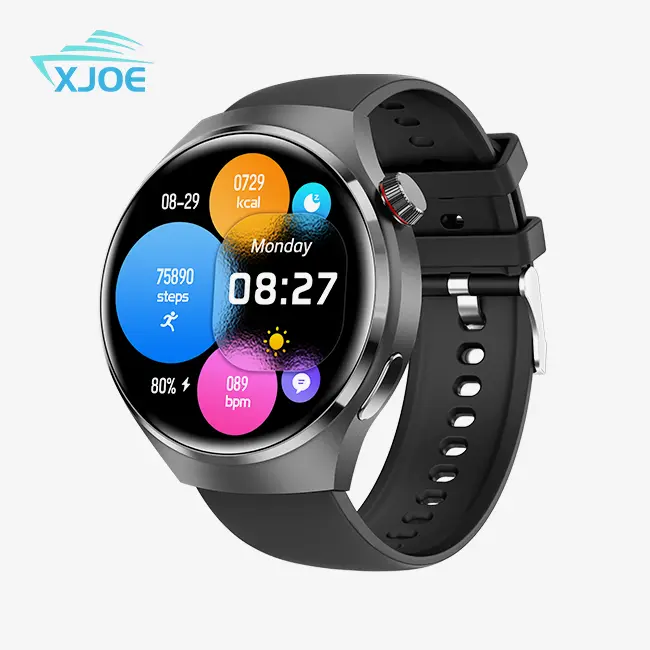
The price range of mid-range OEM smartwatches is just right for Amazon FBA sellers and Shopify tech shops. A 300mAh battery in a device with BLE 5.0 and hardware that works well can usually last for 5–7 days of everyday use. That level of performance is good for most casual fitness users and keeps the margins healthy. The top-of-the-line Xizhou model has a 1.46-inch Round IPS Color Screen with a resolution of 360x360 and a clean, high-end look. It comes in Gun Black and Silver.
Where Private-Label Brands Win
A lot of private-label buyers who are making their own fitness brands find that being able to control the firmware is more useful than trying to get the highest mAh number. You can control what customers expect from the start when you set default power modes, name the app interface, and handle the out-of-box experience. This helps you get better reviews and keep more customers.
Procurement Considerations: Ensuring Battery Reliability and Cost Efficiency
Finding a good item is just one part of the job. Many suppliers don't do a good job of making sure that different batches of batteries work the same way.
Warranty Terms and Batch Consistency
It is known that batteries in consumer gadgets break down over time. At the batch level, providers who care about quality test for hydrostatic pressure, make sure that the lifetime buttons work, and check the cell capacity. When looking into a high-end sports smartwatch provider, don't just look at a product specification sheet; ask to see proof of their quality control procedures as well.
Budget Segmentation for B2B Buyers
This is a useful way to think about different price levels:
- Under $50 wholesale: Entry-level fitness bands, basic step and sleep tracking, battery life 3–5 days. Suitable for promotional gifts and low-AOV e-commerce stores.
- $50–
How Long Should a Premium Sports Smartwatch Battery Last? - Xizhou 20 wholesale: Mid-range sports watches with Bluetooth 5.0, multi-sport modes, 5–10-day battery life. Strong fit for Amazon FBA and Shopify DTC brands. English


How Long Should a Premium Sports Smartwatch Battery Last?
2026-10-10 17:50:52If you sell or source wearables, battery life is one of the first questions your customers ask. A premium sports smartwatch with a short battery life creates returns, bad reviews, and lost repeat business. So what's the real benchmark? Most quality sports smartwatches today deliver between 5 and 14 days on standard use, with GPS-active sessions running 20 to 60 hours depending on the model. Entry-level devices with smaller cells may fall below those numbers. Understanding what drives those figures helps you pick the right product for your market.
Understanding Battery Life in Premium Sports Smartwatches
There is no set number for battery life. The time changes based on what the watch is doing at the moment.
What Drains the Battery Fastest
At the same time, GPS tracking, constant heart rate sampling, bright AMOLED screens, and busy Bluetooth connections all use power. It's possible for a watch to use 30–40% more power during a triathlon than it would to just count steps. Wearable energy-consumption tests show that changing the lighting of the screen alone can change the total amount of use by 15–20%.
Standby vs. Active Use: The Real Gap
It takes longer for batteries to die when they're not being used than most buyers think. A watch that says "10 days" usually means that it has limited GPS and screen-on time. If you use GPS all the time, you can cut that time down to less than 24 hours. Before placing an order, procurement buyers should always check both numbers.
Where the Market Stands in 2025
The Fenix 8 series from Garmin can be used in GPS mode for up to 90 hours. In Low Power Mode, the Apple Watch Ultra 2 lasts for about 60 hours. Most mid-range sports bands from brands that are designed for the Amazon and TikTok Shop channels last between 5 and 10 days with mixed use. When sellers know this range, they can set realistic expectations for their products.
Key Factors Influencing Battery Longevity for Procurement Decisions
When looking at sports smartwatch stock to resell or develop under your own brand, the battery performance needs to be broken down into hardware and software parts.
Hardware: Capacity, Weight, and Chipset
Milliamp-hours (mAh) are used to measure how much power a battery has. Bigger cells last longer, but they weigh more. The top-of-the-line sports model from Xizhou has a 300mAh cell inside a zinc metal case. This is a good mix between durability and comfort. The JL7074 chip is a low-power device that can handle many tasks without using too much power. When selling to active users, the chipset's efficiency is just as important as the battery's size.
Software: Power Modes and OS Management
Good firmware makes a difference that can be seen. 30–50% more battery life can be gained by watches that let users turn off the always-on display, lower the frequency of sync, or switch to a basic activity mode. The Xizhou device comes with firmware that supports 28 languages and can link to the RDFit app. This lets users set the volume of notifications and the time between syncs, both of which have a direct effect on daily use.
Use Case Variability
A fitness influencer who wears a watch 18 hours a day with GPS and heart rate tracking turned on will drain the battery much more quickly than a normal person who checks their step count twice a day. Before placing large orders, B2B buyers who are looking for batteries for specific groups of people, like gym brands, outdoor adventure stores, or corporate wellness programs, should make sure that the battery specs match how the batteries will be used.
Before choosing an SKU, you should make a map of these variables because one of the main reasons for bad reviews on Amazon and Shopify is that the battery specs don't match up with the actual use case.
Comparing Battery Life Across Leading Sports Smartwatch Brands
Not every brand handles power in the same way. Knowing these differences helps dealers and wholesalers put goods in the right place.
Apple vs. Garmin: Two Different Philosophies
The Apple Watch Series 10 puts a lot of emphasis on a great display experience and strong ecosystem interaction. It can be used normally for about 18 hours. Garmin, on the other hand, designs its gadgets with endurance runners who need GPS tracking over multiple days in mind. At full power, the Fenix 8 can last for weeks. These two product ideas are very different, and they are made for different types of customers.
Mid-Range OEM Models: The Volume Opportunity
The price range of mid-range OEM smartwatches is just right for Amazon FBA sellers and Shopify tech shops. A 300mAh battery in a device with BLE 5.0 and hardware that works well can usually last for 5–7 days of everyday use. That level of performance is good for most casual fitness users and keeps the margins healthy. The top-of-the-line Xizhou model has a 1.46-inch Round IPS Color Screen with a resolution of 360x360 and a clean, high-end look. It comes in Gun Black and Silver.
Where Private-Label Brands Win
A lot of private-label buyers who are making their own fitness brands find that being able to control the firmware is more useful than trying to get the highest mAh number. You can control what customers expect from the start when you set default power modes, name the app interface, and handle the out-of-box experience. This helps you get better reviews and keep more customers.
Procurement Considerations: Ensuring Battery Reliability and Cost Efficiency
Finding a good item is just one part of the job. Many suppliers don't do a good job of making sure that different batches of batteries work the same way.
Warranty Terms and Batch Consistency
It is known that batteries in consumer gadgets break down over time. At the batch level, providers who care about quality test for hydrostatic pressure, make sure that the lifetime buttons work, and check the cell capacity. When looking into a high-end sports smartwatch provider, don't just look at a product specification sheet; ask to see proof of their quality control procedures as well.
Budget Segmentation for B2B Buyers
This is a useful way to think about different price levels:
- Under $50 wholesale: Entry-level fitness bands, basic step and sleep tracking, battery life 3–5 days. Suitable for promotional gifts and low-AOV e-commerce stores.
- $50–$120 wholesale: Mid-range sports watches with Bluetooth 5.0, multi-sport modes, 5–10-day battery life. Strong fit for Amazon FBA and Shopify DTC brands.
- $120+ wholesale: Feature-rich smartwatches with advanced health sensors, extended battery modes, and OEM customization support. Best for private-label brands and corporate wellness buyers.
In the middle to upper range, the Xizhou flagship model has full OEM branding options, IP67 water and dust protection, and magnetic charging. This makes it a great choice for resellers who want to sell a product that looks high-end without having to pay the high-end prices of a flagship brand.
These price levels can help procurement teams better divide funds and avoid spending too much on features that the people they want to buy won't use.
Lifecycle Management
Batteries lose power as they are charged and drained. After 500 cycles, a well-designed 300mAh cell with the right charge control circuits will usually still have 80% of its original capacity. This means that resellers will get fewer service claims and be able to keep customers longer.

Future Trends in Battery Technology for Sports Wearables
The next version of batteries that can be worn will change how sellers choose which products to sell.
Solid-State and Solar Supplementation
Solid-state batteries claim to have a higher energy density in a smaller package, which means they can hold more power without taking up more space. Solar-assisted charging is already available on high-end Garmin models. The cost of it is going down, and it's possible that OEM devices will have it within two to three years.
AI-Driven Power Management
Chips with AI built in can learn how things are used and turn off power to sensors that aren't being used. With this type of flexible management, users don't have to change any settings to get an extra 20 to 30 percent of battery life.
Sensor Accuracy vs. Power Demands
As health sensors get better at tracking things like skin temperature, blood oxygen levels, and signs of stress, they put more strain on batteries. For the next three years, the technical task will be to keep things accurate while also using little power. When these goods hit the market, buyers who work with suppliers that are actively spending in R&D will have an edge when it comes to sourcing.
Conclusion
How long a premium sports smartwatch's battery lasts depends on its hardware, how well its chipset works, how well its firmware is designed, and how hard you use it in real life. The right battery specification for sellers who want to sell on Amazon, Shopify, TikTok Shop, or in bulk varies on the type of watch and how the person wears it. For the middle-to-high-volume market, the Xizhou flagship model strikes a good balance between durability and performance. It comes with OEM support and IP67 reliability that stands up to customer scrutiny. Choose a source that can grow with your business and make sure that the specs of your product are right for the people you want to buy it.
FAQ
1. How long does a sports smartwatch battery last during GPS use?
Most mid-range sports watches last between 15 and 30 hours with GPS active. Flagship models from Garmin can reach 90 hours. For OEM devices with a 300mAh cell and BLE 5.0, expect 15–20 hours of GPS-intensive use under normal conditions.
2. What is the best way to extend smartwatch battery life?
Reduce screen brightness, limit always-on display, lower Bluetooth sync frequency, and disable unused health sensors when not exercising. Good firmware with configurable power modes makes these adjustments accessible to everyday users.
3. What warranty terms should B2B buyers request?
Ask for a minimum 6-month battery performance guarantee, batch-level QC reports, and clear replacement policies for defective cells. Reliable suppliers will provide documentation rather than verbal assurances.
4. Does IP67 rating affect battery life?
IP67 sealing does not directly drain the battery. However, the gaskets and sealed construction required for water resistance add slight device weight and can influence heat dissipation, which indirectly affects long-term battery health in high-temperature environments.
5. Can the battery be replaced in OEM smartwatches?
Battery replaceability depends on device construction. Magnetic-charging designs like the Xizhou flagship model are typically sealed units. For B2B buyers, clarify replacement and refurbishment policies before finalizing procurement agreements.
Source Your Next Batch of Sports Smartwatches with Xizhou
You can trust Xizhou to make high-quality premium sports smartwatches. They have a mature R&D team, a GMP-certified factory, a lot of stock, and they can do both OEM and ODM work. Our most popular model, which has a 1.46-inch IPS screen, JL7074 chip, BLE 5.0, IP67 resistance, and magnetic charging, is ready to be customized with your own brand. Get in touch with us right away to talk about pricing, MOQ, and branding options. To get a sample or bulk price, email us at 13266508958@163.com.
References
1. Garmin Ltd. — Fenix 8 Series Product Specifications and Battery Performance Data, Garmin Press Release, 2024.
2. IDC Research — Worldwide Wearables Market Quarterly Update, IDC, 2024.
3. IEEE Transactions on Consumer Electronics — Power Management Strategies in Wearable Computing Devices, IEEE, 2023.
4. Nature Energy — Advances in Solid-State Battery Technology for Portable Electronics, Nature Publishing Group, 2023.
5. Counterpoint Research — Global Smartwatch Market Share and Battery Life Benchmarks, Counterpoint Technology Market Research, 2024.
6. Consumer Reports — Smartwatch Battery Life Testing Methodology and Results, Consumer Reports, 2024.
share:




 YOU MAY LIKE
-
How Long Should a Premium Sports Smartwatch Battery Last? - Xizhou 20+ wholesale: Feature-rich smartwatches with advanced health sensors, extended battery modes, and OEM customization support. Best for private-label brands and corporate wellness buyers. English How Long Should a Premium Sports Smartwatch Battery Last?
2026-10-10 17:50:52If you sell or source wearables, battery life is one of the first questions your customers ask. A premium sports smartwatch with a short battery life creates returns, bad reviews, and lost repeat business. So what's the real benchmark? Most quality sports smartwatches today deliver between 5 and 14 days on standard use, with GPS-active sessions running 20 to 60 hours depending on the model. Entry-level devices with smaller cells may fall below those numbers. Understanding what drives those figures helps you pick the right product for your market.
Understanding Battery Life in Premium Sports Smartwatches
There is no set number for battery life. The time changes based on what the watch is doing at the moment.
What Drains the Battery Fastest
At the same time, GPS tracking, constant heart rate sampling, bright AMOLED screens, and busy Bluetooth connections all use power. It's possible for a watch to use 30–40% more power during a triathlon than it would to just count steps. Wearable energy-consumption tests show that changing the lighting of the screen alone can change the total amount of use by 15–20%.
Standby vs. Active Use: The Real Gap
It takes longer for batteries to die when they're not being used than most buyers think. A watch that says "10 days" usually means that it has limited GPS and screen-on time. If you use GPS all the time, you can cut that time down to less than 24 hours. Before placing an order, procurement buyers should always check both numbers.
Where the Market Stands in 2025
The Fenix 8 series from Garmin can be used in GPS mode for up to 90 hours. In Low Power Mode, the Apple Watch Ultra 2 lasts for about 60 hours. Most mid-range sports bands from brands that are designed for the Amazon and TikTok Shop channels last between 5 and 10 days with mixed use. When sellers know this range, they can set realistic expectations for their products.
Key Factors Influencing Battery Longevity for Procurement Decisions
When looking at sports smartwatch stock to resell or develop under your own brand, the battery performance needs to be broken down into hardware and software parts.
Hardware: Capacity, Weight, and Chipset
Milliamp-hours (mAh) are used to measure how much power a battery has. Bigger cells last longer, but they weigh more. The top-of-the-line sports model from Xizhou has a 300mAh cell inside a zinc metal case. This is a good mix between durability and comfort. The JL7074 chip is a low-power device that can handle many tasks without using too much power. When selling to active users, the chipset's efficiency is just as important as the battery's size.
Software: Power Modes and OS Management
Good firmware makes a difference that can be seen. 30–50% more battery life can be gained by watches that let users turn off the always-on display, lower the frequency of sync, or switch to a basic activity mode. The Xizhou device comes with firmware that supports 28 languages and can link to the RDFit app. This lets users set the volume of notifications and the time between syncs, both of which have a direct effect on daily use.
Use Case Variability
A fitness influencer who wears a watch 18 hours a day with GPS and heart rate tracking turned on will drain the battery much more quickly than a normal person who checks their step count twice a day. Before placing large orders, B2B buyers who are looking for batteries for specific groups of people, like gym brands, outdoor adventure stores, or corporate wellness programs, should make sure that the battery specs match how the batteries will be used.
Before choosing an SKU, you should make a map of these variables because one of the main reasons for bad reviews on Amazon and Shopify is that the battery specs don't match up with the actual use case.
Comparing Battery Life Across Leading Sports Smartwatch Brands
Not every brand handles power in the same way. Knowing these differences helps dealers and wholesalers put goods in the right place.
Apple vs. Garmin: Two Different Philosophies
The Apple Watch Series 10 puts a lot of emphasis on a great display experience and strong ecosystem interaction. It can be used normally for about 18 hours. Garmin, on the other hand, designs its gadgets with endurance runners who need GPS tracking over multiple days in mind. At full power, the Fenix 8 can last for weeks. These two product ideas are very different, and they are made for different types of customers.
Mid-Range OEM Models: The Volume Opportunity
The price range of mid-range OEM smartwatches is just right for Amazon FBA sellers and Shopify tech shops. A 300mAh battery in a device with BLE 5.0 and hardware that works well can usually last for 5–7 days of everyday use. That level of performance is good for most casual fitness users and keeps the margins healthy. The top-of-the-line Xizhou model has a 1.46-inch Round IPS Color Screen with a resolution of 360x360 and a clean, high-end look. It comes in Gun Black and Silver.
Where Private-Label Brands Win
A lot of private-label buyers who are making their own fitness brands find that being able to control the firmware is more useful than trying to get the highest mAh number. You can control what customers expect from the start when you set default power modes, name the app interface, and handle the out-of-box experience. This helps you get better reviews and keep more customers.
Procurement Considerations: Ensuring Battery Reliability and Cost Efficiency
Finding a good item is just one part of the job. Many suppliers don't do a good job of making sure that different batches of batteries work the same way.
Warranty Terms and Batch Consistency
It is known that batteries in consumer gadgets break down over time. At the batch level, providers who care about quality test for hydrostatic pressure, make sure that the lifetime buttons work, and check the cell capacity. When looking into a high-end sports smartwatch provider, don't just look at a product specification sheet; ask to see proof of their quality control procedures as well.
Budget Segmentation for B2B Buyers
This is a useful way to think about different price levels:
- Under $50 wholesale: Entry-level fitness bands, basic step and sleep tracking, battery life 3–5 days. Suitable for promotional gifts and low-AOV e-commerce stores.
- $50–$120 wholesale: Mid-range sports watches with Bluetooth 5.0, multi-sport modes, 5–10-day battery life. Strong fit for Amazon FBA and Shopify DTC brands.
- $120+ wholesale: Feature-rich smartwatches with advanced health sensors, extended battery modes, and OEM customization support. Best for private-label brands and corporate wellness buyers.
In the middle to upper range, the Xizhou flagship model has full OEM branding options, IP67 water and dust protection, and magnetic charging. This makes it a great choice for resellers who want to sell a product that looks high-end without having to pay the high-end prices of a flagship brand.
These price levels can help procurement teams better divide funds and avoid spending too much on features that the people they want to buy won't use.
Lifecycle Management
Batteries lose power as they are charged and drained. After 500 cycles, a well-designed 300mAh cell with the right charge control circuits will usually still have 80% of its original capacity. This means that resellers will get fewer service claims and be able to keep customers longer.
Future Trends in Battery Technology for Sports Wearables
The next version of batteries that can be worn will change how sellers choose which products to sell.
Solid-State and Solar Supplementation
Solid-state batteries claim to have a higher energy density in a smaller package, which means they can hold more power without taking up more space. Solar-assisted charging is already available on high-end Garmin models. The cost of it is going down, and it's possible that OEM devices will have it within two to three years.
AI-Driven Power Management
Chips with AI built in can learn how things are used and turn off power to sensors that aren't being used. With this type of flexible management, users don't have to change any settings to get an extra 20 to 30 percent of battery life.
Sensor Accuracy vs. Power Demands
As health sensors get better at tracking things like skin temperature, blood oxygen levels, and signs of stress, they put more strain on batteries. For the next three years, the technical task will be to keep things accurate while also using little power. When these goods hit the market, buyers who work with suppliers that are actively spending in R&D will have an edge when it comes to sourcing.
Conclusion
How long a premium sports smartwatch's battery lasts depends on its hardware, how well its chipset works, how well its firmware is designed, and how hard you use it in real life. The right battery specification for sellers who want to sell on Amazon, Shopify, TikTok Shop, or in bulk varies on the type of watch and how the person wears it. For the middle-to-high-volume market, the Xizhou flagship model strikes a good balance between durability and performance. It comes with OEM support and IP67 reliability that stands up to customer scrutiny. Choose a source that can grow with your business and make sure that the specs of your product are right for the people you want to buy it.
FAQ
1. How long does a sports smartwatch battery last during GPS use?
Most mid-range sports watches last between 15 and 30 hours with GPS active. Flagship models from Garmin can reach 90 hours. For OEM devices with a 300mAh cell and BLE 5.0, expect 15–20 hours of GPS-intensive use under normal conditions.
2. What is the best way to extend smartwatch battery life?
Reduce screen brightness, limit always-on display, lower Bluetooth sync frequency, and disable unused health sensors when not exercising. Good firmware with configurable power modes makes these adjustments accessible to everyday users.
3. What warranty terms should B2B buyers request?
Ask for a minimum 6-month battery performance guarantee, batch-level QC reports, and clear replacement policies for defective cells. Reliable suppliers will provide documentation rather than verbal assurances.
4. Does IP67 rating affect battery life?
IP67 sealing does not directly drain the battery. However, the gaskets and sealed construction required for water resistance add slight device weight and can influence heat dissipation, which indirectly affects long-term battery health in high-temperature environments.
5. Can the battery be replaced in OEM smartwatches?
Battery replaceability depends on device construction. Magnetic-charging designs like the Xizhou flagship model are typically sealed units. For B2B buyers, clarify replacement and refurbishment policies before finalizing procurement agreements.
Source Your Next Batch of Sports Smartwatches with Xizhou
You can trust Xizhou to make high-quality premium sports smartwatches. They have a mature R&D team, a GMP-certified factory, a lot of stock, and they can do both OEM and ODM work. Our most popular model, which has a 1.46-inch IPS screen, JL7074 chip, BLE 5.0, IP67 resistance, and magnetic charging, is ready to be customized with your own brand. Get in touch with us right away to talk about pricing, MOQ, and branding options. To get a sample or bulk price, email us at 13266508958@163.com.
References
1. Garmin Ltd. — Fenix 8 Series Product Specifications and Battery Performance Data, Garmin Press Release, 2024.
2. IDC Research — Worldwide Wearables Market Quarterly Update, IDC, 2024.
3. IEEE Transactions on Consumer Electronics — Power Management Strategies in Wearable Computing Devices, IEEE, 2023.
4. Nature Energy — Advances in Solid-State Battery Technology for Portable Electronics, Nature Publishing Group, 2023.
5. Counterpoint Research — Global Smartwatch Market Share and Battery Life Benchmarks, Counterpoint Technology Market Research, 2024.
6. Consumer Reports — Smartwatch Battery Life Testing Methodology and Results, Consumer Reports, 2024.
share:YOU MAY LIKE

In the middle to upper range, the Xizhou flagship model has full OEM branding options, IP67 water and dust protection, and magnetic charging. This makes it a great choice for resellers who want to sell a product that looks high-end without having to pay the high-end prices of a flagship brand.
These price levels can help procurement teams better divide funds and avoid spending too much on features that the people they want to buy won't use.
Lifecycle Management
Batteries lose power as they are charged and drained. After 500 cycles, a well-designed 300mAh cell with the right charge control circuits will usually still have 80% of its original capacity. This means that resellers will get fewer service claims and be able to keep customers longer.
Future Trends in Battery Technology for Sports Wearables
The next version of batteries that can be worn will change how sellers choose which products to sell.
Solid-State and Solar Supplementation
Solid-state batteries claim to have a higher energy density in a smaller package, which means they can hold more power without taking up more space. Solar-assisted charging is already available on high-end Garmin models. The cost of it is going down, and it's possible that OEM devices will have it within two to three years.
AI-Driven Power Management
Chips with AI built in can learn how things are used and turn off power to sensors that aren't being used. With this type of flexible management, users don't have to change any settings to get an extra 20 to 30 percent of battery life.
Sensor Accuracy vs. Power Demands
As health sensors get better at tracking things like skin temperature, blood oxygen levels, and signs of stress, they put more strain on batteries. For the next three years, the technical task will be to keep things accurate while also using little power. When these goods hit the market, buyers who work with suppliers that are actively spending in R&D will have an edge when it comes to sourcing.
Conclusion
How long a premium sports smartwatch's battery lasts depends on its hardware, how well its chipset works, how well its firmware is designed, and how hard you use it in real life. The right battery specification for sellers who want to sell on Amazon, Shopify, TikTok Shop, or in bulk varies on the type of watch and how the person wears it. For the middle-to-high-volume market, the Xizhou flagship model strikes a good balance between durability and performance. It comes with OEM support and IP67 reliability that stands up to customer scrutiny. Choose a source that can grow with your business and make sure that the specs of your product are right for the people you want to buy it.
FAQ
1. How long does a sports smartwatch battery last during GPS use?
Most mid-range sports watches last between 15 and 30 hours with GPS active. Flagship models from Garmin can reach 90 hours. For OEM devices with a 300mAh cell and BLE 5.0, expect 15–20 hours of GPS-intensive use under normal conditions.
2. What is the best way to extend smartwatch battery life?
Reduce screen brightness, limit always-on display, lower Bluetooth sync frequency, and disable unused health sensors when not exercising. Good firmware with configurable power modes makes these adjustments accessible to everyday users.
3. What warranty terms should B2B buyers request?
Ask for a minimum 6-month battery performance guarantee, batch-level QC reports, and clear replacement policies for defective cells. Reliable suppliers will provide documentation rather than verbal assurances.
4. Does IP67 rating affect battery life?
IP67 sealing does not directly drain the battery. However, the gaskets and sealed construction required for water resistance add slight device weight and can influence heat dissipation, which indirectly affects long-term battery health in high-temperature environments.
5. Can the battery be replaced in OEM smartwatches?
Battery replaceability depends on device construction. Magnetic-charging designs like the Xizhou flagship model are typically sealed units. For B2B buyers, clarify replacement and refurbishment policies before finalizing procurement agreements.
Source Your Next Batch of Sports Smartwatches with Xizhou
You can trust Xizhou to make high-quality premium sports smartwatches. They have a mature R&D team, a GMP-certified factory, a lot of stock, and they can do both OEM and ODM work. Our most popular model, which has a 1.46-inch IPS screen, JL7074 chip, BLE 5.0, IP67 resistance, and magnetic charging, is ready to be customized with your own brand. Get in touch with us right away to talk about pricing, MOQ, and branding options. To get a sample or bulk price, email us at 13266508958@163.com.
References
1. Garmin Ltd. — Fenix 8 Series Product Specifications and Battery Performance Data, Garmin Press Release, 2024.
2. IDC Research — Worldwide Wearables Market Quarterly Update, IDC, 2024.
3. IEEE Transactions on Consumer Electronics — Power Management Strategies in Wearable Computing Devices, IEEE, 2023.
4. Nature Energy — Advances in Solid-State Battery Technology for Portable Electronics, Nature Publishing Group, 2023.
5. Counterpoint Research — Global Smartwatch Market Share and Battery Life Benchmarks, Counterpoint Technology Market Research, 2024.
6. Consumer Reports — Smartwatch Battery Life Testing Methodology and Results, Consumer Reports, 2024.