

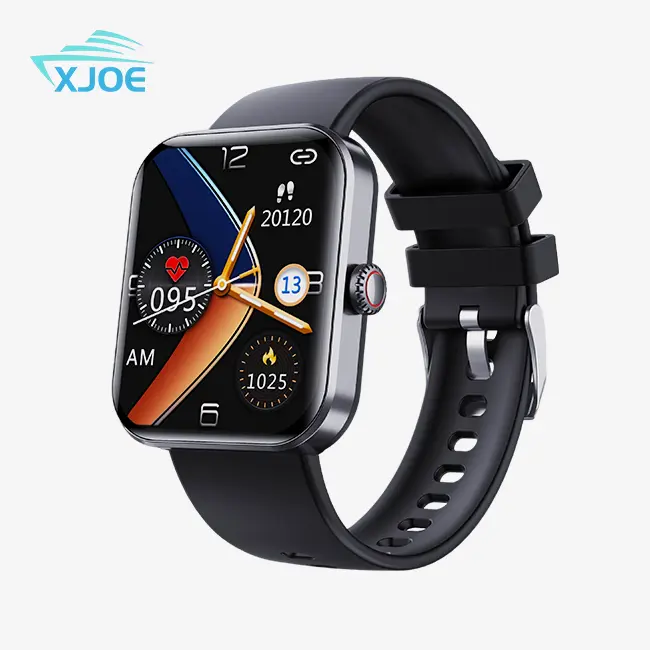
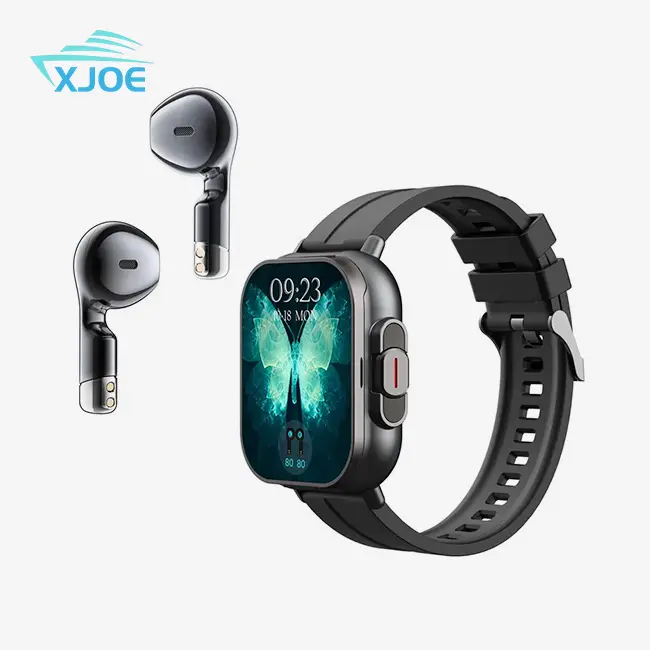
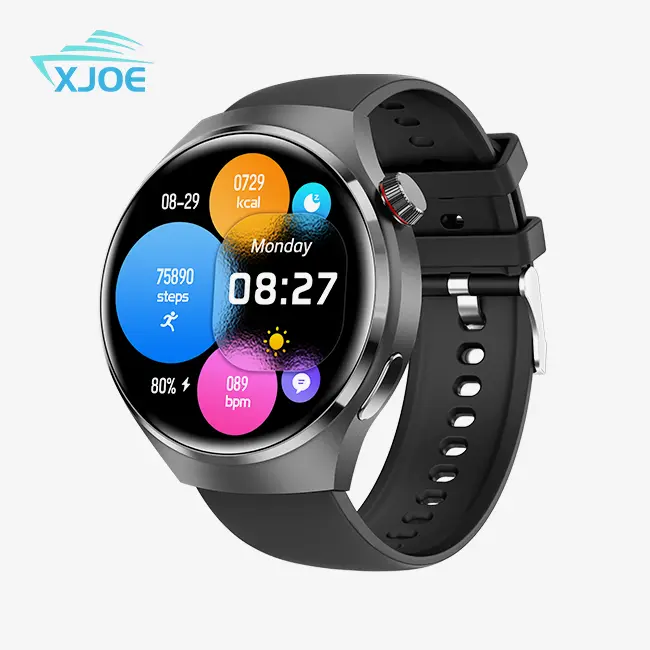
ECG SpO2 Smartwatch Manufacturing: What Affects Product Quality?
Product quality in an ECG SpO2 smartwatch depends on several interconnected factors, from sensor precision and hardware materials to firmware reliability and assembly standards. As an Amazon seller or OEM buyer sourcing health wearables for the U.S. market, understanding these factors helps you avoid costly returns and negative reviews. This guide breaks down what separates a trustworthy ECG SpO2 smartwatch from a product that fails in the field, so you can make smarter sourcing decisions from the start.
Medical Disclaimer: The health monitoring features described in this article are intended for general wellness tracking. They do not replace professional medical diagnosis or treatment.
Understanding ECG SpO2 Smartwatch Technology
What ECG and SpO2 Monitoring Actually Do
An electrocardiogram (ECG) sensor picks up the heart's electrical signals to find rhythm problems like atrial fibrillation or arrhythmias. Photoplethysmography (PPG) is used to measure blood oxygen levels during SpO2 measurement. When both functions are combined in one device, users get a fuller picture of their cardiovascular and lung health. This is a feature set that fitness fans, wellness programs, and people who are at risk for health problems really want.
Why Sensor Integration Matters
Putting ECG and SpO2 monitors together in a small package is a difficult technical task. The sensors must work together without any power problems, and the data must sync correctly with the partner app. Inconsistent readings are caused by poor integration, which directly leads to bad user reviews. This is a big problem for Amazon FBA sellers and Shopify brands that count on rating scores to stay visible and keep their conversion rates high.
ECG-Only vs. SpO2-Only vs. Combined Devices
ECG-only watches are designed to keep an eye on your heart. SpO2 devices measure the amount of oxygen in the blood while you sleep or work out. Combined devices meet both needs, giving you more value per unit and a wider range of options. When B2B buyers test out new SKUs with low MOQs, combined health wearables usually have higher sell-through rates. This is because they serve a wider range of customers by helping with fitness, sleep health, and managing chronic conditions.
Critical Manufacturing Factors That Affect Product Quality
Sensor Precision and Calibration
A health watch that works well needs sensors that are very accurate. Microvolt-level signals must be picked up correctly by smartwatch ECG Spo2 electrodes, and LED wavelengths (usually red at 660nm and infrared at 940nm) must be adjusted for SpO2 devices to get an exact reading of oxygen saturation within ±2%. Without factory-level testing at every stage of production, the difference from batch to batch grows. This is a problem that keeps happening and causes warranty claims and chargebacks from distributors.
Hardware Materials and Battery Performance
The materials used to make the wristband and case have a direct effect on how comfortable the user is and how long the device lasts. Biocompatible rubber straps keep your skin from getting irritated, and ABS cases are a good mix between weight and impact resistance. How the battery is charged and how much power it has also affect how good something seems. A 200mAh battery that can last for 5–7 days of normal use and can be charged magnetically sets a useful standard for everyday wearables. Weak battery management ICs make the real run time less than what was promised, which hurts the trustworthiness of the brand.
Firmware, Software, and Compliance Standards
Real-time data processing needs firmware that is stable. Bugs in the methods used to show ECG waves or figure out SpO2 levels directly hurt accuracy and user trust. Over-the-air (OTA) software updates let makers fix problems after the product has been shipped, which is an important quality safety net. Certifications are also very important. Wearables used for health that are sold in the U.S. and Europe must have FDA approval and CE marking. Products that don't have these certifications could be taken off of big sites by regulators.
Comparison of ECG SpO2 Smartwatch Manufacturers and Brands
Global Brand Benchmarks
You can get an ECG on both the Apple Watch Series 9 and the Samsung Galaxy Watch 6. Fitbit's Sense 2 is all about tracking stress and SpO2. These brands are the best when it comes to sensor accuracy and software stability, but their high prices and long lead times make them unsuitable for OEM or white-label sourcing. If a buyer is doing business with another company, knowing their quality standards can help them choose between factory-level options.
Outsourced vs. Integrated Manufacturing
Companies that get parts from outside sources have to deal with more supply chain uncertainty. When a plant uses third-party sensor providers, it has less control over making sure that calibration is the same from batch to batch. On the other hand, producers with their own R&D departments, sensor testing labs, and GMP-certified production floors keep limits lower. This difference has a direct effect on return rates and review scores, two factors that determine whether an Amazon listing will be successful in the long term.
What B2B Clients Report About Supplier Reliability
The three performance measures that procurement teams always use to judge sellers are the defect rate per batch, the time it takes to respond to quality issues, and the uniformity of the packaging. Suppliers who offer pre-shipment check records and ECGs for each batch and SpO2 precision data give buyers proof they can use before the goods leave the plant. When placing a bulk order for the first time, the procurement risk is much higher for suppliers who can't provide this documentation.

Best Practices in Procurement for High-Quality ECG SpO2 Smartwatches
Evaluation Criteria Before Committing to a Supplier
Before placing bulk orders, B2B buyers should look at four main things: proof of sensor accuracy, battery life in real life, IP67 water resistance test results, and app compatibility with iOS 10.0+ and Android 6.0+. Here are the main things that buying teams should check with every supplier:
- Sensor accuracy records: Request batch calibration reports showing smartwatch ecg spo2 blood pressure, and SpO2 deviation margins across a production sample.
- Battery cycle data: Confirm whether 5–7 day battery life holds under continuous heart rate and SpO2 monitoring, not just standby mode.
- Certification documentation: Verify FDA, CE, and RoHS compliance certificates are current and product-specific, not generic factory documents.
- App stability testing: Test the companion app across multiple OS versions before approving the product for retail listing.
These checks lower the chance of getting goods that don't work well in real life, which protects your brand's review score and lowers the cost of handling returns.
Factory Audits and Pilot Orders
A factory audit that looks at the setup of the production line, the QC inspection sites, and access to the R&D lab is clear proof of the ability to make things. Before going big, you can test the quality of your product with pilot orders of 50 to 200 units at a manageable cost. Pilot testing also shows how durable the packaging is, how good the charging line is, and how stable it is for apps to pair. These are all things that affect how the apps pair and how early customer reviews are.
Negotiating Price Without Sacrificing Quality
Volume pricing tiers are common in the making of wearables, but buyers shouldn't accept price cuts that come with worse components. Talk about getting deals with set specs that lock in the same brands of sensors and battery ICs for all order batches. Also, make sure you get OEM customization terms up front for things like logo placement, packaging design, and firmware UI branding so that you don't have to pay for delays and extra work when you're scaling up production.
Future Trends in ECG SpO2 Smartwatch Manufacturing
AI Integration and Multi-Parameter Monitoring
As sensors get smaller, watches can measure things like skin temperature, blood pressure, and stress in addition to ECG and SpO2. AI-driven anomaly detection is going from processing in the cloud to reasoning on the device, which cuts down on the time it takes to send an alert. When sellers are trying to reach people who pay a lot for health care, these extra factors help them stand out, which is why they can charge more at retail.
Industry 4.0 and Lean Manufacturing
When factories use real-time production screens, automated optical inspection (AOI), and statistical process control (SPC), they get lower defect rates and better throughput. These steps lower the cost of managing quality without raising the price per unit. When wholesalers place large orders every three months, working with a plant that uses Industry 4.0 methods means that the product in each shipment is more consistent.
Sustainability and Regulatory Direction
Wearable health gadgets are getting stricter in the US and EU. More information is being added to the FDA Pre-Submission processes for ECG wearables, and materials must be compliant with REACH as a standard for responsible manufacturing. As part of the qualification process, buyers looking for suppliers for corporate wellness programs or institutional procurement are asking suppliers to show more and more environmental certifications and ethical sourcing practices.
Conclusion
When it comes to making health wearables, accuracy is needed at every step, from calibrating the sensors and choosing the right materials to making sure the software stays stable and getting the product approved by the government. Knowing these things is important for Amazon sellers, OEM brands, and distributors looking for ECG Spo2 Smartwatch and SpO2 devices for the U.S. market. It makes the difference between a product that builds your brand and one that brings in returns. The best way to protect your inventory investment and keep your platform scores high is to choose a supplier with proven R&D capabilities, GMP production standards, and clear QC paperwork.
FAQ
1. How do I verify ECG and SpO2 accuracy before a bulk order?
Request factory calibration reports for a sample batch and compare ECG waveform outputs against a certified medical reference device. For SpO2, deviation within ±2% across a 70–100% saturation range is the accepted accuracy standard. Always run independent testing on pilot units before approving full production.
2. Which certifications matter most for the U.S. market?
FDA clearance is the primary requirement for ECG health claims in the U.S. CE marking covers EU market entry. FCC certification is required for wireless connectivity. RoHS compliance applies to material safety. Confirm that all certificates are product-specific and currently valid — not expired or issued for a different model.
3. Does battery life affect overall product quality perception?
Yes, significantly. A device advertised at 5–7 days that consistently dies in 3 days under normal use generates immediate negative reviews. Battery life depends on the management IC quality, sensor polling frequency, and firmware efficiency. Always test under continuous heart rate and SpO2 monitoring conditions, not manufacturer-claimed standby hours.
4. What is a reasonable MOQ for testing a new ECG smartwatch SKU?
Most reliable OEM manufacturers offer MOQs of 100–300 units for customized orders. Some suppliers support lower MOQs for initial testing. Confirm whether the MOQ covers full OEM packaging and firmware customization or only the base hardware.
Partner With Xizhou for Your Next ECG SpO2 Smartwatch Order
Xizhou is a manufacturer and supplier of the GMP-certified ECG Spo2 Smartwatch. They do their own research and development, offer full certification support, and allow OEM customization. We can meet your needs quickly and consistently, whether you need low-MOQ testing runs or large-scale restocking. You can get samples, look through our catalog, and get a competitive quote that fits your business needs by going to emailing us at 13266508958@163.com.
References
1. Topol, E. J. (2019). Deep Medicine: How Artificial Intelligence Can Make Healthcare Human Again. Basic Books.
2. Piwek, L., Ellis, D. A., Andrews, S., & Joinson, A. (2016). The rise of consumer health wearables. PLOS Medicine, 13(2).
3. U.S. Food and Drug Administration. (2022). Digital Health Center of Excellence: Wearable ECG Devices — Guidance for Industry.
4. Steinhubl, S. R., Waalen, J., Edwards, A. M., et al. (2018). Effect of a home-based wearable continuous ECG monitoring patch on detection of undiagnosed atrial fibrillation. JAMA, 320(2), 146–155.
5. Grand View Research. (2023). Smart Wearable Healthcare Devices Market Size, Share & Trends Analysis Report.
6. International Electrotechnical Commission. (2020). IEC 60601-1: Medical Electrical Equipment — General Requirements for Basic Safety and Essential Performance.