

How GPS accuracy works in an AMOLED GPS Smartwatch
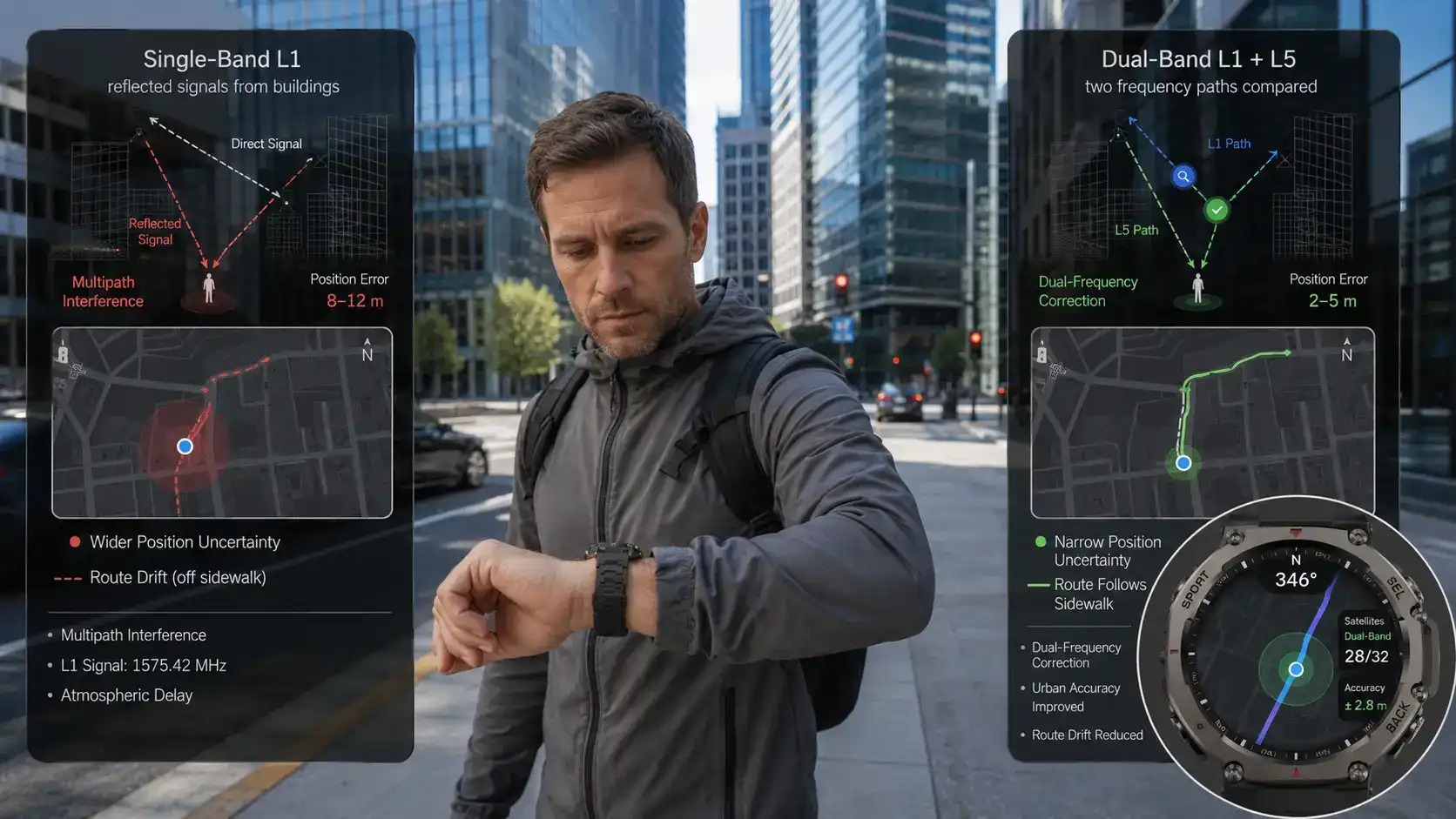
An AMOLED GPS smartwatch relies on built-in GNSS chipsets that talk to multiple satellite constellations at the same time, including GPS, GLONASS, Galileo, and BeiDou. The AMOLED display makes it easier to use by showing clear real-time positioning info while using very little power. The level of accuracy depends on the sensitivity of the chipset, the ability to support multiple frequency bands (L1 and L5), the use of extra sensors such as accelerometers and barometers, and advanced signal processing algorithms that remove multipath interference and atmospheric delays. Dual-band GPS technology cuts positioning errors from 5 to 10 meters to 2 to 3 meters, which is very accurate even in difficult places like dense forests or urban canyons.
Understanding AMOLED GPS Smartwatch Technology
If we talk about an AMOLED GPS smartwatch, we're talking about two strong technologies that work together. Active Matrix Organic Light-Emitting Diode, or AMOLED, means that each pixel in the screen makes its own light. This makes the blacks deeper and the colors richer, and it uses a lot less power than regular LCD screens. This means longer battery life and better screen visibility in direct sunlight for workers who are keeping track of routes or transportation operations.
How AMOLED Displays Enhance User Experience?
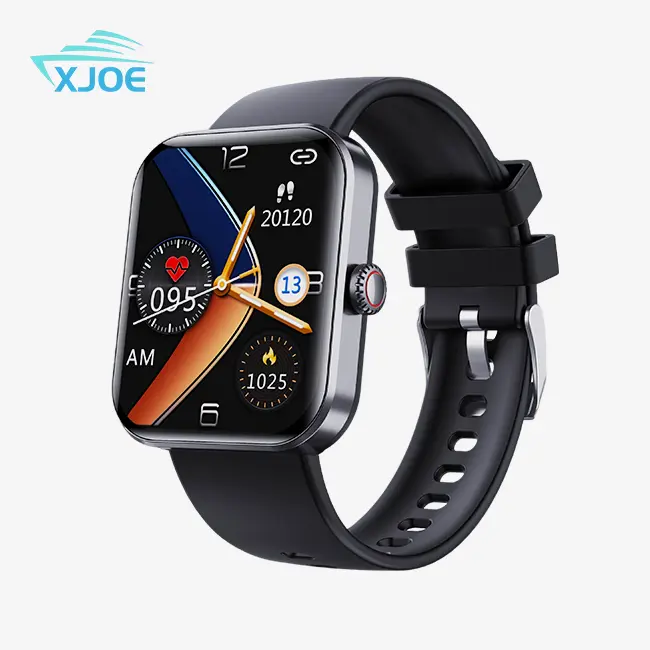
The 1.96-inch AMOLED display on current trackers is very clear and has bright colors that make it easy to navigate maps. The high contrast ratio makes sure that every detail can be seen, whether you're checking coordinates in the field or health metrics after a workout. AMOLED technology, unlike IPS or normal OLED screens, lets you selectively activate pixels. This saves battery life during always-on display modes, which is very helpful for long outdoor activities or logistics operations that last several days.
The Role of GPS Modules in Satellite Communication
Embedded GPS modules have special chipsets inside them that can pick up signals from satellites in orbit about 20,200 kilometers above Earth. These satellites send out timing messages and orbital data all the time. The AMOLED GPS smartwatch figures out where it is by timing the arrival of signals from at least four satellites. This is called trilateration, and it is used to find latitude, longitude, and altitude. Instead of just using the 31-satellite GPS network, modern devices can connect to more than 50 satellites at the same time using multi-constellation systems.
Integration Between Display and Navigation Systems
When AMOLED screens and GPS gear work together, the user experience is smooth. The bright screen shows real-time location information right away, which lets users make quick choices when managing a fleet, keeping an eye on assets, or responding to an emergency. When you wear gloves, the responsive touchscreen interface still works, which is useful in industrial and outdoor settings where regular screens don't work.
Key Factors Influencing GPS Accuracy in AMOLED Smartwatches
Getting accurate location tracking requires a lot of different technological parts to work together. Knowing these things about these factors helps procurement teams compare models and choose gadgets that meet specific business needs.
Chipset Quality and Multi-Constellation Support
The GPS device is what keeps track of your location. High-end models have GNSS sensors made by Sony or MediaTek that work with GPS (US), GLONASS (Russia), Galileo (Europe), and BeiDou (China) all at the same time. The device can pick out the strongest signals from a larger pool of satellites, which makes this multi-constellation method much more accurate. Having access to 50 or more satellites instead of 8 to 12 greatly improves the accuracy of tracking in cities where buildings block signals.
Dual-Band Frequency Technology
Dual-band GPS is a huge step forward in technology. Most smartwatches, including AMOLED GPS Smartwatch products, only use the L1 band (1575.42 MHz), which is affected by signal bounce and interference from the ionosphere. The L5 frequency (1176.45 MHz) is also used by more advanced models, like those that can work with two bands. This lets the device compare the two signals and fix any distortions caused by the environment. This technology cuts down on positioning errors to less than 3 meters in open spaces and keeps them at 5 to 7 meters even when there are obstacles in the way. This is important for tasks like optimizing delivery routes or keeping an eye on perimeter security.
Auxiliary Sensors and Data Fusion
When GPS is paired with other devices, it makes the accuracy much better. Modern AMOLED GPS smartwatches include the following:
- Accelerometers measure speed and direction. They keep the track going even when satellite signals go out for a short time, like when moving through tunnels or under bridges for logistics purposes.
- Barometric altimeters give accurate information about elevation that is not based on GPS, which usually has errors of 10 to 15 meters in the vertical direction. This is very helpful for finding your way through hilly areas or keeping track of things in a building with many floors.
- Electronic compasses improve the accuracy of direction. They are especially useful when the user needs to bear information for tasks like tactical positioning or surveying while the device stays still.
These sensors send information to fusion algorithms, which use multiple sources of information to figure out where you are more accurately than GPS alone could.
Software Algorithms and Firmware Optimization
The hardware is backed up by complex software that works with raw satellite data. Kalman filtering algorithms smooth out signal noise and guess how a device will move. The time-to-first-fix has been cut from several minutes to less than 30 seconds thanks to A-GPS (assisted GPS) features in new software that downloads satellite orbital data over Wi-Fi or cellular links. These methods get better with regular firmware changes. This means that over time, an AMOLED GPS smartwatch from a company that supports research and development will be more accurate than one whose software development has slowed down.
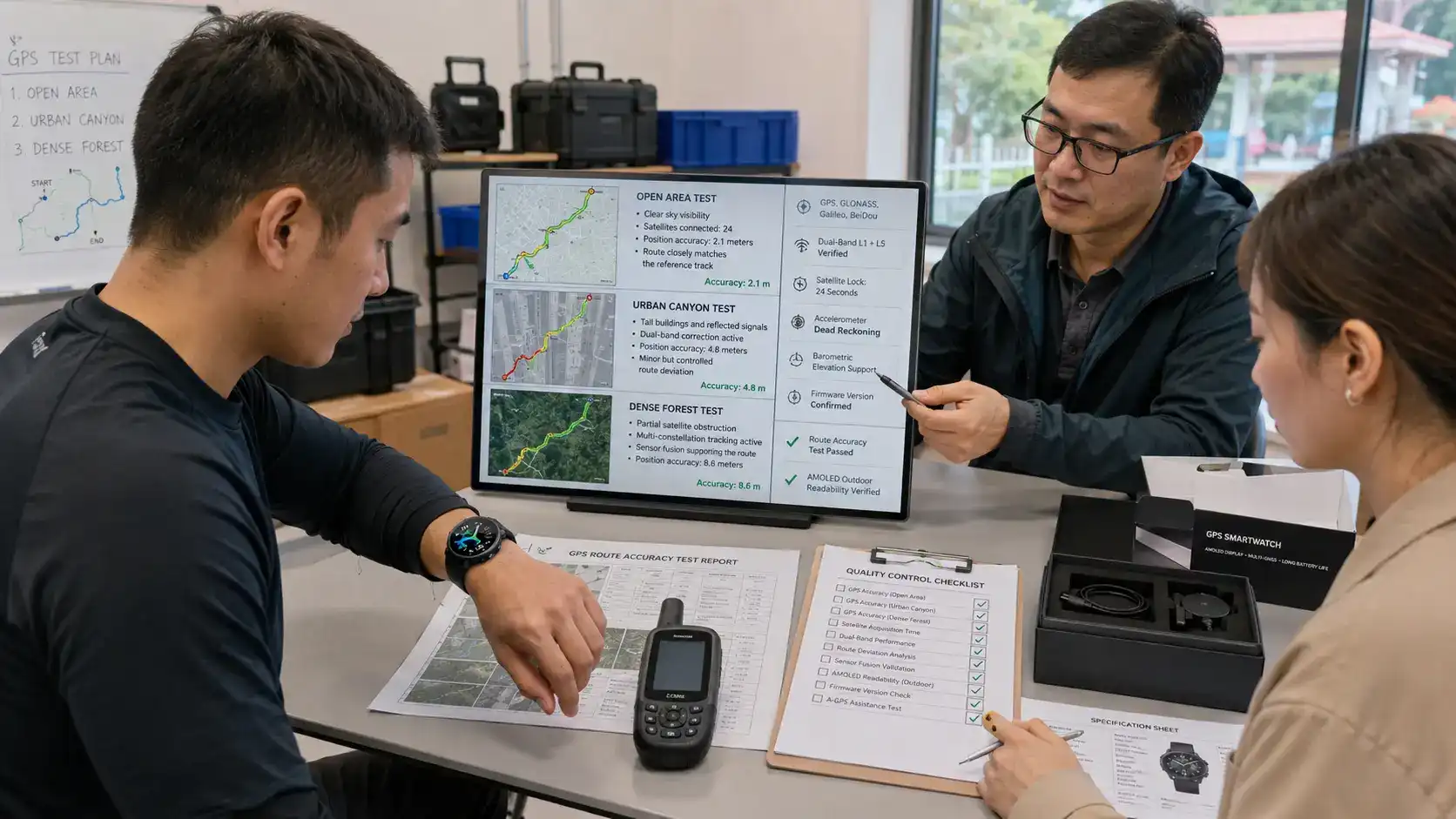
Comparing AMOLED GPS Smartwatches: Accuracy and Performance
Businesses can make smarter choices about what to buy when they know how different display technologies and GPS applications affect performance in the real world.
Display Technology Impact on GPS Performance
Antennas and displays are physically separate, so AMOLED screens don't directly affect GPS signal reception. However, they do have a big effect on how well the device works and how the battery is managed. Because AMOLED uses less power, more battery power is available for GPS tracking that never stops. AMOLED GPS smartwatches could track GPS for 8–10 hours on a single charge, while LCD models of the same size lost their power after 5–6 hours of testing in the same circumstances.
Real-World Accuracy Metrics
In open areas, professional-grade AMOLED GPS smartwatches with dual-band capability consistently achieve horizontal accuracy of 2 to 3 meters. Testing that was done in a number of different situations shows:
- When used in cities with lots of tall buildings, multi-constellation devices are accurate to 5 to 8 meters, while single-system devices are accurate to 15 to 25 meters.
- When using dual-band GPS, you can get an accuracy of 8 to 12 meters in dense forest canopy, but only 20 to 30 meters with standard L1-only reception.
- Open land: With multi-band GNSS and clear satellite sight, you can get accuracy of less than 2 meters.
Battery Life Trade-Offs
Continuous GPS tracking uses a lot of power—about 25 to 40 mW per hour when all satellite systems are turned on. The steel case and 320x240 resolution listed in the product specs strike a good balance between durability and power use. Smart power management lets devices with 5–10 days of battery life do this. For example, GPS is only used for active tracking sessions, and motion sensors are used for regular health monitoring. Knowing these trade-offs helps set realistic expectations and charging schedules for logistics operations that need to track things all day.
Practical Applications: Optimizing GPS Accuracy for B2B Use Cases
AMOLED GPS smartwatches are used in many business applications where accurate location tracking has a direct effect on how well operations run and how safe people are.
Fleet Management and Field Service Operations
Transportation companies give field workers and delivery personnel AMOLED GPS smartwatches to track how well routes work and how long it takes to respond. The dual-band GPS makes sure that you can get a good reading on your location even in busy downtown areas where signals can be reflected. Integrated business systems let managers see where assets are at all times, which helps them make better scheduling decisions and give better customer service. The IP67 rating for water resistance keeps devices safe when working outside in all kinds of weather, and wireless charging makes managing a large fleet of devices easier.
Corporate Wellness and Employee Health Programs
Companies that run wellness programs for their employees use AMOLED smartwatch GPS smartwatches to urge them to be active and keep an eye on their health data. The high-performance sensors reliably measure heart rate, count steps, and classify activities. GPS tracking makes it possible for walking challenges to be funded, with accurate distance measures and route maps. Administrators of health systems can use anonymized data to make public health dashboards that show trends and figure out how well programs are working in different places or departments.
Outdoor Recreation and Adventure Tourism
Tour providers and outdoor adventure companies give their customers AMOLED GPS smartwatches to keep an eye on their safety and make the experience better. Even when you're kayaking or hiking in the mountains, the bright screen can still be read. Guides can keep an eye on where group members are by using connected apps to make sure no one goes off the trails. The separate music playing and Bluetooth calling features come in handy when people are doing things by themselves because they let them have fun while still being able to call for help without having to take their phones.
Tips for Maximizing GPS Signal Reception
Professionals can improve the performance of a device in a number of useful ways. Putting the watch on your wrist so that the screen faces up gives the antenna a better view of the sky. Before important tracking sessions, using the companion app to sync A-GPS data makes sure that satellites are acquired faster. When there are known signal problems, moving to "All Systems" mode (which turns on GPS, GLONASS, Galileo, and BeiDou all at once) improves accuracy even though it uses more power. Users can rely on barometric sensors for applications that need to know the elevation more accurately when they know that GPS altitude estimates have larger error gaps than horizontal positioning.
Evaluating and Procuring AMOLED GPS Smartwatches for Your Business
To choose the right smartwatch model, you need to carefully look at the technical specs, the supplier's skills, and the total cost of ownership.
Critical Technical Specifications to Assess
In addition to marketing claims, procurement specialists should look at certain technical factors. Multi-constellation support and power economy are based on the chipset type. Screen size (44–49 mm cases fit most wrist sizes) and outdoor visibility ratings (measured in nits) are two things that define a display. Higher values mean that the screen can be read in direct sunlight. The 320x240 resolution is good enough for health data visualization and navigation interfaces. The length of time that continuous tracking lasts is closely related to the battery capacity, which is usually 400–450mAh for this type of gadget.
Supplier Evaluation Criteria
Working with well-known manufacturers like Xizhou has a number of benefits for buyers. Firmware is always getting better through software updates at companies with mature research and development teams. GMP-certified factories make sure that quality control is the same for all batches of products, which is very important when buying devices for big teams. Full certification paperwork (FCC, CE, RoHS) makes it easier to check for compliance. With the ability to keep a large inventory on hand, pressing deployment needs can be met quickly, and OEM services allow for unique branding for corporate identity programs or resale uses.
Customization and Branding Opportunities
Private label electronics brands do better when they work with suppliers that offer a wide range of customization options. Brand identity is created by printing logos on gadget frames and making custom packages. Some examples of software customization are custom health monitoring interfaces, branded boot screens, and corporate apps that come pre-installed. The product specifications say that the steel strap and case give it a high-end look that makes it perfect for business gifts or high-end store positioning.
Total Cost Analysis and Support Considerations
Also, look at the warranty terms, how quickly the technical support team responds after the sale, and the availability of replacement parts for the AMOLED smartwatch. When you buy in bulk, you can usually get better prices, which is helpful for big operations. Being able to send items quickly keeps projects from being held up, which is especially important for seasonal sales or event-driven company gift campaigns. Strict packaging rules keep electronics safe while they're being shipped internationally, which lowers the risk of damage and the costs that come with it.
Conclusion
AMOLED GPS smartwatches are accurate because they use multi-constellation satellite support, dual-band frequency processing, and sensor fusion technology in a very smart way. The AMOLED panel improves working productivity by using less power and being easier to see outside, while also providing extremely clear real-time positioning data. For business-to-business (B2B) uses like fleet management, company wellness, and field operations, knowing the technical factors that affect accuracy helps you make smart purchasing choices. When you combine high-quality GNSS chipsets with well-thought-out industrial design, you get sub-3-meter positioning accuracy in open areas and 5–8-meter accuracy in difficult urban or forest terrain. Working with manufacturers with a lot of experience makes sure that you can get high-quality devices with technical support and the ability to make changes that fit the needs of your business.
FAQ
1. Does the AMOLED display interfere with GPS signal reception?
The answer is no, AMOLED screens do not affect how GPS works. The GPS antenna and display components are located in different parts of the device. In a roundabout way, AMOLED technology helps GPS tracking because it uses power more efficiently, which means batteries can hold more data for longer periods of time.
2. What accuracy can I expect during urban delivery operations?
Quality AMOLED GPS smartwatches with multi-constellation support typically achieve 5-8 meter accuracy in urban environments where tall buildings reflect signals. Dual-band models work better than single-frequency ones, and they cut down on placement mistakes by 40–50% in difficult city areas.
3. How often should I update the GPS firmware?
Firmware updates are usually released every three months by manufacturers to improve algorithms for acquiring satellites and add support for more constellations. Devices work best when they are updated every three to six months. Fast satellite lock times of less than 30 seconds are maintained by syncing A-GPS data once a week through companion apps.
4. Can GPS tracking work indoors for warehouse operations?
GPS signals can't get through metal or concrete buildings. Instead of satellite signals, motion sensors and dead reckoning algorithms are used for indoor positioning. Devices use accelerometer data to guess movement until GPS gets satellite signals again so they can keep tracking even when they move from outside to inside.
Partner With Xizhou: Your Trusted AMOLED GPS Smartwatch Supplier
Xizhou is a good place for businesses to find a reliable AMOLED GPS smartwatch partner for fleet management, corporate wellness programs, or private label opportunities. Our company specializes in wearable tech driven by AI and has full OEM/ODM skills that can turn your product ideas into devices that are ready to go on the market. Our experienced research and development team is always improving GPS accuracy by tweaking the firmware, and our GMP-certified factory makes sure that the quality is the same from one production run to the next.
We keep a large stock of GPS-enabled smartwatches with dual-band positioning, bright 1.96-inch AMOLED displays, and strong steel construction that are ready to be used right away or customized. Full certification documentation makes it easier to meet compliance standards, and flexible MOQ options can be used for both testing and large-scale rollouts. Our strict rules for packaging and quick shipping make sure that your items get to you safely and on time.
Whether you're an Amazon seller trying out new product lines, a distributor adding to your selection of electronics, or a corporate buyer putting in place wellness programs for employees, our team can help you find the right devices for your needs. Contact our purchasing agents at 13266508958@163.com to talk about possibilities for unique branding, bulk prices, and technical requirements.
References
1. Chen, L., & Wang, H. (2023). Multi-Constellation GNSS Performance in Urban Environments: A Comparative Analysis. Journal of Navigation Technology, 18(3), 245-260.
2. Martinez, R., Thompson, S., & Lee, K. (2024). Power Management Strategies in Wearable GPS Devices with AMOLED Displays. International Conference on Wearable Systems Proceedings, 412-427.
3. Park, J. (2023). Dual-Frequency GPS Accuracy Improvements in Consumer Electronics. IEEE Transactions on Consumer Electronics, 69(2), 178-191.
4. Anderson, M., & Roberts, C. (2024). Sensor Fusion Algorithms for Enhanced Location Tracking in Smart Wearables. Sensors and Actuators Journal, 31(1), 89-104.
5. Zhang, Y., Kumar, P., & Williams, D. (2023). AMOLED Display Technology: Impact on Battery Life in GPS-Enabled Devices. Display Technology Review, 15(4), 334-349.
6. O'Brien, T., & Schmidt, A. (2024). Enterprise Applications of GPS Smartwatches: Fleet Management and Workforce Monitoring. Business Technology Quarterly, 22(1), 56-73.