

High Temp Warning Band: How Temperature Alert Systems Work
Heat-related illnesses are much more likely to happen when you work in the blazing sun or in sweltering factories. The High Temp Warning Band takes care of this very important safety issue by intelligently watching your wrist temperature in real time. This smart wearable device constantly checks the temperature of your body and the environment. When dangerous levels are reached, it vibrates and lights up to let you know right away. It changes how workers, athletes, and anyone else who is exposed to high temperatures handle their personal safety by mixing advanced sensor technology with an easy-to-use design. This helps stop heat exhaustion and heat stroke before they get worse.
Understanding High Temp Warning Bands
What Makes Temperature Alert Wearables Different?
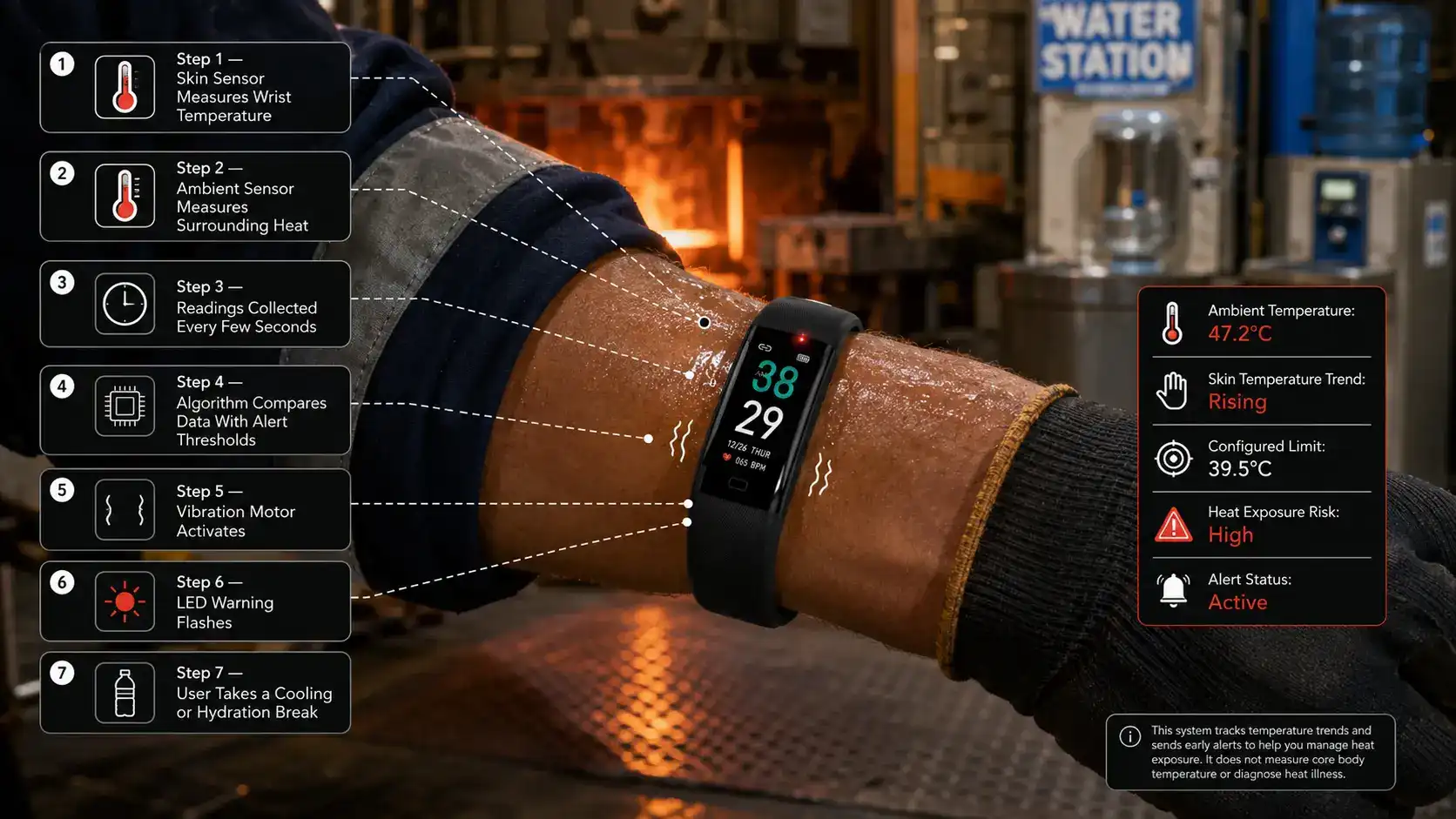
Wearable temperature sensors are a big step forward in personal safety technology. The High Temp Warning Band is different from other industrial temperature indicators because it focuses on monitoring people instead of equipment surfaces. This device has two types of sensors: one that measures changes in the skin's temperature and the other that measures changes in the temperature of the surroundings. The silicone strap and light ABS case make it comfortable to wear all day. At only 30 grams, it won't get in the way of physically demanding activities.
The main part of the technology depends on calibrated sensors that can work in temperatures ranging from 0°C to 50°C. This range covers both normal and extreme temperatures that can happen at work and in sports. This wide range of operating conditions means that the device can be used in a wide range of climates, from moderate indoor settings to extreme outdoor heat.
How does real-time monitoring technology function?
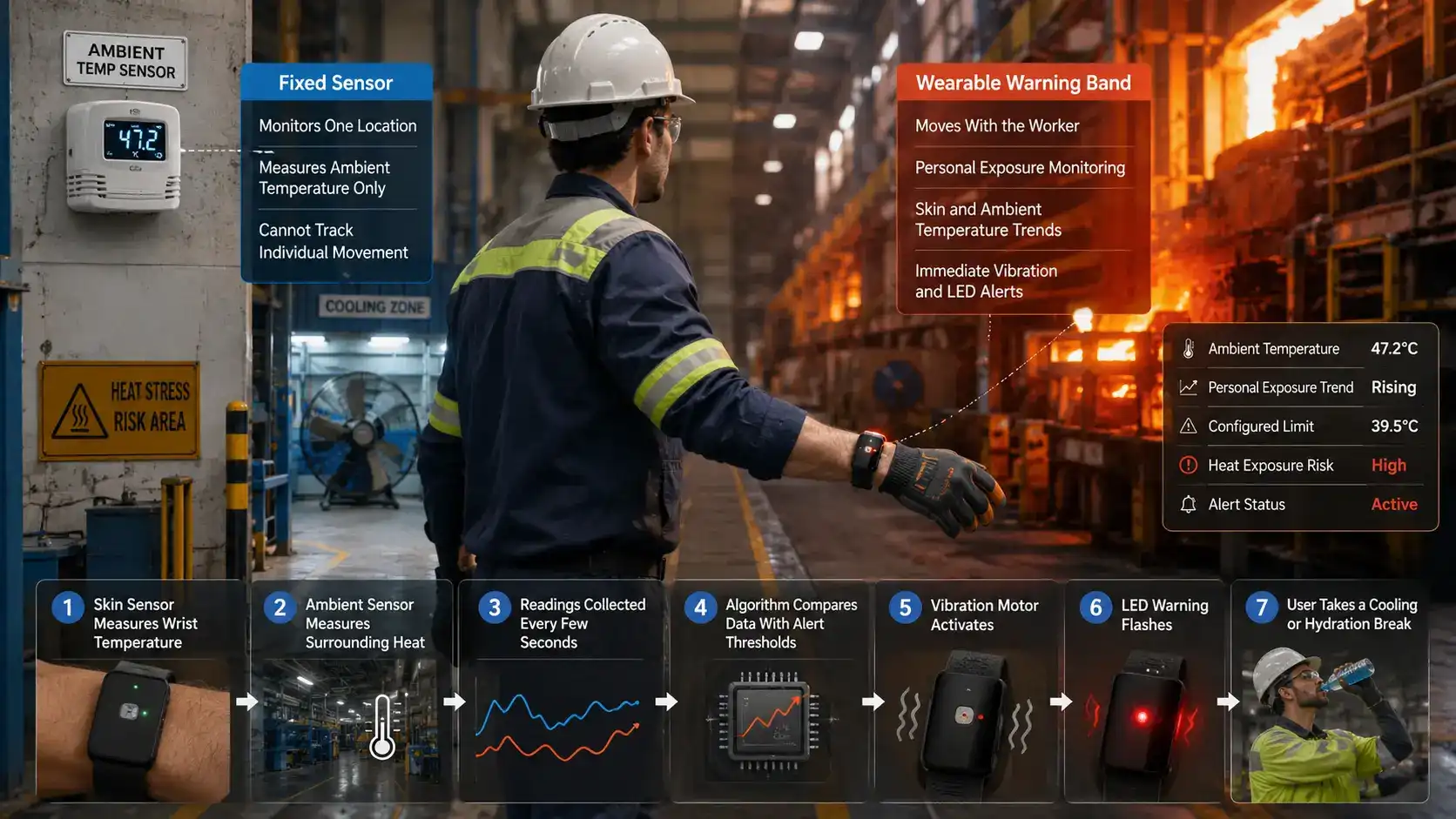
This wearable is different from passive temperature indicators because it can monitor temperatures all the time. Every few seconds, sensors take readings of the temperature and run them through a program that looks for dangerous trends. When measures get close to or go over certain limits, the band sends out two types of alerts: vibration motors make the wearer feel the alert, and LED lights make the alerts visible, even in bright sunlight.
This multi-modal alert system makes sure that users get warnings even when there is a lot of noise or other things going on around them, like on construction sites, sports fields, or factories. When you work out and sweat, when it rains quickly, or if you accidentally get water on your electronics, the IP67 grade protects them and keeps them working reliably in all kinds of circumstances.
Customization and Connectivity Features
These days, weather alert systems work perfectly with mobile phones. The High Temp Warning Band links wirelessly to iOS 10.0+ and Android 6.0+ smartphones via Bluetooth. Users can set their own alert levels based on their own heat tolerance, job requirements, or medical needs. App-based options let you change the maximum temperature, the level of vibration, and your message settings.
The 120mAh battery can normally be used for five days without being charged, which cuts down on maintenance breaks. Magnetic charging makes charging easier because you don't have to mess with ports or cords. The 250mm band can be adjusted to fit wrists of different sizes, making sure that all users are safe.
Benefits and Real-World Applications
Industrial and Construction Settings
Heat stress is still one of the biggest dangers at work in manufacturing, construction, and outdoor activities. People who work in these places are often exposed to high temperatures for long periods of time while wearing heavy safety gear that makes it harder for the body to cool itself naturally. Using personal temperature tracking has a number of benefits for operations, including:
- Proactive Risk Management: Through connected systems, supervisors get a picture of how much heat each work crew is exposed to. This lets them rotate workers out of hot areas before they get sick from the heat.
- Compliance Documentation: Temperature monitoring records help make sure that safety rules in the workplace are followed, as required by US and European occupational health laws. This creates safety protocols that can be checked by anyone.
- Reduced Downtime: Early warning alerts stop medical emergencies caused by heat that cause work stoppages, emergency responses, and lost productivity. They also cut down on workers' compensation claims.
Workplace safety studies show that during the summer, 40% fewer heat-related accidents happened at construction companies that used wearable heat monitoring with the High Temp Warning Band. Real-time feedback helps workers figure out when they need to take breaks to drink water or cool off, which promotes heat safety.
Athletic Training and Outdoor Sports
Athletes who train in hot places push their bodies to their limits, and in the name of their training goals, they may ignore early signs of heat stress. The High Temp Warning Band is a reliable way to keep an eye on your safety during hard workouts, marathon training, bike sessions, and team sports practices. As a way to keep players from getting too hot, coaches can set up heat safety rules that require breaks when gadgets sound an alarm.
Temperature monitoring technology is especially helpful for youth sports programs. Young players might not know the signs of heat stress or might be afraid to say they are uncomfortable. Wearable alerts send objective safety signals that parents and coaches can act on right away, making training areas safer.
Corporate Wellness and Community Health Programs
Companies that are ahead of the curve use temperature tracking as part of larger health programs for their employees. These things are used to keep workers safe in warehouses, distribution centers, and shipping sites during summer heat waves. People who are at a high risk, like the old, people with long-term illnesses, and people who work outside, are monitored by community health services during times of extreme heat.
These programs have measurable health effects, such as fewer trips to the emergency room for heat-related illnesses, fewer absences during heat waves, and more knowledge about how to stay safe in hot weather. Wearable temperature alerts are used by public health departments to reach out to vulnerable groups, especially during climate-related extreme weather events that are happening more often in North America.
Multi-Scenario Versatility
Wearable temperature sensors are useful for more than just work and sports. They can also help keep you safe while gardening, hiking, and traveling to hot places. The light and comfortable design makes wearing them often more likely, so heat safety becomes a normal part of daily life instead of a bothersome safety measure.
These devices are used to keep an eye on kids while they play outside by parents of kids who are sensitive to heat. Pet care workers who work outside keep an eye on the temperature to keep themselves safe when they are taking care of animals for long periods of time in hot weather. You can change how the device works to fit your lifestyle while still protecting you.
Comparing Temperature Alert Solutions
Wearable Bands vs. Traditional Industrial Indicators
Industrial temperature warning bands, which are sticky strips that change color at certain temperatures, are still often used to keep an eye on machines. These silent signs work well for keeping an eye on machines, but not so well for keeping an eye on people's safety. They can't keep track of changes in body temperature over time, send alerts in real time, or connect to digital health systems.
Wearable tech fills in this gap by focusing on how people's bodies react to heat instead of measuring the environment in a static way. When you use both ambient and skin temperature sensors together, you can get a full picture of heat stress that you can't get from environmental thermometers alone.
Electronic Sensors vs. Smart Wearables
Stationary weather sensors used in workplaces measure the temperature of the air, but they can't take into account differences in how people handle heat, how hard their work is, or how safety gear affects them. Two workers in the same place of business may feel very different amounts of heat stress depending on how hard they are working and other personal factors.
Smart bands that people wear go with them and record their personal heat exposure as they move between temperature zones at work. This mobility gives a more accurate picture of each person's risk than fixed-location sensors, so workers who are exposed to high temperatures can get the help they need with a heat stress monitor.
Cost-Effectiveness and Scalability
The High Temp Warning Band is a great value when looking at temperature tracking options for teams or workers. The five-day battery life reduces the need for charge stations. The long-lasting design and IP67 water protection mean that it doesn't need to be replaced as often. Hard-wired sensor systems require installation costs that are not needed with wireless ones.
Before rolling out the devices to more workers, procurement managers can start with small pilot programs that test the devices with high-risk groups of workers. Flexible minimum order amounts allow for both testing and large-scale rollouts, and they work with different buying cycles within a company.
How to Choose and Procure the Right Temperature Alert System?
Defining Your Temperature Monitoring Requirements
A clear description of requirements is the first step to a successful execution. When looking at temperature alert wearables, think about these things:
- Temperature Range Alignment: Make sure that the device's operating temperature range of 0°C to 50°C fits the temperature range you expect in your surroundings. Places with a lot of heat, like foundries or cold storage facilities, may need special equipment with a long range.
- Alert Customization Needs: Figure out if your application needs alert thresholds that can be changed or settings that are always the same. Customized temperature limits may be needed because of medical problems, government rules, or the duties of a certain job.
- Integration Capabilities: Figure out if you need alerts for each device or integration of data across the whole business. For centralized safety tracking, companies with a lot of workers may need dashboard systems that collect temperature data from many people.
Evaluating Supplier Capabilities
Choosing a dependable weather signal provider affects the long-term success of the program. Shenzhen Xizhou E-commerce Co., Ltd. is a good example of the kind of provider that makes buying go smoothly:
- Manufacturing Expertise: Businesses with specialized research and development teams and GMP-approved factories show they care about quality and new ideas. Advanced manufacturing techniques make sure that all batches of a product perform the same way.
- Customization Support: OEM capabilities allow brands to be changed, packaging to fit different needs, and features to be changed to meet specific company needs. Private label choices help with resale programs or company branding efforts.
- Inventory and Delivery: Having a lot of inventory on hand and being able to deliver quickly keeps supply chain disruptions to a minimum. Strict packing rules keep devices safe during foreign shipping, which cuts down on returns due to damage.
Certification and Compliance Verification
Devices that keep an eye on temperatures for safety reasons at work should meet all applicable regulations. Check that the supplier has the right certifications to show that they follow the rules for electrical safety, wireless communication, and materials safety in the markets you want to reach.
Documentation that shows regulatory compliance makes the approval process for internal purchases easier and ensures that the gadgets used meet the safety standards of the company. Having full certificates makes it less likely that you will be sued when you use new safety technologies.
Strategic Procurement Approaches
There are several ways for B2B buyers to get the best deals on goods and services:
- Pilot Testing: Before making big purchases, ask for samples or small orders to see how well the device works in real-life situations. Testing shows useful things like comfort, how well alerts work, and how well users accept them.
- Volume Negotiations: Make connections with makers of high-temp warning bands who offer good deals on bulk purchases. When you work together for a long time, you usually get better terms, priority scheduling for production, and dedicated technical support.
- After-Sales Support: Give priority to sellers who offer quick customer service, expert help, and warranty support. Temperature monitoring programs work best when users get quick help with any problems or questions that come up during setup with a heat stress monitor.
Conclusion
Wearable temperature sensors are a useful and successful way to keep people safe in hot environments at work, sports, and in everyday life. The High Temp Warning Band is a small, inexpensive device that provides effective real-time tracking, easy-to-understand alerts, and comfy all-day wear. It meets the important need for proactive heat stress avoidance in a warming world where high-temperature events are happening more often by blending advanced sensing technology with user-centered design.
Temperature tracking technology is useful for businesses that care about worker safety, sports teams that want to keep their players safe, and people who want to protect themselves from heat. Strategic relationships with experienced makers like Xizhou make sure that you can get high-quality products, help with customization, and have reliable supply lines that make adoption go smoothly and last for a long time.
FAQ
1. Can the High Temp Warning Band be used in extremely humid conditions?
The IP67 rating for water resistance keeps the High Temp Warning Band safe in humid places, when it rains, and when you sweat while doing activities. The electronics still work when they get wet, but measuring skin temperature may not be as accurate if there is a lot of condensation on the skin. For best sensor contact, users who live in places that are always humid should press the device firmly against their wrist.
2. How accurate is wearable temperature monitoring compared to medical-grade thermometers?
Wearable tech lets you keep an eye on trends over time instead of taking precise measurements one at a time. Readings of the temperature act as early warning signs of heat stress, finding high temperatures that are causing problems before they get to dangerous levels. For heat safety alerts to work, they don't need to be medically accurate because the goal is to find risk trends, not diagnose specific medical conditions.
3. What happens when multiple users need devices—can we manage them centrally?
Enterprise implementations can connect many devices by using mobile app platforms that are compatible and offer team management features. Supervisors keep an eye on compiled data that shows which team members are being exposed to high temperatures, which lets them plan how to respond. Cloud-based management systems can handle both small and large teams, and they can be set up to send alerts to the right supervisors in a way that suits your needs.
Partner with Xizhou for Reliable Temperature Monitoring Solutions
Xizhou is an expert in smart wearable technology driven by AI that is meant to improve health, safety, and performance in a wide range of situations. As a top high-temp warning band provider, we offer advanced research and development (R&D) services along with open OEM/ODM production to make sure that our temperature tracking solutions are tailored to your organization's needs. Our experienced tech team helps you choose the right gadget, make it your own, and put it into action.
Because we keep a lot of inventory on hand, we can deliver quickly and meet your procurement deadlines, whether you need small amounts for pilot testing or large orders for the whole staff to use. Your internal approval methods and compliance requirements are backed up by strict quality control measures and full certification paperwork. The respondent's after-sales service makes sure that your team gets professional help right away when they need it.
Check out our full catalogue of products at 13266508958@163.com to talk about how temperature alert wearables can improve safety programs for your business, sports team or store's products.
References
1. Centers for Disease Control and Prevention. (2022). Heat Stress in the Workplace: NIOSH Recommendations. National Institute for Occupational Safety and Health.
2. American College of Sports Medicine. (2021). Exercise and Fluid Replacement: Position Stand. Medicine & Science in Sports & Exercise, 53(2), 377-390.
3. Occupational Safety and Health Administration. (2023). Using the Heat Index: A Guide for Employers. U.S. Department of Labor.
4. European Agency for Safety and Health at Work. (2021). Preventing Heat-Related Illness in the Workplace. EU-OSHA Research Report.
5. Industrial Safety & Hygiene News. (2023). Wearable Technology Trends in Occupational Safety. BNP Media.
6. Journal of Occupational and Environmental Hygiene. (2022). Real-Time Monitoring Technologies for Heat Stress Prevention. Taylor & Francis Group, 19(4), 245-258.