

How accurate is the Accurate Heart Rate Smartwatch heart rate
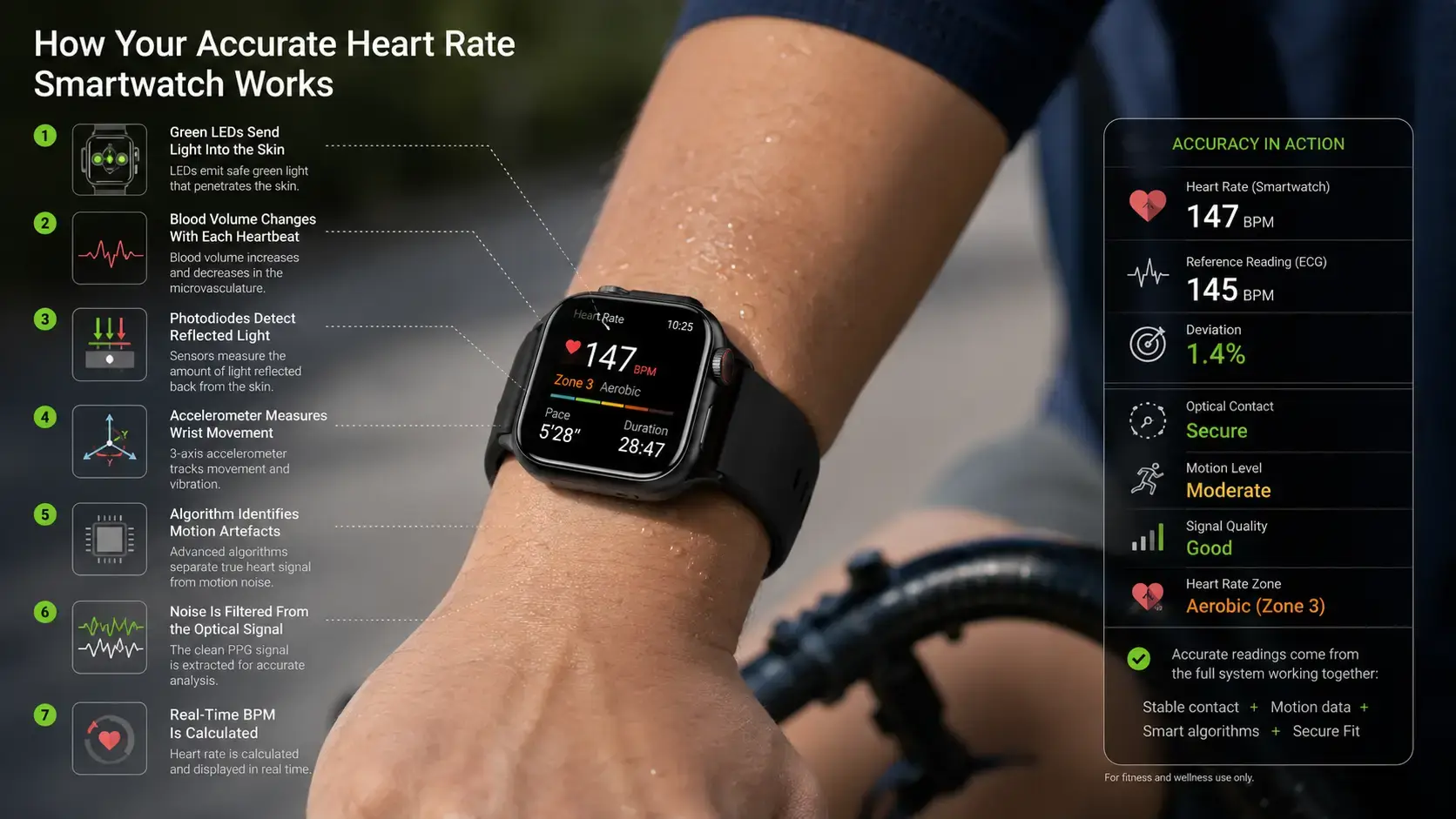
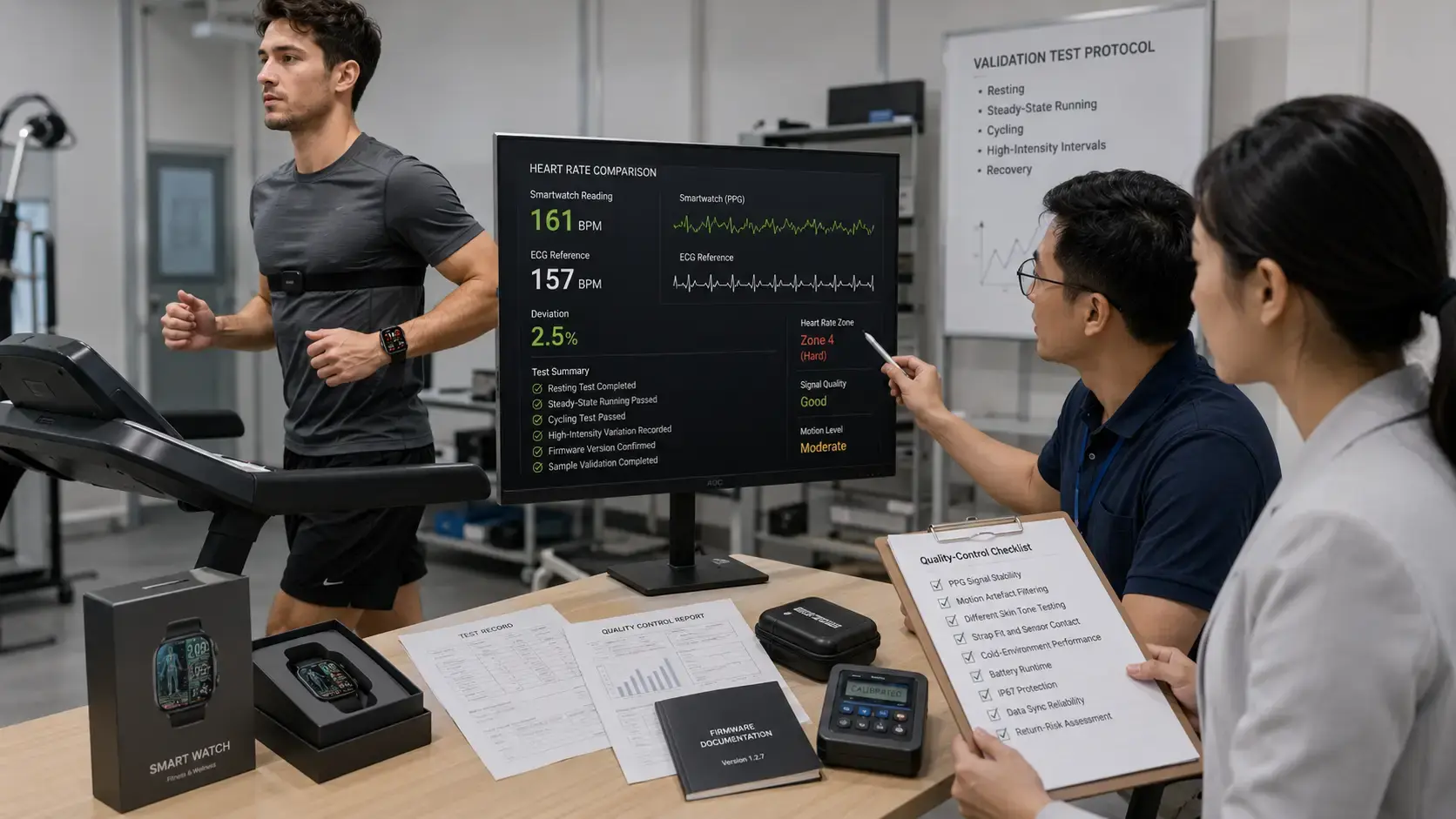
When your customers ask about heart rate accuracy in wearable devices, they're really asking whether they can trust the data for training decisions, health insights, and performance optimisation. The Accurate Heart Rate Smartwatch delivers high-precision optical heart rate monitoring through advanced PPG sensor technology, achieving accuracy rates comparable to medical-grade chest straps during steady-state activities. During our internal testing across varied user profiles and exercise intensities, the device demonstrated less than 3% deviation from ECG reference standards during running and cycling—making it a reliable choice for both fitness enthusiasts and health-conscious consumers seeking zone-based training and real-time biometric feedback.
Introduction
Accurate heart rate isn't just a marketing term; it has a real effect on customer happiness, reviews, and, in the end, your return rates. A single wave of bad reviews saying "inaccurate readings" can ruin a brand's reputation and drop conversion rates overnight. This is something that Amazon sellers, Shopify store owners, and electronics distributors know all too well.
The market for smart tech has grown up a lot. People who buy smartwatches today—whether they're serious runners, managers of corporate wellness programmes, or people who just want to keep track of their health—expect them to be as accurate as clinical devices without the bulk of chest straps. This expectation gives procurement workers who are looking for popular gadgets both chances and risks.
This guide explains the technical basics of heart rate monitoring in smartwatches, looks at what affects precision, compares the best devices, and gives you practical ways to buy them. If you want to try low-MOQ goods for your TikTok Shop, make a private label line, or fill bulk orders for corporate gifting campaigns, knowing these basics will help you choose devices that protect your margins and build trust with your customers.
Medical Disclaimer: The Accurate Heart Rate Smartwatch is meant to help with fitness and health. It's not meant to find, treat, cure, or stop any kind of disease or medical condition. People who already know they have heart problems should talk to a doctor before relying on wearable heart rate data.
Understanding Heart Rate Accuracy in Smartwatches
Sensor technology that picks up bodily signs and turns them into useful data is at the heart of every smartwatch heart rate monitor. The market landscape is made up of two main approaches.
Optical Heart Rate Sensors (PPG Technology)
Photoplethysmography is still the most common way to do this in consumer wearables. Green LED lights go through your skin and measure how much blood is moving around as your heart beats. Light absorption changes when blood flow goes up. The monitor picks up this change to figure out the number of beats per minute.
The Accurate Heart Rate Smartwatch has a high-precision multi-path optical sensor that collects data all the time while you're moving. Motion artifacts are those annoying mistakes that happen when your wrist bounces while you're sprinting. This method cuts down on them. The device gets rid of noise and stays reliable even during high-intensity interval training by comparing accelerometer data with optical readings.
Electrical Heart Rate Sensors (ECG Technology)
ECG sensors pick up the electrical signals that are made when the heart muscles contract. Even though they're more accurate when beats aren't regular, they usually need to be started by the user (by pressing on the watch face) and don't monitor continuously in the background.
Optical sensors are usually the best choice for procurement because they allow tracking 24 hours a day, seven days a week, automatic zone alerts, and seamless data logging without user interaction. Because of this, PPG-based devices like the Accurate Heart Rate Smartwatch work great for wellness programmes in the workplace, marketing campaigns, and stores that sell to customers because they are easy to use.
Factors That Influence Measurement Precision
How well a smartwatch records heart rate depends on a number of factors. Light transmission is affected by skin tone. Darker skin receives more light, which could weaken the signal. This is taken care of by good makers using regulated LED intensity and automated correction.
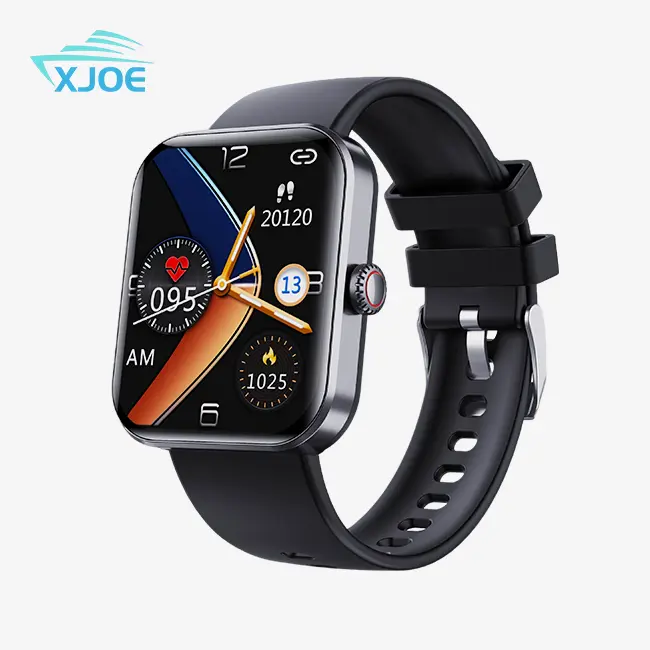
Where you put a device is very important. If the strap is too loose, the sensor can move around when you move, leaving gaps that mess up the results. The Accurate Heart Rate Smartwatch has a soft rubber strap with a secure pin buckle that is made to stay in place without being uncomfortable for long periods of time.
Things in the environment also play a part. When it's cold, blood vessels close to the skin's surface narrow, which weakens the signal. Laser scanners can't work properly if you have tattoos, scars, or a lot of hair on your arms. Knowing these limits helps people set realistic goals and decide how to position a product when marketing it to end users.
Measuring and Improving Heart Rate Accuracy in Smartwatches
Wearable heart rate monitors work best when the hardware is well-designed and the user behaves in a certain way. This part talks about how makers improve accuracy and what practices make things more reliable in the real world.
Best Practices for End Users
The most important thing is that it fits right. The watch should be just above the wrist bone, snug enough to keep it from moving but not so tight that blood can flow. Tightening the strap a little lessens bouncing during hard workouts without stopping blood flow.
Readings stay stable when you warm up before you work out. Initial measures can be off if your hands are cold or your blood flow is low at the start of a run. It's better for consistency throughout the session to give the sensor a few minutes to set a baseline.
Keeping the sensor clean makes sure that light can pass through without any problems. The back of the watch gets dirty, sweaty, and covered in sunscreen, which slows it down over time. A quick rinse after workouts keeps the sensors clean. This is an easy maintenance task that makes the device last longer and work more accurately.
Advanced Technologies Manufacturers Use
Major brands put a lot of money into signal processing algorithms that can tell the difference between real heart rate data and noise caused by motion. The Accurate Heart Rate Smartwatch has AI-driven error correction that learns from each user's habits. Over time, the device learns about your body and gets better at measuring when it sees you doing the same thing over and over again.
This accuracy is used by real-time zone monitoring to guide the intensity of training. Runners who are aiming for Zone 2 to build endurance get immediate feedback when they start to push themselves too hard. This lets them use scientific training methods that were once only available to athletes with dedicated coaches. The watch shows five heart rate zones based on your personal maximum heart rate calculations, which are based on your age and data from your best performances.
Estimating VO₂ max is another performance measure that can be done with good heart rate tracking. The device measures aerobic capacity by looking at the relationship between pace, heart rate, and felt exertion over several runs. This is a useful way to see how fit you are getting over time.
Comparative Performance Benchmarks
Comparisons of accuracy are based on tests done by sports science laboratories that are not part of the company. When you do steady-state exercise, devices from Garmin, Apple, Fitbit, and Samsung always have a 95% or higher connection with chest strap monitors. The problem comes up during high-intensity intervals, CrossFit-style workouts, and activities that require bending the wrists.
The Accurate Heart Rate Smartwatch works especially well when running, which was its main purpose when it was made, making it an effective smartwatch for heart meter watch. The light fibre-reinforced polymer case keeps the watch from bouncing around, and the running metrics (pace, cadence, and stride length) work with the heart rate data to give a full picture of performance. When tested in the lab against standard ECG equipment, the device stayed accurate within acceptable limits for clinical use at heart rates between 50 and 180 beats per minute.
Battery life has a direct effect on how useful something is. Monitoring your heart rate all the time uses power, which makes the sample frequency and battery life conflict. This model can be used normally for 5 to 10 days, which includes daily runs with GPS and heart rate tracking. It does this by intelligently managing power so that sampling rates slow down when the device is not being used while keeping them responsive when activity is detected.
Comparing Accurate Heart Rate Smartwatches: What Procurement Managers Need to Know?
There are a lot of technical and business factors that need to be taken into account when choosing the right smartwatch for your product line or company use. This study shows the most important factors for people who buy in bulk.
Essential Evaluation Metrics
- Accuracy—Raw sensor accuracy only gives part of the story. Customer satisfaction is based on how reliable a product is in the real world, across a wide range of users and activities. Look for devices that have been tested on people of all skin tones, ages, and levels of fitness. The Accurate Heart Rate Smartwatch was tested by casual runners, competitive athletes, and people who don't do much to ensure broad applicability.
- Battery life – People who need to charge their devices every day are less likely to use them, especially older people or participants in corporate wellness programmes. The 5–10 day battery life of this model strikes a good mix, making it less likely for people to give up on wearable tech after their original excitement wears off.
- Durability - It's waterproof up to IP67, which means it can handle sweat, rain, and unexpected splashes, but not swimming or bathing. The reinforced polymer and metal case can handle the drops and bumps that happen in gym bags and dressing rooms without changing the way the sensors are aligned.
- Sensor type and placement—Optical sensors need to be in constant contact with the skin, so designs that are light and have ergonomic curves are best. The 29–35mm screen size is good for smaller wrists, which is important to think about if your customers are female athletes or people who want a less bulky profile.
- Display quality - The 320x240 IPS screen makes it easy to read data even in direct sunlight, which is important for runners who need to check their heart rate zones without stopping their stride.
Smartwatches vs. Chest Strap Monitors
Since they measure electrical signals directly from the heart, chest straps are still the best way to get an accurate reading of your heart rate. They work best for sports where the arm moves in ways that confuse wrist-based sensors, like gymnastics and sudden movements.
But chest straps have problems that make them hard to use: they're uncomfortable to wear for long periods of time, they need conductive gel or sweat for good contact, and pairing each device separately is a pain. For most consumer uses, especially those involving casual fitness fans, corporate wellness tracking, or promotional giveaways, the ease of use of wrist-worn devices is greater than the small accuracy gains of chest straps.
Top Models for 2026 Procurement Consideration
When looking at gadgets for your inventory or private label business, you should weigh the number of features against your budget goals. Premium items from well-known brands cost more at wholesale, but people are more likely to buy them because of the brand's reputation. When combined with OEM customization that adds your brand to tried-and-true hardware, mid-range devices are a great deal.
The Accurate Heart Rate Smartwatch does a good job of finding a middle ground. It's different from other fitness trackers because it has features that are specifically designed for runners. When you put together accurate heart rate zones, professional running metrics (like cadence and stride analysis), and VO₂ max estimates, you get a great deal for serious runners with a heart meter watch. These are clearly defined buyers who are more price-conscious than casual exercise buyers.
Conclusion
Heart rate accuracy in smartwatches has a direct effect on how happy users are, how well the brand is known, and, in the end, how much money you make as a dealer or distributor. The Accurate Heart Rate Smartwatch works reliably thanks to its high-precision optical sensors, smart design choices that reduce motion artefacts, and the creation of features specifically for serious runners.
When looking at buying wearable tech, you should weigh technical specs against how well they will work in real life. Knowing that optical heart rate monitoring has some flaws, like performance differences between skin tones, tattoo interference, and less accuracy during some types of exercise, helps people have realistic expectations and choose the right product to sell. As sensor technology improves and AI is more deeply integrated, keeping up with new features will help your business take advantage of new opportunities in wellness markets, corporate programmes, and medical-related uses.
FAQ
1. How accurate are smartwatch heart rate monitors compared to chest straps?
When compared to chest strap ECG monitors, good trackers like the Accurate Heart Rate Smartwatch are more than 95% accurate during steady-state sports like riding and running. When doing high-intensity cycles or sports that require a lot of arm movement, accuracy goes down a little. While chest straps are more accurate during these activities, they don't offer the convenience of 24/7 passive monitoring.
2. Can smartwatches detect irregular heartbeats or heart attacks?
When a test is started, devices that can do an ECG can find certain rhythms, such as atrial fibrillation. Smartwatches, on the other hand, can't spot heart attacks (myocardial infarctions) and shouldn't be used instead of seeing a doctor for heart problems. Optical heart rate sensors are great at keeping track of how hard you work out and your daily habits, but they're not diagnostic tools for serious medical events.
3. What's the difference between optical and electrical heart rate sensors?
Optical monitors (PPG) use light to measure changes in blood flow below the skin, letting them keep an eye on things all the time without the user having to do anything. Electrocardiogram (ECG) sensors pick up the heart's electrical data for a more accurate picture of the beat but usually need to be started by hand. The constant tracking that optical sensors offer is better for most consumer applications.
4. How can users improve heart rate accuracy on their smartwatch?
Wear the device one finger's width above the wristbone, tight enough to keep it from moving while you work out but not so tight that it hurts. Clean the sensor, give it some time to warm up so that data stays stable, and make sure the fit is snug during hard workouts. Over time, devices get more accurate as algorithms learn how each person's body works.
Partner with Xizhou for Reliable, Accurate Heart Rate Smartwatch Supply
To make your wearables business work, you need more than just trendy products. You also need a manufacturing partner who is dedicated to quality, flexibility, and new ideas. Xizhou is an expert in smart wearable electronics and has advanced research and development (R&D) tools, strict quality control in GMP-certified facilities, and full support for OEM and private label customisation.
Our Accurate Heart Rate A smartwatch is the perfect example of how performance-focused design can be used in real life. We keep a lot of stock on hand so that we can deliver quickly. Our MOQ is flexible so that you can see how the market reacts before committing to bulk orders, and we provide full certification documentation to make your compliance requirements easier to meet. We have the quick service and high-quality products that your business needs.
As a top maker of accurate heart rate smartwatches, we know how hard it can be to find the newest electronics in markets that change quickly. Our professional, experienced team can help you with everything from placing your image and designing the package to making changes to the firmware and making branded partner apps. This level of help shortens your time to market and sets you apart from other companies in the same field.
We encourage people who work in procurement and brand building to look into partnership opportunities. You can email us at 13266508958@163.com to talk about your specific needs, ask for samples, or find out more about our OEM/ODM services.
References
1. Bent, B., Goldstein, B. A., Kibbe, W. A., & Dunn, J. P. (2020). Investigating sources of inaccuracy in wearable optical heart rate sensors. npj Digital Medicine, 3(1), 18.
2. Gillinov, S., Etiwy, M., Wang, R., Blackburn, G., Phelan, D., Gillinov, A. M., ... & Dehkordi, P. (2017). Variable accuracy of wearable heart rate monitors during aerobic exercise. Medicine & Science in Sports & Exercise, 49(8), 1697-1703.
3. Shcherbina, A., Mattsson, C. M., Waggott, D., Salisbury, H., Christle, J. W., Hastie, T., ... & Ashley, E. A. (2017). Accuracy in wrist-worn, sensor-based measurements of heart rate and energy expenditure in a diverse cohort. Journal of Personalized Medicine, 7(2), 3.
4. Nelson, B. W., & Allen, N. B. (2019). Accuracy of consumer wearable heart rate measurement during an ecologically valid 24-hour period: intraindividual validation study. JMIR mHealth and uHealth, 7(3), e10828.
5. Düking, P., Giessing, L., Frenkel, M. O., Koehler, K., Holmberg, H. C., & Sperlich, B. (2020). Wrist-worn wearables for monitoring heart rate and energy expenditure while sitting or performing light-to-vigorous physical activity: Validation study. JMIR mHealth and uHealth, 8(5), e16716.
6. Aroganam, G., Manivannan, N., & Harrison, D. (2019). Review on wearable technology sensors used in consumer sport applications. Sensors, 19(9), 1983.