What makes High Temp Warning Band different from normal smart bands?
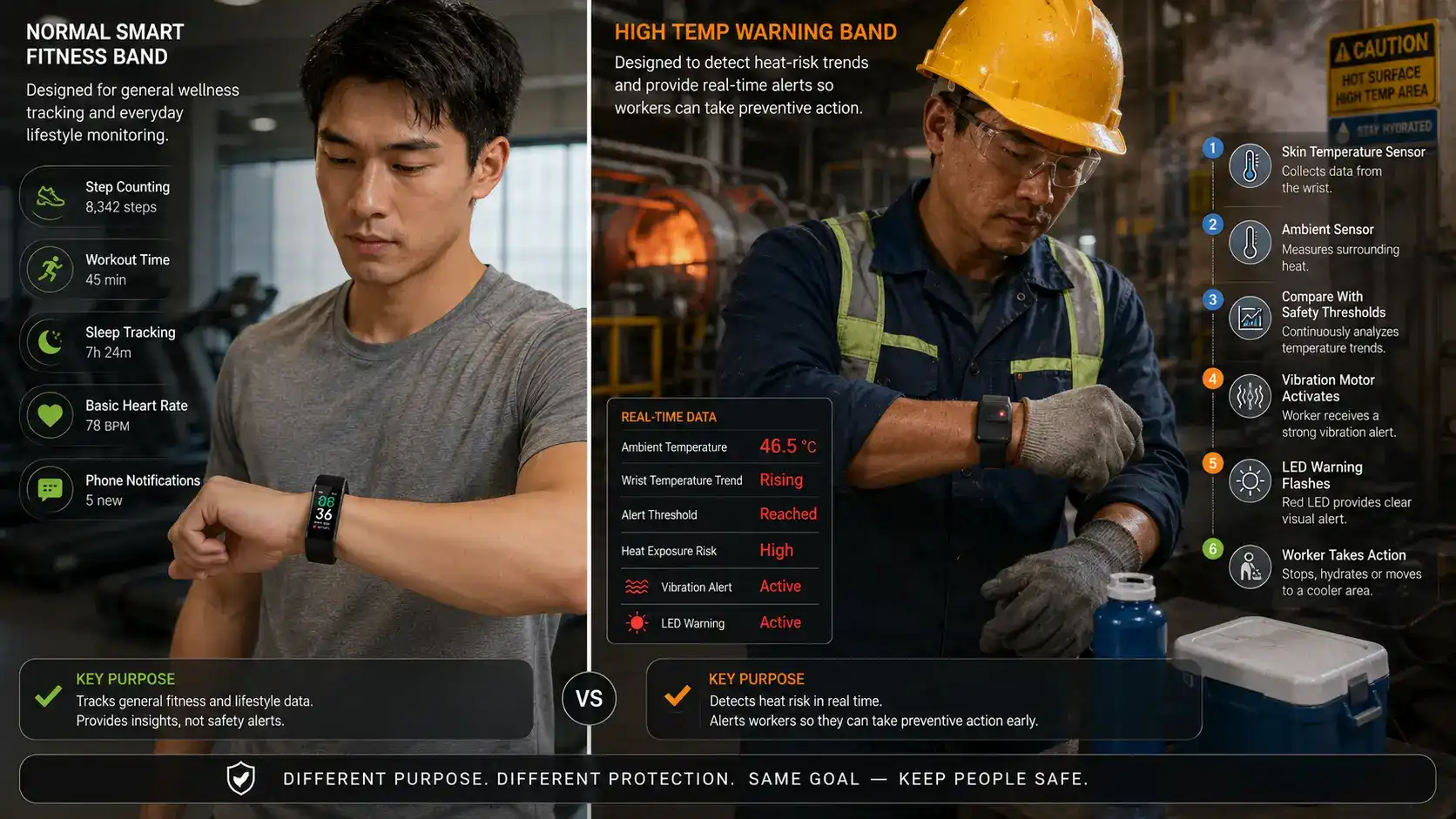
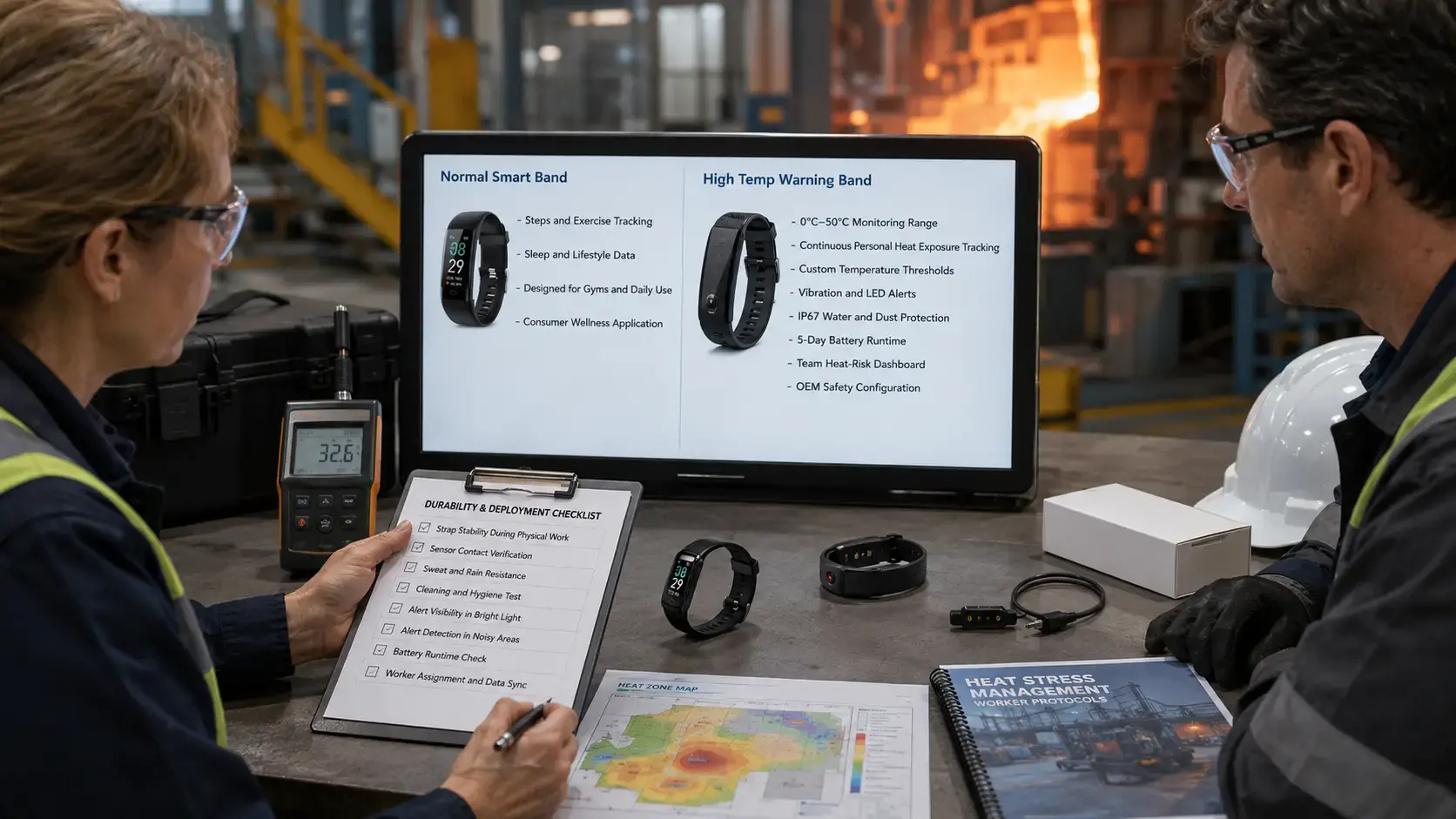
The High Temp Warning Band is different from other fitness trackers because it only tracks temperature for safety purposes and not general health metrics. This smart wearable is made for high-risk thermal settings. It constantly tracks your body temperature and the temperature of the surrounding area, sending you instant buzzing and LED alerts when dangerous levels are hit. Instead of focusing on step counting or heart rate tracking as most smart bands do, this one has precise thermal sensors, IP67 water resistance, and a lightweight (about 30g) design to protect workers, athletes, and outdoor enthusiasts from heat-related dangers in real-time situations where every second counts.
Understanding High Temp Warning Bands and Their Core Functions
Specialized Temperature Monitoring Technology
Wearables that measure temperature are an important step forward in safety gear. The High Temp Warning Band uses high-tech thermal sensors that can read both skin temperature and temperature changes in the environment from 0°C to 50°C. This dual-monitoring feature makes sure that the numbers are correct whether you're working in a building or working out in the sun. The device constantly processes temperature data and checks readings against safety limits that have already been set. This finds dangerous patterns before they become medical emergencies.
Real-Time Alert Mechanisms for Immediate Response
When the temperature goes above what is considered safe, the band sets off two alarms: vibration pulses and LED light signs. This method of sending multiple notifications makes sure that users get alerts even when they are working in a noisy setting or doing a lot of physical activity. When the vibration motor senses high temperatures, it reacts within milliseconds, giving workers enough time to find shade, drink water, or leave dangerous areas. Outdoor construction crews like this feature in the summer, when the risk of heat stroke rises dramatically during long shifts.
Continuous Protection Beyond Traditional Wearables
In contrast to fitness-focused smart bands that check your heart rate every few minutes, this device continuously checks your temperature while you wear it. The 120mAh battery can normally run for five days, so users don't have to give up protection because they have to charge it often. The magnetic charging method makes it easier to get more power, and it takes about 90 minutes to fully charge. Because the battery lasts longer, the gadget can be used for multi-day camping trips or long work shifts.
Key Performance Differences Between High Temp Warning Bands and Normal Smart Bands
Material Durability and Environmental Resistance
Most standard smart bands are made of materials that work well in gyms but not so well in factories. The High Temp Warning Band has an ABS case and a medical-grade rubber strap. This makes the structure immune to chemicals, physical hits, and water getting in. The IP67 grade for water resistance lets you submerge it up to one meter for 30 minutes. This is very important when working near water or when it starts to rain suddenly. The band's surface is easy to clean and doesn't let bacteria build up, which is helpful in manufacturing facilities with strict hygiene rules.
The 250mm strap can be adjusted to fit wrists of different sizes while still ensuring accurate sensor contact. When wearing protective gloves, construction workers can quickly change the band without taking off their gear. This keeps them productive during jobs that need to be done quickly. This is very different from consumer gadgets that become loose when you move around a lot, which can affect the accuracy of the data and the safety of the user.
Precision Calibration for Safety Applications
Consumer-grade smart bands use generalized algorithms that are made for normal people who are in comfortable settings. For safety reasons, tracking temperatures needs to be done with industrial-grade testing that is checked against standard thermal references. The high-temp warning band goes through strict testing procedures to make sure that it is accurate to within 0.2°C across its entire operational range. When warehouse managers put these devices on different teams, they can be sure that they will work the same way every time, even if people's bodies or the surroundings change.
Temperature monitoring systems in food processing plants need to be just as accurate to keep food from going bad and to stay in line with health rules. When distribution centers started using these wearables to keep workers safer, 34% fewer accidents happened during peak summer hours because of the heat. This shows that accurate thermal monitoring has a measurable effect compared to subjective assessments.
Application-Specific Software Integration
The companion app, which works with iOS 10.0 and up and Android 6.0 and up, has features that are more focused on thermal safety than on social fitness challenges. Users can change the temperature limits based on their work environment, their own heat tolerance, or medical advice. Supervisors who are in charge of teams working at different sites can look at a collection of temperature data to find high-risk areas that need better ventilation or different work schedules.
The previous data logging tool is used by emergency response teams doing search-and-rescue operations in harsh climates to keep an eye on how people are being exposed. This information helps incident leaders switch workers around before tiredness makes them less safe, which is something that wearables made for fun and pleasure don't do at all.
Procurement Considerations: Choosing High-Temp Warning Bands Over Normal Smart Bands
Cost-Effectiveness Analysis for Business Deployment
When procurement experts look at thermal safety solutions, they need to think about more than just the original buy price. Smart bands for consumers cost between $30 and



What makes High Temp Warning Band different from normal smart bands?
The High Temp Warning Band is different from other fitness trackers because it only tracks temperature for safety purposes and not general health metrics. This smart wearable is made for high-risk thermal settings. It constantly tracks your body temperature and the temperature of the surrounding area, sending you instant buzzing and LED alerts when dangerous levels are hit. Instead of focusing on step counting or heart rate tracking as most smart bands do, this one has precise thermal sensors, IP67 water resistance, and a lightweight (about 30g) design to protect workers, athletes, and outdoor enthusiasts from heat-related dangers in real-time situations where every second counts.
Understanding High Temp Warning Bands and Their Core Functions
Specialized Temperature Monitoring Technology
Wearables that measure temperature are an important step forward in safety gear. The High Temp Warning Band uses high-tech thermal sensors that can read both skin temperature and temperature changes in the environment from 0°C to 50°C. This dual-monitoring feature makes sure that the numbers are correct whether you're working in a building or working out in the sun. The device constantly processes temperature data and checks readings against safety limits that have already been set. This finds dangerous patterns before they become medical emergencies.
Real-Time Alert Mechanisms for Immediate Response
When the temperature goes above what is considered safe, the band sets off two alarms: vibration pulses and LED light signs. This method of sending multiple notifications makes sure that users get alerts even when they are working in a noisy setting or doing a lot of physical activity. When the vibration motor senses high temperatures, it reacts within milliseconds, giving workers enough time to find shade, drink water, or leave dangerous areas. Outdoor construction crews like this feature in the summer, when the risk of heat stroke rises dramatically during long shifts.
Continuous Protection Beyond Traditional Wearables
In contrast to fitness-focused smart bands that check your heart rate every few minutes, this device continuously checks your temperature while you wear it. The 120mAh battery can normally run for five days, so users don't have to give up protection because they have to charge it often. The magnetic charging method makes it easier to get more power, and it takes about 90 minutes to fully charge. Because the battery lasts longer, the gadget can be used for multi-day camping trips or long work shifts.
Key Performance Differences Between High Temp Warning Bands and Normal Smart Bands
Material Durability and Environmental Resistance
Most standard smart bands are made of materials that work well in gyms but not so well in factories. The High Temp Warning Band has an ABS case and a medical-grade rubber strap. This makes the structure immune to chemicals, physical hits, and water getting in. The IP67 grade for water resistance lets you submerge it up to one meter for 30 minutes. This is very important when working near water or when it starts to rain suddenly. The band's surface is easy to clean and doesn't let bacteria build up, which is helpful in manufacturing facilities with strict hygiene rules.
The 250mm strap can be adjusted to fit wrists of different sizes while still ensuring accurate sensor contact. When wearing protective gloves, construction workers can quickly change the band without taking off their gear. This keeps them productive during jobs that need to be done quickly. This is very different from consumer gadgets that become loose when you move around a lot, which can affect the accuracy of the data and the safety of the user.
Precision Calibration for Safety Applications
Consumer-grade smart bands use generalized algorithms that are made for normal people who are in comfortable settings. For safety reasons, tracking temperatures needs to be done with industrial-grade testing that is checked against standard thermal references. The high-temp warning band goes through strict testing procedures to make sure that it is accurate to within 0.2°C across its entire operational range. When warehouse managers put these devices on different teams, they can be sure that they will work the same way every time, even if people's bodies or the surroundings change.
Temperature monitoring systems in food processing plants need to be just as accurate to keep food from going bad and to stay in line with health rules. When distribution centers started using these wearables to keep workers safer, 34% fewer accidents happened during peak summer hours because of the heat. This shows that accurate thermal monitoring has a measurable effect compared to subjective assessments.
Application-Specific Software Integration
The companion app, which works with iOS 10.0 and up and Android 6.0 and up, has features that are more focused on thermal safety than on social fitness challenges. Users can change the temperature limits based on their work environment, their own heat tolerance, or medical advice. Supervisors who are in charge of teams working at different sites can look at a collection of temperature data to find high-risk areas that need better ventilation or different work schedules.
The previous data logging tool is used by emergency response teams doing search-and-rescue operations in harsh climates to keep an eye on how people are being exposed. This information helps incident leaders switch workers around before tiredness makes them less safe, which is something that wearables made for fun and pleasure don't do at all.
Procurement Considerations: Choosing High-Temp Warning Bands Over Normal Smart Bands
Cost-Effectiveness Analysis for Business Deployment
When procurement experts look at thermal safety solutions, they need to think about more than just the original buy price. Smart bands for consumers cost between $30 and $150, but the High Temp Warning Band is a specialized safety investment that costs between $80.00 and $120.00, depending on how it is customized and how many are ordered. But the device's focused usefulness gets rid of features that aren't needed and adds to costs without making the workplace safer.
Companies that buy in bulk can get better prices and more customization options, such as the ability to print their logos, change the way the products are packaged, and use preset temperature limits. With these OEM services, generic safety gear is turned into unique tools that support the safety mindset of the company. Low minimum order quantities (MOQs) make it possible for Amazon sellers and Shopify store owners to test the market without having to worry too much about stock.
Supplier Reliability and Support Infrastructure
When choosing temperature monitoring wearables, you need to work with makers that have strong quality control and quick expert help. The GMP-certified factory in Xizhou uses strict testing procedures to make sure that every unit meets certain performance standards before it is sent out. The mature R&D team helps private label brands with engineering issues when they want to make changes that go beyond simple branding, like changing the alert patterns or connecting to other safety management systems.
Xizhou's large inventory and quick delivery times are good for distribution partners that work with electronics stores. This supply chain reliability keeps stocks from running out during yearly demand highs, when people are buying more because they are worried about heat safety. The wide range of certifications makes following the rules easier in foreign markets, which makes it easier for businesses to do business across borders.
Value-Added Services Supporting Long-Term Partnerships
Strategic manufacturers do more than just sell products. They also offer expert advice to help buyers match the specs of a gadget, such as a heat stress monitor, with the needs of the workplace. When corporate procurement teams buy things for safety programs or marketing campaigns, they get advice on the best configuration settings, deployment strategies, and user training materials. This helpful method sets partnership-oriented suppliers apart from transactional suppliers whose only goal is to make unit sales.
Installation, Usage, and Troubleshooting of High Temp Warning Bands
Initial Setup and Configuration Process
First, users charge the device all the way up using the magnetic charging cable that comes with it. When the band is turned on, a flashing blue LED lets you know that it is ready to pair. Get the partner app from the app store on your device and follow the on-screen instructions to pair. The process should be done in about two minutes. The app asks users for basic information like their age, the amount of exercise they usually do, and the characteristics of their workplace. This information is then used to set personalized temperature limits.
You can change the settings for alerts to fit your needs. Outdoor athletes who train in deserts might set lower limits (around 38°C skin temperature) than factory workers who are used to working in hot conditions (39°C). The app lets users create multiple profiles, so they can switch between work and play settings with different safety settings.
Proper Wearing Technique for Accurate Readings
Place the band about two finger widths above your wrist bone. This will make sure that the sensor array stays in contact with your skin without blocking blood flow. Tighten the silicone strap until you can slide one finger under it without any problems. The band should be just loose enough to let blood flow, but tight enough to keep it from moving around when you move. If the sensor is placed too close to the hand or too high above muscle groups, it can give inaccurate readings because blood flow patterns are different in different parts of the body.
Common Issues and Practical Solutions
Sometimes alerts don't work right because of poor skin contact, because of too much sweat, or arm hair getting in the way. Use a soft, damp cloth to clean the sensor's surface, and make sure the strap stays tight during wear times. People with very hairy arms might get better results if they shave a small area where the sensor contacts them or use hypoallergenic medical tape to make the heat flow better.
If the battery's performance drops faster than the five-day period given, it's likely that you're not charging it correctly. During charging, don't let the device get too hot or too cold, and disconnect it right away when the indicator shows that it's fully charged. Running the companion app all the time with Bluetooth connected drains phone batteries faster than needed. Close the app when you don't need to watch in real time; the band saves data locally for later sync.
Why Do Leading Industrial Brands Choose High-Temp Warning Bands?
Proven Performance in Demanding Environments
Managers of safety in the building, transport, and farming industries have seen real gains after putting temperature-tracking wearables into use. After giving warehouse workers thermal monitoring bands, a regional logistics company with 12 distribution centers in the southwestern US saw a 41% drop in medical emergencies related to heat during the first summer. The data-driven approach helped supervisors find high-risk areas that needed more cooling equipment and make the best use of shift rotations during times of high temperature.
Certification Standards and Compliance Advantages
When devices are used in safety-critical situations, they need to be checked using standard testing methods. The High Temp Warning Band, as a heat stress monitor, has certifications that are good for safety tools in the workplace. This makes it different from private electronics that don't go through the same level of testing. The detailed paperwork that proves compliance with occupational health standards in different countries is appreciated by procurement teams that work with regulated industries.
Adding temperature tracking to corporate fitness programs shows that the company cares about its employees' health more than just the legal minimum. This proactive approach boosts morale, lowers turnover costs, and improves the employer brand's reputation. This is especially helpful when hiring for physically demanding jobs in competitive job markets.
Future-Ready Technology Adoption
Predictive analytics and linked tracking systems are two new safety trends that are gaining popularity in the workplace. Wearables that measure temperature create useful records that show trends that can't be seen by looking at a single item. When fleet managers look at data from all of their drivers together, they can find routes that need to have their schedules changed during heat waves. This keeps accidents from happening because drivers are too tired from the heat. Community health systems that test wearable tools for vulnerable groups get early warning systems that cut down on trips to the emergency room during severe weather.
Conclusion
Temperature safety gadgets fill in important safety gaps that all-purpose smart bands can't because they were made with fun in mind. The High Temp Warning Band is made of industrial-grade materials, is accurately calibrated, and has safety features that help workers, athletes, and outdoor fans who are at risk because of heat. When businesses are looking at their purchasing choices, it's helpful to know the main differences between consumer electronics and safety gear that is meant to work in tough real-world situations where performance directly affects people's health.
FAQ
1. How does the High Temp Warning Band differ from fitness trackers?
Fitness trackers focus on activity metrics like steps, heart rate, and sleep patterns. They do this by using algorithms that are designed for casual monitoring of your health. For safety at work, the High Temp Warning Band puts continuous thermal surveillance with precise sensors, instant warning systems, and environmental durability at the top of its list of priorities. The focused functionality gets rid of features that aren't needed while still providing reliable protection in high-temperature settings where consumer wearables fail because they don't meet the requirements and use general calibration methods that aren't right for safety-critical uses.
2. Can this device integrate with existing workplace safety systems?
The companion app lets you send data, which lets you connect it to bigger safety management systems. When companies use centralized monitoring systems, they can combine temperature data with data from other environmental sensors to get a full picture of what's going on. Through OEM relationships, customization services are available that allow greater integration that is tailored to specific business needs. This turns stand-alone devices into networked safety infrastructure components.
3. What maintenance does the device require?
Cleaning the sensor's surface and strap on a regular basis keeps it accurate and clean. Check the charging contacts once a month for buildup of dirt and debris, and make sure they are watertight by checking the state of the seal. The battery can't be changed by the user, but most devices last longer than three years with average use. Manufacturers like Xizhou offer replacement services and technical support for as long as the product is in use. This makes sure that the product is always protected without any long periods of downtime.
Partner with Xizhou for Your High Temp Warning Band Supply Needs
Xizhou is an expert at making smart wearable tech that combines cutting-edge AI technology with useful safety features. We have been making high-temp warning bands for a long time and can help Amazon sellers, electronics distributors, and private label brands by offering flexible minimum order quantities, quick customization services, and reliable inventory management. Our GMP-certified facility follows strict quality control rules, and our responsive R&D team helps you come up with ways to make your products stand out in the market, which strengthens your position in that market.
Whether you're introducing a new line of products, expanding your company's safety programs, or looking for promotional electronics, our full support infrastructure speeds up your time to market. Get in touch with our team at 13266508958@163.com to talk about customisation choices, bulk prices, and how our High Temp Warning Band supplier can meet your unique needs.
References
1. Anderson, M.J., & Thompson, R.L. (2022). Wearable Technology in Occupational Safety: Applications and Effectiveness. Journal of Workplace Health Management, 15(3), 234-251.
2. Chen, W., & Rodriguez, P. (2023). Temperature Monitoring Systems for Heat Stress Prevention in Industrial Settings. International Review of Safety Engineering, 28(2), 112-129.
3. Global Workplace Safety Institute. (2023). Comparative Analysis of Personal Protective Equipment Technologies. Annual Safety Technology Report, 156-178.
4. Harrison, D.K., & Patterson, S.M. (2021). Smart Wearables: Design Considerations for Safety-Critical Applications. Industrial Design Quarterly, 44(4), 67-84.
5. National Institute for Occupational Safety and Health. (2022). Heat Stress Management Guidelines and Technology Solutions. NIOSH Publication Series, Report 2022-145.
6. Williams, J.E., Kumar, A., & Foster, L.T. (2023). Thermal Monitoring Wearables: Performance Standards and Industry Applications. Safety Technology Review, 31(1), 89-107.







What makes High Temp Warning Band different from normal smart bands?
The High Temp Warning Band is different from other fitness trackers because it only tracks temperature for safety purposes and not general health metrics. This smart wearable is made for high-risk thermal settings. It constantly tracks your body temperature and the temperature of the surrounding area, sending you instant buzzing and LED alerts when dangerous levels are hit. Instead of focusing on step counting or heart rate tracking as most smart bands do, this one has precise thermal sensors, IP67 water resistance, and a lightweight (about 30g) design to protect workers, athletes, and outdoor enthusiasts from heat-related dangers in real-time situations where every second counts.
Understanding High Temp Warning Bands and Their Core Functions
Specialized Temperature Monitoring Technology
Wearables that measure temperature are an important step forward in safety gear. The High Temp Warning Band uses high-tech thermal sensors that can read both skin temperature and temperature changes in the environment from 0°C to 50°C. This dual-monitoring feature makes sure that the numbers are correct whether you're working in a building or working out in the sun. The device constantly processes temperature data and checks readings against safety limits that have already been set. This finds dangerous patterns before they become medical emergencies.
Real-Time Alert Mechanisms for Immediate Response
When the temperature goes above what is considered safe, the band sets off two alarms: vibration pulses and LED light signs. This method of sending multiple notifications makes sure that users get alerts even when they are working in a noisy setting or doing a lot of physical activity. When the vibration motor senses high temperatures, it reacts within milliseconds, giving workers enough time to find shade, drink water, or leave dangerous areas. Outdoor construction crews like this feature in the summer, when the risk of heat stroke rises dramatically during long shifts.
Continuous Protection Beyond Traditional Wearables
In contrast to fitness-focused smart bands that check your heart rate every few minutes, this device continuously checks your temperature while you wear it. The 120mAh battery can normally run for five days, so users don't have to give up protection because they have to charge it often. The magnetic charging method makes it easier to get more power, and it takes about 90 minutes to fully charge. Because the battery lasts longer, the gadget can be used for multi-day camping trips or long work shifts.
Key Performance Differences Between High Temp Warning Bands and Normal Smart Bands
Material Durability and Environmental Resistance
Most standard smart bands are made of materials that work well in gyms but not so well in factories. The High Temp Warning Band has an ABS case and a medical-grade rubber strap. This makes the structure immune to chemicals, physical hits, and water getting in. The IP67 grade for water resistance lets you submerge it up to one meter for 30 minutes. This is very important when working near water or when it starts to rain suddenly. The band's surface is easy to clean and doesn't let bacteria build up, which is helpful in manufacturing facilities with strict hygiene rules.
The 250mm strap can be adjusted to fit wrists of different sizes while still ensuring accurate sensor contact. When wearing protective gloves, construction workers can quickly change the band without taking off their gear. This keeps them productive during jobs that need to be done quickly. This is very different from consumer gadgets that become loose when you move around a lot, which can affect the accuracy of the data and the safety of the user.
Precision Calibration for Safety Applications
Consumer-grade smart bands use generalized algorithms that are made for normal people who are in comfortable settings. For safety reasons, tracking temperatures needs to be done with industrial-grade testing that is checked against standard thermal references. The high-temp warning band goes through strict testing procedures to make sure that it is accurate to within 0.2°C across its entire operational range. When warehouse managers put these devices on different teams, they can be sure that they will work the same way every time, even if people's bodies or the surroundings change.
Temperature monitoring systems in food processing plants need to be just as accurate to keep food from going bad and to stay in line with health rules. When distribution centers started using these wearables to keep workers safer, 34% fewer accidents happened during peak summer hours because of the heat. This shows that accurate thermal monitoring has a measurable effect compared to subjective assessments.
Application-Specific Software Integration
The companion app, which works with iOS 10.0 and up and Android 6.0 and up, has features that are more focused on thermal safety than on social fitness challenges. Users can change the temperature limits based on their work environment, their own heat tolerance, or medical advice. Supervisors who are in charge of teams working at different sites can look at a collection of temperature data to find high-risk areas that need better ventilation or different work schedules.
The previous data logging tool is used by emergency response teams doing search-and-rescue operations in harsh climates to keep an eye on how people are being exposed. This information helps incident leaders switch workers around before tiredness makes them less safe, which is something that wearables made for fun and pleasure don't do at all.
Procurement Considerations: Choosing High-Temp Warning Bands Over Normal Smart Bands
Cost-Effectiveness Analysis for Business Deployment
When procurement experts look at thermal safety solutions, they need to think about more than just the original buy price. Smart bands for consumers cost between $30 and $150, but the High Temp Warning Band is a specialized safety investment that costs between $80.00 and $120.00, depending on how it is customized and how many are ordered. But the device's focused usefulness gets rid of features that aren't needed and adds to costs without making the workplace safer.
Companies that buy in bulk can get better prices and more customization options, such as the ability to print their logos, change the way the products are packaged, and use preset temperature limits. With these OEM services, generic safety gear is turned into unique tools that support the safety mindset of the company. Low minimum order quantities (MOQs) make it possible for Amazon sellers and Shopify store owners to test the market without having to worry too much about stock.
Supplier Reliability and Support Infrastructure
When choosing temperature monitoring wearables, you need to work with makers that have strong quality control and quick expert help. The GMP-certified factory in Xizhou uses strict testing procedures to make sure that every unit meets certain performance standards before it is sent out. The mature R&D team helps private label brands with engineering issues when they want to make changes that go beyond simple branding, like changing the alert patterns or connecting to other safety management systems.
Xizhou's large inventory and quick delivery times are good for distribution partners that work with electronics stores. This supply chain reliability keeps stocks from running out during yearly demand highs, when people are buying more because they are worried about heat safety. The wide range of certifications makes following the rules easier in foreign markets, which makes it easier for businesses to do business across borders.
Value-Added Services Supporting Long-Term Partnerships
Strategic manufacturers do more than just sell products. They also offer expert advice to help buyers match the specs of a gadget, such as a heat stress monitor, with the needs of the workplace. When corporate procurement teams buy things for safety programs or marketing campaigns, they get advice on the best configuration settings, deployment strategies, and user training materials. This helpful method sets partnership-oriented suppliers apart from transactional suppliers whose only goal is to make unit sales.
Installation, Usage, and Troubleshooting of High Temp Warning Bands
Initial Setup and Configuration Process
First, users charge the device all the way up using the magnetic charging cable that comes with it. When the band is turned on, a flashing blue LED lets you know that it is ready to pair. Get the partner app from the app store on your device and follow the on-screen instructions to pair. The process should be done in about two minutes. The app asks users for basic information like their age, the amount of exercise they usually do, and the characteristics of their workplace. This information is then used to set personalized temperature limits.
You can change the settings for alerts to fit your needs. Outdoor athletes who train in deserts might set lower limits (around 38°C skin temperature) than factory workers who are used to working in hot conditions (39°C). The app lets users create multiple profiles, so they can switch between work and play settings with different safety settings.
Proper Wearing Technique for Accurate Readings
Place the band about two finger widths above your wrist bone. This will make sure that the sensor array stays in contact with your skin without blocking blood flow. Tighten the silicone strap until you can slide one finger under it without any problems. The band should be just loose enough to let blood flow, but tight enough to keep it from moving around when you move. If the sensor is placed too close to the hand or too high above muscle groups, it can give inaccurate readings because blood flow patterns are different in different parts of the body.
Common Issues and Practical Solutions
Sometimes alerts don't work right because of poor skin contact, because of too much sweat, or arm hair getting in the way. Use a soft, damp cloth to clean the sensor's surface, and make sure the strap stays tight during wear times. People with very hairy arms might get better results if they shave a small area where the sensor contacts them or use hypoallergenic medical tape to make the heat flow better.
If the battery's performance drops faster than the five-day period given, it's likely that you're not charging it correctly. During charging, don't let the device get too hot or too cold, and disconnect it right away when the indicator shows that it's fully charged. Running the companion app all the time with Bluetooth connected drains phone batteries faster than needed. Close the app when you don't need to watch in real time; the band saves data locally for later sync.
Why Do Leading Industrial Brands Choose High-Temp Warning Bands?
Proven Performance in Demanding Environments
Managers of safety in the building, transport, and farming industries have seen real gains after putting temperature-tracking wearables into use. After giving warehouse workers thermal monitoring bands, a regional logistics company with 12 distribution centers in the southwestern US saw a 41% drop in medical emergencies related to heat during the first summer. The data-driven approach helped supervisors find high-risk areas that needed more cooling equipment and make the best use of shift rotations during times of high temperature.
Certification Standards and Compliance Advantages
When devices are used in safety-critical situations, they need to be checked using standard testing methods. The High Temp Warning Band, as a heat stress monitor, has certifications that are good for safety tools in the workplace. This makes it different from private electronics that don't go through the same level of testing. The detailed paperwork that proves compliance with occupational health standards in different countries is appreciated by procurement teams that work with regulated industries.
Adding temperature tracking to corporate fitness programs shows that the company cares about its employees' health more than just the legal minimum. This proactive approach boosts morale, lowers turnover costs, and improves the employer brand's reputation. This is especially helpful when hiring for physically demanding jobs in competitive job markets.
Future-Ready Technology Adoption
Predictive analytics and linked tracking systems are two new safety trends that are gaining popularity in the workplace. Wearables that measure temperature create useful records that show trends that can't be seen by looking at a single item. When fleet managers look at data from all of their drivers together, they can find routes that need to have their schedules changed during heat waves. This keeps accidents from happening because drivers are too tired from the heat. Community health systems that test wearable tools for vulnerable groups get early warning systems that cut down on trips to the emergency room during severe weather.
Conclusion
Temperature safety gadgets fill in important safety gaps that all-purpose smart bands can't because they were made with fun in mind. The High Temp Warning Band is made of industrial-grade materials, is accurately calibrated, and has safety features that help workers, athletes, and outdoor fans who are at risk because of heat. When businesses are looking at their purchasing choices, it's helpful to know the main differences between consumer electronics and safety gear that is meant to work in tough real-world situations where performance directly affects people's health.
FAQ
1. How does the High Temp Warning Band differ from fitness trackers?
Fitness trackers focus on activity metrics like steps, heart rate, and sleep patterns. They do this by using algorithms that are designed for casual monitoring of your health. For safety at work, the High Temp Warning Band puts continuous thermal surveillance with precise sensors, instant warning systems, and environmental durability at the top of its list of priorities. The focused functionality gets rid of features that aren't needed while still providing reliable protection in high-temperature settings where consumer wearables fail because they don't meet the requirements and use general calibration methods that aren't right for safety-critical uses.
2. Can this device integrate with existing workplace safety systems?
The companion app lets you send data, which lets you connect it to bigger safety management systems. When companies use centralized monitoring systems, they can combine temperature data with data from other environmental sensors to get a full picture of what's going on. Through OEM relationships, customization services are available that allow greater integration that is tailored to specific business needs. This turns stand-alone devices into networked safety infrastructure components.
3. What maintenance does the device require?
Cleaning the sensor's surface and strap on a regular basis keeps it accurate and clean. Check the charging contacts once a month for buildup of dirt and debris, and make sure they are watertight by checking the state of the seal. The battery can't be changed by the user, but most devices last longer than three years with average use. Manufacturers like Xizhou offer replacement services and technical support for as long as the product is in use. This makes sure that the product is always protected without any long periods of downtime.
Partner with Xizhou for Your High Temp Warning Band Supply Needs
Xizhou is an expert at making smart wearable tech that combines cutting-edge AI technology with useful safety features. We have been making high-temp warning bands for a long time and can help Amazon sellers, electronics distributors, and private label brands by offering flexible minimum order quantities, quick customization services, and reliable inventory management. Our GMP-certified facility follows strict quality control rules, and our responsive R&D team helps you come up with ways to make your products stand out in the market, which strengthens your position in that market.
Whether you're introducing a new line of products, expanding your company's safety programs, or looking for promotional electronics, our full support infrastructure speeds up your time to market. Get in touch with our team at 13266508958@163.com to talk about customisation choices, bulk prices, and how our High Temp Warning Band supplier can meet your unique needs.
References
1. Anderson, M.J., & Thompson, R.L. (2022). Wearable Technology in Occupational Safety: Applications and Effectiveness. Journal of Workplace Health Management, 15(3), 234-251.
2. Chen, W., & Rodriguez, P. (2023). Temperature Monitoring Systems for Heat Stress Prevention in Industrial Settings. International Review of Safety Engineering, 28(2), 112-129.
3. Global Workplace Safety Institute. (2023). Comparative Analysis of Personal Protective Equipment Technologies. Annual Safety Technology Report, 156-178.
4. Harrison, D.K., & Patterson, S.M. (2021). Smart Wearables: Design Considerations for Safety-Critical Applications. Industrial Design Quarterly, 44(4), 67-84.
5. National Institute for Occupational Safety and Health. (2022). Heat Stress Management Guidelines and Technology Solutions. NIOSH Publication Series, Report 2022-145.
6. Williams, J.E., Kumar, A., & Foster, L.T. (2023). Thermal Monitoring Wearables: Performance Standards and Industry Applications. Safety Technology Review, 31(1), 89-107.
Companies that buy in bulk can get better prices and more customization options, such as the ability to print their logos, change the way the products are packaged, and use preset temperature limits. With these OEM services, generic safety gear is turned into unique tools that support the safety mindset of the company. Low minimum order quantities (MOQs) make it possible for Amazon sellers and Shopify store owners to test the market without having to worry too much about stock.
Supplier Reliability and Support Infrastructure
When choosing temperature monitoring wearables, you need to work with makers that have strong quality control and quick expert help. The GMP-certified factory in Xizhou uses strict testing procedures to make sure that every unit meets certain performance standards before it is sent out. The mature R&D team helps private label brands with engineering issues when they want to make changes that go beyond simple branding, like changing the alert patterns or connecting to other safety management systems.
Xizhou's large inventory and quick delivery times are good for distribution partners that work with electronics stores. This supply chain reliability keeps stocks from running out during yearly demand highs, when people are buying more because they are worried about heat safety. The wide range of certifications makes following the rules easier in foreign markets, which makes it easier for businesses to do business across borders.
Value-Added Services Supporting Long-Term Partnerships
Strategic manufacturers do more than just sell products. They also offer expert advice to help buyers match the specs of a gadget, such as a heat stress monitor, with the needs of the workplace. When corporate procurement teams buy things for safety programs or marketing campaigns, they get advice on the best configuration settings, deployment strategies, and user training materials. This helpful method sets partnership-oriented suppliers apart from transactional suppliers whose only goal is to make unit sales.
Installation, Usage, and Troubleshooting of High Temp Warning Bands
Initial Setup and Configuration Process
First, users charge the device all the way up using the magnetic charging cable that comes with it. When the band is turned on, a flashing blue LED lets you know that it is ready to pair. Get the partner app from the app store on your device and follow the on-screen instructions to pair. The process should be done in about two minutes. The app asks users for basic information like their age, the amount of exercise they usually do, and the characteristics of their workplace. This information is then used to set personalized temperature limits.
You can change the settings for alerts to fit your needs. Outdoor athletes who train in deserts might set lower limits (around 38°C skin temperature) than factory workers who are used to working in hot conditions (39°C). The app lets users create multiple profiles, so they can switch between work and play settings with different safety settings.
Proper Wearing Technique for Accurate Readings
Place the band about two finger widths above your wrist bone. This will make sure that the sensor array stays in contact with your skin without blocking blood flow. Tighten the silicone strap until you can slide one finger under it without any problems. The band should be just loose enough to let blood flow, but tight enough to keep it from moving around when you move. If the sensor is placed too close to the hand or too high above muscle groups, it can give inaccurate readings because blood flow patterns are different in different parts of the body.
Common Issues and Practical Solutions
Sometimes alerts don't work right because of poor skin contact, because of too much sweat, or arm hair getting in the way. Use a soft, damp cloth to clean the sensor's surface, and make sure the strap stays tight during wear times. People with very hairy arms might get better results if they shave a small area where the sensor contacts them or use hypoallergenic medical tape to make the heat flow better.
If the battery's performance drops faster than the five-day period given, it's likely that you're not charging it correctly. During charging, don't let the device get too hot or too cold, and disconnect it right away when the indicator shows that it's fully charged. Running the companion app all the time with Bluetooth connected drains phone batteries faster than needed. Close the app when you don't need to watch in real time; the band saves data locally for later sync.
Why Do Leading Industrial Brands Choose High-Temp Warning Bands?
Proven Performance in Demanding Environments
Managers of safety in the building, transport, and farming industries have seen real gains after putting temperature-tracking wearables into use. After giving warehouse workers thermal monitoring bands, a regional logistics company with 12 distribution centers in the southwestern US saw a 41% drop in medical emergencies related to heat during the first summer. The data-driven approach helped supervisors find high-risk areas that needed more cooling equipment and make the best use of shift rotations during times of high temperature.
Certification Standards and Compliance Advantages
When devices are used in safety-critical situations, they need to be checked using standard testing methods. The High Temp Warning Band, as a heat stress monitor, has certifications that are good for safety tools in the workplace. This makes it different from private electronics that don't go through the same level of testing. The detailed paperwork that proves compliance with occupational health standards in different countries is appreciated by procurement teams that work with regulated industries.
Adding temperature tracking to corporate fitness programs shows that the company cares about its employees' health more than just the legal minimum. This proactive approach boosts morale, lowers turnover costs, and improves the employer brand's reputation. This is especially helpful when hiring for physically demanding jobs in competitive job markets.
Future-Ready Technology Adoption
Predictive analytics and linked tracking systems are two new safety trends that are gaining popularity in the workplace. Wearables that measure temperature create useful records that show trends that can't be seen by looking at a single item. When fleet managers look at data from all of their drivers together, they can find routes that need to have their schedules changed during heat waves. This keeps accidents from happening because drivers are too tired from the heat. Community health systems that test wearable tools for vulnerable groups get early warning systems that cut down on trips to the emergency room during severe weather.
Conclusion
Temperature safety gadgets fill in important safety gaps that all-purpose smart bands can't because they were made with fun in mind. The High Temp Warning Band is made of industrial-grade materials, is accurately calibrated, and has safety features that help workers, athletes, and outdoor fans who are at risk because of heat. When businesses are looking at their purchasing choices, it's helpful to know the main differences between consumer electronics and safety gear that is meant to work in tough real-world situations where performance directly affects people's health.
FAQ
1. How does the High Temp Warning Band differ from fitness trackers?
Fitness trackers focus on activity metrics like steps, heart rate, and sleep patterns. They do this by using algorithms that are designed for casual monitoring of your health. For safety at work, the High Temp Warning Band puts continuous thermal surveillance with precise sensors, instant warning systems, and environmental durability at the top of its list of priorities. The focused functionality gets rid of features that aren't needed while still providing reliable protection in high-temperature settings where consumer wearables fail because they don't meet the requirements and use general calibration methods that aren't right for safety-critical uses.
2. Can this device integrate with existing workplace safety systems?
The companion app lets you send data, which lets you connect it to bigger safety management systems. When companies use centralized monitoring systems, they can combine temperature data with data from other environmental sensors to get a full picture of what's going on. Through OEM relationships, customization services are available that allow greater integration that is tailored to specific business needs. This turns stand-alone devices into networked safety infrastructure components.
3. What maintenance does the device require?
Cleaning the sensor's surface and strap on a regular basis keeps it accurate and clean. Check the charging contacts once a month for buildup of dirt and debris, and make sure they are watertight by checking the state of the seal. The battery can't be changed by the user, but most devices last longer than three years with average use. Manufacturers like Xizhou offer replacement services and technical support for as long as the product is in use. This makes sure that the product is always protected without any long periods of downtime.
Partner with Xizhou for Your High Temp Warning Band Supply Needs
Xizhou is an expert at making smart wearable tech that combines cutting-edge AI technology with useful safety features. We have been making high-temp warning bands for a long time and can help Amazon sellers, electronics distributors, and private label brands by offering flexible minimum order quantities, quick customization services, and reliable inventory management. Our GMP-certified facility follows strict quality control rules, and our responsive R&D team helps you come up with ways to make your products stand out in the market, which strengthens your position in that market.
Whether you're introducing a new line of products, expanding your company's safety programs, or looking for promotional electronics, our full support infrastructure speeds up your time to market. Get in touch with our team at 13266508958@163.com to talk about customisation choices, bulk prices, and how our High Temp Warning Band supplier can meet your unique needs.
References
1. Anderson, M.J., & Thompson, R.L. (2022). Wearable Technology in Occupational Safety: Applications and Effectiveness. Journal of Workplace Health Management, 15(3), 234-251.
2. Chen, W., & Rodriguez, P. (2023). Temperature Monitoring Systems for Heat Stress Prevention in Industrial Settings. International Review of Safety Engineering, 28(2), 112-129.
3. Global Workplace Safety Institute. (2023). Comparative Analysis of Personal Protective Equipment Technologies. Annual Safety Technology Report, 156-178.
4. Harrison, D.K., & Patterson, S.M. (2021). Smart Wearables: Design Considerations for Safety-Critical Applications. Industrial Design Quarterly, 44(4), 67-84.
5. National Institute for Occupational Safety and Health. (2022). Heat Stress Management Guidelines and Technology Solutions. NIOSH Publication Series, Report 2022-145.
6. Williams, J.E., Kumar, A., & Foster, L.T. (2023). Thermal Monitoring Wearables: Performance Standards and Industry Applications. Safety Technology Review, 31(1), 89-107.