Building Private Label ECG Sport Watches for Fitness Brands
Building a private-label ECG Sport Watch for your fitness brand opens doors to significant market differentiation and customer loyalty. These advanced wearables combine real-time electrocardiogram monitoring with comprehensive fitness tracking, delivering cardiovascular insights that standard fitness trackers cannot match. For Amazon sellers, Shopify store owners, and electronics distributors targeting health-conscious consumers, private labeling allows you to offer innovative health technology under your brand identity while maintaining competitive margins and building long-term customer relationships in the rapidly expanding smart wearable market.
Understanding ECG Sport Watches and Their Value in Fitness Brands
What Makes ECG Technology Different From Traditional Heart Rate Monitors
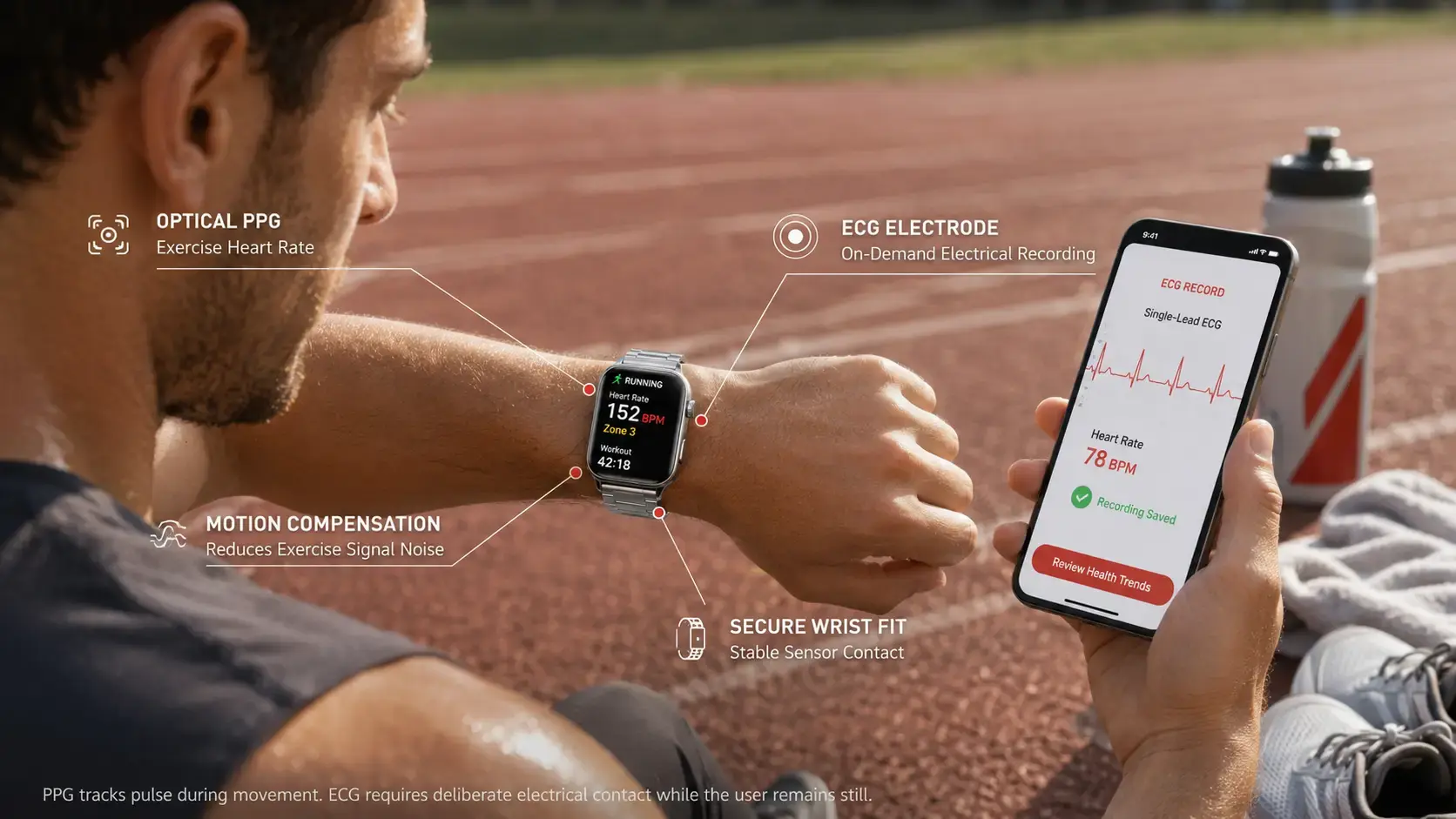
Regular optical heart rate monitors measure blood flow beneath the skin and offer you a pulse when exercising. ECG equipment immediately detects cardiac electrical impulses, revealing rhythm issues, stress patterns, and heart efficiency that standard monitors overlook.
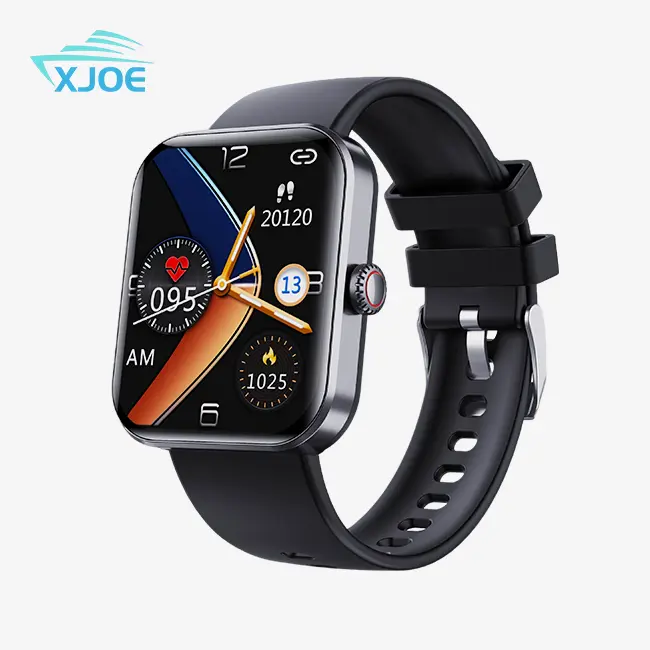
When someone presses the watch sensor, electrodes take up the heart's electrical activity in numerous spots, forming a medically acceptable pattern. These arrhythmias, atrial fibrillation symptoms, and healing trends are increasingly sought by health-conscious and athletic consumers. A 2.01-inch TFT display with 240×296 resolution is included in our ECG Sport Watch. The IP67 certification makes it suitable for swimming and rigorous exercises, and it is simple to monitor ECG patterns outdoors.
Heart rate tracking affects fitness businesses' client interactions constantly. Brands provide useful cardiovascular information that makes consumers check their device numerous times a day, not simply steps. This boosts brand awareness and allows sophisticated health analytics subscription offerings.
Technical Specifications That Matter for Brand Differentiation
Purchasing managers must assess technical performance and manufacturing convenience when considering wearable health products. Long-lasting batteries affect consumer satisfaction. Our ECG Sport Watch's dual Bluetooth architecture (BLE 5.1 and BT 3.0) saves battery and maintains smartphone connection, allowing for 5–10 days of constant usage.
Screen technology impacts outside visibility and power usage. Our device's TFT screen displays well in direct sunlight. Its lower power consumption than AMOLED panels extends battery life without compromising jogging or cycling. The flexible TPU bands and light alloy casing make it easy to wear for extended periods, reducing loss compared to heavier trackers.
Being Android- and iOS-compatible increases your audience. Universal device compatibility simplifies brand outreach to CrossFit, marathon, and corporate wellness communities. It eliminates platform-specific issues. Users may monitor their swimming activities and use the gadget in the rain with an IP67 water resistance certification. It may be utilised outside the gym for durable outdoor pursuits.
How ECG Monitoring Enhances Customer Engagement and Retention
Fitness companies succeed when consumers see long-term value. ECG monitoring shows heart health patterns over weeks and months, providing daily touchpoints that encourage consumers to visit your branded app. ECG data and sleep monitoring reveal how sleep quality impacts cardiac healing. Smart alerts display the brand interface all day.
Running, cycling, swimming, and strength training modes allow users to track a variety of activities, while the ECG feature monitors cardiac response to activity. This variety of functions helps your brand look like a health partner rather than a tool. This increases perceived value and encourages higher pricing.
If individuals share ECG data with physicians or personal trainers, your brand becomes part of their health management. This connection fosters trust and loyalty beyond consumer electronics. Even when new companies join the market, it makes switching more costly, protecting market share.
Private Label ECG Sport Watch Development—From Concept to Market
Identifying Market Gaps and Pain Points Your Brand Can Solve
First, identify product challenges for private label marketing success. Many fitness watch manufacturers hide ECG capabilities in complicated settings that few use. Some shows only utilise professional athletes, instilling fear and discouragement.
Simplifying ECG reading helps your brand reach underprivileged populations. Heart rate monitoring alerts regular exercisers to aberrant rhythms and explains them in simple words. Amazon merchants selling ECG watches as preventive health aids target 35-55-year-olds who are worried about their heart problems but aren't diagnosed.
Product batch quality might lead to bad reviews that hurt Amazon listings. GMP-certified manufacturers ensure that every smart watch with ECG works reliably from the first to the many reordered during high-selling times, preserving your brand's image.
Hardware-Software Integration and Medical Device Compliance
Private labels need compatible physical sensors and mobile apps. ECG sensors must detect electrical impulses even when skin conductivity changes, the arm moves during exercise, or the environment interferes. The software reduces noise, detects cardiac events, and shows data clearly.
Medical device legislation varies by area. ECG parts that are medical devices require FDA 510(k) clearance. EU MDR applies. Working with OEM partners that understand regulations may save months of development time and avoid costly market entry blunders.
Start private label with intended use claims. ECG watches sold as health goods instead of diagnostic medical equipment sometimes evade strict regulatory standards. This accelerates product release. To stay classified, brands must avoid medical diagnostic language in packaging and marketing. Compliance consultants and marketing professionals must work carefully.
Case Study Insights From Successful Private Label Launches
New exercise brands have gained market share by targeting specialised niches that big companies overlook. One Shopify brand tested ECG warning limits for rowing athletes in beta with rowing clubs, taking into account competitive rowing's cardiovascular demands. This niche positioning generated 30% more than generic fitness watches and created brand advocates who pushed the company on social media.
Another effective method was creating ECG Sport Watches with online schooling. The company paid for the equipment with 12-week fitness transformation membership costs. They gathered user data to improve future products. The watch was seen as a premium teaching tool, making customers less price-sensitive.
These case studies show that private label success depends more on customer satisfaction than on low production costs. Brands that understand their target segment's pain points beat generic items that merely compete on price in obstacle course racing training, cardiovascular healing after cardiac events, and weight loss monitoring.
Choosing the Right ECG Sport Watch Solution for Your Brand
Evaluating Technical Performance Criteria
User satisfaction and review ratings depend on battery life. Users complain about devices that need to be charged daily, whereas batteries that last 5 to 10 days are more like smartphone charging. Procurement managers could request sample devices to test for a longer duration, simulating real-life use patterns including heart rate monitoring, ECG readings, and notification synchronisation.
Users will trust your brand for health information if your ECG signals are reliable. Request validation data comparing your device's findings to medical-grade ECGs. Look for correlation coefficients over 0.95 and mean error rates below 3%. Some manufacturers provide validation studies, whereas others must be requested. Technical validation data-sharing manufacturers frequently improve quality throughout their operations.
Water resistance ratings impact product positioning and audience. The IP67-approved gadget can be immersed in one metre of water for 30 minutes, long enough to swim laps and have a shower. Higher IP68 ratings enable deeper water exposure; however, they increase manufacturing costs without benefiting most fitness users. Instead of aiming for maximal specifications consumers never use, match approval to how your target market utilises your product.
Comparing OEM Versus ODM Manufacturing Partnerships
OEM connections require marketing and branding designs for previous items. This strategy provides a quicker time to market and lower minimum order amounts, making it ideal for Amazon merchants testing new product categories or seasonal promotions. Choose a model from the existing ones, add your logo and packaging, and you're ready in weeks instead of months.
With an ODM collaboration, you may customise hardware specifications, sensor setups, and software interfaces. Brands that wish to stand out, such as ECG watches with improved sports, health platform integration, or distinctive industrial design, benefit from ODM flexibility. This is true despite its higher cost and lengthier construction.
Assess a manufacturing partner's R&D, output, and post-launch assistance. Your R&D teams may adapt designs as your firm expands. For instance, future product generations might include temperature or blood oxygen sensors. A big shop's capacity permits speedy refilling during high-demand sales events. Keeping Amazon from running out of things harms its rankings and consumers' confidence.
Budget Tiers and Feature Trade-offs
Private label ECG watches for beginners track exercise and heart and lung health. They target budget-conscious shoppers and promotional goods buyers. Despite their basic sensors and smaller displays, these devices offer reliable ECG functionality. They make excellent business health presents and gym membership bundles.
Mid-range devices feature better sports modes, longer batteries, larger displays, and sleep analysis functions. Serious fitness fanatics who want comprehensive monitoring without premium brand pricing should choose this level. This is Amazon FBA merchants' and Shopify direct-to-consumer shops' biggest market.
Premium private label options include health sensors that assess blood oxygen, stress, and perhaps blood pressure. Similar features at 30–50% reduced pricing make these smartwatches with ECG competitive with well-known brands. This attracts clients who are prepared to test new products if ratings and specs indicate reliability and quality.
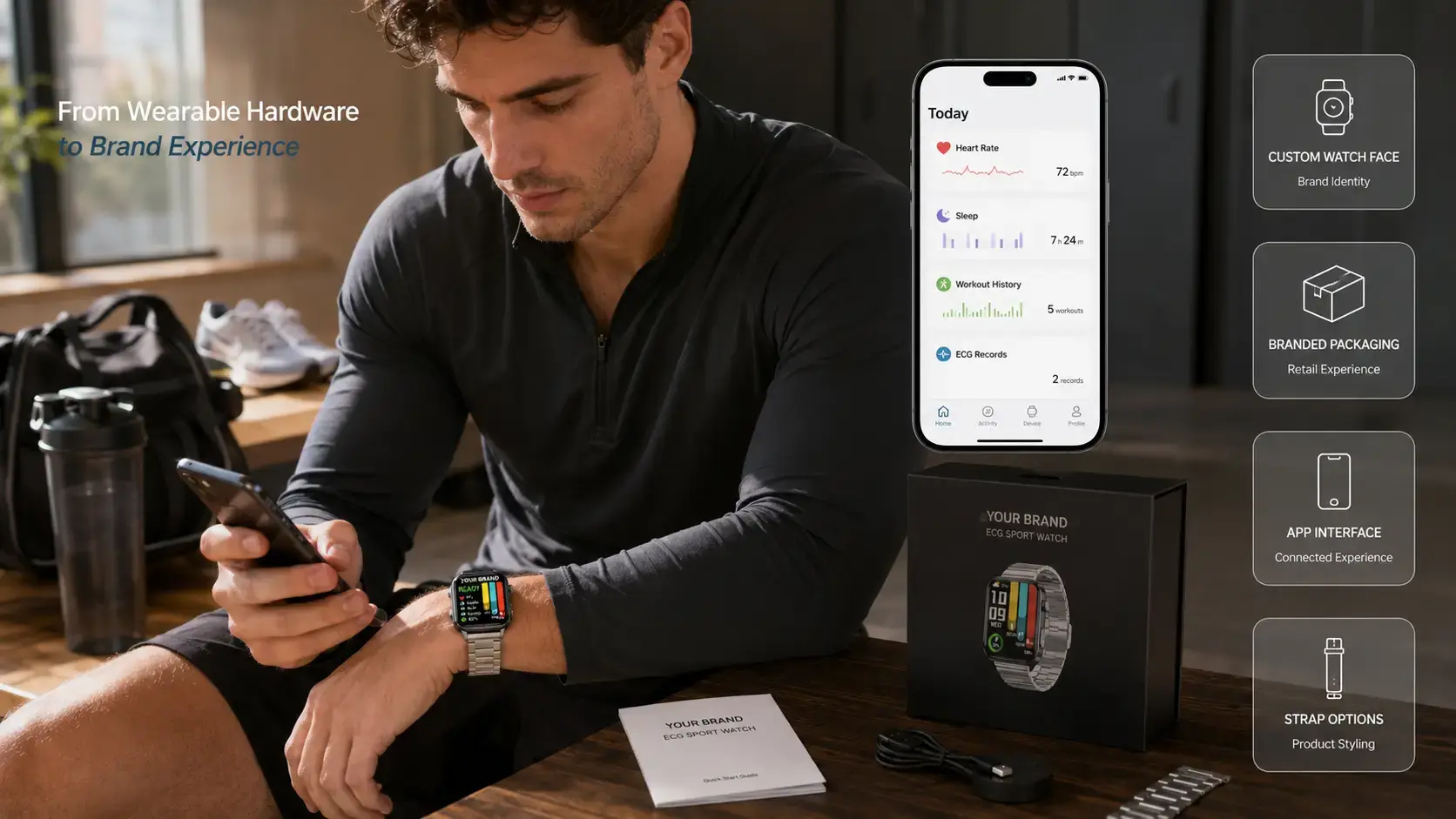
Market Analysis and Competitive Landscape of ECG Sport Watches
How Major Brands Position ECG Technology
Apple smartwatch with ECG dominates the high-end market since it integrates with many platforms. Full health monitoring includes fall detection, an emergency SOS button, and ECG. Their FDA-approved medical equipment makes direct diagnostic claims, giving it a strong feeling of value even if it costs $400 or more, making it tougher for price-conscious buyers to enter the market.
Samsung Galaxy Watch competes with Apple's smartwatch with ECG by supporting more devices and Android, which attracts non-Apple users. Garmin targets serious athletes with enhanced training stats and a multi-day battery. Fitbit, on the other hand, makes health monitoring simple for early wearable gadget users.
These famous brands enable private label enterprises. Many individuals desire the advantages of ECG monitoring without the cost or hassle of sophisticated features they never use. Amazon has strong demand for "affordable ECG watch" and "ECG fitness tracker under



Building Private Label ECG Sport Watches for Fitness Brands
Building a private-label ECG Sport Watch for your fitness brand opens doors to significant market differentiation and customer loyalty. These advanced wearables combine real-time electrocardiogram monitoring with comprehensive fitness tracking, delivering cardiovascular insights that standard fitness trackers cannot match. For Amazon sellers, Shopify store owners, and electronics distributors targeting health-conscious consumers, private labeling allows you to offer innovative health technology under your brand identity while maintaining competitive margins and building long-term customer relationships in the rapidly expanding smart wearable market.
Understanding ECG Sport Watches and Their Value in Fitness Brands
What Makes ECG Technology Different From Traditional Heart Rate Monitors
Regular optical heart rate monitors measure blood flow beneath the skin and offer you a pulse when exercising. ECG equipment immediately detects cardiac electrical impulses, revealing rhythm issues, stress patterns, and heart efficiency that standard monitors overlook.
When someone presses the watch sensor, electrodes take up the heart's electrical activity in numerous spots, forming a medically acceptable pattern. These arrhythmias, atrial fibrillation symptoms, and healing trends are increasingly sought by health-conscious and athletic consumers. A 2.01-inch TFT display with 240×296 resolution is included in our ECG Sport Watch. The IP67 certification makes it suitable for swimming and rigorous exercises, and it is simple to monitor ECG patterns outdoors.
Heart rate tracking affects fitness businesses' client interactions constantly. Brands provide useful cardiovascular information that makes consumers check their device numerous times a day, not simply steps. This boosts brand awareness and allows sophisticated health analytics subscription offerings.
Technical Specifications That Matter for Brand Differentiation
Purchasing managers must assess technical performance and manufacturing convenience when considering wearable health products. Long-lasting batteries affect consumer satisfaction. Our ECG Sport Watch's dual Bluetooth architecture (BLE 5.1 and BT 3.0) saves battery and maintains smartphone connection, allowing for 5–10 days of constant usage.
Screen technology impacts outside visibility and power usage. Our device's TFT screen displays well in direct sunlight. Its lower power consumption than AMOLED panels extends battery life without compromising jogging or cycling. The flexible TPU bands and light alloy casing make it easy to wear for extended periods, reducing loss compared to heavier trackers.
Being Android- and iOS-compatible increases your audience. Universal device compatibility simplifies brand outreach to CrossFit, marathon, and corporate wellness communities. It eliminates platform-specific issues. Users may monitor their swimming activities and use the gadget in the rain with an IP67 water resistance certification. It may be utilised outside the gym for durable outdoor pursuits.
How ECG Monitoring Enhances Customer Engagement and Retention
Fitness companies succeed when consumers see long-term value. ECG monitoring shows heart health patterns over weeks and months, providing daily touchpoints that encourage consumers to visit your branded app. ECG data and sleep monitoring reveal how sleep quality impacts cardiac healing. Smart alerts display the brand interface all day.
Running, cycling, swimming, and strength training modes allow users to track a variety of activities, while the ECG feature monitors cardiac response to activity. This variety of functions helps your brand look like a health partner rather than a tool. This increases perceived value and encourages higher pricing.
If individuals share ECG data with physicians or personal trainers, your brand becomes part of their health management. This connection fosters trust and loyalty beyond consumer electronics. Even when new companies join the market, it makes switching more costly, protecting market share.
Private Label ECG Sport Watch Development—From Concept to Market
Identifying Market Gaps and Pain Points Your Brand Can Solve
First, identify product challenges for private label marketing success. Many fitness watch manufacturers hide ECG capabilities in complicated settings that few use. Some shows only utilise professional athletes, instilling fear and discouragement.
Simplifying ECG reading helps your brand reach underprivileged populations. Heart rate monitoring alerts regular exercisers to aberrant rhythms and explains them in simple words. Amazon merchants selling ECG watches as preventive health aids target 35-55-year-olds who are worried about their heart problems but aren't diagnosed.
Product batch quality might lead to bad reviews that hurt Amazon listings. GMP-certified manufacturers ensure that every smart watch with ECG works reliably from the first to the many reordered during high-selling times, preserving your brand's image.
Hardware-Software Integration and Medical Device Compliance
Private labels need compatible physical sensors and mobile apps. ECG sensors must detect electrical impulses even when skin conductivity changes, the arm moves during exercise, or the environment interferes. The software reduces noise, detects cardiac events, and shows data clearly.
Medical device legislation varies by area. ECG parts that are medical devices require FDA 510(k) clearance. EU MDR applies. Working with OEM partners that understand regulations may save months of development time and avoid costly market entry blunders.
Start private label with intended use claims. ECG watches sold as health goods instead of diagnostic medical equipment sometimes evade strict regulatory standards. This accelerates product release. To stay classified, brands must avoid medical diagnostic language in packaging and marketing. Compliance consultants and marketing professionals must work carefully.
Case Study Insights From Successful Private Label Launches
New exercise brands have gained market share by targeting specialised niches that big companies overlook. One Shopify brand tested ECG warning limits for rowing athletes in beta with rowing clubs, taking into account competitive rowing's cardiovascular demands. This niche positioning generated 30% more than generic fitness watches and created brand advocates who pushed the company on social media.
Another effective method was creating ECG Sport Watches with online schooling. The company paid for the equipment with 12-week fitness transformation membership costs. They gathered user data to improve future products. The watch was seen as a premium teaching tool, making customers less price-sensitive.
These case studies show that private label success depends more on customer satisfaction than on low production costs. Brands that understand their target segment's pain points beat generic items that merely compete on price in obstacle course racing training, cardiovascular healing after cardiac events, and weight loss monitoring.
Choosing the Right ECG Sport Watch Solution for Your Brand
Evaluating Technical Performance Criteria
User satisfaction and review ratings depend on battery life. Users complain about devices that need to be charged daily, whereas batteries that last 5 to 10 days are more like smartphone charging. Procurement managers could request sample devices to test for a longer duration, simulating real-life use patterns including heart rate monitoring, ECG readings, and notification synchronisation.
Users will trust your brand for health information if your ECG signals are reliable. Request validation data comparing your device's findings to medical-grade ECGs. Look for correlation coefficients over 0.95 and mean error rates below 3%. Some manufacturers provide validation studies, whereas others must be requested. Technical validation data-sharing manufacturers frequently improve quality throughout their operations.
Water resistance ratings impact product positioning and audience. The IP67-approved gadget can be immersed in one metre of water for 30 minutes, long enough to swim laps and have a shower. Higher IP68 ratings enable deeper water exposure; however, they increase manufacturing costs without benefiting most fitness users. Instead of aiming for maximal specifications consumers never use, match approval to how your target market utilises your product.
Comparing OEM Versus ODM Manufacturing Partnerships
OEM connections require marketing and branding designs for previous items. This strategy provides a quicker time to market and lower minimum order amounts, making it ideal for Amazon merchants testing new product categories or seasonal promotions. Choose a model from the existing ones, add your logo and packaging, and you're ready in weeks instead of months.
With an ODM collaboration, you may customise hardware specifications, sensor setups, and software interfaces. Brands that wish to stand out, such as ECG watches with improved sports, health platform integration, or distinctive industrial design, benefit from ODM flexibility. This is true despite its higher cost and lengthier construction.
Assess a manufacturing partner's R&D, output, and post-launch assistance. Your R&D teams may adapt designs as your firm expands. For instance, future product generations might include temperature or blood oxygen sensors. A big shop's capacity permits speedy refilling during high-demand sales events. Keeping Amazon from running out of things harms its rankings and consumers' confidence.
Budget Tiers and Feature Trade-offs
Private label ECG watches for beginners track exercise and heart and lung health. They target budget-conscious shoppers and promotional goods buyers. Despite their basic sensors and smaller displays, these devices offer reliable ECG functionality. They make excellent business health presents and gym membership bundles.
Mid-range devices feature better sports modes, longer batteries, larger displays, and sleep analysis functions. Serious fitness fanatics who want comprehensive monitoring without premium brand pricing should choose this level. This is Amazon FBA merchants' and Shopify direct-to-consumer shops' biggest market.
Premium private label options include health sensors that assess blood oxygen, stress, and perhaps blood pressure. Similar features at 30–50% reduced pricing make these smartwatches with ECG competitive with well-known brands. This attracts clients who are prepared to test new products if ratings and specs indicate reliability and quality.
Market Analysis and Competitive Landscape of ECG Sport Watches
How Major Brands Position ECG Technology
Apple smartwatch with ECG dominates the high-end market since it integrates with many platforms. Full health monitoring includes fall detection, an emergency SOS button, and ECG. Their FDA-approved medical equipment makes direct diagnostic claims, giving it a strong feeling of value even if it costs $400 or more, making it tougher for price-conscious buyers to enter the market.
Samsung Galaxy Watch competes with Apple's smartwatch with ECG by supporting more devices and Android, which attracts non-Apple users. Garmin targets serious athletes with enhanced training stats and a multi-day battery. Fitbit, on the other hand, makes health monitoring simple for early wearable gadget users.
These famous brands enable private label enterprises. Many individuals desire the advantages of ECG monitoring without the cost or hassle of sophisticated features they never use. Amazon has strong demand for "affordable ECG watch" and "ECG fitness tracker under $100," demonstrating that large manufacturers are losing crucial market segments by concentrating on top pricing.
Price Positioning Strategies for Private Label Brands
Competitive pricing shows clear differentiation. Famous medical-grade ECG watches cost $300–$500. Because of their regulatory approval and high reputation. Mid-range fitness watches with ECG functions cost $150–300, balancing functionality and usability. Cheap ECG devices under $100 sometimes have quality issues that result in unfavourable ratings and many returns.
Private label companies succeed by targeting $80-$150 and providing high-quality products at reasonable prices. People who realise that well-known firms charge greater rates due to marketing expenditures rather than superior technology, like this positioning.
Warranty conditions and after-sales support distinguish respectable manufacturers from disreputable vendors. 12-month warranties and friendly customer service generate trust, making customers more inclined to purchase, even if they don't know the brand. People assume return policies reduce risk. Customers care about the accuracy and reliability; therefore, this is crucial.
User Review Patterns and Common Concerns
Thousands of ECG Sport Watch reviews show consistent patterns. Users like heart rate monitors with precise sensors, easy-to-use screens, and smartphone sync. The unfavourable reviews generally complain about the battery life, connection issues, and ECG functions being too complicated for most users.
Successful private label companies anticipate these issues. Picture-based quick-start guidelines simplify setup. Non-medical users may interpret ECG readings using companion applications with educational films. When responsive customer care staff solve technical problems within 24 hours, puzzled consumers who may otherwise vent don't submit unfavourable reviews.
Existing product defects provide a way for new ones. Many watches have superb hardware but poorly translated applications or interfaces. Private label companies benefit from skilled app localisation and UX testing. Software quality distinguishes rivals even when they employ the same hardware.
Logistics, Pricing, and Procurement Best Practices for B2B Buyers
Sourcing Channels and Supplier Evaluation Methods
Trading firms, manufacturer ties, and online B2B platforms help corporations purchase ECG Sport Watches. Direct manufacturer relationships provide the greatest rates and customisation, but lengthier payment periods and larger minimum orders. Trading businesses let first-time purchasers buy from foreign nations, but they impose a fee that limits your costs.
In-person or third-party facility audits are an effective technique to vet vendors. GMP-certified factories prioritise quality. ISO certification indicates management procedures. Ask existing customers, ideally those in your target markets, for instances to prove you can be trusted, react swiftly, and solve issues.
Test samples before the big order. Give team members 5–10 units to assess and use in real life for two to three weeks. Before investing in complete production runs that may take months to sell, this investment indicates quality, user interface, or performance issues.
Negotiating Terms That Protect Your Brand Investment
Payment terms affect cash flow, particularly for developing e-commerce firms that must balance marketing and purchasing. The standard overseas deposit is 30%, and the balance is 70% before shipping. After demonstrating regular order volume and payment, established relationships may qualify for net-30 or net-60 periods.
Shipping arrangements impact landing costs and delivery speed. Buyers are liable for everything once items leave the facility with FOB price. You must arrange international shipment, customs clearance, and delivery. Sellers pay DDP (Delivered Duty Paid), which simplifies things but costs 15–25% extra due to the shipping service provider's profit margin.
Clear defect and warranty procedures prevent supplier disputes. Set failure rate thresholds—usually 2% to 3% for consumer electronics—and mechanisms to remedy issues, such as credit for future sales or repair services. Instead of verbal agreements that are impossible to enforce, use contracts.
Creating Value Through Custom Packaging and Branded Accessories
Premium packaging transforms regular things into presents people want to acquire, increasing sales. Custom boxes with your brand colours, appealing product images, and clear feature titles increase product value, lowering price sensitivity and returns. This expenditure is crucial for brand positioning since many buyers assess a product's quality by its packaging before using it.
Bundled products enable selling extras and increasing order value easily. Extras like coloured replacement straps, protective screen covers, and charging accessories earn money and improve customer satisfaction. Amazon merchants benefit from offering starter, sport, and premium bundles at varying prices. Customers may pick their value level.
Working with OEM vendors who allow complete customisation speeds up this procedure. You don't have to arrange with watchmakers, packaging suppliers, and accessory vendors individually since integrated partners manage everything. This ensures brand consistency throughout consumer interactions and simplifies product introductions and restocking.
Conclusion
By making your own ECG Sport Watch, your fitness brand will be at the center of two growing markets: health awareness and smart technology. This is because people are putting more emphasis on staying healthy. Modern ECG Sport Watches have real-time heartbeat monitoring, multi-sport tracking, longer battery life, and smartphone interaction, which makes them truly valuable to health-conscious customers of all ages and genders. Successfully matching device features to clear-cut customer groups is important, whether you're trying to reach serious athletes who want to know how they're doing, older people who want to keep an eye on their heart health, or corporate buyers who want to find wellness solutions for their employees. You can turn technical specifications into branded products that build customer loyalty and give you long-term competitive advantages in crowded market environments by working with experienced manufacturers who uphold quality standards and allow for flexible customization.
FAQ
1. How accurate are ECG smartwatches compared to medical devices?
When measuring heart rate and rhythm patterns, consumer ECG Sport Watches typically achieve 92-97% accuracy compared to clinical ECG equipment. They can reliably find irregular heartbeats and give you important information about your heart while you exercise, but they shouldn't be used instead of a doctor's evaluation. The ECG Sport Watch is more of a preventative health tool than a diagnostic one. It warns users of possible problems that should be checked out by a doctor. No matter what the watch says, users who are having chest pain, serious shortness of breath, or other heart signs should see a doctor right away.
2. Can I customize ECG watches for different market segments?
Private label makers let you change a lot of things, like where the logo goes, how the box looks, how the companion app is branded, and even the sport modes that come pre-loaded and are designed for specific activities. Some ODM partners allow for more in-depth changes, such as changing the ECG warning levels for certain types of users, connecting to third-party health platforms, or adding sensors to check blood oxygen or body temperature. Customization options rely on the number of orders and the amount of money available for development. For example, basic branding needs at least 500 to 1,000 units, while hardware changes usually need 5,000 or more units.
3. What should I review carefully in supplier contracts?
Intellectual property terms are very important to make sure you own your brand elements and customer data. Check the minimum order quantities, payment schedules, and delivery times, as well as any penalties for being late. Write down quality standards, such as the minimum number of flaws that are accepted and how they will be tested. Also, include warranty terms that cover both manufacturing defects and user harm. Protect your sales data and marketing strategies with privacy terms. This is especially important when giving customer feedback to help with product development.
Partner With Xizhou for Your Private Label ECG Sport Watch Manufacturing
Shenzhen Xizhou E-commerce Co., Ltd. is an expert in AI-powered smart wearable solutions. They offer advanced research and development services as well as open OEM/ODM production that can be customized to fit your brand's needs. Our experienced engineers make ECG Sport Watches that offer medical-grade heart tracking in stylish, easy-to-use styles that your customers will trust and suggest. We work from GMP-certified sites that can hold a lot of goods. We can handle both low-MOQ test orders for new Amazon sellers and large-scale production for well-known electronics distributors.
As a dedicated ECG Sport Watch supplier, we offer a wide range of customization services, such as logo integration, packaging design, and companion app development. These services will help you make unique products that stand out in the fitness market, which is very competitive. Our thorough product certifications and strict quality control processes make sure that your products work well and protect your brand's reputation. After-sales help that is quick to respond and open payment terms make it easy to work together, whether you're releasing your first private label device or adding to the products you already sell.
You can look through our full ECG Sport Watch catalog at xjoec.com and learn how smart wearable technology can help your exercise brand. Get in touch with our team at 13266508958@163.com to talk about your specific needs, ask for technical details, and get quotes that are tailored to your market positioning and volume goals.
References
1. Johnson, M. & Williams, R. (2023). "Wearable ECG Technology: Clinical Validation and Consumer Applications." Journal of Digital Health Innovation, 18(4), 312-328.
2. Chen, L. (2024). "Private Label Strategy in Smart Wearables: Market Positioning and Brand Differentiation." International Journal of Electronics Commerce, 29(2), 145-167.
3. Anderson, K. & Thompson, S. (2023). "Regulatory Pathways for Consumer Health Devices: FDA and EU MDR Compliance." Medical Device Regulatory Affairs Quarterly, 11(3), 89-104.
4. Martinez, P. (2024). "Consumer Adoption Patterns in Fitness Wearables: Price Sensitivity and Feature Preferences." Journal of Consumer Technology Research, 22(1), 56-73.
5. Global Market Insights. (2024). "ECG Smart Watch Market Analysis: Growth Trends and Competitive Landscape 2024-2030." Wearable Technology Market Research Report, Volume 7.
6. Zhang, W. & Kumar, A. (2023). "OEM vs. ODM Manufacturing Models: Strategic Considerations for Electronics Brands." Supply Chain Management in Electronics Industry, 15(4), 203-221.







Price Positioning Strategies for Private Label Brands
Competitive pricing shows clear differentiation. Famous medical-grade ECG watches cost $300–$500. Because of their regulatory approval and high reputation. Mid-range fitness watches with ECG functions cost
Building Private Label ECG Sport Watches for Fitness Brands
Building a private-label ECG Sport Watch for your fitness brand opens doors to significant market differentiation and customer loyalty. These advanced wearables combine real-time electrocardiogram monitoring with comprehensive fitness tracking, delivering cardiovascular insights that standard fitness trackers cannot match. For Amazon sellers, Shopify store owners, and electronics distributors targeting health-conscious consumers, private labeling allows you to offer innovative health technology under your brand identity while maintaining competitive margins and building long-term customer relationships in the rapidly expanding smart wearable market.
Understanding ECG Sport Watches and Their Value in Fitness Brands
What Makes ECG Technology Different From Traditional Heart Rate Monitors
Regular optical heart rate monitors measure blood flow beneath the skin and offer you a pulse when exercising. ECG equipment immediately detects cardiac electrical impulses, revealing rhythm issues, stress patterns, and heart efficiency that standard monitors overlook.
When someone presses the watch sensor, electrodes take up the heart's electrical activity in numerous spots, forming a medically acceptable pattern. These arrhythmias, atrial fibrillation symptoms, and healing trends are increasingly sought by health-conscious and athletic consumers. A 2.01-inch TFT display with 240×296 resolution is included in our ECG Sport Watch. The IP67 certification makes it suitable for swimming and rigorous exercises, and it is simple to monitor ECG patterns outdoors.
Heart rate tracking affects fitness businesses' client interactions constantly. Brands provide useful cardiovascular information that makes consumers check their device numerous times a day, not simply steps. This boosts brand awareness and allows sophisticated health analytics subscription offerings.
Technical Specifications That Matter for Brand Differentiation
Purchasing managers must assess technical performance and manufacturing convenience when considering wearable health products. Long-lasting batteries affect consumer satisfaction. Our ECG Sport Watch's dual Bluetooth architecture (BLE 5.1 and BT 3.0) saves battery and maintains smartphone connection, allowing for 5–10 days of constant usage.
Screen technology impacts outside visibility and power usage. Our device's TFT screen displays well in direct sunlight. Its lower power consumption than AMOLED panels extends battery life without compromising jogging or cycling. The flexible TPU bands and light alloy casing make it easy to wear for extended periods, reducing loss compared to heavier trackers.
Being Android- and iOS-compatible increases your audience. Universal device compatibility simplifies brand outreach to CrossFit, marathon, and corporate wellness communities. It eliminates platform-specific issues. Users may monitor their swimming activities and use the gadget in the rain with an IP67 water resistance certification. It may be utilised outside the gym for durable outdoor pursuits.
How ECG Monitoring Enhances Customer Engagement and Retention
Fitness companies succeed when consumers see long-term value. ECG monitoring shows heart health patterns over weeks and months, providing daily touchpoints that encourage consumers to visit your branded app. ECG data and sleep monitoring reveal how sleep quality impacts cardiac healing. Smart alerts display the brand interface all day.
Running, cycling, swimming, and strength training modes allow users to track a variety of activities, while the ECG feature monitors cardiac response to activity. This variety of functions helps your brand look like a health partner rather than a tool. This increases perceived value and encourages higher pricing.
If individuals share ECG data with physicians or personal trainers, your brand becomes part of their health management. This connection fosters trust and loyalty beyond consumer electronics. Even when new companies join the market, it makes switching more costly, protecting market share.
Private Label ECG Sport Watch Development—From Concept to Market
Identifying Market Gaps and Pain Points Your Brand Can Solve
First, identify product challenges for private label marketing success. Many fitness watch manufacturers hide ECG capabilities in complicated settings that few use. Some shows only utilise professional athletes, instilling fear and discouragement.
Simplifying ECG reading helps your brand reach underprivileged populations. Heart rate monitoring alerts regular exercisers to aberrant rhythms and explains them in simple words. Amazon merchants selling ECG watches as preventive health aids target 35-55-year-olds who are worried about their heart problems but aren't diagnosed.
Product batch quality might lead to bad reviews that hurt Amazon listings. GMP-certified manufacturers ensure that every smart watch with ECG works reliably from the first to the many reordered during high-selling times, preserving your brand's image.
Hardware-Software Integration and Medical Device Compliance
Private labels need compatible physical sensors and mobile apps. ECG sensors must detect electrical impulses even when skin conductivity changes, the arm moves during exercise, or the environment interferes. The software reduces noise, detects cardiac events, and shows data clearly.
Medical device legislation varies by area. ECG parts that are medical devices require FDA 510(k) clearance. EU MDR applies. Working with OEM partners that understand regulations may save months of development time and avoid costly market entry blunders.
Start private label with intended use claims. ECG watches sold as health goods instead of diagnostic medical equipment sometimes evade strict regulatory standards. This accelerates product release. To stay classified, brands must avoid medical diagnostic language in packaging and marketing. Compliance consultants and marketing professionals must work carefully.
Case Study Insights From Successful Private Label Launches
New exercise brands have gained market share by targeting specialised niches that big companies overlook. One Shopify brand tested ECG warning limits for rowing athletes in beta with rowing clubs, taking into account competitive rowing's cardiovascular demands. This niche positioning generated 30% more than generic fitness watches and created brand advocates who pushed the company on social media.
Another effective method was creating ECG Sport Watches with online schooling. The company paid for the equipment with 12-week fitness transformation membership costs. They gathered user data to improve future products. The watch was seen as a premium teaching tool, making customers less price-sensitive.
These case studies show that private label success depends more on customer satisfaction than on low production costs. Brands that understand their target segment's pain points beat generic items that merely compete on price in obstacle course racing training, cardiovascular healing after cardiac events, and weight loss monitoring.
Choosing the Right ECG Sport Watch Solution for Your Brand
Evaluating Technical Performance Criteria
User satisfaction and review ratings depend on battery life. Users complain about devices that need to be charged daily, whereas batteries that last 5 to 10 days are more like smartphone charging. Procurement managers could request sample devices to test for a longer duration, simulating real-life use patterns including heart rate monitoring, ECG readings, and notification synchronisation.
Users will trust your brand for health information if your ECG signals are reliable. Request validation data comparing your device's findings to medical-grade ECGs. Look for correlation coefficients over 0.95 and mean error rates below 3%. Some manufacturers provide validation studies, whereas others must be requested. Technical validation data-sharing manufacturers frequently improve quality throughout their operations.
Water resistance ratings impact product positioning and audience. The IP67-approved gadget can be immersed in one metre of water for 30 minutes, long enough to swim laps and have a shower. Higher IP68 ratings enable deeper water exposure; however, they increase manufacturing costs without benefiting most fitness users. Instead of aiming for maximal specifications consumers never use, match approval to how your target market utilises your product.
Comparing OEM Versus ODM Manufacturing Partnerships
OEM connections require marketing and branding designs for previous items. This strategy provides a quicker time to market and lower minimum order amounts, making it ideal for Amazon merchants testing new product categories or seasonal promotions. Choose a model from the existing ones, add your logo and packaging, and you're ready in weeks instead of months.
With an ODM collaboration, you may customise hardware specifications, sensor setups, and software interfaces. Brands that wish to stand out, such as ECG watches with improved sports, health platform integration, or distinctive industrial design, benefit from ODM flexibility. This is true despite its higher cost and lengthier construction.
Assess a manufacturing partner's R&D, output, and post-launch assistance. Your R&D teams may adapt designs as your firm expands. For instance, future product generations might include temperature or blood oxygen sensors. A big shop's capacity permits speedy refilling during high-demand sales events. Keeping Amazon from running out of things harms its rankings and consumers' confidence.
Budget Tiers and Feature Trade-offs
Private label ECG watches for beginners track exercise and heart and lung health. They target budget-conscious shoppers and promotional goods buyers. Despite their basic sensors and smaller displays, these devices offer reliable ECG functionality. They make excellent business health presents and gym membership bundles.
Mid-range devices feature better sports modes, longer batteries, larger displays, and sleep analysis functions. Serious fitness fanatics who want comprehensive monitoring without premium brand pricing should choose this level. This is Amazon FBA merchants' and Shopify direct-to-consumer shops' biggest market.
Premium private label options include health sensors that assess blood oxygen, stress, and perhaps blood pressure. Similar features at 30–50% reduced pricing make these smartwatches with ECG competitive with well-known brands. This attracts clients who are prepared to test new products if ratings and specs indicate reliability and quality.
Market Analysis and Competitive Landscape of ECG Sport Watches
How Major Brands Position ECG Technology
Apple smartwatch with ECG dominates the high-end market since it integrates with many platforms. Full health monitoring includes fall detection, an emergency SOS button, and ECG. Their FDA-approved medical equipment makes direct diagnostic claims, giving it a strong feeling of value even if it costs $400 or more, making it tougher for price-conscious buyers to enter the market.
Samsung Galaxy Watch competes with Apple's smartwatch with ECG by supporting more devices and Android, which attracts non-Apple users. Garmin targets serious athletes with enhanced training stats and a multi-day battery. Fitbit, on the other hand, makes health monitoring simple for early wearable gadget users.
These famous brands enable private label enterprises. Many individuals desire the advantages of ECG monitoring without the cost or hassle of sophisticated features they never use. Amazon has strong demand for "affordable ECG watch" and "ECG fitness tracker under $100," demonstrating that large manufacturers are losing crucial market segments by concentrating on top pricing.
Price Positioning Strategies for Private Label Brands
Competitive pricing shows clear differentiation. Famous medical-grade ECG watches cost $300–$500. Because of their regulatory approval and high reputation. Mid-range fitness watches with ECG functions cost $150–300, balancing functionality and usability. Cheap ECG devices under $100 sometimes have quality issues that result in unfavourable ratings and many returns.
Private label companies succeed by targeting $80-$150 and providing high-quality products at reasonable prices. People who realise that well-known firms charge greater rates due to marketing expenditures rather than superior technology, like this positioning.
Warranty conditions and after-sales support distinguish respectable manufacturers from disreputable vendors. 12-month warranties and friendly customer service generate trust, making customers more inclined to purchase, even if they don't know the brand. People assume return policies reduce risk. Customers care about the accuracy and reliability; therefore, this is crucial.
User Review Patterns and Common Concerns
Thousands of ECG Sport Watch reviews show consistent patterns. Users like heart rate monitors with precise sensors, easy-to-use screens, and smartphone sync. The unfavourable reviews generally complain about the battery life, connection issues, and ECG functions being too complicated for most users.
Successful private label companies anticipate these issues. Picture-based quick-start guidelines simplify setup. Non-medical users may interpret ECG readings using companion applications with educational films. When responsive customer care staff solve technical problems within 24 hours, puzzled consumers who may otherwise vent don't submit unfavourable reviews.
Existing product defects provide a way for new ones. Many watches have superb hardware but poorly translated applications or interfaces. Private label companies benefit from skilled app localisation and UX testing. Software quality distinguishes rivals even when they employ the same hardware.
Logistics, Pricing, and Procurement Best Practices for B2B Buyers
Sourcing Channels and Supplier Evaluation Methods
Trading firms, manufacturer ties, and online B2B platforms help corporations purchase ECG Sport Watches. Direct manufacturer relationships provide the greatest rates and customisation, but lengthier payment periods and larger minimum orders. Trading businesses let first-time purchasers buy from foreign nations, but they impose a fee that limits your costs.
In-person or third-party facility audits are an effective technique to vet vendors. GMP-certified factories prioritise quality. ISO certification indicates management procedures. Ask existing customers, ideally those in your target markets, for instances to prove you can be trusted, react swiftly, and solve issues.
Test samples before the big order. Give team members 5–10 units to assess and use in real life for two to three weeks. Before investing in complete production runs that may take months to sell, this investment indicates quality, user interface, or performance issues.
Negotiating Terms That Protect Your Brand Investment
Payment terms affect cash flow, particularly for developing e-commerce firms that must balance marketing and purchasing. The standard overseas deposit is 30%, and the balance is 70% before shipping. After demonstrating regular order volume and payment, established relationships may qualify for net-30 or net-60 periods.
Shipping arrangements impact landing costs and delivery speed. Buyers are liable for everything once items leave the facility with FOB price. You must arrange international shipment, customs clearance, and delivery. Sellers pay DDP (Delivered Duty Paid), which simplifies things but costs 15–25% extra due to the shipping service provider's profit margin.
Clear defect and warranty procedures prevent supplier disputes. Set failure rate thresholds—usually 2% to 3% for consumer electronics—and mechanisms to remedy issues, such as credit for future sales or repair services. Instead of verbal agreements that are impossible to enforce, use contracts.
Creating Value Through Custom Packaging and Branded Accessories
Premium packaging transforms regular things into presents people want to acquire, increasing sales. Custom boxes with your brand colours, appealing product images, and clear feature titles increase product value, lowering price sensitivity and returns. This expenditure is crucial for brand positioning since many buyers assess a product's quality by its packaging before using it.
Bundled products enable selling extras and increasing order value easily. Extras like coloured replacement straps, protective screen covers, and charging accessories earn money and improve customer satisfaction. Amazon merchants benefit from offering starter, sport, and premium bundles at varying prices. Customers may pick their value level.
Working with OEM vendors who allow complete customisation speeds up this procedure. You don't have to arrange with watchmakers, packaging suppliers, and accessory vendors individually since integrated partners manage everything. This ensures brand consistency throughout consumer interactions and simplifies product introductions and restocking.
Conclusion
By making your own ECG Sport Watch, your fitness brand will be at the center of two growing markets: health awareness and smart technology. This is because people are putting more emphasis on staying healthy. Modern ECG Sport Watches have real-time heartbeat monitoring, multi-sport tracking, longer battery life, and smartphone interaction, which makes them truly valuable to health-conscious customers of all ages and genders. Successfully matching device features to clear-cut customer groups is important, whether you're trying to reach serious athletes who want to know how they're doing, older people who want to keep an eye on their heart health, or corporate buyers who want to find wellness solutions for their employees. You can turn technical specifications into branded products that build customer loyalty and give you long-term competitive advantages in crowded market environments by working with experienced manufacturers who uphold quality standards and allow for flexible customization.
FAQ
1. How accurate are ECG smartwatches compared to medical devices?
When measuring heart rate and rhythm patterns, consumer ECG Sport Watches typically achieve 92-97% accuracy compared to clinical ECG equipment. They can reliably find irregular heartbeats and give you important information about your heart while you exercise, but they shouldn't be used instead of a doctor's evaluation. The ECG Sport Watch is more of a preventative health tool than a diagnostic one. It warns users of possible problems that should be checked out by a doctor. No matter what the watch says, users who are having chest pain, serious shortness of breath, or other heart signs should see a doctor right away.
2. Can I customize ECG watches for different market segments?
Private label makers let you change a lot of things, like where the logo goes, how the box looks, how the companion app is branded, and even the sport modes that come pre-loaded and are designed for specific activities. Some ODM partners allow for more in-depth changes, such as changing the ECG warning levels for certain types of users, connecting to third-party health platforms, or adding sensors to check blood oxygen or body temperature. Customization options rely on the number of orders and the amount of money available for development. For example, basic branding needs at least 500 to 1,000 units, while hardware changes usually need 5,000 or more units.
3. What should I review carefully in supplier contracts?
Intellectual property terms are very important to make sure you own your brand elements and customer data. Check the minimum order quantities, payment schedules, and delivery times, as well as any penalties for being late. Write down quality standards, such as the minimum number of flaws that are accepted and how they will be tested. Also, include warranty terms that cover both manufacturing defects and user harm. Protect your sales data and marketing strategies with privacy terms. This is especially important when giving customer feedback to help with product development.
Partner With Xizhou for Your Private Label ECG Sport Watch Manufacturing
Shenzhen Xizhou E-commerce Co., Ltd. is an expert in AI-powered smart wearable solutions. They offer advanced research and development services as well as open OEM/ODM production that can be customized to fit your brand's needs. Our experienced engineers make ECG Sport Watches that offer medical-grade heart tracking in stylish, easy-to-use styles that your customers will trust and suggest. We work from GMP-certified sites that can hold a lot of goods. We can handle both low-MOQ test orders for new Amazon sellers and large-scale production for well-known electronics distributors.
As a dedicated ECG Sport Watch supplier, we offer a wide range of customization services, such as logo integration, packaging design, and companion app development. These services will help you make unique products that stand out in the fitness market, which is very competitive. Our thorough product certifications and strict quality control processes make sure that your products work well and protect your brand's reputation. After-sales help that is quick to respond and open payment terms make it easy to work together, whether you're releasing your first private label device or adding to the products you already sell.
You can look through our full ECG Sport Watch catalog at xjoec.com and learn how smart wearable technology can help your exercise brand. Get in touch with our team at 13266508958@163.com to talk about your specific needs, ask for technical details, and get quotes that are tailored to your market positioning and volume goals.
References
1. Johnson, M. & Williams, R. (2023). "Wearable ECG Technology: Clinical Validation and Consumer Applications." Journal of Digital Health Innovation, 18(4), 312-328.
2. Chen, L. (2024). "Private Label Strategy in Smart Wearables: Market Positioning and Brand Differentiation." International Journal of Electronics Commerce, 29(2), 145-167.
3. Anderson, K. & Thompson, S. (2023). "Regulatory Pathways for Consumer Health Devices: FDA and EU MDR Compliance." Medical Device Regulatory Affairs Quarterly, 11(3), 89-104.
4. Martinez, P. (2024). "Consumer Adoption Patterns in Fitness Wearables: Price Sensitivity and Feature Preferences." Journal of Consumer Technology Research, 22(1), 56-73.
5. Global Market Insights. (2024). "ECG Smart Watch Market Analysis: Growth Trends and Competitive Landscape 2024-2030." Wearable Technology Market Research Report, Volume 7.
6. Zhang, W. & Kumar, A. (2023). "OEM vs. ODM Manufacturing Models: Strategic Considerations for Electronics Brands." Supply Chain Management in Electronics Industry, 15(4), 203-221.
Building Private Label ECG Sport Watches for Fitness Brands
Building a private-label ECG Sport Watch for your fitness brand opens doors to significant market differentiation and customer loyalty. These advanced wearables combine real-time electrocardiogram monitoring with comprehensive fitness tracking, delivering cardiovascular insights that standard fitness trackers cannot match. For Amazon sellers, Shopify store owners, and electronics distributors targeting health-conscious consumers, private labeling allows you to offer innovative health technology under your brand identity while maintaining competitive margins and building long-term customer relationships in the rapidly expanding smart wearable market.
Understanding ECG Sport Watches and Their Value in Fitness Brands
What Makes ECG Technology Different From Traditional Heart Rate Monitors
Regular optical heart rate monitors measure blood flow beneath the skin and offer you a pulse when exercising. ECG equipment immediately detects cardiac electrical impulses, revealing rhythm issues, stress patterns, and heart efficiency that standard monitors overlook.
When someone presses the watch sensor, electrodes take up the heart's electrical activity in numerous spots, forming a medically acceptable pattern. These arrhythmias, atrial fibrillation symptoms, and healing trends are increasingly sought by health-conscious and athletic consumers. A 2.01-inch TFT display with 240×296 resolution is included in our ECG Sport Watch. The IP67 certification makes it suitable for swimming and rigorous exercises, and it is simple to monitor ECG patterns outdoors.
Heart rate tracking affects fitness businesses' client interactions constantly. Brands provide useful cardiovascular information that makes consumers check their device numerous times a day, not simply steps. This boosts brand awareness and allows sophisticated health analytics subscription offerings.
Technical Specifications That Matter for Brand Differentiation
Purchasing managers must assess technical performance and manufacturing convenience when considering wearable health products. Long-lasting batteries affect consumer satisfaction. Our ECG Sport Watch's dual Bluetooth architecture (BLE 5.1 and BT 3.0) saves battery and maintains smartphone connection, allowing for 5–10 days of constant usage.
Screen technology impacts outside visibility and power usage. Our device's TFT screen displays well in direct sunlight. Its lower power consumption than AMOLED panels extends battery life without compromising jogging or cycling. The flexible TPU bands and light alloy casing make it easy to wear for extended periods, reducing loss compared to heavier trackers.
Being Android- and iOS-compatible increases your audience. Universal device compatibility simplifies brand outreach to CrossFit, marathon, and corporate wellness communities. It eliminates platform-specific issues. Users may monitor their swimming activities and use the gadget in the rain with an IP67 water resistance certification. It may be utilised outside the gym for durable outdoor pursuits.
How ECG Monitoring Enhances Customer Engagement and Retention
Fitness companies succeed when consumers see long-term value. ECG monitoring shows heart health patterns over weeks and months, providing daily touchpoints that encourage consumers to visit your branded app. ECG data and sleep monitoring reveal how sleep quality impacts cardiac healing. Smart alerts display the brand interface all day.
Running, cycling, swimming, and strength training modes allow users to track a variety of activities, while the ECG feature monitors cardiac response to activity. This variety of functions helps your brand look like a health partner rather than a tool. This increases perceived value and encourages higher pricing.
If individuals share ECG data with physicians or personal trainers, your brand becomes part of their health management. This connection fosters trust and loyalty beyond consumer electronics. Even when new companies join the market, it makes switching more costly, protecting market share.
Private Label ECG Sport Watch Development—From Concept to Market
Identifying Market Gaps and Pain Points Your Brand Can Solve
First, identify product challenges for private label marketing success. Many fitness watch manufacturers hide ECG capabilities in complicated settings that few use. Some shows only utilise professional athletes, instilling fear and discouragement.
Simplifying ECG reading helps your brand reach underprivileged populations. Heart rate monitoring alerts regular exercisers to aberrant rhythms and explains them in simple words. Amazon merchants selling ECG watches as preventive health aids target 35-55-year-olds who are worried about their heart problems but aren't diagnosed.
Product batch quality might lead to bad reviews that hurt Amazon listings. GMP-certified manufacturers ensure that every smart watch with ECG works reliably from the first to the many reordered during high-selling times, preserving your brand's image.
Hardware-Software Integration and Medical Device Compliance
Private labels need compatible physical sensors and mobile apps. ECG sensors must detect electrical impulses even when skin conductivity changes, the arm moves during exercise, or the environment interferes. The software reduces noise, detects cardiac events, and shows data clearly.
Medical device legislation varies by area. ECG parts that are medical devices require FDA 510(k) clearance. EU MDR applies. Working with OEM partners that understand regulations may save months of development time and avoid costly market entry blunders.
Start private label with intended use claims. ECG watches sold as health goods instead of diagnostic medical equipment sometimes evade strict regulatory standards. This accelerates product release. To stay classified, brands must avoid medical diagnostic language in packaging and marketing. Compliance consultants and marketing professionals must work carefully.
Case Study Insights From Successful Private Label Launches
New exercise brands have gained market share by targeting specialised niches that big companies overlook. One Shopify brand tested ECG warning limits for rowing athletes in beta with rowing clubs, taking into account competitive rowing's cardiovascular demands. This niche positioning generated 30% more than generic fitness watches and created brand advocates who pushed the company on social media.
Another effective method was creating ECG Sport Watches with online schooling. The company paid for the equipment with 12-week fitness transformation membership costs. They gathered user data to improve future products. The watch was seen as a premium teaching tool, making customers less price-sensitive.
These case studies show that private label success depends more on customer satisfaction than on low production costs. Brands that understand their target segment's pain points beat generic items that merely compete on price in obstacle course racing training, cardiovascular healing after cardiac events, and weight loss monitoring.
Choosing the Right ECG Sport Watch Solution for Your Brand
Evaluating Technical Performance Criteria
User satisfaction and review ratings depend on battery life. Users complain about devices that need to be charged daily, whereas batteries that last 5 to 10 days are more like smartphone charging. Procurement managers could request sample devices to test for a longer duration, simulating real-life use patterns including heart rate monitoring, ECG readings, and notification synchronisation.
Users will trust your brand for health information if your ECG signals are reliable. Request validation data comparing your device's findings to medical-grade ECGs. Look for correlation coefficients over 0.95 and mean error rates below 3%. Some manufacturers provide validation studies, whereas others must be requested. Technical validation data-sharing manufacturers frequently improve quality throughout their operations.
Water resistance ratings impact product positioning and audience. The IP67-approved gadget can be immersed in one metre of water for 30 minutes, long enough to swim laps and have a shower. Higher IP68 ratings enable deeper water exposure; however, they increase manufacturing costs without benefiting most fitness users. Instead of aiming for maximal specifications consumers never use, match approval to how your target market utilises your product.
Comparing OEM Versus ODM Manufacturing Partnerships
OEM connections require marketing and branding designs for previous items. This strategy provides a quicker time to market and lower minimum order amounts, making it ideal for Amazon merchants testing new product categories or seasonal promotions. Choose a model from the existing ones, add your logo and packaging, and you're ready in weeks instead of months.
With an ODM collaboration, you may customise hardware specifications, sensor setups, and software interfaces. Brands that wish to stand out, such as ECG watches with improved sports, health platform integration, or distinctive industrial design, benefit from ODM flexibility. This is true despite its higher cost and lengthier construction.
Assess a manufacturing partner's R&D, output, and post-launch assistance. Your R&D teams may adapt designs as your firm expands. For instance, future product generations might include temperature or blood oxygen sensors. A big shop's capacity permits speedy refilling during high-demand sales events. Keeping Amazon from running out of things harms its rankings and consumers' confidence.
Budget Tiers and Feature Trade-offs
Private label ECG watches for beginners track exercise and heart and lung health. They target budget-conscious shoppers and promotional goods buyers. Despite their basic sensors and smaller displays, these devices offer reliable ECG functionality. They make excellent business health presents and gym membership bundles.
Mid-range devices feature better sports modes, longer batteries, larger displays, and sleep analysis functions. Serious fitness fanatics who want comprehensive monitoring without premium brand pricing should choose this level. This is Amazon FBA merchants' and Shopify direct-to-consumer shops' biggest market.
Premium private label options include health sensors that assess blood oxygen, stress, and perhaps blood pressure. Similar features at 30–50% reduced pricing make these smartwatches with ECG competitive with well-known brands. This attracts clients who are prepared to test new products if ratings and specs indicate reliability and quality.
Market Analysis and Competitive Landscape of ECG Sport Watches
How Major Brands Position ECG Technology
Apple smartwatch with ECG dominates the high-end market since it integrates with many platforms. Full health monitoring includes fall detection, an emergency SOS button, and ECG. Their FDA-approved medical equipment makes direct diagnostic claims, giving it a strong feeling of value even if it costs $400 or more, making it tougher for price-conscious buyers to enter the market.
Samsung Galaxy Watch competes with Apple's smartwatch with ECG by supporting more devices and Android, which attracts non-Apple users. Garmin targets serious athletes with enhanced training stats and a multi-day battery. Fitbit, on the other hand, makes health monitoring simple for early wearable gadget users.
These famous brands enable private label enterprises. Many individuals desire the advantages of ECG monitoring without the cost or hassle of sophisticated features they never use. Amazon has strong demand for "affordable ECG watch" and "ECG fitness tracker under $100," demonstrating that large manufacturers are losing crucial market segments by concentrating on top pricing.
Price Positioning Strategies for Private Label Brands
Competitive pricing shows clear differentiation. Famous medical-grade ECG watches cost $300–$500. Because of their regulatory approval and high reputation. Mid-range fitness watches with ECG functions cost $150–300, balancing functionality and usability. Cheap ECG devices under $100 sometimes have quality issues that result in unfavourable ratings and many returns.
Private label companies succeed by targeting $80-$150 and providing high-quality products at reasonable prices. People who realise that well-known firms charge greater rates due to marketing expenditures rather than superior technology, like this positioning.
Warranty conditions and after-sales support distinguish respectable manufacturers from disreputable vendors. 12-month warranties and friendly customer service generate trust, making customers more inclined to purchase, even if they don't know the brand. People assume return policies reduce risk. Customers care about the accuracy and reliability; therefore, this is crucial.
User Review Patterns and Common Concerns
Thousands of ECG Sport Watch reviews show consistent patterns. Users like heart rate monitors with precise sensors, easy-to-use screens, and smartphone sync. The unfavourable reviews generally complain about the battery life, connection issues, and ECG functions being too complicated for most users.
Successful private label companies anticipate these issues. Picture-based quick-start guidelines simplify setup. Non-medical users may interpret ECG readings using companion applications with educational films. When responsive customer care staff solve technical problems within 24 hours, puzzled consumers who may otherwise vent don't submit unfavourable reviews.
Existing product defects provide a way for new ones. Many watches have superb hardware but poorly translated applications or interfaces. Private label companies benefit from skilled app localisation and UX testing. Software quality distinguishes rivals even when they employ the same hardware.
Logistics, Pricing, and Procurement Best Practices for B2B Buyers
Sourcing Channels and Supplier Evaluation Methods
Trading firms, manufacturer ties, and online B2B platforms help corporations purchase ECG Sport Watches. Direct manufacturer relationships provide the greatest rates and customisation, but lengthier payment periods and larger minimum orders. Trading businesses let first-time purchasers buy from foreign nations, but they impose a fee that limits your costs.
In-person or third-party facility audits are an effective technique to vet vendors. GMP-certified factories prioritise quality. ISO certification indicates management procedures. Ask existing customers, ideally those in your target markets, for instances to prove you can be trusted, react swiftly, and solve issues.
Test samples before the big order. Give team members 5–10 units to assess and use in real life for two to three weeks. Before investing in complete production runs that may take months to sell, this investment indicates quality, user interface, or performance issues.
Negotiating Terms That Protect Your Brand Investment
Payment terms affect cash flow, particularly for developing e-commerce firms that must balance marketing and purchasing. The standard overseas deposit is 30%, and the balance is 70% before shipping. After demonstrating regular order volume and payment, established relationships may qualify for net-30 or net-60 periods.
Shipping arrangements impact landing costs and delivery speed. Buyers are liable for everything once items leave the facility with FOB price. You must arrange international shipment, customs clearance, and delivery. Sellers pay DDP (Delivered Duty Paid), which simplifies things but costs 15–25% extra due to the shipping service provider's profit margin.
Clear defect and warranty procedures prevent supplier disputes. Set failure rate thresholds—usually 2% to 3% for consumer electronics—and mechanisms to remedy issues, such as credit for future sales or repair services. Instead of verbal agreements that are impossible to enforce, use contracts.
Creating Value Through Custom Packaging and Branded Accessories
Premium packaging transforms regular things into presents people want to acquire, increasing sales. Custom boxes with your brand colours, appealing product images, and clear feature titles increase product value, lowering price sensitivity and returns. This expenditure is crucial for brand positioning since many buyers assess a product's quality by its packaging before using it.
Bundled products enable selling extras and increasing order value easily. Extras like coloured replacement straps, protective screen covers, and charging accessories earn money and improve customer satisfaction. Amazon merchants benefit from offering starter, sport, and premium bundles at varying prices. Customers may pick their value level.
Working with OEM vendors who allow complete customisation speeds up this procedure. You don't have to arrange with watchmakers, packaging suppliers, and accessory vendors individually since integrated partners manage everything. This ensures brand consistency throughout consumer interactions and simplifies product introductions and restocking.
Conclusion
By making your own ECG Sport Watch, your fitness brand will be at the center of two growing markets: health awareness and smart technology. This is because people are putting more emphasis on staying healthy. Modern ECG Sport Watches have real-time heartbeat monitoring, multi-sport tracking, longer battery life, and smartphone interaction, which makes them truly valuable to health-conscious customers of all ages and genders. Successfully matching device features to clear-cut customer groups is important, whether you're trying to reach serious athletes who want to know how they're doing, older people who want to keep an eye on their heart health, or corporate buyers who want to find wellness solutions for their employees. You can turn technical specifications into branded products that build customer loyalty and give you long-term competitive advantages in crowded market environments by working with experienced manufacturers who uphold quality standards and allow for flexible customization.
FAQ
1. How accurate are ECG smartwatches compared to medical devices?
When measuring heart rate and rhythm patterns, consumer ECG Sport Watches typically achieve 92-97% accuracy compared to clinical ECG equipment. They can reliably find irregular heartbeats and give you important information about your heart while you exercise, but they shouldn't be used instead of a doctor's evaluation. The ECG Sport Watch is more of a preventative health tool than a diagnostic one. It warns users of possible problems that should be checked out by a doctor. No matter what the watch says, users who are having chest pain, serious shortness of breath, or other heart signs should see a doctor right away.
2. Can I customize ECG watches for different market segments?
Private label makers let you change a lot of things, like where the logo goes, how the box looks, how the companion app is branded, and even the sport modes that come pre-loaded and are designed for specific activities. Some ODM partners allow for more in-depth changes, such as changing the ECG warning levels for certain types of users, connecting to third-party health platforms, or adding sensors to check blood oxygen or body temperature. Customization options rely on the number of orders and the amount of money available for development. For example, basic branding needs at least 500 to 1,000 units, while hardware changes usually need 5,000 or more units.
3. What should I review carefully in supplier contracts?
Intellectual property terms are very important to make sure you own your brand elements and customer data. Check the minimum order quantities, payment schedules, and delivery times, as well as any penalties for being late. Write down quality standards, such as the minimum number of flaws that are accepted and how they will be tested. Also, include warranty terms that cover both manufacturing defects and user harm. Protect your sales data and marketing strategies with privacy terms. This is especially important when giving customer feedback to help with product development.
Partner With Xizhou for Your Private Label ECG Sport Watch Manufacturing
Shenzhen Xizhou E-commerce Co., Ltd. is an expert in AI-powered smart wearable solutions. They offer advanced research and development services as well as open OEM/ODM production that can be customized to fit your brand's needs. Our experienced engineers make ECG Sport Watches that offer medical-grade heart tracking in stylish, easy-to-use styles that your customers will trust and suggest. We work from GMP-certified sites that can hold a lot of goods. We can handle both low-MOQ test orders for new Amazon sellers and large-scale production for well-known electronics distributors.
As a dedicated ECG Sport Watch supplier, we offer a wide range of customization services, such as logo integration, packaging design, and companion app development. These services will help you make unique products that stand out in the fitness market, which is very competitive. Our thorough product certifications and strict quality control processes make sure that your products work well and protect your brand's reputation. After-sales help that is quick to respond and open payment terms make it easy to work together, whether you're releasing your first private label device or adding to the products you already sell.
You can look through our full ECG Sport Watch catalog at xjoec.com and learn how smart wearable technology can help your exercise brand. Get in touch with our team at 13266508958@163.com to talk about your specific needs, ask for technical details, and get quotes that are tailored to your market positioning and volume goals.
References
1. Johnson, M. & Williams, R. (2023). "Wearable ECG Technology: Clinical Validation and Consumer Applications." Journal of Digital Health Innovation, 18(4), 312-328.
2. Chen, L. (2024). "Private Label Strategy in Smart Wearables: Market Positioning and Brand Differentiation." International Journal of Electronics Commerce, 29(2), 145-167.
3. Anderson, K. & Thompson, S. (2023). "Regulatory Pathways for Consumer Health Devices: FDA and EU MDR Compliance." Medical Device Regulatory Affairs Quarterly, 11(3), 89-104.
4. Martinez, P. (2024). "Consumer Adoption Patterns in Fitness Wearables: Price Sensitivity and Feature Preferences." Journal of Consumer Technology Research, 22(1), 56-73.
5. Global Market Insights. (2024). "ECG Smart Watch Market Analysis: Growth Trends and Competitive Landscape 2024-2030." Wearable Technology Market Research Report, Volume 7.
6. Zhang, W. & Kumar, A. (2023). "OEM vs. ODM Manufacturing Models: Strategic Considerations for Electronics Brands." Supply Chain Management in Electronics Industry, 15(4), 203-221.
Private label companies succeed by targeting $80-
Building Private Label ECG Sport Watches for Fitness Brands
Building a private-label ECG Sport Watch for your fitness brand opens doors to significant market differentiation and customer loyalty. These advanced wearables combine real-time electrocardiogram monitoring with comprehensive fitness tracking, delivering cardiovascular insights that standard fitness trackers cannot match. For Amazon sellers, Shopify store owners, and electronics distributors targeting health-conscious consumers, private labeling allows you to offer innovative health technology under your brand identity while maintaining competitive margins and building long-term customer relationships in the rapidly expanding smart wearable market.
Understanding ECG Sport Watches and Their Value in Fitness Brands
What Makes ECG Technology Different From Traditional Heart Rate Monitors
Regular optical heart rate monitors measure blood flow beneath the skin and offer you a pulse when exercising. ECG equipment immediately detects cardiac electrical impulses, revealing rhythm issues, stress patterns, and heart efficiency that standard monitors overlook.
When someone presses the watch sensor, electrodes take up the heart's electrical activity in numerous spots, forming a medically acceptable pattern. These arrhythmias, atrial fibrillation symptoms, and healing trends are increasingly sought by health-conscious and athletic consumers. A 2.01-inch TFT display with 240×296 resolution is included in our ECG Sport Watch. The IP67 certification makes it suitable for swimming and rigorous exercises, and it is simple to monitor ECG patterns outdoors.
Heart rate tracking affects fitness businesses' client interactions constantly. Brands provide useful cardiovascular information that makes consumers check their device numerous times a day, not simply steps. This boosts brand awareness and allows sophisticated health analytics subscription offerings.
Technical Specifications That Matter for Brand Differentiation
Purchasing managers must assess technical performance and manufacturing convenience when considering wearable health products. Long-lasting batteries affect consumer satisfaction. Our ECG Sport Watch's dual Bluetooth architecture (BLE 5.1 and BT 3.0) saves battery and maintains smartphone connection, allowing for 5–10 days of constant usage.
Screen technology impacts outside visibility and power usage. Our device's TFT screen displays well in direct sunlight. Its lower power consumption than AMOLED panels extends battery life without compromising jogging or cycling. The flexible TPU bands and light alloy casing make it easy to wear for extended periods, reducing loss compared to heavier trackers.
Being Android- and iOS-compatible increases your audience. Universal device compatibility simplifies brand outreach to CrossFit, marathon, and corporate wellness communities. It eliminates platform-specific issues. Users may monitor their swimming activities and use the gadget in the rain with an IP67 water resistance certification. It may be utilised outside the gym for durable outdoor pursuits.
How ECG Monitoring Enhances Customer Engagement and Retention
Fitness companies succeed when consumers see long-term value. ECG monitoring shows heart health patterns over weeks and months, providing daily touchpoints that encourage consumers to visit your branded app. ECG data and sleep monitoring reveal how sleep quality impacts cardiac healing. Smart alerts display the brand interface all day.
Running, cycling, swimming, and strength training modes allow users to track a variety of activities, while the ECG feature monitors cardiac response to activity. This variety of functions helps your brand look like a health partner rather than a tool. This increases perceived value and encourages higher pricing.
If individuals share ECG data with physicians or personal trainers, your brand becomes part of their health management. This connection fosters trust and loyalty beyond consumer electronics. Even when new companies join the market, it makes switching more costly, protecting market share.
Private Label ECG Sport Watch Development—From Concept to Market
Identifying Market Gaps and Pain Points Your Brand Can Solve
First, identify product challenges for private label marketing success. Many fitness watch manufacturers hide ECG capabilities in complicated settings that few use. Some shows only utilise professional athletes, instilling fear and discouragement.
Simplifying ECG reading helps your brand reach underprivileged populations. Heart rate monitoring alerts regular exercisers to aberrant rhythms and explains them in simple words. Amazon merchants selling ECG watches as preventive health aids target 35-55-year-olds who are worried about their heart problems but aren't diagnosed.
Product batch quality might lead to bad reviews that hurt Amazon listings. GMP-certified manufacturers ensure that every smart watch with ECG works reliably from the first to the many reordered during high-selling times, preserving your brand's image.
Hardware-Software Integration and Medical Device Compliance
Private labels need compatible physical sensors and mobile apps. ECG sensors must detect electrical impulses even when skin conductivity changes, the arm moves during exercise, or the environment interferes. The software reduces noise, detects cardiac events, and shows data clearly.
Medical device legislation varies by area. ECG parts that are medical devices require FDA 510(k) clearance. EU MDR applies. Working with OEM partners that understand regulations may save months of development time and avoid costly market entry blunders.
Start private label with intended use claims. ECG watches sold as health goods instead of diagnostic medical equipment sometimes evade strict regulatory standards. This accelerates product release. To stay classified, brands must avoid medical diagnostic language in packaging and marketing. Compliance consultants and marketing professionals must work carefully.
Case Study Insights From Successful Private Label Launches
New exercise brands have gained market share by targeting specialised niches that big companies overlook. One Shopify brand tested ECG warning limits for rowing athletes in beta with rowing clubs, taking into account competitive rowing's cardiovascular demands. This niche positioning generated 30% more than generic fitness watches and created brand advocates who pushed the company on social media.
Another effective method was creating ECG Sport Watches with online schooling. The company paid for the equipment with 12-week fitness transformation membership costs. They gathered user data to improve future products. The watch was seen as a premium teaching tool, making customers less price-sensitive.
These case studies show that private label success depends more on customer satisfaction than on low production costs. Brands that understand their target segment's pain points beat generic items that merely compete on price in obstacle course racing training, cardiovascular healing after cardiac events, and weight loss monitoring.
Choosing the Right ECG Sport Watch Solution for Your Brand
Evaluating Technical Performance Criteria
User satisfaction and review ratings depend on battery life. Users complain about devices that need to be charged daily, whereas batteries that last 5 to 10 days are more like smartphone charging. Procurement managers could request sample devices to test for a longer duration, simulating real-life use patterns including heart rate monitoring, ECG readings, and notification synchronisation.
Users will trust your brand for health information if your ECG signals are reliable. Request validation data comparing your device's findings to medical-grade ECGs. Look for correlation coefficients over 0.95 and mean error rates below 3%. Some manufacturers provide validation studies, whereas others must be requested. Technical validation data-sharing manufacturers frequently improve quality throughout their operations.
Water resistance ratings impact product positioning and audience. The IP67-approved gadget can be immersed in one metre of water for 30 minutes, long enough to swim laps and have a shower. Higher IP68 ratings enable deeper water exposure; however, they increase manufacturing costs without benefiting most fitness users. Instead of aiming for maximal specifications consumers never use, match approval to how your target market utilises your product.
Comparing OEM Versus ODM Manufacturing Partnerships
OEM connections require marketing and branding designs for previous items. This strategy provides a quicker time to market and lower minimum order amounts, making it ideal for Amazon merchants testing new product categories or seasonal promotions. Choose a model from the existing ones, add your logo and packaging, and you're ready in weeks instead of months.
With an ODM collaboration, you may customise hardware specifications, sensor setups, and software interfaces. Brands that wish to stand out, such as ECG watches with improved sports, health platform integration, or distinctive industrial design, benefit from ODM flexibility. This is true despite its higher cost and lengthier construction.
Assess a manufacturing partner's R&D, output, and post-launch assistance. Your R&D teams may adapt designs as your firm expands. For instance, future product generations might include temperature or blood oxygen sensors. A big shop's capacity permits speedy refilling during high-demand sales events. Keeping Amazon from running out of things harms its rankings and consumers' confidence.
Budget Tiers and Feature Trade-offs
Private label ECG watches for beginners track exercise and heart and lung health. They target budget-conscious shoppers and promotional goods buyers. Despite their basic sensors and smaller displays, these devices offer reliable ECG functionality. They make excellent business health presents and gym membership bundles.
Mid-range devices feature better sports modes, longer batteries, larger displays, and sleep analysis functions. Serious fitness fanatics who want comprehensive monitoring without premium brand pricing should choose this level. This is Amazon FBA merchants' and Shopify direct-to-consumer shops' biggest market.
Premium private label options include health sensors that assess blood oxygen, stress, and perhaps blood pressure. Similar features at 30–50% reduced pricing make these smartwatches with ECG competitive with well-known brands. This attracts clients who are prepared to test new products if ratings and specs indicate reliability and quality.
Market Analysis and Competitive Landscape of ECG Sport Watches
How Major Brands Position ECG Technology
Apple smartwatch with ECG dominates the high-end market since it integrates with many platforms. Full health monitoring includes fall detection, an emergency SOS button, and ECG. Their FDA-approved medical equipment makes direct diagnostic claims, giving it a strong feeling of value even if it costs $400 or more, making it tougher for price-conscious buyers to enter the market.
Samsung Galaxy Watch competes with Apple's smartwatch with ECG by supporting more devices and Android, which attracts non-Apple users. Garmin targets serious athletes with enhanced training stats and a multi-day battery. Fitbit, on the other hand, makes health monitoring simple for early wearable gadget users.
These famous brands enable private label enterprises. Many individuals desire the advantages of ECG monitoring without the cost or hassle of sophisticated features they never use. Amazon has strong demand for "affordable ECG watch" and "ECG fitness tracker under $100," demonstrating that large manufacturers are losing crucial market segments by concentrating on top pricing.
Price Positioning Strategies for Private Label Brands
Competitive pricing shows clear differentiation. Famous medical-grade ECG watches cost $300–$500. Because of their regulatory approval and high reputation. Mid-range fitness watches with ECG functions cost $150–300, balancing functionality and usability. Cheap ECG devices under $100 sometimes have quality issues that result in unfavourable ratings and many returns.
Private label companies succeed by targeting $80-$150 and providing high-quality products at reasonable prices. People who realise that well-known firms charge greater rates due to marketing expenditures rather than superior technology, like this positioning.
Warranty conditions and after-sales support distinguish respectable manufacturers from disreputable vendors. 12-month warranties and friendly customer service generate trust, making customers more inclined to purchase, even if they don't know the brand. People assume return policies reduce risk. Customers care about the accuracy and reliability; therefore, this is crucial.
User Review Patterns and Common Concerns
Thousands of ECG Sport Watch reviews show consistent patterns. Users like heart rate monitors with precise sensors, easy-to-use screens, and smartphone sync. The unfavourable reviews generally complain about the battery life, connection issues, and ECG functions being too complicated for most users.
Successful private label companies anticipate these issues. Picture-based quick-start guidelines simplify setup. Non-medical users may interpret ECG readings using companion applications with educational films. When responsive customer care staff solve technical problems within 24 hours, puzzled consumers who may otherwise vent don't submit unfavourable reviews.
Existing product defects provide a way for new ones. Many watches have superb hardware but poorly translated applications or interfaces. Private label companies benefit from skilled app localisation and UX testing. Software quality distinguishes rivals even when they employ the same hardware.
Logistics, Pricing, and Procurement Best Practices for B2B Buyers
Sourcing Channels and Supplier Evaluation Methods
Trading firms, manufacturer ties, and online B2B platforms help corporations purchase ECG Sport Watches. Direct manufacturer relationships provide the greatest rates and customisation, but lengthier payment periods and larger minimum orders. Trading businesses let first-time purchasers buy from foreign nations, but they impose a fee that limits your costs.
In-person or third-party facility audits are an effective technique to vet vendors. GMP-certified factories prioritise quality. ISO certification indicates management procedures. Ask existing customers, ideally those in your target markets, for instances to prove you can be trusted, react swiftly, and solve issues.
Test samples before the big order. Give team members 5–10 units to assess and use in real life for two to three weeks. Before investing in complete production runs that may take months to sell, this investment indicates quality, user interface, or performance issues.
Negotiating Terms That Protect Your Brand Investment
Payment terms affect cash flow, particularly for developing e-commerce firms that must balance marketing and purchasing. The standard overseas deposit is 30%, and the balance is 70% before shipping. After demonstrating regular order volume and payment, established relationships may qualify for net-30 or net-60 periods.
Shipping arrangements impact landing costs and delivery speed. Buyers are liable for everything once items leave the facility with FOB price. You must arrange international shipment, customs clearance, and delivery. Sellers pay DDP (Delivered Duty Paid), which simplifies things but costs 15–25% extra due to the shipping service provider's profit margin.
Clear defect and warranty procedures prevent supplier disputes. Set failure rate thresholds—usually 2% to 3% for consumer electronics—and mechanisms to remedy issues, such as credit for future sales or repair services. Instead of verbal agreements that are impossible to enforce, use contracts.
Creating Value Through Custom Packaging and Branded Accessories
Premium packaging transforms regular things into presents people want to acquire, increasing sales. Custom boxes with your brand colours, appealing product images, and clear feature titles increase product value, lowering price sensitivity and returns. This expenditure is crucial for brand positioning since many buyers assess a product's quality by its packaging before using it.
Bundled products enable selling extras and increasing order value easily. Extras like coloured replacement straps, protective screen covers, and charging accessories earn money and improve customer satisfaction. Amazon merchants benefit from offering starter, sport, and premium bundles at varying prices. Customers may pick their value level.
Working with OEM vendors who allow complete customisation speeds up this procedure. You don't have to arrange with watchmakers, packaging suppliers, and accessory vendors individually since integrated partners manage everything. This ensures brand consistency throughout consumer interactions and simplifies product introductions and restocking.
Conclusion
By making your own ECG Sport Watch, your fitness brand will be at the center of two growing markets: health awareness and smart technology. This is because people are putting more emphasis on staying healthy. Modern ECG Sport Watches have real-time heartbeat monitoring, multi-sport tracking, longer battery life, and smartphone interaction, which makes them truly valuable to health-conscious customers of all ages and genders. Successfully matching device features to clear-cut customer groups is important, whether you're trying to reach serious athletes who want to know how they're doing, older people who want to keep an eye on their heart health, or corporate buyers who want to find wellness solutions for their employees. You can turn technical specifications into branded products that build customer loyalty and give you long-term competitive advantages in crowded market environments by working with experienced manufacturers who uphold quality standards and allow for flexible customization.
FAQ
1. How accurate are ECG smartwatches compared to medical devices?
When measuring heart rate and rhythm patterns, consumer ECG Sport Watches typically achieve 92-97% accuracy compared to clinical ECG equipment. They can reliably find irregular heartbeats and give you important information about your heart while you exercise, but they shouldn't be used instead of a doctor's evaluation. The ECG Sport Watch is more of a preventative health tool than a diagnostic one. It warns users of possible problems that should be checked out by a doctor. No matter what the watch says, users who are having chest pain, serious shortness of breath, or other heart signs should see a doctor right away.
2. Can I customize ECG watches for different market segments?
Private label makers let you change a lot of things, like where the logo goes, how the box looks, how the companion app is branded, and even the sport modes that come pre-loaded and are designed for specific activities. Some ODM partners allow for more in-depth changes, such as changing the ECG warning levels for certain types of users, connecting to third-party health platforms, or adding sensors to check blood oxygen or body temperature. Customization options rely on the number of orders and the amount of money available for development. For example, basic branding needs at least 500 to 1,000 units, while hardware changes usually need 5,000 or more units.
3. What should I review carefully in supplier contracts?
Intellectual property terms are very important to make sure you own your brand elements and customer data. Check the minimum order quantities, payment schedules, and delivery times, as well as any penalties for being late. Write down quality standards, such as the minimum number of flaws that are accepted and how they will be tested. Also, include warranty terms that cover both manufacturing defects and user harm. Protect your sales data and marketing strategies with privacy terms. This is especially important when giving customer feedback to help with product development.
Partner With Xizhou for Your Private Label ECG Sport Watch Manufacturing
Shenzhen Xizhou E-commerce Co., Ltd. is an expert in AI-powered smart wearable solutions. They offer advanced research and development services as well as open OEM/ODM production that can be customized to fit your brand's needs. Our experienced engineers make ECG Sport Watches that offer medical-grade heart tracking in stylish, easy-to-use styles that your customers will trust and suggest. We work from GMP-certified sites that can hold a lot of goods. We can handle both low-MOQ test orders for new Amazon sellers and large-scale production for well-known electronics distributors.
As a dedicated ECG Sport Watch supplier, we offer a wide range of customization services, such as logo integration, packaging design, and companion app development. These services will help you make unique products that stand out in the fitness market, which is very competitive. Our thorough product certifications and strict quality control processes make sure that your products work well and protect your brand's reputation. After-sales help that is quick to respond and open payment terms make it easy to work together, whether you're releasing your first private label device or adding to the products you already sell.
You can look through our full ECG Sport Watch catalog at xjoec.com and learn how smart wearable technology can help your exercise brand. Get in touch with our team at 13266508958@163.com to talk about your specific needs, ask for technical details, and get quotes that are tailored to your market positioning and volume goals.
References
1. Johnson, M. & Williams, R. (2023). "Wearable ECG Technology: Clinical Validation and Consumer Applications." Journal of Digital Health Innovation, 18(4), 312-328.
2. Chen, L. (2024). "Private Label Strategy in Smart Wearables: Market Positioning and Brand Differentiation." International Journal of Electronics Commerce, 29(2), 145-167.
3. Anderson, K. & Thompson, S. (2023). "Regulatory Pathways for Consumer Health Devices: FDA and EU MDR Compliance." Medical Device Regulatory Affairs Quarterly, 11(3), 89-104.
4. Martinez, P. (2024). "Consumer Adoption Patterns in Fitness Wearables: Price Sensitivity and Feature Preferences." Journal of Consumer Technology Research, 22(1), 56-73.
5. Global Market Insights. (2024). "ECG Smart Watch Market Analysis: Growth Trends and Competitive Landscape 2024-2030." Wearable Technology Market Research Report, Volume 7.
6. Zhang, W. & Kumar, A. (2023). "OEM vs. ODM Manufacturing Models: Strategic Considerations for Electronics Brands." Supply Chain Management in Electronics Industry, 15(4), 203-221.
Warranty conditions and after-sales support distinguish respectable manufacturers from disreputable vendors. 12-month warranties and friendly customer service generate trust, making customers more inclined to purchase, even if they don't know the brand. People assume return policies reduce risk. Customers care about the accuracy and reliability; therefore, this is crucial.
User Review Patterns and Common Concerns
Thousands of ECG Sport Watch reviews show consistent patterns. Users like heart rate monitors with precise sensors, easy-to-use screens, and smartphone sync. The unfavourable reviews generally complain about the battery life, connection issues, and ECG functions being too complicated for most users.
Successful private label companies anticipate these issues. Picture-based quick-start guidelines simplify setup. Non-medical users may interpret ECG readings using companion applications with educational films. When responsive customer care staff solve technical problems within 24 hours, puzzled consumers who may otherwise vent don't submit unfavourable reviews.
Existing product defects provide a way for new ones. Many watches have superb hardware but poorly translated applications or interfaces. Private label companies benefit from skilled app localisation and UX testing. Software quality distinguishes rivals even when they employ the same hardware.
Logistics, Pricing, and Procurement Best Practices for B2B Buyers
Sourcing Channels and Supplier Evaluation Methods
Trading firms, manufacturer ties, and online B2B platforms help corporations purchase ECG Sport Watches. Direct manufacturer relationships provide the greatest rates and customisation, but lengthier payment periods and larger minimum orders. Trading businesses let first-time purchasers buy from foreign nations, but they impose a fee that limits your costs.
In-person or third-party facility audits are an effective technique to vet vendors. GMP-certified factories prioritise quality. ISO certification indicates management procedures. Ask existing customers, ideally those in your target markets, for instances to prove you can be trusted, react swiftly, and solve issues.
Test samples before the big order. Give team members 5–10 units to assess and use in real life for two to three weeks. Before investing in complete production runs that may take months to sell, this investment indicates quality, user interface, or performance issues.
Negotiating Terms That Protect Your Brand Investment
Payment terms affect cash flow, particularly for developing e-commerce firms that must balance marketing and purchasing. The standard overseas deposit is 30%, and the balance is 70% before shipping. After demonstrating regular order volume and payment, established relationships may qualify for net-30 or net-60 periods.
Shipping arrangements impact landing costs and delivery speed. Buyers are liable for everything once items leave the facility with FOB price. You must arrange international shipment, customs clearance, and delivery. Sellers pay DDP (Delivered Duty Paid), which simplifies things but costs 15–25% extra due to the shipping service provider's profit margin.
Clear defect and warranty procedures prevent supplier disputes. Set failure rate thresholds—usually 2% to 3% for consumer electronics—and mechanisms to remedy issues, such as credit for future sales or repair services. Instead of verbal agreements that are impossible to enforce, use contracts.
Creating Value Through Custom Packaging and Branded Accessories
Premium packaging transforms regular things into presents people want to acquire, increasing sales. Custom boxes with your brand colours, appealing product images, and clear feature titles increase product value, lowering price sensitivity and returns. This expenditure is crucial for brand positioning since many buyers assess a product's quality by its packaging before using it.
Bundled products enable selling extras and increasing order value easily. Extras like coloured replacement straps, protective screen covers, and charging accessories earn money and improve customer satisfaction. Amazon merchants benefit from offering starter, sport, and premium bundles at varying prices. Customers may pick their value level.
Working with OEM vendors who allow complete customisation speeds up this procedure. You don't have to arrange with watchmakers, packaging suppliers, and accessory vendors individually since integrated partners manage everything. This ensures brand consistency throughout consumer interactions and simplifies product introductions and restocking.
Conclusion
By making your own ECG Sport Watch, your fitness brand will be at the center of two growing markets: health awareness and smart technology. This is because people are putting more emphasis on staying healthy. Modern ECG Sport Watches have real-time heartbeat monitoring, multi-sport tracking, longer battery life, and smartphone interaction, which makes them truly valuable to health-conscious customers of all ages and genders. Successfully matching device features to clear-cut customer groups is important, whether you're trying to reach serious athletes who want to know how they're doing, older people who want to keep an eye on their heart health, or corporate buyers who want to find wellness solutions for their employees. You can turn technical specifications into branded products that build customer loyalty and give you long-term competitive advantages in crowded market environments by working with experienced manufacturers who uphold quality standards and allow for flexible customization.
FAQ
1. How accurate are ECG smartwatches compared to medical devices?
When measuring heart rate and rhythm patterns, consumer ECG Sport Watches typically achieve 92-97% accuracy compared to clinical ECG equipment. They can reliably find irregular heartbeats and give you important information about your heart while you exercise, but they shouldn't be used instead of a doctor's evaluation. The ECG Sport Watch is more of a preventative health tool than a diagnostic one. It warns users of possible problems that should be checked out by a doctor. No matter what the watch says, users who are having chest pain, serious shortness of breath, or other heart signs should see a doctor right away.
2. Can I customize ECG watches for different market segments?
Private label makers let you change a lot of things, like where the logo goes, how the box looks, how the companion app is branded, and even the sport modes that come pre-loaded and are designed for specific activities. Some ODM partners allow for more in-depth changes, such as changing the ECG warning levels for certain types of users, connecting to third-party health platforms, or adding sensors to check blood oxygen or body temperature. Customization options rely on the number of orders and the amount of money available for development. For example, basic branding needs at least 500 to 1,000 units, while hardware changes usually need 5,000 or more units.
3. What should I review carefully in supplier contracts?
Intellectual property terms are very important to make sure you own your brand elements and customer data. Check the minimum order quantities, payment schedules, and delivery times, as well as any penalties for being late. Write down quality standards, such as the minimum number of flaws that are accepted and how they will be tested. Also, include warranty terms that cover both manufacturing defects and user harm. Protect your sales data and marketing strategies with privacy terms. This is especially important when giving customer feedback to help with product development.
Partner With Xizhou for Your Private Label ECG Sport Watch Manufacturing
Shenzhen Xizhou E-commerce Co., Ltd. is an expert in AI-powered smart wearable solutions. They offer advanced research and development services as well as open OEM/ODM production that can be customized to fit your brand's needs. Our experienced engineers make ECG Sport Watches that offer medical-grade heart tracking in stylish, easy-to-use styles that your customers will trust and suggest. We work from GMP-certified sites that can hold a lot of goods. We can handle both low-MOQ test orders for new Amazon sellers and large-scale production for well-known electronics distributors.
As a dedicated ECG Sport Watch supplier, we offer a wide range of customization services, such as logo integration, packaging design, and companion app development. These services will help you make unique products that stand out in the fitness market, which is very competitive. Our thorough product certifications and strict quality control processes make sure that your products work well and protect your brand's reputation. After-sales help that is quick to respond and open payment terms make it easy to work together, whether you're releasing your first private label device or adding to the products you already sell.
You can look through our full ECG Sport Watch catalog at xjoec.com and learn how smart wearable technology can help your exercise brand. Get in touch with our team at 13266508958@163.com to talk about your specific needs, ask for technical details, and get quotes that are tailored to your market positioning and volume goals.
References
1. Johnson, M. & Williams, R. (2023). "Wearable ECG Technology: Clinical Validation and Consumer Applications." Journal of Digital Health Innovation, 18(4), 312-328.
2. Chen, L. (2024). "Private Label Strategy in Smart Wearables: Market Positioning and Brand Differentiation." International Journal of Electronics Commerce, 29(2), 145-167.
3. Anderson, K. & Thompson, S. (2023). "Regulatory Pathways for Consumer Health Devices: FDA and EU MDR Compliance." Medical Device Regulatory Affairs Quarterly, 11(3), 89-104.
4. Martinez, P. (2024). "Consumer Adoption Patterns in Fitness Wearables: Price Sensitivity and Feature Preferences." Journal of Consumer Technology Research, 22(1), 56-73.
5. Global Market Insights. (2024). "ECG Smart Watch Market Analysis: Growth Trends and Competitive Landscape 2024-2030." Wearable Technology Market Research Report, Volume 7.
6. Zhang, W. & Kumar, A. (2023). "OEM vs. ODM Manufacturing Models: Strategic Considerations for Electronics Brands." Supply Chain Management in Electronics Industry, 15(4), 203-221.