

AMOLED GPS Smartwatch Design and Performance Guide
If you're sourcing wearable technology for your Amazon store, wholesale catalog, or private label brand, you've likely noticed one thing: the market has shifted decisively toward AMOLED displays paired with multi-system GPS. This guide breaks down exactly why that matters — and what to look for when evaluating an AMOLED GPS smartwatch for bulk procurement or OEM partnership.
Understanding AMOLED GPS Smartwatch Technology
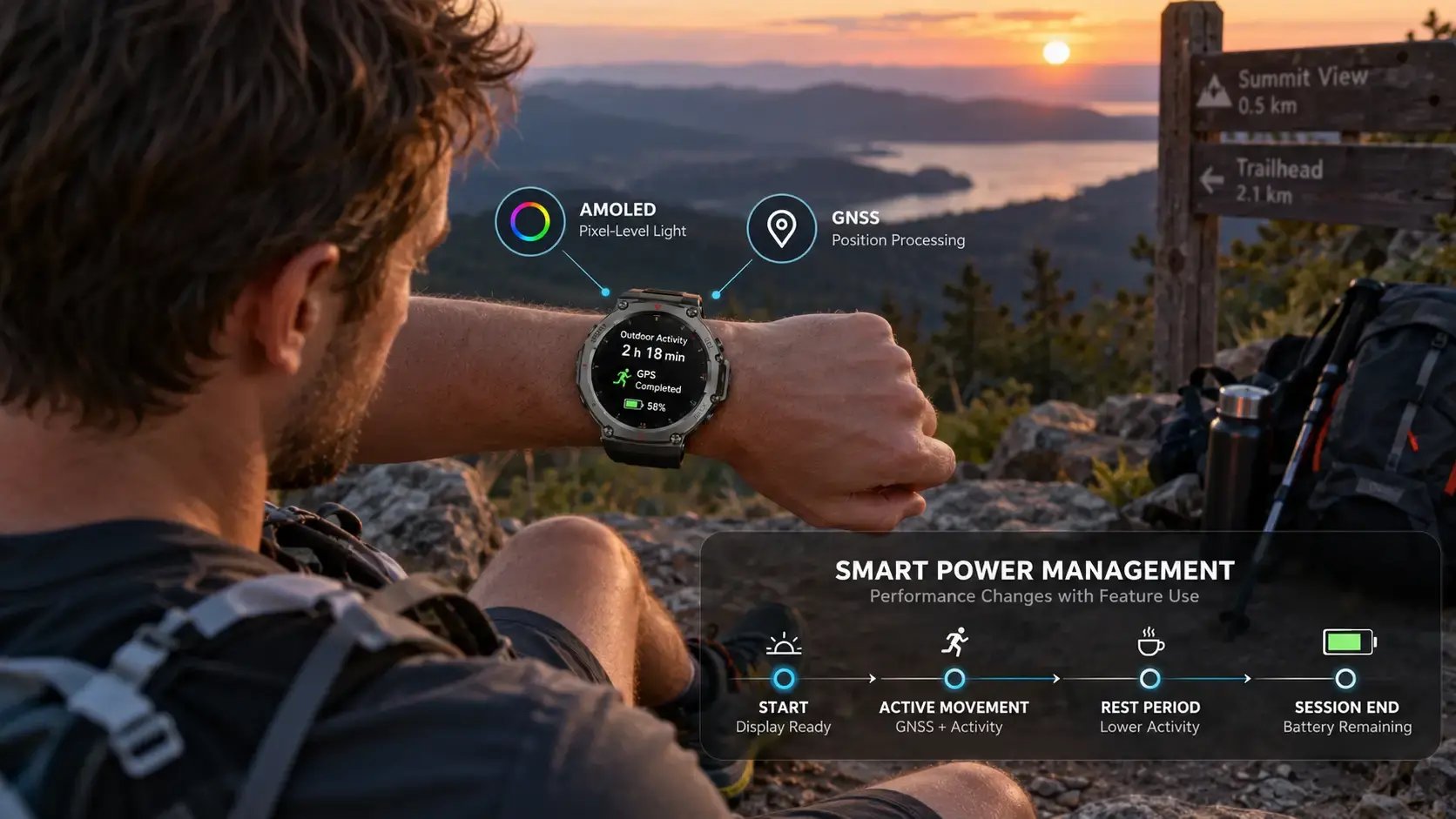
An Active Matrix Organic Light Emitting Diode display and an integrated satellite navigation receiver make up an AMOLED GPS smartwatch. AMOLED cells give off their own light, while regular LCD screens need a backlight. This makes the blacks darker, the contrast higher, and the power draw much lower when dark watch faces are shown, which is useful for a device that is worn all day.
Why AMOLED Outperforms LCD in Wearables
Based on display benchmarks released by DisplayMate Technologies, the contrast ratio advantage of AMOLED over standard IPS LCD can be more than 10,000:1. For outdoor activities like trail running, cycling, and on-site logistics, this means a screen that can still be read in direct sunlight without having to be turned up very brightly, which would drain the battery. When sellers put their goods on Amazon or TikTok Shop, one of the most important things they say about getting good reviews and repeat purchases is the quality of the display.
GPS Technology: Multi-Constellation vs. Single-System
More and more modern trackers with GPS support multi-constellation GNSS, which means they can use signals from GPS (US), GLONASS (Russia), Galileo (Europe), and BeiDou (China) all at the same time. Dual-band capability, which uses both L1 and L5 frequencies, lowers location error even more, from the usual 5–10 meters to less than 2 meters in open areas. This difference in precision is important for people who like the outdoors, athletes, and people who use business fleets.
Design Principles and Performance Optimization
The biggest problem with designing AMOLED GPS smartwatches has always been how to keep GPS processing and a bright screen going without draining the battery too quickly. Smart co-design of hardware and software is the answer.
Power Management Strategies That Work
Leading manufacturers deal with this problem by using adaptive sampling. When there isn't much activity, the GPS chipset lowers the number of updates it sends, and the AMOLED display dims or goes into an always-on low-power state. As soon as the accelerometer in the watch picks up active movement, both devices start up again. With this design, devices in the 44–49mm form factor can go 5 to 10 days of normal use on a single wireless charge. This range of specs fits well with what mid-range consumers want and the prices that retailers charge.
The Fenix series from Garmin and the Galaxy Watch Ultra from Samsung have both shown that combining AMOLED with GNSS chipsets that work well (like the Airoha AG3335 or Sony CXD5611GF) can work for battery life. These real-world examples show that the problem with thinking there is a trade-off between battery life and monitor quality is mostly fixed at the hardware level.
Future Trajectory: What Procurement Teams Should Anticipate
The next generation of smartwatch screens will have higher nit ceilings (2,000+ nits peak brightness) and will use a mix of micro-LEDs and other materials. For procurement pros making a 12–18-month sourcing roadmap, spec sheets coming out in 2025 will more and more likely include these changes along with longer GPS session lengths.
Comparative Analysis: Selecting the Right Device for Business Needs
Every GPS smartwatch isn't best for every work case. If you're restocking an Amazon FBA catalog, making a private label wellness brand, or selling gifts for a business, the decision matrix will look different.
Here are the core specification dimensions that matter most for B2B evaluation:
- Display technology: Compared to IPS or MIP displays, AMOLED displays have a bigger visual impact and stand out more on product listing pages. This has a direct effect on conversion rates for online shopping platforms.
- GPS precision and system count: Support for dual-band and multi-constellation comes at a higher cost, but it's worth it because it allows for better store positioning and lowers customer concerns about inaccurate tracking, which is a regular problem that comes up in bad reviews.
- Water resistance: IP67 certification means protection against immersion up to 1 meter for 30 minutes, which is enough for most fitness and everyday wear situations. If buyers want to reach major outdoor markets, they should look at 5ATM or 10ATM options.
- Battery life window: A 5–10 day range for wireless charging meets most people's needs and stops the "constant charging" issue that hurts product reviews.
- Strap and case material: Steel construction means durability and a high-end look, which is important for brands that compete with those that cost more than $60.
These dimensions collectively determine where a product sits competitively and what margin structure is realistic for an AMOLED smartwatch GPS square. Expert procurement teams keep margins safe and return rates low by making sure the right specification is sent through the right channel.
Practical Guide: Fitness and Health Tracking Applications
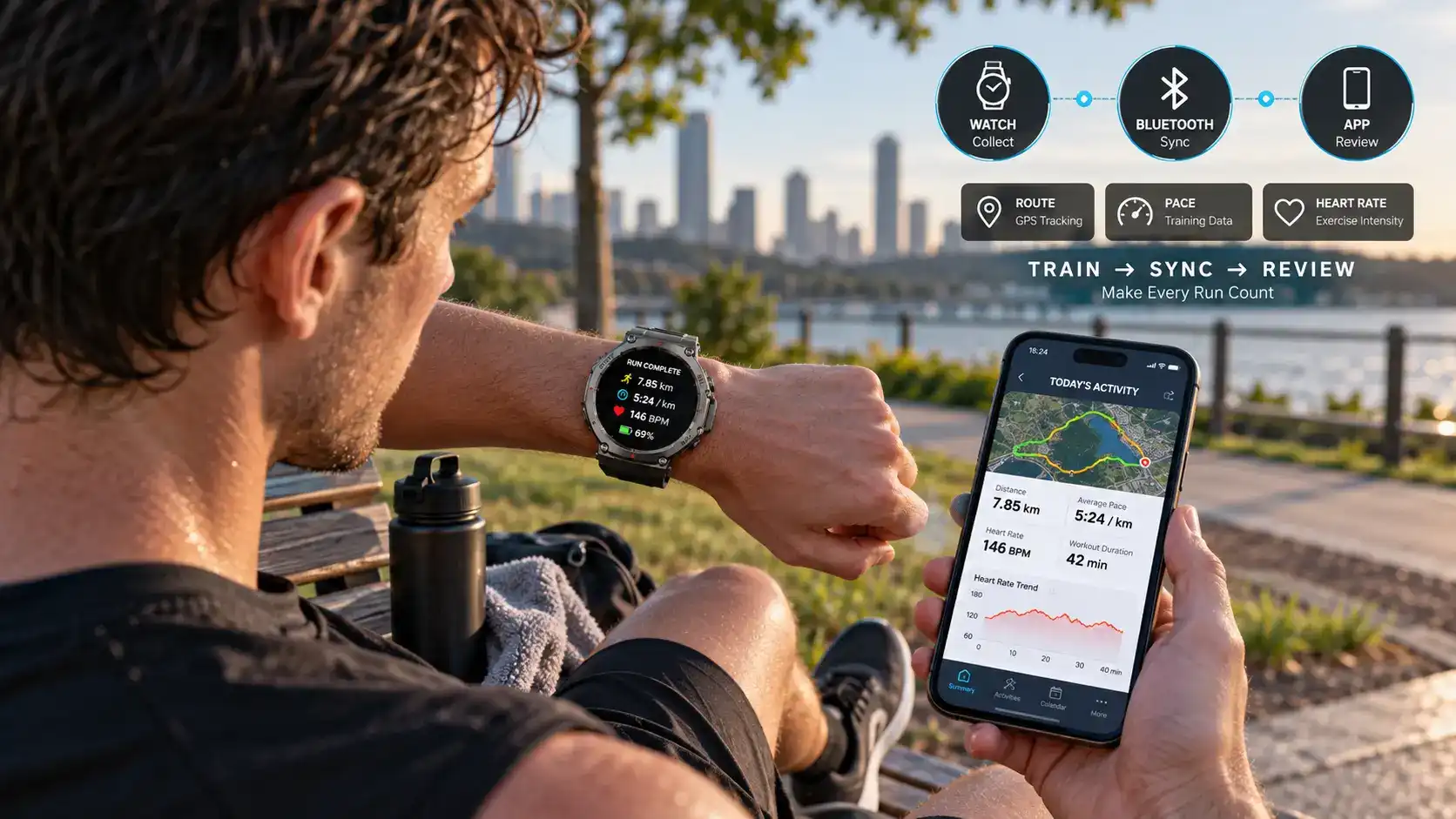
A well-designed GPS smartwatch can do more than just count steps to keep an eye on your health. At mid-market prices, high-performance devices can now give you heart rate variability (HRV) data, SpO2 readings, sleep stage analysis, and stress scores, all of which are things that US customers are expecting more and more.
Scenarios Where This Matters for B2B Buyers
Think about a company that runs a fitness program for employees that needs to buy 500 units for health programs for their employees. This is a growing area of buying. Devices with accurate sensors lower the risk of liability and boost the trustworthiness of the program. In the same way, a Shopify brand aimed at fitness fans needs health data that can stand up to close inspection, since a video review going viral that says heart rate readings are wrong can be harmful.
Independent music playback via onboard storage and Bluetooth calling capability further extend the device's utility during workouts, letting users leave their phones behind completely. This feature is a strong selling point in fitness-related ads and is a real way to set your product apart if the tech backs it up.
Medical disclaimer: The heart rate, SpO2, and stress data that are discussed in the health tracking features are only meant to be used for general fitness information. They are not meant to be used for medical diagnosis or clinical-grade monitoring. Users who have health problems should talk to a qualified medical professional.
Procurement and Transaction Insights
Finding the cheapest unit price is only one aspect of sourcing an AMOLED GPS smartwatch at scale. People who work in procurement and have been through several product cycles know that the original price isn't the only thing that matters. Supplier trustworthiness, quality consistency from batch to batch, and the ability to provide support after the sale are also very important.
Key considerations when vetting a supplier include: verifying factory certifications (CE, FCC, RoHS), requesting sample units from actual production batches rather than hand-assembled prototypes, and confirming minimum order quantities that align with your testing-phase needs. If an Amazon FBA seller is new to an SKU, low MOQ options greatly lower the risk of running out of stock.
OEM and ODM buyers should additionally confirm the supplier's capacity for logo customization, packaging design, and firmware branding — capabilities that determine how quickly a private label product reaches the market.
Conclusion
Consumer demand in the US wearables market is driven by the AMOLED GPS smartwatch, which combines the best display technology, accurate tracking, and useful health data. Whether you're building an Amazon product catalog, making a private label fitness brand, or sourcing corporate gifting inventory, the specification decisions you make at the procurement stage directly shape your competitive position. If you put display quality, GPS accuracy, sensor reliability, and the credibility of the supplier at the top of your list, you'll be able to find goods that customers actually suggest.
FAQ
1. Does AMOLED technology help extend battery life compared to LCD?
Of course, in real life. When they're showing black, AMOLED cells don't use any power. This means that dark watch faces and dark-mode UIs use a lot less power than similar LCD displays. This helps make the 5–10-day battery life window possible on well-optimized devices.
2. Is this smartwatch compatible with both Android and iOS?
The device has a lot of cross-platform connectivity and runs on the Android OS. Notifications, Bluetooth calling, and fitness data sync are all core features that work on both Android and iOS. However, some companion app features may be different depending on the platform.
3. What should I prioritize when purchasing in bulk for resale?
Pay attention to three things: consistent batch quality (ask for third-party QC reports), supplier MOQ flexibility for initial test runs, and documented certifications (FCC, CE, RoHS) to make sure you can get through customs and meet platform requirements. Support after the sale is also very important for keeping your sales reviews high.
4. Can these devices support enterprise health monitoring deployments?
Yes. Smartwatches with solid sensor arrays and app integration support are better for companies that use them in employee fitness programs or community health systems. Always make sure that data privacy rules are followed with your legal team before a large-scale rollout.
Source AMOLED GPS Smartwatches Directly from Xizhou — Your Trusted OEM Manufacturer
With a certified GMP plant, an experienced R&D team, and a history of providing OEM/ODM customization, Xizhou is a well-known AMOLED GPS smartwatch maker. We offer low MOQ samples, personalized logos and packaging, and quick shipping around the world. We can help you find what you need, whether it's 50 units for testing or 5,000 for a product launch. To get examples and specs right away, email 13266508958@163.com.
References
1. DisplayMate Technologies — Smartphone Display Technology Shoot-Out, 2023.
2. Grand View Research — Smart Wearable Market Size, Share & Trends Analysis Report, 2024.
3. Garmin Ltd. — Fenix 7 Series Product Technical Documentation, 2023.
4. IEEE Transactions on Consumer Electronics — Power Optimization Strategies for AMOLED-Based Wearable Devices, Vol. 69, 2023.
5. International Journal of Navigation and Observation — Multi-Constellation GNSS Performance in Urban and Obstructed Environments, 2022.
6. IDC — Worldwide Wearables Market Quarterly Tracker, Q4 2024.