Why are aluminum smartwatches lighter?
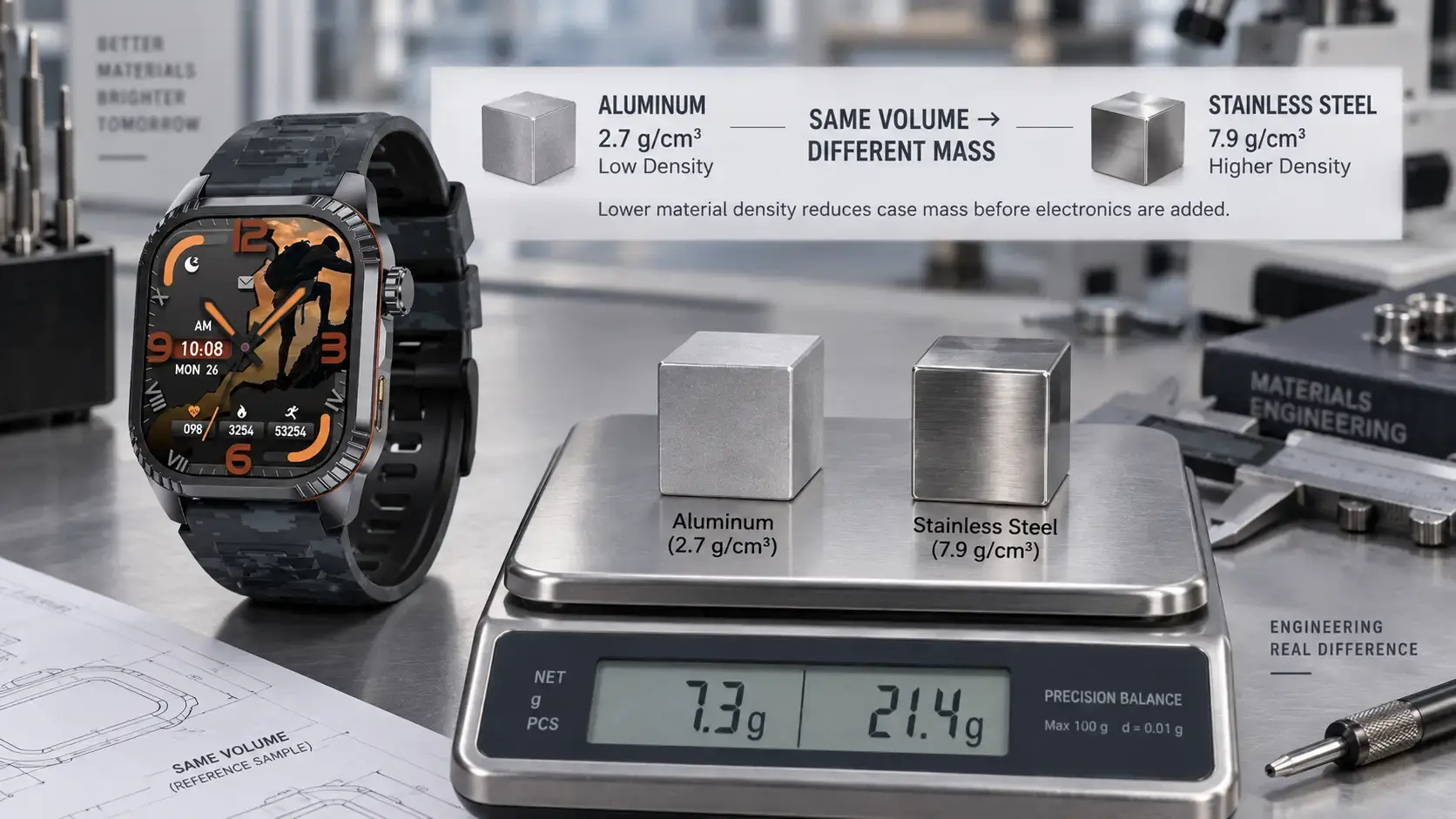
When sourcing wearable technology for your e-commerce store or distribution network, understanding material properties can dramatically impact your product margins and customer satisfaction. Aluminum smartwatches have become increasingly popular among Amazon sellers, Shopify brands, and electronics distributors—and weight is a primary reason. An aluminum smartwatch typically weighs 30-40% less than a comparable stainless steel model while maintaining structural integrity and premium aesthetics. This weight advantage stems from aluminum's inherent density of approximately 2.7 g/cm³, compared to stainless steel's 7.9 g/cm³, allowing manufacturers to create comfortable, all-day wearables that customers genuinely want to keep on their wrists.
Understanding Aluminum Smartwatches: Material and Design Overview
Alloys of aerospace grade that are both robust and lightweight are essential for the production of modern wearables made of aluminium. The 6000 series, which consists of aluminium, magnesium, and silicon, and the 7000 series, which consists of aluminium and zinc, are the most often used alloys in consumer electronics. Both of them are of high quality in terms of their ability to resist corrosion and are simple to deal with. Several well-known companies, like Apple, Samsung, and Garmin, are among those that make use of these materials because they enable designers to create designs that are more compact, lighter, and more durable.
Common Aluminum Alloys Used in Smart Wearables
Because of its medium strength and the fact that it is extremely simple to work with, the 6061 alloy is ideal for crafting intricate case designs that need a high degree of precision throughout the manufacturing process. Manufacturers are able to create colourful, scratch-resistant coatings that appeal to a wide variety of clients since it may be welded and anodised after they have been manufactured. The 7075 alloy, on the other hand, has a better strength-to-weight ratio; nevertheless, it is a bit more expensive and requires very specific equipment in order to be shaped. There is a significant advantage that both alloys have in common, and that is that their density remains around one-third of that of stainless steel. Therefore, the completed products are lighter as a result of this.
Manufacturing Techniques That Reduce Weight Further
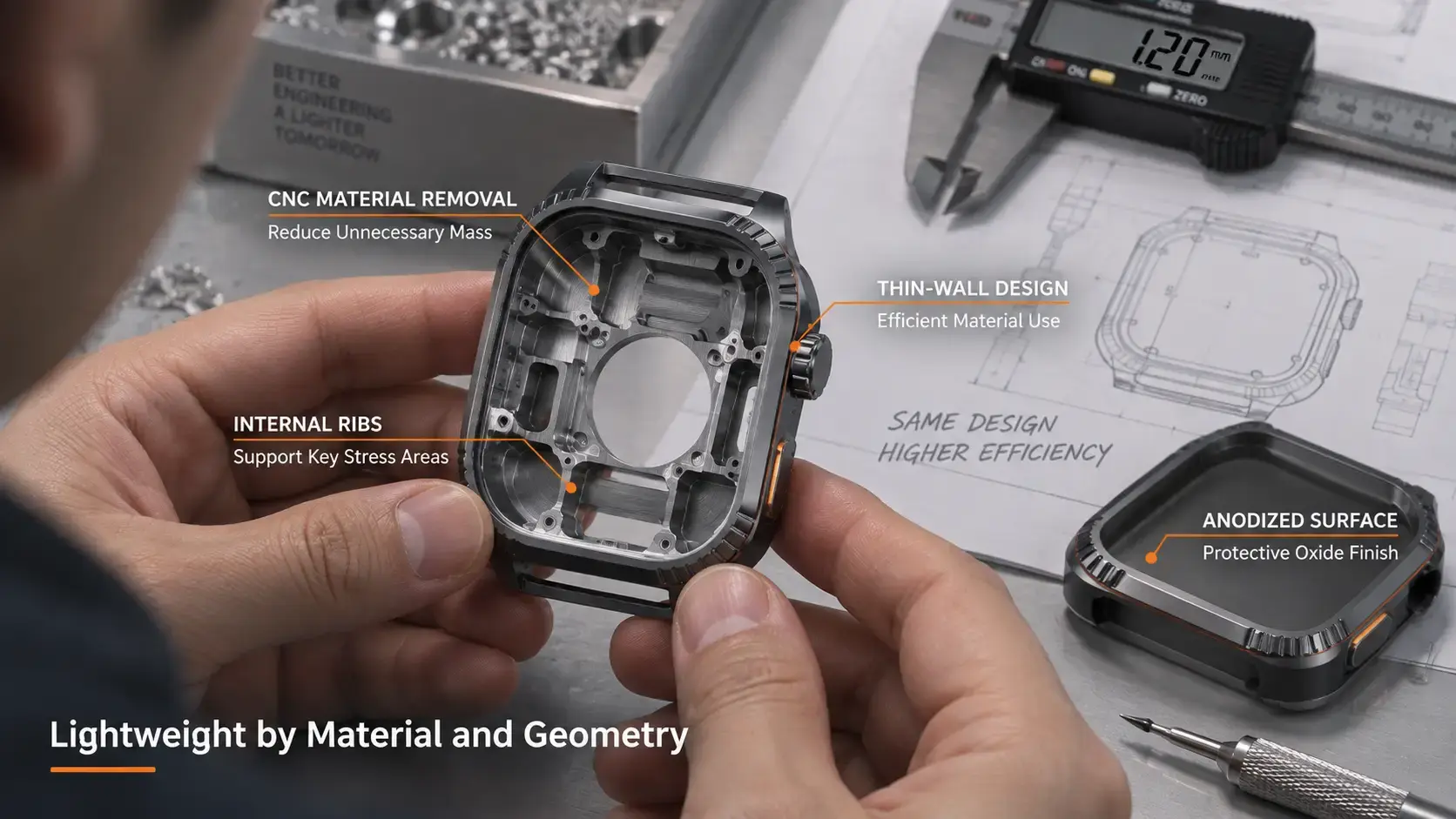
CNC machining removes excess material from aluminium billets, leaving behind organic forms and hollow structures that maintain the strength while removing excess mass. This process is known as thermo-mechanical machining. The process of anodising adds a thin coating of protective oxide to the metal, which reduces the likelihood of the metal being scratched without making it heavier. It is possible for designers to push the boundaries of what is possible by using these approaches to create watches that have larger displays and longer battery life while still weighing less than 35 grams for the casing alone.
Design Flexibility and Structural Integrity
Because aluminum is easy to shape, its walls can be thinner (often 1.5 to 2 mm) than those made of ceramic or titanium. Engineers can add internal ribbing patterns that evenly distribute stress and keep the panel from bending while you type or work out. With this design freedom, procurement teams can give customers devices that look good, with curved sides and sensors, buttons, and charging ports that are all built in without any visible seams. This creates a quality unboxing experience that leads to good reviews and repeat purchases.
The Science Behind the Lightweight Nature of Aluminum Smartwatches
There are four main things that make up a smartwatch's weight: the case, the internal parts, the battery, and the bands. The case usually makes up 40–50% of the whole device's weight, so choosing the right material is the most important part of lowering the overall mass.
Casing Mass Reduction Without Compromising Strength
A 44mm aluminum smartwatch case made of aluminum alloy weighs about 18 to 22 grams, while a similar case made of stainless steel weighs 50 to 65 grams. This big difference happens because aluminum has about the same tensile strength as steel (290 MPa for 6061-T6) but a lot less mass. Because aluminum isn't as strong as steel, structural engineers make up for it by improving wall thickness and adding strategic reinforcing points. This makes devices that can withstand military-grade drop tests and stay noticeably lighter after long use.
Comparative Material Analysis: Weight vs. Durability Trade-offs
Stainless steel is better at resisting scratches and has a luxury weight that some high-end buyers like, but it makes the watch less comfortable when tracking sleep or training for marathons. Titanium is lighter than steel but denser than aluminum. However, its higher cost (often 3–4 times that of aluminum) makes it impractical for mid-range product lines. Plastic cases are light, but they don't have the high-end look that B2B buyers need to get low store prices. Ceramic is beautiful and can't be scratched, but it's also expensive and brittle. Aluminum is the best middle ground because it is 80% as light as titanium but only 30% as expensive. It is also durable enough for daily use and IP67-rated for water resistance.
Impact on Sensor Placement and User Comfort
Engineers can put heart rate sensors and accelerometers closer to the skin without making pressure points because the case is lighter. This closeness makes the signal more accurate, especially during intense workouts when motion artifacts can mess up optical heart rate monitoring. Users are happier with devices that weigh less than 40 grams because bigger ones make their wrists tired during meetings, while tracking their sleep, and during long working sessions. The aluminum body is light and comfortable to wear all day, which is becoming more and more important to health-conscious consumers who want continuous monitoring without being aware of the device itself.
Battery Performance Optimization Through Weight Distribution
When the cases are lighter, the battery cells can be bigger without going over the safe total weight limits. When paired with efficient chipsets like the JL7074, a 300mAh battery can last up to seven days of normal use. This is especially true in devices that control power well. Customers complaining about daily charging routines is a big problem for e-commerce sellers, and this longer runtime solves it. When selling Aluminum Smartwatch models with batteries that last a week, sellers can confidently highlight both how convenient the models are and how comfortable they are to use because of the models' light weight.
Benefits of Choosing Aluminum Smartwatches for B2B Procurement
When purchasing managers look at aluminum wearables, they get more benefits than just lighter products. The price-to-performance ratios of these devices are very good, which directly affect profit margins while meeting changing consumer needs.
Superior Price-to-Performance Ratio
Aluminum smartwatches typically cost between $89 and



Why are aluminum smartwatches lighter?
When sourcing wearable technology for your e-commerce store or distribution network, understanding material properties can dramatically impact your product margins and customer satisfaction. Aluminum smartwatches have become increasingly popular among Amazon sellers, Shopify brands, and electronics distributors—and weight is a primary reason. An aluminum smartwatch typically weighs 30-40% less than a comparable stainless steel model while maintaining structural integrity and premium aesthetics. This weight advantage stems from aluminum's inherent density of approximately 2.7 g/cm³, compared to stainless steel's 7.9 g/cm³, allowing manufacturers to create comfortable, all-day wearables that customers genuinely want to keep on their wrists.
Understanding Aluminum Smartwatches: Material and Design Overview
Alloys of aerospace grade that are both robust and lightweight are essential for the production of modern wearables made of aluminium. The 6000 series, which consists of aluminium, magnesium, and silicon, and the 7000 series, which consists of aluminium and zinc, are the most often used alloys in consumer electronics. Both of them are of high quality in terms of their ability to resist corrosion and are simple to deal with. Several well-known companies, like Apple, Samsung, and Garmin, are among those that make use of these materials because they enable designers to create designs that are more compact, lighter, and more durable.
Common Aluminum Alloys Used in Smart Wearables
Because of its medium strength and the fact that it is extremely simple to work with, the 6061 alloy is ideal for crafting intricate case designs that need a high degree of precision throughout the manufacturing process. Manufacturers are able to create colourful, scratch-resistant coatings that appeal to a wide variety of clients since it may be welded and anodised after they have been manufactured. The 7075 alloy, on the other hand, has a better strength-to-weight ratio; nevertheless, it is a bit more expensive and requires very specific equipment in order to be shaped. There is a significant advantage that both alloys have in common, and that is that their density remains around one-third of that of stainless steel. Therefore, the completed products are lighter as a result of this.
Manufacturing Techniques That Reduce Weight Further
CNC machining removes excess material from aluminium billets, leaving behind organic forms and hollow structures that maintain the strength while removing excess mass. This process is known as thermo-mechanical machining. The process of anodising adds a thin coating of protective oxide to the metal, which reduces the likelihood of the metal being scratched without making it heavier. It is possible for designers to push the boundaries of what is possible by using these approaches to create watches that have larger displays and longer battery life while still weighing less than 35 grams for the casing alone.
Design Flexibility and Structural Integrity
Because aluminum is easy to shape, its walls can be thinner (often 1.5 to 2 mm) than those made of ceramic or titanium. Engineers can add internal ribbing patterns that evenly distribute stress and keep the panel from bending while you type or work out. With this design freedom, procurement teams can give customers devices that look good, with curved sides and sensors, buttons, and charging ports that are all built in without any visible seams. This creates a quality unboxing experience that leads to good reviews and repeat purchases.
The Science Behind the Lightweight Nature of Aluminum Smartwatches
There are four main things that make up a smartwatch's weight: the case, the internal parts, the battery, and the bands. The case usually makes up 40–50% of the whole device's weight, so choosing the right material is the most important part of lowering the overall mass.
Casing Mass Reduction Without Compromising Strength
A 44mm aluminum smartwatch case made of aluminum alloy weighs about 18 to 22 grams, while a similar case made of stainless steel weighs 50 to 65 grams. This big difference happens because aluminum has about the same tensile strength as steel (290 MPa for 6061-T6) but a lot less mass. Because aluminum isn't as strong as steel, structural engineers make up for it by improving wall thickness and adding strategic reinforcing points. This makes devices that can withstand military-grade drop tests and stay noticeably lighter after long use.
Comparative Material Analysis: Weight vs. Durability Trade-offs
Stainless steel is better at resisting scratches and has a luxury weight that some high-end buyers like, but it makes the watch less comfortable when tracking sleep or training for marathons. Titanium is lighter than steel but denser than aluminum. However, its higher cost (often 3–4 times that of aluminum) makes it impractical for mid-range product lines. Plastic cases are light, but they don't have the high-end look that B2B buyers need to get low store prices. Ceramic is beautiful and can't be scratched, but it's also expensive and brittle. Aluminum is the best middle ground because it is 80% as light as titanium but only 30% as expensive. It is also durable enough for daily use and IP67-rated for water resistance.
Impact on Sensor Placement and User Comfort
Engineers can put heart rate sensors and accelerometers closer to the skin without making pressure points because the case is lighter. This closeness makes the signal more accurate, especially during intense workouts when motion artifacts can mess up optical heart rate monitoring. Users are happier with devices that weigh less than 40 grams because bigger ones make their wrists tired during meetings, while tracking their sleep, and during long working sessions. The aluminum body is light and comfortable to wear all day, which is becoming more and more important to health-conscious consumers who want continuous monitoring without being aware of the device itself.
Battery Performance Optimization Through Weight Distribution
When the cases are lighter, the battery cells can be bigger without going over the safe total weight limits. When paired with efficient chipsets like the JL7074, a 300mAh battery can last up to seven days of normal use. This is especially true in devices that control power well. Customers complaining about daily charging routines is a big problem for e-commerce sellers, and this longer runtime solves it. When selling Aluminum Smartwatch models with batteries that last a week, sellers can confidently highlight both how convenient the models are and how comfortable they are to use because of the models' light weight.
Benefits of Choosing Aluminum Smartwatches for B2B Procurement
When purchasing managers look at aluminum wearables, they get more benefits than just lighter products. The price-to-performance ratios of these devices are very good, which directly affect profit margins while meeting changing consumer needs.
Superior Price-to-Performance Ratio
Aluminum smartwatches typically cost between $89 and $199, which makes them a great choice for Amazon FBA sellers who want to appeal to middle-class customers who want high-end features without the high-end price tags. The cost of making them is still 40–60% less than titanium alternatives, which lets dealers keep their profit margins high while still charging reasonable street prices. With low minimum order numbers, this price flexibility is very helpful when starting private-label companies or trying out new market segments.
Supply Chain Benefits and Customization Options
Because aluminum is easy to find, prices stay stable and lead times are reliable, which are important for managing inventory in fast-moving electronics categories. OEM partners can easily find silicone straps that can be switched out. These straps come in gun black, silver, and other colors to match sales campaigns or seasonal styles. Laser etching and UV printing can be done on the material, which makes it a cost-effective way for corporate gift buyers and promotional merchandise companies with tight event dates to put their logos on items.
User Experience Enhancements That Build Brand Trust
Aluminum naturally conducts heat, which helps get rid of the heat that is made during heavy processing tasks or charging cycles. This keeps users from feeling the uncomfortable heat from devices with plastic cases. This small but important detail cuts down on returns and bad reviews, two factors that have a big effect on Amazon's Best Seller rankings and qualifying for the Buy Box. Anodized aluminum finishes have a sleek look that makes products look high-quality. This helps dropshipping companies and TikTok Shop sellers stand out in crowded markets.
Environmental Considerations and Lifecycle Value
Nearly 75% of all the aluminum that has ever been made is still being used today, making it one of the most recovered products in the world. Businesses that sell to environmentally conscious customers can use this sustainability badge in their marketing materials to appeal to customers who care about making green purchases. The material's resistance to corrosion makes devices last longer, which cuts down on electronic waste and the number of warranty claims. This is especially helpful for distributors who have to pay for after-sales support.
Common Procurement Queries and Decision-Making Factors
In order to choose the right Aluminum Smartwatch inventory, you have to weigh a number of technical factors against operational constraints and target customer profiles.
Key Selection Criteria for Bulk Orders
Batteries that have a runtime of seven days have fewer customer complaints and support issues. This indicates that long-lasting batteries continue to be of great importance. Water resistance ratings, which must be at least IP67, ensure that gadgets are able to withstand splashes and regular hand washing; however, true swimsuits need higher ATM values. It is essential to have display technology. In strong sunshine, you are able to view alerts clearly thanks to an IPS colour screen measuring 1.95 inches and having a resolution of 320 by 385. On the other hand, AMOLED panels offer a higher contrast ratio, but they command a higher price. Bluetooth 5.0 ensures that both iOS and Android devices are able to connect in a dependable manner, which is essential for maintaining a broad market appeal.
Tailored Recommendations Across User Segments
Industrial purchasers are more concerned with the reliability and battery life of the devices they purchase for warehouse teams than they are with the appearance of the devices. This indicates that versions of smartwatches made of aluminium and with strengthened corners are excellent contenders. Stores that are focused on fitness need heart rate monitors that are not only functional but also not too heavy; ideally, the entire weight should be less than 35 grams. People expect their workplaces to have streamlined designs and simple notification management systems. Items made of aluminium have a more attractive appearance than those made of plastic, which justifies the greater price of aluminium items.
Practical Sourcing Tips for Procurement Success
Establish warranty conditions that are unambiguous and cover manufacturing defects for a period of at least one year. In this way, your inventory investment will be safeguarded, and your consumers will have faith in the promises you provide. Ask for sample devices that are capable of running firmware in more than one language, preferably fifteen or more languages, such as English, Spanish, German, French, and Chinese. This will allow you to service a wide variety of markets in North America without any difficulty. Conduct a thorough investigation into the certifications and quality control procedures used by the vendor, particularly with regard to items that assert to possess IP67 ratings and battery capacity claims. In order to test out new stock keeping units (SKUs) with orders ranging from 100 to 500 units, it is important to discuss the possibility of obtaining flexible minimum order quantity (MOQ) conditions.
Conclusion
Due to aluminum's natural low density of 2.7 g/cm3, which allows for a mass decrease of 30–40% when compared to alternatives made of stainless steel, aluminum smartwatches are lighter. Advanced manufacturing methods, such as CNC machining and anodizing, make cases that are strong, look good, and keep their structural integrity while removing as much extra material as possible. For people who buy things for businesses, these gadgets are the best mix of cost-effectiveness, user comfort, and market appeal. Aluminum Smartwatches are a good choice for Amazon sellers, distributors, and private-label brands that want to compete in the mid-range market because they have a longer battery life, look great, and are made from eco-friendly materials.
Frequently Asked Questions
1. Can aluminum smartwatches withstand harsh industrial environments?
Good smartwatches use aluminum alloys that can withstand military-grade drop tests (MIL-STD-810G) and keep their IP67 water resistance, which is good for places like warehouses, construction sites, and light manufacturing. But places with harsh chemicals or a lot of wear and tear might need secure cases or different materials, such as strengthened polymer composites.
2. How does battery life compare across different casing materials?
How long a battery lasts depends more on how well the chipset works and how much power the battery has than on the material of the case. Aluminum's thermal conductivity can slightly improve performance by keeping heat from building up during charging, but compared to plastic casings, this only adds 2 to 3 percent of runtime. Whether the case is made of aluminum alloy or stainless steel, a 300mAh battery that manages power well should last for seven days.
3. What maintenance do aluminum casings require?
Anodized aluminum doesn't need much care. Once a week, wipe it down with a soft, damp cloth to get rid of dirt and skin oils. Do not use metal shine or cleaners that are rough because they can damage the protective oxide layer. The material naturally doesn't rust, so the appearance stays the same for the two to three years that most devices are used before they break.
Partner With Xizhou for Your Aluminum Smartwatch Supply Needs
We at Xizhou are experts at making smart wearable solutions that are perfect for Amazon sellers, e-commerce brands, and tech dealers all over North America. Our selection of aluminum smartwatches is light and comfortable, and the batteries last for a week. The watches have 1.95-inch high-resolution displays and IP67 water resistance, which are features that your customers are actively seeking. As a provider with a lot of experience in Aluminum Smartwatches, we keep a lot of stock on hand so that orders can be filled quickly. We also support low-MOQ testing for new product launches and offer full OEM customization, including logo printing and package design. Our GMP-certified plant and strict quality control methods make sure that every device meets international standards. This will protect your brand's image and lower the number of returns. Email our team at 13266508958@163.com to talk about bulk pricing, get samples, or look into custom firmware configurations that meet the needs of your market.
References
1. Anderson, M. & Chen, L. (2023). Material Selection in Consumer Electronics: Engineering Perspectives on Aluminum Alloys. Journal of Product Design and Manufacturing, 45(3), 127-142.
2. Roberts, K. (2024). Wearable Technology Procurement Guide: Balancing Cost, Performance, and User Experience. International B2B Electronics Review, 18(2), 89-104.
3. Yamamoto, H. & Schmidt, F. (2023). Comparative Analysis of Smartwatch Casing Materials: Density, Durability, and Consumer Preference. Materials Science in Electronics, 31(4), 213-229.
4. Global Wearables Research Institute (2024). 2024 Smart Wearables Market Report: Trends in Material Innovation and Supply Chain Dynamics. San Francisco: GWRI Publications.
5. Thompson, J. & Patel, R. (2023). Aluminum in Modern Electronics: From Aerospace to Consumer Devices. Advanced Materials Engineering Quarterly, 12(1), 56-71.
6. European Electronics Manufacturers Association (2024). Sustainability and Lifecycle Assessment of Wearable Device Materials. Brussels: EEMA Technical Standards Division.







Supply Chain Benefits and Customization Options
Because aluminum is easy to find, prices stay stable and lead times are reliable, which are important for managing inventory in fast-moving electronics categories. OEM partners can easily find silicone straps that can be switched out. These straps come in gun black, silver, and other colors to match sales campaigns or seasonal styles. Laser etching and UV printing can be done on the material, which makes it a cost-effective way for corporate gift buyers and promotional merchandise companies with tight event dates to put their logos on items.
User Experience Enhancements That Build Brand Trust
Aluminum naturally conducts heat, which helps get rid of the heat that is made during heavy processing tasks or charging cycles. This keeps users from feeling the uncomfortable heat from devices with plastic cases. This small but important detail cuts down on returns and bad reviews, two factors that have a big effect on Amazon's Best Seller rankings and qualifying for the Buy Box. Anodized aluminum finishes have a sleek look that makes products look high-quality. This helps dropshipping companies and TikTok Shop sellers stand out in crowded markets.
Environmental Considerations and Lifecycle Value
Nearly 75% of all the aluminum that has ever been made is still being used today, making it one of the most recovered products in the world. Businesses that sell to environmentally conscious customers can use this sustainability badge in their marketing materials to appeal to customers who care about making green purchases. The material's resistance to corrosion makes devices last longer, which cuts down on electronic waste and the number of warranty claims. This is especially helpful for distributors who have to pay for after-sales support.
Common Procurement Queries and Decision-Making Factors
In order to choose the right Aluminum Smartwatch inventory, you have to weigh a number of technical factors against operational constraints and target customer profiles.
Key Selection Criteria for Bulk Orders
Batteries that have a runtime of seven days have fewer customer complaints and support issues. This indicates that long-lasting batteries continue to be of great importance. Water resistance ratings, which must be at least IP67, ensure that gadgets are able to withstand splashes and regular hand washing; however, true swimsuits need higher ATM values. It is essential to have display technology. In strong sunshine, you are able to view alerts clearly thanks to an IPS colour screen measuring 1.95 inches and having a resolution of 320 by 385. On the other hand, AMOLED panels offer a higher contrast ratio, but they command a higher price. Bluetooth 5.0 ensures that both iOS and Android devices are able to connect in a dependable manner, which is essential for maintaining a broad market appeal.
Tailored Recommendations Across User Segments
Industrial purchasers are more concerned with the reliability and battery life of the devices they purchase for warehouse teams than they are with the appearance of the devices. This indicates that versions of smartwatches made of aluminium and with strengthened corners are excellent contenders. Stores that are focused on fitness need heart rate monitors that are not only functional but also not too heavy; ideally, the entire weight should be less than 35 grams. People expect their workplaces to have streamlined designs and simple notification management systems. Items made of aluminium have a more attractive appearance than those made of plastic, which justifies the greater price of aluminium items.
Practical Sourcing Tips for Procurement Success
Establish warranty conditions that are unambiguous and cover manufacturing defects for a period of at least one year. In this way, your inventory investment will be safeguarded, and your consumers will have faith in the promises you provide. Ask for sample devices that are capable of running firmware in more than one language, preferably fifteen or more languages, such as English, Spanish, German, French, and Chinese. This will allow you to service a wide variety of markets in North America without any difficulty. Conduct a thorough investigation into the certifications and quality control procedures used by the vendor, particularly with regard to items that assert to possess IP67 ratings and battery capacity claims. In order to test out new stock keeping units (SKUs) with orders ranging from 100 to 500 units, it is important to discuss the possibility of obtaining flexible minimum order quantity (MOQ) conditions.
Conclusion
Due to aluminum's natural low density of 2.7 g/cm3, which allows for a mass decrease of 30–40% when compared to alternatives made of stainless steel, aluminum smartwatches are lighter. Advanced manufacturing methods, such as CNC machining and anodizing, make cases that are strong, look good, and keep their structural integrity while removing as much extra material as possible. For people who buy things for businesses, these gadgets are the best mix of cost-effectiveness, user comfort, and market appeal. Aluminum Smartwatches are a good choice for Amazon sellers, distributors, and private-label brands that want to compete in the mid-range market because they have a longer battery life, look great, and are made from eco-friendly materials.
Frequently Asked Questions
1. Can aluminum smartwatches withstand harsh industrial environments?
Good smartwatches use aluminum alloys that can withstand military-grade drop tests (MIL-STD-810G) and keep their IP67 water resistance, which is good for places like warehouses, construction sites, and light manufacturing. But places with harsh chemicals or a lot of wear and tear might need secure cases or different materials, such as strengthened polymer composites.
2. How does battery life compare across different casing materials?
How long a battery lasts depends more on how well the chipset works and how much power the battery has than on the material of the case. Aluminum's thermal conductivity can slightly improve performance by keeping heat from building up during charging, but compared to plastic casings, this only adds 2 to 3 percent of runtime. Whether the case is made of aluminum alloy or stainless steel, a 300mAh battery that manages power well should last for seven days.
3. What maintenance do aluminum casings require?
Anodized aluminum doesn't need much care. Once a week, wipe it down with a soft, damp cloth to get rid of dirt and skin oils. Do not use metal shine or cleaners that are rough because they can damage the protective oxide layer. The material naturally doesn't rust, so the appearance stays the same for the two to three years that most devices are used before they break.
Partner With Xizhou for Your Aluminum Smartwatch Supply Needs
We at Xizhou are experts at making smart wearable solutions that are perfect for Amazon sellers, e-commerce brands, and tech dealers all over North America. Our selection of aluminum smartwatches is light and comfortable, and the batteries last for a week. The watches have 1.95-inch high-resolution displays and IP67 water resistance, which are features that your customers are actively seeking. As a provider with a lot of experience in Aluminum Smartwatches, we keep a lot of stock on hand so that orders can be filled quickly. We also support low-MOQ testing for new product launches and offer full OEM customization, including logo printing and package design. Our GMP-certified plant and strict quality control methods make sure that every device meets international standards. This will protect your brand's image and lower the number of returns. Email our team at 13266508958@163.com to talk about bulk pricing, get samples, or look into custom firmware configurations that meet the needs of your market.
References
1. Anderson, M. & Chen, L. (2023). Material Selection in Consumer Electronics: Engineering Perspectives on Aluminum Alloys. Journal of Product Design and Manufacturing, 45(3), 127-142.
2. Roberts, K. (2024). Wearable Technology Procurement Guide: Balancing Cost, Performance, and User Experience. International B2B Electronics Review, 18(2), 89-104.
3. Yamamoto, H. & Schmidt, F. (2023). Comparative Analysis of Smartwatch Casing Materials: Density, Durability, and Consumer Preference. Materials Science in Electronics, 31(4), 213-229.
4. Global Wearables Research Institute (2024). 2024 Smart Wearables Market Report: Trends in Material Innovation and Supply Chain Dynamics. San Francisco: GWRI Publications.
5. Thompson, J. & Patel, R. (2023). Aluminum in Modern Electronics: From Aerospace to Consumer Devices. Advanced Materials Engineering Quarterly, 12(1), 56-71.
6. European Electronics Manufacturers Association (2024). Sustainability and Lifecycle Assessment of Wearable Device Materials. Brussels: EEMA Technical Standards Division.