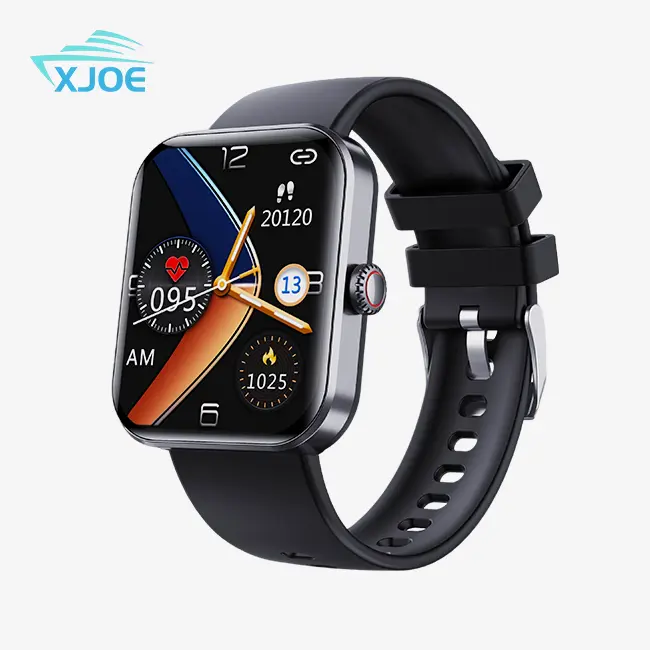
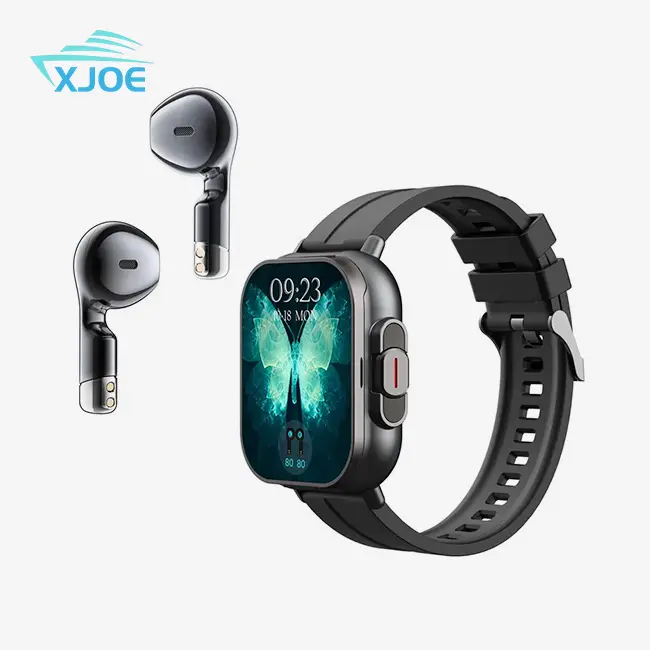
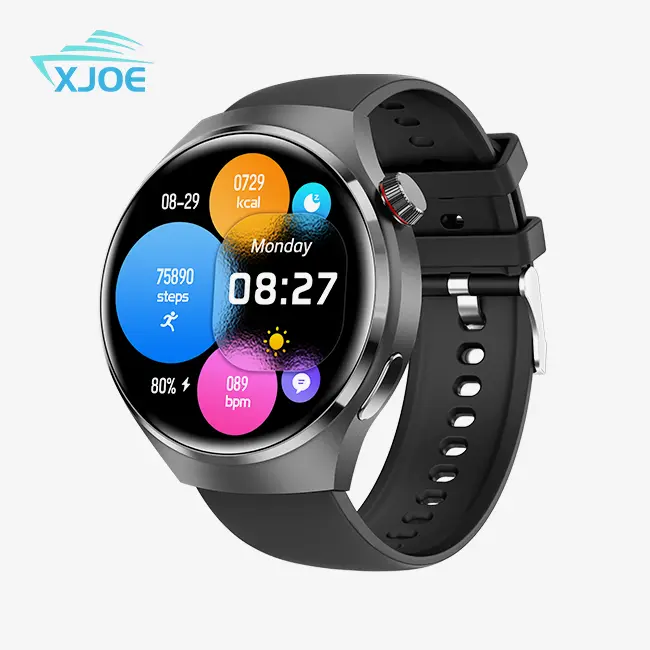
Custom ECG SpO2 Smartwatch Design for Healthcare Applications
Medical Disclaimer: The smartwatch products and information presented in this article are intended for general wellness tracking and B2B procurement reference purposes. They are not intended to diagnose, treat, cure, or prevent any medical condition. Healthcare professionals should validate any wearable device against applicable regulatory standards before clinical deployment.
When we talk about wearable technology in healthcare today, the conversation has shifted dramatically. It is no longer about counting steps or checking notifications — it is about continuous, reliable health data that can genuinely support patient care. Custom ECG SpO2 smartwatches sit at the center of this shift. Designed for demanding medical environments, these devices combine electrocardiogram monitoring and blood oxygen saturation sensing with the rugged reliability of an endurance smartwatch platform. For Amazon sellers, OEM brands, distributors, and procurement teams looking to tap into the growing medical wearables market, understanding what these devices offer — and how to source them right — is a significant competitive advantage.
Understanding the Role of Custom ECG SpO2 Smartwatches in Healthcare
Why ECG and SpO2 Integration Changes Everything
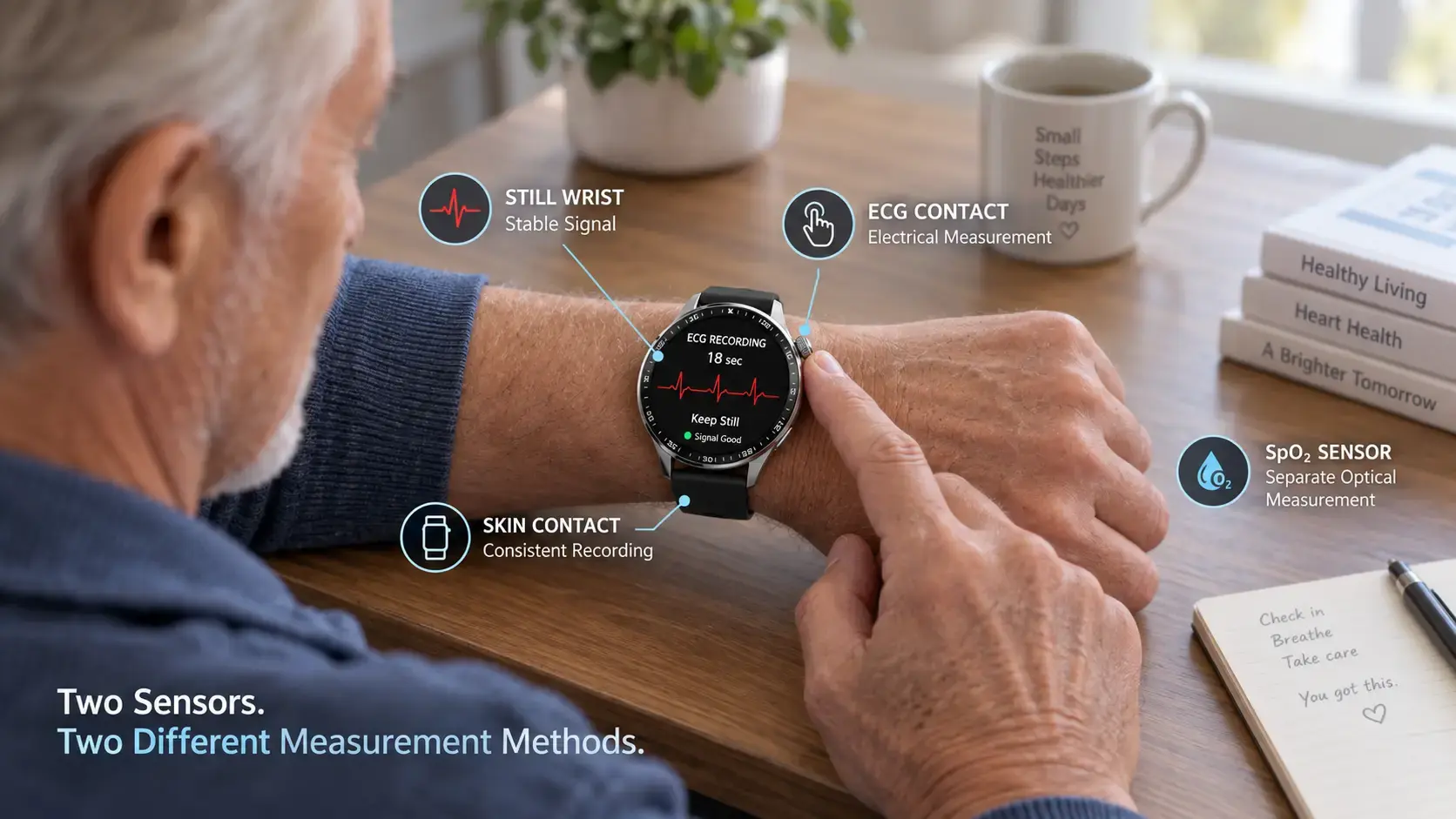
Fitness wearables from the past were never made with clinical accuracy in mind. When ECG and SpO2 are added to a smartwatch, it becomes a real tool for monitoring health. ECG monitors pick up electrical signals from the heart and mark rhythms that aren't regular, which could be a sign of atrial fibrillation or another disease. SpO2 monitors measure blood oxygen saturation, which has become a well-known number in recent years as the world has paid more attention to lung health. The global medical devices market was worth more than



Custom ECG SpO2 Smartwatch Design for Healthcare Applications
Medical Disclaimer: The smartwatch products and information presented in this article are intended for general wellness tracking and B2B procurement reference purposes. They are not intended to diagnose, treat, cure, or prevent any medical condition. Healthcare professionals should validate any wearable device against applicable regulatory standards before clinical deployment.
When we talk about wearable technology in healthcare today, the conversation has shifted dramatically. It is no longer about counting steps or checking notifications — it is about continuous, reliable health data that can genuinely support patient care. Custom ECG SpO2 smartwatches sit at the center of this shift. Designed for demanding medical environments, these devices combine electrocardiogram monitoring and blood oxygen saturation sensing with the rugged reliability of an endurance smartwatch platform. For Amazon sellers, OEM brands, distributors, and procurement teams looking to tap into the growing medical wearables market, understanding what these devices offer — and how to source them right — is a significant competitive advantage.
Understanding the Role of Custom ECG SpO2 Smartwatches in Healthcare
Why ECG and SpO2 Integration Changes Everything
Fitness wearables from the past were never made with clinical accuracy in mind. When ECG and SpO2 are added to a smartwatch, it becomes a real tool for monitoring health. ECG monitors pick up electrical signals from the heart and mark rhythms that aren't regular, which could be a sign of atrial fibrillation or another disease. SpO2 monitors measure blood oxygen saturation, which has become a well-known number in recent years as the world has paid more attention to lung health. The global medical devices market was worth more than $18.4 billion in 2022, according to a study by Grand View Research. It is expected to keep growing at a rate of 26.8% per year until 2030.
These tools aren't just for hospitals. A well-designed custom smartwatch lets care teams keep an eye on a patient's vital signs around the clock without them having to stay in a professional setting. This is useful in community health programs, assisted living facilities, and post-discharge tracking systems. The real value is in how it can be used in the real world.
Challenges in Traditional Healthcare Wearables and How Custom Designs Overcome Them
The Battery Life Gap in Medical Wearables
When it comes to healthcare wearables, battery life is one of the biggest problems that keeps coming up. A device that needs to be charged every day really slows down work in clinical or assisted living settings. Normal monitors for consumers only last one to two days of active tracking, which is not enough time to keep an eye on a patient all the time.
This is directly addressed by medical-grade wearables that are custom-made. In basic mode, a well-designed device like the JL7012, which is made on a chip architecture that uses little power, can last up to 21 days. With that kind of endurance and wireless charging for ease of use, there is no longer a charging block that both patients and caregivers find frustrating.
Durability in Real-World Healthcare Environments
Durability for an endurance smartwatch is just as important as battery life. Healthcare settings require people to wash their hands often, be around cleaning products, take part in outdoor rehabilitation programs, and be in situations with a lot of activity. A device that isn't properly sealed and built will become a liability instead of an asset.
When you combine custom zinc metal construction with IP67 water and dust protection, you get the kind of tough dependability that healthcare settings need. The device works well in a hospital ward, a community health screening event, or an online patient tracking program; the sensors are still accurate.
Comprehensive Features and Specifications of Custom ECG SpO2 Endurance Smartwatches
The features of a smartwatch for healthcare must match real-world needs, not just what the company says they want to sell. Here are the most important hardware and software features of a gadget that make it truly perfect for healthcare business-to-business buying:
- Display: The 1.53-inch round IPS color screen with 360×360 resolution shows health data clearly and easily, even in different lighting conditions. This is helpful in both clinical and rehabilitation settings, indoors and outdoors.
- Chipset: The device's JL7012 chip strikes a good balance between processing speed and power consumption, allowing for stable monitoring 24 hours a day, seven days a week, without draining the battery too quickly.
- Battery & Charging: A 300mAh battery that can be charged wirelessly lasts for up to 21 days in basic mode, which means that caregivers don't have to do as much maintenance on the device.
- Build Quality: The zinc metal body is resistant to water and dust (IP67), so it will hold up in tough healthcare situations.
- Connectivity: BLE 5.0 lets stable, low-latency data flow to hospital control tools and companion health platforms.
- App Compatibility: The RDFIT app works with more than 30 languages, such as English, Spanish, Arabic, Japanese, and Hindi. This means that it can be used with a wide range of patients around the world.
- Firmware Languages: The 28 supported firmware languages make sure that devices can be localized for use in healthcare systems around the world.
- Colors: It comes in Gun Black and Silver with silicone straps. The basic round shape looks professional and is comfortable enough to wear every day for a long time.
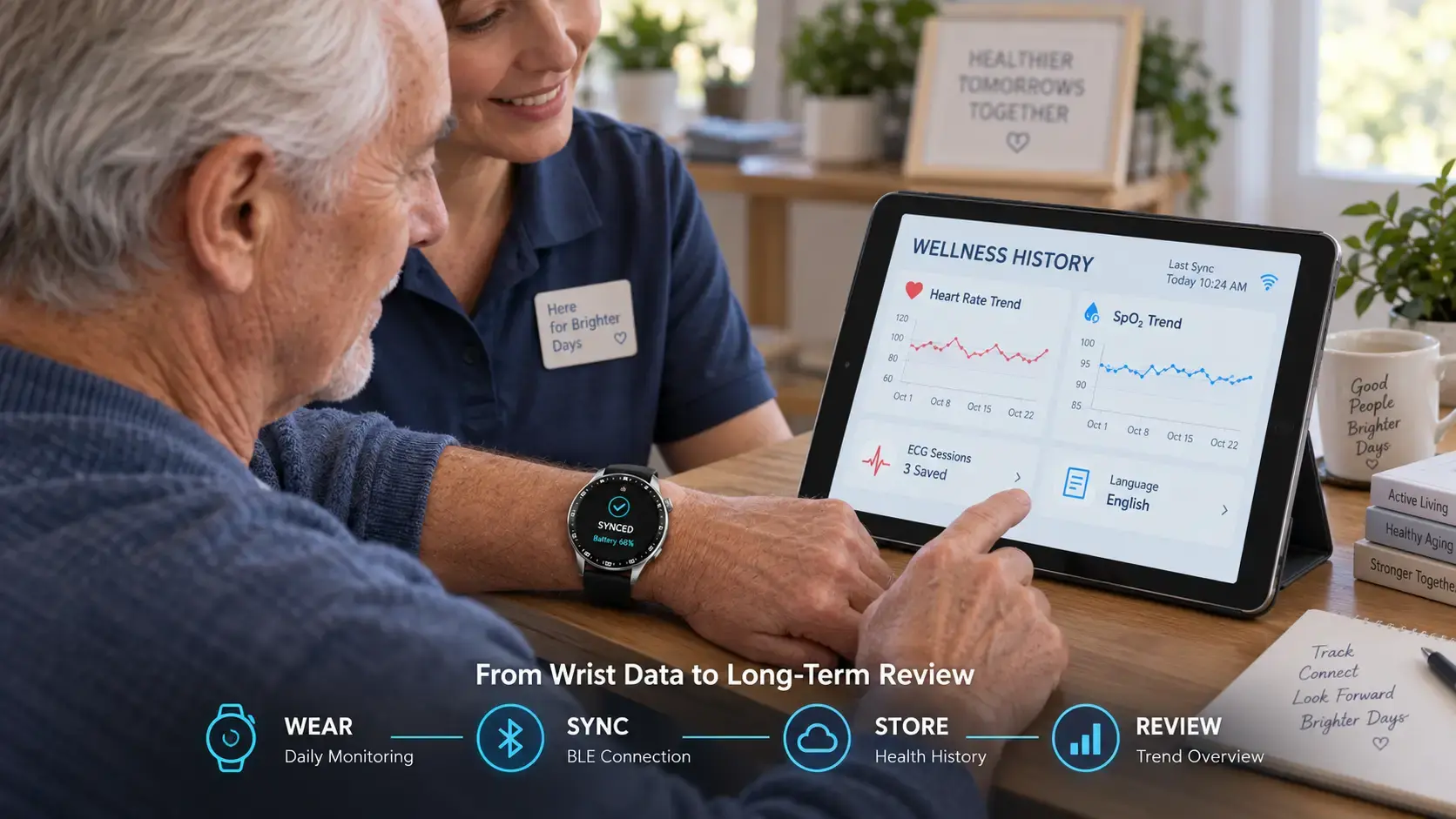
With all of these features, the device is ready to be used in long-term care facilities, corporate wellness programs, and community health monitoring systems. It's a good choice for B2B users who serve a wide range of markets because it has a long battery life, supports multiple languages, and is well-built.
Procurement Insights: How to Choose and Purchase Custom ECG SpO2 Endurance Smartwatches
Key Evaluation Criteria for B2B Buyers
There's more to choosing the right custom smartwatch provider for a long battery life smartwatch than just looking at the standard sheets. When buying something from a business, the buying team needs to check out the supplier's OEM/ODM skills, quality control methods, minimum order amounts, and facilities for after-sales service. Here's what procurement managers with a lot of experience always put first:
Tests of sensor precision are the most important thing. Before placing large orders, standard tests must be done to make sure that the ECG waveform and SpO2 measurements are accurate and consistent across production batches. A manufacturing environment that is GMP-certified gives you measurable peace of mind on this front.
Customization freedom is just as important. Customers in the healthcare field often need special firmware, branded displays, specific packaging, and language settings that are set up to work with their devices. These needs can be met by a provider with mature R&D resources without making wait times longer.
The structure of prices and the flexibility of the MOQ also affect decisions about what to buy. Low MOQ options let Amazon FBA sellers and Shopify brands test new lines of healthcare products in the market before going big. Regional distributors have less inventory risk when they can plan their deliveries and pay in bulk.
Future Trends and Innovations in ECG SpO2 Endurance Smartwatches for Healthcare
AI Integration and Telemedicine Convergence
The newest medical wearables will do more than just gather data; they will also figure out what it means. AI-powered health analytics built into the firmware level are already letting people know ahead of time when their heart rhythms aren't normal or when oxygen levels drop. As the use of telemedicine grows, smartwatches that work well with electronic health record systems and online patient care platforms will sell for a lot more.
This trend means that supplier partnerships with strong software development skills are becoming more valuable for business-to-business buyers. Over-the-air (OTA) software updates mean that devices can change with new regulations and more clinical use cases. This protects the long-term value of purchase investments. A key differentiator is working with a provider that puts money into ongoing product development instead of static SKU management.
Conclusion
Custom endurance smartwatch ECG SpO2 smartwatches are a real example of how consumer wearable design and medical use can come together. This architecture's devices meet real needs in assisted living programs, community health efforts, and post-discharge tracking setups. They have a classic shape that's good for continuous wear, a battery life of up to 21 days, and IP67 durability. The chance is instant and scalable for procurement workers, OEM brands, and business-to-business distributors, as long as they have the right production partner.
FAQ
1. How accurate are SpO2 sensors in custom smartwatches compared to clinical pulse oximeters?
Wearable SpO2 sensors made for consumers and medical use usually work within ±2% of clinical pulse oximeters when conditions are stable. Different skin tones, movements, and levels of light can change how accurate it is. This range of accuracy is usually thought to be good enough for monitoring wellness and tracking trends in settings that aren't acute.
2. What battery life should healthcare buyers expect from a wearable monitoring device?
In basic tracking mode, devices with well-tuned chipsets and software, like those based on the JL7012 design, can last up to 21 days. This will be reduced by active ECG and SpO2 monitoring, but the baseline endurance is still much higher than that of most consumer smartwatches.
3. Can custom ECG smartwatches integrate with hospital software systems?
How well integration works depends on how well the supplier supports software development. With BLE 5.0 connectivity, you can pair with partner apps and send info to other platforms. During the OEM specification phase, buyers who need deep interaction with an EHR or hospital system should talk to the seller about custom software and API development.
4. What is the minimum order quantity for custom-branded healthcare smartwatches?
MOQ is different for each supplier. Companies like Xizhou that have flexible production lines can handle both small sample orders for trying the product and large-volume runs for putting it on the market.
Partner with Xizhou for Your Custom ECG SpO2 Smartwatch Project
Xizhou — a reliable company that makes endurance smartwatches — offers flexible OEM/ODM options based on strong research and development, GMP-certified production, and full certification support. Our team can quickly customize your order, keep the quality stable, and provide helpful after-sales service, whether you need a small trial batch or a lot of branded products. Reach us at 13266508958@163.com to explore specifications, request samples, and start your custom project today.
References
1. Grand View Research. (2022). Medical Wearable Devices Market Size, Share & Trends Analysis Report.
2. Perez, M. V., et al. (2019). Large-Scale Assessment of a Smartwatch to Identify Atrial Fibrillation. New England Journal of Medicine, 381(20), 1909–1917.
3. World Health Organization. (2021). Global Report on Assistive Technology.
4. Bent, B., et al. (2020). Investigating Sources of Inaccuracy in Wearable Optical Heart Rate Sensors. npj Digital Medicine, 3(1), 1–9.
5. Quer, G., et al. (2021). Wearable Sensor Data and Self-Reported Symptoms for COVID-19 Detection. Nature Medicine, 27(1), 73–77.
6. Majumder, S., et al. (2017). Wearable Sensors for Remote Health Monitoring. Sensors, 17(1), 130.







These tools aren't just for hospitals. A well-designed custom smartwatch lets care teams keep an eye on a patient's vital signs around the clock without them having to stay in a professional setting. This is useful in community health programs, assisted living facilities, and post-discharge tracking systems. The real value is in how it can be used in the real world.
Challenges in Traditional Healthcare Wearables and How Custom Designs Overcome Them
The Battery Life Gap in Medical Wearables
When it comes to healthcare wearables, battery life is one of the biggest problems that keeps coming up. A device that needs to be charged every day really slows down work in clinical or assisted living settings. Normal monitors for consumers only last one to two days of active tracking, which is not enough time to keep an eye on a patient all the time.
This is directly addressed by medical-grade wearables that are custom-made. In basic mode, a well-designed device like the JL7012, which is made on a chip architecture that uses little power, can last up to 21 days. With that kind of endurance and wireless charging for ease of use, there is no longer a charging block that both patients and caregivers find frustrating.
Durability in Real-World Healthcare Environments
Durability for an endurance smartwatch is just as important as battery life. Healthcare settings require people to wash their hands often, be around cleaning products, take part in outdoor rehabilitation programs, and be in situations with a lot of activity. A device that isn't properly sealed and built will become a liability instead of an asset.
When you combine custom zinc metal construction with IP67 water and dust protection, you get the kind of tough dependability that healthcare settings need. The device works well in a hospital ward, a community health screening event, or an online patient tracking program; the sensors are still accurate.
Comprehensive Features and Specifications of Custom ECG SpO2 Endurance Smartwatches
The features of a smartwatch for healthcare must match real-world needs, not just what the company says they want to sell. Here are the most important hardware and software features of a gadget that make it truly perfect for healthcare business-to-business buying:
- Display: The 1.53-inch round IPS color screen with 360×360 resolution shows health data clearly and easily, even in different lighting conditions. This is helpful in both clinical and rehabilitation settings, indoors and outdoors.
- Chipset: The device's JL7012 chip strikes a good balance between processing speed and power consumption, allowing for stable monitoring 24 hours a day, seven days a week, without draining the battery too quickly.
- Battery & Charging: A 300mAh battery that can be charged wirelessly lasts for up to 21 days in basic mode, which means that caregivers don't have to do as much maintenance on the device.
- Build Quality: The zinc metal body is resistant to water and dust (IP67), so it will hold up in tough healthcare situations.
- Connectivity: BLE 5.0 lets stable, low-latency data flow to hospital control tools and companion health platforms.
- App Compatibility: The RDFIT app works with more than 30 languages, such as English, Spanish, Arabic, Japanese, and Hindi. This means that it can be used with a wide range of patients around the world.
- Firmware Languages: The 28 supported firmware languages make sure that devices can be localized for use in healthcare systems around the world.
- Colors: It comes in Gun Black and Silver with silicone straps. The basic round shape looks professional and is comfortable enough to wear every day for a long time.
With all of these features, the device is ready to be used in long-term care facilities, corporate wellness programs, and community health monitoring systems. It's a good choice for B2B users who serve a wide range of markets because it has a long battery life, supports multiple languages, and is well-built.
Procurement Insights: How to Choose and Purchase Custom ECG SpO2 Endurance Smartwatches
Key Evaluation Criteria for B2B Buyers
There's more to choosing the right custom smartwatch provider for a long battery life smartwatch than just looking at the standard sheets. When buying something from a business, the buying team needs to check out the supplier's OEM/ODM skills, quality control methods, minimum order amounts, and facilities for after-sales service. Here's what procurement managers with a lot of experience always put first:
Tests of sensor precision are the most important thing. Before placing large orders, standard tests must be done to make sure that the ECG waveform and SpO2 measurements are accurate and consistent across production batches. A manufacturing environment that is GMP-certified gives you measurable peace of mind on this front.
Customization freedom is just as important. Customers in the healthcare field often need special firmware, branded displays, specific packaging, and language settings that are set up to work with their devices. These needs can be met by a provider with mature R&D resources without making wait times longer.
The structure of prices and the flexibility of the MOQ also affect decisions about what to buy. Low MOQ options let Amazon FBA sellers and Shopify brands test new lines of healthcare products in the market before going big. Regional distributors have less inventory risk when they can plan their deliveries and pay in bulk.
Future Trends and Innovations in ECG SpO2 Endurance Smartwatches for Healthcare
AI Integration and Telemedicine Convergence
The newest medical wearables will do more than just gather data; they will also figure out what it means. AI-powered health analytics built into the firmware level are already letting people know ahead of time when their heart rhythms aren't normal or when oxygen levels drop. As the use of telemedicine grows, smartwatches that work well with electronic health record systems and online patient care platforms will sell for a lot more.
This trend means that supplier partnerships with strong software development skills are becoming more valuable for business-to-business buyers. Over-the-air (OTA) software updates mean that devices can change with new regulations and more clinical use cases. This protects the long-term value of purchase investments. A key differentiator is working with a provider that puts money into ongoing product development instead of static SKU management.
Conclusion
Custom endurance smartwatch ECG SpO2 smartwatches are a real example of how consumer wearable design and medical use can come together. This architecture's devices meet real needs in assisted living programs, community health efforts, and post-discharge tracking setups. They have a classic shape that's good for continuous wear, a battery life of up to 21 days, and IP67 durability. The chance is instant and scalable for procurement workers, OEM brands, and business-to-business distributors, as long as they have the right production partner.
FAQ
1. How accurate are SpO2 sensors in custom smartwatches compared to clinical pulse oximeters?
Wearable SpO2 sensors made for consumers and medical use usually work within ±2% of clinical pulse oximeters when conditions are stable. Different skin tones, movements, and levels of light can change how accurate it is. This range of accuracy is usually thought to be good enough for monitoring wellness and tracking trends in settings that aren't acute.
2. What battery life should healthcare buyers expect from a wearable monitoring device?
In basic tracking mode, devices with well-tuned chipsets and software, like those based on the JL7012 design, can last up to 21 days. This will be reduced by active ECG and SpO2 monitoring, but the baseline endurance is still much higher than that of most consumer smartwatches.
3. Can custom ECG smartwatches integrate with hospital software systems?
How well integration works depends on how well the supplier supports software development. With BLE 5.0 connectivity, you can pair with partner apps and send info to other platforms. During the OEM specification phase, buyers who need deep interaction with an EHR or hospital system should talk to the seller about custom software and API development.
4. What is the minimum order quantity for custom-branded healthcare smartwatches?
MOQ is different for each supplier. Companies like Xizhou that have flexible production lines can handle both small sample orders for trying the product and large-volume runs for putting it on the market.
Partner with Xizhou for Your Custom ECG SpO2 Smartwatch Project
Xizhou — a reliable company that makes endurance smartwatches — offers flexible OEM/ODM options based on strong research and development, GMP-certified production, and full certification support. Our team can quickly customize your order, keep the quality stable, and provide helpful after-sales service, whether you need a small trial batch or a lot of branded products. Reach us at 13266508958@163.com to explore specifications, request samples, and start your custom project today.
References
1. Grand View Research. (2022). Medical Wearable Devices Market Size, Share & Trends Analysis Report.
2. Perez, M. V., et al. (2019). Large-Scale Assessment of a Smartwatch to Identify Atrial Fibrillation. New England Journal of Medicine, 381(20), 1909–1917.
3. World Health Organization. (2021). Global Report on Assistive Technology.
4. Bent, B., et al. (2020). Investigating Sources of Inaccuracy in Wearable Optical Heart Rate Sensors. npj Digital Medicine, 3(1), 1–9.
5. Quer, G., et al. (2021). Wearable Sensor Data and Self-Reported Symptoms for COVID-19 Detection. Nature Medicine, 27(1), 73–77.
6. Majumder, S., et al. (2017). Wearable Sensors for Remote Health Monitoring. Sensors, 17(1), 130.