

Testing Outdoor Light Smartwatch Performance Outdoors
When sourcing wearable technology for resale or private-label programs, performance validation is non-negotiable. An outdoor light smartwatch combines lightweight construction with functional outdoor tools — including LED flashlight capability, health monitoring, and real-time notifications — making it a compelling product for Amazon FBA sellers, wholesale distributors, and OEM brand builders alike. Before committing to inventory or a manufacturing partnership, understanding how these devices actually perform in field conditions separates profitable catalog additions from costly return nightmares.
Understanding Outdoor Light Smartwatches and Their Core Features
Not all smartwatches that say they are "outdoor" really are. True outdoor light smartwatches are made for people who spend real time in the field, not just at the gym, and strike a careful balance between durability and weight.
What Sets These Devices Apart
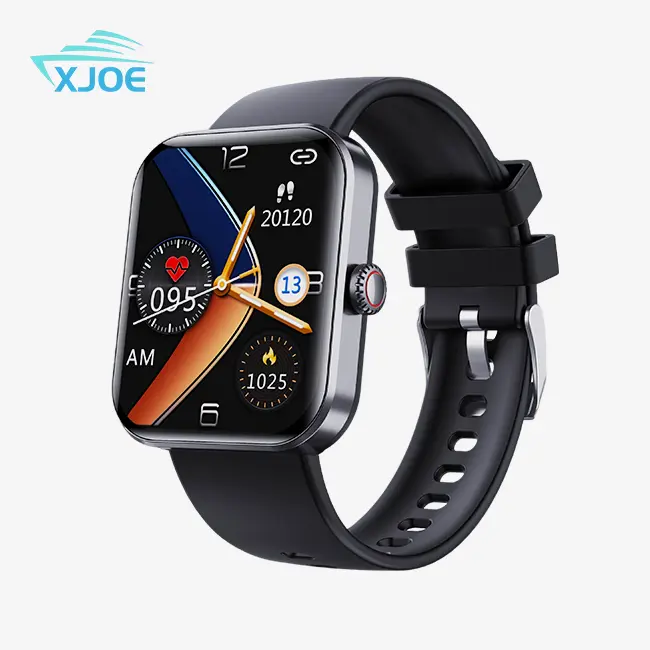
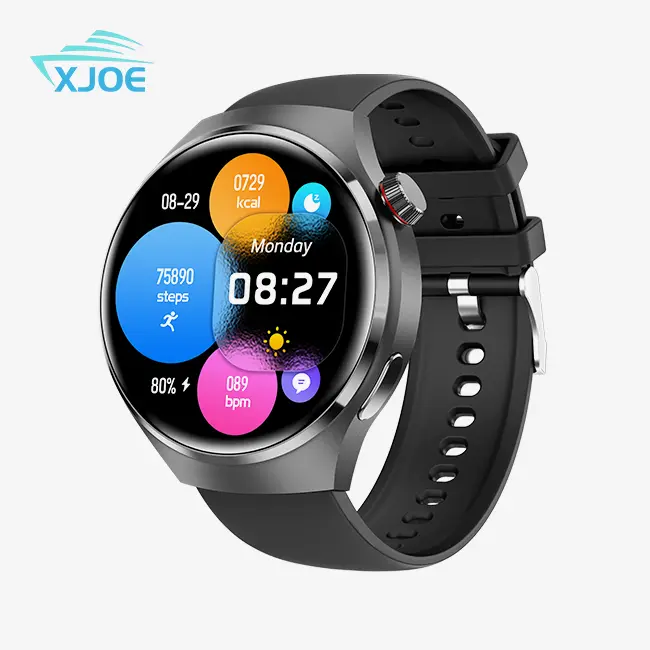
For instance, the Xizhou outdoor light smartwatch has an aluminum case with a steel strap and a snap-button buckle, and the screen is a 44–49 mm AMOLED with a size of 360×360. With an IPX67 grade for water and dust protection, it can handle light rain, trail splashes, and moderate submersion without any problems. A single magnetic charge lasts for 5–10 days, and the built-in LED flashlight fills a real need—most smartwatches don't have any low-light features at all.
Core Performance Drivers Worth Evaluating
To B2B purchasers, the qualities that are most important are those that have a direct impact on the level of satisfaction experienced by end users and the number of reviews received by the product:
- A multi-functional health tracking system comprises the monitoring of heart rate, the analysis of sleep, and the counting of steps. Users who like being outside rely on this information to ensure their safety and maximise their performance throughout extended journeys.
- Users are able to maintain contact with one another even when their phones are in a group via real-time alerts. Working in the field, going on walks, or camping are all made simpler as a result of this.
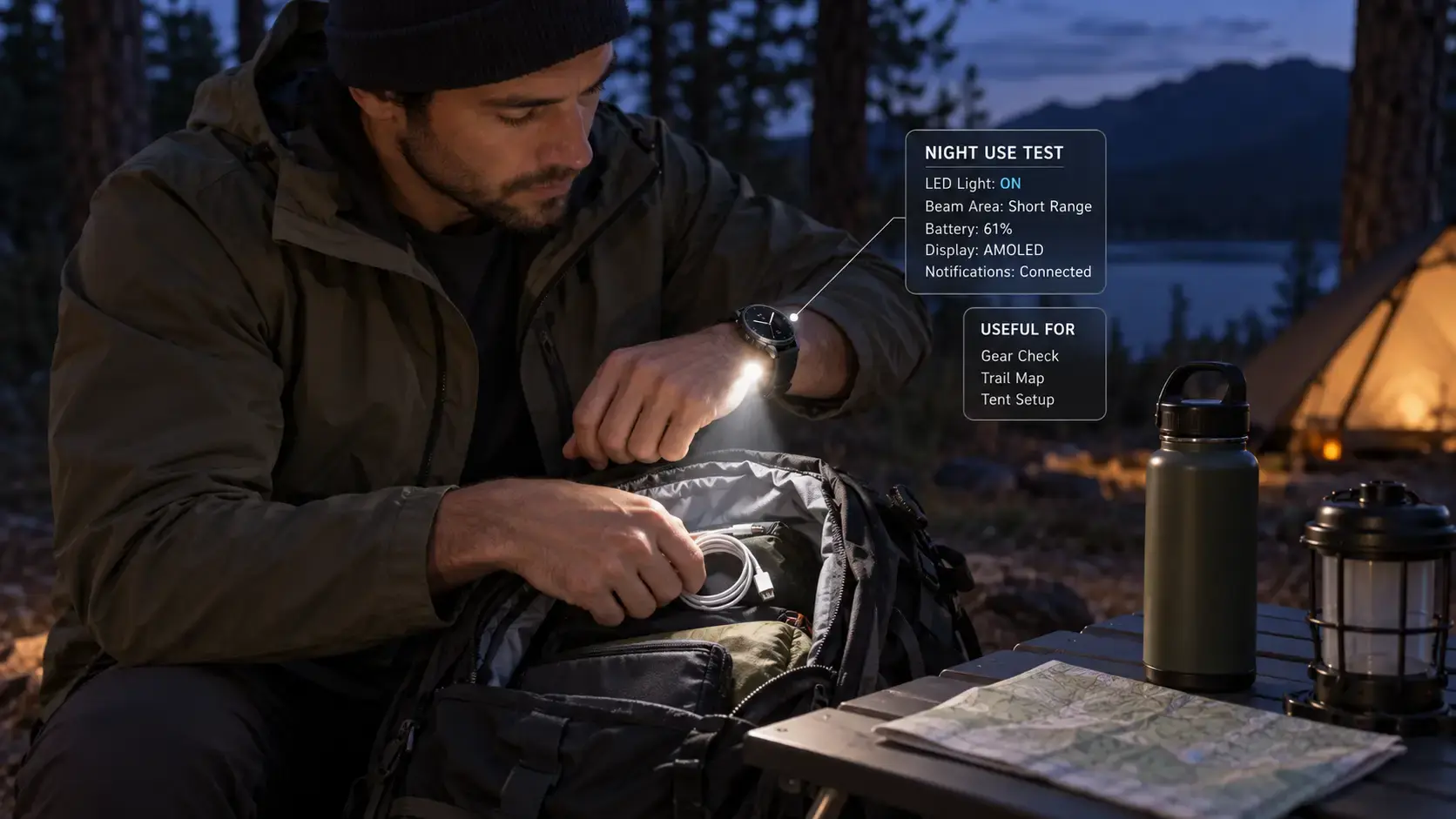
- The product's worth is increased by the presence of an LED torch that is built in, making it more helpful for activities that take place at night and in the event of an emergency.
- The fact that the gadget is both lightweight and robust guarantees that it will be pleasant to use for an extended period of time. By doing so, the frequency of returns that are brought on by discomfort during extended usage outside is reduced.
In order to deliver dependable performance that can withstand challenging situations, these elements collaborate to provide it. This is the aspect that active consumers and corporate procurement teams worry about the most.
Testing Outdoor Light Smartwatch Performance: Key Dimensions and Methodology
Any order for an outdoor light smartwatch should be put through thorough performance testing first, but it's especially important for sellers whose reputation depends on the quality of their products. The following aspects show what professional reviews of procurement usually look at.
GPS and Sensor Accuracy in Varied Terrain
The Xizhou model is more focused on health and messaging features than on multi-constellation GNSS tracking. However, the motion sensors and step-counting algorithms should be tested on flat walks, hills, and uneven surfaces. Accuracy drift in step counts is directly linked to bad reviews, especially from people who are interested in exercise.
Battery and Charging Reliability
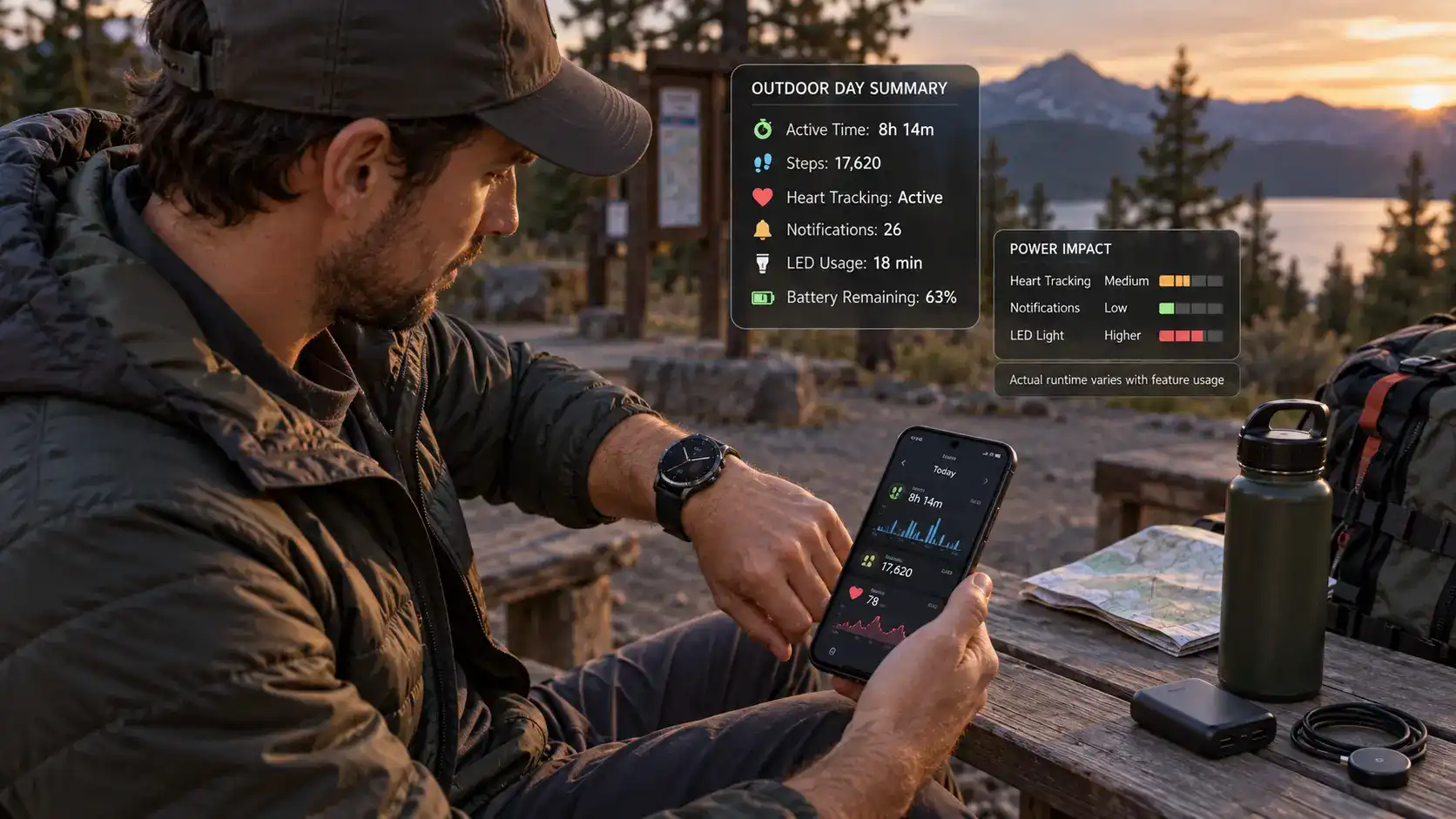
The 5–10 day battery window needs to be put through real-life stress tests. When you turn on constant heart rate tracking, notifications, and the LED flashlight all at the same time, that window gets a lot smaller. When looking for products for markets with a lot of activity, buyers should ask for test data that shows heavy use scenarios instead of estimates that are only good for backup.
Waterproof Validation Under IPX67 Standards
With IPX67 certification, the device can handle being fully submerged in water up to 1 meter for 30 minutes and dust ingress. When buying things for outdoor or industrial use, procurement teams should make sure that plant testing methods match this standard from batch to batch, not just for sample units. IEC guidelines say that testing IP ratings on production units often shows differences that are hidden by testing samples.
Night Usability and Flashlight Function
Even when it's dark, AMOLED screens have a lot of contrast. But the LED flashlight is what makes this product group stand out. Testing the flashlight's brightness and angle in the wild, like on a camping trip or a trail, shows whether it is actually useful or just for looks. End users can tell the difference right away.
Comparative Analysis: Outdoor Light Smartwatch vs Alternative Devices
Knowing where this type of outdoor light smartwatch fits into the bigger picture of wearable tech helps B2B buyers place it properly and avoid customers' standards not being met.
vs. Standard Smartwatches
Consumer-level smartwatches, like entry-level Fitbits or basic Android Wear devices, don't have features that make them useful in the field, like built-in LED lighting or resistance to water or dust. The flashlight watch category bridges the gap between wearable tech for city life and heavy-duty adventure gear, making it more affordable for a wider range of buyers.
vs. Rugged Smartwatches
The Instinct series from Garmin and the Pro Trek line from Casio are aimed at professional mountaineers and military users, respectively, and have different price points and levels of features. Devices like the Xizhou outdoor wearable are made for people with busy lifestyles, like walkers, campers, and health-conscious outdoor fans, who care more about value, portability, and daily usage than mil-spec approval. This placement leads straight to faster sales at prices that are easy for customers to afford.
vs. Fitness Trackers
Standard fitness bands can track your heart rate and steps, but they don't have the build quality, screen size, or ability to integrate notifications that make an outdoor smartwatch truly useful. As an important improvement, the 44–49mm AMOLED screen and alloy build quality justify the product's higher selling price.
Procurement Guide: Making Smart Buying Decisions for Your Business
When buying an outdoor light smartwatch, it's important to look at more than just the unit price. If a product line stays profitable over multiple inventory cycles, it depends on its total cost of ownership, which includes defect rates, return processing, and restock lead times.
Key Supplier Evaluation Criteria
Procurement teams should look at batch consistency, quality control paperwork, and certifications when looking at possible providers or makers. Important things to think about are:
- Warranty terms and after-sales support have a direct effect on how sellers deal with returns and bad reviews on sites like Amazon.
- OEM and private-label flexibility give brands the freedom to stand out by using custom packaging, printing logos, and changing the color of the straps.
- MOQ and restock speed show how quickly sellers can react to sudden increases in demand without risking too much capital.
Sourcing risk is greatly reduced when suppliers have GMP-certified factories, full product certifications, and proof of their ability to do research and development. Because of these things, there are fewer requests for refunds due to quality issues, and planning for inventory is more stable.
Optimizing Outdoor Light Smartwatch Use in Your Organization
Putting these outdoor light smartwatches to use, whether for selling or for employees to use, requires careful setup and ongoing upkeep.
Best Practices for Deployment and Longevity
Firmware changes should be put on devices before they are sent to end users to make sure they have the most up-to-date speed improvements. Setting up notification settings and health tracking preferences ahead of time makes the first impression better for corporate gifts or promotional deployments. Taking care of batteries, especially by avoiding full discharge cycles over and over, makes cells last longer than the stated cycle count. If you use a device in a constantly wet environment, you should check the waterproof gasket integrity every three months. This is because saltwater or cleaning agents can speed up seal degradation. If the device supports standard data export formats, organizations that use wearable health data for community health monitoring systems or wellness programs for employees can add device outputs to platforms that are already in use.
Conclusion
One of the best ways to protect margins and keep good seller reviews is to test the performance of outdoor wearables before adding more of them to the store. The Xizhou outdoor light smartwatch has a 5–10 day battery life, an AMOLED display, IPX67 resistance, an LED flashlight, and multi-function health tracking. These features make it competitive in the busy lifestyle and outdoor shopping markets. You can build a long-lasting sourcing relationship that grows with your business by pairing that core product with a supplier that allows OEM customization and flexible order volumes.
FAQ
1. How long does the battery actually last under active use?
The battery life of 5 to 10 days is based on a variety of uses. Continuously tracking your heart rate and regularly merging your notifications will put your usage closer to the lower end. For end users who are very active, setting heart rate tracking to interval mode instead of continuous mode makes the daily runtime much longer.
2. Is IPX67 sufficient for outdoor and light industrial use?
The IPX67 rating means that it can handle rain, rough terrain, and accidental submersion. It's not meant to be used with high-pressure water jets or for long periods of time underwater. If the buyer wants to use the device for marine or heavy industrial purposes, they should get one with a higher ATM rating.
3. Can these devices integrate with enterprise health monitoring systems?
The program environment and data export format determine how well the two can work together. During the sampling phase, buyers who need to make sure that the API or data-sharing meets enterprise compatibility requirements should confirm these details with the supplier.
4. What customization options are available for private-label sourcing?
As an OEM, you can usually put your name on the dial and the packaging, choose your own strap colors, and get retail boxes with your logo on them. Prices and lead times are different for each provider. Requesting a customization spec sheet early on in the conversation speeds up the project schedule.
Partner with Xizhou for Reliable Outdoor Light Smartwatch Supply
Xizhou makes trendy wearable electronics for sellers who need consistent quality, quick turnaround, and the ability to make changes as needed. As a reliable outdoor light smartwatch maker, we offer OEM branding, low-minimum-order (MOQ) sample orders, and bulk restocking. Our production is GMP-certified, and we have all the necessary certifications. Whether you want to test a new SKU or make an existing line bigger, our team is ready to go. To ask for product specs, samples, or a sourcing consultation, email 13266508958@163.com.
References
1. International Electrotechnical Commission. IEC 60529: Degrees of Protection Provided by Enclosures (IP Code). IEC, 2013.
2. Garmin Ltd. Outdoor Wearable Device Performance and Specification Standards. Garmin Annual Product Report, 2023.
3. Wired. How Smartwatch Sensors Are Tested for Outdoor Accuracy. Wired Technology Review, 2022.
4. Consumer Reports. Smartwatch Durability and Water Resistance Testing Methodology. Consumer Reports Electronics, 2023.
5. IDC Research. Global Wearables Market Forecast and Outdoor Segment Analysis. IDC Market Intelligence Report, 2024.
6. IEEE Spectrum. Advances in Low-Power Display Technology for Wearable Devices. IEEE Spectrum, 2023.