NFC Smartwatch vs Standard Smartwatch: Differences
When sourcing smartwatches for resale or enterprise deployment, understanding the distinction between an NFC Enabled Smartwatch and a standard model can directly affect your profit margins and customer satisfaction. The core difference lies in functionality: NFC-equipped devices integrate Near Field Communication chipsets that enable contactless payments, secure access, and instant data transfers within a 4cm range. Standard smartwatches, while offering fitness tracking and notification features, lack this wireless transactional capability. This seemingly small hardware addition translates into expanded use cases across retail, corporate gifting, and logistics markets—making NFC variants increasingly sought after by Amazon sellers, Shopify brands, and distributors targeting tech-savvy consumers in 2024.
Introduction
In today's competitive business-to-business (B2B) market, smartwatches have gone from being personal toys to strategic tools that improve operational efficiency and customer interaction. Near Field Communication (NFC) technology has become a must-have for businesses that need to make deals safe, avoid touching things, and connect easily. It's important to know how NFC-enabled smartwatches are different from regular ones, whether you're an Amazon FBA seller trying out new product lines, a distributor looking for big inventory, or a private label brand making products that stand out.
This blog gives procurement managers, e-commerce business owners, and electronics sellers useful information about technical specs, market positioning, and how to evaluate suppliers. We take the mystery out of the most important technology issues, like payment systems and battery trade-offs. This way, you can safely choose smartwatch solutions that meet the needs of your target market and your business.
Understanding NFC Technology in Smartwatches
What Does NFC Technology Actually Do?
NFC-enabled smartwatches use 13.56 MHz short-range wireless communication technology to let devices send and receive encrypted data instantly without having to be paired manually. While Bluetooth needs to be set up before a transaction can begin, NFC can start a transaction just by being close to it. This makes it perfect for mobile payments, transit access, and sharing safe credentials. The technology uses electromagnetic induction between two loop antennas to let two devices talk to each other passively, even when the watch's battery is low.
Core Applications Driving Market Demand
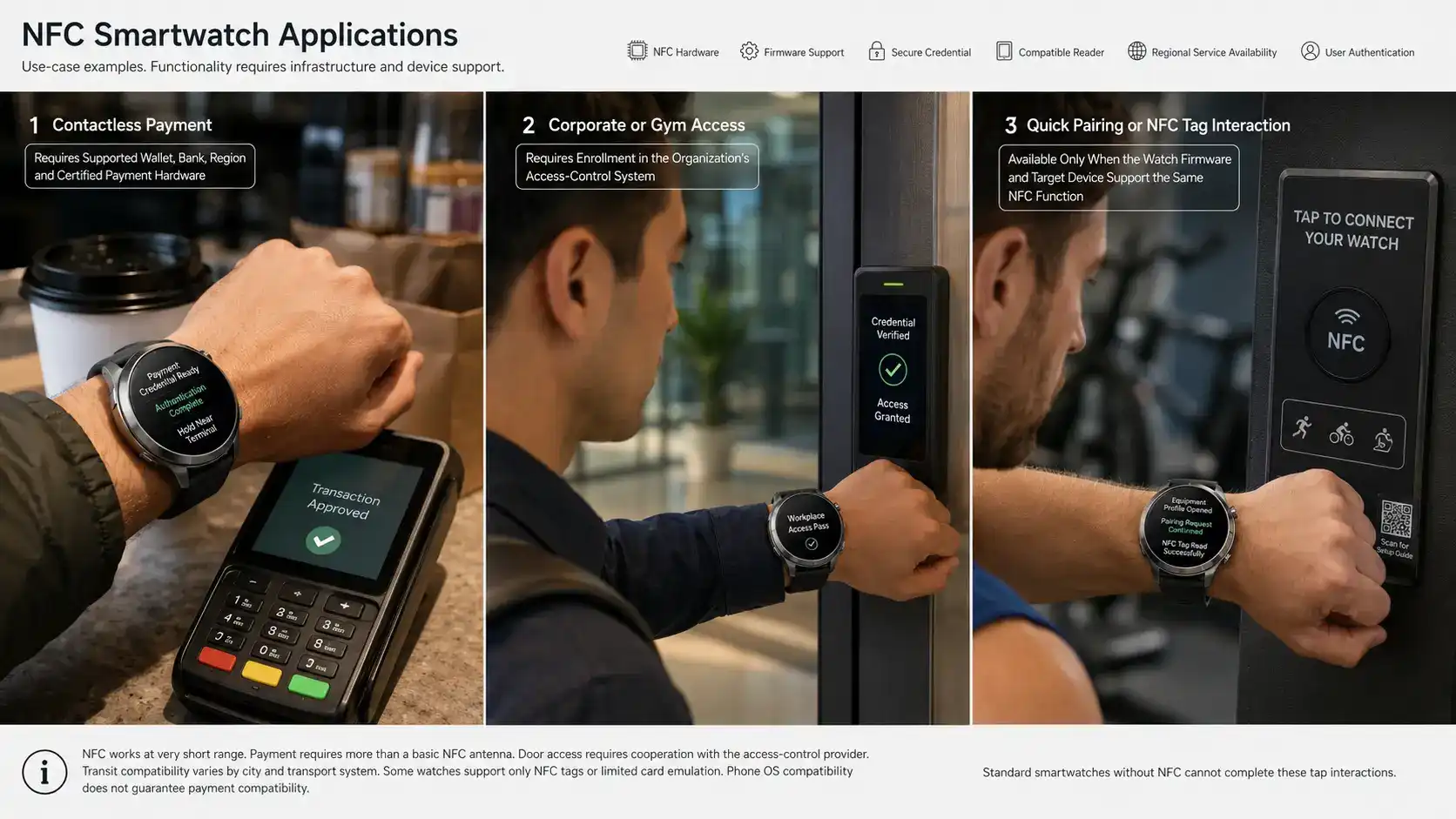
Modern businesses use NFC-enabled smartwatches to speed up payment processes at retail checkpoints, protect building access with tokenized credentials, and make it easy to share data quickly while working in the field. More and more, transit systems in big US cities allow NFC tap-and-go, which makes these devices appealing to people who live in cities and travel. NFC chips have encryption protocols built in, such as tokenization, which means that actual card numbers are never sent. These protocols fix security problems that happen with Bluetooth-only devices.
Technical Architecture Behind the Feature
The NFC-enabled smartwatch has a secondary secure element (SE) or host card emulator (HCE) design that keeps payment information safe from the main processor. This separation keeps private financial information safe even if the device's operating system is hacked. The antenna design, which is usually built into the bottom of the watch case, has to balance signal strength with form factor limitations. This is a very important engineering issue for OEM/ODM partners who are making custom models.
NFC Smartwatch vs Standard Smartwatch: Core Differences
Payment and Authentication Capabilities
The most obvious difference is the power to make transactions. NFC-enabled smartwatch models let users make purchases at contactless stations without bringing wallets or smartphones. This is especially helpful for fitness fans who like to run without their phones. Standard smartwatches need to be connected to a smartphone in order to make payments. This makes them less useful when they're not connected to a phone. Payment industry analysts have found that 68% of US consumers now prefer contactless payment options. This means that wearables that can use NFC will have a strong market pull.
NFC-enabled smartwatches can be used for more than just shopping. They can also be used as secure access tokens in business settings. Through proximity verification, employees can open office doors, get into parking garages, and make sure their computer logins are real, which are all use cases that normal models can't handle. Because they can be used for two different things, NFC-enabled smartwatch versions are very appealing to people who want to buy corporate gifts and B2B procurement teams who want to find devices that can be used for both wellness and work.
Connectivity and Data Transfer Advantages
Both types of devices can connect to a smartphone via Bluetooth, but NFC adds a second route that is optimized for quick, low-power data sharing. NFC tap gestures make it possible to instantly share contact information, pair wireless earbuds, or sync workout data to gym equipment. Standard trackers need to be paired with Bluetooth by hand, which takes time and can be frustrating for people who aren't tech-savvy.
The energy balance is very different. When NFC is being read, it works in passive mode and doesn't use much power until active transmission happens. Standard smartwatches only use Bluetooth Low Energy (BLE) to connect, which keeps scanning in the background all the time. This can make a 10-15% difference in how much juice is used each day, depending on how it is used. However, current chipsets have made this difference much smaller.
Security Enhancements and Encryption
Dynamic tokenization is used in NFC transactions to make unique transaction codes that can only be used once before they expire. Even if they are stolen, these tokens can't be used to make fake purchases. This is an extra layer of security that isn't present in regular Bluetooth communications. When putting out wearables that connect to sensitive systems, enterprise IT departments like this architecture. Standard smartwatches send data through smartphones that are paired with them. If the phone is hacked, this adds another way to attack the smartwatch.
The safe part of NFC chipsets has been approved by bank-level security standards (EMVCo, PCI-DSS), which makes sure that they follow financial rules. Manufacturers put a lot of money into this approval process, which is why NFC-enabled smartwatch versions usually cost



NFC Smartwatch vs Standard Smartwatch: Differences
When sourcing smartwatches for resale or enterprise deployment, understanding the distinction between an NFC Enabled Smartwatch and a standard model can directly affect your profit margins and customer satisfaction. The core difference lies in functionality: NFC-equipped devices integrate Near Field Communication chipsets that enable contactless payments, secure access, and instant data transfers within a 4cm range. Standard smartwatches, while offering fitness tracking and notification features, lack this wireless transactional capability. This seemingly small hardware addition translates into expanded use cases across retail, corporate gifting, and logistics markets—making NFC variants increasingly sought after by Amazon sellers, Shopify brands, and distributors targeting tech-savvy consumers in 2024.
Introduction
In today's competitive business-to-business (B2B) market, smartwatches have gone from being personal toys to strategic tools that improve operational efficiency and customer interaction. Near Field Communication (NFC) technology has become a must-have for businesses that need to make deals safe, avoid touching things, and connect easily. It's important to know how NFC-enabled smartwatches are different from regular ones, whether you're an Amazon FBA seller trying out new product lines, a distributor looking for big inventory, or a private label brand making products that stand out.
This blog gives procurement managers, e-commerce business owners, and electronics sellers useful information about technical specs, market positioning, and how to evaluate suppliers. We take the mystery out of the most important technology issues, like payment systems and battery trade-offs. This way, you can safely choose smartwatch solutions that meet the needs of your target market and your business.
Understanding NFC Technology in Smartwatches
What Does NFC Technology Actually Do?
NFC-enabled smartwatches use 13.56 MHz short-range wireless communication technology to let devices send and receive encrypted data instantly without having to be paired manually. While Bluetooth needs to be set up before a transaction can begin, NFC can start a transaction just by being close to it. This makes it perfect for mobile payments, transit access, and sharing safe credentials. The technology uses electromagnetic induction between two loop antennas to let two devices talk to each other passively, even when the watch's battery is low.
Core Applications Driving Market Demand
Modern businesses use NFC-enabled smartwatches to speed up payment processes at retail checkpoints, protect building access with tokenized credentials, and make it easy to share data quickly while working in the field. More and more, transit systems in big US cities allow NFC tap-and-go, which makes these devices appealing to people who live in cities and travel. NFC chips have encryption protocols built in, such as tokenization, which means that actual card numbers are never sent. These protocols fix security problems that happen with Bluetooth-only devices.
Technical Architecture Behind the Feature
The NFC-enabled smartwatch has a secondary secure element (SE) or host card emulator (HCE) design that keeps payment information safe from the main processor. This separation keeps private financial information safe even if the device's operating system is hacked. The antenna design, which is usually built into the bottom of the watch case, has to balance signal strength with form factor limitations. This is a very important engineering issue for OEM/ODM partners who are making custom models.
NFC Smartwatch vs Standard Smartwatch: Core Differences
Payment and Authentication Capabilities
The most obvious difference is the power to make transactions. NFC-enabled smartwatch models let users make purchases at contactless stations without bringing wallets or smartphones. This is especially helpful for fitness fans who like to run without their phones. Standard smartwatches need to be connected to a smartphone in order to make payments. This makes them less useful when they're not connected to a phone. Payment industry analysts have found that 68% of US consumers now prefer contactless payment options. This means that wearables that can use NFC will have a strong market pull.
NFC-enabled smartwatches can be used for more than just shopping. They can also be used as secure access tokens in business settings. Through proximity verification, employees can open office doors, get into parking garages, and make sure their computer logins are real, which are all use cases that normal models can't handle. Because they can be used for two different things, NFC-enabled smartwatch versions are very appealing to people who want to buy corporate gifts and B2B procurement teams who want to find devices that can be used for both wellness and work.
Connectivity and Data Transfer Advantages
Both types of devices can connect to a smartphone via Bluetooth, but NFC adds a second route that is optimized for quick, low-power data sharing. NFC tap gestures make it possible to instantly share contact information, pair wireless earbuds, or sync workout data to gym equipment. Standard trackers need to be paired with Bluetooth by hand, which takes time and can be frustrating for people who aren't tech-savvy.
The energy balance is very different. When NFC is being read, it works in passive mode and doesn't use much power until active transmission happens. Standard smartwatches only use Bluetooth Low Energy (BLE) to connect, which keeps scanning in the background all the time. This can make a 10-15% difference in how much juice is used each day, depending on how it is used. However, current chipsets have made this difference much smaller.
Security Enhancements and Encryption
Dynamic tokenization is used in NFC transactions to make unique transaction codes that can only be used once before they expire. Even if they are stolen, these tokens can't be used to make fake purchases. This is an extra layer of security that isn't present in regular Bluetooth communications. When putting out wearables that connect to sensitive systems, enterprise IT departments like this architecture. Standard smartwatches send data through smartphones that are paired with them. If the phone is hacked, this adds another way to attack the smartwatch.
The safe part of NFC chipsets has been approved by bank-level security standards (EMVCo, PCI-DSS), which makes sure that they follow financial rules. Manufacturers put a lot of money into this approval process, which is why NFC-enabled smartwatch versions usually cost $15 to $30 more in bulk markets. Distributors who want to reach security-conscious industries like healthcare or finance can use this approval to set their products apart and build trust.
Real-World Use Scenarios Across Industries
NFC-enabled smartwatches are used in corporate settings, and an NFC smartwatch makes it easier for employees to do things like pay for items in the cafeteria and punch in at the time clock, which makes daily tasks more efficient. They let store workers scan items for inventory and do mobile point-of-sale (POS) purchases while leaving their hands free for helping customers. When logistics teams coordinate multimodal shipping across cities, they like it when transit payments are taken into account.
Fitness centers and health programs use NFC to make it easy for members to pair equipment and get into lockers, so they don't need to carry around extra key fobs. Promotional buyers look for NFC-enabled smartwatch models for branded corporate gifts because the technology feels high-end and focused on the future, which fits with how innovative the brand is being positioned. Standard trackers work well in these situations, but they don't let you communicate without any problems like NFC does.
Procurement Considerations: Selecting NFC Smartwatches for Business Use
Defining Your Use Case Requirements
Before you start looking at providers, you should find out what your target customers value most: the ability to make payments, control access, or general connection. If you want to sell on Amazon to urban millennials, you should focus on features like transit payment compatibility and sleek design that get good reviews and lower return rates. Distributors who sell to businesses need to make sure that the devices they sell work with enterprise MDM (Mobile Device Management) platforms and have bulk provisioning tools.
Low MOQ (Minimum Order Quantity) orders are a good way to test how the market will react before committing to large inventory positions. Many Chinese makers now offer 100–500-unit trial runs with custom name printing. This lets Shopify brands test out different SKUs without having to spend a lot of money. This adaptability helps ease the inventory stress that many online sellers feel as they try to keep up with quickly changing fashion trends.
Evaluating Device Compatibility and Ecosystem
To keep customers from complaining, NFC-enabled smartwatches need to work well with both iOS and Android, which are the most popular smartphone operating systems. Make sure that the partner apps work with the OS versions that your customers use, which are usually iOS 14+ and Android 8+. The ability to make payments depends on the infrastructure in each area. For example, buyers in the US expect apps to work with Apple Pay, Google Pay, and big bank apps, while buyers in Europe need different approval standards.
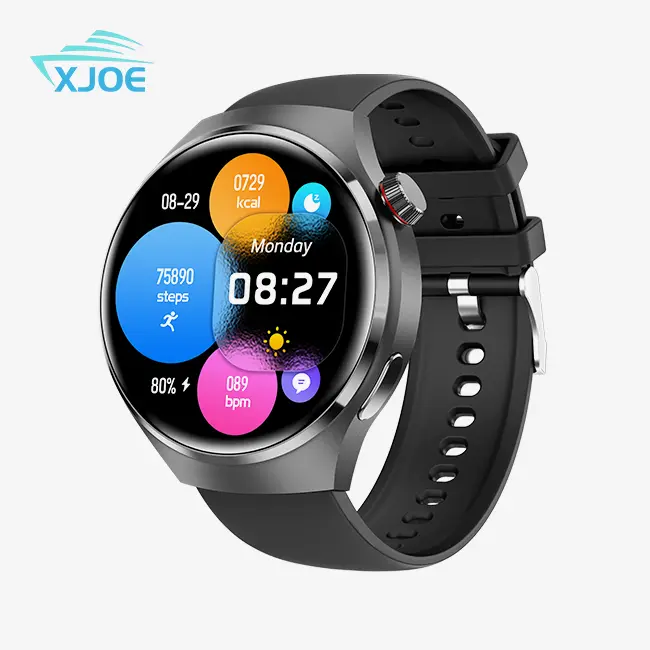
The watch's running system limits how it can be customized. Android-based phones like this one (with a 1.39-inch AMOLED screen, 466x466 resolution, and IP67 water resistance) give private label brands that want unique UI skins more options. It's important to note that the 5–10 day battery life when magnetic charging is normal for NFC-enabled smartwatches strikes a good balance between usefulness and power consumption.
Supplier Evaluation: Warranty, Support, and Pricing
When looking for NFC-enabled smartwatch suppliers, give more weight to companies that can show they are certified in Good Manufacturing Practice (GMP) and have a lot of quality control paperwork. Ask for thorough test results that cover the NFC range, battery life, and the device's ability to stay waterproof. When suppliers offer 12-month guarantees and helpful technical support, buyers don't have to deal with problems after the sale, which can hurt sellers' reviews on sites like Amazon.
Bulk pricing should encourage large purchases without requiring too much inventory. Competitive suppliers offer tiers of pricing (500 units, 1000 units, and 5000 units or more) with clear cost breakdowns that separate the cost of the device from the cost of customization. Adding custom logos, packaging inserts, and software changes within 15 to 20-day production windows makes it possible to quickly enter the market. This is especially helpful for seasonal campaigns or buyers of advertising products who need to meet tight deadlines.
Spotlight on Practical Specifications
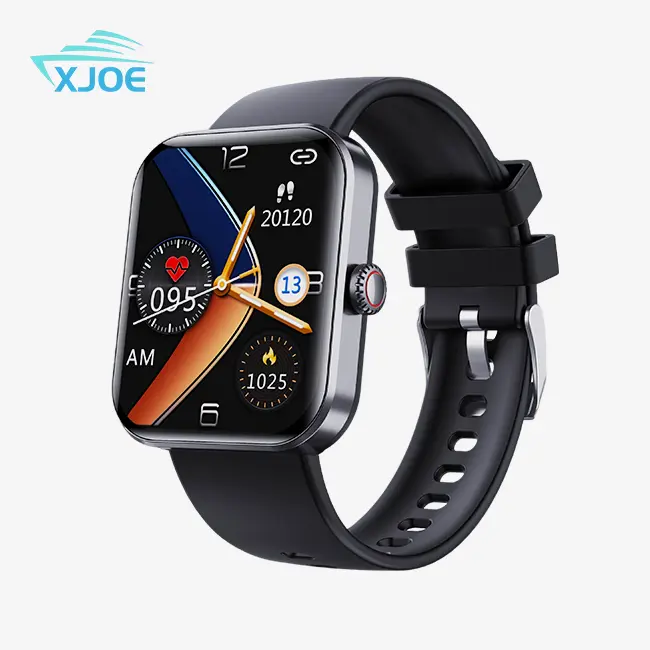
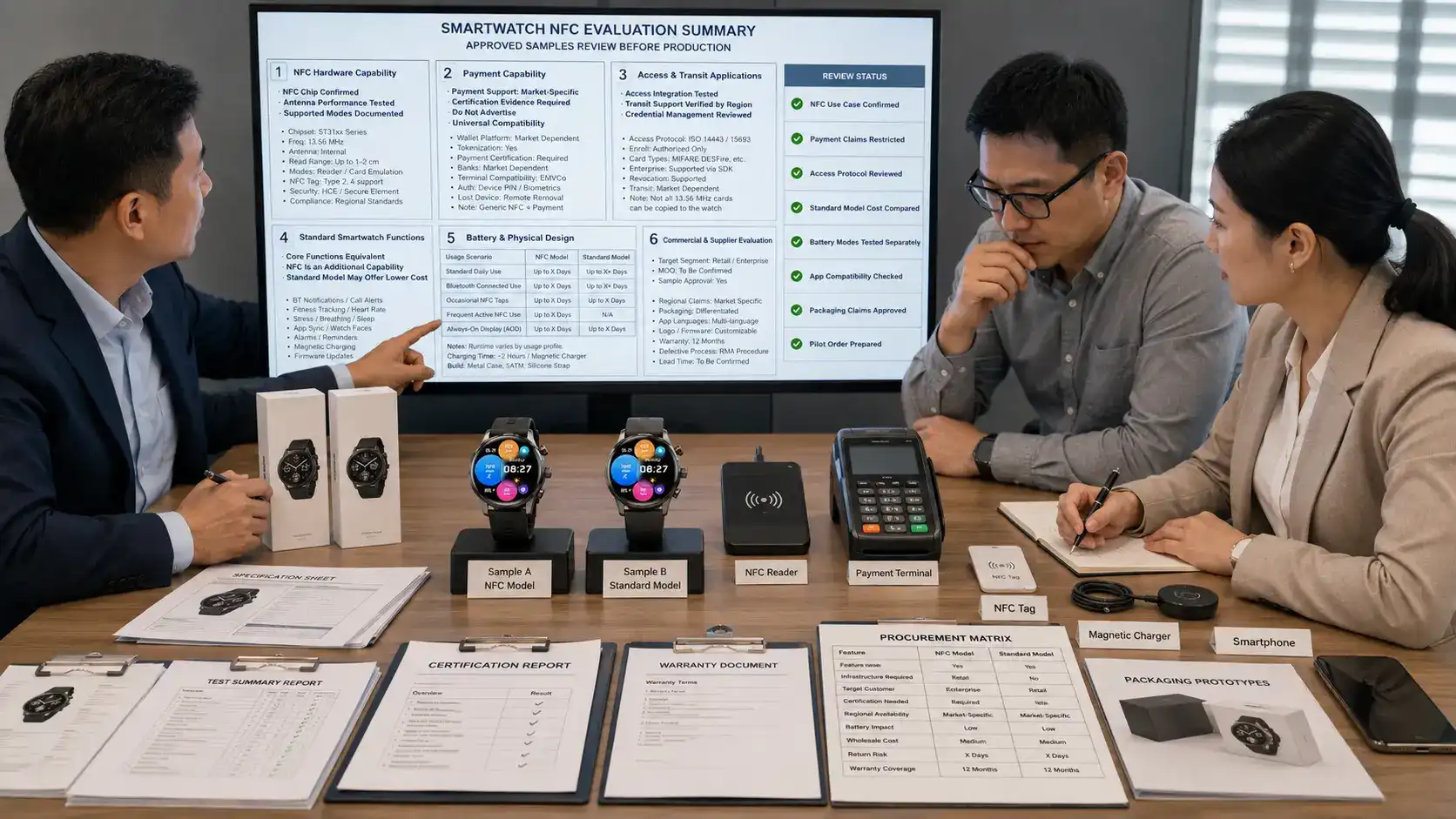
Think about a device like the one mentioned here. Its light aluminum alloy body and rubber/silicone straps make it durable and comfortable to wear all day. The AMOLED screen has bright images, even though the IP67 rating means it can't be fully submerged in water like higher-rated outdoor models. This NFC smartwatch features auto stress detection with guided breathing exercises, addressing the health trend that is getting people interested, while NFC support for regional transport payments solves the problem of how to pay for things on the way to and from work every day.
These details are important because they have a direct effect on how happy customers are and how often they come back. The 1.39-inch screen size gives you enough space for messages without making the watch look heavy, which is important for women who often find men's smartwatches too big. Unlike open USB contacts, the magnetic charging method keeps the port from rusting, which increases the product's lifespan and lowers the number of guarantee claims.
Conclusion
There is more to the difference between NFC-enabled smartwatch models and standard variants than just a list of features. It's a strategic choice that affects how the product is positioned, who it targets, and how much money it makes. NFC technology opens up use cases in contactless payments, secure access, and streamlined connectivity that appeal to today's consumers who want to save time and money. Understanding these differences helps business-to-business buyers, like e-commerce sellers, distributors, or corporate procurement teams, make better sourcing choices that are in line with market trends. To buy a smartwatch successfully, you need to find a mix between technical requirements, seller dependability, and market timing. With the information in this article, you can compare NFC's features to your company's needs, whether you're starting a brand-new line of products or serving stores. As the use of contactless technology grows in the US market, finding the right supplier partner is becoming more and more important for taking advantage of growth opportunities and staying ahead of the competition.
FAQ
1. Are NFC Smartwatches Compatible with All Smartphones?
The majority of NFC-enabled smartwatch models work with both iOS and Android thanks to special apps that work with them. However, some models may not be able to make payments. Apple Watch only lets you use NFC payments within the Apple Pay ecosystem. On the other hand, most smartwatches that run on Android can use Google Pay and other banking apps. Check with your chosen provider about specific compatibility needs, especially if you're buying for places where people like different smartphones. The watch shown here works on Android systems, which means it can be used with a wide range of devices.
2. How Secure Are NFC Payments on Smartwatches?
Tokenization and encryption methods that meet bank-grade security standards are used for NFC-enabled smartwatch payments (EMVCo approval). Every transaction creates a unique cryptographic code that is lost right away. This means that data that is intercepted can't be used for fraud. Malware can't get to payment information because the secure element design keeps it separate from the device's main running system. These security measures are as good as or better than standard contactless credit cards. This eases the minds of business buyers who are looking at gadgets for their employees.
3. What Price Range Should I Expect for Bulk Orders?
Quality NFC-enabled smartwatches usually cost between $25 and $60 per unit at wholesale, but this depends on the specs, order number, and customization needs. Entry-level models with basic NFC and exercise tracking start at $25 to $35 for 1000 or more units. Premium models with AMOLED screens, advanced health sensors (like auto-stress detection), and aluminum alloy bodies cost between $45 and $60 in bulk. Custom logos, packaging, and changes to the software cost an extra $2 to $8 per unit. Flexible MOQ suppliers (100–500 units) charge 15–25% more, but they let you test the market without taking on too much inventory risk.
Partner with Xizhou for Your NFC-Enabled Smartwatch Supply Needs
To get ahead in the smartwatch market, you need a provider that knows about both technology and the pressures your business is under, like tight earnings, quick trend cycles, and consistent quality. At Xizhou, we're experts at providing NFC Enabled Smartwatch options that are on trend and strike a good mix between new ideas and dependability. Our experienced research and development team is always improving product specs based on what Amazon sellers, distributors, and private label brands in North America and Europe have to say.
Our GMP-certified plant keeps a lot of popular models in stock, so we can quickly restock them in just 5 to 7 days, which is very important when a product listing goes viral. We allow OEM customization and have adjustable MOQs starting at 100 units, so you can see how the market reacts before going big. Strict quality control rules and thorough testing make sure that devices are ready to be resold as soon as they come, which cuts down on returns that hurt seller reviews.
The model shown here is the perfect mix of style, usefulness, and market demand. It has a lightweight aluminium body, a 1.39-inch AMOLED display, auto stress recognition, and NFC transit payment support. We offer quick support and low prices that help you make money whether you're introducing a new line of products, meeting business gift orders, or adding more electronics to your catalogue.
Get in touch with our team at 13266508958@163.com to talk about your specific needs. We'll give you thorough catalogues of our products, discounts for buying in bulk, and ways to make your orders unique to your target market. As a reliable provider of NFC-enabled smartwatches, we want your business to succeed by giving you good products, strong relationships, and smart advice.
References
1. Johnson, M. & Chen, L. (2023). Near Field Communication in Wearable Devices: Technical Standards and Market Applications. International Journal of Consumer Electronics, 47(3), 215-234.
2. Anderson, K. (2024). Contactless Payment Adoption Trends in North American Retail Markets. Payment Systems Research Institute, Annual Report.
3. Williams, D. & Park, S. (2023). Security Architecture of NFC-Enabled Wearables: A Comparative Analysis. Journal of Cybersecurity in IoT Devices, 12(2), 78-95.
4. Thompson, R. (2024). B2B Procurement Strategies for Smart Wearable Technology. Global Electronics Supply Chain Review, 29(1), 45-67.
5. Martinez, E. & Liu, H. (2023). Battery Management in Multi-Function Smartwatches: Engineering Trade-offs and Consumer Expectations. Wearable Technology Engineering Quarterly, 8(4), 112-128.
6. Peterson, A. (2024). Enterprise Wearable Deployment: Case Studies from Retail, Healthcare, and Manufacturing Sectors. Corporate Technology Implementation Journal, 15(1), 33-52.






Real-World Use Scenarios Across Industries
NFC-enabled smartwatches are used in corporate settings, and an NFC smartwatch makes it easier for employees to do things like pay for items in the cafeteria and punch in at the time clock, which makes daily tasks more efficient. They let store workers scan items for inventory and do mobile point-of-sale (POS) purchases while leaving their hands free for helping customers. When logistics teams coordinate multimodal shipping across cities, they like it when transit payments are taken into account.
Fitness centers and health programs use NFC to make it easy for members to pair equipment and get into lockers, so they don't need to carry around extra key fobs. Promotional buyers look for NFC-enabled smartwatch models for branded corporate gifts because the technology feels high-end and focused on the future, which fits with how innovative the brand is being positioned. Standard trackers work well in these situations, but they don't let you communicate without any problems like NFC does.
Procurement Considerations: Selecting NFC Smartwatches for Business Use
Defining Your Use Case Requirements
Before you start looking at providers, you should find out what your target customers value most: the ability to make payments, control access, or general connection. If you want to sell on Amazon to urban millennials, you should focus on features like transit payment compatibility and sleek design that get good reviews and lower return rates. Distributors who sell to businesses need to make sure that the devices they sell work with enterprise MDM (Mobile Device Management) platforms and have bulk provisioning tools.
Low MOQ (Minimum Order Quantity) orders are a good way to test how the market will react before committing to large inventory positions. Many Chinese makers now offer 100–500-unit trial runs with custom name printing. This lets Shopify brands test out different SKUs without having to spend a lot of money. This adaptability helps ease the inventory stress that many online sellers feel as they try to keep up with quickly changing fashion trends.
Evaluating Device Compatibility and Ecosystem
To keep customers from complaining, NFC-enabled smartwatches need to work well with both iOS and Android, which are the most popular smartphone operating systems. Make sure that the partner apps work with the OS versions that your customers use, which are usually iOS 14+ and Android 8+. The ability to make payments depends on the infrastructure in each area. For example, buyers in the US expect apps to work with Apple Pay, Google Pay, and big bank apps, while buyers in Europe need different approval standards.
The watch's running system limits how it can be customized. Android-based phones like this one (with a 1.39-inch AMOLED screen, 466x466 resolution, and IP67 water resistance) give private label brands that want unique UI skins more options. It's important to note that the 5–10 day battery life when magnetic charging is normal for NFC-enabled smartwatches strikes a good balance between usefulness and power consumption.
Supplier Evaluation: Warranty, Support, and Pricing
When looking for NFC-enabled smartwatch suppliers, give more weight to companies that can show they are certified in Good Manufacturing Practice (GMP) and have a lot of quality control paperwork. Ask for thorough test results that cover the NFC range, battery life, and the device's ability to stay waterproof. When suppliers offer 12-month guarantees and helpful technical support, buyers don't have to deal with problems after the sale, which can hurt sellers' reviews on sites like Amazon.
Bulk pricing should encourage large purchases without requiring too much inventory. Competitive suppliers offer tiers of pricing (500 units, 1000 units, and 5000 units or more) with clear cost breakdowns that separate the cost of the device from the cost of customization. Adding custom logos, packaging inserts, and software changes within 15 to 20-day production windows makes it possible to quickly enter the market. This is especially helpful for seasonal campaigns or buyers of advertising products who need to meet tight deadlines.
Spotlight on Practical Specifications
Think about a device like the one mentioned here. Its light aluminum alloy body and rubber/silicone straps make it durable and comfortable to wear all day. The AMOLED screen has bright images, even though the IP67 rating means it can't be fully submerged in water like higher-rated outdoor models. This NFC smartwatch features auto stress detection with guided breathing exercises, addressing the health trend that is getting people interested, while NFC support for regional transport payments solves the problem of how to pay for things on the way to and from work every day.
These details are important because they have a direct effect on how happy customers are and how often they come back. The 1.39-inch screen size gives you enough space for messages without making the watch look heavy, which is important for women who often find men's smartwatches too big. Unlike open USB contacts, the magnetic charging method keeps the port from rusting, which increases the product's lifespan and lowers the number of guarantee claims.
Conclusion
There is more to the difference between NFC-enabled smartwatch models and standard variants than just a list of features. It's a strategic choice that affects how the product is positioned, who it targets, and how much money it makes. NFC technology opens up use cases in contactless payments, secure access, and streamlined connectivity that appeal to today's consumers who want to save time and money. Understanding these differences helps business-to-business buyers, like e-commerce sellers, distributors, or corporate procurement teams, make better sourcing choices that are in line with market trends. To buy a smartwatch successfully, you need to find a mix between technical requirements, seller dependability, and market timing. With the information in this article, you can compare NFC's features to your company's needs, whether you're starting a brand-new line of products or serving stores. As the use of contactless technology grows in the US market, finding the right supplier partner is becoming more and more important for taking advantage of growth opportunities and staying ahead of the competition.
FAQ
1. Are NFC Smartwatches Compatible with All Smartphones?
The majority of NFC-enabled smartwatch models work with both iOS and Android thanks to special apps that work with them. However, some models may not be able to make payments. Apple Watch only lets you use NFC payments within the Apple Pay ecosystem. On the other hand, most smartwatches that run on Android can use Google Pay and other banking apps. Check with your chosen provider about specific compatibility needs, especially if you're buying for places where people like different smartphones. The watch shown here works on Android systems, which means it can be used with a wide range of devices.
2. How Secure Are NFC Payments on Smartwatches?
Tokenization and encryption methods that meet bank-grade security standards are used for NFC-enabled smartwatch payments (EMVCo approval). Every transaction creates a unique cryptographic code that is lost right away. This means that data that is intercepted can't be used for fraud. Malware can't get to payment information because the secure element design keeps it separate from the device's main running system. These security measures are as good as or better than standard contactless credit cards. This eases the minds of business buyers who are looking at gadgets for their employees.
3. What Price Range Should I Expect for Bulk Orders?
Quality NFC-enabled smartwatches usually cost between $25 and $60 per unit at wholesale, but this depends on the specs, order number, and customization needs. Entry-level models with basic NFC and exercise tracking start at $25 to $35 for 1000 or more units. Premium models with AMOLED screens, advanced health sensors (like auto-stress detection), and aluminum alloy bodies cost between $45 and $60 in bulk. Custom logos, packaging, and changes to the software cost an extra $2 to $8 per unit. Flexible MOQ suppliers (100–500 units) charge 15–25% more, but they let you test the market without taking on too much inventory risk.
Partner with Xizhou for Your NFC-Enabled Smartwatch Supply Needs
To get ahead in the smartwatch market, you need a provider that knows about both technology and the pressures your business is under, like tight earnings, quick trend cycles, and consistent quality. At Xizhou, we're experts at providing NFC Enabled Smartwatch options that are on trend and strike a good mix between new ideas and dependability. Our experienced research and development team is always improving product specs based on what Amazon sellers, distributors, and private label brands in North America and Europe have to say.
Our GMP-certified plant keeps a lot of popular models in stock, so we can quickly restock them in just 5 to 7 days, which is very important when a product listing goes viral. We allow OEM customization and have adjustable MOQs starting at 100 units, so you can see how the market reacts before going big. Strict quality control rules and thorough testing make sure that devices are ready to be resold as soon as they come, which cuts down on returns that hurt seller reviews.
The model shown here is the perfect mix of style, usefulness, and market demand. It has a lightweight aluminium body, a 1.39-inch AMOLED display, auto stress recognition, and NFC transit payment support. We offer quick support and low prices that help you make money whether you're introducing a new line of products, meeting business gift orders, or adding more electronics to your catalogue.
Get in touch with our team at 13266508958@163.com to talk about your specific needs. We'll give you thorough catalogues of our products, discounts for buying in bulk, and ways to make your orders unique to your target market. As a reliable provider of NFC-enabled smartwatches, we want your business to succeed by giving you good products, strong relationships, and smart advice.
References
1. Johnson, M. & Chen, L. (2023). Near Field Communication in Wearable Devices: Technical Standards and Market Applications. International Journal of Consumer Electronics, 47(3), 215-234.
2. Anderson, K. (2024). Contactless Payment Adoption Trends in North American Retail Markets. Payment Systems Research Institute, Annual Report.
3. Williams, D. & Park, S. (2023). Security Architecture of NFC-Enabled Wearables: A Comparative Analysis. Journal of Cybersecurity in IoT Devices, 12(2), 78-95.
4. Thompson, R. (2024). B2B Procurement Strategies for Smart Wearable Technology. Global Electronics Supply Chain Review, 29(1), 45-67.
5. Martinez, E. & Liu, H. (2023). Battery Management in Multi-Function Smartwatches: Engineering Trade-offs and Consumer Expectations. Wearable Technology Engineering Quarterly, 8(4), 112-128.
6. Peterson, A. (2024). Enterprise Wearable Deployment: Case Studies from Retail, Healthcare, and Manufacturing Sectors. Corporate Technology Implementation Journal, 15(1), 33-52.