

NFC Payment Smartwatch Solutions for Digital Transactions
NFC Payment Smartwatch Solutions for Digital Transactions represent the convergence of wearable technology and contactless payment infrastructure, enabling businesses to streamline financial workflows through NFC enabled smartwatch devices. These solutions leverage Near Field Communication protocols to execute secure, proximity-based transactions without requiring physical cards or smartphones, addressing critical pain points in retail operations, corporate expense management, and employee payment systems. As digital payment adoption accelerates across industries, understanding the technical architecture, procurement considerations, and integration pathways for contactless payment wearables has become essential for B2B buyers seeking scalable, secure transaction solutions.
Understanding NFC-Enabled Smartwatches and Their Role in Digital Transactions
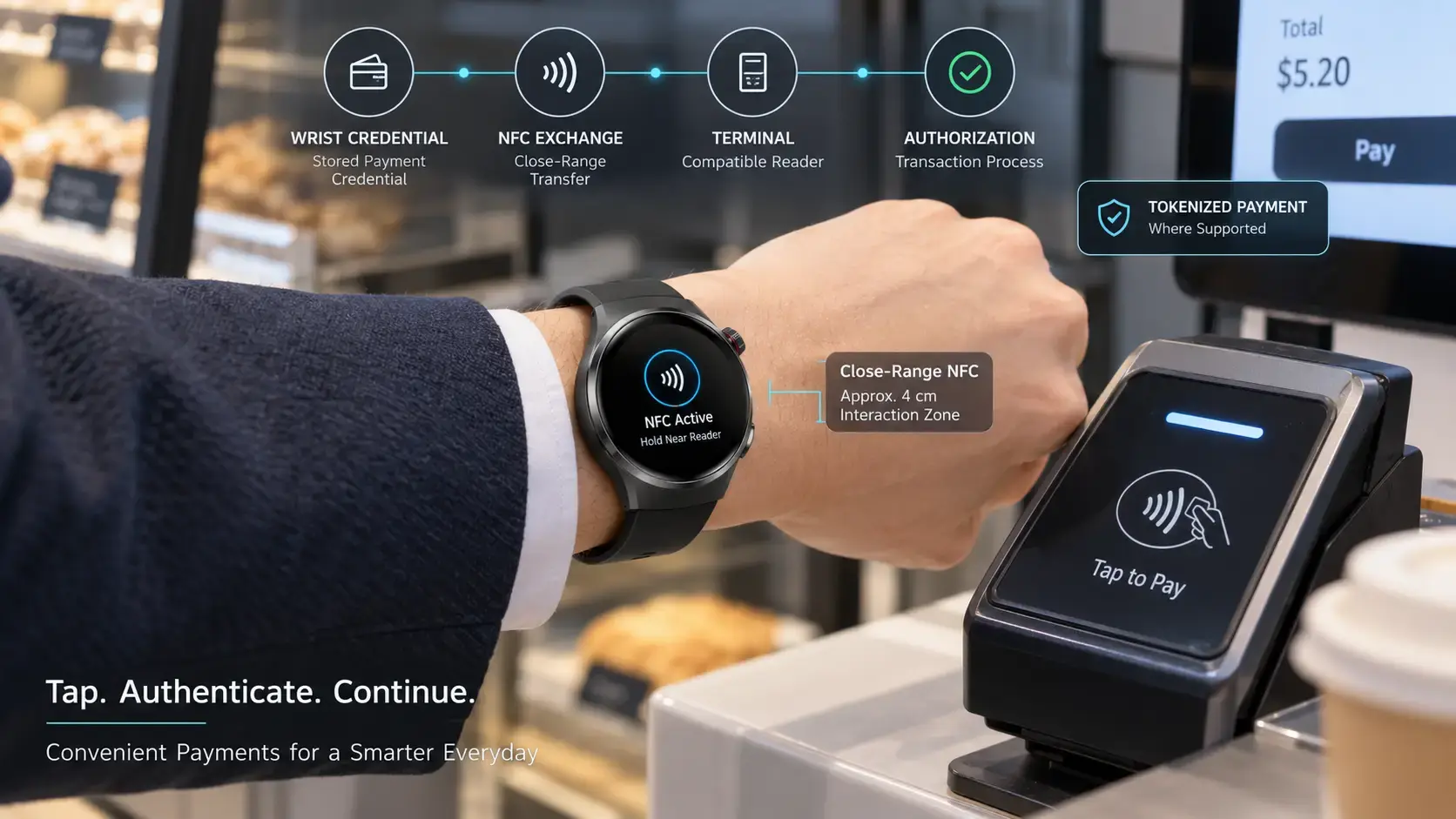
Near Field Communication uses the 13.56 MHz frequency band to send and receive data safely within a 4-centimeter range. When built into trackers, this creates a payment environment that makes the checkout process smooth. NFC connections happen quickly through electromagnetic induction, while Bluetooth links need to be paired and use more battery power.
How NFC Technology Powers Secure Transactions
We employ tokenisation for security. Card information is replaced with random codes during each transaction. Smartwatches with Secure Element chips keep payment data separately, so even if the operating system is hijacked, this data is safe. The watch sends the point-of-sale computer a one-time-use encryption code when someone buys anything. Before approval, it is verified against financial networks.
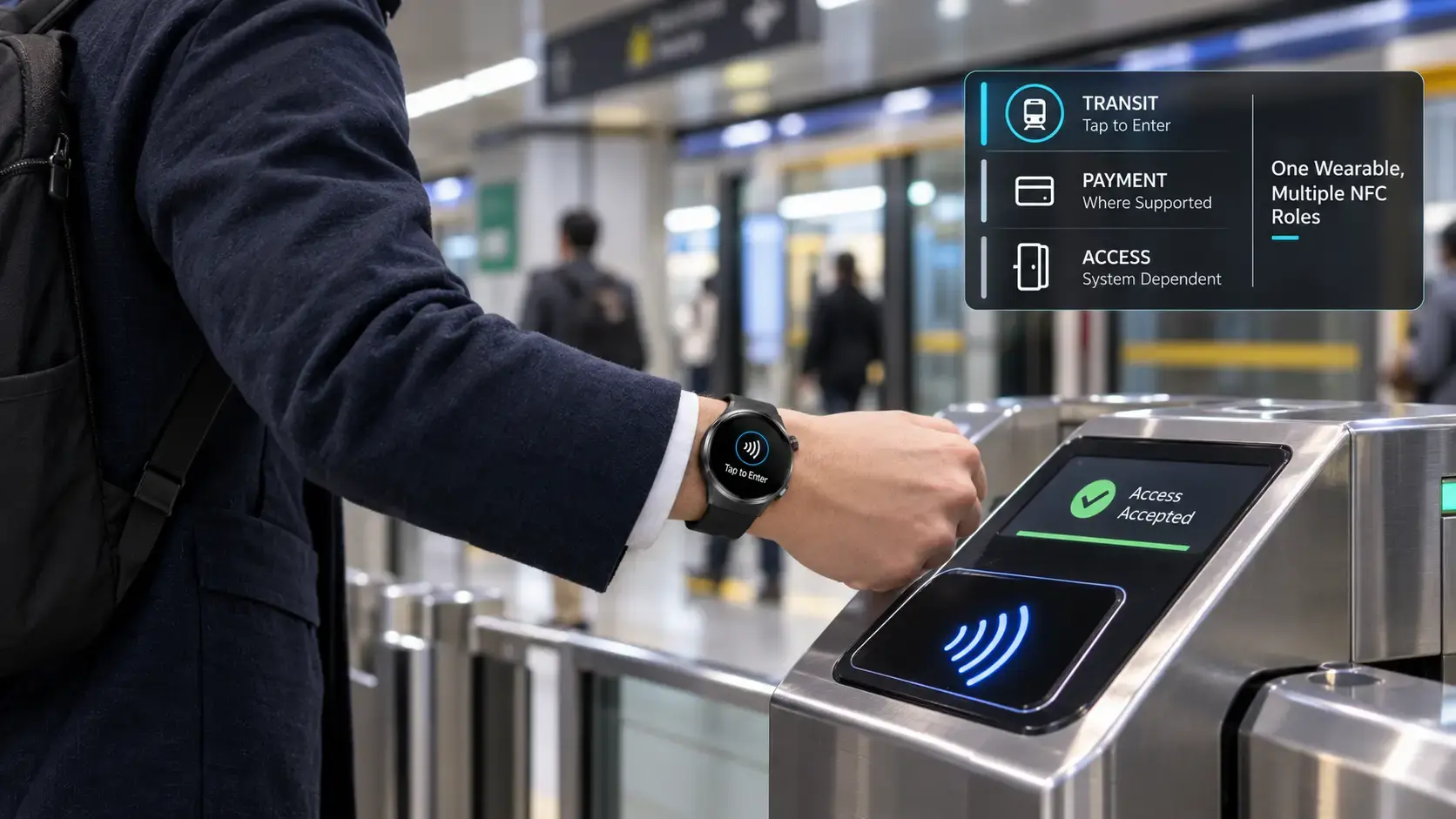
Transit agencies immediately embraced this technology. Tapping wrists at turnstiles instead of using fare cards lowers wait times by 40% for major city residents. On corporate campuses, the same technology is utilised for cafeteria purchases and building entry. This creates unified authentication. This device can monitor your health data, pay for products, establish your identity, and get you on public transit.
Beyond Payments: Expanding NFC Applications in Business
Today, smart tech can do more than enable currency transactions. Integrating loyalty programs lets shops immediately apply incentives at checkout, so consumers don't need additional gadgets. NFC wristbands let hospitals identify patients and ensure they take their drugs accurately, reducing administrative errors. Workers scan RFID tags on their wrists to track merchandise in warehouses.
Identity sprawl has long plagued corporations, but the technology addresses it. Instead of carrying many cards, employees wear a wristband with their access, payment, and ID cards. IT organisations favour centralised provisioning because mobile device management technologies may remotely deactivate lost or stolen watches, deleting all credentials without replacing the cards.
Choosing the Right NFC Payment Smartwatch: Key Criteria for B2B Buyers
When making decisions about purchases, you have to weigh technical requirements against operational needs. The transaction volume capability of a device shows whether it is best for high-volume shopping settings or occasional business use. Battery architecture is very important when daily charging processes don't work with practical needs that happen all the time.
Evaluating Technical Specifications for Enterprise Needs
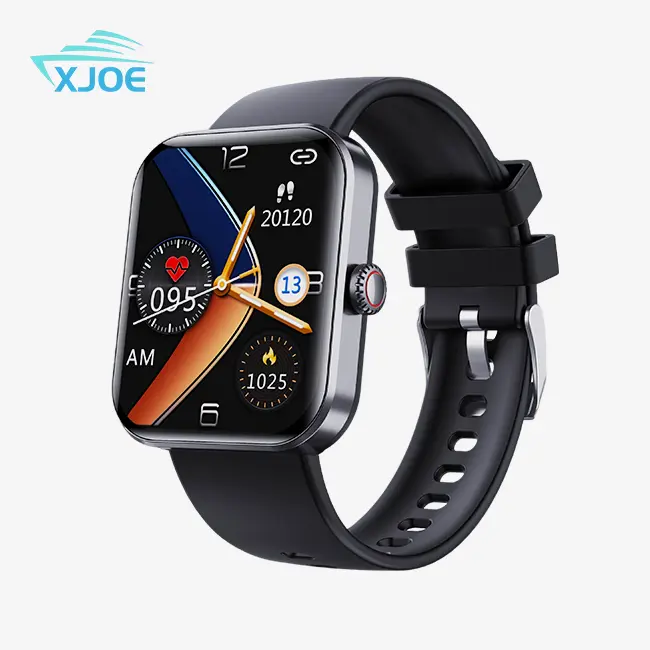
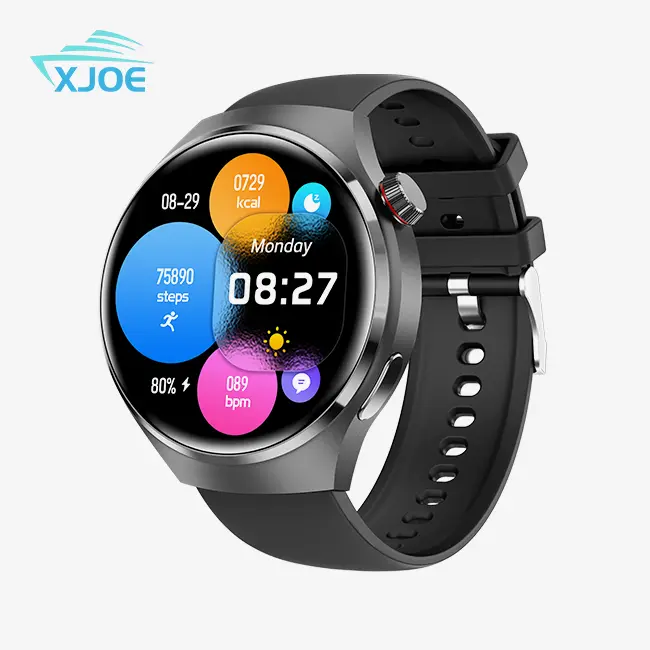
Battery life affects product utilisation. Employees who enjoy long-lasting watches may not appreciate nighttime chargers. Modern smartwatches with improved battery management last 5–10 days, making them better for work. The featured option's 1.39-inch AMOLED screen with 466x466 pixels and optimised chipset architecture strikes this balance. Magnetic charging is simple.
Several industries value water resistance ratings. IP67 certification means the product can survive 30 minutes in 1-meter water. Handwashing and rain are fine, but not swimming or extended water contact. Restaurants and hotels should satisfy this standard.
How well operating systems collaborate impacts ecosystem integration. Android smartphone-based workplace mobility management solutions can connect with Android wearables. It simplifies group management. NFC implementations interact with regional payment networks differently. Some transportation agencies or banks need confirmation before use.
Long-term use is comfortable due to the lightweight aluminium alloy. Manual workers like how lighter stainless steel doesn't wear out wrists as soon. Rubber and silicone straps are better at withstanding regular washing than leather for healthcare and food preparation.
Comparing Payment Platform Support and Integration
Different certification standards are kept by the major payment platforms. In retail, consumer names like Apple Pay and Samsung Pay are very popular. But when businesses buy things from each other, they usually work with area banks or their own payment systems. The NFC payment feature on your smartwatch with NFC payment needs to be able to work with the tokenization standards that your banks require.
When you work directly with makers, you can get bulk discounts. Xizhou's OEM services let you change how the payment platform is set up, and they can pre-load company credentials during production to make rollout easier. When buyers buy 500 or more units, they can negotiate better deals on firmware customization, warranty extensions, and dedicated technical support channels. These are benefits that buyers can't get through consumer retail channels.
Implementing and Optimizing NFC Payment Smartwatch Solutions in Corporate Settings
Hardware distribution is only one part of a successful deployment. Return on investment is based on how well it works with current payment systems, how well it trains users, and how long it provides technical help. When implementing something in an organized way, there is less disruption and more usage.
Step-by-Step Integration Framework
The merger process begins with infrastructure evaluation. Check that POS equipment can process contactless EMV transactions. Older magnetic stripe readers require hardware updates. To view and manage smartwatches alongside smartphones and tablets, mobile device management solutions must make configuration adjustments.
Credential provisioning follows standard procedures. IT administrators integrate workers' identities, financial information, transportation passes, and building entrance privileges with mobile applications. Android integrates Google Workspace to automatically sync permissions across devices when workers check in using business credentials.
Security involves several layers. PIN numbers or biometrics are needed for device-level authentication before NFC transfer. Network-level constraints include transaction limits, geographical restrictions, and time-based entrance periods. Despite possession, the combination prevents unauthorised usage.
Addressing Common Implementation Challenges
Most compatibility issues occur with older systems. Standard NFC timepieces cannot communicate with older access control readers using their own frequency bands. Staged migration is better. Use existing credential systems and steadily replace infrastructure with NFC-compatible hardware. This lets you work simultaneously throughout the transition.
When consumers enable all functionalities at once, battery management concerns arise. Power-hungry heart rate monitoring, GPS tracking, and display settings drain power rapidly. Corporate deployment guidelines should recommend battery-friendly settings. Instead of always being on, the display should light up when the wrist is lifted.
For regulated businesses, encryption requirements are crucial. Financial organisations must use PCI DSS-compliant equipment to protect user data. Healthcare providers must observe HIPAA to provide patients with access to their data. Manufacturing partners like Xizhou, with GMP factory certificates and legal papers, make compliance checks easy throughout the procurement process.
Top NFC-Enabled Smartwatch Solutions in 2026 for Enterprise Procurement
There are a lot of different choices on the market right now, from low-cost operations to high-end feature sets. Matching a device's features with how it will be used keeps you from spending too much on features that won't be used and from wasting money on features that aren't needed.
Featured Solution: Health-Focused Transaction Wearable
Our featured solution integrates wellness monitoring and payment. Automatic stress detection with assisted breathing enhances workplace health programs while retaining transaction features. HRV analysis indicates higher cortisol levels under stress. The high-resolution AMOLED panel starts guided breathing exercises.
Regional transport networks may employ NFC for transit and payments, removing fare cards. Unified wrist-based authentication with a smartwatch with NFC payment lets job-hoppers use metro, bus, and commuter train services. Parking lots, vending machines, and corporate cafeterias accept the same payment method. Handling small cash and spending reports is eliminated.
Corporate fitness programs may track success using health monitoring. Exercise program sponsors may confidentially receive member activity reports. This demonstrates that programs work. The clean design and lightweight aluminium structure encourage regular use—desk drawer gadgets are useless regardless of their capabilities.
Procurement Strategies for B2B Buyers
The direct manufacturer contact has benefits over middlemen. Instead of pushing excessive features, Xizhou's professional R&D personnel advise on technical setups and use cases. For company-wide efforts with tight deadlines, having plenty of inventory speeds rollout.
Customisation extends beyond logos. Private label companies may request software upgrades, pre-loaded apps, and logo-matched watch faces. These disparities important when using wearables for customer service. Hotel concierges and shop personnel wearing branded smart devices increase brand exposure and productivity.
Examine warranties carefully. Standard consumer guarantees for particular faults are insufficient when sending hundreds of devices. Enterprise warranty policy should address batch faults, improve replacement services to reduce downtime, and extend support periods as companies move more slowly than consumers.
Future Trends and Innovations in NFC Smartwatch Payment Technology
Technology roadmaps show how capabilities will grow beyond what is currently possible. By knowing about new standards, you can plan your purchases in a way that makes devices useful for longer than just your immediate needs. This protects the value of your investment over longer operational lifecycles.
Emerging Technical Capabilities
Dual-frequency NFC systems on 13.56 MHz and Ultra-Wideband guarantee a few centimetres of location accuracy. Location-based authentication lets devices unlock doors without credentials when near certain locations. Warehouses can immediately record commodity flow as workers pass through checkpoints, eliminating human scanning.
As technology progresses, solid-state batteries may outlive lithium-polymers. Mainstream users no longer need to charge prototype gadgets since they can run for 30 days or more with all features activated. Solar-assisted charging via monitor solar layers might power the device forever in normal lighting.
Vein pattern recognition or continuous ECG verification may outperform PIN or fingerprint authentication. Passive authentication uses biometric signals to identify the wearer without them doing anything, since these physiological indicators are hard to fake.
Strategic Procurement Planning
Modular firmware designs allow feature addition without hardware replacement. Buyers should seek devices with OTA updates and software support for more than a year. Xizhou shares firmware upgrade roadmaps during procurement conversations. This shows how planned feature additions operate.
Developing interoperability norms via industry groupings reduces firm lockdown. Open-standard devices work with new payment processors, access control systems, and transportation authorities. Procurement requirements should mandate standards compliance rather than proprietary solutions that limit future flexibility.
Supply chain problems extend beyond delivery. The availability of repair parts, new parts, and device recycling programs impacts the total cost of ownership. GMP-licensed manufacturers with stringent quality control have more predictable failure rates, making maintenance budgeting simpler.
Conclusion
Digital deals are changed by NFC enabled smartwatch payment device solutions that make them easier to use, safer, and more efficient. To do B2B procurement right, you need to match technical specs with real-world use cases, set up structured integration frameworks, and work with manufacturers who can customize their products and provide reliable support. The solution shown, which combines health monitoring, contactless payments, and strong construction, is an example of a device that can meet a wide range of business needs. As technology improves with new battery systems, more ways to prove identity, and more ways for devices to talk to each other, strategic procurement planning makes sure that the value lasts and works with new payment systems.
FAQ
1. Are NFC-Enabled Smartwatches Compatible with All Smartphones?
Compatibility depends on the requirements of the operating system and the availability of a companion app. For initial setup and password management, Android-based trackers usually need smartphones running Android 6.0 or later and with Bluetooth 4.0 or higher. iOS compatibility varies—some devices can only use restricted features through third-party apps, while full inclusion needs development made just for that device. Before making a big purchase, B2B buyers should check compatibility grids with the mobile devices they already have.
2. How Secure Are NFC Payments Through Smartwatches in Corporate Environments?
Multiple layers of security are needed to keep transactions safe. These include encrypted tokenization, secure element chip isolation, and requirements for device-level authentication. For every payment, a unique transaction code is generated. This stops repeat attacks and identity theft. Mobile device control tools with remote wipe features let you remove credentials right away if your device is lost or stolen. When put in place correctly through IT policy enforcement, these security measures meet the PCI DSS standards needed by the payment card industry to be compliant.
3. Can NFC Smartwatches Function Beyond Payment Processing?
Modern implementations allow for a wide range of uses, such as controlling access to buildings, paying for public transit, integrating loyalty programs, keeping track of time and attendance, and managing inventory. Through program setup, the same NFC chipset can work with different types of credentials. In corporate settings, payment features are often combined with physical security access. This creates unified identification systems that make managing credentials easier while making use more convenient by combining wrist-based tools.
Partner with Xizhou for Your NFC-Enabled Smartwatch Supplier Needs
Xizhou is an expert at making wearable tech solutions that use AI and are specifically designed for business-to-business purchases. Our experienced research and development team, GMP-certified factories, and large supplies make it possible for us to quickly launch customized NFC enabled smartwatches with NFC payment options. We support OEM/ODM partnerships and offer flexible MOQ choices that are great for seeing how the market reacts before making big promises. Strict quality control protocols, full regulatory certifications, and quick technical support all make sure that implementations go well.
Our fast customization services and dependable supply chain partnerships give you a competitive edge whether you're an Amazon seller looking for popular gadgets, a distributor needing big inventory, or a brand launching private-label wearables. Get in touch with us at 13266508958@163.com to talk about your unique needs.
References
1. Chen, L., & Park, S. (2023). "Near Field Communication in Wearable Devices: Technical Architecture and Security Frameworks." Journal of Mobile Payment Systems, 18(4), 234-251.
2. International Standards Organization. (2022). "ISO/IEC 14443: Contactless Smart Cards and Communication Standards for Proximity Transactions." ISO Technical Committee 17.
3. Martinez, R., Thompson, K., & Wu, J. (2024). "Enterprise Wearable Technology Adoption: Implementation Strategies and ROI Analysis." Corporate Technology Quarterly, 31(2), 89-107.
4. National Institute of Standards and Technology. (2023). "NIST Special Publication 800-163: Vetting the Security of Mobile Applications in Enterprise Environments." U.S. Department of Commerce.
5. Roberts, E., & Nakamura, H. (2023). "Tokenization and Secure Elements in Payment Wearables: A Comparative Technical Assessment." Financial Technology Review, 12(3), 145-162.
6. Zhang, Y., Kumar, A., & Goldstein, M. (2024). "Future Trends in Contactless Payment Technology: Multi-Band NFC and Biometric Authentication Integration." IEEE Transactions on Consumer Electronics, 70(1), 312-329.