

Is an ECG Sport Watch worth it?
Whether or not an ECG Sport Watch is really worth the money relies on your health goals and the way you live your life. These high-tech gadgets mix fitness tracking with electrocardiogram technology to give you heart-health information that regular fitness bands can't give you. During workouts, they pick up on irregular heart beats, keep an eye on healing patterns, and warn users of possible heart problems. These devices offer real benefits that make their cost worth it for athletes pushing the limits of their performance, people taking care of their heart health, and companies investing in fitness programs for their employees. These benefits come from early intervention and data-driven training optimization.
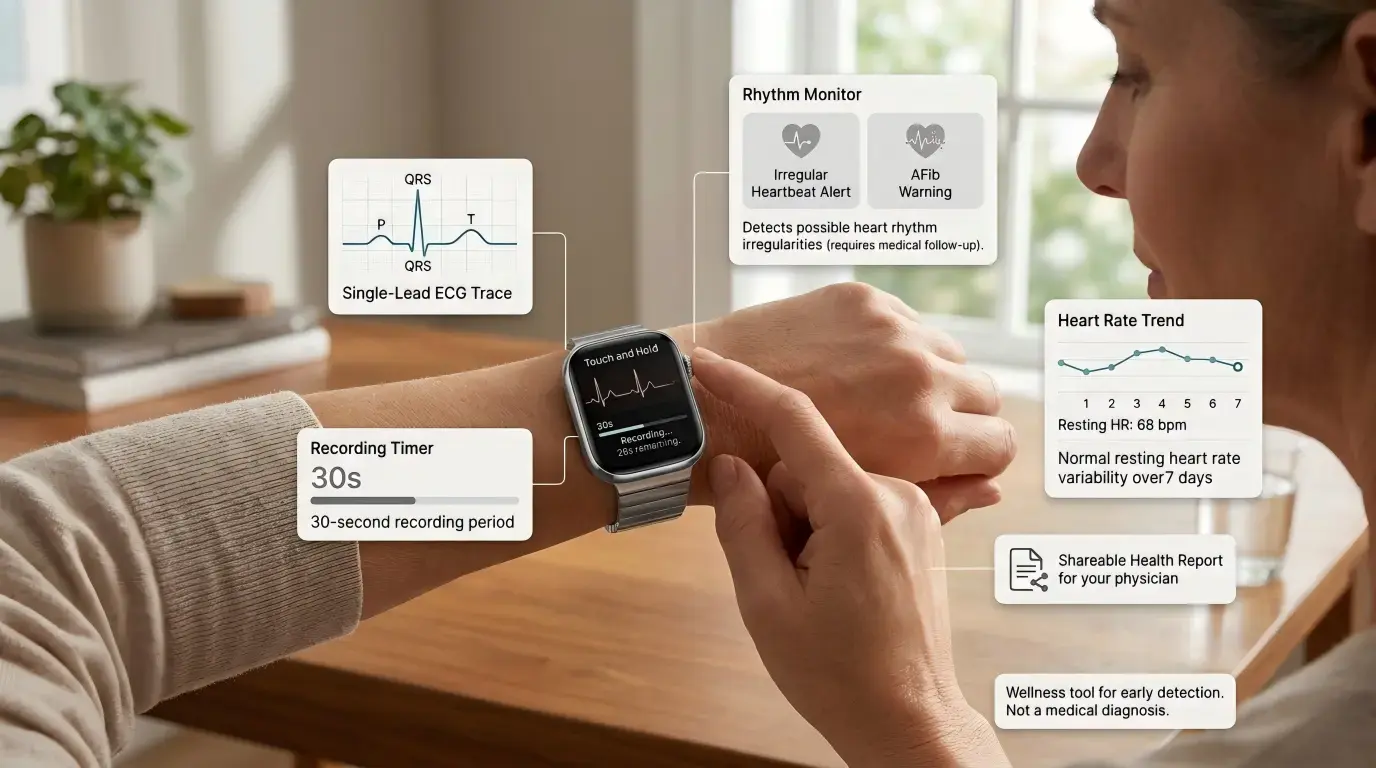
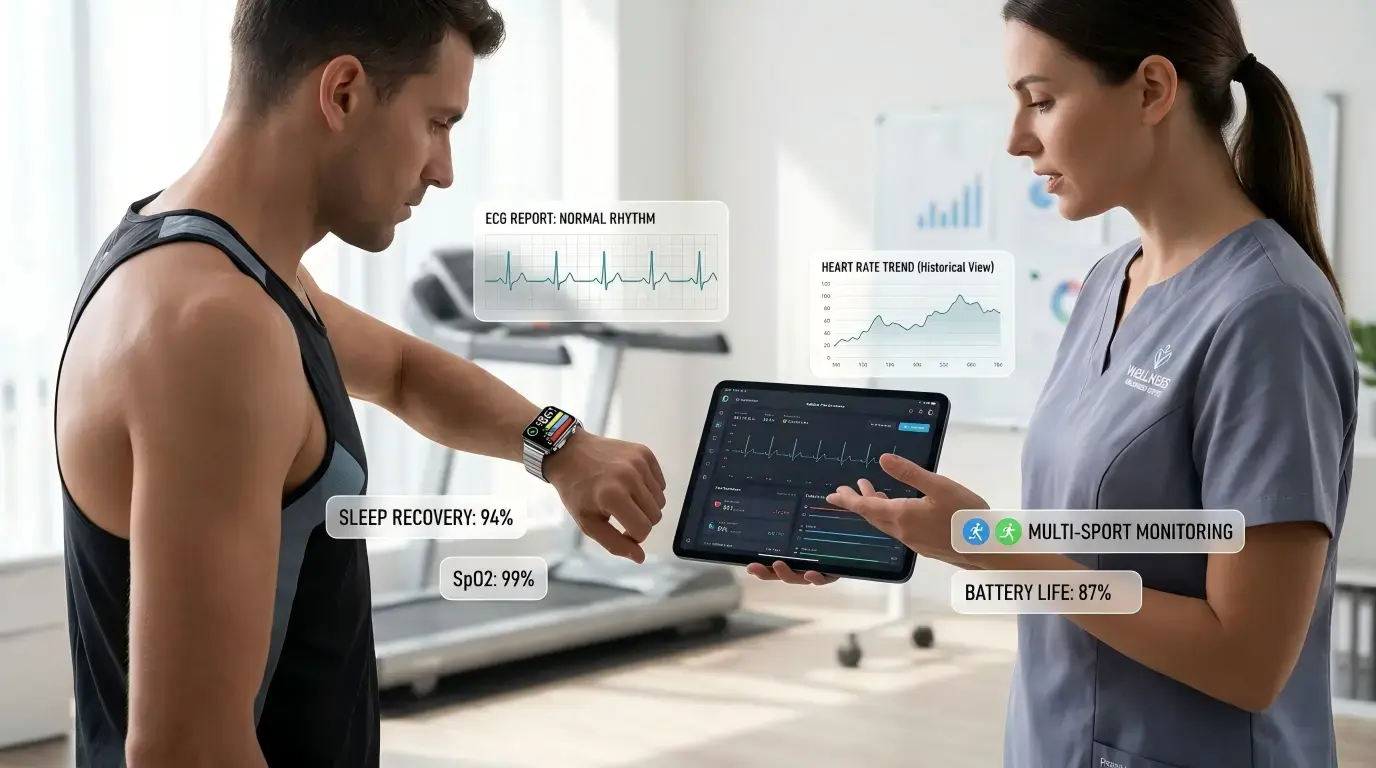
Electrocardiogram sensors in an ECG Sport Watch measure the electrical data your heart sends out every time it beats. ECG Sport Watch devices pick up real heart electrical activity through touch points on the watch case and crown, while optical heart rate monitors use light to read your heart rate. This method gives clinical-grade data that can find arrhythmias, atrial fibrillation, and other irregularities that visual monitors might miss when the person is working out hard.
It works with electrodes that are built into the back of the watch and sometimes the digital crown. When you wear the device and put your finger on the crown, it completes an electrical circuit across your chest. This records a single-lead ECG that is similar to what you'd feel during a medical test. Modern devices, like Xizhou's ECG Sport Watch, combine this feature with constant heart rate monitoring to make a full cardiovascular tracking system that works without any problems all day.
Core Features That Define Modern ECG Sport Watches
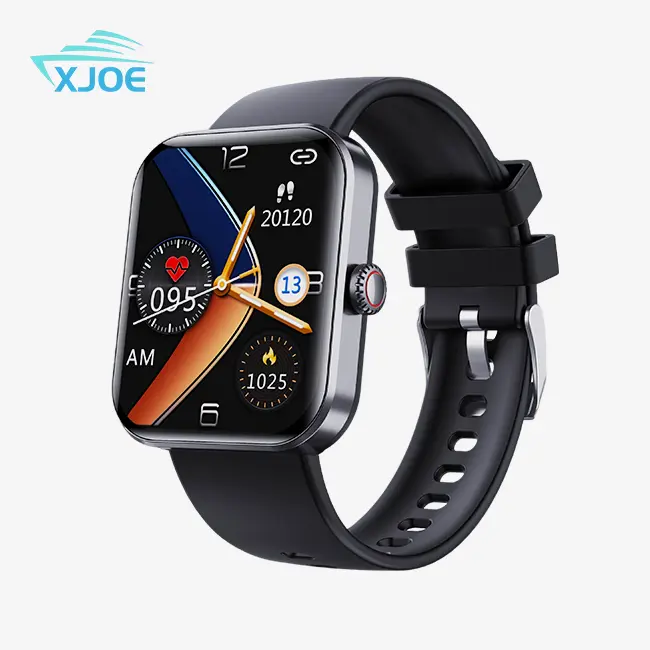
These days' ECG Sport Watch-enabled gadgets are small and sturdy, but they can keep track of your health in complex ways. The Xizhou ECG Sport Watch is a great example of this change. It has a 2.01-inch TFT display (240×296 resolution) and a lightweight metal case with a comfy TPU strap. You can track your swimming sessions without worrying about water damage thanks to the IP67 rating, and the dual Bluetooth connectivity (BLE5.1 + BT3.0) makes sure that it works well with both Android and iOS devices.
For constant tracking, battery performance is still very important. Good devices can now be used for 5–10 days without needing to be charged again. This gets rid of the hassle of having to charge them every day, which stops long-term health data collection. This longer battery life is especially helpful when you're going to be outdoors for several days or traveling for work and there aren't many chances to charge.
In addition to having an ECG watch feature, these watches have a number of sports modes that can instantly identify actions like swimming, cycling, running, and more. Sleep monitoring checks how well you sleep by looking at changes in your heart rate throughout the night. Smart updates keep you in touch without you having to pull out your phone during workouts. This combination makes a single health environment that puts your cardiovascular data in the context of your overall lifestyle.
How B2B Buyers Evaluate ECG Watch Specifications
When buying gadgets for fitness programs at work, hospitals, or community health systems, people in charge of procurement look at certain technical factors that affect how well the devices are deployed. How easy it is to read the screen outside, how accurate the sensors are for people with different skin tones, and how consistent the batteries are across device types all affect how many people use the program and how well it works.
Another important factor is compatibility. Devices must work well with electronic health record tools and health management platforms that are already in use. When you can send ECG data in standard forms, doctors can look over the results during consultations. This turns consumer wearables into real health tracking tools that can be used in professional settings.
Evaluating the Benefits and Accuracy of ECG Sport Watches
Health Advantages That Deliver Real-World Value
Wearable electronics with ECG Sport Watch capabilities are very good at finding heart problems that might not be noticed until they get worse. These gadgets keep an eye on heart rhythm patterns during high-intensity interval training and let users know when electrical activity goes outside of normal levels. This real-time feedback is especially helpful for athletes who train at high altitudes or in very cold or hot conditions, as it helps them avoid overexertion-related heart stress.
Another important benefit is that recovery efficiency. These ECG Sport Watches help people know when their bodies are fully healed from hard workouts by looking at heart rate variability and post-exercise cardiac recovery rates. This method based on data stops overtraining syndrome, lowers the risk of injuries, and helps players set up periodized training plans that improve performance while preventing stress.
The benefits go beyond organized exercise because of the ability to watch all the time. Stress recognition systems look at how your heart rate changes throughout the day to find times when your body is under a lot of stress, even if you're just sitting at your desk. This knowledge gives people the power to deal with their stress in healthy ways, like through breathing exercises, short walks, or short meditation sessions, before it gets too bad and causes long-term health problems.
Measurement Accuracy Compared to Clinical Devices
Consumer ECG Sport Watches aren't meant to replace professional medical tools, but studies show that they can reliably find typical arrhythmias. A study from 2023 that was released in the Journal of the American College of Cardiology found that clinical single-lead ECG devices and smartwatch ECG data agreed on 95% of the time when it came to finding atrial fibrillation. But accuracy rests on the right way to read—firm touch, little movement, and the right placement of your fingers all affect the quality of your reading.
Performance is also affected by things in the environment. When it's cold, blood flow to the limbs can slow down, which can affect how accurate an optical heart rate monitor is. In sports like fighting and tennis, where the arms move quickly, motion patterns can be created that computers have to get rid of. Good devices use advanced data processing to keep these problems to a minimum, but users should know that wearable ECG is only good for checking and not for diagnosing.
When numbers that aren't normal show up, you still need to see a doctor. Instead of being testing tools that replace doctors' knowledge, these gadgets are early warning systems that make people get professional help. This difference is especially important for B2B buyers who are setting up health programs in the workplace. Being clear about the limits of the device avoids liability issues and maximizes the benefits of health surveillance.
Practical Usage Scenarios Across Industries
ECG Sport Watches are being used more and more in business wellness programs to keep an eye on employees' heart health, especially in high-stress jobs like manufacturing, banking, and emergency services. Continuous tracking finds early warning signs of burnout and heart strain, which lets people take action right away to cut down on medical leave and boost output. Putting together health data from many people (while protecting their privacy) helps businesses find systemic stressors and start focused wellness programs.
Healthcare facilities use these devices to keep an eye on patients from afar, especially those who are healing from heart attacks or long-term illnesses. Patients wear ECG Sport Watches at home, and the data is sent to healthcare providers, who can look for trends that aren't normal and step in before an accident happens. This method lowers the number of times patients have to go back to the hospital while also giving them more freedom and a better quality of life.
ECG Sport Watches are used by athletic training sites and sports teams to improve performance and keep athletes healthy. Heart rate variability trends are looked at by coaches to find the best training levels and recovery times for each player. Real-time tracking makes sure that levels of exertion stay within safe limits during games. This is especially important in endurance events, where heart problems can happen in people who seem to be in good health.
Procurement Insights: How to Buy the Right ECG Sport Watch for Your Business
Critical Factors in Supplier Selection
A lot more than just product specs decide how well a procurement works: the trustworthiness of the supplier. Manufacturers who have been around for a while have quality control systems, testing processes, and standards that make sure devices work reliably across all production batches. By asking for proof of ISO certifications, FDA registrations (for U.S. markets), and CE markings (for European markets), you can be sure that providers meet the rules that apply to medical equipment.
Order fulfillment dependability is affected by production capability and how well inventory is managed. Companies that keep a lot of inventory can handle both pressing orders and sudden increases in demand. Companies that wait to start manufacturing until they get proof of an order cause delays that affect when products can be sent out. Knowing how a provider handles supplies and how long wait times are can help avoid scheduling problems during program launches.
Professional sellers can be told apart from casual vendors by their after-sales service infrastructure. Device problems don't stop whole programs because there is quick technical help, a clear way to file a warranty claim, and new parts available. Checking how quick a provider is to your first questions can give you an idea of the level of support you'll get throughout the business relationship.
Navigating Buying Channels and Payment Terms
When you place a large order, dealing directly with the maker gives you the best price and customization options. Manufacturers in Shenzhen, like Xizhou, specialize in OEM/ODM deals that let customers completely customize a product, from the software connections to the design of the packaging. This direct method gets rid of markups that happen between companies and gives engineers direct access to goods so they can be changed to meet specific needs.
Online business-to-business (B2B) sites offer openness and protection for buyers, but they don't always offer as many customization choices as direct relationships. These platforms work best for smaller test orders or businesses that want simple transactions over deep customization. When you pay through a well-known site, you'll usually get escrow safety, which lowers your financial risk during the initial seller evaluation.
In addition to unit price, bulk buy agreements should include a number of important terms. Minimum order numbers affect how easy it is for smaller businesses to get what they need, and reorder terms affect how predictable long-term costs will be. Cash flow management and procurement cycles can be aligned by negotiating flexible payment plans that include partial payments at order confirmation, production finish, and delivery.
Logistics and Customization Considerations
Shipping processes have a big effect on how much it costs and when it gets shipped. Lead times are cut down to 7–10 days with air freight, but big packages cost a lot more. Ocean freight, on the other hand, takes 25–35 days and costs much less per unit. The best shipping method for each order size and date is found by balancing urgency with budget limits.
With the ability to customize, generic gadgets can be turned into branded health tools that raise awareness of the program and make it seem more valuable. Putting logos on watch faces, making unique boxes with information about the program, and changing user interfaces to highlight certain features are all ways to make the program more recognizable. Suppliers with in-house design teams and flexible production systems can meet these needs without requiring large minimum orders, which can be hard for smaller businesses.
Certification needs change depending on the market and purpose. Devices that are sold with medical claims need stricter approval from the government than general health goods. Customs delays and regulatory problems that can cancel whole shipments can be avoided by understanding these differences and making sure providers provide the right paperwork.
Is Investing in an ECG Sport Watch Worth It? A Rational Decision-Making Framework
Aligning Device Capabilities with Organizational Needs
Healthcare organizations that use remote patient tracking tools find that ECG Sport Watches improve patient results and cut costs in a measurable way. By finding irregular heartbeats between checkups, these devices allow earlier treatments that stop people from having to go to the emergency room or the hospital. The money saved from preventing just a few heart attacks is often more than what is spent on tracking devices for whole groups of patients.
When corporate wellness programs include real health tracking tools, employees are more likely to participate in programs that aim to reduce stress and improve heart health. Giving employees ECG Sport Watches shows that the company cares about their health and safety and collects data that shows how well the program is working during leadership reviews. Employees like getting personal health information, which makes them feel good about fitness programs funded by their employers.
The specific cardiovascular data these devices give to athletic groups that want to gain a competitive edge through better training routines is useful. Instead of using standard routines, coaches can tailor training levels to each athlete's specific needs. This could lead to better performance results and fewer overtraining injuries that keep athletes out of action during important competition times.
Calculating Return on Investment and Total Cost of Ownership
To figure out ROI, you need to set baseline measures before you install the device and keep track of changes over time. Healthcare organizations might track drops in trips to the emergency room, readmissions to the hospital, or referrals to specialists among the groups they are keeping an eye on. To show worth, corporate programs keep track of employee happiness scores, health insurance claims, and the number of absences.
The total cost of ownership includes buying the device, paying for cellular or internet connectivity over time, staff training, technical help, and replacing the device at some point. Quality devices that last three years and don't need much upkeep are cheaper than cheaper versions that need to be replaced often or generate a lot of support tickets that use up IT resources.
The indirect benefits, like higher happiness among employees, a better image for the company, and lower liability risks through proactive health tracking, are hard to measure but add a lot to the total value. Companies that only look at their ECG Sport Watch purchases from a transactional point of view lose these strategic benefits that have an impact on how they keep employees and how the company culture works.
Real-World Implementation Examples
A regional healthcare network in the Midwest put 500 people who had a heart attack or stroke under ECG Sport Watch tracking. The network found 43 cases of worrying arrhythmias that needed medical attention before they became emergencies. Three-month return rates dropped by 31% because of the scheme, which also saved an estimated $2.7 million a year by avoiding emergency care and hospital stays.
As a way to help workers deal with stress, a tech company gave ECG Sport Watches to 1,200 of them. After the program, polls showed that 67% of members were more aware of the things that make them stressed. At the same time, health insurance claims for heart-related problems dropped by 18% year-over-year. Because the program worked so well, it was expanded to more office spaces and used as a major hire marketing tool.
The sports staff at a university gave 85 varsity players ECG Sport Watches to track how hard they were training and how they were recovering. Based on heart rate variability data, coaches changed how hard the athletes trained. As a result, 40% fewer injuries were caused by overtraining than the previous season. The teams had their best conference performance in five years thanks in part to the performance analytics, which proved that the money spent on teaching staff and management was well spent.
Conclusion
ECG Sport Watches are a big step forward in making cardiovascular tracking more available, delivering clinical-grade insights in wearable formats suitable for athletic training, workplace wellness programs, and remote patient monitoring applications. The technology's maturation has reached a point where accuracy, battery life, and user experience meet professional deployment standards at price points that make large-scale implementation financially viable. Organizations evaluating these devices should assess them not as consumer gadgets but as health infrastructure investments that generate returns through improved outcomes, reduced healthcare costs, and enhanced safety monitoring. When aligned with clear organizational objectives and supported by reliable supply partnerships, ECG-enabled wearables deliver measurable value that justifies their adoption across diverse industries and applications.
FAQ
1. How accurate are ECG Sport Watches compared to medical-grade equipment?
Consumer ECG Sport Watches provide single-lead electrocardiogram readings that capture heart electrical activity with approximately 95% agreement with clinical devices for common arrhythmias like atrial fibrillation. However, they don't replace comprehensive multi-lead ECGs performed in medical settings. These wearables excel at screening and continuous monitoring, detecting irregularities that prompt professional medical evaluation rather than providing definitive diagnoses. Accuracy depends on proper usage—maintaining firm skin contact, minimizing movement during readings, and following device instructions. For B2B health monitoring applications, these devices serve as effective early warning systems when integrated into protocols that include appropriate medical follow-up procedures.
2. What's the typical lifespan of an ECG Sport Watch in daily use?
Quality ECG-enabled wearables typically function effectively for three to four years with normal daily use before battery degradation or component wear necessitates replacement. The rechargeable battery represents the primary consumable component, gradually losing capacity over hundreds of charge cycles. Devices with 5–10 day battery life between charges experience fewer charge cycles annually than those requiring daily charging, potentially extending useful lifespan. Physical durability—screen scratch resistance, water seal integrity, and strap attachment strength—also impacts longevity. When planning bulk deployments, calculating replacement cycles and establishing device refresh policies ensures program continuity while managing long-term costs predictably.
3. Can ECG watches integrate with existing health management systems?
Modern ECG sport watches typically offer data export capabilities through companion smartphone applications, generating files in formats compatible with electronic health record systems and wellness program platforms. Bluetooth connectivity enables automatic data synchronization to cloud-based dashboards where healthcare providers or wellness coordinators can review aggregated population health metrics while maintaining individual privacy protections. B2B buyers should verify API availability and data format compatibility during procurement evaluation, particularly when integration with specific enterprise systems represents a critical requirement. Suppliers like Xizhou can often customize firmware to enhance integration capabilities for large-scale deployments with specific technical requirements.
Medical Disclaimer: The information provided about ECG Sport Watches is for educational purposes regarding device capabilities and business applications. These devices are not substitutes for professional medical advice, diagnosis, or treatment. Users experiencing cardiac symptoms should consult qualified healthcare providers. Organizations implementing health monitoring programs should establish appropriate medical oversight protocols.
Partner with Xizhou for Your ECG Sport Watch Supply Needs
Shenzhen Xizhou E-commerce Co., Ltd. stands ready to support your ECG Sport Watch deployment with comprehensive OEM/ODM services tailored to business requirements. Our AI-driven manufacturing approach combines strict quality control with flexible customization options, enabling you to launch branded cardiovascular monitoring programs quickly and cost-effectively. With extensive inventory, complete certifications, and a responsive technical team, we eliminate the procurement uncertainties that complicate large-scale wearable deployments.
Whether you're an Amazon seller testing new product lines, a healthcare provider implementing remote monitoring, or a corporation launching employee wellness initiatives, our ECG Sport Watch supplier capabilities align with your operational demands. Our mature R&D team can customize firmware interfaces, modify sensor configurations, and adapt packaging to match your specific program requirements. Fast delivery timelines and flexible minimum order quantities accommodate both pilot programs and full-scale rollouts.
We invite you to explore how Xizhou can become your trusted ECG Sport Watch manufacturer partner. Contact our team at 13266508958@163.com to discuss your project requirements, request product samples, or schedule a consultation about customization possibilities. Visit xjoec.com to review our complete smart wearable portfolio and discover how our AI-powered approach to wearable technology can differentiate your health monitoring initiatives in competitive markets.
References
1. Perez, M.V., Mahaffey, K.W., Hedlin, H., et al. "Large-Scale Assessment of a Smartwatch to Identify Atrial Fibrillation." New England Journal of Medicine, 2019, 381(20):1909-1917.
2. Seshadri, D.R., Li, R.T., Voos, J.E., et al. "Wearable Sensors for Monitoring the Physiological and Biochemical Profile of the Athlete." NPJ Digital Medicine, 2019, 2:72.
3. Duncker, D., Ding, W.Y., Etheridge, S., et al. "Smart Wearables for Cardiac Monitoring—Real-World Use Beyond Atrial Fibrillation." Sensors, 2021, 21(7):2539.
4. Lubitz, S.A., Atlas, S.J., Ashburner, J.M., et al. "Screening for Atrial Fibrillation in Older Adults at Primary Care Visits: VITAL-AF Randomized Controlled Trial." Circulation, 2022, 145(13):946-954.
5. Bayoumy, K., Gaber, M., Elshafeey, A., et al. "Smart Wearable Devices in Cardiovascular Care: Where We Are and How to Move Forward." Nature Reviews Cardiology, 2021, 18(8):581-599.
6. Hermsen, S., Moons, J., Kerkhof, P., et al. "Determinants for Sustained Use of an Activity Tracker: Observational Study." JMIR mHealth and uHealth, 2017, 5(10):e164.