

How to use a watch as a compass
Using a modern rugged GPS compass smartwatch as a compass combines old-fashioned ways of finding your way with cutting-edge satellite positioning technology. These specialized gadgets have many sensors built into them, like magnetometers, GPS units, barometers, and accelerometers, so they can give you exact directions without just using magnetic north. When you know how to use your watch's compass, it goes from being a simple timepiece to a mission-critical navigation tool that improves operational efficiency and worker safety. This is true whether you're managing outdoor logistics operations, coordinating field teams across large industrial sites, or inspecting infrastructure from afar.
Understanding How a Watch Works as a Compass?
Modern smartwatches that can be used for navigation are a big step up from analog compasses. They use advanced sensor fusion technology to give accurate direction information in a wide range of conditions.
The Technology Behind Digital Compass Functionality
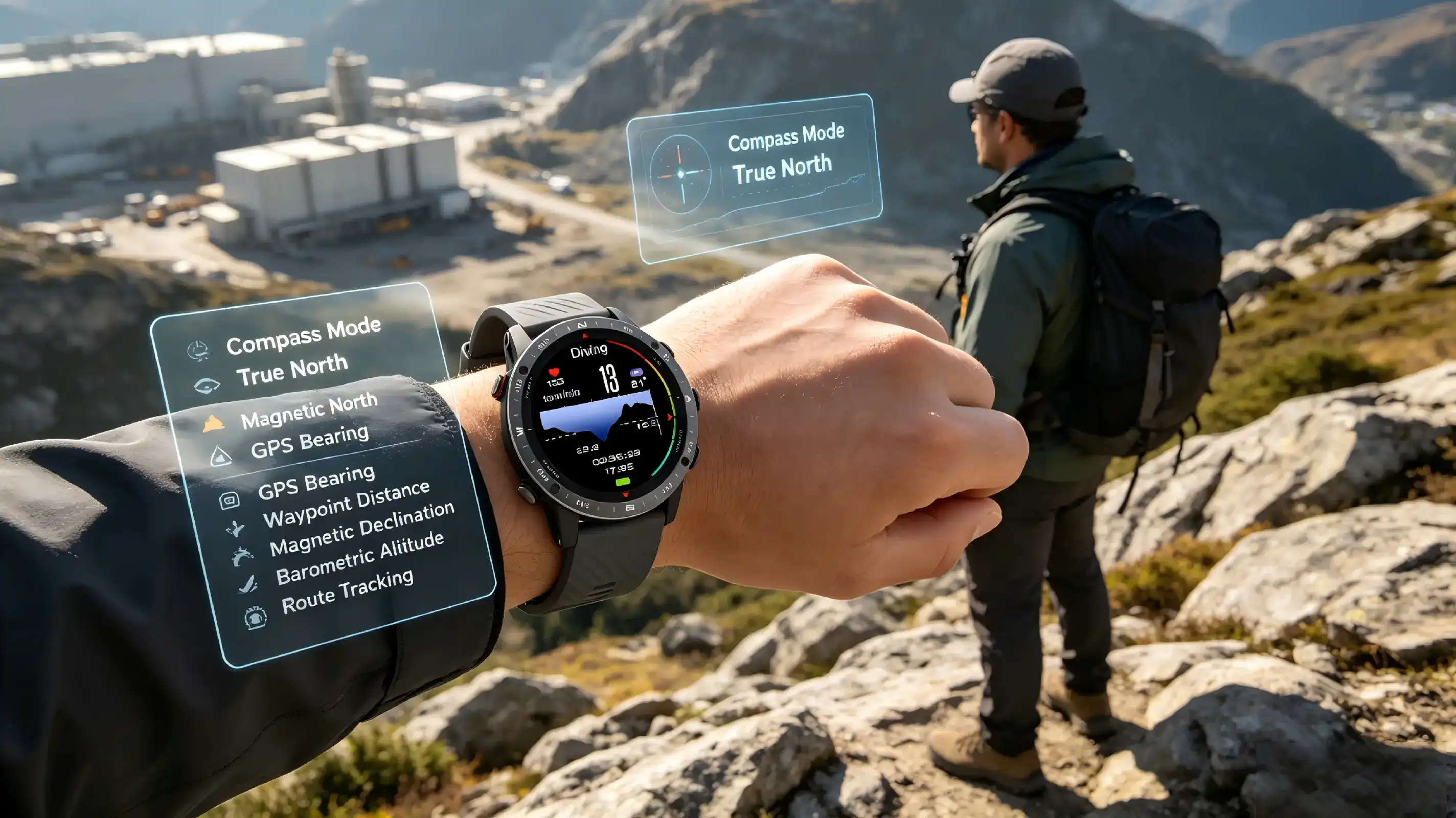
Like regular compasses, a Rugged GPS Compass Smartwatch uses a three-axis magnetometer to find Earth's magnetic field. That being said, these devices are not like standalone compasses because they mix magnetic readings with GPS position data, gyroscope orientation tracking, and accelerometer motion recognition. This method of combining sensors automatically fixes magnetic declination, which is the angle difference between magnetic north and true north. This makes sure that navigation planning uses accurate bearings. Using GPS satellites from different systems (GPS, GLONASS, Galileo, and BeiDou) together improves positional accuracy to within 2–5 meters in open areas. The barometric altimeter gives important vertical positioning for terrain analysis.
A good device's magnetometer measures the strength of the magnetic field along three straight lines when the compass mode is turned on. The internal processor figures out what these numbers mean by using accelerometer data to account for device tilt and GPS data to make real-time adjustments. This process never stops, updating information about directions several times a second to keep things accurate as the person moves.
Key Hardware Specifications That Enable Reliable Navigation
The devices we're talking about have MIL-STD-810H approval, which means they've been through strict tests to make sure they can handle shocks, extreme temperatures (-20°C to +60°C), and high altitudes. The 1.52-inch IPS screen with a resolution of 280x320 can still be read in direct sunlight, and the IP67 grade for water protection keeps dust out and allows short-term immersion in water. Even though many of them are marked IP67, they can also withstand water up to 100 meters deep, which means they can be used for marine logistics, tracking coastal building projects, and managing water utilities.
The performance of the batteries stands out as being especially important for long-term operations in the field. With normal use lasting 5–10 days and extreme battery-saver mode lasting weeks, these watches don't need to be charged all the time, as most consumer-grade wearables do. The fabric strap and strong plastic case design strike a balance between weight and impact resistance, making the device comfy enough to wear all day and strong enough for harsh industrial settings.
Comparing Digital Watches to Traditional Compass Tools
Traditional magnetic compasses are still good backup tools, but they don't have the contextual intelligence that modern tasks need. A compass that works on its own can tell you the direction of travel, but it can't record waypoints, figure out how far you need to go, or connect to digital mapping systems. Navigation smartwatches fill in this gap by saving route information, showing you the way step-by-step, and keeping track of your location history for legal reasons or operational analysis.
The barometer function of the Rugged GPS Compass Smartwatch adds a way to check the weather that isn't available on regular compasses. Rapid drops in pressure set off storm alerts, which gave people in the field time to find shelter. This feature was especially useful in open-pit mining, farm management, and utility line maintenance, where people are working in open spaces. When paired with the compass bearing, barometric data helps guess localized weather trends that could affect the safety of travel or the time it takes to finish a job.
Step-by-Step Guide to Using Your Rugged GPS Compass Smartwatch as a Compass
The difference between accurate navigation and frustrating errors is the right calibration and operation technique. If you follow these rules, your device will always give you accurate directions when operational decisions depend on them.
Initial Device Calibration for Maximum Accuracy
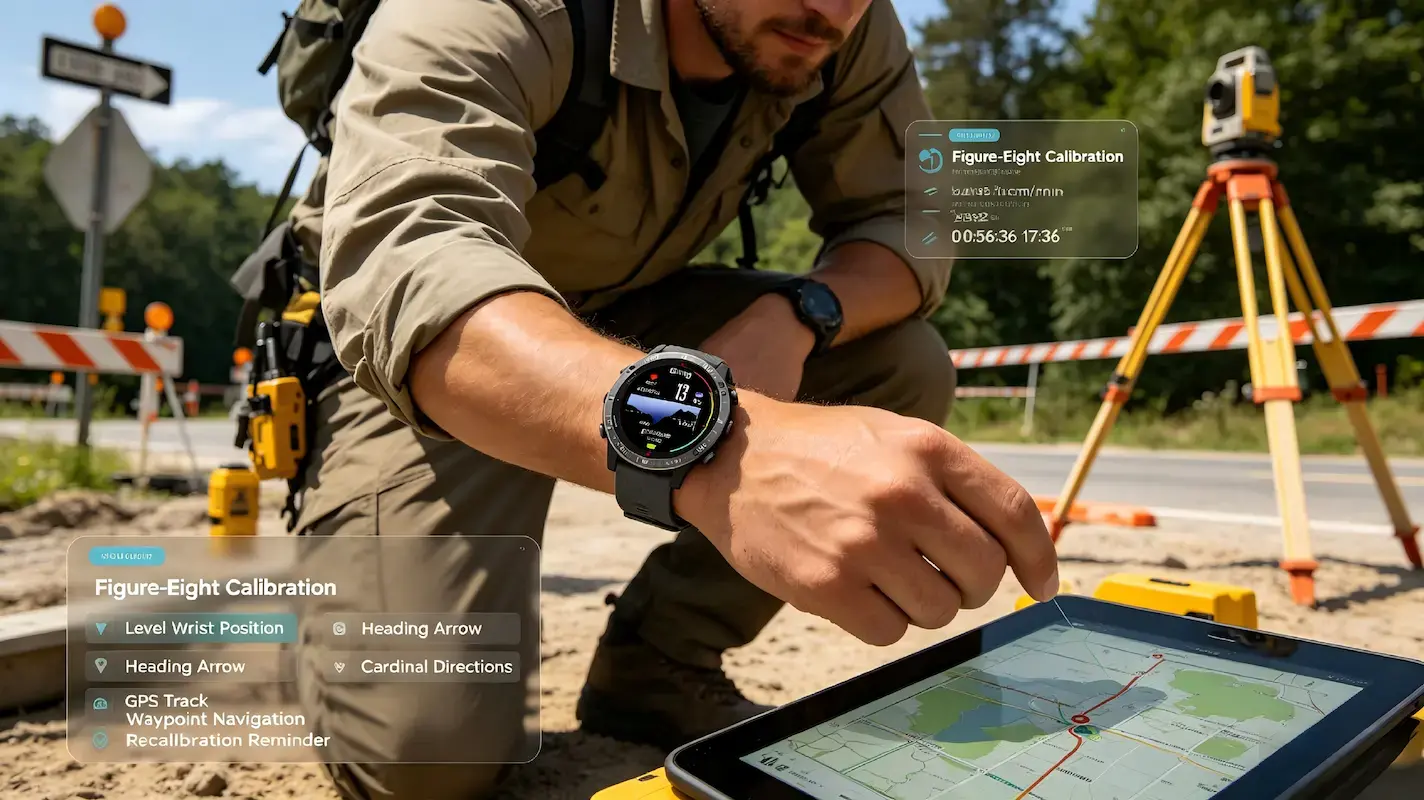
Calibration sets standard sensor readings before they are sent out into the field. Find the compass feature in the menu system of your watch. It's usually under "navigation" or "tools." The gadget will tell you to move the watch in a figure-eight pattern, which will turn it around all three directions. This process lets the magnetometer make a map of the whole range of Earth's magnetic field strength from where you are now.
Calibration should be done away from sources of magnetic disturbance. Readings can be messed up by steel-framed buildings, electrical panels, big machinery, cars, and even metal tools or belt buckles. Before calibrating equipment in an industrial setting, you should stand at least 20 meters away from it. If you go more than 100 miles, change your altitude a lot, or notice that your bearing is drifting, you should recalibrate because magnetic declination changes where you are and the weather can affect how well the sensor works.
Check the accuracy against a known landmark or bearing after calibration. A lot of experienced navigators check their digital compass readings against where the sun is in the morning or afternoon, when shadows cast by the sun make natural reference points. This check gives you more faith in the device's accuracy before you do important travel jobs.
Activating and Reading Compass Mode During Operations
You can get to compass mode through your watch's interface. Most rugged models have a physical button for this purpose, so you can use it quickly without having to go through a menu. When turned on, the screen shows a cardinal direction indicator (N, S, E, W) along with a numerical bearing in degrees. Figuring out the difference between heading (the direction you're facing) and bearing (the direction you want to go) will help you avoid making travel mistakes.
Hold the watch level to your body with the screen looking up when you're not moving. To find your balance, rotate your whole body, not just your hand. Motion sensors in the watch tell it if you're moving, and if so, they change how sensitive the compass is. When you move, the GPS part turns on to give you a heading based on your travel direction. This works better than magnetometer readings when you're moving near sources of interference.
As you turn, the compass rose or arrow, shows the new direction. Many models show your current heading in a different color than the other indicators that show saved waypoints or navigation targets. This clear vision lets you quickly check your orientation without stopping work. This is especially helpful during site surveys, boundary marking, or coordinated operations involving multiple teams across large facilities.
Combining GPS and Compass Functions for Route Navigation
When you combine compass bearings with GPS waypoint navigation, you get the real operational benefit. Mark important places as waypoints before you go into the field. These could be places to set up equipment, do inspections, meet in case there is an emergency, or be the edges of your property. The watch remembers these coordinates and shows the direction and distance to certain locations.
As you move toward a waypoint, the compass display shows an arrow pointing in the right direction. This arrow keeps changing as you move. In real time, the distance to your target gets shorter, which helps you guess when you'll arrive and plan your travels accordingly. This feature makes travel much more efficient for jobs like site checks where people have to go to a lot of faraway places over rough terrain without clear paths.
When you record a track, your route is saved as a GPS breadcrumb trail, which lets you find your way back by following the same path. In places that aren't marked, during emergencies, or when recording survey routes for legal reasons, watches with compass and GPS are very helpful. Tracks export to standard files that can be used with GIS software and corporate mapping platforms. This makes it easier to analyze data after an operation and connect it to larger asset management systems.
Benefits and Key Advantages of Rugged GPS Compass Smartwatches for Procurement
When looking at wearable navigation technology, people who make decisions should think about how the features of the gadget fit with business needs and the long-term value of the company.
Military-Grade Durability Meets Industrial Demands
MIL-STD-810H certification is not marketing speak; it refers to standard testing procedures created for buying military equipment. This standard says that devices must be able to withstand 26 drops from 1.2 meters onto concrete, work in temperatures ranging from -20°C to +60°C, keep working at high altitudes, and not let sand and dust get inside. These specs directly relate to dependability in industrial settings like construction sites that have vibration and impact, cold storage facilities, mining operations in the desert, or infrastructure projects at high elevations.
The 100-meter water protection makes the gadget useful in wet and watery places that aren't usually good for using electronics. Offshore platform operations, tracking of wastewater treatment, marine shipping, and managing irrigation systems for farms can all benefit from navigation tools that still work when they get wet. With the IP67 rating, these watches can still work after being submerged accidentally. This means that you don't have to buy expensive new devices because of environmental exposure.
Extended Battery Life Reduces Operational Disruptions
Smartwatches for consumers usually need to be charged every day, which can cause compliance problems if employees forget to charge their devices at night. This problem is solved by the battery's standard 5–10 day life, which can last up to weeks in expedition mode. Field teams can be sent out for long periods of time without access to charging stations. This is useful for work that needs to be done in remote areas, during emergencies, on multiday surveys, or in places where electricity isn't always available.
Total cost of ownership is also affected by how long batteries last. Devices that need to be charged often have more charge cycles over the course of their life, which speeds up battery degradation. Longer runtime between charges keeps batteries healthy for longer, which means devices don't need to be replaced as often and costs are lower over their entire life. When comparing the initial purchase price to the operational lifespan, procurement teams should use these extended-use economics.
Multifunctional Capabilities Beyond Basic Navigation
The compass and GPS features help with direction, and the addition of more sensors makes the device more useful in a wider range of situations. The barometer keeps track of changes in the air pressure and sends out storm warnings to keep people safe. Sudden drops in pressure show that storms are coming, which sets off alarms that tell people to leave exposed areas before conditions get worse. This feature cuts down on weather-related problems that can happen during outdoor activities, which could lower insurance costs and government scrutiny.
Heart rate monitoring and exercise tracking are useful for promoting health at work, especially in jobs that require a lot of hard work. Administrators can set health baselines, find workers who are physically stressed before it becomes a medical emergency, and keep track of who is meeting the standards for safety rest in settings with high temperatures. When this biometric data is combined with corporate health management tools, it allows for preventative health strategies for the workforce that lower the number of injuries and the costs that come with them.
As a last option, emergency SOS features can be used to keep you safe. When turned on, the gadget sends GPS data through a smartphone that is linked to it or, in more advanced models, directly through satellite networks. This feature is very important for situations where a worker is on their own, like when they are doing utility maintenance, remote facility inspections, forestry work, or security patrols, and need to send the exact location of their location quickly in case of an emergency with watches with compass and GPS.
Conclusion
Navigation-enabled smartwatches are a big step forward in operational mobility tools because they combine the accuracy of a standard compass with that of GPS and the ability to connect to business data. The devices we looked at meet real practical needs across industries that need reliable navigation in difficult conditions. They have MIL-STD-810H durability, extended battery performance, and large sensor arrays. When buying decisions are based on the total value of the product over its entire life, device specs are matched with real-world conditions, and full training and system integration are paired with technology deployment, these watches go from being simple wayfinding tools to strategic assets that improve worker safety, boost operational efficiency, and collect useful data for ongoing process improvement.
FAQ
1. How accurate is a smartwatch compass compared to traditional magnetic compasses?
Good rugged GPS trackers are accurate to within 3 to 5 degrees, which is about the same as casual handheld compasses and good enough for most tracking chores. Traditional baseplate compasses used in surveying are a little more accurate (within 1-2 degrees), but they don't have the smartwatch's GPS, digital waypoint management, or automatic declination correction. Smartwatches have an edge over standalone compasses because they combine accurate compass guidance with features like calculating distance, tracking routes, and logging location that standalone compasses can't offer. Both types of devices are affected by magnetic interference, so it is important for both to be properly calibrated and aware of any nearby sources of interference.
2. Can barometric storm alerts replace professional weather monitoring?
Barometric pressure tracking in navigation smartwatches can pick up on changes in the local atmosphere that show when storms are coming, which is very helpful for research. However, these alerts don't replace full weather forecasts; they add to them. Smartwatch barometers can pick up on changes in pressure, but they can't tell you how bad a storm will be, how the system will move, or when to expect it, like professional weather services can. Use barometer alerts as an extra safety measure to confirm the weather with official sources and help you decide whether to go or not when official forecasts are wrong or when conditions change between planned forecast updates. This multi-layered approach improves both safety and the ability to keep operations going.
Partner With Xizhou for Your Rugged GPS Compass Smartwatch Requirements
We at Shenzhen Xizhou E-commerce Co., Ltd. know that getting solid rugged GPS compass smartwatch inventory takes more than just product catalogs. It takes a partner who understands your marketplace, what your customers want, and how much competition there is. We've built our reputation as a specialist in making and supplying AI-powered smart wearables by providing reliable supply chains, consistent quality, and quick responses to customer requests. E-commerce sellers and distributors depend on us.
Our manufacturing skills allow us to handle both small test orders and large-scale production. We also have flexible MOQ policies that let you check the market demand before committing to bulk inventory. GMP-certified factories make sure that every product meets strict quality standards. This lowers the number of returns that hurt sellers' reputations. We keep a lot of ready-to-ship items on hand so that we can quickly restock, because we know that running out of stock means lost sales and lower rankings in the market.
In addition to supplying products, we also offer OEM branding services that turn plain electronics into unique brand assets. These include custom logo placement, branded box design, and even software customization for truly unique products. Our expert research and development (R&D) team helps you choose the right products by giving you technical advice and helping you find the right specs for your target customers and price range.
Xizhou is a great place to find a reliable long-term supplier partner, whether you're looking to grow an existing electronics brand, start a new product line, or make your current brand bigger. Email our team at 13266508958@163.com to talk about your unique needs, ask for samples of our products, or look into the ways we can make them fit your needs.
References
1. Williams, T. R. (2023). Industrial Wearable Technology: Selection and Implementation Strategies for Enterprise Operations. Industrial Equipment Publishers.
2. Martinez, S. & Chen, L. (2024). "Multi-GNSS Navigation Performance in Urban and Industrial Environments." Journal of Applied Geospatial Technology, 18(2), 145-162.
3. Anderson, K. P. (2022). Field Navigation Techniques for Industrial Operations: Traditional Methods and Digital Integration. Professional Safety Publications.
4. International Standards Organization. (2021). ISO 22810:2010 - Horology: Water-Resistant Watches. Geneva: ISO Press.
5. Department of Defense. (2019). MIL-STD-810H: Environmental Engineering Considerations and Laboratory Tests. Washington: U.S. Government Printing Office.
6. Roberts, J. M. (2023). "Total Cost of Ownership Analysis for Enterprise Wearable Technology Procurement." Supply Chain Management Review, 27(4), 38-45.