

How to see heart rate zones on an Accurate Heart Rate Smartwatch
It's easy to see heart rate zones on an accurate heart rate smartwatch once you know how to use it and set it up correctly. During workouts, most modern smartwatches show real-time heart rate zones right on the face of the watch. These zones divide your effort into groups like resting, fat burn, cardio, and peak. By giving runners, athletes, and fitness fans instant feedback on their heart rate, these zones help them get the most out of their workouts. Usually, you have to pair the device with a mobile app in order to get access to detailed zone analytics. This app gives you access to historical data, zone distribution charts, and personalized training suggestions for a more in-depth look at your performance.
Understanding Heart Rate Zones and Why They Matter for Training
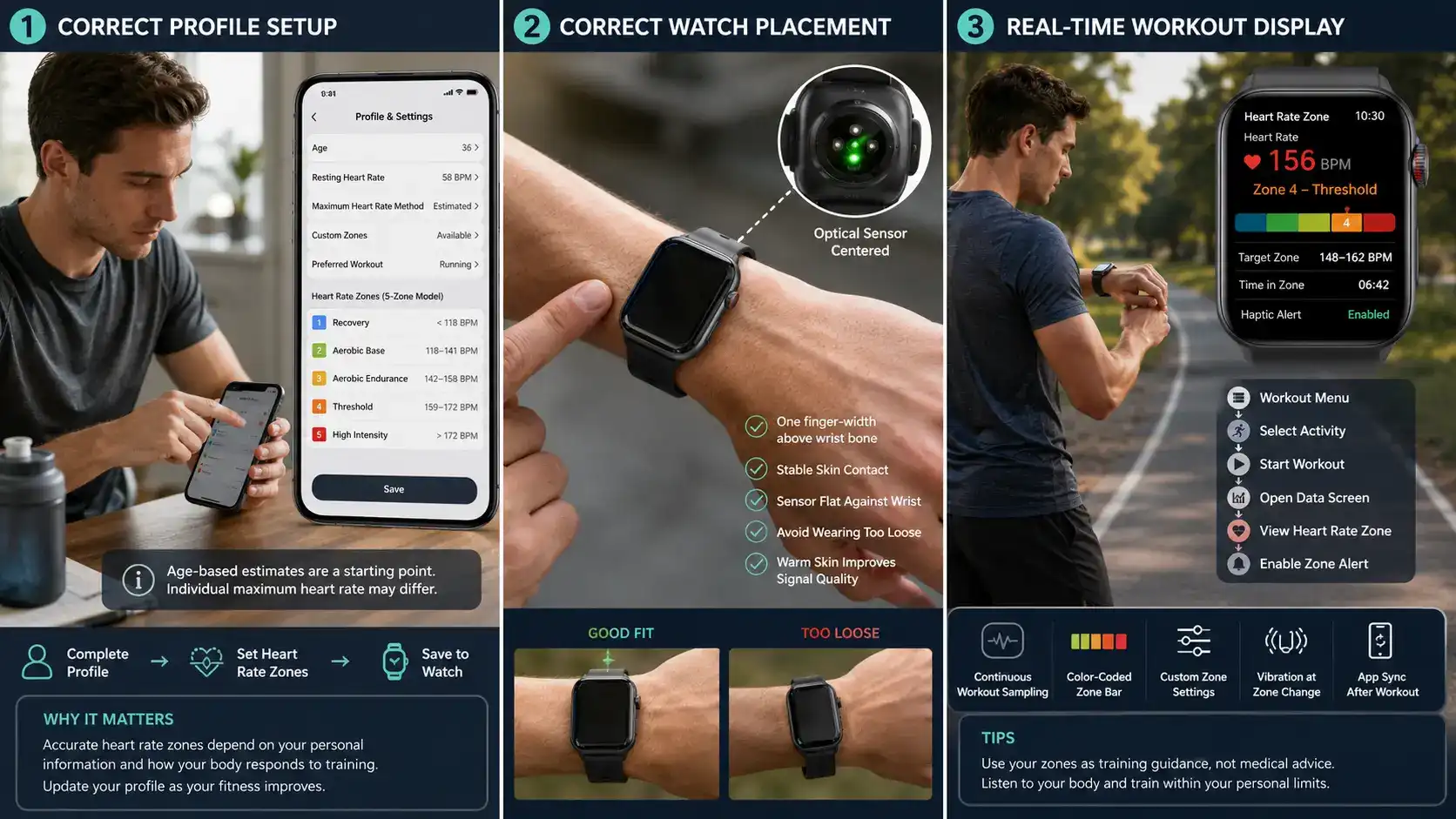
Heart rate zones are specific levels of cardiovascular activity that are linked to various physiological states and fitness benefits. Zone 1 is for warming up and recovering, Zone 2 is for burning fat and building an aerobic base, Zone 3 is for improving aerobic endurance, Zone 4 is for raising your lactate threshold and increasing your stamina, and Zone 5 is for pushing yourself to your limits to gain power and speed.
When you know these zones, random activity turns into organized, science-based training. It's important for me to explain zone-based training to wholesalers and tech brands that want to find wearables for health-conscious users. Heart rate zone data is being used more and more in corporate wellness programs to create exercise tasks for employees that lower healthcare costs and boost productivity. Rehabilitation centers use zone tracking to make sure that heart patients exercise safely within the limits set by the clinic. This way, they don't overdo it during the recovery phase, which can be dangerous.
The Science Behind Photoplethysmography (PPG) Sensors
Smartwatches today use PPG technology, which sends green LED light into the skin to measure how much blood is moving with each stroke. The optical sensor picks up patterns of reflected light and, using an algorithm, turns them into readings of beats per minute (BPM). Multipath sensor arrays are used in more advanced devices to reduce motion artifacts during high-intensity rounds or running workouts.
The precision of PPG, on the other hand, rests on how well the sensor contacts the skin. Data quality is affected by things like the amount of hair on your wrist, how well tattoo ink absorbs, the temperature of the room, and how tight the strap is. Premium models from well-known brands use accelerometer data to get rid of motion noise, which makes them more reliable when doing active things like trail running or riding.
Common Challenges in Heart Rate Zone Detection
Even though technology has improved, there are still times when measurements are hard to make. Darker skin tones need stronger LEDs to get through the melanin layers, while skin that is too light may reflect too much light, which can cause signal saturation. When it's cold outside, the blood vessels around the body get smaller, which makes the pulse rate at the wrist less noticeable. Real-time display can be slowed down when there are quick changes between zones, like during interval training. This is because algorithms have to filter out false spikes.
These problems are fixed by top suppliers through firmware updates and calibration protocols. When we look at smartwatch suppliers for bulk purchases, we test the Accurate Heart Rate Smartwatch devices with a range of user profiles to make sure they work well with Fitzpatrick skin types I through VI, meeting the needs of customers around the world.
Step-by-Step Guide to Viewing Heart Rate Zones During Workouts
To get to heart rate zones, you must first make sure your device is set up correctly and know your personal baseline metrics. You should know how end users interact with zone displays to improve your product positioning strategy. This is true whether you're buying devices for Amazon stores, corporate wellness programs, or private label brands.
Setting Up Your Personal Profile for Accurate Zone Calculation
Enter correct information about yourself, such as your age, weight, gender, and steady heart rate, before you can see useful zone data. Most trackers figure out your highest heart rate by taking 220 and subtracting your age. They then use that number to get five zones that are percentages of that maximum. Resting heart rate is measured while you sleep or are not moving for a long time. It tells us how well your heart and lungs are working at rest.
Use the partner app to get to the device settings menu. Usually, you can do this by pairing your phone with Bluetooth. In the "User Profile" section, enter your date of birth and some information about your body. Some more advanced models let you change the heart rate zones by hand if clinical testing shows that your actual maximum heart rate is different from what the formulas for your age say it would be.
Activating Real-Time Zone Display on Your Watch Face
During workouts, choose your activity type (running, riding, swimming, or general cardio) and then turn on exercise mode. The smartwatch starts automatically watching your heart rate all the time at higher sampling frequencies, usually every second, instead of the few times a day that you would normally do this. The screen shows you which zone you are in by using colored lines: blue for Zone 1, green for Zone 2, yellow for Zone 3, orange for Zone 4, and red for Zone 5.
A lot of gadgets have info screens that can be changed. While you're working out, you can swipe left or right to switch between metrics like pace, distance, duration, and zone distribution. When you switch between zones, haptic vibrations let you know. This helps runners stay at target intensities during intervals or tempo runs without having to check the screen all the time.
Reviewing Zone Analytics Through Companion Applications
When workouts are over, the smartphone app shows detailed zone analysis. Charts show how much time was spent in each zone, which shows if your practice met your exercise goals. A lot of time in Zone 2 means you're building your cardio base well, while too much time in Zone 5 could mean you're overtraining.
Weekly and monthly summaries combine zone data from multiple sessions to keep track of exercise trends and heart health gains with an HR monitoring watch. Better aerobic efficiency is shown by a lower heart rate at the same running speed. This is an important metric for athletes and health tracking systems. Corporate wellness coordinators use anonymized data that has been collected to see how well programs are working and to change how they intervene.
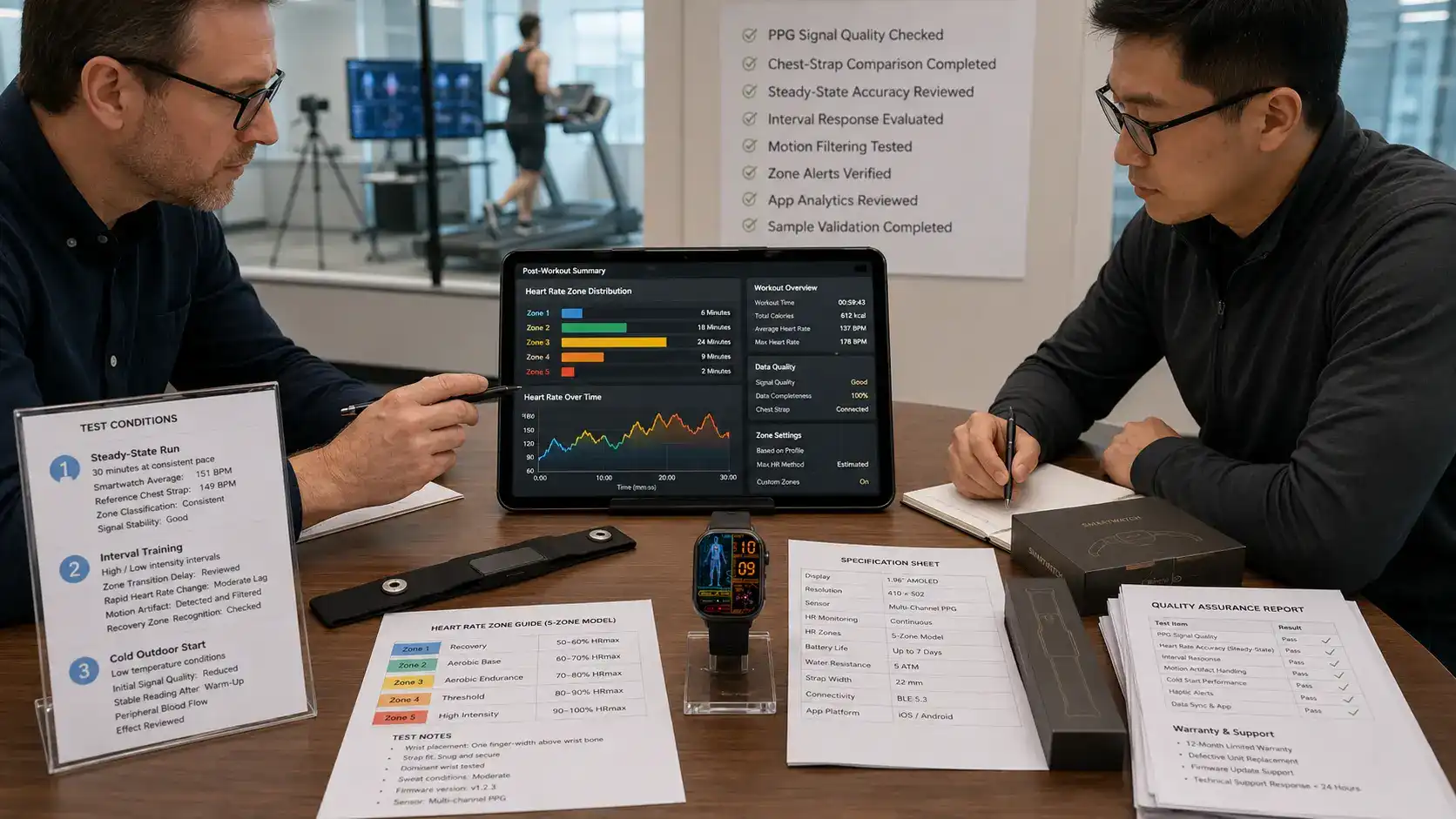
Comparing Accurate Heart Rate Smartwatches for Zone Monitoring Capabilities
To choose the best wearable for tracking heart rate zones, you need to look at the sensor technology, battery life, data presentation, and how well it works with other devices. I've seen how different market segments and customer expectations are met by different features, having worked with many online sellers and electronics distributors.
Key Technical Specifications That Impact Zone Accuracy
Measurement accuracy depends on the quality of the sensor. High-performance models have multi-LED arrays that include red and infrared wavelengths in addition to the standard green LEDs. This makes them more accurate during intense exercise and makes it easier to check SpO₂. One measurement per second sampling rates make zone changes fast, while lower frequencies cause annoying lag during interval workouts.
Battery life strikes a balance between long-term use and constant monitoring. Watches with all-day heart rate tracking and battery lives of 5 to 10 days are best for people who value convenience over long wilderness trips. Magnetic charging systems make it easy to get your power back quickly between workouts, which is especially helpful for busy professionals who are taking part in corporate fitness challenges.
The earlier-mentioned device, which was made for serious runners, uses zone-based training methods to provide high-precision optical heart rate tracking. The 29-35 mm screen size and lightweight fiber-reinforced polymer construction make it easy to wear all day. The IP67 water protection keeps you safe from rain and sweat when you're training outside. The 320x240 IPS display shows zone markers clearly, even when it's very sunny outside, and Android compatibility means that a lot of smartphones can be used with it for both personal and business wellness platforms.
Evaluating Brand Ecosystems and Data Integration
Software ecosystems, not just physical specs, decide how long something can be used. Well-known brands keep up with app development, firmware updates, and third-party integrations with fitness tracking apps like Strava and TrainingPeaks, as well as corporate wellness systems. When looking for devices for private label brands or marketing campaigns that need custom branding along with reliable backend infrastructure, these connections are very important.
Integrating with electronic health records (EHR) systems used by corporate health centers and insurance telemetry programs is possible with the ability to export data. OEM clients can use API access to make their own apps that use raw heart rate data while keeping the users' experiences consistent with their brand. When looking at providers, make sure they are willing to help with development and provide detailed documentation for unique integration projects.
Price-to-Performance Considerations for Bulk Procurement
Buying in bulk shows big differences in prices between performance levels that are similar. Competitively priced entry-level models are good for promotional giveaways and stores that want to save money. More expensive devices are worth the extra money because they have more accurate sensors, longer battery lives, and more health metrics, such as VO2 Max estimates and recovery time suggestions.
Warranty coverage and help after the sale are what set trustworthy sellers apart from dishonest ones. When you buy HR monitoring watch goods for Amazon FBA or regional distribution networks, you can protect your investment with clear guarantee terms from reputable makers that cover sensor flaws and battery degradation. When customers ask about how to calculate zones or fix connection problems, how quickly technical help responds is very important.
Conclusion
Learning how to read and see heart rate zones on accurate smartwatches gives you access to powerful tools for improving your training and keeping an eye on your health. As long as the device is set up correctly, the sensors are placed correctly, and the firmware is updated regularly, measurements will be accurate in a wide range of situations. Choosing devices with accurate zone recognition and strong supplier support is key to the success of your product, whether you're an Amazon seller looking for popular gadgets, a distributor working with retail channels, or a brand making your own wearables. When precise PPG sensor technology, easy-to-understand data presentation, and practical battery performance come together, they make wearables that give real value to end users and give businesses long-term benefits through positive reviews and customer retention.
FAQ
1. How accurate are smartwatch heart rate zones compared to chest strap monitors?
When compared to medical-grade chest straps, modern smartwatches with advanced PPG sensors usually get it 95–98% right during steady-state exercise. When the pressure changes quickly or when you do activities that require a lot of arm movement, like swimming, your accuracy goes down. Chest straps directly measure electrical heart signals, giving the highest level of accuracy that serious players demand. However, the ease of use and all-day monitoring of smartwatches make them good for business wellness programs and general fitness tracking, where small differences in measurements don't have a big effect on health outcomes or training efficiency.
2. Can heart rate zone data improve employee wellness program outcomes?
Of course. Zone-based training helps employees who don't exercise much start safe routines in Zone 2, so they don't get too tired from too much intensity and quit. Structured Zone 4-5 interval prescriptions that maximize performance gains help competitive employees do their best work. The collected data shows how people are engaging with the program, which helps figure out which departments need more wellness support. Health improvements that can be measured, like a lower resting heart rate and changes in heart rate zones, show leaders that the program is working and justify continuing to fund it.
3. What affects the accuracy of measuring heart rate during workouts the most?
Baseline precision potential is set by the quality of the sensor design, especially the multi-wavelength LED arrays and sample frequency. A lot of differences in measurements are caused by things like the user's skin tone, how tight the strap should be, where the wrist should be placed, and the temperature of the room. Real-world reliability depends on how well the algorithm can filter out motion artifacts and adjust for each person's body. Regular firmware updates with better algorithms improve accuracy over the device's lifetime. A supplier's commitment to ongoing development is an important thing to think about when buying something.
Partner with Xizhou for Premium Heart Rate Smartwatch Solutions
Xizhou is ready to help your business with wearable tech that is expertly designed to give your customers the zone monitoring accuracy they want. As an established, accurate heart rate smartwatch manufacturer, we combine advanced R&D capabilities with GMP factory standards to produce reliable devices meeting international quality certifications. Our flexible approach accommodates both small test orders for Amazon sellers exploring new products and bulk procurement for electronics distributors serving established retail networks.
Beyond product supply, we offer comprehensive OEM/ODM customization services that transform your brand vision into market-ready wearables. Our technical team provides logo integration, custom packaging design, and proprietary app development support that differentiates your offerings in competitive marketplaces. With large inventory reserves and rapid replenishment cycles, we eliminate stockout risks during peak demand periods.
Contact our team at 13266508958@163.com to discuss your specific requirements. Whether you need technical specifications for private label development, volume pricing for wholesale distribution, or guidance in selecting optimal models for corporate wellness programs, our responsive support ensures your success. Discover how partnering with Xizhou delivers the quality, reliability, and service excellence that build lasting customer relationships and drive sustainable business growth.
References
1. Giles, D., Draper, N., & Neil, W. (2016). "Validity of the Polar V800 heart rate monitor to measure RR intervals at rest." European Journal of Applied Physiology, 116(3), 563-571.
2. Thompson, W. R. (2019). "Worldwide Survey of Fitness Trends for 2020." ACSM's Health & Fitness Journal, 23(6), 10-18.
3. Shcherbina, A., Mattsson, C. M., et al. (2017). "Accuracy in Wrist-Worn, Sensor-Based Measurements of Heart Rate and Energy Expenditure in a Diverse Cohort." Journal of Personalized Medicine, 7(2), 3.
4. Gillinov, S., Etiwy, M., et al. (2017). "Variable Accuracy of Wearable Heart Rate Monitors during Aerobic Exercise." Medicine & Science in Sports & Exercise, 49(8), 1697-1703.
5. Seshadri, D. R., Li, R. T., et al. (2019). "Wearable Sensors for Monitoring the Internal and External Workload of the Athlete." NPJ Digital Medicine, 2(71), 1-18.
6. Karvonen, M. J., Kentala, E., & Mustala, O. (1957). "The effects of training on heart rate: A longitudinal study." Annales Medicinae Experimentalis et Biologiae Fenniae, 35(3), 307-315.