How to Evaluate Athletic GPS Smartwatch Quality for Commercial Use
To evaluate an athletic GPS smartwatch for commercial use, buyers should assess multi-GNSS positioning accuracy, build durability, battery performance, firmware language support, and supplier reliability. A quality athletic GPS smartwatch must maintain consistent signal tracking across outdoor environments, survive daily physical stress, and support the languages your target market requires. For B2B procurement teams sourcing wearables at scale — whether for resale, private label, or corporate wellness programs — these benchmarks determine long-term product value and brand reputation.
Understanding Athletic GPS Smartwatches and Their Commercial Value
Athletic GPS Smartwatches are more than just exercise tools. For business buyers, they are a type of product that is in high demand and will stay that way. In 2023, the global smartwatch market was worth about $29.3 billion. It is still growing as more businesses adopt health programs for employees, outdoor sports, and team training.
What Makes These Devices Commercially Relevant
GPS sport watches are useful for business purposes as well as for personal training. They are used by corporate wellness programs to keep track of what employees are doing. They are used by sports organizations to keep an eye on how teams are doing. Location data is used by logistics and field operations teams to plan how staff will move around. These applications lead to regular B2B buying processes and orders that are placed again and again.
Why B2B Buyers Prioritize Quality Over Price Alone
One batch of broken units can get Amazon sellers a lot of bad reviews, return requests, and even account bans. Distributors have to deal with warranty claims and losing stock. Quality control is important because it saves your profits and your image.
How Product Specs Connect to Commercial Outcomes
A GPS outdoor watch that works with a multi-platform app like RDFIT and supports 28 software languages makes it easier to sell in North America, Europe, Southeast Asia, and other places. Just being able to translate between languages makes your target market bigger without adding SKUs.
Key Quality Dimensions for Evaluating Athletic GPS Smartwatches
It takes more than looking at a specs sheet to find the right GPS sport watch. You need to take a systematic look at a number of performance layers.
GPS and Satellite System Accuracy
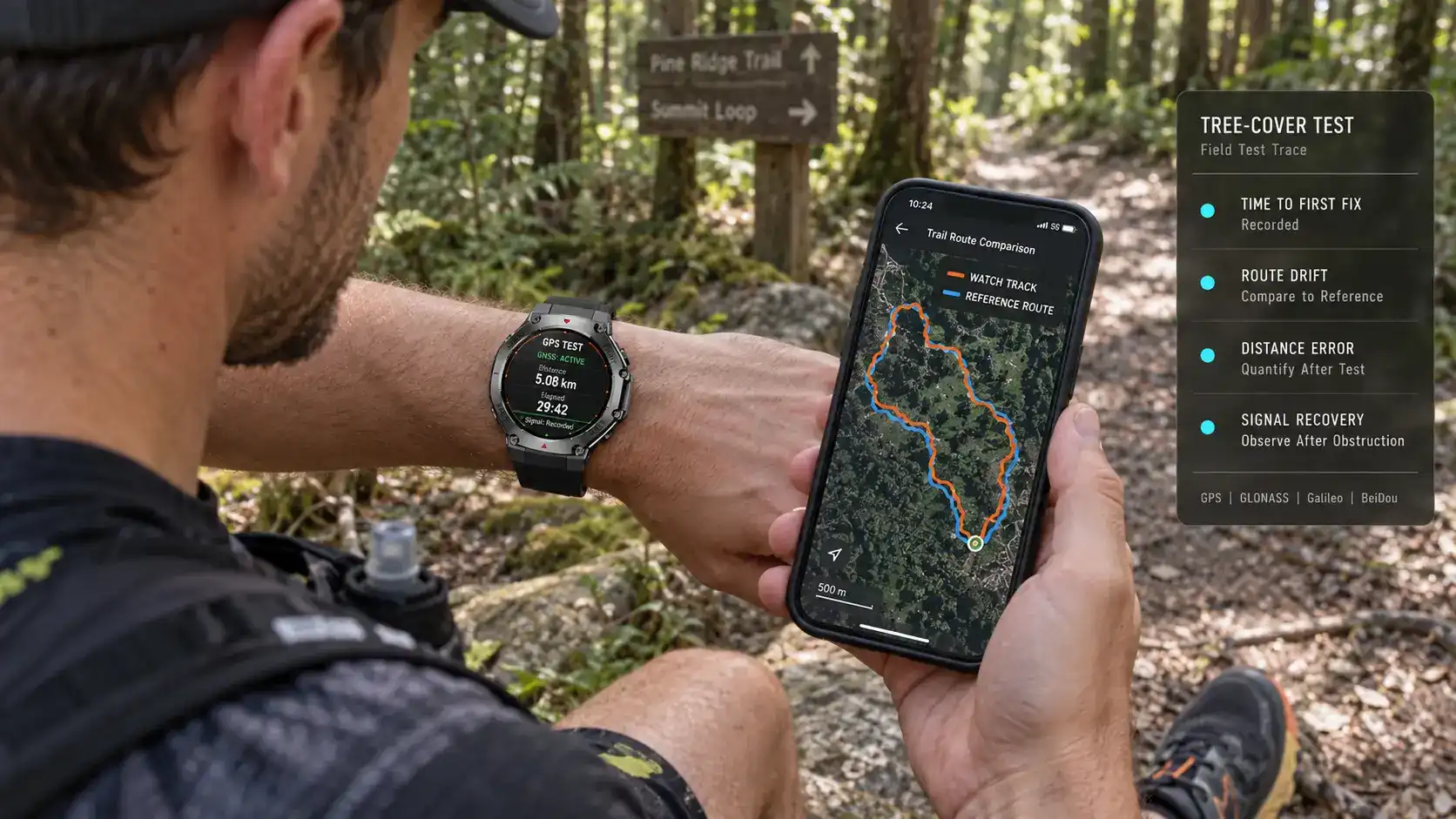
Any real outdoor tracking gadget needs to have multi-GNSS technology as a base. A sports watch that gets signals from GPS, GLONASS, Galileo, and BeiDou all at the same time cuts down on positioning mistakes that are caused by things like thick forest cover or buildings blocking the view. The European GNSS Agency (GSA) says that multi-constellation systems can cut positional error from 5 to 10 meters to less than 2 meters in tough circumstances. For business buyers, this truth has a direct effect on how trustworthy the sports watch product is and how happy users are with it.
Build Quality and Environmental Resistance
Training-grade sports watches are different from general exercise bands because they last longer. You should look for a chassis made of zinc alloy or reinforced polymer that has an IP67 or higher grade for water and dust protection in a sports watch. An IP67-rated device can be submerged up to 1 meter for 30 minutes, which means it can handle rain and intense workouts that make you sweat a lot. This standard must be used for outdoor and endurance sports applications.
Battery Life and Charging Efficiency
Extended battery life is a big reason why end users buy things and a big reason why commercial buyers choose one brand over another. A watch with a 410mAh battery and power-efficient Bluetooth BLE 5.0 connection can track for several days without having to be charged every day. The ability to charge wirelessly also makes accessories easier to use, which appeals to high-end buyers. Not just maker data sheets should be used to check battery claims; they should also be tested in the real world.
Display Visibility and Interface Usability
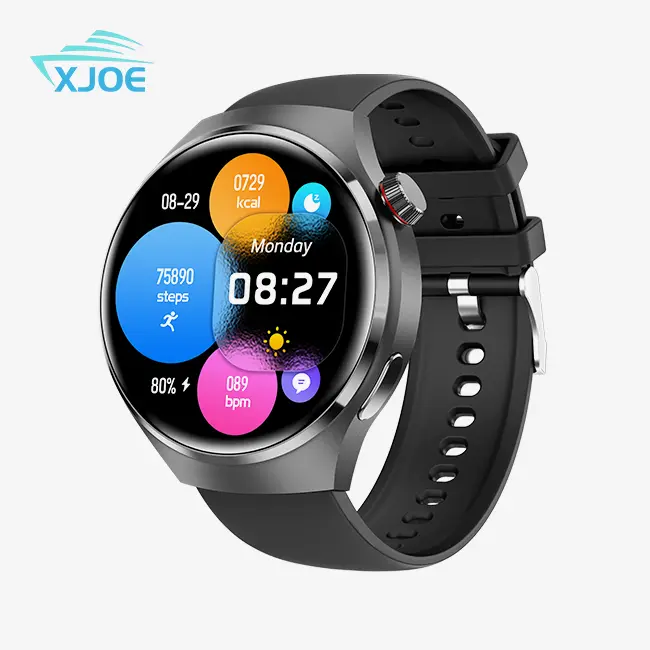
A high-brightness 1.53-inch round IPS color screen with 360×360 resolution makes it possible to see data in direct sunlight, which is important for sports that are played outside. When screens get washed out in bright light, users complain and send them back. For business use with a wide range of users, the display must work the same way in all lighting situations.
Comparative Analysis of Athletic GPS Smartwatch Options for B2B Procurement
Cost-benefit analysis is used by commercial buyers to choose sports GPS watches, not just feature lists. Knowing where the different levels of a product fit in the hierarchy helps procurement teams decide how to spend money and set realistic expectations for margins.
Premium Brands vs. OEM/ODM Options
Garmin and Suunto are at the top of the market because they offer advanced data and well-known brands. But because of their high unit prices and minimum order quantities, they can't be used for private label projects or test-market launches. OEM-made Athletic GPS Smartwatches have similar core features, like multi-GNSS, a rugged build, and wireless charging, and they are priced in a way that allows for healthy store profits and low minimum order quantity (MOQ) sampling.
Evaluating Chipset and Software Ecosystem
It's possible for a lot of consumer-grade sports watches to use the JL7012 chipset because it has stable multi-GNSS processing and good power management. When you combine that with an app platform like RDFIT, which works with more than 30 languages like English, Spanish, French, Arabic, Japanese, and Korean, you have a sports watch product that is ready to be sold around the world without having to spend money on software translation.
Pricing Strategy and Volume Discounts
Wholesale prices below



How to Evaluate Athletic GPS Smartwatch Quality for Commercial Use
To evaluate an athletic GPS smartwatch for commercial use, buyers should assess multi-GNSS positioning accuracy, build durability, battery performance, firmware language support, and supplier reliability. A quality athletic GPS smartwatch must maintain consistent signal tracking across outdoor environments, survive daily physical stress, and support the languages your target market requires. For B2B procurement teams sourcing wearables at scale — whether for resale, private label, or corporate wellness programs — these benchmarks determine long-term product value and brand reputation.
Understanding Athletic GPS Smartwatches and Their Commercial Value
Athletic GPS Smartwatches are more than just exercise tools. For business buyers, they are a type of product that is in high demand and will stay that way. In 2023, the global smartwatch market was worth about $29.3 billion. It is still growing as more businesses adopt health programs for employees, outdoor sports, and team training.
What Makes These Devices Commercially Relevant
GPS sport watches are useful for business purposes as well as for personal training. They are used by corporate wellness programs to keep track of what employees are doing. They are used by sports organizations to keep an eye on how teams are doing. Location data is used by logistics and field operations teams to plan how staff will move around. These applications lead to regular B2B buying processes and orders that are placed again and again.
Why B2B Buyers Prioritize Quality Over Price Alone
One batch of broken units can get Amazon sellers a lot of bad reviews, return requests, and even account bans. Distributors have to deal with warranty claims and losing stock. Quality control is important because it saves your profits and your image.
How Product Specs Connect to Commercial Outcomes
A GPS outdoor watch that works with a multi-platform app like RDFIT and supports 28 software languages makes it easier to sell in North America, Europe, Southeast Asia, and other places. Just being able to translate between languages makes your target market bigger without adding SKUs.
Key Quality Dimensions for Evaluating Athletic GPS Smartwatches
It takes more than looking at a specs sheet to find the right GPS sport watch. You need to take a systematic look at a number of performance layers.
GPS and Satellite System Accuracy
Any real outdoor tracking gadget needs to have multi-GNSS technology as a base. A sports watch that gets signals from GPS, GLONASS, Galileo, and BeiDou all at the same time cuts down on positioning mistakes that are caused by things like thick forest cover or buildings blocking the view. The European GNSS Agency (GSA) says that multi-constellation systems can cut positional error from 5 to 10 meters to less than 2 meters in tough circumstances. For business buyers, this truth has a direct effect on how trustworthy the sports watch product is and how happy users are with it.
Build Quality and Environmental Resistance
Training-grade sports watches are different from general exercise bands because they last longer. You should look for a chassis made of zinc alloy or reinforced polymer that has an IP67 or higher grade for water and dust protection in a sports watch. An IP67-rated device can be submerged up to 1 meter for 30 minutes, which means it can handle rain and intense workouts that make you sweat a lot. This standard must be used for outdoor and endurance sports applications.
Battery Life and Charging Efficiency
Extended battery life is a big reason why end users buy things and a big reason why commercial buyers choose one brand over another. A watch with a 410mAh battery and power-efficient Bluetooth BLE 5.0 connection can track for several days without having to be charged every day. The ability to charge wirelessly also makes accessories easier to use, which appeals to high-end buyers. Not just maker data sheets should be used to check battery claims; they should also be tested in the real world.
Display Visibility and Interface Usability
A high-brightness 1.53-inch round IPS color screen with 360×360 resolution makes it possible to see data in direct sunlight, which is important for sports that are played outside. When screens get washed out in bright light, users complain and send them back. For business use with a wide range of users, the display must work the same way in all lighting situations.
Comparative Analysis of Athletic GPS Smartwatch Options for B2B Procurement
Cost-benefit analysis is used by commercial buyers to choose sports GPS watches, not just feature lists. Knowing where the different levels of a product fit in the hierarchy helps procurement teams decide how to spend money and set realistic expectations for margins.
Premium Brands vs. OEM/ODM Options
Garmin and Suunto are at the top of the market because they offer advanced data and well-known brands. But because of their high unit prices and minimum order quantities, they can't be used for private label projects or test-market launches. OEM-made Athletic GPS Smartwatches have similar core features, like multi-GNSS, a rugged build, and wireless charging, and they are priced in a way that allows for healthy store profits and low minimum order quantity (MOQ) sampling.
Evaluating Chipset and Software Ecosystem
It's possible for a lot of consumer-grade sports watches to use the JL7012 chipset because it has stable multi-GNSS processing and good power management. When you combine that with an app platform like RDFIT, which works with more than 30 languages like English, Spanish, French, Arabic, Japanese, and Korean, you have a sports watch product that is ready to be sold around the world without having to spend money on software translation.
Pricing Strategy and Volume Discounts
Wholesale prices below $100 let sellers put GPS fitness watches in a competitive position on Amazon and TikTok Shop while still making good profits. When you negotiate tiered pricing with suppliers for orders of 500, 1,000, or 5,000 units, you can cut unit costs by 15–30%, which makes bulk procurement campaigns much more profitable.

How to Implement a Quality Evaluation Process for Commercial Purchase
A structured screening method saves the money you spend on sourcing and lowers the risk further down the line. Here is a useful framework that procurement teams can use.
Define Your Evaluation Criteria Before Sampling
Before you buy samples, make a list of your minimum needs in five areas: stable GPS signals, long battery life when tracking, bright outdoor displays, IP rating confirmation, and firmware language support. Setting these standards before testing stops subjective evaluation and makes it possible to compare suppliers in an objective way.
Run Field Tests, Not Just Lab Checks
Lab certifications show that something is legal, but they don't show how it works in real life. GPS sport watches should be tested in the field in a variety of settings, such as cities, forests, and open land, to make sure they can quickly acquire satellites and keep track of their location. For battery tests, GPS logging should run continuously until the battery runs out. Get testers' opinions on how comfortable the strap is, how easy it is to charge, and how fast the interface is.
Assess Supplier Terms and After-Sales Support
Once a product passes the technical test, carefully read the terms of the supplier contract for the sports watch. Some important things to look at are the guarantee coverage per unit, the return and replacement policies, the wait times for restocking, and the ability to customize the product through OEM or ODM. Private label programs have a lot more business freedom when their suppliers allow logo printing, custom packaging, and software branding.
If you follow these steps regularly, you can lower the chance of sourcing failures and set up your brand for long-term product performance.
Case Studies and Best Practices for Commercial Use of Athletic GPS Smartwatches
Evaluations of specifications are backed up by real-world uses. Use-case evidence always leads to better business results when it comes to procurement choices.
Corporate Wellness Program Deployment
In the U.S., a medium-sized logistics business gave GPS activity watches to field workers as a way to encourage them to stay healthy. Devices with firmware that could read and write in more than one language made deployment consistent across a multilingual workforce. Tracking steps and location information helped HR teams see who was participating and report on wellness results. This cut down on program management costs compared to options that only used apps.
Amazon Private Label Brand Launch
For a fitness-focused private label launch, an Amazon FBA seller bought an OEM GPS sports watch and had it packaged and branded with their own name. They made sure the product fit the market by ordering 300 units as a test before going ahead with a full order of 2,000 units. Low minimum order quantity (MOQ) and quick restocking from the supplier made it possible for them to handle sudden increases in demand without running out of stock.
Lessons From These Deployments
Both cases show that seller flexibility is just as important as product specs when it comes to MOQ, customization, and language support. When procurement teams treat checking out suppliers as important as testing the product, the launch goes better, and there are fewer returns.
Conclusion
Evaluating an athletic GPS smartwatch training watch for commercial use requires equal attention to technical performance and supplier capability. From multi-GNSS accuracy and IP67 durability to multilingual firmware and OEM customization support, each factor affects your product's success in the market. Buyers who apply a structured evaluation process — testing in real conditions, reviewing supplier terms, and aligning specs to their target use case — consistently source better products and build more competitive brands.
FAQ
1. What is the minimum order quantity for an OEM GPS sport watch?
Most OEM suppliers accept sample orders of 10–50 units for product evaluation. Commercial production runs typically start at 200–500 units, with pricing incentives beginning at 1,000 units or more.
2. How do I verify the IP67 rating on a GPS training watch?
Request the original test report from the supplier, referencing the IEC 60529 standard. You can also conduct in-house submersion tests at 1 meter depth for 30 minutes as a basic verification step.
3. Does multi-GNSS support affect battery life significantly?
Yes. Running all satellite systems simultaneously increases power draw compared to GPS-only mode. However, efficient chipsets like the JL7012 manage power consumption well enough to sustain multi-day use on a 410mAh battery under typical training conditions.
4. Can firmware language be customized for specific markets?
Yes. Suppliers with OEM capability can adjust default firmware languages and companion app configurations to match your target market's requirements.
Partner With Xizhou for Your Athletic GPS Smartwatch Supply
Most OEM suppliers will take sample orders of 10 to 50 units so that you can try out the product. For commercial production, runs of 200 to 500 athletic GPS smartwatch units are common, and discounts start at 1,000 units or more. You can get samples and prices right now by emailing 13266508958@163.com.
References
1. European GNSS Agency (GSA). GNSS Market Report. 2022.
2. Grand View Research. Smartwatch Market Size & Forecast Report. 2023.
3. IEC Standard 60529. Degrees of Protection Provided by Enclosures (IP Code). International Electrotechnical Commission, 2013.
4. Statista Research Department. Global Wearable Device Market Revenue. 2023.
5. McKinsey & Company. The State of Corporate Wellness Programs. 2022.
6. IDC Worldwide Quarterly Wearable Device Tracker. Smartwatch Shipment and Market Share Data. 2023.






How to Implement a Quality Evaluation Process for Commercial Purchase
A structured screening method saves the money you spend on sourcing and lowers the risk further down the line. Here is a useful framework that procurement teams can use.
Define Your Evaluation Criteria Before Sampling
Before you buy samples, make a list of your minimum needs in five areas: stable GPS signals, long battery life when tracking, bright outdoor displays, IP rating confirmation, and firmware language support. Setting these standards before testing stops subjective evaluation and makes it possible to compare suppliers in an objective way.
Run Field Tests, Not Just Lab Checks
Lab certifications show that something is legal, but they don't show how it works in real life. GPS sport watches should be tested in the field in a variety of settings, such as cities, forests, and open land, to make sure they can quickly acquire satellites and keep track of their location. For battery tests, GPS logging should run continuously until the battery runs out. Get testers' opinions on how comfortable the strap is, how easy it is to charge, and how fast the interface is.
Assess Supplier Terms and After-Sales Support
Once a product passes the technical test, carefully read the terms of the supplier contract for the sports watch. Some important things to look at are the guarantee coverage per unit, the return and replacement policies, the wait times for restocking, and the ability to customize the product through OEM or ODM. Private label programs have a lot more business freedom when their suppliers allow logo printing, custom packaging, and software branding.
If you follow these steps regularly, you can lower the chance of sourcing failures and set up your brand for long-term product performance.
Case Studies and Best Practices for Commercial Use of Athletic GPS Smartwatches
Evaluations of specifications are backed up by real-world uses. Use-case evidence always leads to better business results when it comes to procurement choices.
Corporate Wellness Program Deployment
In the U.S., a medium-sized logistics business gave GPS activity watches to field workers as a way to encourage them to stay healthy. Devices with firmware that could read and write in more than one language made deployment consistent across a multilingual workforce. Tracking steps and location information helped HR teams see who was participating and report on wellness results. This cut down on program management costs compared to options that only used apps.
Amazon Private Label Brand Launch
For a fitness-focused private label launch, an Amazon FBA seller bought an OEM GPS sports watch and had it packaged and branded with their own name. They made sure the product fit the market by ordering 300 units as a test before going ahead with a full order of 2,000 units. Low minimum order quantity (MOQ) and quick restocking from the supplier made it possible for them to handle sudden increases in demand without running out of stock.
Lessons From These Deployments
Both cases show that seller flexibility is just as important as product specs when it comes to MOQ, customization, and language support. When procurement teams treat checking out suppliers as important as testing the product, the launch goes better, and there are fewer returns.
Conclusion
Evaluating an athletic GPS smartwatch training watch for commercial use requires equal attention to technical performance and supplier capability. From multi-GNSS accuracy and IP67 durability to multilingual firmware and OEM customization support, each factor affects your product's success in the market. Buyers who apply a structured evaluation process — testing in real conditions, reviewing supplier terms, and aligning specs to their target use case — consistently source better products and build more competitive brands.
FAQ
1. What is the minimum order quantity for an OEM GPS sport watch?
Most OEM suppliers accept sample orders of 10–50 units for product evaluation. Commercial production runs typically start at 200–500 units, with pricing incentives beginning at 1,000 units or more.
2. How do I verify the IP67 rating on a GPS training watch?
Request the original test report from the supplier, referencing the IEC 60529 standard. You can also conduct in-house submersion tests at 1 meter depth for 30 minutes as a basic verification step.
3. Does multi-GNSS support affect battery life significantly?
Yes. Running all satellite systems simultaneously increases power draw compared to GPS-only mode. However, efficient chipsets like the JL7012 manage power consumption well enough to sustain multi-day use on a 410mAh battery under typical training conditions.
4. Can firmware language be customized for specific markets?
Yes. Suppliers with OEM capability can adjust default firmware languages and companion app configurations to match your target market's requirements.
Partner With Xizhou for Your Athletic GPS Smartwatch Supply
Most OEM suppliers will take sample orders of 10 to 50 units so that you can try out the product. For commercial production, runs of 200 to 500 athletic GPS smartwatch units are common, and discounts start at 1,000 units or more. You can get samples and prices right now by emailing 13266508958@163.com.
References
1. European GNSS Agency (GSA). GNSS Market Report. 2022.
2. Grand View Research. Smartwatch Market Size & Forecast Report. 2023.
3. IEC Standard 60529. Degrees of Protection Provided by Enclosures (IP Code). International Electrotechnical Commission, 2013.
4. Statista Research Department. Global Wearable Device Market Revenue. 2023.
5. McKinsey & Company. The State of Corporate Wellness Programs. 2022.
6. IDC Worldwide Quarterly Wearable Device Tracker. Smartwatch Shipment and Market Share Data. 2023.