

How to Choose a GPS Outdoor Smartwatch for Enterprise Use
Choosing the right GPS outdoor smartwatch for your enterprise isn't just about picking a trendy gadget—it's about equipping your workforce with reliable tools that enhance safety, boost productivity, and withstand the rigors of demanding environments. Whether you're managing field technicians, construction crews, logistics teams, or emergency responders, the right wearable technology can streamline operations and provide real-time insights that traditional tracking methods simply can't match. This guide walks you through the essential considerations for selecting GPS outdoor smartwatches that truly deliver value for enterprise use, helping you make informed procurement decisions that align with your operational goals and budget constraints.
Understanding the Importance of GPS Outdoor Smartwatches in Enterprise Environments
GPS Outdoor Smartwatches are becoming commercial tools rather than just fitness accessories. These devices employ GPS, GLONASS, Galileo, and BeiDou to provide precise location information even in poor signal regions, including urban canyons, wooded areas, and rural construction sites, unlike basic activity trackers.
Building, field services, transportation, and emergency response companies need these solutions to tackle their particular difficulties. Traditional tracking methods use cumbersome portable gadgets or phone applications that consume batteries rapidly and need continual attention. These techniques include operational hazards such as delayed emergency response times, incorrect location data that costs resources, and safety gaps when workers enter risky regions.
Modern GPS Outdoor Smartwatches solve these issues. Continuous, hands-free location monitoring works well with personnel management systems. If a delivery driver is travelling someplace new, the watch can guide them without their phone. A construction supervisor may discover a team member on a vast site in seconds using real-time location.
In addition to guiding, these gadgets boost worker safety with temperature, barometric pressure, and altitude sensors, automated fall identification, and precise SOS signals. Companies that manage remote workers benefit from quicker emergency response times, improved route planning, cheaper fuel costs, and comprehensive activity records for compliance and performance reviews.
Key Criteria for Selecting a GPS Outdoor Smartwatch for Enterprise Use
When choosing an enterprise-grade GPS Outdoor Smartwatch, you need to look at a number of important technical and operating factors that have a direct effect on how well your employees do their jobs and how long the device lasts.
Positioning Accuracy and Multi-GNSS Support
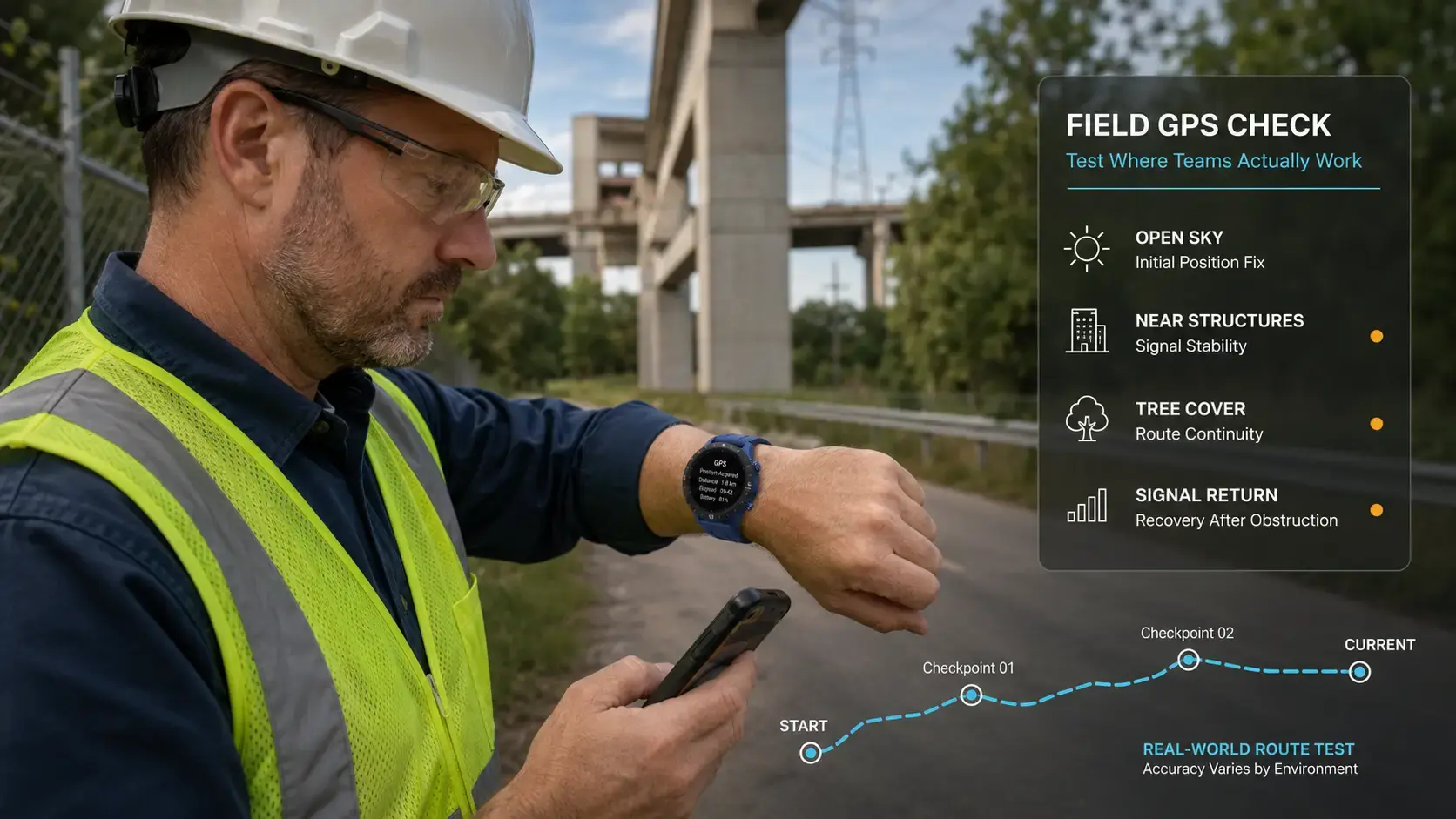
The main benefit of any GPS wearable is that it is accurate. There aren't many open-sky situations that are perfect in business settings. Your teams work under bridges, between buildings, inside buildings that aren't quite finished, or under the cover of trees. In these situations, single-frequency GPS devices don't work well, and their positions can drift by more than 10 to 15 meters.
Look for devices that can receive multiple GNSS signals on two frequencies. This technology gets signals from many satellite constellations at the same time, and it does so across different frequency bands (L1 and L5). This makes multipath errors caused by signal reflection much less common. This gives sub-meter accuracy even in rough terrain, so you can be sure that your workforce management system shows accurate positions in real time.
Battery Endurance for Extended Operations
Battery life has a direct effect on how long operations can go on. For enterprise field operations, shifts of 10 to 12 hours are common. During emergencies or remote project work, missions can last for several days. A smartwatch that needs to be charged every day adds to your break and makes things harder to organize.
Look for gadgets that can last 5 to 10 days on a single charge when used for normal GPS tracking. The model we tested can work nonstop for up to seven days with GPS tracking and Bluetooth synchronization turned on all the time. This longer endurance gets rid of the stress of charging in the middle of a job and lowers the work that goes into handling charging schedules for many teams. Magnetic charging ports make it easier to charge, so you can quickly power up during breaks without having to mess with cords.
Durability and Environmental Resistance
Conditions that would destroy consumer gadgets can't hurt business equipment. With a water resistance rating of 5 ATM (50 meters), the watch will still work even if it rains hard, gets submerged by mistake, or is washed under high pressure on an industrial site. The impact-resistant alloy case keeps the device from breaking when it hits hard surfaces or equipment.
Tolerance to temperature is also important. When working outside in cold weather in the winter or in hot engine rooms or on building sites in the summer, devices must work effectively. The most rugged smartwatches are those that have been certified by the military to MIL-STD-810, but even commercial-grade enterprise smartwatches with reinforced construction and sealed designs are tough enough for most field applications.
Health and Safety Monitoring Features
Modern Chinese smartwatch GPS devices can do more than just navigate. They can also keep a close eye on your health. Optical heart rate trackers measure the strain on the heart and lungs during physically hard work and let you know when you're getting too tired too quickly. This feature is useful for building workers who have to work in very hot conditions or for first responders who have to push their bodies to the limit in emergency situations.
When combined with corporate health management systems, this biometric data allows for proactive wellness programs, lowers the number of injuries at work, and provides objective activity records to back workers' compensation claims. Emergency SOS features add an extra layer of safety. If a worker slips and falls on a remote site, they can instantly send an alert to their bosses and emergency services with their exact GPS coordinates.
Enterprise Integration and Data Security
Functioning on its own is only the beginning. Enterprise GPS Outdoor Smartwatches need to work well with the rest of your technology. Android compatibility makes sure that a lot of devices can use it, and a stable Bluetooth connection lets you share your data easily with software for managing assets, hiring workers, and keeping track of compliance.
You can't forget about data security. Tracking an employee's location gives employers private details about their movements and how the business runs. Make sure that the gadgets you choose can send protected data and follow the privacy rules that apply. Partnering with well-known enterprise software platforms can help with integration issues and speed up the deployment process.
Comparing GPS Outdoor Smartwatch Options for Enterprise Deployment
When looking for a GPS Outdoor Smartwatch for your business, it's helpful to know how the different types and specs fit with your working needs. This will help you narrow down your choices and get the most out of your investment.
Technical Specifications That Matter
Clearness affects bright outdoor screen performance. A 33mm TFT display with 360x360 pixels displays maps, alerts, and other information quickly. AMOLED screens provide better contrast, while TFT technology uses less power, giving business users 7 days of battery life.
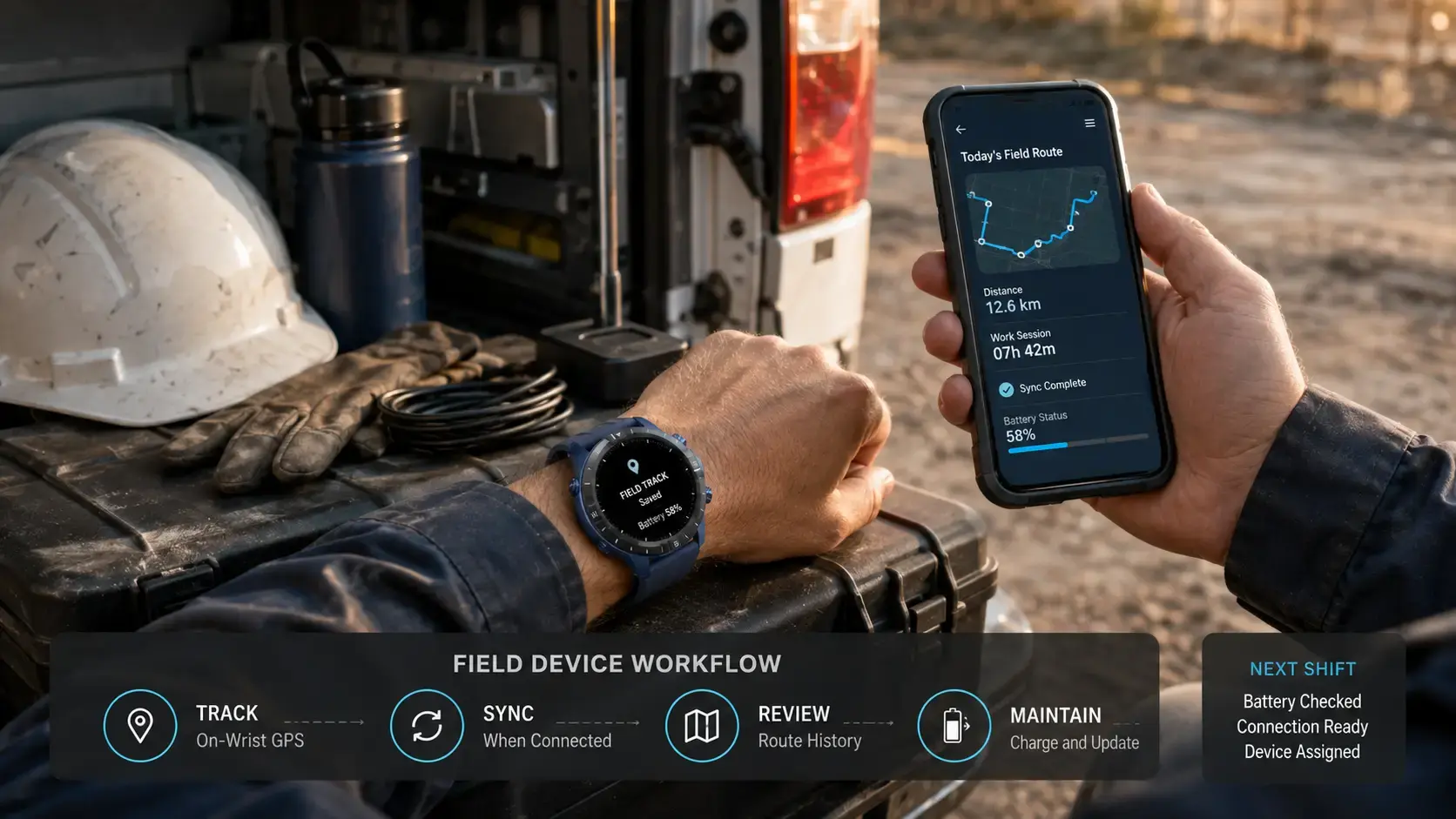
Device connection influences the workflow role. Stand-alone GPS tracking allows your employees to monitor their routes without smartphones; the watch may save activity logs. Management systems get Bluetooth sync signals when workers return to base or enter network service zones. Data gathering and independent running are balanced in this hybrid method.
Strap material affects all-day comfort. Silicone is flexible, hypoallergenic, and easy to clean, making it suited for various workplaces. Pin buckles provide locked-fit adjustments during intense exercise. Clasp closures prevent accidental releases.
Practical Application Scenarios
Consider how teams will use these techs. Standalone GPS tracking preserves route data without draining smartphone batteries, optimising logistics and delivery. Turn-by-turn instructions are sent via steering vibration. This improves car safety and economy.
Massive construction site management incorporates real-time location. Managers can quickly discover team members, provide supplies, and manage geofenced safety zones that warn workers of prohibited locations. Working near water or in the rain requires 5 ATM water protection.
Extended battery life keeps wide-area field service professionals connected throughout multi-stop days. GPS and service call timestamps may be connected for billing and quality control. The lightweight aluminium housing reduces wrist strain while repairing with several tools.
Emergency response teams must be reliable. First responders in disaster zones, wildfires, search & rescue, and distant medical issues benefit from emergency notifications, accurate location, and durable build. Teamwork and overseas deployments benefit from bilingualism.
Vendor Considerations and Support Infrastructure
Long-term happiness with your business smartwatch usage depends on more than just the device specs. It also depends on how reliable the seller is. Check the terms of the guarantee. Full coverage against production flaws lowers the total cost of ownership. When a lot of devices are being used, quick technical help is very important. Delays in fixing setup or hardware issues have a direct effect on how productive workers are.
Infrastructure for after-sales support is especially important for business buyers. Your device fleet will stay operational and safe throughout its lifecycle if you can get replacement units, repair services, and firmware updates. Beyond the cost of the hardware itself, vendors that offer dedicated enterprise support channels, bulk purchasing discounts, and customization options (such as branded packaging or pre-configured settings) are very valuable.
Step-by-Step Guide to Procuring GPS Outdoor Smartwatches for Your Enterprise
For businesses to successfully buy Chinese smartwatch GPS, they need to follow a structured process that makes sure the device's features match their needs while also keeping an eye on costs and deadlines for implementation.
Assessing Your Enterprise Requirements
Create a picture of your employees' qualities and work environments. How many field workers require devices? Where will they work? In cities, rural regions, industries, or terrible weather? What are their safety risks? Which employee, asset, and health management platforms need to be connected?
Write use cases with team leaders and end users. A transport business must plan routes and confirm delivery. Construction companies need safety monitoring and location visibility. Emergency services must be dependable and fast. These demands determine your technological specification goals.
Budget difficulties go beyond unit pricing. Calculate the overall cost of ownership, including additional charging cables, protective cases, software integration, training, and support. Battery-powered gadgets survive longer and need fewer replacements, justifying their greater initial cost.
Evaluating Purchasing Channels
Each of the three main ways businesses buy products offers benefits. Price and customising may be less flexible, but official brand outlets assure authenticity and warranty coverage. Producers may provide bulk discounts to large consumers.
Authorised wholesalers provide genuine products, individual service, and faster delivery. They stock locally to quickly serve growing or needed areas. The electronics industry is plagued by fake items; thus, verifying their authenticity is vital.
Businesses may discover unique solutions with OEM/ODM partners like Xizhou. For testing novel distribution techniques, certain GPS Outdoor Smartwatch manufacturers provide variable minimum purchase amounts. Private label branding helps companies keep their brand, while technological customisation adds proprietary software or features that off-the-shelf products can't.
Post-Procurement Implementation Best Practices
A successful rollout starts before users get their devices. Create standard setup profiles to load corporate settings, Wi-Fi passwords for synchronisation points, and crucial location data at session start. Planning saves time and standardises device settings.
Full user training increases ROI and acceptance. Learn to transmit emergency notifications, understand navigational clues, charge gadgets, and solve basic problems using real-life situations. Hands-on practice is better than reading.
Maintenance extends and improves device performance. Schedule firmware updates to fix security issues and boost performance. Track battery degradation to decide when to replace them before they fail. Systematically collect client feedback to uncover usability problems, enhancements, and practical difficulties that may influence future purchases.
Ensuring Long-Term Success with GPS Outdoor Smartwatches in Enterprise Use
To maintain value, GPS Outdoor Smartwatch installations must be reviewed and improved depending on operations data and workforce needs.
Technical and business metrics should be used to evaluate performance. GPS accuracy, battery life, connection reliability, and hardware failure are technical indications. Employee response time, safety, route efficiency, and compliance paperwork completion are business KPIs.
This data shows improvement areas when reviewed regularly. If battery life drops considerably after 18 months, schedule replacements to prevent work disruptions. Consider multi-band devices if GPS accuracy is unreliable in particular work areas. Check strap materials and case sizes if workers say long-term usage causes aches.
As technology develops, your device strategy must change. For extended autonomy, newer models may feature better batteries, sensors, APIs, or solar charging. Some new ideas are bad, but knowing the crucial ones lets you arrange update cycles for optimum operational benefit.
When examined properly, these gadgets' health and location data may help organisations. Overall, mobility patterns waste time and gas due to inefficient route planning. Productivity and activity dictate optimal work and break times. Environmental sensors assess weather and altitude to enhance safety and workers' comp.
Privacy must balance data usefulness with employee rights and compliance. Set clear rules on what data you gather, how you use it, who may see it, and how long you keep it. To build trust and guarantee honest execution, include workers and their representatives in policymaking.
Conclusion
When businesses choose GPS Outdoor Smartwatches, they need to carefully look at the technical specs, operating needs, provider reliability, and long-term lifecycle management. The right gadgets give real benefits by making workers safer, making operations more efficient, and keeping detailed records of all activities that help with many business tasks. A good procurement process chooses devices that work well with current systems and leave room for future technological progress, while also meeting immediate needs. Whether you're buying devices for a small field service team or for workers all over the country, the guidelines in this guide will help you make smart choices that will get the most out of your money and make your business run better in tough outdoor conditions.
FAQ
1. What GPS accuracy can enterprises expect in challenging environments?
These days, multi-GNSS trackers can usually get within 3 to 5 meters of accuracy outside. Dual-frequency receivers stay accurate within 5 to 10 meters in urban canyons, thick woods, or partly enclosed buildings. Single-frequency devices, on the other hand, may drift 10 to 20 meters or more. For important tasks that need sub-meter accuracy, think about getting devices that can connect to external antennas or reinforcement systems, even though they are more expensive and complicated.
2. How do battery life claims translate to real-world enterprise use?
The advertized battery life is based on mixed use with GPS activation happening from time to time. The battery life drops by 40 to 60% when GPS tracking is used all the time for route recording or real-time position monitoring. A gadget that says it can last for 7 days with normal use might only last for 3–4 days if it is tracked all the time. Businesses that need GPS all day should look for devices that can handle mixed use for 10 days or more, or they should set up charging schedules for when shifts change and during breaks.
3. Can GPS outdoor smartwatches integrate with existing workforce management software?
Most enterprise-level devices can send data in standard forms like GPX and FIT files and have APIs that let you add custom features. Smartwatches from well-known brands are becoming more and more natively supported by cloud-based labor management systems. Ask for technical integration paperwork when looking at devices, and if you can, do trial testing with your own software system. OEM partners, such as Xizhou, can often make custom firmware or apps that make it easier to connect to private business systems.
Partner with Xizhou for Your Enterprise GPS Outdoor Smartwatch Needs
We at Shenzhen Xizhou E-commerce Co., Ltd. know that business buyers need more than just regular consumer goods. As a dedicated GPS Outdoor Smartwatch provider that focuses on smart wearable technology, we combine advanced research and development (R&D) with flexible production to provide solutions that are suited to your unique business needs. Our devices come with strict quality control measures and full certifications, as well as GPS tracking that works on its own, a battery life of 5–10 days, and water resistance up to 5 ATM. They are also lightweight and comfortable to wear.
Our team is here to help you every step of the way with your procurement, whether you need low minimum order amounts for test programs, private label branding to strengthen your company's image, or custom feature development to work with your own systems. We keep a lot of stock on hand so that orders can be filled quickly. We also provide quick technical support and stand behind our products with dependable service after the sale that business buyers depend on.
Are you ready to give your employees GPS Outdoor Smartwatches that will really make them safer and more productive? Visit our business solutions team at 13266508958@163.com to talk about your unique needs, get technical specs, and look into bulk price options. Let us help you change how your field teams work in tough outdoor conditions by giving them smart wearable tech that is made to solve real-world business problems.
References
1. Anderson, M. & Roberts, K. (2022). Wearable Technology in Industrial Workforce Management: Applications and Best Practices. Journal of Enterprise Technology Solutions, 14(3), 287-304.
2. Chen, L., Wang, P., & Zhang, Y. (2023). Multi-GNSS Positioning Accuracy in Complex Environments: A Comparative Analysis for Enterprise Applications. International Journal of Navigation Systems, 28(2), 156-173.
3. Industrial Safety Equipment Association. (2023). Guidelines for Selecting and Deploying GPS-Enabled Wearables in High-Risk Work Environments. ISEA Technical Report 2023-07.
4. Martinez, J. & Thompson, R. (2021). Total Cost of Ownership Analysis for Enterprise Wearable Device Deployments. Business Technology Review, 45(4), 112-129.
5. National Institute for Occupational Safety and Health. (2022). Wearable Technologies for Worker Safety and Health: Current Applications and Future Directions. NIOSH Publication No. 2022-134.
6. Peterson, S., Kumar, A., & O'Brien, C. (2023). Battery Performance and Lifecycle Management in Enterprise Smartwatch Fleets. Mobile Computing and Enterprise Applications Quarterly, 19(1), 45-62.