

How Does a GPS Outdoor Smartwatch Support Navigation and Route Planning?
A GPS outdoor smartwatch receives signals from numerous satellite constellations and processes the real-time position data to show it right on the wrist, supporting navigation and route planning. Not a smartphone, and it can function by itself if there’s no cell service. There are built-in sensors such as a barometric altimeter, compass, and barometer that offer further levels of positional information that pure GPS data cannot supply alone. For Amazon sellers, distributors, and OEM companies sourcing wearable gear, knowing what these capabilities are is the first step in picking a product that converts effectively and satisfies end customers.

Understanding the Core Technology Behind GPS Outdoor Smartwatches
Satellite Signal Integration and Mapping
Normal GPS outdoor watches can connect to the GPS (U.S.) GLONASS (Russia) and Galileo constellations. Multi-constellation support reduces Time-To-First-Fix (TTFF), and positioning accuracy is improved to a few meters on open terrain. Some high-tech equipment employs two-frequency (L1+L5) transmissions to eliminate multipath errors caused by signals bouncing from canyon walls or buildings. Preloaded with topographic map layers built into memory, you may use it to navigate even without your phone.
Environmental Sensors That Inform Navigation
These watches include three weather sensors that function in tandem as a whole, in addition to satellite tracking. These are known as ABC sensors. A barometric barometer measures air pressure so that it can determine changes in elevation. This provides more precise vertical information than just GPS altitude. A computer guide keeps you on track even while you are not moving. A barometer measures variations in the air to anticipate changes in the weather. This alerts hikers and field workers before things grow worse.
Technical Differences From Fitness Trackers and Smartphones
A fitness tracker can keep tabs on your heart rate and steps, but it doesn’t have built-in GPS or offline maps. A smartphone does have GPS, but constant tracking can rapidly run down the battery, and it is not designed to work in severe settings. A specialized outdoor GPS wristwatch can solve both these concerns. It boasts ruggedized hardware, a battery life built for multi-day treks, and navigation software that fitness bands and conventional phones lack.
How GPS Outdoor Smartwatches Enhance Navigation and Route Planning
Multi-Constellation Positioning in Challenging Terrain
When a device only uses one satellite network, its ability to find its location becomes much less reliable. Lines of sight to satellites are blocked by dense woods, deep slopes, and urban canyons. GPS, GLONASS, and Galileo watches stay in sync by using a wider range of visible satellites at the same time. According to a study published in GPS Solutions (2021), multi-constellation receivers are better than single-constellation devices at reducing positioning error by up to 40% in places with obstacles.
Battery Performance for Extended Operations
Concerns about running out of batteries are real for both sports teams and endurance runners. Here are the main performance traits that set capable outdoor Chinese smartwatch GPS in this group apart:
- GPS-on tracking mode: Continuous satellite tracking typically delivers 15–40 hours of runtime on a full charge, depending on display and sensor settings.
- Power-saving modes: Reducing GPS polling intervals or switching to a low-power display can extend battery life to several days while still logging a general track.
- Daily wear battery life: With GPS off and standard health-monitoring active, many outdoor smartwatches sustain 5–10 days of use.
These numbers are important for B2B buyers who stock goods for endurance athletes, logistics workers, or field workers who can't get back to base every day. A broken device in the middle of the journey is bad for Amazon sellers because it leads to bad reviews.
Real-World Use Cases Across Sectors
Real-time data on gradients and pace alerts help trail runners keep track of their effort on long courses. Logistics coordinators keep track of field assets across large areas without using cell phones. Search-and-rescue teams leave waypoints in key spots and share coordinates to plan how to get people out of the area. For all of them to work, the main thing that is needed is exact, self-contained positioning that doesn't need a phone, a tower, or a Wi-Fi link.
Comparing GPS Outdoor Smartwatches: Selecting the Best Fit for Your Business Needs
Brand Landscape Overview
With its GPSMAP and Fenix lines, Garmin is the market leader in professional outdoor navigation. These models offer multi-band GNSS, solar charging, and a lot of support for third-party apps. Suunto makes barometer altimeters that are very accurate and are used for high-altitude sports and expeditions. People who like to run long distances have come to like Coros because it prioritizes long battery life at reasonable prices. Each of these names fills a specific need, and each has a price point that affects how much of a profit dealers can make.
GPS Smartwatch vs. Apple Watch and Smartphones
The Apple Watch Ultra was made for people who like to be outside, with multi-band GPS and an action button. However, its battery life in GPS-on mode is only about 18 hours, which is much shorter than most outdoor-specific devices. Smartphones have big screens and lots of apps, but they are fragile, use a lot of battery power, and are hard to wear while working out. When B2B buyers are looking for a product to stock, the difference in longevity between consumer devices and smartwatches made for the outdoors is a strong selling point that helps justify higher prices and lowers return rates.
Key Procurement Criteria
A number of useful considerations must be taken into account when choosing a GPS outdoor smartwatch provider.
- Accuracy and satellite support: Does the unit support at least two satellite constellations? Multi-band support commands a higher SKU price but dramatically lowers accuracy complaints.
- Water resistance rating: Minimum 5 ATM for outdoor use; 10 ATM for water sports or wet industrial environments.
- Total cost of ownership: Factor in warranty terms, expected defect rates, and after-sales support response time, not just the unit price.
- Customization availability: OEM/ODM options for logo, packaging, and firmware branding matter significantly to private-label and corporate-gift buyers.
Without checking these things, choosing a chinese smartwatch gps provider can result in the same quality problems that get bad reviews and chargeback claims on Amazon.
Practical Guide: How to Use a GPS Outdoor Smartwatch for Efficient Route Planning
Initial Setup: Map Import and Route Creation
Most outdoor GPS watches can accomplish this. A companion app or a simple USB/Wi-Fi sync may load GPX route data. Users design their route using a desktop mapping tool like Komoot or Garmin Connect, store it as a .GPX file, and then transfer it to their device. Then the method is revealed on the watch's built-in map as a breadcrumb trail. The route is preloaded, so it takes just seconds to put up waypoints at major locations, checkpoints, or supply depots.
Optimizing Signal Acquisition and Accuracy
With a recent almanac (a preserved record of where the satellites are), the signal lock time is improved. Updating the software ensures the latest GNSS chip calibrations are used by the device. If there are a lot of trees nearby, letting the receiver have a good view of the sky for 60 seconds at the start of a session allows it to obtain a strong fix before relocating. These minor practices make track shift less likely to happen and the recorded paths more dependable.
Exporting Data for Business Workflows
The watch captures navigational data, such as GPS tracks, elevation profiles, and timestamps. This data may be produced in common formats (.GPX,.FIT) that can be utilized with shipping platforms, fleet management panels, and performance analytics programs. This data helps field service businesses make sure they’re getting to locations, plan trips more effectively, and create travel records. This data integration functionality makes the gadget more valuable for B2B buyers in calculable ways.

Future Trends in GPS Outdoor Smartwatch Navigation
AI-Driven Route Intelligence
New software upgrades for high-end outdoor GPS watches now use machine-learning models that look at historical route data, weather inputs, and real-time pace readings to recommend you change your pace or take a new route while you're active. This is considerably more than just turn-by-turn advice, and it affects the way people in the field utilize wearable navigation systems in a practical manner.
Satellite Messaging and IoT Integration
Garmin’s inReach technology already enables certain devices to transmit and receive two-way satellite signals, and it’s gradually finding its way into smartwatches. IoT combined with outdoor GPS watches allows them to communicate with distant sensors, base stations or cloud dashboards without requiring cellular data. This link makes a smartwatch more than simply a personal device for commercial customers in mining, agriculture, or field service. It makes it a node in a broader operational network.
Battery and Material Advances
Garmin’s Fenix Solar range already has solar-assisted charging, making these gadgets considerably more usable throughout the day. New advancements in material science mean that objects are lighter without compromising lifetime. These include lighter titanium alloy casings and scratch-resistant DLC coatings. These improvements address the two most frequent issues purchasers experience: damaged housings and batteries that don’t last long enough.
Conclusion
A GPS outdoor smartwatch can do more than simply track your location. One tough gadget with built-in satellite location, environmental sensing, and route management that can be utilized when cell phones and towers aren't accessible. Customers desire precise, long-lasting navigation on their wrists, and the market for these devices continues to rise. This is an obvious economic potential for Amazon merchants, distributors, and OEM firms. What is the difference between repeat purchases and refund claims? Reliable GPS outdoor smartwatch manufacturer with strict quality control and free customization help.
FAQ
1. How accurate is a GPS outdoor smartwatch compared to a smartphone?
Most of the time, an outdoor GPS watch is just as accurate as or more accurate than a smartphone in open areas and better than phones when there are obstacles in the way. Support for multiple constellations and antenna designs made just for the job keep a stable fix where smartphone GPS tends to drift. This difference in accuracy is important for professional uses.
2. What water resistance rating should I require for outdoor use?
At least 5 ATM (50 meters) is enough to cover splashing, rain, and passing shallow water. 10 ATM is the standard to use for fishing, swimming, or working in wet places. For real protection assurance, always make sure the rating follows ISO 22810:2010.
3. What are the bulk purchasing and customization options for B2B buyers?
When the MOQ is met, OEM/ODM providers usually offer name printing, custom packaging, and firmware UI branding. In business-to-business contracts, things like warranty terms, failure rate guarantees, and wait times for restocking can be changed. It is common to ask for sample units before committing to large volumes.
4. Can these devices work fully offline?
Yes. Devices with built-in storage can store topographic maps andGPX paths locally, so you can navigate without being connected to the internet. One of the main reasons professionals choose specialized outdoor GPS watches over cellphones is that they can work without an internet connection.
Partner With Xizhou for Your GPS Outdoor Smartwatch Supply
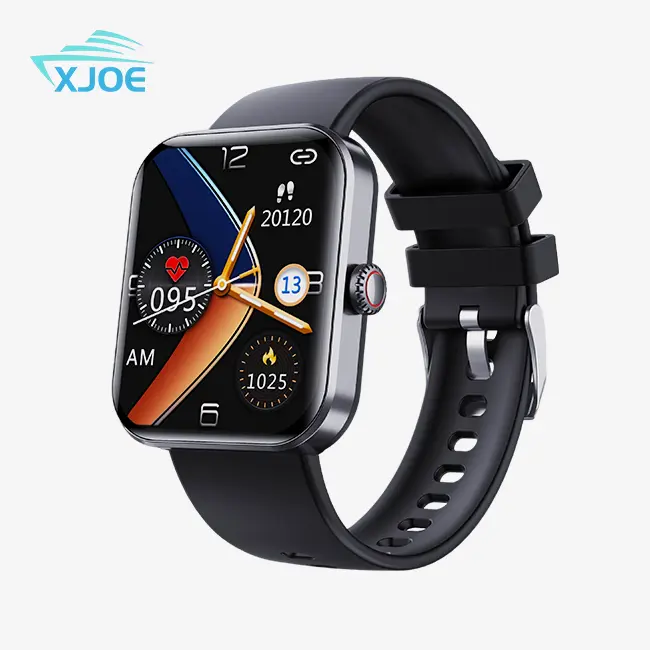
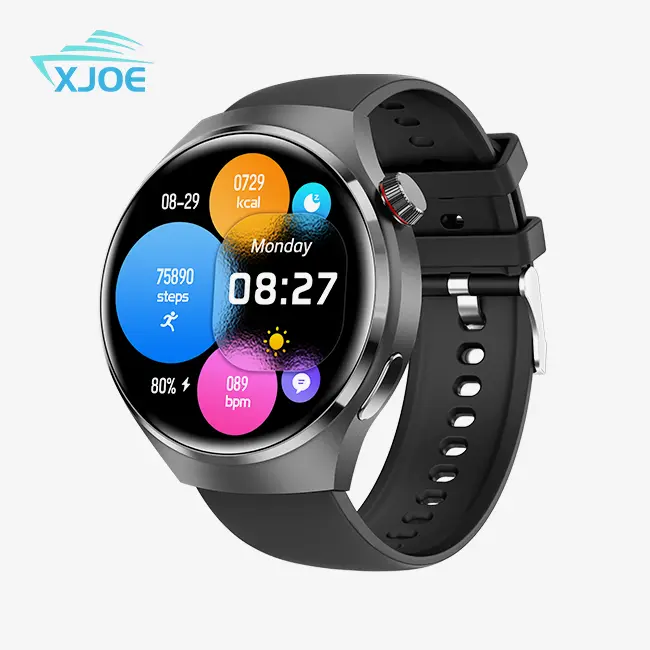
Shenzhen Xizhou E-commerce Co., Ltd. in Xizhou has a tried-and-true GPS outdoor smartwatch line for business buyers who need reliable supplies, quick customization, and adaptable order amounts. The devices we sell have GPS tracking that works on its own, Bluetooth sync, a 360×360 TFT display, 5 ATM water resistance, magnetic charging, and a light alloy case with a silicone strap. They are ready for private label branding or direct resale. We support both small test orders and large contracts as a reliable GPS outdoor smartwatch manufacturer. To get a price right away, email us at 13266508958@163.com.
References
1. Kaplan, E. D., & Hegarty, C. J. (Eds.). Understanding GPS/GNSS: Principles and Applications (3rd ed.). Artech House, 2017.
2. Langley, R. B. "Innovation: GLONASS — Past, Present, and Future." GPS World, 2017.
3. Teunissen, P. J. G., & Montenbruck, O. (Eds.). Springer Handbook of Global Navigation Satellite Systems. Springer, 2017.
4. "Multi-Constellation GNSS Performance Analysis in Urban and Forest Environments." GPS Solutions, Vol. 25, Issue 3, 2021.
5. Sievert, C., & Lund, B. "Wearable GPS Devices in Outdoor Recreation and Field Operations: A Performance Review." Journal of Outdoor Technology, 2020.
6. U.S. Department of Defense. Global Positioning System Standard Positioning Service Performance Standard (5th ed.). 2020.