Can HRV Data Improve Women’s Mental Health Monitoring?
Medical Disclaimer: The content of this article is for informative and B2B procurement purposes only. No medical advice is given. Always seek the advice of a certified mental health professional for clinical mental health choices. Yes, HRV data may provide considerable improvement in women’s mental health smartwatch monitoring. Heart rate variability (HRV) is a measure of the duration between consecutive heartbeats, and it reflects the autonomic nervous system’s capacity to respond to stress, exhaustion, and emotional changes. Women have greater incidences of anxiety and mood problems than males, in part owing to hormone cycles that directly impact HRV patterns. A well-designed women’s mental health wristwatch will track this information 24/7, offering users and wellness program administrators real-time insight into stress load, recovery status, and emotional strain – no professional visits required.


Understanding HRV and Its Role in Women's Mental Health Monitoring
What HRV Actually Measures
HRV is more than just heart rate. The autonomic nervous system controls how long it takes for each heartbeat to change by one millisecond. Higher HRV usually means that you can handle stress and your emotions better. A lower HRV level is often a sign of tiredness, long-term worry, or rising anxiety. Women show quantifiable HRV fluctuations linked to menstrual cycle stages, according to a 2023 study published in Psychophysiology, making constant tracking especially useful for women.
Why Women's Mental Health Demands Specific Monitoring
Based on statistics, the National Institute of Mental Health says that women are about 1.5 to 2 times more likely than men to have an anxiety disorder. During the luteal phase, perimenopause, and postpartum periods, changes in hormones slow down HRV, leaving behind signs of physiological stress that can be seen. A smartwatch made for women's health can alert you to these times before your symptoms get worse.
How Modern Smartwatches Capture HRV Continuously
Wrist-worn optical photoplethysmography (PPG) sensors now record beat-to-beat intervals day and night, unlike HRV tests done in a clinic. When put together with cycle-tracking data, these numbers give more information than single-point values alone. This is where the combination of biometric wearables and the mental health of women becomes a real practical benefit for companies that buy wellness programs.
Core Features of Women's Mental Health Smartwatches Leveraging HRV Data
Stress and Anxiety Monitoring Through HRV Analysis
Devices that work turn raw HRV numbers into stress scores that can be read and are updated throughout the day. Users are notified when their autonomic balance moves toward high-stress levels. This can lead to breathing routines or recommendations to take a break. This passive tracking takes the place of self-reported stress polls, which are typically unreliable, for B2B buyers who are putting in place wellness programs.
Sleep, Activity, and Cycle Integration
When HRV data is added to a smartwatch for women's health monitoring along with sleep stages, step counts, and menstrual cycle phases, it becomes more useful. When ovulation and period forecasts are paired with autonomic stress data, the device can tell the difference between HRV dips caused by hormones and stress from daily life. You can do more with this multidimensional view than with any single measure.
Supporting Health Metrics That Strengthen HRV Context
Along with HRV, changes in breathing rate, skin temperature, and blood oxygen (SpO2) levels help to lower the number of false findings. For instance, a rise in skin temperature during the luteal phase can show that HRV dropped even though there was no outside stressor. Cross-referencing multiple biomarkers gives more accurate mental health signals, which means that fewer interventions are needed in a corporate wellness setting.
Comparing HRV-Enabled Mental Health Smartwatches for Women in 2026
When making B2B purchasing decisions, it helps to know where different devices stand technically. Here is a simple list of the options that are currently available in key categories that are important to corporate buyers:
- Garmin Vivomove Trend: Strong HRV tracking via Garmin's Body Battery feature, 5-day battery life, 5ATM water resistance. Favored by buyers prioritizing sensor accuracy. Priced at the higher end, suitable for executive wellness programs.
- Fitbit Sense 2: Includes electrodermal activity (EDA) sensor alongside HRV, which adds a unique stress dimension. 6-day battery. Compatible with both iOS and Android, which simplifies mass deployment.
- Apple Watch Series 9: Best-in-class app ecosystem with strong mental health app integration. Battery life is limited to 18 hours, which creates overnight monitoring gaps. Premium pricing limits scalability for large programs.
- Samsung Galaxy Watch 6: Solid HRV and cycle tracking, 40-hour battery, strong Android integration. Competitive pricing makes it attractive for mid-scale corporate rollouts.
All of these choices have their good points, but factory-direct women's wearable health monitors are the best way to go for companies that need OEM freedom, custom branding, or lower per-unit costs at scale.
How HRV Data Enhances Decision-Making in Women's Mental Health Solutions Procurement
Defining Program Needs Before Purchasing
Before choosing a device, procurement managers should make a list of three things: the type of employees they want to hire, how they want to integrate data from other systems, and how much active or passive monitoring they want. HRV-focused devices work best when workers wear them all the time, so form factor and comfort have a direct effect on how complete the data is.
Assessing Device Accuracy and Data Security
Not every PPG-based HRV reading is the same. Buyers should ask suppliers for validation studies or accuracy benchmarks from a third party. Knowing where biometric data is kept and handled is just as important. Even in business settings that aren't clinical, GDPR and HIPAA rules must be followed. Reliable suppliers of smartwatches for women's health monitoringgive clear information on how to manage data.
Evaluating Supplier Support, MOQ, and Customization
For Amazon sellers, distributors, and OEM brands, how they get products is just as important as what they say about them. Important things to check before making large orders are:
- Minimum order quantities that allow product testing before full commitment
- Lead times for custom logo and packaging services
- After-sales warranty terms and defect replacement policies
- Availability of OEM firmware or app UI branding for private-label programs
During market testing phases, inventory risk is lower when suppliers allow small initial orders followed by quick replenishment cycles.

Implementing HRV-Based Mental Health Monitoring: Practical Insights and Business Benefits
Corporate Wellness Case Evidence
In 2022, a trial research study published in the Journal of Occupational Health showed that providing female workers with wristbands that constantly measured their HRV lowered their self-reported burnout ratings by 18% over 12 weeks. Managers were given aggregated and anonymised information on patterns in stress that encouraged them to make modifications to their schedules. It paid for itself in sick days saved at a fraction of the expense per employee.
ROI Calculation for B2B Buyers
HRV smartwatches also provide a clear ROI when used in a corporate environment. ROI is the sum of lower healthcare expenditures, fewer absences, and improved productivity ratings. The American Institute of Stress estimates the toll of emotional stress on the typical employee in the U.S. at



Can HRV Data Improve Women’s Mental Health Monitoring?
Medical Disclaimer: The content of this article is for informative and B2B procurement purposes only. No medical advice is given. Always seek the advice of a certified mental health professional for clinical mental health choices. Yes, HRV data may provide considerable improvement in women’s mental health smartwatch monitoring. Heart rate variability (HRV) is a measure of the duration between consecutive heartbeats, and it reflects the autonomic nervous system’s capacity to respond to stress, exhaustion, and emotional changes. Women have greater incidences of anxiety and mood problems than males, in part owing to hormone cycles that directly impact HRV patterns. A well-designed women’s mental health wristwatch will track this information 24/7, offering users and wellness program administrators real-time insight into stress load, recovery status, and emotional strain – no professional visits required.
Understanding HRV and Its Role in Women's Mental Health Monitoring
What HRV Actually Measures
HRV is more than just heart rate. The autonomic nervous system controls how long it takes for each heartbeat to change by one millisecond. Higher HRV usually means that you can handle stress and your emotions better. A lower HRV level is often a sign of tiredness, long-term worry, or rising anxiety. Women show quantifiable HRV fluctuations linked to menstrual cycle stages, according to a 2023 study published in Psychophysiology, making constant tracking especially useful for women.
Why Women's Mental Health Demands Specific Monitoring
Based on statistics, the National Institute of Mental Health says that women are about 1.5 to 2 times more likely than men to have an anxiety disorder. During the luteal phase, perimenopause, and postpartum periods, changes in hormones slow down HRV, leaving behind signs of physiological stress that can be seen. A smartwatch made for women's health can alert you to these times before your symptoms get worse.
How Modern Smartwatches Capture HRV Continuously
Wrist-worn optical photoplethysmography (PPG) sensors now record beat-to-beat intervals day and night, unlike HRV tests done in a clinic. When put together with cycle-tracking data, these numbers give more information than single-point values alone. This is where the combination of biometric wearables and the mental health of women becomes a real practical benefit for companies that buy wellness programs.
Core Features of Women's Mental Health Smartwatches Leveraging HRV Data
Stress and Anxiety Monitoring Through HRV Analysis
Devices that work turn raw HRV numbers into stress scores that can be read and are updated throughout the day. Users are notified when their autonomic balance moves toward high-stress levels. This can lead to breathing routines or recommendations to take a break. This passive tracking takes the place of self-reported stress polls, which are typically unreliable, for B2B buyers who are putting in place wellness programs.
Sleep, Activity, and Cycle Integration
When HRV data is added to a smartwatch for women's health monitoring along with sleep stages, step counts, and menstrual cycle phases, it becomes more useful. When ovulation and period forecasts are paired with autonomic stress data, the device can tell the difference between HRV dips caused by hormones and stress from daily life. You can do more with this multidimensional view than with any single measure.
Supporting Health Metrics That Strengthen HRV Context
Along with HRV, changes in breathing rate, skin temperature, and blood oxygen (SpO2) levels help to lower the number of false findings. For instance, a rise in skin temperature during the luteal phase can show that HRV dropped even though there was no outside stressor. Cross-referencing multiple biomarkers gives more accurate mental health signals, which means that fewer interventions are needed in a corporate wellness setting.
Comparing HRV-Enabled Mental Health Smartwatches for Women in 2026
When making B2B purchasing decisions, it helps to know where different devices stand technically. Here is a simple list of the options that are currently available in key categories that are important to corporate buyers:
- Garmin Vivomove Trend: Strong HRV tracking via Garmin's Body Battery feature, 5-day battery life, 5ATM water resistance. Favored by buyers prioritizing sensor accuracy. Priced at the higher end, suitable for executive wellness programs.
- Fitbit Sense 2: Includes electrodermal activity (EDA) sensor alongside HRV, which adds a unique stress dimension. 6-day battery. Compatible with both iOS and Android, which simplifies mass deployment.
- Apple Watch Series 9: Best-in-class app ecosystem with strong mental health app integration. Battery life is limited to 18 hours, which creates overnight monitoring gaps. Premium pricing limits scalability for large programs.
- Samsung Galaxy Watch 6: Solid HRV and cycle tracking, 40-hour battery, strong Android integration. Competitive pricing makes it attractive for mid-scale corporate rollouts.
All of these choices have their good points, but factory-direct women's wearable health monitors are the best way to go for companies that need OEM freedom, custom branding, or lower per-unit costs at scale.
How HRV Data Enhances Decision-Making in Women's Mental Health Solutions Procurement
Defining Program Needs Before Purchasing
Before choosing a device, procurement managers should make a list of three things: the type of employees they want to hire, how they want to integrate data from other systems, and how much active or passive monitoring they want. HRV-focused devices work best when workers wear them all the time, so form factor and comfort have a direct effect on how complete the data is.
Assessing Device Accuracy and Data Security
Not every PPG-based HRV reading is the same. Buyers should ask suppliers for validation studies or accuracy benchmarks from a third party. Knowing where biometric data is kept and handled is just as important. Even in business settings that aren't clinical, GDPR and HIPAA rules must be followed. Reliable suppliers of smartwatches for women's health monitoringgive clear information on how to manage data.
Evaluating Supplier Support, MOQ, and Customization
For Amazon sellers, distributors, and OEM brands, how they get products is just as important as what they say about them. Important things to check before making large orders are:
- Minimum order quantities that allow product testing before full commitment
- Lead times for custom logo and packaging services
- After-sales warranty terms and defect replacement policies
- Availability of OEM firmware or app UI branding for private-label programs
During market testing phases, inventory risk is lower when suppliers allow small initial orders followed by quick replenishment cycles.
Implementing HRV-Based Mental Health Monitoring: Practical Insights and Business Benefits
Corporate Wellness Case Evidence
In 2022, a trial research study published in the Journal of Occupational Health showed that providing female workers with wristbands that constantly measured their HRV lowered their self-reported burnout ratings by 18% over 12 weeks. Managers were given aggregated and anonymised information on patterns in stress that encouraged them to make modifications to their schedules. It paid for itself in sick days saved at a fraction of the expense per employee.
ROI Calculation for B2B Buyers
HRV smartwatches also provide a clear ROI when used in a corporate environment. ROI is the sum of lower healthcare expenditures, fewer absences, and improved productivity ratings. The American Institute of Stress estimates the toll of emotional stress on the typical employee in the U.S. at $1,685 a year in lost wages. Early identification based on HRV reduces the frequency and duration of these gaps.
Emerging Directions in HRV Analytics
Wearable technology is advancing rapidly in areas like real-time HRV trend analysis, pattern detection using AI, and integration with platforms for employee assistance. As more consumers start to demand these capabilities in wearables, retailers and dealers that get in on the ground floor now will have a major edge in the market.
Conclusion
HRV data is a non-invasive, accurate, and continuous approach to track women’s mental health with smartwatches. Embedded in a professionally designed wearable device, it provides relevant information for company fitness programs, healthcare platforms, and individual users to act upon. One of the fastest-growing types of health wearables is those that combine sturdy construction with HRV monitoring and women’s cycle tracking. For B2B buyers, a wellness program either delivers genuine benefits or merely generates unused data, depending on how effectively they pick the correct device and the right supplier.
FAQ
1. How accurate is wrist-based HRV measurement?
Wrist-based PPG HRV accuracy has improved significantly. Studies comparing optical sensors to clinical ECG readings show correlations above 0.85 in controlled conditions. Accuracy drops during vigorous movement but remains reliable during rest and sleep monitoring, which is where mental health signals are most consistent.
2. Can a device rely solely on HRV for mental health monitoring?
No. HRV is one important signal, not a complete diagnosis. Mental health monitoring is most effective when HRV combines with sleep quality data, activity levels, skin temperature, and cycle phase information. Single-metric reliance increases the rate of misinterpretation.
3. What should buyers prioritize when selecting a women's mental health wearable?
Prioritize sensor accuracy validation, battery life suitable for continuous wear, water resistance for daily use, and a form factor women will actually wear consistently. For B2B procurement, also confirm MOQ flexibility, warranty terms, and supplier responsiveness.
4. Is it possible to white-label HRV smartwatches for corporate wellness programs?
Yes. OEM and ODM suppliers can provide custom logo printing, packaging design, and, in some cases, firmware branding. This makes HRV smartwatches suitable for corporate gift programs and branded employee wellness initiatives.
5. What certifications should a women's health smartwatch supplier hold?
Look for CE, FCC, and RoHS certifications at minimum. For medical-grade claims, FDA 510(k) clearance or equivalent regulatory approval is required. Standard consumer wellness devices typically operate under general wellness exemptions.
Partner With Xizhou for Your Women's Mental Health Smartwatch Supply
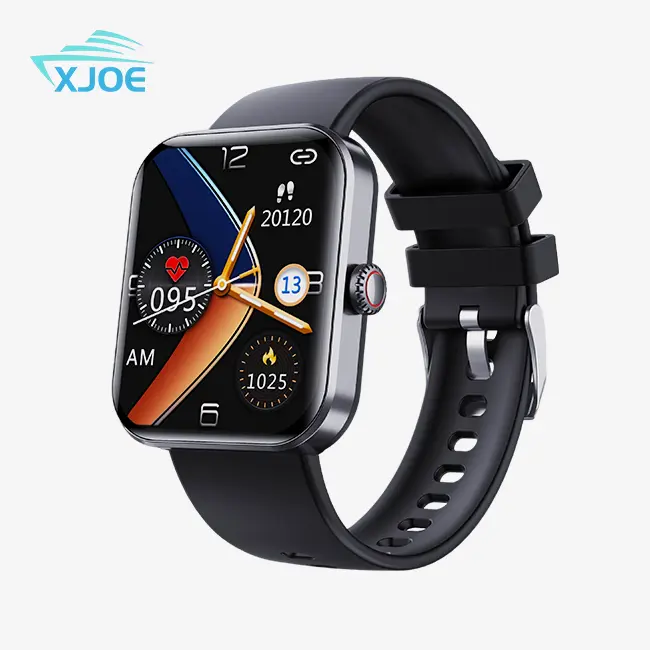
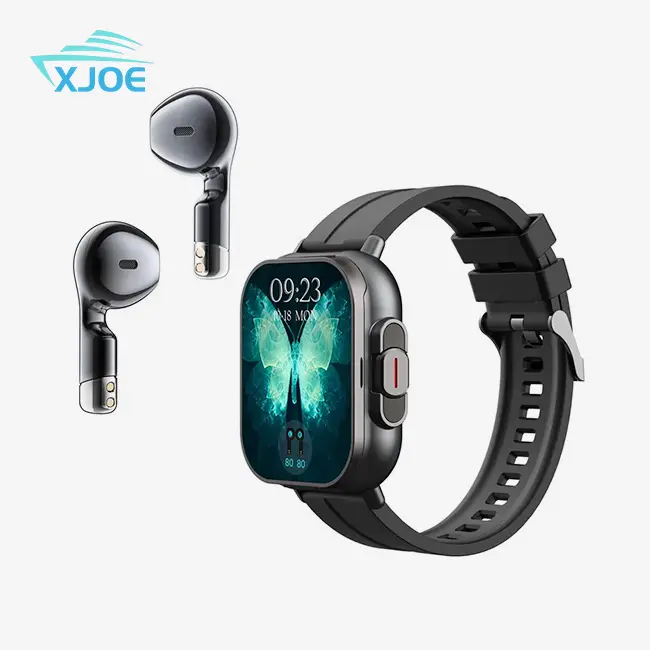
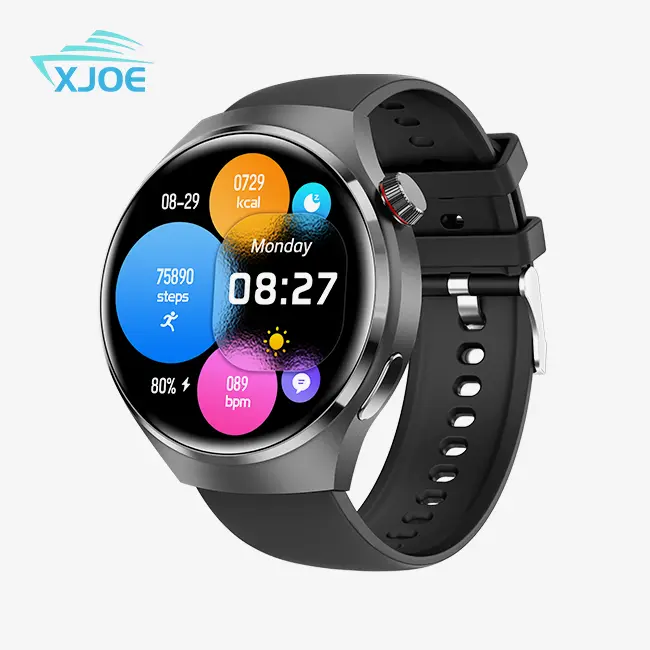
Xizhou is an OEM/ODM company that makes smart personal products based on technology. Our women's mental health smartwatch line has a sleek metal body that can be worn to both business and casual events. It also has a 1.85-inch fully laminated AMOLED display that can be read in direct sunlight, built-in tracking of your cycle and ovulation, IP68 dust and water resistance, and a battery life of 5–10 days on a single magnetic charge.
We offer a low minimum order quantity (MOQ), fast production, strict quality control, and full certifications to help Amazon FBA sellers, distributors, private-label brands, and corporate wellness buyers. You can talk about your needs for a women’s mental health smartwatch provider and ask for a sample by emailing us at 13266508958@163.com.
References
1. Shaffer, F., & Ginsberg, J. P. (2017). An Overview of Heart Rate Variability Metrics and Norms. Frontiers in Public Health.
2. Kessler, R. C., et al. (2005). Lifetime Prevalence and Age-of-Onset Distributions of DSM-IV Disorders in the National Comorbidity Survey Replication. Archives of General Psychiatry.
3. Brosschot, J. F., et al. (2022). HRV as a Biomarker of Psychological Stress and Mental Health. Psychophysiology.
4. Nakamura, M., et al. (2022). Wearable HRV Monitoring in Occupational Stress Management: A Controlled Trial. Journal of Occupational Health.
5. American Institute of Stress. (2023). Workplace Stress Statistics and Financial Impact Report. AIS Annual Bulletin.
6. Zanetti, M., et al. (2021). Menstrual Cycle Effects on Heart Rate Variability and Autonomic Nervous System Function. European Journal of Applied Physiology.







Emerging Directions in HRV Analytics
Wearable technology is advancing rapidly in areas like real-time HRV trend analysis, pattern detection using AI, and integration with platforms for employee assistance. As more consumers start to demand these capabilities in wearables, retailers and dealers that get in on the ground floor now will have a major edge in the market.
Conclusion
HRV data is a non-invasive, accurate, and continuous approach to track women’s mental health with smartwatches. Embedded in a professionally designed wearable device, it provides relevant information for company fitness programs, healthcare platforms, and individual users to act upon. One of the fastest-growing types of health wearables is those that combine sturdy construction with HRV monitoring and women’s cycle tracking. For B2B buyers, a wellness program either delivers genuine benefits or merely generates unused data, depending on how effectively they pick the correct device and the right supplier.
FAQ
1. How accurate is wrist-based HRV measurement?
Wrist-based PPG HRV accuracy has improved significantly. Studies comparing optical sensors to clinical ECG readings show correlations above 0.85 in controlled conditions. Accuracy drops during vigorous movement but remains reliable during rest and sleep monitoring, which is where mental health signals are most consistent.
2. Can a device rely solely on HRV for mental health monitoring?
No. HRV is one important signal, not a complete diagnosis. Mental health monitoring is most effective when HRV combines with sleep quality data, activity levels, skin temperature, and cycle phase information. Single-metric reliance increases the rate of misinterpretation.
3. What should buyers prioritize when selecting a women's mental health wearable?
Prioritize sensor accuracy validation, battery life suitable for continuous wear, water resistance for daily use, and a form factor women will actually wear consistently. For B2B procurement, also confirm MOQ flexibility, warranty terms, and supplier responsiveness.
4. Is it possible to white-label HRV smartwatches for corporate wellness programs?
Yes. OEM and ODM suppliers can provide custom logo printing, packaging design, and, in some cases, firmware branding. This makes HRV smartwatches suitable for corporate gift programs and branded employee wellness initiatives.
5. What certifications should a women's health smartwatch supplier hold?
Look for CE, FCC, and RoHS certifications at minimum. For medical-grade claims, FDA 510(k) clearance or equivalent regulatory approval is required. Standard consumer wellness devices typically operate under general wellness exemptions.
Partner With Xizhou for Your Women's Mental Health Smartwatch Supply
Xizhou is an OEM/ODM company that makes smart personal products based on technology. Our women's mental health smartwatch line has a sleek metal body that can be worn to both business and casual events. It also has a 1.85-inch fully laminated AMOLED display that can be read in direct sunlight, built-in tracking of your cycle and ovulation, IP68 dust and water resistance, and a battery life of 5–10 days on a single magnetic charge.
We offer a low minimum order quantity (MOQ), fast production, strict quality control, and full certifications to help Amazon FBA sellers, distributors, private-label brands, and corporate wellness buyers. You can talk about your needs for a women’s mental health smartwatch provider and ask for a sample by emailing us at 13266508958@163.com.
References
1. Shaffer, F., & Ginsberg, J. P. (2017). An Overview of Heart Rate Variability Metrics and Norms. Frontiers in Public Health.
2. Kessler, R. C., et al. (2005). Lifetime Prevalence and Age-of-Onset Distributions of DSM-IV Disorders in the National Comorbidity Survey Replication. Archives of General Psychiatry.
3. Brosschot, J. F., et al. (2022). HRV as a Biomarker of Psychological Stress and Mental Health. Psychophysiology.
4. Nakamura, M., et al. (2022). Wearable HRV Monitoring in Occupational Stress Management: A Controlled Trial. Journal of Occupational Health.
5. American Institute of Stress. (2023). Workplace Stress Statistics and Financial Impact Report. AIS Annual Bulletin.
6. Zanetti, M., et al. (2021). Menstrual Cycle Effects on Heart Rate Variability and Autonomic Nervous System Function. European Journal of Applied Physiology.