

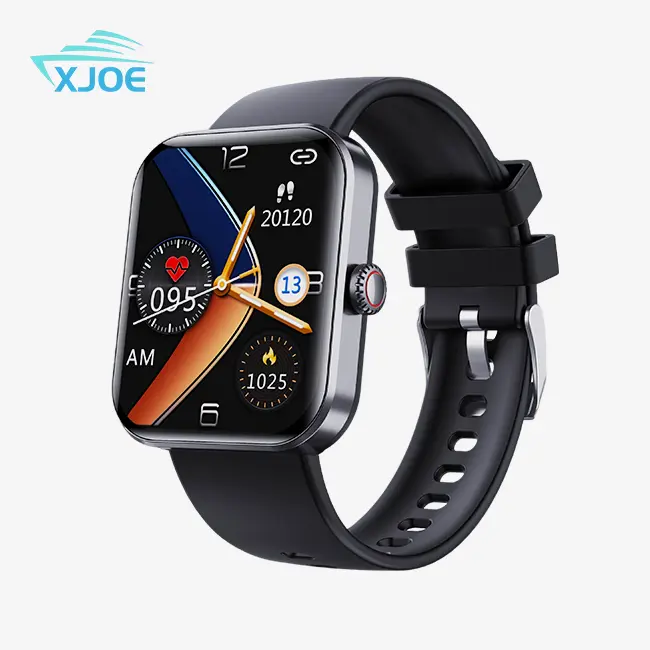
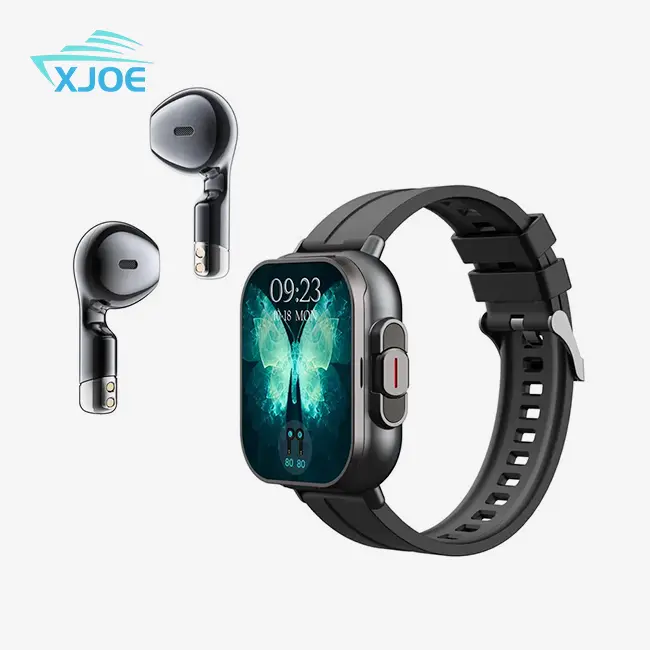
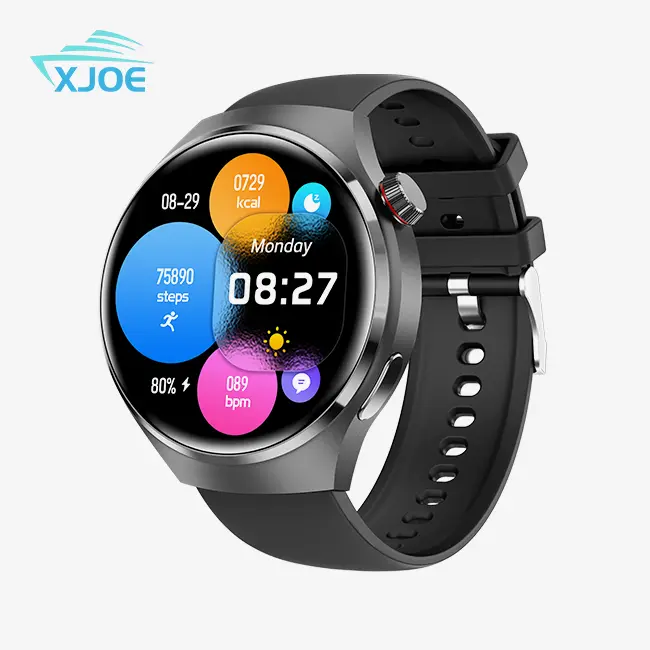
How Accurate Is an ECG Health Smartwatch for AFib?
There is some medical knowledge in this piece, but it is only meant to teach and inform. ECG health smartwatches can help you stay healthy, but they shouldn't be used instead of seeing a doctor for advice, diagnosis, or treatment. If you're having a health issue, you should always talk to a trained medical worker. Today's ECG health tools are very good at finding atrial fibrillation (AFib), a heart rate problem that millions of people around the world have. This means that most consumer-grade ECG smartwatches can find AFib with a sensitivity rate of 84% to 98% and a precision rate of 94% to 99%. It depends on how good the device is and how hard the program is to understand. With these measures, it looks like reliable tools can find heart rate problems. But the accuracy depends on the hardware, where the sensors are placed, the software algorithms, and how well the user does what they're supposed to do. Screening with these tools is easy, and they work especially well in community health programs, fitness programs at work, and online systems that keep track of patients. But they shouldn't be used instead of regular ECG tools in a hospital.
Understanding ECG Health Smartwatches and AFib Detection
What Makes an ECG Smartwatch Different from Regular Fitness Trackers?
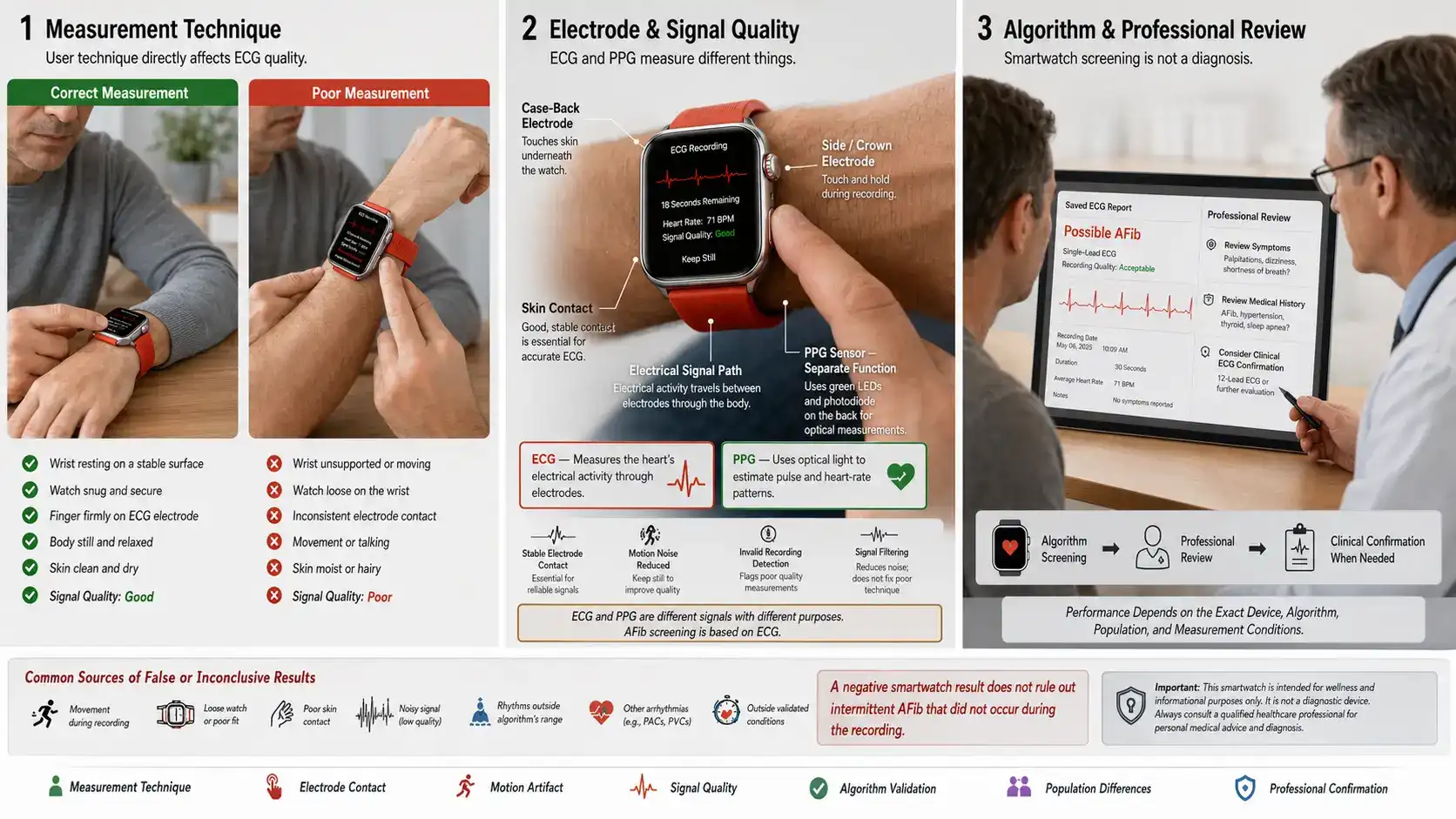
Most fitness watches measure heart rate with optical sensors that pick up changes in the flow of blood through your skin. Smartwatches that can do ECG do more than just this basic task. When you touch the case or crown of the watch with your finger, electrodes built into them pick up electrical signals from your heart. A single-lead electrocardiogram reading like the kind you'd get in a hospital is what this gives you.
This change is very important when we're trying to find atrial fibrillation. Heart rate monitors that use light can find irregular heartbeats, but they can't give doctors the exact electrical signal they need to be sure of AFib. Electricity from an ECG monitor tells you the exact rate and time of your heart's electrical activity. This makes it possible for complicated programs to find patterns that are typical of AFib that would not be seen any other way.
How Does ECG Technology Detect Atrial Fibrillation?
When you tell your smartwatch to take an ECG, electrodes will pick up the electrical data that make your heart beat. Electronics, like the JL7012 chip found in more advanced models, digitize and filter the raw data to get rid of noise and moving marks. The signal is sent using machine-learning methods that have been taught on thousands of real cases of AFib.
It is "irregularly irregular," which means that atrial fibrillation doesn't have the normal P-waves that show atrial contraction. This is what the smartwatch's program looks for as warning signs: irregular heart activity, irregular R-R intervals, and no organised atrial depolarisation. The software will let you know if it thinks it has found these trends and tell you to talk to a doctor if it does. It only takes thirty seconds, which is a lot faster than calling the office to make an appointment.
Why Early AFib Detection Matters in Healthcare Systems?
If you have atrial fibrillation, you are five times more likely to have a stroke. It can also cause heart failure, memory loss, and a lower quality of life. The problem is that it only happens sometimes. A lot of people with paroxysmal AFib have episodes that come and go without warning, and doctors don't always notice them when they come in for regular visits. Regular or continuous screening greatly increases the number of early detections. This is becoming clear to more and more community health centers, corporate wellness programs, and remote patient monitoring programs.
Companies can find people who are at risk before they have big problems when they use ECG smartwatches, such as an ECG Health Smartwatch, as part of work health programs. It is the job of healthcare workers in senior living homes to keep an eye on the residents at all times and record any irregular heartbeats that may happen while they sleep or do normal things. AFib costs a lot of money, so finding and treating it early can save a lot of money on costly emergency treatments and long-term injury costs.
Accuracy Factors of ECG Smartwatches for AFib Detection
Clinical Validation and Performance Metrics
Consumer ECG smartwatches have been compared to gold-standard 12-lead ECG machines and Holter monitors in a number of peer-reviewed studies. Over 400,000 people took part in the Apple Heart Study, which showed that alerts about irregular heart rhythms were 84% accurate when later confirmed by ECG patch monitors. Similar confirmation tests of other big brands show similar performance, though the exact results depend on the type of device used and the method being used.
Specificity tells you how well a device avoids false results, while sensitivity tells you how well it finds real cases of AFib. The best devices have a sensitivity level above 95%, which means they can find 95 out of every 100 real AFib events. Specificity rates above 97% make sure that healthy users don't get many false alarms that could cause stress and higher medical costs. In some places, these measures meet or come close to the standards needed to get FDA approval as medical equipment.
Hardware Components That Influence Accuracy
The way an ECG smartwatch is built has a direct effect on how accurate its measurements are. The quality and placement of the electrodes decide how clear the signal is. Devices with bigger touch areas and safe materials like zinc alloy or stainless steel tend to get clearer signals than those with smaller electrodes. Advanced models have screens that are 1.5 inches, which is a good size for making stable electrode contact during 30-second readings.
It's also important to be able to understand signs. Modern chips don't let electromagnetic radiation, motion noise, or bad contact effects get through, which could make the results less clear. Cheaper materials lose their strength over time, but sapphire glass keeps its electrical qualities over time. This means that the screen doesn't get scratched. If you wash your hands or work out and the device gets wet, IP67 water resistance makes sure that it still works properly. This is important because electrode poisoning could change results in these scenarios.
How well the battery works affects how often the test is done. The 300mAh battery lasts for 10 days, so people can use it to do normal ECG checks without having to think about charging it all the time. This longer battery life is especially helpful in business-to-business settings where devices need to be taken care of less often. Using Bluetooth 5.0 to connect makes sure that data is always in sync with smartphones and corporate health platforms. This keeps data from getting lost, which could make ongoing tracking less accurate.
Software Algorithms and Machine Learning
Every correct AFib identification is made possible by a complicated AI that has been trained on a large group of patients. The best manufacturers are always making their models better by using data from millions of real users. In this way, it is easy to find people with a wide range of backgrounds, heart problems, and activity levels. Over time, drugs can change your pulse, and sometimes arrhythmias happen at the same time, which could give you wrong results. These formulas take all of these things into account.
B2B buyers are still worried about how clear algorithms are. Some manufacturers give a lot of information about how they validate their products, how well they do statistically across subgroups, and how they handle updates. Because of this, healthcare organizations and business fitness programs can check to see if a gadget meets their standards for accuracy before buying a lot of them. The community of RDFIT apps that support advanced models should make it easy to understand results, look at past trends, and share data in a way that works with current health information systems, especially when integrating devices like an ECG Health Smartwatch into professional healthcare and wellness management solutions.
Practical Application and Limitations in a B2B Context
Effective Deployment in Corporate Wellness Programs
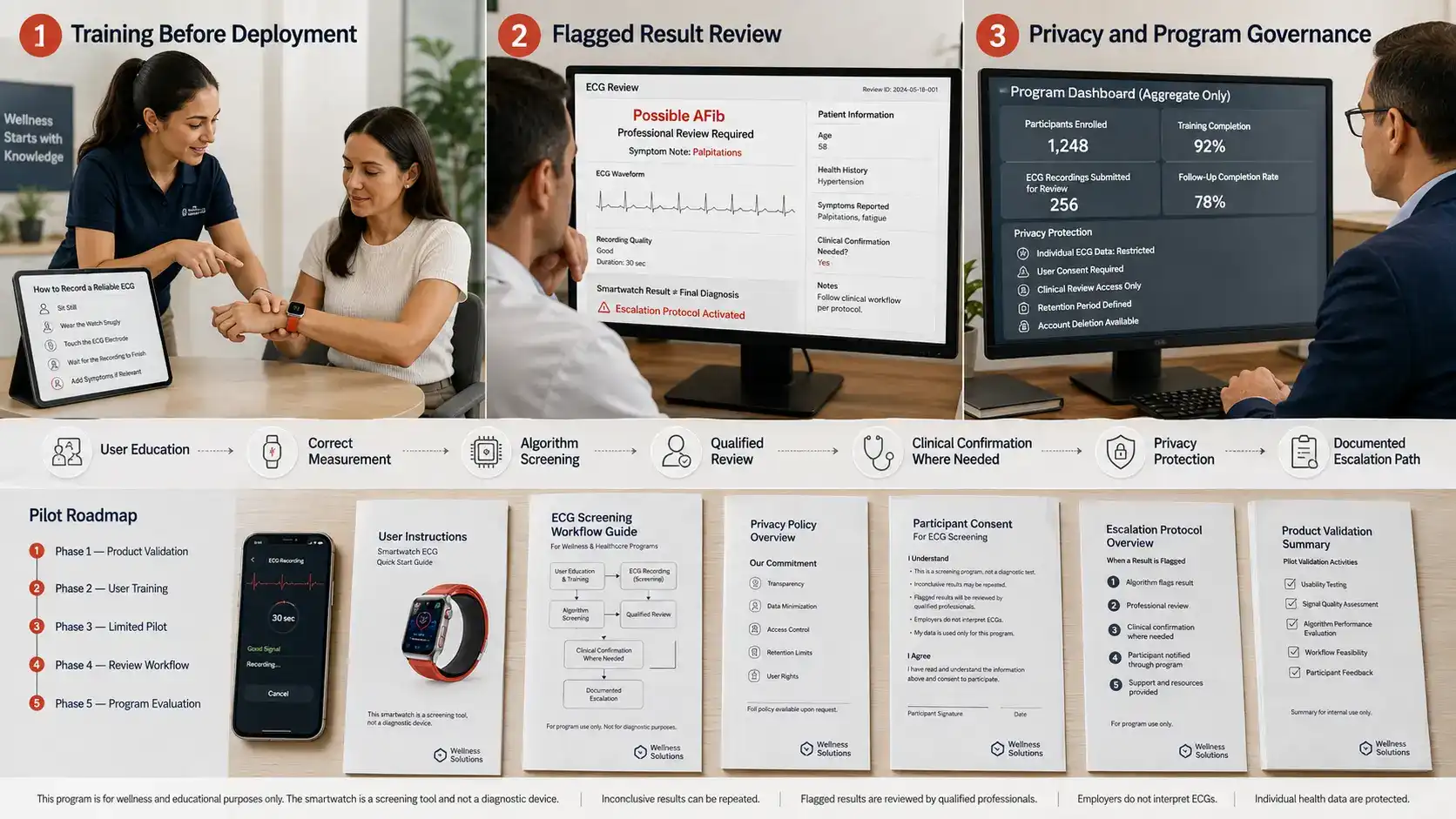
To make ECG smartwatches work well in workplace health programs, more than just giving them out needs to be carefully planned. Employees need clear instructions on when to take measurements—getting readings during symptomatic episodes gives more useful information than testing at random. Proper practice should be taught during training lessons. This includes staying still, making sure the watch fits snugly on the wrist, and keeping a firm grip on the crown with the finger.
Corporate health teams should set clear rules for how to handle reports of positive AFib. This includes healthcare experts who are in charge of looking over results that have been reported, deciding how important they are, and setting up the right follow-up care. Without these support systems, workers might either ignore results that aren't good or respond to results that are good, which would hurt the value of the program. Adding current employee aid programs and health insurance networks makes the process of getting help from start to end smooth.
These devices are good for diverse multinational workplaces because they can support 28 languages, from English and Spanish to Vietnamese and Persian. This linguistic accessibility makes sure that all employees, no matter what language they speak as their first, can understand their results and get the right help. This addresses issues of equity that often arise in workplace health initiatives.
Healthcare Provider Integration and Remote Monitoring
Wearable ECG tracking is being used more and more in patient care plans by medical groups, senior care facilities, and home health agencies. These gadgets are great at picking up irregular heartbeats that regular monitoring misses. A person who has irregular heartbeats can wear the smartwatch all the time and get an ECG reading whenever their symptoms happen. The results will be sent to their cardiologist with a timestamp.
Heart rate tracking all the time and the ability to do an ECG on demand are both useful features for remote patient monitoring systems. Through telehealth systems, healthcare workers can look at continuous data and spot worrying trends before they become serious events. The 10-day battery life makes it easier for patients to follow their treatment plan, which can be a problem with older Holter monitors that need to be charged or replaced often.
Problems with integration need to be looked at. For healthcare systems to work, gadgets must be able to send data in standard forms that can be read by electronic health records. In order to follow HIPAA rules in the US or GDPR rules in Europe, data must be encrypted securely, users must give permission, and there must be records of who saw patient information and when. Before a large-scale rollout, B2B buyers should make sure that any possible gadgets and the apps that go with them meet these legal requirements.
Limitations and Complementary Role
A full cardiac evaluation is still needed, even with the most accurate ECG smartwatch. These machines record ECGs with only one lead, but diagnostic-grade machines record ECGs with 12 leads at the same time, showing the heart's electrical activity from all sides. Some rhythms or structural problems can only be seen with multi-lead analysis, which may not be picked up by single-lead records.
When movement artifacts, bad touch, or other technical problems cause random signals that algorithms mistake for AFib, this is called a false positive. Users need to know that a good result needs to be confirmed with a regular ECG test before treatment can begin. On the other hand, false rejections happen when AFib events happen between tests or when the strength of the signal drops. This problem can be fixed with continuous visual heart rate tracking, which lets users know when their pulse patterns aren't normal and require an ECG right away.
The devices, including an ECG Health Smartwatch, work best as part of a larger plan for cardiac care, used for screening and keeping an eye on things. They should be seen as additions to regular checkups, not replacements for them, especially for people who already know they are at risk for heart disease. This realistic frame keeps people from having unrealistic expectations while making the most of the real benefits these technologies offer.
Conclusion
ECG health smartwatches deliver clinically meaningful AFib detection accuracy suitable for screening and monitoring applications across diverse B2B contexts. Their performance—typically 84-98% sensitivity and 94-99% specificity—positions them as valuable complements to traditional cardiac care rather than replacements. Success depends on choosing devices with validated accuracy, appropriate hardware specifications, and comprehensive software ecosystems that integrate smoothly with existing health management infrastructure.
B2B buyers should prioritize vendors demonstrating transparent clinical validation, regulatory compliance, and realistic positioning of device capabilities and limitations. The convergence of improving technology, favorable market dynamics, and supportive regulatory frameworks creates expanding opportunities for organizations that thoughtfully integrate these tools into corporate wellness programs, healthcare delivery systems, and senior care facilities.
FAQ
1. How often should users take ECG readings to effectively monitor for AFib?
Healthcare providers typically recommend taking ECG readings whenever users experience symptoms like palpitations, dizziness, or unusual fatigue. Asymptomatic individuals at elevated risk due to age, hypertension, or family history might perform weekly baseline measurements. The key lies in consistency—establishing a regular measurement schedule creates longitudinal data that reveals changes over time. During illness or periods of unusual stress, increasing measurement frequency helps capture transient arrhythmias.
2. Can I rely solely on smartwatch ECG data for AFib diagnosis?
No. While smartwatch ECG readings provide valuable screening information, definitive AFib diagnosis requires confirmation by a qualified healthcare provider using clinical-grade equipment. Smartwatch results should prompt medical consultation, but treatment decisions must never rest on wearable device data alone. The single-lead recordings captured by smartwatches lack the comprehensive perspective that 12-lead ECGs provide, and technical factors can occasionally produce misleading results requiring professional interpretation.
3. What should organizations do when a device detects possible AFib?
Establish clear protocols before deployment. Designate healthcare professionals who review flagged results, assess urgency based on symptoms and medical history, and coordinate appropriate follow-up—ranging from routine cardiology appointments to immediate emergency evaluation. Provide users with written guidance explaining that positive results require professional confirmation while emphasizing the importance of timely medical consultation. This structured response balances appropriate urgency against unnecessary panic.
Partner with Xizhou for Reliable ECG Health Smartwatch Supply
Xizhou specializes as a trusted ECG health smartwatch manufacturer serving Amazon sellers, distributors, and private label brands seeking high-quality wearable health technology. Our AI-powered devices combine professional ECG and SpO₂ monitoring with 10-day battery life and scratch-resistant sapphire glass construction—all backed by GMP factory quality control and comprehensive certifications.
Whether you need a low MOQ for market testing or bulk orders with custom branding, our experienced R&D team supports flexible OEM/ODM customization that differentiates your product offerings. We understand the quality consistency, fast delivery, and responsive after-sales service that prevent negative reviews and protect your reputation. Contact us at 13266508958@163.com to discuss your specific requirements, request product samples, or explore partnership opportunities that leverage our inventory strength and manufacturing capabilities.
References
1. Perez, M.V., Mahaffey, K.W., Hedlin, H., et al. (2019). Large-Scale Assessment of a Smartwatch to Identify Atrial Fibrillation. New England Journal of Medicine, 381(20), 1909-1917.
2. Bumgarner, J.M., Lambert, C.T., Hussein, A.A., et al. (2018). Smartwatch Algorithm for Automated Detection of Atrial Fibrillation. Journal of the American College of Cardiology, 71(21), 2381-2388.
3. Guo, Y., Wang, H., Zhang, H., et al. (2019). Mobile Photoplethysmographic Technology to Detect Atrial Fibrillation. Journal of the American College of Cardiology, 74(19), 2365-2375.
4. Seshadri, D.R., Bittel, B., Browsky, D., et al. (2020). Accuracy of Apple Watch for Detection of Atrial Fibrillation. Circulation, 141(8), 702-703.
5. Hindricks, G., Potpara, T., Dagres, N., et al. (2021). ESC Guidelines for the Diagnosis and Management of Atrial Fibrillation. European Heart Journal, 42(5), 373-498.
6. Lubitz, S.A., Faranesh, A.Z., Selvaggi, C., et al. (2022). Detection of Atrial Fibrillation in Large Populations Using Wearable Devices: Challenges and Opportunities. Cardiovascular Digital Health Journal, 3(1), 19-29.