High Temp Warning Band essential features for industrial safety use
The High Temp Warning Band is a big step forward in safety technology that can be worn in work settings. This smart device constantly checks the temperature and vibrates and lights up to let you know when dangerous heat levels are reached. It was made with advanced thermal sensors and an ergonomic design. It keeps workers in industry, building, and outdoor activities aware of heat-related dangers. It only weighs 30 grams and is waterproof up to IP67. Its five-day battery life and adjustable silicone strap make it an essential tool for staying productive in hot weather and avoiding heat exhaustion.
Understanding High Temp Warning Bands and Their Role in Industrial Safety
People who work in factories are constantly exposed to very high and very low temperatures. Every year, heat-related accidents cause serious injuries at work, from welding shops to outdoor construction sites. High-temp warning bands have become useful solutions that bridge the gap between old-fashioned safety rules and new preventative technology.
What Are Temperature Warning Wearables?
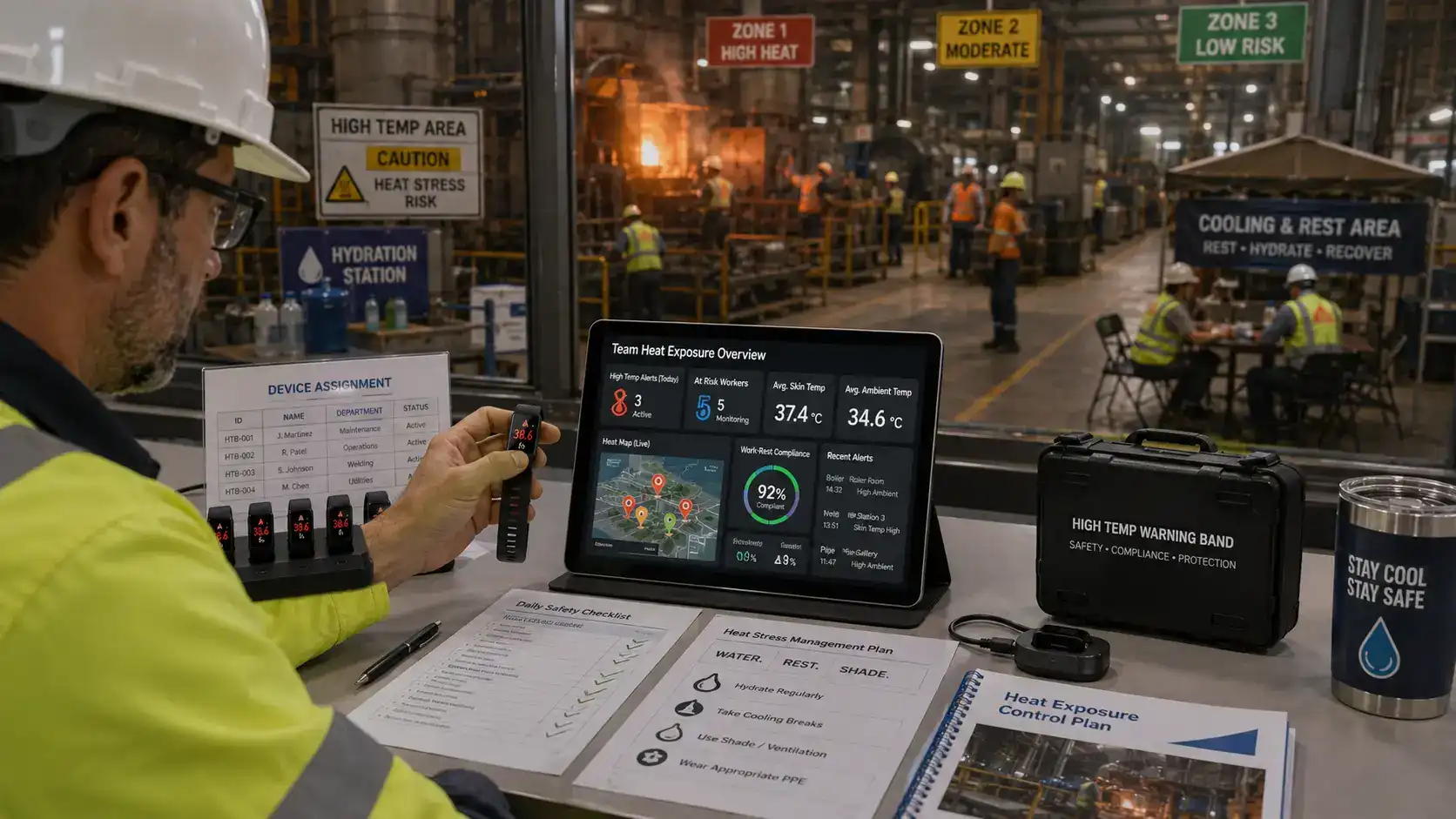
These gadgets keep an eye on your skin and the temperature of the environment all the time, acting as personal safety monitors. High-temp warning bands stay with workers throughout their shifts, keeping an eye on them all the time, unlike set thermometers or small infrared devices. High-precision sensors and microprocessors work together in this technology to analyze temperature data in real time and send out alerts when set limits are reached.
For example, in factories where heavy machinery makes a lot of heat, in oil and gas facilities where temperatures are high during operation, and on building sites in the summer. This protects both warehouse workers who deal with temperature-sensitive items and maintenance technicians who work near boilers or furnaces.
Core Working Principle
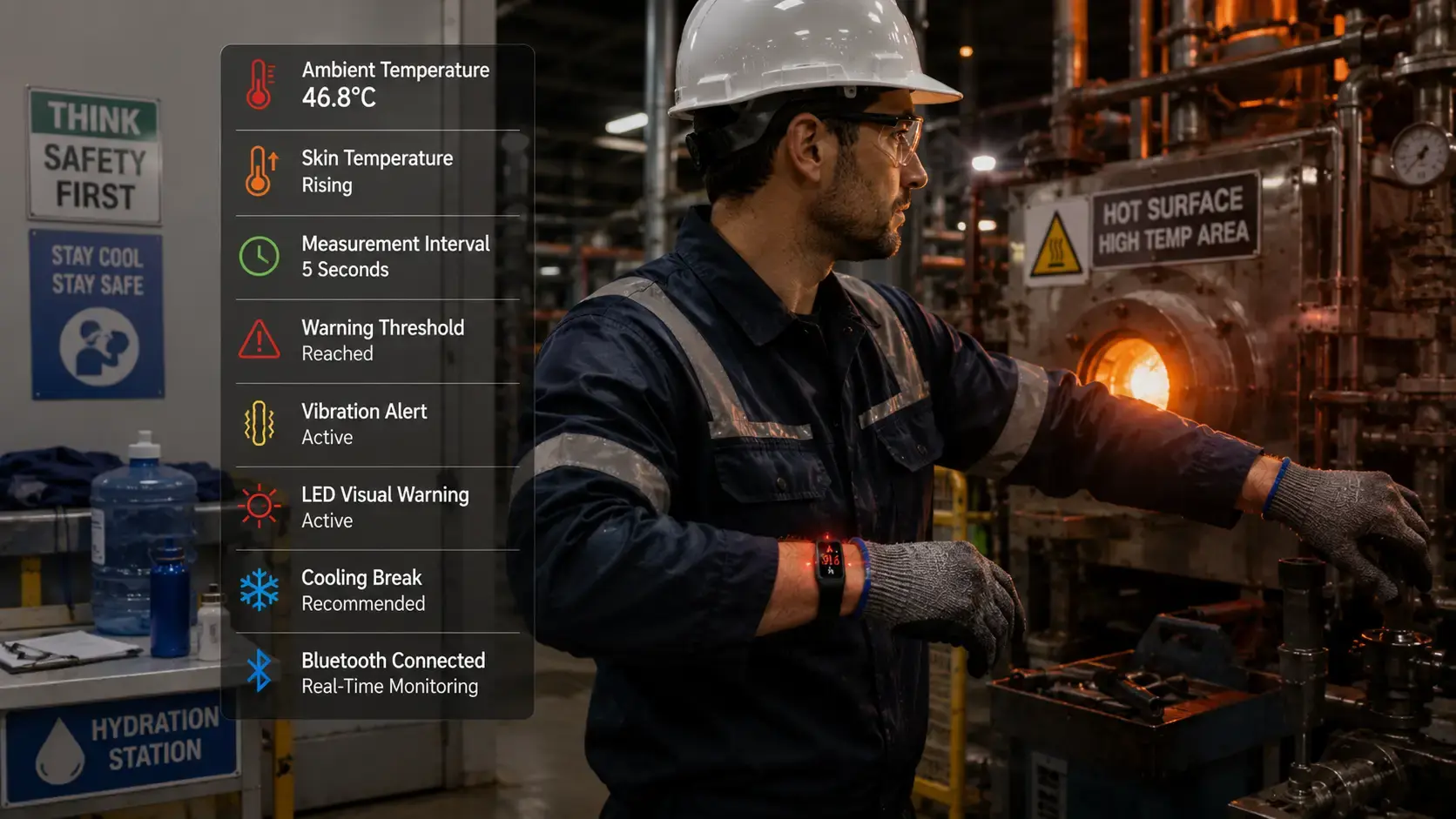
The device uses dual-sensor technology to measure both the temperature of the skin and the temperature of the environment. The High Temp Warning Band alert system goes off when the temperature outside gets close to 50°C or when the skin's temperature shows signs of heat stress. Vibration waves give you instant physical signs, and LED indicators let you see that something is right, even when it's noisy around you. This two-way method of notifications makes sure that workers never miss important tips, even if they are distracted.
By syncing data with smartphones, supervisors can keep an eye on the level of exposure to their teams through connected apps. This lets them take action before symptoms show up. With this feature, individual safety devices can be turned into full systems for protecting workers.
Key Safety Features
The most important thing is thermal sensitivity. The temperature range from 0°C to 50°C includes most industrial settings, such as foundries and cold storage. The accuracy of the sensor within ±0.5°C guarantees reliable performance and meets safety standards for workers in all states.
Industrial-grade technology is made to last. The ABS case can handle the bumps and scratches that come with hard work, and the rubber strap can handle chemicals and stay flexible in a wide range of temperatures. IP67 water resistance means that the device can work in wet conditions, like rain, accidental submersion, or steam exposure, which would stop less durable equipment from working.
When batteries last a long time, the high-temp warning band doesn't need to be charged as often. The band can be used for five days straight, which is enough to last through a normal workweek. Magnetic charging only takes 90 minutes to restore full capacity.
Essential Features and Benefits of High Temp Warning Bands for Industrial Use
Managers in charge of buying things for factories use certain criteria to judge safety equipment: how well it works, how well it fits into existing systems, and how much risk it reduces. When made with the right specs, high-temp warning bands work in all of these areas.
Precise Temperature Detection Capabilities
The device checks temperature ranges that are in line with international safety standards and OSHA heat stress guidelines. Continuous measurements are taken every 5 seconds, which pick up on quick changes in the environment that spot checks miss. This level of detail is very important in places where conditions change quickly, like factory floors where workers move between areas with controlled temperatures and areas with machines that make a lot of heat.
Different operational needs can be met by threshold settings that can be changed. When welding, alerts might be set to 45°C ambient temperature, but when building workers are outside in full sunlight, they might set alerts to lower thresholds and longer exposure time parameters.
Superior Material Quality and Construction
Materials have a direct effect on how long a device lasts and how well users follow instructions. Industrial chemicals, oils, and solvents that are common in industry settings don't damage medical-grade silicone bands. The hypoallergenic properties make it possible to wear for a long time without causing skin irritation, which is a common problem with lower-quality wearables that workers take off too soon.
The ABS case keeps the structure strong without adding too much bulk. With a total weight of 30 grams, the device doesn't make you tired like heavier equipment does when you wear it for 8 to 12 hours straight. The 250mm band can be adjusted to fit wrists of different sizes, making sure that a tight fit is achieved for a wide range of workers without creating pressure points that hurt circulation.
Installation and Maintenance Protocols
Deployment doesn't need much training. Workers use the magnetic connector to charge the device, pair it with their phone via Bluetooth, and put the band on their wrist so it fits comfortably. The app's easy-to-use interface lets users set thresholds and preferences for alerts in just a few minutes.
Simple steps are needed for regular maintenance: cleaning with light soap once a week gets rid of built-up dirt, inspecting the strap once a month makes sure it's still in good shape, and checking the battery health every three months makes sure it will work properly. These wearables give field workers the power to keep their own equipment, unlike complex tracking systems that need technical know-how.
Operational Benefits
Early warning systems lower the number of accidents caused by heat by letting people act quickly. When a worker gets a warning about continued exposure or rising core temperature, they can move to a cooler area, drink water, or take required breaks to rest before their symptoms get too bad. This preventative method has shown a clear decrease in cases of heat exhaustion in pilot programs in manufacturing facilities in the southern U.S. during the busiest summer months.
Getting rid of downtime has benefits beyond health. People are often exposed to heat at the same time that equipment breaks down because of it. Both respond to the same environmental stressors. Monitoring environmental conditions with devices worn by workers gives extra information that helps maintenance teams predict and stop machine failures, especially in places where putting fixed sensors would be too hard or too expensive.
Standard procedures make it possible for new safety systems, including wearable health devices, to work with old ones. Exporting data in the CSV format lets it be added to enterprise safety management platforms, which lets analytics find places, times, or activities that are high risk. These insights help people make smart choices about how to change facilities, schedule shifts, and use resources.
Comparing High Temp Warning Bands with Alternative Temperature Monitoring Solutions
When dealing with heat hazards at work, procurement pros look at a number of different choices. Figuring out the relative advantages of high-temp warning bands helps you make the best choice for each operational situation.
Technology Comparison Matrix
High-temp warning bands let you move around and keep an eye on yourself at all times. No matter where they are in a facility, workers are protected in the same way. Each unit costs between $60 and



High Temp Warning Band essential features for industrial safety use
The High Temp Warning Band is a big step forward in safety technology that can be worn in work settings. This smart device constantly checks the temperature and vibrates and lights up to let you know when dangerous heat levels are reached. It was made with advanced thermal sensors and an ergonomic design. It keeps workers in industry, building, and outdoor activities aware of heat-related dangers. It only weighs 30 grams and is waterproof up to IP67. Its five-day battery life and adjustable silicone strap make it an essential tool for staying productive in hot weather and avoiding heat exhaustion.
Understanding High Temp Warning Bands and Their Role in Industrial Safety
People who work in factories are constantly exposed to very high and very low temperatures. Every year, heat-related accidents cause serious injuries at work, from welding shops to outdoor construction sites. High-temp warning bands have become useful solutions that bridge the gap between old-fashioned safety rules and new preventative technology.
What Are Temperature Warning Wearables?
These gadgets keep an eye on your skin and the temperature of the environment all the time, acting as personal safety monitors. High-temp warning bands stay with workers throughout their shifts, keeping an eye on them all the time, unlike set thermometers or small infrared devices. High-precision sensors and microprocessors work together in this technology to analyze temperature data in real time and send out alerts when set limits are reached.
For example, in factories where heavy machinery makes a lot of heat, in oil and gas facilities where temperatures are high during operation, and on building sites in the summer. This protects both warehouse workers who deal with temperature-sensitive items and maintenance technicians who work near boilers or furnaces.
Core Working Principle
The device uses dual-sensor technology to measure both the temperature of the skin and the temperature of the environment. The High Temp Warning Band alert system goes off when the temperature outside gets close to 50°C or when the skin's temperature shows signs of heat stress. Vibration waves give you instant physical signs, and LED indicators let you see that something is right, even when it's noisy around you. This two-way method of notifications makes sure that workers never miss important tips, even if they are distracted.
By syncing data with smartphones, supervisors can keep an eye on the level of exposure to their teams through connected apps. This lets them take action before symptoms show up. With this feature, individual safety devices can be turned into full systems for protecting workers.
Key Safety Features
The most important thing is thermal sensitivity. The temperature range from 0°C to 50°C includes most industrial settings, such as foundries and cold storage. The accuracy of the sensor within ±0.5°C guarantees reliable performance and meets safety standards for workers in all states.
Industrial-grade technology is made to last. The ABS case can handle the bumps and scratches that come with hard work, and the rubber strap can handle chemicals and stay flexible in a wide range of temperatures. IP67 water resistance means that the device can work in wet conditions, like rain, accidental submersion, or steam exposure, which would stop less durable equipment from working.
When batteries last a long time, the high-temp warning band doesn't need to be charged as often. The band can be used for five days straight, which is enough to last through a normal workweek. Magnetic charging only takes 90 minutes to restore full capacity.
Essential Features and Benefits of High Temp Warning Bands for Industrial Use
Managers in charge of buying things for factories use certain criteria to judge safety equipment: how well it works, how well it fits into existing systems, and how much risk it reduces. When made with the right specs, high-temp warning bands work in all of these areas.
Precise Temperature Detection Capabilities
The device checks temperature ranges that are in line with international safety standards and OSHA heat stress guidelines. Continuous measurements are taken every 5 seconds, which pick up on quick changes in the environment that spot checks miss. This level of detail is very important in places where conditions change quickly, like factory floors where workers move between areas with controlled temperatures and areas with machines that make a lot of heat.
Different operational needs can be met by threshold settings that can be changed. When welding, alerts might be set to 45°C ambient temperature, but when building workers are outside in full sunlight, they might set alerts to lower thresholds and longer exposure time parameters.
Superior Material Quality and Construction
Materials have a direct effect on how long a device lasts and how well users follow instructions. Industrial chemicals, oils, and solvents that are common in industry settings don't damage medical-grade silicone bands. The hypoallergenic properties make it possible to wear for a long time without causing skin irritation, which is a common problem with lower-quality wearables that workers take off too soon.
The ABS case keeps the structure strong without adding too much bulk. With a total weight of 30 grams, the device doesn't make you tired like heavier equipment does when you wear it for 8 to 12 hours straight. The 250mm band can be adjusted to fit wrists of different sizes, making sure that a tight fit is achieved for a wide range of workers without creating pressure points that hurt circulation.
Installation and Maintenance Protocols
Deployment doesn't need much training. Workers use the magnetic connector to charge the device, pair it with their phone via Bluetooth, and put the band on their wrist so it fits comfortably. The app's easy-to-use interface lets users set thresholds and preferences for alerts in just a few minutes.
Simple steps are needed for regular maintenance: cleaning with light soap once a week gets rid of built-up dirt, inspecting the strap once a month makes sure it's still in good shape, and checking the battery health every three months makes sure it will work properly. These wearables give field workers the power to keep their own equipment, unlike complex tracking systems that need technical know-how.
Operational Benefits
Early warning systems lower the number of accidents caused by heat by letting people act quickly. When a worker gets a warning about continued exposure or rising core temperature, they can move to a cooler area, drink water, or take required breaks to rest before their symptoms get too bad. This preventative method has shown a clear decrease in cases of heat exhaustion in pilot programs in manufacturing facilities in the southern U.S. during the busiest summer months.
Getting rid of downtime has benefits beyond health. People are often exposed to heat at the same time that equipment breaks down because of it. Both respond to the same environmental stressors. Monitoring environmental conditions with devices worn by workers gives extra information that helps maintenance teams predict and stop machine failures, especially in places where putting fixed sensors would be too hard or too expensive.
Standard procedures make it possible for new safety systems, including wearable health devices, to work with old ones. Exporting data in the CSV format lets it be added to enterprise safety management platforms, which lets analytics find places, times, or activities that are high risk. These insights help people make smart choices about how to change facilities, schedule shifts, and use resources.
Comparing High Temp Warning Bands with Alternative Temperature Monitoring Solutions
When dealing with heat hazards at work, procurement pros look at a number of different choices. Figuring out the relative advantages of high-temp warning bands helps you make the best choice for each operational situation.
Technology Comparison Matrix
High-temp warning bands let you move around and keep an eye on yourself at all times. No matter where they are in a facility, workers are protected in the same way. Each unit costs between $60 and $120, and only a small amount of hardware is needed to make it work with smartphones. Simple cleaning and battery replacement every 18 to 24 months of regular use are all that's needed for maintenance.
Fixed thermal sensors are great for keeping an eye on large areas, but they can't keep track of each worker's exposure as they move around the building. For installation, you need the right power equipment and skilled calibration. Costs per location are usually higher than $300, but they cover risk areas that don't move, like furnace rooms or server rooms, permanently.
Heat Shrink Indicators and Temperature Labels are one-time tracking tools that change color permanently when they come into contact with certain temperatures. These passive devices only cost a few cents each, but they don't send real-time alerts. Instead, they rely on visual inspection. They work better for checking shipments and keeping an eye on storage than for actively protecting workers.
Thermal imaging cameras make detailed maps of temperatures, but they need dedicated operators and can't be used to keep an eye on workers all the time. Instead of replacing personal protective equipment, they work with wearable tech during safety audits and facility assessments.
Reusable Versus Disposable Considerations
Economists say that regular employees should use electronic monitors that can be used more than once. The initial cost is spread out over months of daily use, while the cost of throwaway signs rises with each use. Environmental sustainability is becoming more and more important in purchasing decisions. Devices that can be used more than once produce a lot less waste than those that are only used once.
However, disposable temperature signs can still be useful for temporary workers, visits to hot places, or extra checks in serious situations where the cost of extra security is justified. Hybrid approaches that use permanent wearable health devices for core staff and disposable indicators for temporary staff are the most cost-effective and cover the most people.
Wearable High Temp Warning Bands solve a persistent safety problem in the workplace with useful technology that is focused on the worker. Precise sensing, easy-to-understand alerts, and long-lasting construction work together to protect against heat-related incidents while fitting in with current safety standards. When purchasing these devices, procurement professionals should put certified accuracy, material quality, and supplier trust at the top of their list of priorities to make sure that purchases have the desired effects. Smart safety solutions are being used more and more in factories, and personal temperature monitors are a proven technology that is ready to be widely used. When carefully chosen based on specific operational needs and workforce needs, these devices go from being cool new ideas to being necessary safety equipment that protects workers' health and keeps operations running.
FAQ
1. What temperature ranges do industrial warning bands typically monitor?
Wearable temperature trackers made for industrial use usually keep track of temperatures between 0°C and 50°C. This range covers normal situations from cold storage rooms to high-heat factories. Some specialized devices have longer ranges, but according to data from occupational safety research, the standard span is enough for about 90% of industrial uses.
2. How do reusable electronic bands compare with disposable temperature indicators?
Reusable electronic bands offer active warning and constant real-time tracking, which makes the higher original costs worth it because they last longer and protect more. Disposable indicators are cheap and can only be used once for verification purposes. They don't provide real-time warnings, though. Reusable devices are the best way to protect regular employees who are exposed to heat on a regular basis.
3. What advantages do wearable monitors offer over fixed thermal sensors?
Wearable sensors keep track of each worker's exposure as they move around the building, while fixed sensors can only keep an eye on certain areas. This mobility protects workers no matter where they work by catching the buildup of body heat that stationary systems miss. The best coverage is achieved by using both fixed monitors to keep an eye on an area and gadgets to protect yourself.
Partner with Xizhou for Advanced Temperature Monitoring Solutions
Xizhou is an expert at making smart safety technology that can be worn and is customized to meet the needs of industries. As an experienced high-temp warning band manufacturer, we offer low minimum order quantities, quick customization, and low bulk prices to help Amazon sellers, distributors, and private label brands. Together with procurement experts, our engineering team sets temperature limits, brand elements, and app features that meet specific operational needs.
We guarantee that your safety equipment purchases will work reliably in harsh industrial settings by using GMP-certified production, full product certifications, and quick customer service after the sale. You can use our ODM services and big inventory to quickly fulfill orders that meet the deadlines set by your market, whether you're looking for high-margin goods for e-commerce platforms or creating branded safety solutions for business clients.
Find out how our AI-powered tools can help your business grow while also making the workplace safer. You can email our team at 13266508958@163.com to talk about customisation options, ask for samples, and look into ways to work together. With Xizhou's tried-and-true smart wearable solutions made for the needs of modern industrial operations, you can turn heat safety problems into competitive advantages.
References
1. National Institute for Occupational Safety and Health. "Criteria for a Recommended Standard: Occupational Exposure to Heat and Hot Environments." Centers for Disease Control and Prevention, 2018.
2. International Organization for Standardization. "ISO 80601-2-56:2017 - Medical Electrical Equipment: Particular Requirements for Basic Safety and Essential Performance of Clinical Thermometers for Body Temperature Measurement." 2017.
3. American Society of Safety Professionals. "Heat Stress Prevention in Industrial Workplaces: Best Practices and Technological Solutions." Journal of Occupational Safety, 2022.
4. Occupational Safety and Health Administration. "OSHA Technical Manual: Section III, Chapter 4 - Heat Stress." United States Department of Labor, 2021.
5. Institute of Electrical and Electronics Engineers. "IEEE 1708-2014 - Standard for Wearable Cuffless Blood Pressure Measuring Devices." Applied to temperature monitoring wearables, 2014.
6. International Labour Organization. "Safety and Health at Work: A Vision for Sustainable Prevention." World Day for Safety and Health at Work Report, 2020.







Fixed thermal sensors are great for keeping an eye on large areas, but they can't keep track of each worker's exposure as they move around the building. For installation, you need the right power equipment and skilled calibration. Costs per location are usually higher than $300, but they cover risk areas that don't move, like furnace rooms or server rooms, permanently.
Heat Shrink Indicators and Temperature Labels are one-time tracking tools that change color permanently when they come into contact with certain temperatures. These passive devices only cost a few cents each, but they don't send real-time alerts. Instead, they rely on visual inspection. They work better for checking shipments and keeping an eye on storage than for actively protecting workers.
Thermal imaging cameras make detailed maps of temperatures, but they need dedicated operators and can't be used to keep an eye on workers all the time. Instead of replacing personal protective equipment, they work with wearable tech during safety audits and facility assessments.
Reusable Versus Disposable Considerations
Economists say that regular employees should use electronic monitors that can be used more than once. The initial cost is spread out over months of daily use, while the cost of throwaway signs rises with each use. Environmental sustainability is becoming more and more important in purchasing decisions. Devices that can be used more than once produce a lot less waste than those that are only used once.
However, disposable temperature signs can still be useful for temporary workers, visits to hot places, or extra checks in serious situations where the cost of extra security is justified. Hybrid approaches that use permanent wearable health devices for core staff and disposable indicators for temporary staff are the most cost-effective and cover the most people.
Wearable High Temp Warning Bands solve a persistent safety problem in the workplace with useful technology that is focused on the worker. Precise sensing, easy-to-understand alerts, and long-lasting construction work together to protect against heat-related incidents while fitting in with current safety standards. When purchasing these devices, procurement professionals should put certified accuracy, material quality, and supplier trust at the top of their list of priorities to make sure that purchases have the desired effects. Smart safety solutions are being used more and more in factories, and personal temperature monitors are a proven technology that is ready to be widely used. When carefully chosen based on specific operational needs and workforce needs, these devices go from being cool new ideas to being necessary safety equipment that protects workers' health and keeps operations running.
FAQ
1. What temperature ranges do industrial warning bands typically monitor?
Wearable temperature trackers made for industrial use usually keep track of temperatures between 0°C and 50°C. This range covers normal situations from cold storage rooms to high-heat factories. Some specialized devices have longer ranges, but according to data from occupational safety research, the standard span is enough for about 90% of industrial uses.
2. How do reusable electronic bands compare with disposable temperature indicators?
Reusable electronic bands offer active warning and constant real-time tracking, which makes the higher original costs worth it because they last longer and protect more. Disposable indicators are cheap and can only be used once for verification purposes. They don't provide real-time warnings, though. Reusable devices are the best way to protect regular employees who are exposed to heat on a regular basis.
3. What advantages do wearable monitors offer over fixed thermal sensors?
Wearable sensors keep track of each worker's exposure as they move around the building, while fixed sensors can only keep an eye on certain areas. This mobility protects workers no matter where they work by catching the buildup of body heat that stationary systems miss. The best coverage is achieved by using both fixed monitors to keep an eye on an area and gadgets to protect yourself.
Partner with Xizhou for Advanced Temperature Monitoring Solutions
Xizhou is an expert at making smart safety technology that can be worn and is customized to meet the needs of industries. As an experienced high-temp warning band manufacturer, we offer low minimum order quantities, quick customization, and low bulk prices to help Amazon sellers, distributors, and private label brands. Together with procurement experts, our engineering team sets temperature limits, brand elements, and app features that meet specific operational needs.
We guarantee that your safety equipment purchases will work reliably in harsh industrial settings by using GMP-certified production, full product certifications, and quick customer service after the sale. You can use our ODM services and big inventory to quickly fulfill orders that meet the deadlines set by your market, whether you're looking for high-margin goods for e-commerce platforms or creating branded safety solutions for business clients.
Find out how our AI-powered tools can help your business grow while also making the workplace safer. You can email our team at 13266508958@163.com to talk about customisation options, ask for samples, and look into ways to work together. With Xizhou's tried-and-true smart wearable solutions made for the needs of modern industrial operations, you can turn heat safety problems into competitive advantages.
References
1. National Institute for Occupational Safety and Health. "Criteria for a Recommended Standard: Occupational Exposure to Heat and Hot Environments." Centers for Disease Control and Prevention, 2018.
2. International Organization for Standardization. "ISO 80601-2-56:2017 - Medical Electrical Equipment: Particular Requirements for Basic Safety and Essential Performance of Clinical Thermometers for Body Temperature Measurement." 2017.
3. American Society of Safety Professionals. "Heat Stress Prevention in Industrial Workplaces: Best Practices and Technological Solutions." Journal of Occupational Safety, 2022.
4. Occupational Safety and Health Administration. "OSHA Technical Manual: Section III, Chapter 4 - Heat Stress." United States Department of Labor, 2021.
5. Institute of Electrical and Electronics Engineers. "IEEE 1708-2014 - Standard for Wearable Cuffless Blood Pressure Measuring Devices." Applied to temperature monitoring wearables, 2014.
6. International Labour Organization. "Safety and Health at Work: A Vision for Sustainable Prevention." World Day for Safety and Health at Work Report, 2020.