

Health Monitoring Solutions Using Heart Rate Smartwatches
Health monitoring has shifted from clinical settings to everyday wearables, and accurate heart rate smartwatch technology sits at the center of this transformation. Whether you're sourcing for corporate wellness programs, remote patient monitoring platforms, or high-performance athletic training, the ability to capture reliable cardiac data in real time directly determines the value your solution delivers. This guide walks through the technology, procurement considerations, real-world applications, and emerging trends — giving B2B buyers a clear foundation to make confident decisions.
Medical Disclaimer: The information in this article is intended for general B2B procurement guidance only. Smartwatch heart rate data does not constitute medical diagnosis or treatment. Always consult a licensed healthcare professional for clinical decisions.
Understanding Heart Rate Smartwatch Accuracy
PPG vs. ECG: Knowing the Difference
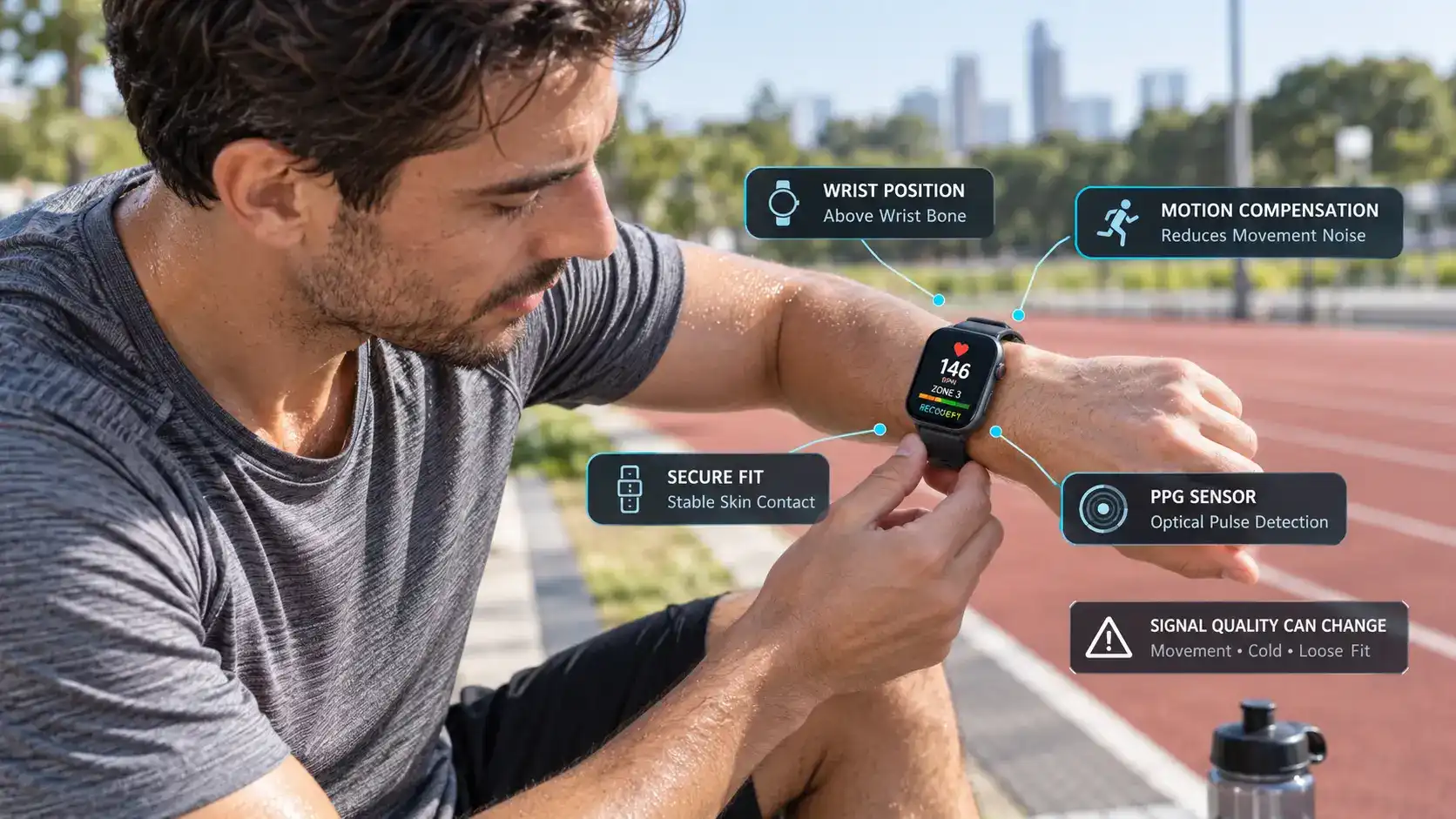
Most smartwatches for regular people use photoplethysmography (PPG), which is when green LED light bounces off of blood vessels under the skin to figure out the heart rate. PPG is cheap and can be used for constant tracking while people are doing normal things. Some high-end monitors, called ECG-based sensors, can directly pick up electrical data from the heart, which is a clinically acceptable way to find arrhythmias. A 2019 study in the journal npj Digital Medicine found that wrist-worn PPG devices were more accurate than ECG chest straps 97.5% of the time when the person was at rest. However, when the person was moving quickly, motion artifacts made the wrist-worn devices less accurate.
Factors That Affect Measurement Precision
The correctness of the result is not just based on the quality of the sensors. PPG signal quality is affected by where the device is placed on the wrist, differences in skin tone across the Fitzpatrick scale, the temperature of the room, and even the amount of ink in a tattoo. Firmware algorithms are also very important. Advanced motion-compensation software gets rid of cadence-lock errors and noise that come from moving the arm quickly. When B2B buyers put devices in the hands of a wide range of users, they have to make sure that the algorithms are mature and that the devices work with multiple skin tones.
Evaluating and Selecting Accurate Heart Rate Smartwatches for B2B Procurement
Key Technical Criteria to Assess
To choose the right wrist-based cardiac monitor for a business rollout, you need to look at more than just the specs. When someone buys a sensor, they should look at how often it samples, how long the battery lasts when monitoring is continuous, how waterproof it is (IP67 or higher for active use), and how well it works with other health data platforms. When you have to wear something for a long time, like when you're watching workers' safety or giving professional remote care, ergonomic comfort is very important.
Selecting the best accurate heart rate smartwatches for business purchase requires focusing on these core hardware benchmarks:
- Sensor technology: In changing settings, multi-path optical modules with motion-compensation accelerometers work better than single-LED options.
- Battery performance: Devices that can run continuously for 5 to 10 days make large deployments easier, especially for monitoring programs in the field or after surgery.
- Data integration: ANT+ and Bluetooth 5.0 or higher make sure that telemetry stays in sync with EHR and business health tools.
- Durability: Ratings for water resistance, case material strength, and strap biocompatibility (ISO 10993 compliance) are important for daily use that lasts for a long time.
These standards directly lead to lower replacement costs, fewer warranty claims, and more satisfied end users. All of these things are important to procurement managers who are in charge of large-scale deployments of multiple units.
Spotlight: A Purpose-Built Running Performance Smartwatch
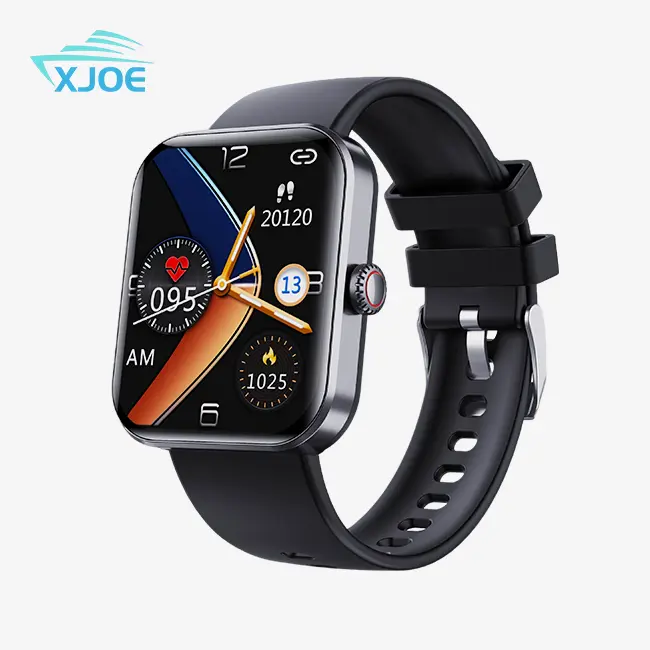
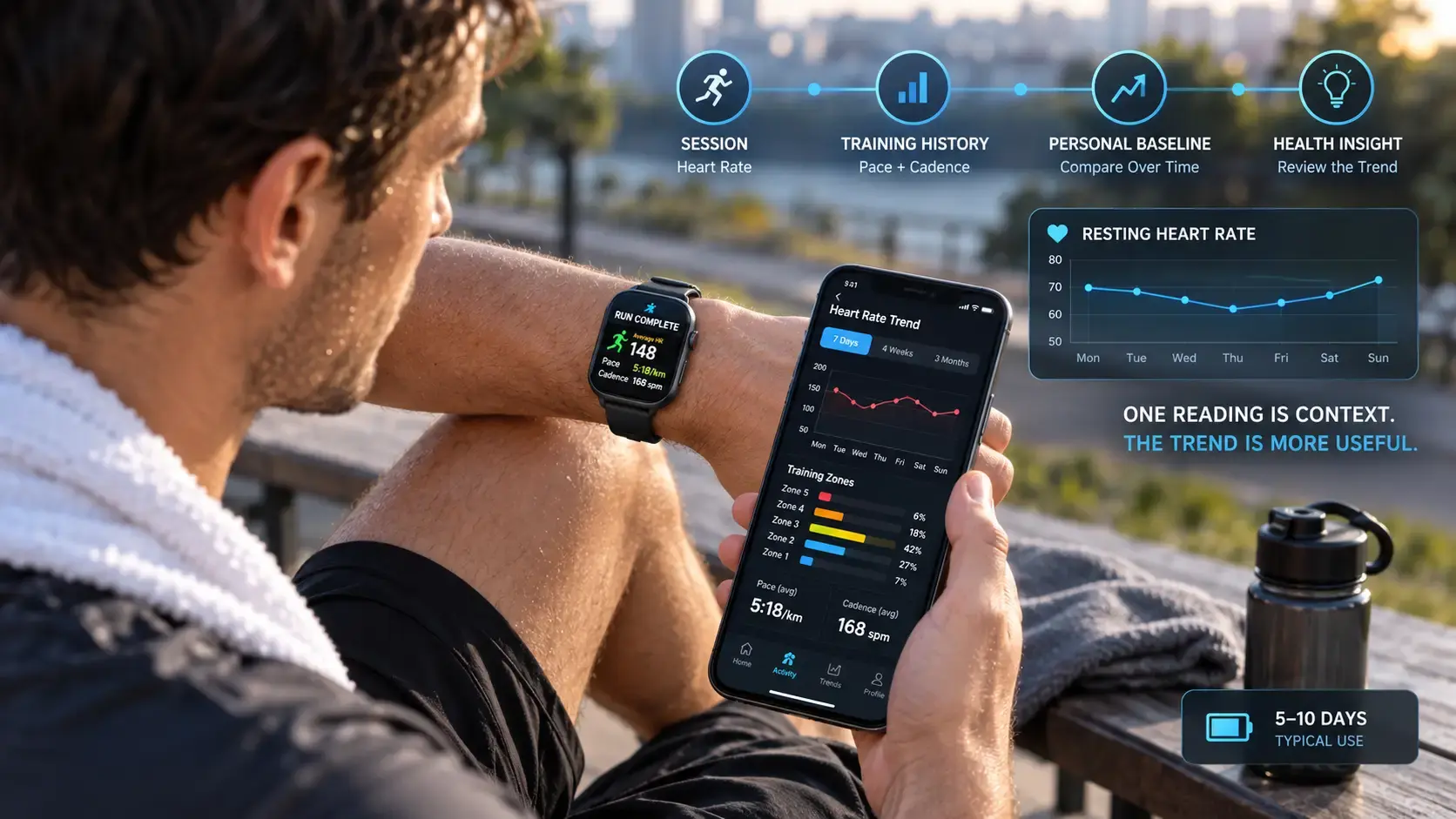
Xizhou's running-focused heart rate smartwatch is a great example of purpose-driven design. It was made for serious runners and fitness programs that focus on performance. This gadget has a very accurate optical heart rate tracker that keeps track of training zones in real time, which helps with cardiovascular fitness based on zones. It also gives professional-level running metrics like pace, cadence, and VO2 Max estimates, which give coaches and training tools useful physiological data they can use.
The gadget has an IP67 rating for waterproofing and runs on Android. It has a small 29–35 mm case and a 320×240 IPS screen, so it can be used for outdoor workouts and sweaty exercises. A magnetic charging port and a silicone strap with a pin buckle closure finish off a design that is made to be worn every day. When used normally, the battery lasts for 5 to 10 days. The lightweight of the alloy case with a strengthened polymer structure doesn't come at the cost of longevity.
This setup works well for business fitness challenges, community health screening programs, and sports performance platforms that need to find reliable heart rate monitors at low prices for large orders.
Practical Applications in Health Monitoring Solutions
Corporate Wellness and Community Health Systems
More and more, companies that offer fitness programs for their employees depend on wrist-worn cardiac monitors to keep track of overall exercise trends, find people who are at high risk, and encourage better behavior. Community health management platforms, like those used in senior care networks or wellness apps that are linked to insurance, use continuous heart rate data to send personalized alerts and engage in health coaching conversations. A device with a battery life of 5–10 days and magnetic charging that doesn't make noise fits right in with these environments and doesn't get in the way of daily life.
Workforce Safety in High-Risk Environments
Real-time heart rate tracking with a heart monitor running watch is being used by industrial workers in logistics, building, and manufacturing to find signs of physiological stress before they happen. High heart rate at rest and strange HRV rhythms during shift work can be signs of heat-related sickness or heart emergencies. Putting accurate wrist trackers on everyone in a company and sending the data to a central safety screen adds a layer of preventative safety that can't be done with traditional methods.
Remote Patient Monitoring and Clinical Support
Continuous heart rate tracking lets post-operative care teams and chronic disease management platforms keep an eye on patients outside of hospitals. Wearable PPG monitors are not a replacement for diagnostic-grade ECG, but they do offer useful trendline data that clinical staff can look at from afar. Before they can be used in these situations, devices must meet the necessary protection and licensing standards (HIPAA in the US). Before agreeing to clinically-adjacent procurement, buyers should check the paperwork provided by suppliers.
Procurement Best Practices
Sourcing, Negotiation, and Supplier Vetting
Supply lines that you can count on are just as important as the specs of the gadget. When you buy directly from an OEM/ODM manufacturer with verified certifications, GMP-compliant production, and documented quality control processes, you lower the risk of getting defective units, batch quality that isn't consistent, and late fulfillment, all of which add costs in enterprise deployments.
When buying wearable health monitors from a business, it's usually best to ask for comparative accuracy test reports that are based on Polar H10 or similar chest strap standards. You should also look over the warranty and service terms after the sale and make sure that the minimum order size is flexible for the first testing cycles. When negotiating with a seller, you should talk about things like volume discounts, shipping times around the world, and the choices for OEM and private label. Inventory risk is greatly reduced when you work with a manufacturer that can handle both small test orders and large-scale restocking cycles.
Future Trends in Heart Rate Smartwatch Technology
AI-Driven Sensors and Multi-Parameter Integration
The next generation of health trackers worn on the wrist combines PPG and ECG functions within hybrid sensor designs. These are made possible by AI-driven signal processing that adjusts to each person's biometric baselines. With multi-wavelength optical sensors, SpO₂, stress index, and skin temperature can now be tracked at the same time as cardiac rate. This brings smartwatches closer to becoming full-fledged ambulatory health hubs.
Cloud analytics tools that work with IoT are changing how this data is used. Instead of just keeping track of raw measures, connected ecosystems use predictive modeling to find patterns of health decline, help doctors make decisions, and power dynamic insurance price models. For business-to-business buyers, making sure their buying plans match these trends means choosing suppliers with active research and development programs and a track record of being able to integrate platforms, not just hardware makers selling separate devices.
Conclusion
Heart rate monitoring technology has grown to the point where devices worn on the wrist, like the accurate heart rate smartwatch can provide accurate physiological data in fitness, medical, and work settings. When making this kind of purchase decision, you have to weigh the accuracy of the sensors, the durability of the devices, the flexibility of the integration, and the total cost of deployment. The right supplier relationship is key to long-term success, whether you're creating a workplace fitness program, growing a remote tracking platform, or finding private-label wearables for a B2C brand that's growing. Xizhou helps buyers around the world feel confident in their purchases by combining strong engineering with flexible manufacturing support.
FAQ
1. Do all smartwatches include heart rate sensors?
Optical PPG heart rate monitors are built into most current smartwatches as standard. However, entry-level consumer products and enterprise-grade wearables are very different in terms of sensor quality, sampling frequency, and algorithm complexity. When looking for health monitoring deployments, buyers should ask for proof of comparative accuracy.
2. What causes inaccurate heart rate readings?
Most of the time, signal confusion in PPG-based devices is caused by motion artifacts during fast movement. Some other factors that can affect the results are not placing the wrist correctly, having very different skin tones without multi-tone calibration, the environment being cold, which lowers blood flow to the extremities, and tattoo ink that stops light from being absorbed.
3. How do I verify supplier credibility before placing a bulk order?
Ask for approved test results that compare the accuracy of the device to a well-known standard. Check the factory's certifications, look over the quality of the sample batch, and see how responsive the after-sales support is. A supplier with a flexible MOQ for initial tests and clear paperwork shows the operating openness that is needed for long-term B2B relationships.
4. Can heart rate smartwatches support clinical health programs?
Wrist devices that use PPG can be used with remote patient tracking tools to provide constant trendline data. They are not meant to be used instead of diagnostic-grade ECG machines. Always check the status of any necessary regulatory compliance and certifications before deploying in environments that are close to clinical settings.
Partner with Xizhou for Accurate Heart Rate Smartwatch Supply
You can email Xizhou at 13266508958@163.com to get in touch with them. They are a GMP-certified OEM/ODM accurate heart rate smartwatch manufacturer with a history of successful research and development, a lot of stock, and full certification coverage. Our team can do unique marking, a low minimum order quantity, and fast shipping around the world. Get in touch with us right away to get a product list, sample evaluation, or volume price quote that fits your needs, whether you need a trial order or a scaled restocking.
References
1. Bent, B., Goldstein, B. A., Kibbe, W. A., & Dunn, J. P. — npj Digital Medicine, 2020.
2. Gillinov, S., et al. "Variable Accuracy of Wearable Heart Rate Monitors during Aerobic Exercise." — Medicine & Science in Sports & Exercise, 2017.
3. Shcherbina, A., et al. "Accuracy in Wrist-Worn, Sensor-Based Measurements of Heart Rate and Energy Expenditure in a Diverse Cohort." — Journal of Personalized Medicine, 2017.
4. Stahl, S. E., et al. "How Accurate Is the Activity Tracking in Commonly Used Wearable Devices?" — BMJ Open Sport & Exercise Medicine, 2016.
5. Parak, J., & Korhonen, I. "Evaluation of Wearable Consumer Heart Rate Monitors Based on Photoplethysmography." — IEEE Engineering in Medicine and Biology Society, 2014.
6. Dunn, J. et al. "Wearable Sensors Enable Personalized Predictions of Clinical Laboratory Measurements." — Nature Medicine, 2021.