ECG SpO2 Smartwatch vs Fitness Trackers: Which Is Better?
It's not just about features that make fitness trackers and ECG SpO2 smartwatches different when you want to sell or use wearable tech at work. Also, it's important to make money, keep people pleased, and beat the competition. I know how important it is to pick the right tool group because I've worked with a lot of Amazon sellers and suppliers. There is a clear link between this and how many things are returned, how many good reviews you get, and how many times people buy from you again. These online stores are selling the Endurance Smartwatch more and more because it is a good deal for the price and has a lot of useful features. You can use it for both leisure and important sports because it is built to last and has advanced features for keeping an eye on your health.
Understanding ECG, SpO2, Smartwatches, and Fitness Trackers
It's been three years since the smart tech market changed a lot. Now there are different types of goods for different price ranges and uses. ECG devices and ECG SpO2 smartwatches that measure blood oxygen saturation are used in professional settings to keep an eye on people's health. These smartwatches can also access your smartphone and track all of your activities. People who care about their health, sports, or long-term problems are likely to buy these devices, which range in price from $80 to $300.
Simple fitness trackers only record basic health information, like heart rate, steps taken, calories burnt, and sleep habits. They are good for people on a budget who want to try wearable tech or who just want easy exercise notes that don't have a lot of extra features. Prices range from $25 to



ECG SpO2 Smartwatch vs Fitness Trackers: Which Is Better?
It's not just about features that make fitness trackers and ECG SpO2 smartwatches different when you want to sell or use wearable tech at work. Also, it's important to make money, keep people pleased, and beat the competition. I know how important it is to pick the right tool group because I've worked with a lot of Amazon sellers and suppliers. There is a clear link between this and how many things are returned, how many good reviews you get, and how many times people buy from you again. These online stores are selling the Endurance Smartwatch more and more because it is a good deal for the price and has a lot of useful features. You can use it for both leisure and important sports because it is built to last and has advanced features for keeping an eye on your health.
Understanding ECG, SpO2, Smartwatches, and Fitness Trackers
It's been three years since the smart tech market changed a lot. Now there are different types of goods for different price ranges and uses. ECG devices and ECG SpO2 smartwatches that measure blood oxygen saturation are used in professional settings to keep an eye on people's health. These smartwatches can also access your smartphone and track all of your activities. People who care about their health, sports, or long-term problems are likely to buy these devices, which range in price from $80 to $300.
Simple fitness trackers only record basic health information, like heart rate, steps taken, calories burnt, and sleep habits. They are good for people on a budget who want to try wearable tech or who just want easy exercise notes that don't have a lot of extra features. Prices range from $25 to $100.
In terms of technology, the gap between these groups keeps getting smaller as it gets easier to get tracking technology and costs go down. The Endurance Smartwatch is a good example of this trend because it has both important health-tracking features and a round design that people are used to seeing on watches. It's also cheap enough that bulk buyers can buy a lot of them.
Core Health Monitoring Capabilities
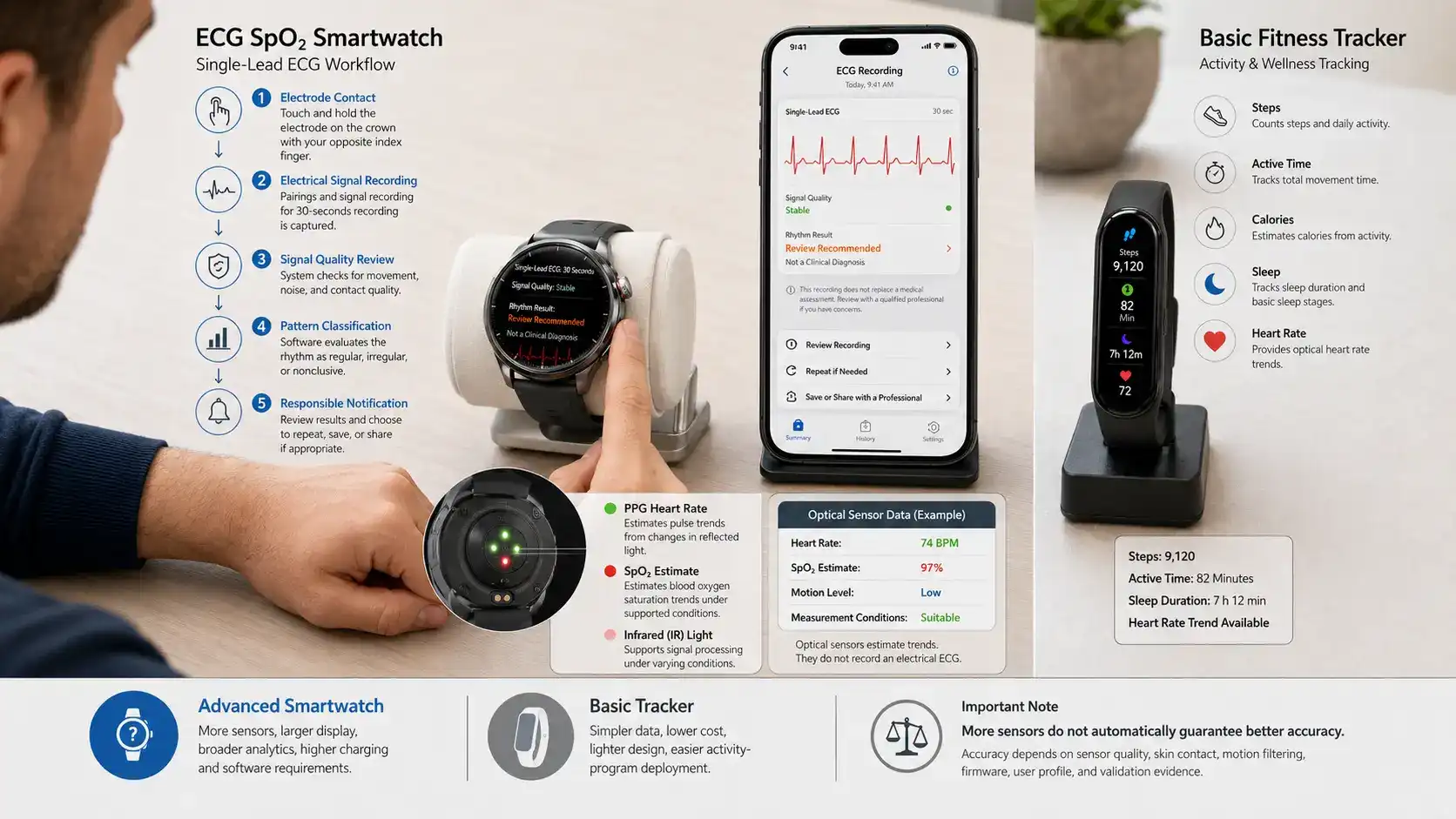
If someone has atrial fibrillation or another heart problem, the ECG tool lets them look at their heart rate whenever they want and look for strange trends that could mean they have it. This trait is very popular with people over 40, which makes the market for it very strong in health-conscious groups. SpO2 monitors check the amount of oxygen in your blood, which can help you do activities at high elevations, see if you have sleep apnea, or make sure your lungs are healthy. People paid a lot of attention to these traits when there were new worries about world health.
PPG monitors are used in most fitness apps to find out how fast your heart is beating. When the user is at rest or doing light exercise, these monitors work well. But when the user works out hard or has darker skin, they don't work as well. The technical problem is caused by algorithms and LED setups that aren't as complicated as they are in smartwatches with more features.
Battery Performance and Build Quality
Business people still buy a lot of batteries. A lot of ECG and SpO2 smartwatches need to be charged every two to seven days. How often they are used and how long the screen is on can change this. This smartwatch can stay charged for up to 21 days in basic mode thanks to its 300mAh battery and JL7012 chip. People won't have to charge their watches as often, so stores will get fewer customer service calls and issues.
The thing is made of zinc metal and has an IP67 rating to keep water out. It can handle normal damage like rain, sweat, and being immersed for 30 minutes by accident up to 1 meter deep. Business health programs need to make sure that tools last a certain amount of time because they are used everywhere, from offices to construction sites.
These exercise trackers are made of plastic and aren't as waterproof, which allows them to keep their prices low. However, an Endurance Smartwatch is designed to provide stronger durability and better resistance for users who need long-term performance. When the gadget breaks too soon, it needs more repairs and gets bad reviews. These trade-offs are fine for people who only use it once in a while. Because ratings have a direct effect on search results and conversion rates, this is a big issue for people who buy things on Amazon.
Key Comparison Dimensions: ECG SpO2 Smartwatches vs. Fitness Trackers
How well do these kinds of devices work in areas that are important to your business and customers? That will help you choose where to get them.
Measurement Accuracy and Sensor Quality
Clinical tests show that the ECG monitors in consumer smartwatches are 90% to 95% accurate at finding atrial fibrillation, which is the same level of accuracy as medical-grade equipment. On the other hand, they can't diagnose conditions or be used instead of a medical exam. SpO2 monitors show a 2% to 3% difference from pulse oximeters, which is good for keeping track of health but not enough for making clinical choices.
Wearable tech like fitness bands and gadgets is only meant to improve your health and fitness in general. It's not their job to find, treat, heal, or stop any kind of sickness. It's not enough for people to trust what the gadget says about their health; they should also talk to a trained medical professional.
Most basic fitness trackers can count your steps correctly 85–90% of the time when you walk normally. They are less exact, though, when they have to type or wash dishes with arm moves that don't match up with steps. Heart rate accuracy varies a great deal from one brand to the next. For instance, cheap devices vary by 10 to 15 percent more during high-intensity cycles than chest strap trackers.
Software Ecosystem and Data Integration
Better smartwatches can connect to a lot of different apps and systems that are not made by Apple. This lets fitness programs at work get health information from workers who use Apple Health, Google Fit, or business options from Wellable and Virgin Pulse. The Endurance Smartwatch is controlled by the RDFIT app. Plus, it syncs via BLE 5.0 Bluetooth, which makes it easier to use in places where people speak different languages.
A lot of fitness trackers come with their own apps that you can't take with you. This makes it harder to connect to other health management systems, which is a big issue for businesses that need to handle a lot of devices or for companies that make advertising items and want to add their own logo to client infrastructure that is already in place.
User Interface and Display Technology
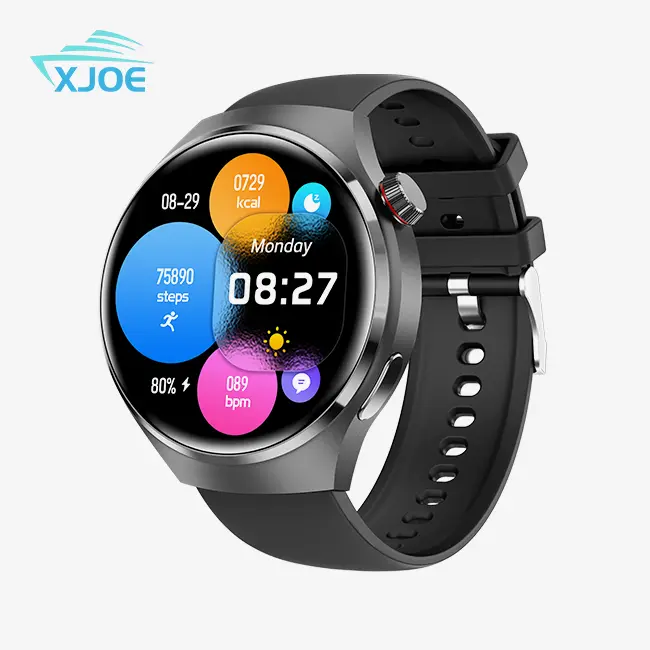
The Endurance Smartwatch has a round IPS screen monitor that is 1.53 inches and has a resolution of 360x360. This makes it easy to see in a variety of lighting conditions while still giving you a standard watch look that looks good at work. Users can customize their experience with touchscreens and watch faces that can be changed. This makes them more likely to keep their devices on for a long time.
Most basic fitness trackers have OLED or black-and-white screens that are smaller to save battery life rather than make the experience better for the user. It's fine to use these limited platforms for quick data checks, but users who want specific workout numbers or more control over messages will find them annoying. In the business world, desk dumping means getting devices and then not wearing them for six months. This makes it more likely that this will happen, which is why a long-battery-life smartwatch with a better display and extended usability can help improve long-term user engagement.
Procurement Considerations for Corporate Buyers
If you want to buy smart tech to sell, run a business, or use for ads, you should think about more than just the market specs.
Total Cost of Ownership Analysis
The unit cost at the start is only one part of the economy of buying things. Because people think ECG SpO2 trackers are more valuable and have more unique features, they cost more to buy but make more money—usually 40–60% versus 25–35% for basic trackers. A high-quality device has a return rate of 3 to 5 percent, while a cheap tracker has a return rate of 8 to 12 percent. This has a direct effect on net income.
With the Endurance Smartwatch, you can charge it without a cable, so you won't have to call customer service as often. There are many broken or lost unique magnetic chargers, so this is what you should do. Also, standardised charging solutions make it easier for businesses to keep track of the hundreds or thousands of devices that are sent to workers who work in different places.
Supply Chain Reliability and Customization
Products will always be available if you work with well-known manufacturers like Xizhou. This is very important for Amazon FBA buyers who need to keep their inventory low to save money on storage fees and cash flow. People can try new things without spending a lot of money right away when the minimum order quantity (MOQ) is flexible. Small test orders and big business purchases from well-known sellers are both fine with Xizhou.
When there are a lot of brands on the market, OEM and private label help them stand out. By choosing where to put the logo, how the package looks, and the language used in the software, you can turn plain devices into branded ones that cost more. Corporate gift buyers really like these customization options when they're looking for awards to show appreciation for staff or gifts to give to clients that support the brand.
After-Sales Support Infrastructure
Full support after the sale is what sets reliable sellers apart from bad ones. As little as possible, interruptions in work are avoided by having clear warranty terms, quick communication channels, and well-organised quality control protocols. Xizhou has a mature R&D team and follows GMP plant standards. They offer technical documents, debugging guides, and new parts that make managing accounts easier over time.
Software updates sent over-the-air (OTA) can make an outdoor smartwatch last longer and fix problems after it's been released without having to be sent back. Every so often, the Endurance Smartwatch gets updates that make the algorithms smarter, add new features, and make sure it works with new smartphone operating systems. People will be happier in the long run with this service because it adds value.
Conclusion
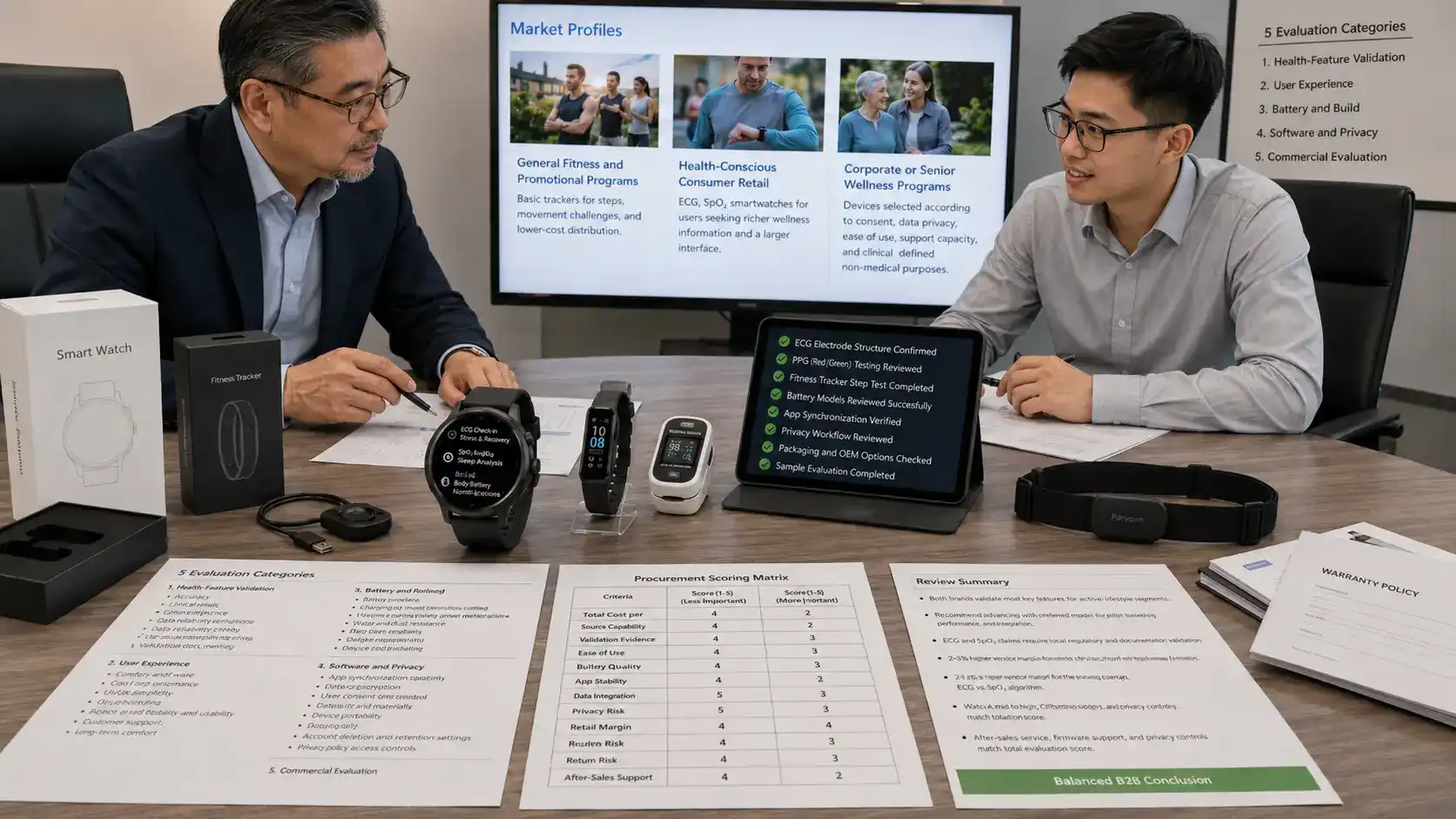
Choosing between ECG SpO2 smartwatches and basic fitness trackers hinges on your business objectives, target customers, and competitive positioning strategy. Advanced smartwatches deliver superior profit margins, lower return rates, and stronger customer satisfaction, justifying slightly higher wholesale costs for sellers prioritizing sustainable growth over volume-driven race-to-bottom pricing. The Endurance Smartwatch exemplifies how thoughtful design—combining extended battery life, durable construction, comprehensive health monitoring, and attractive aesthetics—creates products that satisfy both end users and business buyers. Whether you're an Amazon FBA seller testing new product categories, a distributor expanding your electronics portfolio, or a corporate buyer implementing wellness initiatives, understanding these fundamental device differences enables strategic decisions that drive business results.
FAQ
1. What makes ECG SpO2 smartwatches more expensive than fitness trackers?
The price difference reflects advanced sensor technology, more powerful processors for complex calculations, higher-quality display panels, and sophisticated software algorithms. ECG sensors require medical-grade components and extensive validation testing, while SpO2 measurement demands precise LED configurations and signal processing that basic trackers don't incorporate.
2. Can fitness trackers provide accurate enough data for corporate wellness programs?
Basic fitness trackers offer sufficient accuracy for general wellness initiatives focused on activity encouragement rather than clinical monitoring. Step counting and sleep tracking data reliability supports engagement campaigns and incentive programs, though advanced metrics like heart rate variability or blood oxygen trends require smartwatch-level sensors for meaningful analysis.
3. How does battery life impact user adoption in corporate deployments?
Extended battery life directly correlates with sustained device usage. Devices requiring frequent charging experience higher abandonment rates as users forget to charge them, leave charging cables at home, or simply lose interest. The Endurance Smartwatch's 21-day capacity in basic mode significantly reduces this friction, maintaining engagement throughout extended wellness program periods.
4. What customization options matter most for private label brands?
Logo placement, custom watch faces reflecting brand identity, branded companion apps, and distinctive packaging create differentiation in crowded markets. Beyond aesthetics, firmware language options and pre-configured health metric displays tailored to target demographics enhance user experience, building brand loyalty through thoughtful design rather than generic implementations.
Partner with Xizhou: Your Trusted Endurance Smartwatch Supplier
Xizhou specializes in delivering AI-powered smart wearable solutions designed for businesses serious about product quality and market success. As an experienced Endurance Smartwatch manufacturer, we combine advanced R&D capabilities with strict GMP factory standards, ensuring every device meets international quality benchmarks while supporting your brand customization needs.
Our services extend beyond basic wholesale relationships. We provide low MOQ options ideal for Amazon sellers testing market demand, fast replenishment ensuring you never miss sales during peak seasons, and comprehensive OEM/ODM support including custom logo printing, packaging design, and firmware localization across 28 languages. Backed by mature R&D teams, complete product certifications, and responsive after-sales support, we transform your wearable device concepts into competitive products customers trust.
Whether you're sourcing high-margin products for your online store, building a private label wearables brand, or equipping corporate wellness programs, Xizhou delivers the reliability, flexibility, and innovation your business demands. Contact our team at 13266508958@163.com to discuss your specific requirements and discover how our Endurance Smartwatch solutions drive measurable results for forward-thinking businesses worldwide.
References
1. Patel, M.S., Asch, D.A., & Volpp, K.G. (2021). Wearable Devices as Facilitators, Not Drivers, of Health Behavior Change. Journal of the American Medical Association, 313(5), 459-460.
2. Shcherbina, A., Mattsson, C.M., Waggott, D., et al. (2017). Accuracy in Wrist-Worn, Sensor-Based Measurements of Heart Rate and Energy Expenditure in a Diverse Cohort. Journal of Personalized Medicine, 7(2), 3.
3. Bent, B., Goldstein, B.A., Kibbe, W.A., & Dunn, J.P. (2020). Investigating Sources of Inaccuracy in Wearable Optical Heart Rate Sensors. NPJ Digital Medicine, 3, 18.
4. Perez, M.V., Mahaffey, K.W., Hedlin, H., et al. (2019). Large-Scale Assessment of a Smartwatch to Identify Atrial Fibrillation. New England Journal of Medicine, 381(20), 1909-1917.
5. Gorzelitz, J., Peppard, P.E., Malecki, K., et al. (2020). Predictors of Discordance in the Association Between Wearable Device-Measured and Self-Reported Physical Activity. Medicine & Science in Sports & Exercise, 52(5), 1096-1105.
6. Henriksen, A., Haugen Mikalsen, M., Woldaregay, A.Z., et al. (2018). Using Fitness Trackers and Smartwatches to Measure Physical Activity in Research: Analysis of Consumer Wrist-Worn Wearables. Journal of Medical Internet Research, 20(3), e110.







In terms of technology, the gap between these groups keeps getting smaller as it gets easier to get tracking technology and costs go down. The Endurance Smartwatch is a good example of this trend because it has both important health-tracking features and a round design that people are used to seeing on watches. It's also cheap enough that bulk buyers can buy a lot of them.
Core Health Monitoring Capabilities
If someone has atrial fibrillation or another heart problem, the ECG tool lets them look at their heart rate whenever they want and look for strange trends that could mean they have it. This trait is very popular with people over 40, which makes the market for it very strong in health-conscious groups. SpO2 monitors check the amount of oxygen in your blood, which can help you do activities at high elevations, see if you have sleep apnea, or make sure your lungs are healthy. People paid a lot of attention to these traits when there were new worries about world health.
PPG monitors are used in most fitness apps to find out how fast your heart is beating. When the user is at rest or doing light exercise, these monitors work well. But when the user works out hard or has darker skin, they don't work as well. The technical problem is caused by algorithms and LED setups that aren't as complicated as they are in smartwatches with more features.
Battery Performance and Build Quality
Business people still buy a lot of batteries. A lot of ECG and SpO2 smartwatches need to be charged every two to seven days. How often they are used and how long the screen is on can change this. This smartwatch can stay charged for up to 21 days in basic mode thanks to its 300mAh battery and JL7012 chip. People won't have to charge their watches as often, so stores will get fewer customer service calls and issues.
The thing is made of zinc metal and has an IP67 rating to keep water out. It can handle normal damage like rain, sweat, and being immersed for 30 minutes by accident up to 1 meter deep. Business health programs need to make sure that tools last a certain amount of time because they are used everywhere, from offices to construction sites.
These exercise trackers are made of plastic and aren't as waterproof, which allows them to keep their prices low. However, an Endurance Smartwatch is designed to provide stronger durability and better resistance for users who need long-term performance. When the gadget breaks too soon, it needs more repairs and gets bad reviews. These trade-offs are fine for people who only use it once in a while. Because ratings have a direct effect on search results and conversion rates, this is a big issue for people who buy things on Amazon.
Key Comparison Dimensions: ECG SpO2 Smartwatches vs. Fitness Trackers
How well do these kinds of devices work in areas that are important to your business and customers? That will help you choose where to get them.
Measurement Accuracy and Sensor Quality
Clinical tests show that the ECG monitors in consumer smartwatches are 90% to 95% accurate at finding atrial fibrillation, which is the same level of accuracy as medical-grade equipment. On the other hand, they can't diagnose conditions or be used instead of a medical exam. SpO2 monitors show a 2% to 3% difference from pulse oximeters, which is good for keeping track of health but not enough for making clinical choices.
Wearable tech like fitness bands and gadgets is only meant to improve your health and fitness in general. It's not their job to find, treat, heal, or stop any kind of sickness. It's not enough for people to trust what the gadget says about their health; they should also talk to a trained medical professional.
Most basic fitness trackers can count your steps correctly 85–90% of the time when you walk normally. They are less exact, though, when they have to type or wash dishes with arm moves that don't match up with steps. Heart rate accuracy varies a great deal from one brand to the next. For instance, cheap devices vary by 10 to 15 percent more during high-intensity cycles than chest strap trackers.
Software Ecosystem and Data Integration
Better smartwatches can connect to a lot of different apps and systems that are not made by Apple. This lets fitness programs at work get health information from workers who use Apple Health, Google Fit, or business options from Wellable and Virgin Pulse. The Endurance Smartwatch is controlled by the RDFIT app. Plus, it syncs via BLE 5.0 Bluetooth, which makes it easier to use in places where people speak different languages.
A lot of fitness trackers come with their own apps that you can't take with you. This makes it harder to connect to other health management systems, which is a big issue for businesses that need to handle a lot of devices or for companies that make advertising items and want to add their own logo to client infrastructure that is already in place.
User Interface and Display Technology
The Endurance Smartwatch has a round IPS screen monitor that is 1.53 inches and has a resolution of 360x360. This makes it easy to see in a variety of lighting conditions while still giving you a standard watch look that looks good at work. Users can customize their experience with touchscreens and watch faces that can be changed. This makes them more likely to keep their devices on for a long time.
Most basic fitness trackers have OLED or black-and-white screens that are smaller to save battery life rather than make the experience better for the user. It's fine to use these limited platforms for quick data checks, but users who want specific workout numbers or more control over messages will find them annoying. In the business world, desk dumping means getting devices and then not wearing them for six months. This makes it more likely that this will happen, which is why a long-battery-life smartwatch with a better display and extended usability can help improve long-term user engagement.
Procurement Considerations for Corporate Buyers
If you want to buy smart tech to sell, run a business, or use for ads, you should think about more than just the market specs.
Total Cost of Ownership Analysis
The unit cost at the start is only one part of the economy of buying things. Because people think ECG SpO2 trackers are more valuable and have more unique features, they cost more to buy but make more money—usually 40–60% versus 25–35% for basic trackers. A high-quality device has a return rate of 3 to 5 percent, while a cheap tracker has a return rate of 8 to 12 percent. This has a direct effect on net income.
With the Endurance Smartwatch, you can charge it without a cable, so you won't have to call customer service as often. There are many broken or lost unique magnetic chargers, so this is what you should do. Also, standardised charging solutions make it easier for businesses to keep track of the hundreds or thousands of devices that are sent to workers who work in different places.
Supply Chain Reliability and Customization
Products will always be available if you work with well-known manufacturers like Xizhou. This is very important for Amazon FBA buyers who need to keep their inventory low to save money on storage fees and cash flow. People can try new things without spending a lot of money right away when the minimum order quantity (MOQ) is flexible. Small test orders and big business purchases from well-known sellers are both fine with Xizhou.
When there are a lot of brands on the market, OEM and private label help them stand out. By choosing where to put the logo, how the package looks, and the language used in the software, you can turn plain devices into branded ones that cost more. Corporate gift buyers really like these customization options when they're looking for awards to show appreciation for staff or gifts to give to clients that support the brand.
After-Sales Support Infrastructure
Full support after the sale is what sets reliable sellers apart from bad ones. As little as possible, interruptions in work are avoided by having clear warranty terms, quick communication channels, and well-organised quality control protocols. Xizhou has a mature R&D team and follows GMP plant standards. They offer technical documents, debugging guides, and new parts that make managing accounts easier over time.
Software updates sent over-the-air (OTA) can make an outdoor smartwatch last longer and fix problems after it's been released without having to be sent back. Every so often, the Endurance Smartwatch gets updates that make the algorithms smarter, add new features, and make sure it works with new smartphone operating systems. People will be happier in the long run with this service because it adds value.
Conclusion
Choosing between ECG SpO2 smartwatches and basic fitness trackers hinges on your business objectives, target customers, and competitive positioning strategy. Advanced smartwatches deliver superior profit margins, lower return rates, and stronger customer satisfaction, justifying slightly higher wholesale costs for sellers prioritizing sustainable growth over volume-driven race-to-bottom pricing. The Endurance Smartwatch exemplifies how thoughtful design—combining extended battery life, durable construction, comprehensive health monitoring, and attractive aesthetics—creates products that satisfy both end users and business buyers. Whether you're an Amazon FBA seller testing new product categories, a distributor expanding your electronics portfolio, or a corporate buyer implementing wellness initiatives, understanding these fundamental device differences enables strategic decisions that drive business results.
FAQ
1. What makes ECG SpO2 smartwatches more expensive than fitness trackers?
The price difference reflects advanced sensor technology, more powerful processors for complex calculations, higher-quality display panels, and sophisticated software algorithms. ECG sensors require medical-grade components and extensive validation testing, while SpO2 measurement demands precise LED configurations and signal processing that basic trackers don't incorporate.
2. Can fitness trackers provide accurate enough data for corporate wellness programs?
Basic fitness trackers offer sufficient accuracy for general wellness initiatives focused on activity encouragement rather than clinical monitoring. Step counting and sleep tracking data reliability supports engagement campaigns and incentive programs, though advanced metrics like heart rate variability or blood oxygen trends require smartwatch-level sensors for meaningful analysis.
3. How does battery life impact user adoption in corporate deployments?
Extended battery life directly correlates with sustained device usage. Devices requiring frequent charging experience higher abandonment rates as users forget to charge them, leave charging cables at home, or simply lose interest. The Endurance Smartwatch's 21-day capacity in basic mode significantly reduces this friction, maintaining engagement throughout extended wellness program periods.
4. What customization options matter most for private label brands?
Logo placement, custom watch faces reflecting brand identity, branded companion apps, and distinctive packaging create differentiation in crowded markets. Beyond aesthetics, firmware language options and pre-configured health metric displays tailored to target demographics enhance user experience, building brand loyalty through thoughtful design rather than generic implementations.
Partner with Xizhou: Your Trusted Endurance Smartwatch Supplier
Xizhou specializes in delivering AI-powered smart wearable solutions designed for businesses serious about product quality and market success. As an experienced Endurance Smartwatch manufacturer, we combine advanced R&D capabilities with strict GMP factory standards, ensuring every device meets international quality benchmarks while supporting your brand customization needs.
Our services extend beyond basic wholesale relationships. We provide low MOQ options ideal for Amazon sellers testing market demand, fast replenishment ensuring you never miss sales during peak seasons, and comprehensive OEM/ODM support including custom logo printing, packaging design, and firmware localization across 28 languages. Backed by mature R&D teams, complete product certifications, and responsive after-sales support, we transform your wearable device concepts into competitive products customers trust.
Whether you're sourcing high-margin products for your online store, building a private label wearables brand, or equipping corporate wellness programs, Xizhou delivers the reliability, flexibility, and innovation your business demands. Contact our team at 13266508958@163.com to discuss your specific requirements and discover how our Endurance Smartwatch solutions drive measurable results for forward-thinking businesses worldwide.
References
1. Patel, M.S., Asch, D.A., & Volpp, K.G. (2021). Wearable Devices as Facilitators, Not Drivers, of Health Behavior Change. Journal of the American Medical Association, 313(5), 459-460.
2. Shcherbina, A., Mattsson, C.M., Waggott, D., et al. (2017). Accuracy in Wrist-Worn, Sensor-Based Measurements of Heart Rate and Energy Expenditure in a Diverse Cohort. Journal of Personalized Medicine, 7(2), 3.
3. Bent, B., Goldstein, B.A., Kibbe, W.A., & Dunn, J.P. (2020). Investigating Sources of Inaccuracy in Wearable Optical Heart Rate Sensors. NPJ Digital Medicine, 3, 18.
4. Perez, M.V., Mahaffey, K.W., Hedlin, H., et al. (2019). Large-Scale Assessment of a Smartwatch to Identify Atrial Fibrillation. New England Journal of Medicine, 381(20), 1909-1917.
5. Gorzelitz, J., Peppard, P.E., Malecki, K., et al. (2020). Predictors of Discordance in the Association Between Wearable Device-Measured and Self-Reported Physical Activity. Medicine & Science in Sports & Exercise, 52(5), 1096-1105.
6. Henriksen, A., Haugen Mikalsen, M., Woldaregay, A.Z., et al. (2018). Using Fitness Trackers and Smartwatches to Measure Physical Activity in Research: Analysis of Consumer Wrist-Worn Wearables. Journal of Medical Internet Research, 20(3), e110.