

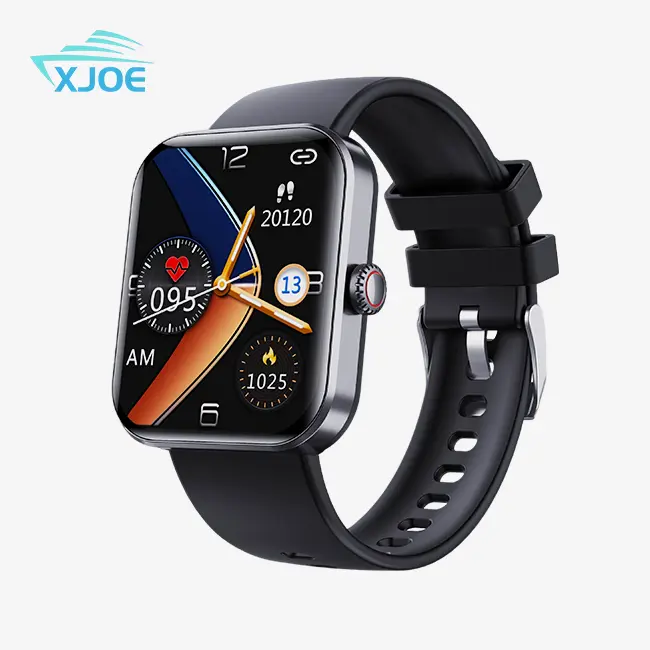
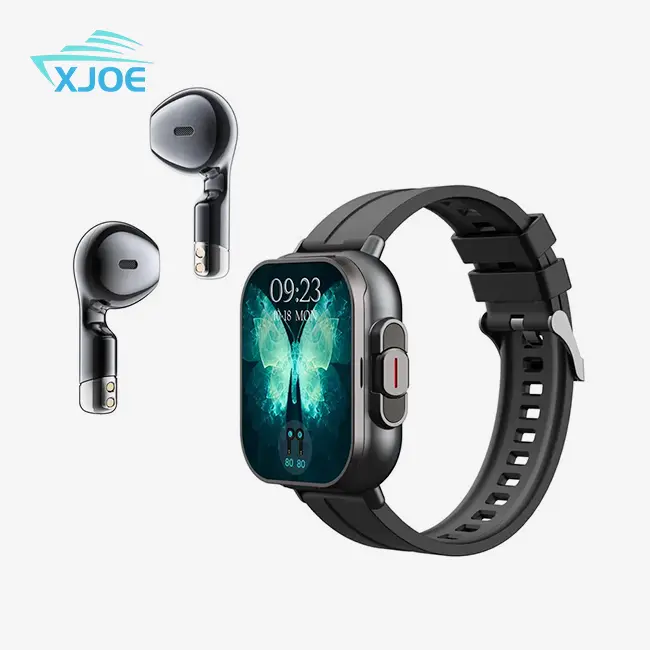
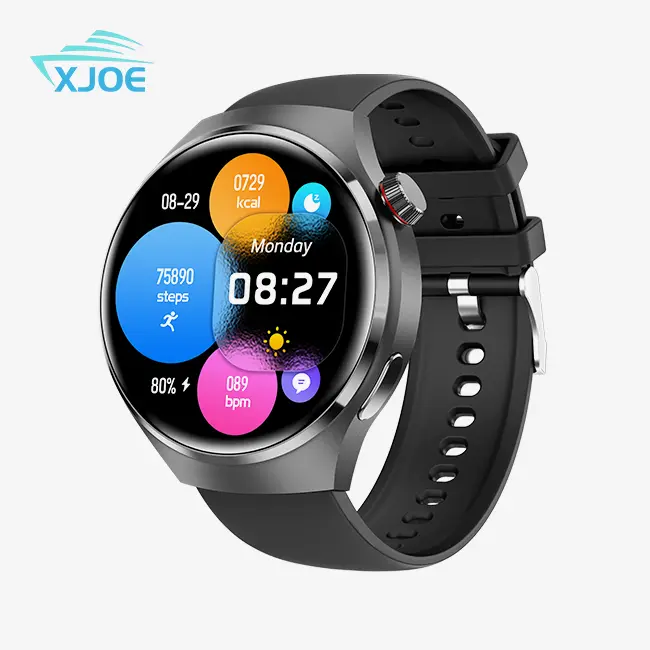
ECG Health Smartwatch with AI Health Alerts
ECG Health Smartwatches offer real-time electrocardiogram readings and smart health alerts, combining medical-grade monitoring with the ease of wearing something. AI looks at trends in heartbeats to find problems like atrial fibrillation and quickly sends alerts. ECG-enabled smartwatches collect cardiac electrical impulses to provide clinically useful data for preventive cardiovascular care and wellness management across a wide range of user demographics. This is different from fitness trackers that only count steps or estimate calories burned. Medical Disclaimer: This post is only meant to teach and help people buy things. ECG smartwatches are health tools that shouldn't be used instead of medical care for evaluation, treatment, or emergencies. People who use it and have chest pain, severe dizziness, or other serious symptoms should see a doctor right away. Do not use information from your smartwatch to make health decisions without first talking to your doctor.
Understanding ECG Health Smartwatches and AI Health Alerts
What Makes ECG Monitoring Different from Standard Heart Rate Tracking
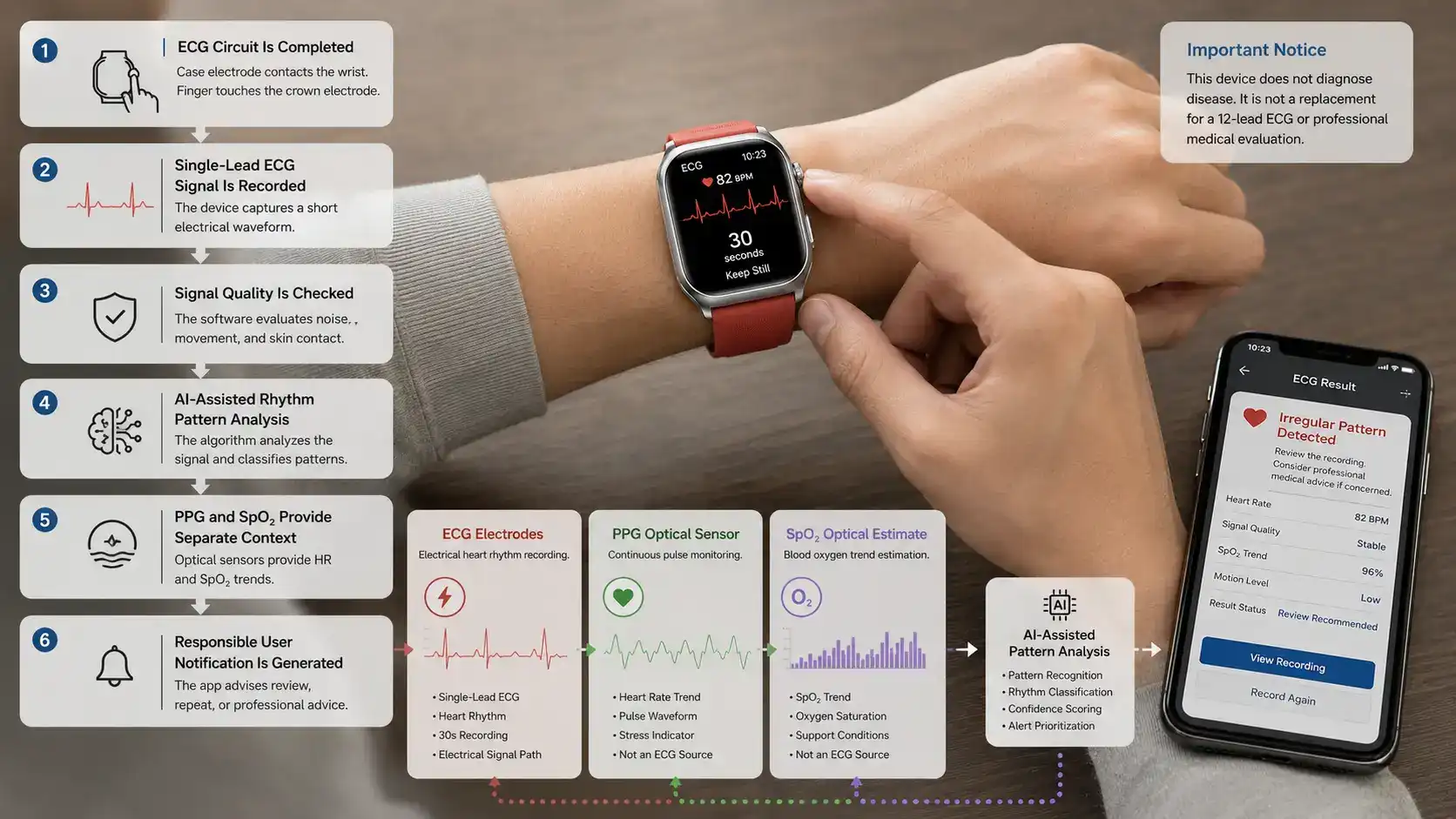
Most optical heart rate monitors employ photoplethysmography (PPG), which records blood volume changes by LED light reflection. PPG tracks health but can't detect heart rate electrical issues. However, smartwatch case and crown electrodes capture the heart's electrical activity for ECG technology. When someone lays their finger on the crown, it completes a circuit that captures a single-lead ECG like Lead I in a clinic.
Our ECG Health Smartwatch's professional sensors properly detect heart signals. It detects arrhythmias, abnormal heartbeats, and other rhythm issues. This makes ECG monitoring valuable for wellness initiatives in enterprises, elder living complexes, and health-focused product lines where clients desire more than activity tracking.
How AI Enhances Health Alert Accuracy and Responsiveness
AI transforms ECG data into useful information. Machine learning algorithms trained on thousands of actual cardiac rhythms can distinguish atrial fibrillation, normal sinus rhythm, and other issues in real time. With simpler tracking systems, false positives are common. Smart processing reduces them. This ensures consumers receive meaningful warnings instead of noise.
The gadget continuously monitors SpO2 and ECG. The AI system can link oxygen saturation decreases to cardiac events. When the algorithm detects unusual patterns like persistent tachycardia and declining blood oxygen levels, it informs the RDFIT app immediately. This two-metric technique delivers a complete cardiac image, so the wristwatch may be utilized for workplace safety, remote patient surveillance, and staff wellness initiatives. Fast action may prevent costly health issues.
Key Technical Specifications That Matter for B2B Buyers
When buying smart health solutions, teams should consider their usability and deployment. Featuring a 1.5-inch circular IPS color screen with 360×360 resolution, our device is simple to read in any light. The JL7012 chip's rapid processing and 10-day battery life are essential for field workers and travelers who can't stop charging.
The item is durable and attractive due to zinc metal. IP67 water and dust resistance protects it against perspiration, rain, and accidental splashes but not swimming or submersion. BLE 5.0 syncs iOS and Android devices, and magnetic charging replaces worn-out charge ports. English, Spanish, German, French, Japanese, Korean, Arabic, and Vietnamese are among the 28 languages the wristwatch understands. This allows them to collaborate with global teams and diverse customers without regional peculiarities.
Why B2B Clients Should Consider ECG Health Smartwatches with AI Health Alerts
Strategic Value in Corporate Wellness and Employee Safety Programs
Companies gain from employee health investments in reduced insurance costs, fewer absences, and increased productivity. ECG Health Smartwatches in workplace wellness programs monitor the heart and lungs to identify at-risk individuals before tiny issues become significant health issues. Aggregated data helps HR and occupational health experts identify patterns and optimize preventive interventions across a workforce.
Factory, warehouse, and construction sites benefit from wearable cardiac monitoring. Workers in physically demanding or stressful professions are more likely to develop heart disease. Detecting cardiac abnormalities in employees in real time may save lives and reduce liabilities. With a 10-day battery life, tracking may continue throughout multi-day projects or jobs that are far away and hard to charge.
Advantages for Healthcare Providers and Senior Care Facilities
Remote patient surveillance has gone from an experiment to a need, particularly for cardiac groups and geriatric care facilities managing long-term disorders. ECG Health Smartwatches allow physicians to monitor patients' heart health between visits. Regular office visits may overlook abnormal heartbeats. AI-powered notifications notify users and authorized caretakers of abnormal readings, making medical treatment simpler to get.
Senior living homes should include monitoring devices that respect residents' independence and ensure their safety. Staff are warned instantly of atrial fibrillation or oxygen desaturation in elderly patients, allowing them to respond fast. This device reduces unexpected heart attacks in the emergency department and provides families peace of mind that their loved ones are constantly looked after.
Compliance and Data Security Considerations for Enterprise Deployment
B2B procurement managers must ensure regulator-compliant wearable health gadgets. Fitness trackers for ordinary people aren't regulated, but medical-grade ECGs should be. Quality-conscious buyers should request testing against clinical-grade instruments and ISO 10993 biocompatibility certification.
Data privacy is crucial for HIPAA-covered US firms and GDPR-compliant European organizations. RDFIT app receiving and storing health data should have end-to-end security. Procurement teams must clarify data ownership to keep health information inside the organization and prevent third parties from selling it. Work with manufacturers with defined data handling procedures to reduce compliance risks and safeguard user privacy.
Comparing ECG Health Smartwatches: Key Procurement Factors
Performance Benchmarks: Smartwatch ECG vs. Traditional Clinical Equipment
Smartwatch ECGs usually only offer single-lead data, while clinical ECG tools take 12-lead readings that give a full picture of the heart. This limitation doesn't make the smartwatch less useful for monitoring all the time and finding arrhythmias. Studies have shown that single-lead ECG machines are very good at finding atrial fibrillation when compared to the best tools on the market. Accessibility is the main benefit: users can record multiple readings throughout the day, while professional ECG visits don't happen very often and may miss some events.
The ECG accuracy of our device rests on how well the electrodes are connected and how the data is processed. Managers in charge of buying things should ask for validation data that shows the Mean Absolute Error (MAE) rates and comparison studies with clinical devices or chest-strap monitors. When you combine ECG and SpO2 tracking, the diagnostic value goes up because oxygen saturation data gives you more information to help you understand cardiac readings. This is especially helpful for people who have breathing problems that affect heart function.
Battery Life and Connectivity: Ensuring Uninterrupted Monitoring
Longevity of the battery has a direct effect on user behaviour and the continuation of data. A device that needs to be charged every day leaves gaps in monitoring when users forget to charge it at night or can't get to a power source. Our smartwatch's 10-day battery life solves this problem, making it useful for long-haul truckers, field service techs, execs who travel a lot, and other people whose schedules don't allow for frequent charging.
Bluetooth 5.0 connectivity makes sure that data syncs reliably with smartphones. This lets health data flow smoothly into cloud-based dashboards that can be accessed by healthcare providers, corporate wellness coordinators, or family carers. Teams that buy things for international markets should make sure that the partner app works with health information systems that are already in place and supports the languages that are needed. It is easier to integrate electronic health records and corporate wellness platforms when data can be exported in standard formats.
Evaluating Supplier Credibility and Total Cost of Ownership
The initial purchase price is only one part of the total cost of ownership for an ECG Health Smartwatch. Buyers should look at the guarantee terms, replacement policies, how often firmware updates happen, and how quickly technical help responds. A company that wants its ECG Health Smartwatch products to last a long time releases regular software changes that add new features, fix security holes, and make AI algorithms more accurate as more training data comes in.
When putting gadgets in the hands of a lot of people, supplier stability is important. Supply chain risks are lower when the vendor has a history of making things, having quality control systems in place, and following the rules. Ask for examples from current B2B clients and find out about minimum order quantities, lead times for custom branding, and the ability to launch in stages. Clear communication about where to get parts and when they need to be made helps procurement teams plan rollouts and keep track of inventory well.
Implementing ECG Health Smartwatch Solutions in Your Business
Assessing Organizational Needs and User Requirements
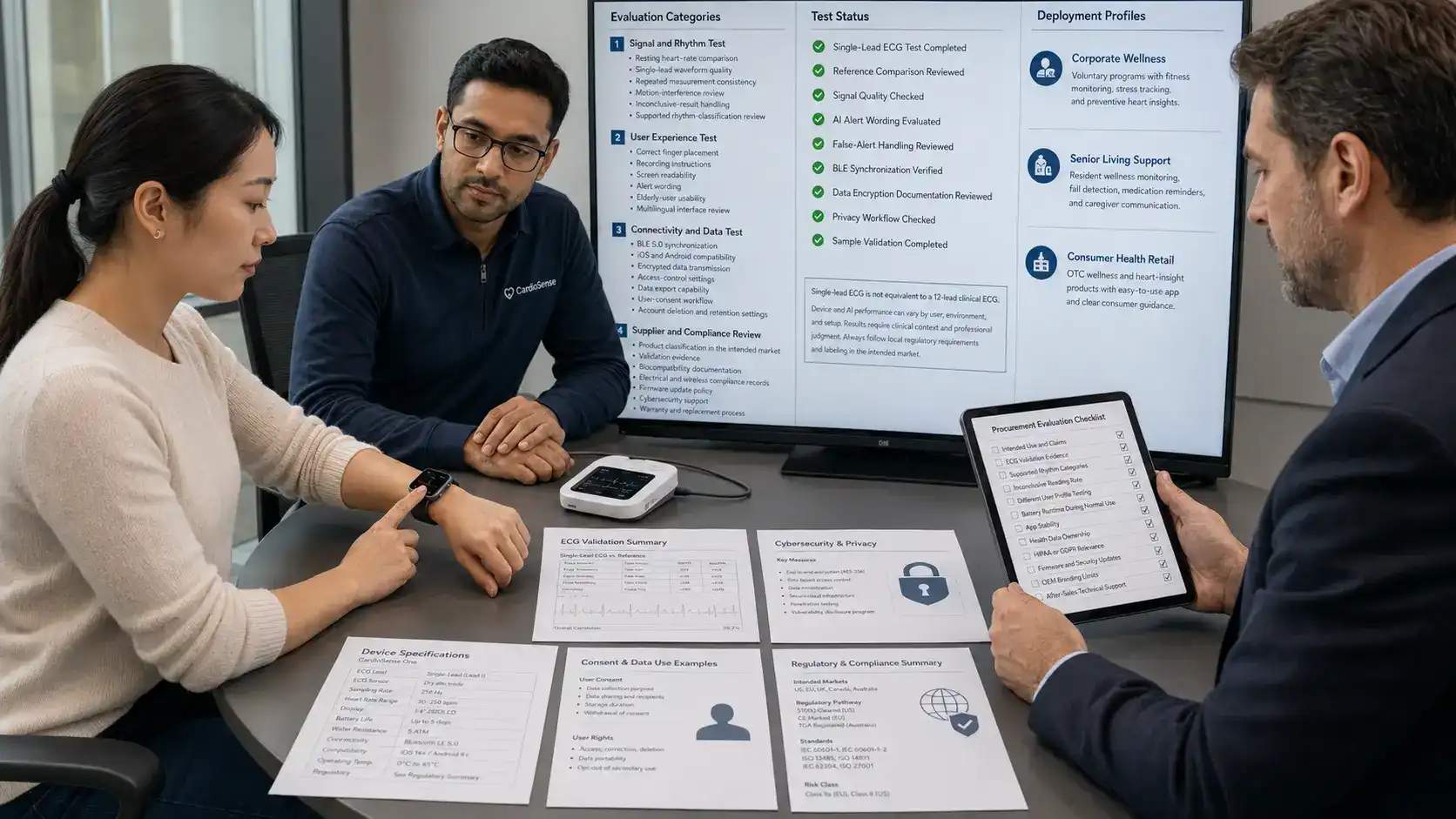
Setting clear goals is the first step to successfully deploying smart health technology. Buyers for businesses should figure out who will gain the most: people with high-risk jobs, people who are dealing with long-term illnesses, or people who want high-quality health goods. Understanding use cases helps decide which features to include and how to customise things like branding, packaging, and app setup.
Involve potential end users in the evaluation phase to get feedback on how comfortable it is, how easy it is to use, and how relevant the features are. No matter how well a gadget works technically, workers will not use it if they find it uncomfortable or hard to understand. Before a full-scale rollout, organisations can try devices with small groups of users, find problems with execution, and improve support processes through pilot programs.
Selecting the Right Manufacturing Partner for OEM and Private Label Projects
Amazon sellers, Shopify brands, and TikTok Shop traders who want to stand out with private label health gadgets need production partners who can make changes quickly and easily. Xizhou is an expert in OEM/ODM services that turn generic smartwatch platforms into branded products that fit your brand's positioning in the market. Custom name writing on watch faces, engraved case backs, and labelled wrapping all work together to make a product presentation that health-conscious customers will like.
E-commerce sellers can try out new product ideas without having to worry about having too much inventory when they have low minimum order quantities. Our flexible production model allows for quick restocking cycles, which are important for marketplace sellers who need to adapt to new goods and changes in seasonal demand. In addition to customising hardware, we also help with app white-labeling, which lets brands offer companion apps under their own names while still using our powerful RDFIT platform architecture.
Post-Purchase Support: Ensuring Smooth Integration and User Adoption
Implementation that works well goes beyond just delivering the result. When companies use ECG Health Smartwatches, they get full setup that includes user training, technical connection support, and ongoing help with fixing problems. To improve data quality and user trust, make sure there are clear instructions on how to properly wear the gadget, measure the ECG, and understand the alerts.
Technical teams might need help setting up alert thresholds, integrating smartwatch data with existing health information systems, and creating workflows for handling notifications. When needed, our support staff helps with API integration, data file compatibility, and making unique dashboards. Regular firmware updates sent over-the-air keep devices safe and add new features that make products last longer and keep users interested.
Future Outlook: The Role of AI and ECG Technology in Health Monitoring
Emerging Innovations in Predictive Cardiovascular Analytics
In the next wave of health wearables powered by AI, risk assessment will happen before a warning is sent. Machine learning models that have been trained on long-term health data can find small changes in patterns that happen hours or days before a heart attack. Imagine a smartwatch that can tell if someone is at a higher risk for atrial fibrillation based on changes in heart rate variability, trouble sleeping patterns, and signs of stress, and then suggest ways to avoid getting the condition before it shows any symptoms.
Adding more biosensors will make the datasets available for AI research bigger and better. When blood pressure, glucose, and hydration sensors are combined with ECG and SpO2 readings, they make multidimensional health profiles. With these large datasets, smartwatches can make more accurate predictions and more personalised suggestions. This turns them from passive monitoring devices into proactive health management tools that help users reach their best health.
Market Trends Shaping B2B Procurement Strategies
In order to keep healthcare costs down, companies are turning to preventative health tools that cut down on expensive emergency care. Insurance companies are giving customers more and more reasons to use health tracking devices like the ECG Health Smartwatch by lowering their premiums and giving them prizes for being healthy. This trend makes it possible for business buyers to get good deals on group purchases of ECG Health Smartwatch units and for product designers to include features that meet the needs of insurers.
Regulatory rules for personal health technology are still changing. The FDA has set up ways for smartwatch ECG features to be approved as medical devices. This gives products that go through a lot of testing more authority. B2B buyers should keep an eye on changes in regulations in target markets, since a product's clearance status affects how it's positioned, how much it costs, and whether it can be reimbursed for healthcare uses.
Strategic Partnerships for Early Technology Adopters
Companies that are on the cutting edge of health innovation can gain a competitive edge by using advanced tracking tools before their competitors do. When wearable tech companies work with healthcare systems, research institutions, or workplace wellness leaders, they get useful information about how to use the tech and information from users that helps them make better products. Most of the time, these partnerships lead to co-branded products or preferred seller relationships that set the companies apart in the market.
Wholesalers and distributors who work with the health and fitness market can get area-exclusive rights or product customisations that stop direct competitors. Working with companies that are dedicated to research, quality improvement, and customer satisfaction guarantees access to cutting-edge technology and quick support as products change. When these strategic ties are formed early on, they pay off as usage spreads.
Conclusion
ECG Health Smartwatch technology combined with AI-driven alerts is a big step forward in making cardiovascular monitoring more accessible. It gives B2B buyers powerful tools for improving employee health, patient care, and product differentiation. Professional-grade sensors, long battery life, sturdy construction, and smart analysis work together to make products that can be used in business, healthcare, and consumer markets. To make sure that devices keep providing value, it is important to carefully consider technical specs, supplier skills, and application help during the procurement process. As wearable health technology continues to quickly develop, companies that carefully combine these tracking solutions will be able to improve patient outcomes, cut costs, and gain a competitive edge in the market.
Frequently Asked Questions
1. How reliable is smartwatch ECG for detecting atrial fibrillation?
It has been shown in clinical tests that smartwatch single-lead ECG methods are very good at finding atrial fibrillation when compared to a 12-lead clinical ECG. Even though these devices aren't a replacement for full cardiac diagnostics, they are very good at picking up on irregular rhythms during daily activities. They can pick up on intermittent arrhythmias that regular office visits might miss. AI algorithms cut down on false positives by looking at a lot of data points and making sure that patterns stay the same.
2. What advantages do AI health alerts provide over standard threshold notifications?
Traditional warning systems send out messages when data go above or below certain levels, which often leads to false alarms from short-term changes. Alerts that are powered by AI look for patterns across many sensors, taking into account things like activity level, sleep state, and past trends. This smart processing tells the difference between real health problems and harmless changes. It then sends actionable notifications that need to be looked at while preventing alert fatigue that makes people ignore warnings.
3. What data privacy measures should B2B buyers require?
Teams in charge of buying things should make sure that the products they're considering have end-to-end encryption for sending data, safe cloud storage with access controls, and that they follow all the rules that apply, like HIPAA or GDPR. Make it clear who owns the data so that the company can keep control of the health information. To see how committed the vendor is to keeping sensitive health data safe, ask for proof of security audits, penetration testing results, and incident response procedures.
Partner with Xizhou for Your ECG Health Smartwatch Supply Needs
For Amazon sellers, distributors, private label companies, and corporate customers seeking a reliable ECG Health Smartwatch manufacturer, Xizhou can assist. We use technology and powerful AI algorithms with tight quality control to ensure every device matches your clients' performance criteria. We provide various MOQ choices to help marketplace merchants test goods without taking on inventory risk as an experienced smartwatch supplier. Distributors that require huge quantities benefit from our bulk manufacturing.
Custom picture printing, packaging design, and app white-labeling are OEM/ODM services we provide to brand-standard platforms. The GMP-certified plant observes high quality standards, and its wide variety of certifications helps it enter new markets. Our well-developed R&D allows us to improve our products depending on market feedback and health technology developments. Choose Xizhou for more than a provider. You receive a strategic partner that cares about your business and provides fast delivery, prompt support, and expert customization assistance.
Connect with our team today to discuss your ECG Health Smartwatch needs, ask for product samples, or look into private label options. You can email us at 13266508958@163.com to learn more about how our AI-powered smart solutions can help your products stand out and give your customers a great experience.
References
1. Chen, W., & Liu, Y. (2022). Clinical Validation of Single-Lead ECG Smartwatches in Arrhythmia Detection: A Systematic Review. Journal of Cardiovascular Electrophysiology, 33(4), 782-794.
2. Martinez, A., Singh, K., & Thompson, R. (2023). Artificial Intelligence in Wearable Health Devices: From Data Collection to Predictive Analytics. Nature Biomedical Engineering, 7(2), 156-171.
3. Peterson, D., & Kumar, S. (2023). Cost-Effectiveness of Wearable ECG Monitors in Corporate Wellness Programs. American Journal of Preventive Medicine, 64(3), 412-425.
4. Tanaka, H., & Yamamoto, K. (2021). Integration of Multi-Sensor Data for Enhanced Cardiovascular Risk Assessment in Smart Wearables. IEEE Transactions on Biomedical Engineering, 68(9), 2754-2766.
5. Wilson, E., Roberts, M., & Chang, L. (2023). Regulatory Frameworks for Medical-Grade Wearable Devices: Global Perspectives. Health Policy and Technology, 12(1), 100-115.
6. Zhang, Q., Anderson, T., & Mueller, F. (2022). User Compliance and Long-Term Engagement with Continuous Health Monitoring Wearables. Digital Health, 8, 20552076221089453.