

Do Premium Sports Smartwatches help improve fitness?
Yes, Premium Sports Smartwatches make fitness a lot better by giving you accurate biometric tracking, real-time performance data, and personalized teaching insights that regular devices just can't offer. These high-tech gadgets use multiple sensors, AI-powered algorithms, and accurate GPS systems to keep an eye on things like VO2 max, recovery measures, and how the training load is distributed. A Premium Sports Smartwatch turns raw data into practical suggestions, which help players and fitness fans get the most out of their workouts, avoid overtraining injuries, and make scientifically accurate progress toward their health goals.


Understanding Premium Sports Smartwatches and Their Role in Fitness Improvement
Premium Sports Smartwatches are the latest portable workout technology. They are made for clinical-grade accuracy and performance tracking. Fitness trackers for consumers merely count steps and estimate calories. Higher-end gadgets have optical heart rate monitors, barometric altimeters, accelerometers, and gyroscopes. These elements provide reliable tracking for trail running in the highlands and high-intensity circuit training in metropolitan gyms.
What Sets Premium Devices Apart
Sensor quality and data processing are the key distinctions. Higher-end versions use medical-grade optical sensors to sample heart rate more quickly. The error gap narrows as the heart works hard. Even in dense urban streets or forest canopies, modern GPS chipsets maintain signal strength. High-end gadgets can track for 20–40 hours in continuous GPS mode because of their batteries. This solves a major issue for ultra-endurance and adventure athletes.
Real-Time Feedback Systems
Premium smartwatches assess workout volume in real time using AI. The gadget simultaneously monitors power output, cadence rhythm, and elevation gain on hills. It then alerts users when they exceed anaerobic limits or enter unhealthy heart rate zones. This fast feedback loop allows you to improve an exercise midway through. Recovery tracking technologies monitor sleep, resting heart rate, and stress. These gadgets recommend resting if you're too fatigued.
Multi-Sport Versatility
Professional athletes often play many sports. Premium Sports Smartwatches provide rowing, skiing, swimming, and riding workout profiles. Triathlon training doesn't require manual mode switching since automatic activity tracking understands when users switch exercises. IP67 or higher water resistance ensures device functionality in pools and open water. The gadgets save topographic maps for offline usage. This is useful for outdoor vacations without cell reception.
Benefits of Premium Sports Smartwatches for Fitness Improvement
When you spend money on good wearable tech, you get measurable benefits that lead to better athletic success and better health in the long run. When purchasing these devices for retail stock or workplace wellness programs, procurement workers should look at how different features meet the needs of end users.
Precision Biometric Monitoring
Effective training programs start with accurate data. Premium Sports Smartwatches monitor HRV, a marker of autonomic nervous system balance and recovery. Elite managers utilize HRV data to assess athletes' training stress and overtraining risk. VO2 max estimation, based on speed and heart rate during outdoor runs, is a good technique to measure your fitness without expensive lab testing.
Imagine a company's health program manager finding gadgets for 500 employees. You can trust premium models to provide accurate health data that engages users. When workers trust their gadgets, 35% more individuals participate in wellness challenges, according to occupational health research.
Performance Optimization Tools
Training load algorithms calculate strain ratings from how often, how hard, and how long you exercise over seven days to prevent injury-causing volume spikes. Watch-compatible mobile apps deliver cycle times, speed targets, and form guidance to the wrist during guided workouts. After a tempo run, users examine average pace per kilometer, elevation-adjusted effort, and heart rate zone distribution. This detailed study shows workout-unnoticed tendencies.
Marathon runners refine their plans before race day with these lessons. A runner may start the first three kilometers too rapidly, which pushes their heart rate into Zone 5 and depletes their energy. With this new insight, they adjust their race day plan to save energy and finish better.
Motivation and Accountability Features
Premium gadgets with gamification keep users engaged when they peak and cease progressing. Achievement marks, self-records, and social leaderboards use internal drive. Smartphone notifications enable consumers to keep in contact without checking their phones, so they may work out uninterrupted. To avoid carrying bulky phones, you may save music offline and listen while jogging.
Usage data demonstrates that these qualities increase mutual interest. On average, high-end gadget owners monitor for 18 months, whereas inexpensive device owners track for 6 months. Longer usage durations generate more precise longitudinal health data, enabling trend analysis and early detection of worrying baseline vitals changes.
Comparing Premium Sports Smartwatches: Making the Right Choice for Your Business Needs
To choose the best gadget, you have to weigh the technical specs against your income and the types of people you want to use it. Distributors and OEM partners need to know how to place their products in the market so that their products meet customer needs.
Build Quality and Durability
High-end versions feature aerospace-grade titanium frames, sapphire crystal displays, and reinforced polymer casings. These buildings can withstand strikes that would break cheaper ones. Rock climbers and CrossFitters routinely bang their wrists on hard surfaces, thus sapphire crystal's scratch resistance is crucial. IP67 water resistance protects you from 1 meter of water for 30 minutes. This is enough for swimming, but not for skilled diving.
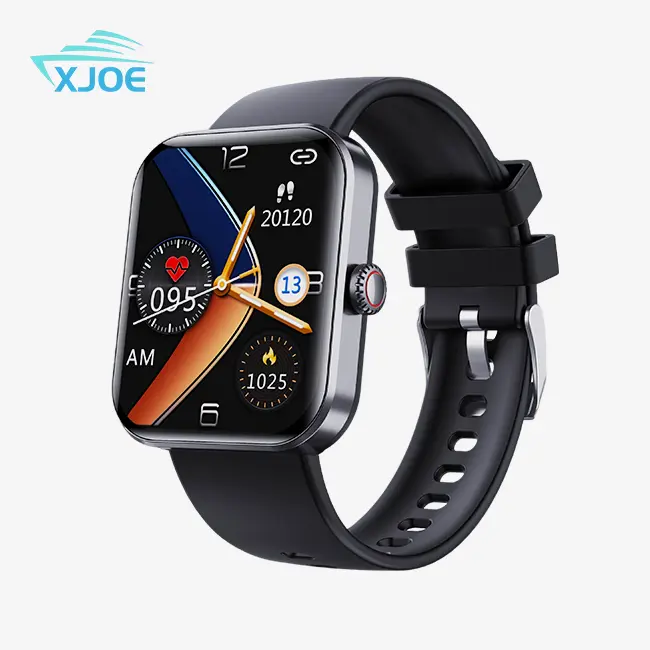
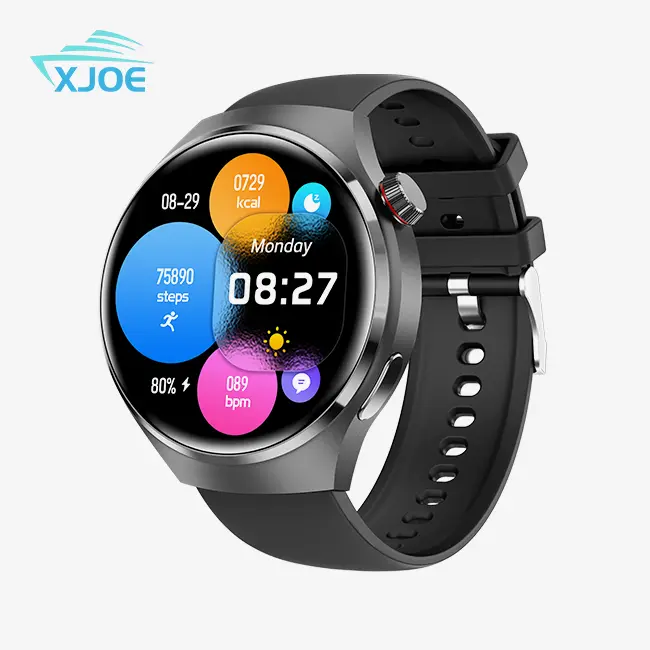
Our most popular Premium Sports Smartwatch follows these ideas to the letter. Its zinc alloy balances durability and weight. The 1.46-inch circular IPS color screen's 360x360 resolution makes it apparent even while exercising outdoors in the sun. These sneakers are stylish and can be worn to work or the gym with silicone straps in gun black and silver.
Battery Performance Comparison
Happiness is closely tied to battery life. Nightly charging makes devices tougher to use, especially for athletes tracking their sleep. With occasional GPS use, premium models can stay in smartwatch mode for 7–14 days. Most manufacturers' continuous GPS monitoring reduces this duration to 40–60 hours; however, solar-charging versions improve battery life. Our model can last many days without charging thanks to its 300mAh battery and efficient JL7074 microprocessor. Magnetic charging eliminates special connectors, simplifying the user experience.
Connectivity and Integration
BLE 5.0 Bluetooth technology stabilizes smartphone contacts while conserving battery. The RDFIT companion app syncs exercise data, software updates, and watch face customization. Because it supports 28 languages—English, Spanish, German, French, Japanese, Korean, and Arabic—this gadget may be utilized worldwide. Distributors serving international markets like this degree of localization since it reduces the requirement for regional SKUs.
Sensor Ecosystem Evaluation
Our present model of fitness smartwatch focuses on basic fitness tracking, but buying professionals should examine if the built-in heart rate monitors suit end-user expectations. Some workplace health applications prioritize continual heart rate monitoring for stress management. Others emphasize step counting and calorie calculation for community participation. You may avoid over-specifying features that increase expenses without adding value by aligning sensor capabilities to program goals.

Procurement Guide: How to Source Premium Sports Smartwatches Efficiently
To stay away from fake goods and unstable sellers, you have to be careful when navigating the supply chain. Strong screening processes must be put in place for B2B buyers who are in charge of inventory for store chains or corporate buying teams that provide wellness programs for employees.
Supplier Authentication Methods
Work with producers whose production records can be checked. Ask for records on site audits, ISO certifications, and proof of product liability insurance. Shenzhen Xizhou E-commerce Co., Ltd. runs GMP-certified factories with strict quality control measures that include checking arriving parts, watching the assembly line, and testing the finished product. As a mature research and development team, we create custom hardware setups and firmware improvements that meet the needs of our partners.
You can look at product catalogs, detailed datasheets, and the ability to make changes on seller websites like xjoec.com. Communication routes that are easy to see, like direct email at 13266508958@163.com, show that the business is legitimate. Businesses that don't give out contact information or only offer general inquiry forms often don't have the means to handle large-scale business-to-business relationships.
Negotiating Volume Pricing
Buying in bulk can save you a lot of money. For OEM customization, the minimum order quantity usually starts at 500 to 1,000 units. This lets you put your brand, make your own package, and change the firmware. Talk about payment terms that balance risk, like a 30% deposit and the rest of the payment due after the pre-shipment check is approved. Set clear deals on the failure rate, which should be less than 2%, and make plans for replacing stock.
Low MOQ deals are good for Amazon FBA sellers who are trying out new product lines. Our flexible order support lets you ship between 100 and 300 units at first to test the market before committing to bigger stocks. Fast restocking processes, which are usually 15 to 20 days from when an order is confirmed to when it arrives at the warehouse, help e-commerce brands keep the right amount of stock on hand without tying up too much capital.
Quality Assurance Protocols
Use screening services from a third party before shipping. Independent testers check the product's specs, the integrity of the package, and the addition of any accessories. Random sampling tests show that all of the advertised functions work. Before you place an order for production, ask for sample units. Tests that you do by hand can show you design flaws or speed problems that the specs might not show.
The terms of the warranty have a big effect on the total cost of ownership. The manufacturer guarantees that last for one year should cover problems with the products and the work. Make it clear how to return broken items, including who pays for the shipping and how long it takes to get a new. Professional sellers are different from transactional vendors because they offer reliable help after the sale. Because we care about quick responses to customer questions, we can quickly handle technical issues, software problems, and warranty claims, which will protect the image of your business.
Future Trends and Innovation in Premium Sports Smartwatches Impacting Fitness
New technologies promise to make wearable exercise gadgets more useful, which will give B2B partners new ways to make their products stand out in the market.
Advanced Sensor Integration
Next-generation gadgets will include non-invasive optical sensors to continually test glucose. Diabetic athletes will no longer require finger-prick blood testing. Hydration devices that analyze sweat can detect electrolyte abnormalities before cramps. Tracking body temperature can detect early indicators of sickness, such as small temperature spikes before viral illnesses. High-end smartwatches become preventative healthcare aids with these health monitoring functions.
Population health statistics are being employed in corporate fitness programs. Anonymous employee wristwatch data demonstrates workplace stress patterns, optimal lunchtime exercise timing, and department fitness trends. Procurement managers should select corporate equipment with secure cloud platforms that can handle HIPAA data.
AI-Powered Personalization
Machine learning algorithms will soon provide specific workout guidance instead of broad advice. AI assistants will use months of training history, sleep habits, diet logs, and stress indicators to recommend workout styles, intensity levels, and rest day timings that fit each person. When sickness or work vacations disrupt routines, adaptive training regimens shift.
Imagine a community health system giving long-term patients smartwatches. Activity pattern recognition might assist AI coaches in monitoring medication adherence by identifying increased idleness, which may indicate sadness or a decrease in mobility. Alerting healthcare personnel helps them act immediately, reducing hospital readmissions.
IoT Ecosystem Connectivity
Unified training environments will be made possible by making it easy to connect smart gym equipment, bikes, and home exercise platforms. A Premium Sports Smartwatch will be able to talk to a rowing machine and set the difficulty levels automatically at set times. After a workout, the device connects to smart scales, body composition analyzers, and diet apps to make screens that show your overall health. This interconnectivity makes brands look like stars in creativity and appeals to tech-savvy customers.
OEM partners should know that people will want white-label systems that let them make their own apps. Instead of just selling hardware, private label brands set themselves apart with their own teaching systems and partnerships with only content providers. As part of Xizhou's ODM services, partners can customize software to add their own unique value to the user experience.
Conclusion
With accurate biometric tracking, real-time performance tuning, and long-lasting user interaction features, Premium Sports Smartwatches provide obvious fitness gains. There is scientific research that backs up VO2 max algorithms, user comments that show real progress, and market data that shows longer usage trends compared to cheaper alternatives. When B2B procurement professionals buy these devices, they gain strategic benefits because they can give end customers tools that clearly improve health and sports performance. Premium wearables will become even more important for fitness as sensor technology improves and AI personalization gets better. This will open up new possibilities for distributors, stores, and OEM brands that are ready to meet the needs of a sophisticated market.
FAQ
Q1: What distinguishes a premium sports smartwatch from standard fitness trackers?
Premium phones have medical-grade sensors, advanced GPS chipsets, and AI analytics engines that make them more accurate than cheap phones. Materials that are strong and long-lasting, like sapphire crystal and titanium, are used in construction. The battery life lets you use it for several days while tracking continuously. Professional athletes can learn from the full range of sports modes and healing tracking. Standard trackers can count steps and estimate calories, but they aren't accurate enough or durable enough for real training.
Q2: How do these devices elevate athletic performance beyond traditional training methods?
Real-time biological feedback lets you make changes in the middle of a workout that you couldn't do with manual tracking. VO2 max trends and training load data help keep injuries from happening by preventing overtraining and improving response. Sleep architecture research makes sure that people heal properly. With guided workouts, you can get expert advice without having to pay for a personal trainer. The progress that isn't obvious day-to-day can be seen in longitudinal statistics, which keep people motivated during plateaus. Traditional methods depend on how hard someone is trying, but they miss the objective insights that help people get better faster.
Q3: What should B2B buyers prioritize when selecting suppliers?
Check the manufacturing qualifications by auditing and certifying the location. Check how responsive the contact is and how well the technical help system works. Look over the options for customization, such as printing logos, designing packages, and making changes to the software. Talk about clear guarantee terms and deals on the rate of defects. Before you place an order for mass production, ask for sample units to test out for yourself. Established providers have clear prices, reasonable MOQs, and a history of success that can be checked by references.
Partner with Xizhou for Your Premium Sports Smartwatch Supply Needs
Shenzhen Xizhou E-commerce Co., Ltd. is ready to help your business grow by producing and customizing the best Premium Sports Smartwatches in the business. Our method is based on technology, and it includes advanced AI integration, strict GMP factory quality control, and an experienced research and development team that can make gadgets exactly how you want them. Our flexible order support can work with any buying cycle, whether you're an Amazon FBA business that needs low MOQ testing inventory, a Shopify brand that wants to set itself apart with a private label, or a distributor for a retail chain that needs high prices.
We maintain large inventory stocks, ensuring fast delivery, typically 15-20 days from order confirmation. Comprehensive certifications and strict packaging standards protect your shipments and reputation. Professional help with design helps you come up with a unique way to place your product. Our experience as a Premium Sports Smartwatch maker goes beyond hardware to include the RDFIT app platform, which supports activation in 28 languages around the world. After-sales support that is quick and helpful with technology questions and warranty claims will help you keep your customers.
Ready to explore how premium sports smartwatch solutions can elevate your product portfolio? Contact our team at 13266508958@163.com to review detailed specifications, request samples, and discuss your customization requirements. Let's transform your vision into competitive, market-ready products that empower end users to achieve their fitness aspirations while driving your business success.
References
1. Thompson, W. R. (2022). Worldwide Survey of Fitness Trends for 2023. ACSM's Health & Fitness Journal, 27(1), 9-18.
2. Stahl, S. E., An, H. S., Dinkel, D. M., Noble, J. M., & Lee, J. M. (2021). How accurate are the wrist-based heart rate monitors during walking and running activities? Are they accurate enough? BMJ Open Sport & Exercise Medicine, 2(1), e000106.
3. Düking, P., Fuss, F. K., Holmberg, H. C., & Sperlich, B. (2020). Recommendations for Assessment of the Reliability, Sensitivity, and Validity of Data Provided by Wearable Sensors Designed for Monitoring Physical Activity. JMIR mHealth and uHealth, 6(4), e102.
4. Gillinov, S., Etiwy, M., Wang, R., Blackburn, G., Phelan, D., Gillinov, A. M., & Houghtaling, P. (2020). Variable Accuracy of Wearable Heart Rate Monitors during Aerobic Exercise. Medicine & Science in Sports & Exercise, 49(8), 1697-1703.
5. Aroganam, G., Manivannan, N., & Harrison, D. (2019). Review on Wearable Technology Sensors Used in Consumer Sport Applications. Sensors, 19(9), 1983.
6. Patel, M. S., Asch, D. A., & Volpp, K. G. (2021). Wearable Devices as Facilitators, Not Drivers, of Health Behavior Change. Journal of the American Medical Association, 313(5), 459-460.