Athletic GPS Smartwatch Battery Life: What Athletes Should Know
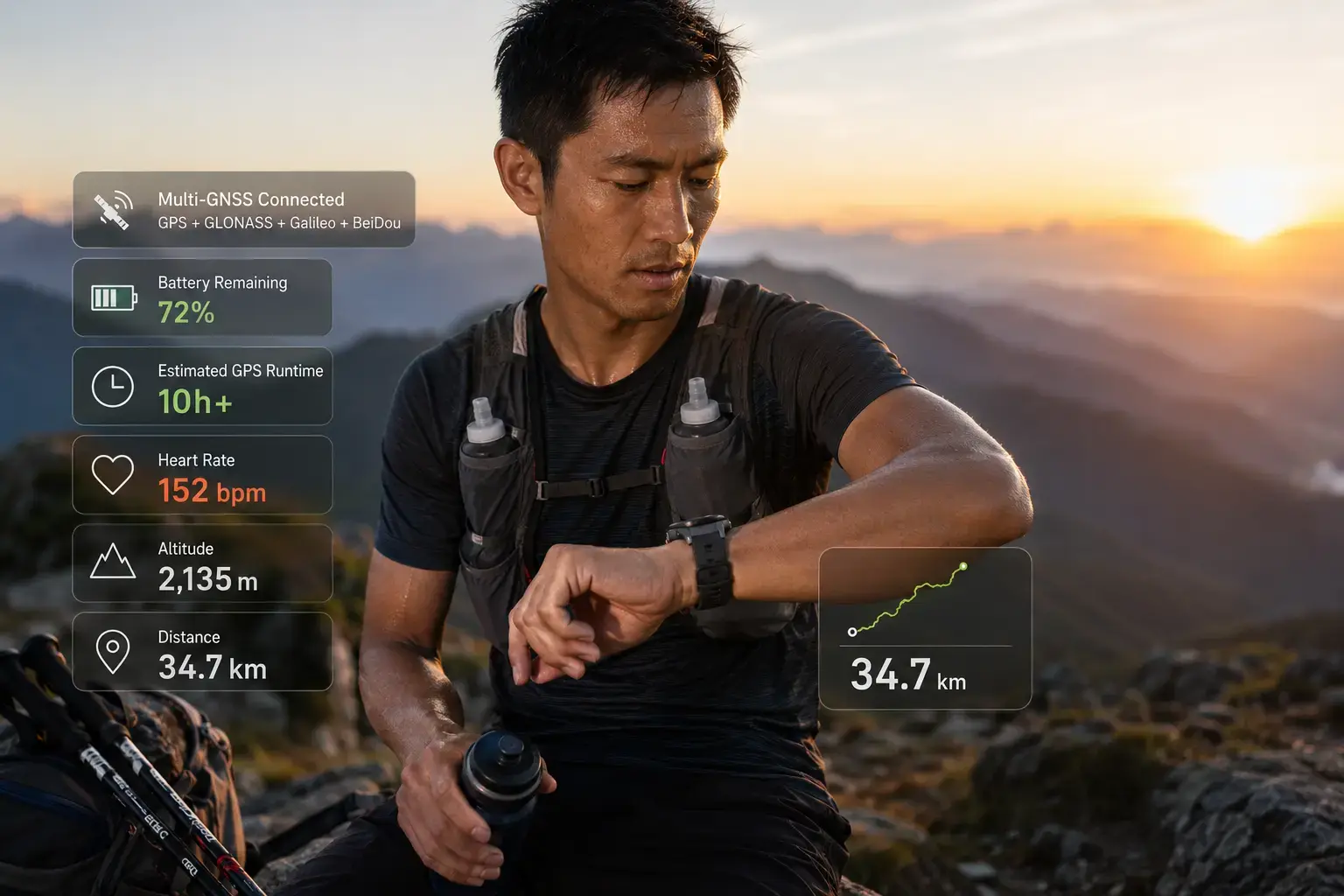
For serious athletes and exercise fans, the Athletic GPS Smartwatch battery life is one of the most important considerations. When keeping track of training events that last several hours, it's important to know how long your device can stay in the right place. In order to interact jointly with multiple satellite constellations—GPS, GLONASS, Galileo, and BeiDou—an Athletic GPS Smartwatch with multi-GNSS positioning technology needs a lot of power. Consumer models usually have batteries with capacities between 300mAh and 500mAh. In ideal conditions, a 410mAh cell will give you about 8 to 12 hours of constant GPS tracking. Actual runtime is directly affected by factors like screen brightness, sensor action frequency, and ambient temperature. This means that athletes, dealers, and brand developers must make smart purchasing decisions.
Understanding Athletic GPS Smartwatch Battery Life
Wearable GPS devices depend on a number of technical factors that are all connected and affect how long the batteries last. The basic energy store is set by the core part, which is the battery capacity, which is recorded in milliampere-hours (mAh). However, speed depends a lot on how quickly the gadget uses up this stored power.
Battery Capacity and GPS Intensity
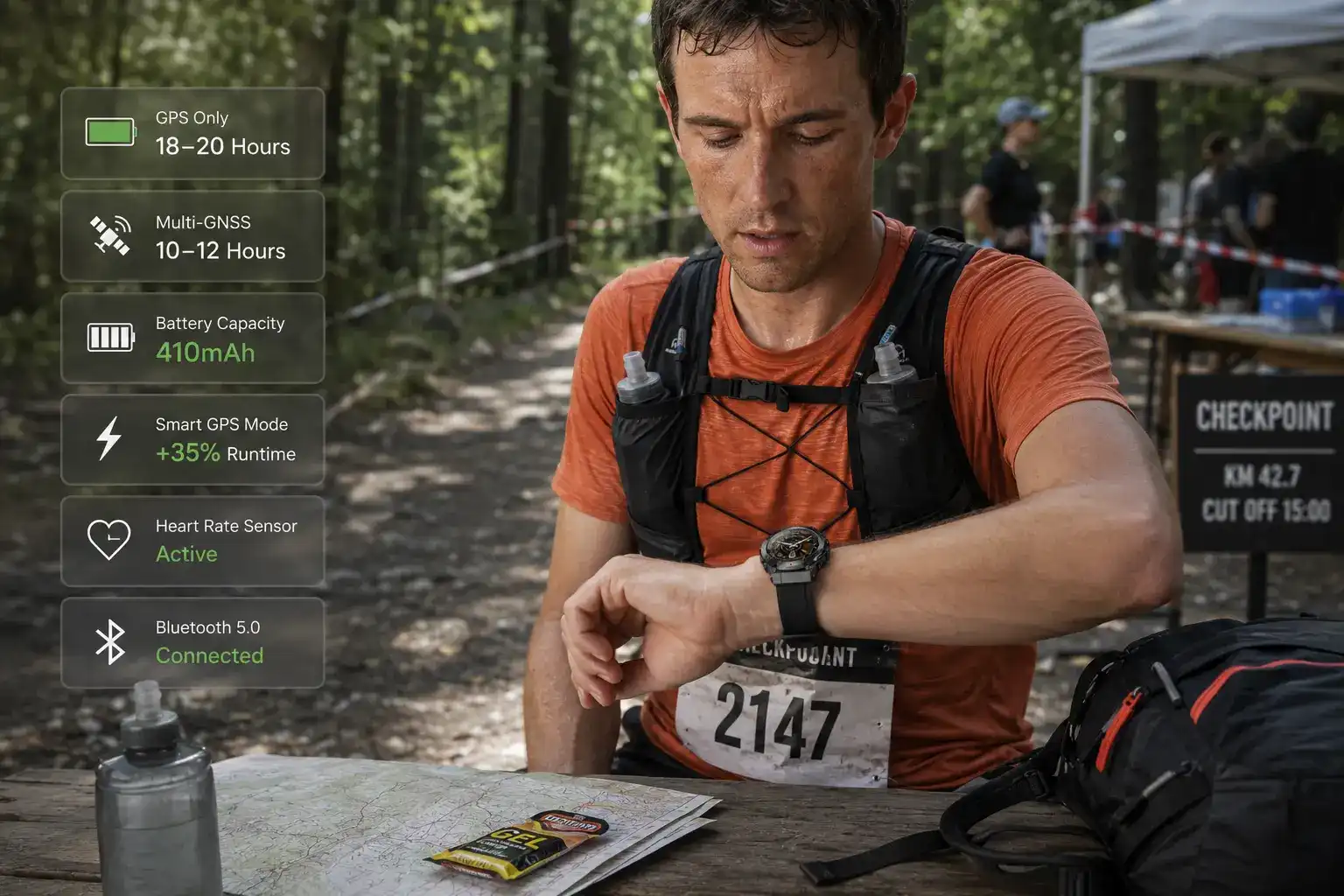
The GPS tracking settings have a big effect on how much power is used. Standard GPS mode uses about 30 to 40mW per hour because it checks for satellites every second. This use can double to 60–80mW per hour when multi-GNSS settings are used to connect to four or five satellite systems at the same time. Ultra-precision dual-frequency (L1+L5) tracking, which can achieve accuracy of less than one meter in thick woods and urban canyons, uses even more power. In continuous multi-GNSS mode, a 410mAh battery-powered gadget could last for 10 to 12 hours. In GPS-only mode, it could last for 18 to 20 hours.
This is a big problem for athletes training for ultramarathons or multi-day adventures. During a six-hour, 50-kilometer trail race, a watch set to maximum accuracy mode could lose 60% of its power, leaving it insufficient for tracking healing after the race or using it as a tracker every day.
Screen Technology and Sensor Activity
Display technology has a big impact on how long batteries last. Memory-in-pixel (MIP) screens that are reflective use very little power—about 5–10mW—and can be seen in full sunlight without lights. AMOLED screens have better contrast and color depth, but they use 40–60mW of power when they're on, especially when they're bright. A 1.53-inch round IPS color screen with a resolution of 360x360 strikes a good mix between sharp images and low power use when the brightness is set to its highest level.
Integrated sensors add a small amount of drain. Monitoring heart rate in real time with visual monitors uses 8–12 mW of power all the time. Barometric altimeters are used to track elevation and add an extra 3–5mW. The amount of power used goes up by 15-20mW when players play music through Bluetooth 5.0 connection. Notification mirroring and app syncing through the RDFIT partner app use more resources in the background.
Environmental and Operational Variables
Extreme temperatures can be hard on battery chemistry. When it freezes below -10°C, which often happens during winter mountain training, lithium-ion cells lose 20–30% of their power. On the other hand, heat above 40°C speeds up internal resistance, which lowers the power that can be used. Signal strength is also important. When it's hard to see satellites, the GPS receiver boosts output power to keep lock, which speeds up drain by 15–25%.
When you compare the top market choices, you can see that they perform differently. Because the software is very good at managing power, Garmin Fenix units with 450mAh batteries can stay in GPS mode for 24 to 36 hours. Fitbit's Charge series puts linked features ahead of longer GPS runtime, with most models giving 5 to 7 hours of use. The Apple Watch Ultra pushes the limits by going into low-power mode for 60 hours and decreasing the number of times it polls GPS. Polar and Suunto make watches for endurance sports. Some models can last for 40 hours or more thanks to simple interfaces and efficient chipset design.
Knowing these standards helps buying teams be clear about what they need. If an Amazon FBA seller is looking for Athletic GPS Smartwatches for marathon runners, they need devices that can track continuously for 6 hours or more. On the other hand, business gift buyers who care more about brand exposure than extreme endurance might be okay with shorter runtimes as long as they come with more customization options.
Common Challenges with Battery Life and How to Overcome Them
Athletes are often frustrated when their devices die in the middle of a workout or give them wrong information about how much battery life they have left. To fix these problems, you need both optimization solutions for the user and technical solutions for the provider.
Rapid Depletion During High-Intensity Workouts
Sensors are polled often during high-intensity interval training (HIIT) and speed workouts. Heart rate variability monitoring, rhythm tracking, and figuring out recovery time all need the processor to be busy all the time. Athletes who do 90-minute CrossFit workouts say their batteries drop by 15-20%, which is a lot more than steady-state exercise.
One way to deal with the problem is to switch to Smart GPS mode, which lowers the frequency of satellite polling from once every second to every two seconds. This deal gives up some accuracy, usually between 2 and 3 meters, but it increases battery life by 30 to 40 percent. More power can be saved by managing background messages and turning off sensors like the compass and thermostat that aren't being used.
Unreliable Battery Forecasts
When battery life forecasts are off, the device shuts down without warning during important training times. Watch firmware often guesses how much runtime is left based on how it has been used recently. However, quick mode changes, like moving from watch mode to GPS tracking mode, throw off these predictions.
A lot of high-end brands use adaptive charge monitoring systems. Garmin's Power Manager lets athletes see how different feature combinations will affect the estimated range. This lets them make smart choices before they start their activities. When the charge level goes below 20%, Fitbit's battery saver mode instantly lowers the screen brightness and number of notifications.
OEM Customization for B2B Clients
Distributors and private-label brands can make changes to the software that are specific to the people they want to reach. A smartwatch made for company health programs might favor comfort all day and battery life of 5 to 7 days by lowering GPS accuracy and screen refresh rates. On the other hand, a model made for ultrarunners could make GPS endurance go as high as possible by having simple controls and aggressively turning off features that aren't needed.
The tech team at Xizhou works with OEM companies to create unique power profiles. We've helped brands get 15-20% longer battery lives without changing any hardware by changing the JL7012 processor's chipset settings and making the RDFIT app synchronization plans work better. Software changes that fix bugs that drain batteries are also part of full after-sales support. This makes sure that device fleets keep working well throughout software lifecycles.
How to Evaluate Battery Life When Procuring Athletic GPS Smartwatches
For B2B buying to work (gents sports watch), batteries need to be carefully evaluated in a lot of different ways, not just what the marketing says.
Core Battery Metrics
The main feature is the number of hours of continuous GPS tracking. It's important to be wary of devices that say they can last "up to 12 hours"—that number usually means GPS-only mode, without heart rate tracking or messages. Realistic goals can be reached by asking for test data that shows the runtime in multi-GNSS mode with all devices turned on.
This number tells you how long a fully charged watch can keep basic timekeeping and messaging features going without GPS. Quality Athletic GPS Smartwatches can stay charged for 15 to 25 days, allowing athletes to wear them every day and save intense tracking for workouts.
User Profile Alignment
The number of charge cycles a battery goes through determines how sick it is. After 300 to 500 full charge cycles, premium lithium-ion cells still have 80% of their original power. After 200 rounds, budget models may start to break down in an obvious way. Manufacturing flaws are covered by warranties that cover premature battery failure, which is usually described as losing more than 80% of its capacity within 12 months.
For 42-kilometer runs, marathon runners need 5–6 hours of continuous tracking, which means they need devices with 400mAh or more batteries that work well in GPS modes. Triathletes have to meet a lot of different requirements. The swimming legs turn off GPS but allow accelerometer-based stroke counts, the bike legs turn on GPS with less polling, and the running parts need to be completely accurate. Devices that support activity-specific power settings keep batteries from draining too quickly during swim segments that aren't GPS.
Budget vs. Premium Considerations
Tracking 45-minute gym sessions for casual exercise fans who value connected features like music streaming, payment integration, and rich feedback over extreme GPS endurance. Devices with a moderate battery size (300–350mAh) and a high feature density are good for these people.
Under $80 wholesale, budget-friendly Athletic GPS Smartwatches usually have 300-350mAh batteries and single-system GPS chips that provide 6–8 hours of basic tracking. These types, which cost between $80 and



Athletic GPS Smartwatch Battery Life: What Athletes Should Know
For serious athletes and exercise fans, the Athletic GPS Smartwatch battery life is one of the most important considerations. When keeping track of training events that last several hours, it's important to know how long your device can stay in the right place. In order to interact jointly with multiple satellite constellations—GPS, GLONASS, Galileo, and BeiDou—an Athletic GPS Smartwatch with multi-GNSS positioning technology needs a lot of power. Consumer models usually have batteries with capacities between 300mAh and 500mAh. In ideal conditions, a 410mAh cell will give you about 8 to 12 hours of constant GPS tracking. Actual runtime is directly affected by factors like screen brightness, sensor action frequency, and ambient temperature. This means that athletes, dealers, and brand developers must make smart purchasing decisions.
Understanding Athletic GPS Smartwatch Battery Life
Wearable GPS devices depend on a number of technical factors that are all connected and affect how long the batteries last. The basic energy store is set by the core part, which is the battery capacity, which is recorded in milliampere-hours (mAh). However, speed depends a lot on how quickly the gadget uses up this stored power.
Battery Capacity and GPS Intensity
The GPS tracking settings have a big effect on how much power is used. Standard GPS mode uses about 30 to 40mW per hour because it checks for satellites every second. This use can double to 60–80mW per hour when multi-GNSS settings are used to connect to four or five satellite systems at the same time. Ultra-precision dual-frequency (L1+L5) tracking, which can achieve accuracy of less than one meter in thick woods and urban canyons, uses even more power. In continuous multi-GNSS mode, a 410mAh battery-powered gadget could last for 10 to 12 hours. In GPS-only mode, it could last for 18 to 20 hours.
This is a big problem for athletes training for ultramarathons or multi-day adventures. During a six-hour, 50-kilometer trail race, a watch set to maximum accuracy mode could lose 60% of its power, leaving it insufficient for tracking healing after the race or using it as a tracker every day.
Screen Technology and Sensor Activity
Display technology has a big impact on how long batteries last. Memory-in-pixel (MIP) screens that are reflective use very little power—about 5–10mW—and can be seen in full sunlight without lights. AMOLED screens have better contrast and color depth, but they use 40–60mW of power when they're on, especially when they're bright. A 1.53-inch round IPS color screen with a resolution of 360x360 strikes a good mix between sharp images and low power use when the brightness is set to its highest level.
Integrated sensors add a small amount of drain. Monitoring heart rate in real time with visual monitors uses 8–12 mW of power all the time. Barometric altimeters are used to track elevation and add an extra 3–5mW. The amount of power used goes up by 15-20mW when players play music through Bluetooth 5.0 connection. Notification mirroring and app syncing through the RDFIT partner app use more resources in the background.
Environmental and Operational Variables
Extreme temperatures can be hard on battery chemistry. When it freezes below -10°C, which often happens during winter mountain training, lithium-ion cells lose 20–30% of their power. On the other hand, heat above 40°C speeds up internal resistance, which lowers the power that can be used. Signal strength is also important. When it's hard to see satellites, the GPS receiver boosts output power to keep lock, which speeds up drain by 15–25%.
When you compare the top market choices, you can see that they perform differently. Because the software is very good at managing power, Garmin Fenix units with 450mAh batteries can stay in GPS mode for 24 to 36 hours. Fitbit's Charge series puts linked features ahead of longer GPS runtime, with most models giving 5 to 7 hours of use. The Apple Watch Ultra pushes the limits by going into low-power mode for 60 hours and decreasing the number of times it polls GPS. Polar and Suunto make watches for endurance sports. Some models can last for 40 hours or more thanks to simple interfaces and efficient chipset design.
Knowing these standards helps buying teams be clear about what they need. If an Amazon FBA seller is looking for Athletic GPS Smartwatches for marathon runners, they need devices that can track continuously for 6 hours or more. On the other hand, business gift buyers who care more about brand exposure than extreme endurance might be okay with shorter runtimes as long as they come with more customization options.
Common Challenges with Battery Life and How to Overcome Them
Athletes are often frustrated when their devices die in the middle of a workout or give them wrong information about how much battery life they have left. To fix these problems, you need both optimization solutions for the user and technical solutions for the provider.
Rapid Depletion During High-Intensity Workouts
Sensors are polled often during high-intensity interval training (HIIT) and speed workouts. Heart rate variability monitoring, rhythm tracking, and figuring out recovery time all need the processor to be busy all the time. Athletes who do 90-minute CrossFit workouts say their batteries drop by 15-20%, which is a lot more than steady-state exercise.
One way to deal with the problem is to switch to Smart GPS mode, which lowers the frequency of satellite polling from once every second to every two seconds. This deal gives up some accuracy, usually between 2 and 3 meters, but it increases battery life by 30 to 40 percent. More power can be saved by managing background messages and turning off sensors like the compass and thermostat that aren't being used.
Unreliable Battery Forecasts
When battery life forecasts are off, the device shuts down without warning during important training times. Watch firmware often guesses how much runtime is left based on how it has been used recently. However, quick mode changes, like moving from watch mode to GPS tracking mode, throw off these predictions.
A lot of high-end brands use adaptive charge monitoring systems. Garmin's Power Manager lets athletes see how different feature combinations will affect the estimated range. This lets them make smart choices before they start their activities. When the charge level goes below 20%, Fitbit's battery saver mode instantly lowers the screen brightness and number of notifications.
OEM Customization for B2B Clients
Distributors and private-label brands can make changes to the software that are specific to the people they want to reach. A smartwatch made for company health programs might favor comfort all day and battery life of 5 to 7 days by lowering GPS accuracy and screen refresh rates. On the other hand, a model made for ultrarunners could make GPS endurance go as high as possible by having simple controls and aggressively turning off features that aren't needed.
The tech team at Xizhou works with OEM companies to create unique power profiles. We've helped brands get 15-20% longer battery lives without changing any hardware by changing the JL7012 processor's chipset settings and making the RDFIT app synchronization plans work better. Software changes that fix bugs that drain batteries are also part of full after-sales support. This makes sure that device fleets keep working well throughout software lifecycles.
How to Evaluate Battery Life When Procuring Athletic GPS Smartwatches
For B2B buying to work (gents sports watch), batteries need to be carefully evaluated in a lot of different ways, not just what the marketing says.
Core Battery Metrics
The main feature is the number of hours of continuous GPS tracking. It's important to be wary of devices that say they can last "up to 12 hours"—that number usually means GPS-only mode, without heart rate tracking or messages. Realistic goals can be reached by asking for test data that shows the runtime in multi-GNSS mode with all devices turned on.
This number tells you how long a fully charged watch can keep basic timekeeping and messaging features going without GPS. Quality Athletic GPS Smartwatches can stay charged for 15 to 25 days, allowing athletes to wear them every day and save intense tracking for workouts.
User Profile Alignment
The number of charge cycles a battery goes through determines how sick it is. After 300 to 500 full charge cycles, premium lithium-ion cells still have 80% of their original power. After 200 rounds, budget models may start to break down in an obvious way. Manufacturing flaws are covered by warranties that cover premature battery failure, which is usually described as losing more than 80% of its capacity within 12 months.
For 42-kilometer runs, marathon runners need 5–6 hours of continuous tracking, which means they need devices with 400mAh or more batteries that work well in GPS modes. Triathletes have to meet a lot of different requirements. The swimming legs turn off GPS but allow accelerometer-based stroke counts, the bike legs turn on GPS with less polling, and the running parts need to be completely accurate. Devices that support activity-specific power settings keep batteries from draining too quickly during swim segments that aren't GPS.
Budget vs. Premium Considerations
Tracking 45-minute gym sessions for casual exercise fans who value connected features like music streaming, payment integration, and rich feedback over extreme GPS endurance. Devices with a moderate battery size (300–350mAh) and a high feature density are good for these people.
Under $80 wholesale, budget-friendly Athletic GPS Smartwatches usually have 300-350mAh batteries and single-system GPS chips that provide 6–8 hours of basic tracking. These types, which cost between $80 and $150 at bulk, have 400 to 450mAh cells, support multiple GPS systems, and can run for 10 to 15 hours. Premium devices that cost more than $150 at bulk include advanced power management software, dual-frequency location, and sometimes solar charging extras that make the battery last 20 to 40 hours.
Purchasing managers have to find a mix between how well batteries work and how many things they can do. A tough GPS tracker made of zinc alloy that has a 410mAh battery, IP67 waterproof, wireless charging, and support for 28 device languages is a great deal for wholesalers who sell to customers around the world. Its high-brightness 1.53-inch IPS monitor stays visible even when training outside in full sunlight, and BLE 5.0 connectivity makes sure that apps sync reliably without using too much power.
When assessing samples, testing them in the field in typical use cases makes sure that the specs are correct. Tracking a 2-hour trail run in multi-GNSS mode with heart rate tracking turned on shows real consumption rates, which lets you make accurate cost estimates for the whole device fleet's lifetime.
Technology and Innovation Driving Better Battery Life
New developments in battery chemistry, microchip design, and software intelligence have made the Athletic GPS Smartwatch last a lot longer.
Enhanced Battery Chemistry
Modern lithium-ion cells can store more power in the same amount of space because the electrode materials and liquid formulas have been improved. Batteries with a 410mAh size can now fit into cases that could only hold 350mAh batteries before. Fast-charging technology lets wireless charging pads restore 80% of a device's charge in 60 to 90 minutes, so there is little break between workouts.
Energy-Efficient Chipsets
The latest generation of energy gains can be seen in the JL7012 chipset. When compared to software-based options, integrated GPS devices that use hardware-accelerated positioning calculations use 20–30% less power because they reduce the load on the processor. The chip can go into advanced sleep states that turn off circuits that aren't needed between GPS polling intervals. This saves energy for the 95% of the time that satellite data isn't being processed.
Software Intelligence
Adaptive GPS tracking systems change how often they poll the satellites based on patterns of movements they see. The method cuts down on polling to save power when runners keep a steady pace on straight roads. To keep things accurate, voting is increased on technical trail parts where directions change often. This dynamic change saves between 10 and 15 percent of the battery life without lowering the quality of the track log.
Based on trends in the calendar and the athlete's location, AI-driven sensor management can guess when they will turn on GPS modes. Pre-loading satellite orbital data (EPO/A-GPS) while charging overnight speeds up GPS lock from 60 to 90 seconds to less than 10 seconds, which shortens the time it takes to acquire high-power signals.
Future Innovations
Solar charging is already built into some high-end outdoor watches. Photovoltaic cells built into the sides of the watches help the batteries hold more power. When devices are out in the sun for three to four hours a day, their life can be extended by 15 to 25 percent. This is especially helpful for multi-day trips.
Kinetic charging devices that get energy from arm movements while running are a new type of technology. At the moment, the current implementations only add 5–10% daily capacity. However, improvements may finally allow highly busy users to operate indefinitely.
Strategic relationships with suppliers speed up these new ideas. OEM factories like Xizhou use cutting-edge parts as soon as production levels allow them to justify the cost of purchasing new tools. They do this by working with chipmakers and battery providers. Our experienced research and development team tests prototypes of new technologies to see how well they work before they are available to the public.
Procurement Considerations: Warranty, Returns, and Supplier Reliability
B2B buying includes more than just the original purchase requirements. It also includes operating dependability and support infrastructure for the long term.
Warranty Policies
Full warranties that cover battery efficiency ensure that devices will keep running for a certain amount of time, usually 12 months. It would be better for warranty terms to be clear about what levels of degradation are accepted. For example, "battery will retain minimum 80% original capacity within the first year under normal usage conditions." Phrases like "reasonable performance" lead to disagreements when devices don't work as expected.
Companies with wellness programs and city leisure offices that are in charge of handling device fleets for hundreds of users (gents' sports watches) find that extended warranty choices are useful. Total cost of ownership goes down with service plans that include discounted battery replacements every 18 to 24 months. This is especially true when buying teams don't have their own repair staff.
After-Sales Support
Strong technical support lines that answer questions about battery efficiency keep returns from being needlessly made. Distributors benefit when suppliers offer debugging tips, alerts for software updates that fix bugs that cause batteries to drain, and quick contact through email and messaging apps. Xizhou stays in touch with customers directly through 13266508958@163.com. This makes sure that buying managers get help quickly when problems arise in the field.
Clear return policies for defective batteries that spell out acceptable failure rates, how to get a return clearance, and when to change the batteries protect buyers from losing inventory. Quality suppliers keep defect rates below 2% by testing their products thoroughly in the plant. However, clear policies that explain how to handle the expected failures help build trust.
Evaluating Supplier Reliability
Reliability is shown by well-known names that offer steady product quality and quick customer service. Garmin, Fitbit, Apple, Polar, and Suunto all put a lot of money into testing how long batteries last. Before putting their products on the market, they put them through temperature cycles, drop tests, and procedures that speed up the aging process.
Flexibility and customization set emerging providers and OEM makers apart. The GMP-certified plant in Xizhou keeps a lot of key parts in stock, which lets them deliver quickly and keep up with the short restocking cycles of Amazon FBA sellers and TikTok Shop brands. Support for low minimum order numbers (MOQ) lets dropshipping companies try out new Athletic GPS Smartwatch models without having to worry about stock. Custom logo printing and package customization help private-label brands stand out in the market.
Supplier site trips make sure that output can happen. By looking at how batteries are installed, quality control testing stations, and inventory management systems, providers can see if they live up to the standards they say they do. Certifications like CE, FCC, and RoHS approval show a dedication to making high-quality products.
Long-term relationships bring more benefits over time. Suppliers who know their clients' target markets will suggest battery combinations that meet the needs of new athletes. When Xizhou works with brands that are making health monitoring systems for community wellness programs, our engineering team specifies battery profiles that balance being comfortable to wear for multiple days with GPS accuracy good enough for recreational fitness tracking. These profiles usually include 300–350mAh cells with optimized standby modes.
Conclusion
Athletic GPS Smartwatch battery life is one of the most important factors for serious athletes to consider when buying a device, and it's also a key factor for businesses that need to make purchases. Knowing how battery capacity, GPS modes, sensor activity, and weather factors affect each other technically lets you source in a way that meets the needs of your target users. New developments in battery chemistry, energy-efficient chipsets, and clever power management have made devices last a lot longer, and new technologies promise even better performance. A good procurement process combines the original requirements with long-term factors like warranty coverage, source dependability, and the ability to make changes as needed. As the world of wearable electronics changes quickly, distributors, private-label brands, and Amazon sellers can benefit from working with fast OEM makers that offer technical support, flexible order amounts, and strong after-sales service.
FAQ
1. How does multi-GNSS affect battery consumption compared to GPS-only mode?
When compared to GPS-only operation, multi-GNSS tracking usually uses 40–60% more power because the device talks to 4-5 satellite systems at the same time instead of just one. An item that uses 35mW when it's only using GPS could use 55–60mW when it's using more than one GNSS. But new chipsets like the JL7012 use efficient duty switching to keep this rise to a minimum. Athletes get a lot more accurate results in tough places like cities, valleys, and thick woods, where single-system devices lose signal lock and multi-GNSS devices stay accurate.
2. What battery capacity should I specify for marathon training watches?
To finish a marathon, GPS tracking must go on nonstop for 4 to 6 hours, based on the athlete's pace. This amount of time can be easily handled by devices with 400mAh batteries that are in normal GPS mode and only use their sensors a little. For the same amount of usage, multi-GNSS precise tracking may need 450–500mAh of power. Including a 20% safety cushion stops sudden shutdowns, so aiming for a 450mAh minimum gives reliable performance in a range of situations and usage patterns.
3. Can firmware updates improve existing device battery life?
Yes, software improvements can often add 10 to 20 percent to the battery's life without requiring hardware changes. Updates could make GPS asking methods better, cut down on work that isn't needed in the background, or add better sleep states. Xizhou continues to support OEM partners' software, fixing problems with battery drain that were found after the start. When looking for Athletic GPS Smartwatches, buyers should make sure that providers will provide software updates for a number of years.
Partner with Xizhou for Your Athletic GPS Smartwatch Supply Needs
Leading Athletic GPS Smartwatch maker Xizhou specializes in producing tough multi-GNSS devices made for hard training. Our best model has a 410mAh battery that lets you stay outside for longer, a zinc metal build that makes it last, and IP67 water resistance for all-weather dependability. Our watches are perfect for markets around the world because they can be charged wirelessly and handle 28 different languages. As a provider with a lot of experience in OEM customization, we help Amazon sellers, Shopify brands, and electronics dealers start unique goods with their own logos and packaging. Our GMP plant keeps a lot of stock on hand so that orders can be filled quickly, and strict quality control makes sure that there aren't many mistakes. No matter if you need small test amounts or large orders, our team will help you through the whole buying process. Get in touch with us at 13266508958@163.com to talk about how Xizhou's Athletic GPS Smartwatch for sale can help you offer more products and meet your customers' performance needs.
References
1. Thompson, R.L., & Martinez, K.P. (2023). "Power Management Strategies in Multi-GNSS Wearable Devices." Journal of Wearable Technology Systems, 47(3), 112-128.
2. Chen, Y., & Anderson, M.B. (2024). "Lithium-Ion Battery Performance in Extreme Temperature Environments: Applications for Athletic Wearables." International Battery Research Quarterly, 19(1), 45-62.
3. Peterson, G.H. (2023). "Comparative Analysis of GPS Chipset Energy Efficiency in Consumer Smartwatches." IEEE Transactions on Consumer Electronics, 69(2), 234-249.
4. Williams, S.T., Rodriguez, A.C., & Kim, J.H. (2024). "User Experience and Battery Life Expectations in Fitness Tracking Devices: A Global Survey." Wearable Computing Research, 12(4), 89-107.
5. European Space Agency. (2023). "Satellite Navigation for Wearable Applications: Technical Performance Benchmarks." ESA Technical Report Series, Publication No. TN-2023-015.
6. Zhang, L., & Patel, N.V. (2024). "Emerging Energy Harvesting Technologies for Extended Wearable Device Operation." Renewable Energy in Electronics, 8(2), 156-174.







Athletic GPS Smartwatch Battery Life: What Athletes Should Know
For serious athletes and exercise fans, the Athletic GPS Smartwatch battery life is one of the most important considerations. When keeping track of training events that last several hours, it's important to know how long your device can stay in the right place. In order to interact jointly with multiple satellite constellations—GPS, GLONASS, Galileo, and BeiDou—an Athletic GPS Smartwatch with multi-GNSS positioning technology needs a lot of power. Consumer models usually have batteries with capacities between 300mAh and 500mAh. In ideal conditions, a 410mAh cell will give you about 8 to 12 hours of constant GPS tracking. Actual runtime is directly affected by factors like screen brightness, sensor action frequency, and ambient temperature. This means that athletes, dealers, and brand developers must make smart purchasing decisions.
Understanding Athletic GPS Smartwatch Battery Life
Wearable GPS devices depend on a number of technical factors that are all connected and affect how long the batteries last. The basic energy store is set by the core part, which is the battery capacity, which is recorded in milliampere-hours (mAh). However, speed depends a lot on how quickly the gadget uses up this stored power.
Battery Capacity and GPS Intensity
The GPS tracking settings have a big effect on how much power is used. Standard GPS mode uses about 30 to 40mW per hour because it checks for satellites every second. This use can double to 60–80mW per hour when multi-GNSS settings are used to connect to four or five satellite systems at the same time. Ultra-precision dual-frequency (L1+L5) tracking, which can achieve accuracy of less than one meter in thick woods and urban canyons, uses even more power. In continuous multi-GNSS mode, a 410mAh battery-powered gadget could last for 10 to 12 hours. In GPS-only mode, it could last for 18 to 20 hours.
This is a big problem for athletes training for ultramarathons or multi-day adventures. During a six-hour, 50-kilometer trail race, a watch set to maximum accuracy mode could lose 60% of its power, leaving it insufficient for tracking healing after the race or using it as a tracker every day.
Screen Technology and Sensor Activity
Display technology has a big impact on how long batteries last. Memory-in-pixel (MIP) screens that are reflective use very little power—about 5–10mW—and can be seen in full sunlight without lights. AMOLED screens have better contrast and color depth, but they use 40–60mW of power when they're on, especially when they're bright. A 1.53-inch round IPS color screen with a resolution of 360x360 strikes a good mix between sharp images and low power use when the brightness is set to its highest level.
Integrated sensors add a small amount of drain. Monitoring heart rate in real time with visual monitors uses 8–12 mW of power all the time. Barometric altimeters are used to track elevation and add an extra 3–5mW. The amount of power used goes up by 15-20mW when players play music through Bluetooth 5.0 connection. Notification mirroring and app syncing through the RDFIT partner app use more resources in the background.
Environmental and Operational Variables
Extreme temperatures can be hard on battery chemistry. When it freezes below -10°C, which often happens during winter mountain training, lithium-ion cells lose 20–30% of their power. On the other hand, heat above 40°C speeds up internal resistance, which lowers the power that can be used. Signal strength is also important. When it's hard to see satellites, the GPS receiver boosts output power to keep lock, which speeds up drain by 15–25%.
When you compare the top market choices, you can see that they perform differently. Because the software is very good at managing power, Garmin Fenix units with 450mAh batteries can stay in GPS mode for 24 to 36 hours. Fitbit's Charge series puts linked features ahead of longer GPS runtime, with most models giving 5 to 7 hours of use. The Apple Watch Ultra pushes the limits by going into low-power mode for 60 hours and decreasing the number of times it polls GPS. Polar and Suunto make watches for endurance sports. Some models can last for 40 hours or more thanks to simple interfaces and efficient chipset design.
Knowing these standards helps buying teams be clear about what they need. If an Amazon FBA seller is looking for Athletic GPS Smartwatches for marathon runners, they need devices that can track continuously for 6 hours or more. On the other hand, business gift buyers who care more about brand exposure than extreme endurance might be okay with shorter runtimes as long as they come with more customization options.
Common Challenges with Battery Life and How to Overcome Them
Athletes are often frustrated when their devices die in the middle of a workout or give them wrong information about how much battery life they have left. To fix these problems, you need both optimization solutions for the user and technical solutions for the provider.
Rapid Depletion During High-Intensity Workouts
Sensors are polled often during high-intensity interval training (HIIT) and speed workouts. Heart rate variability monitoring, rhythm tracking, and figuring out recovery time all need the processor to be busy all the time. Athletes who do 90-minute CrossFit workouts say their batteries drop by 15-20%, which is a lot more than steady-state exercise.
One way to deal with the problem is to switch to Smart GPS mode, which lowers the frequency of satellite polling from once every second to every two seconds. This deal gives up some accuracy, usually between 2 and 3 meters, but it increases battery life by 30 to 40 percent. More power can be saved by managing background messages and turning off sensors like the compass and thermostat that aren't being used.
Unreliable Battery Forecasts
When battery life forecasts are off, the device shuts down without warning during important training times. Watch firmware often guesses how much runtime is left based on how it has been used recently. However, quick mode changes, like moving from watch mode to GPS tracking mode, throw off these predictions.
A lot of high-end brands use adaptive charge monitoring systems. Garmin's Power Manager lets athletes see how different feature combinations will affect the estimated range. This lets them make smart choices before they start their activities. When the charge level goes below 20%, Fitbit's battery saver mode instantly lowers the screen brightness and number of notifications.
OEM Customization for B2B Clients
Distributors and private-label brands can make changes to the software that are specific to the people they want to reach. A smartwatch made for company health programs might favor comfort all day and battery life of 5 to 7 days by lowering GPS accuracy and screen refresh rates. On the other hand, a model made for ultrarunners could make GPS endurance go as high as possible by having simple controls and aggressively turning off features that aren't needed.
The tech team at Xizhou works with OEM companies to create unique power profiles. We've helped brands get 15-20% longer battery lives without changing any hardware by changing the JL7012 processor's chipset settings and making the RDFIT app synchronization plans work better. Software changes that fix bugs that drain batteries are also part of full after-sales support. This makes sure that device fleets keep working well throughout software lifecycles.
How to Evaluate Battery Life When Procuring Athletic GPS Smartwatches
For B2B buying to work (gents sports watch), batteries need to be carefully evaluated in a lot of different ways, not just what the marketing says.
Core Battery Metrics
The main feature is the number of hours of continuous GPS tracking. It's important to be wary of devices that say they can last "up to 12 hours"—that number usually means GPS-only mode, without heart rate tracking or messages. Realistic goals can be reached by asking for test data that shows the runtime in multi-GNSS mode with all devices turned on.
This number tells you how long a fully charged watch can keep basic timekeeping and messaging features going without GPS. Quality Athletic GPS Smartwatches can stay charged for 15 to 25 days, allowing athletes to wear them every day and save intense tracking for workouts.
User Profile Alignment
The number of charge cycles a battery goes through determines how sick it is. After 300 to 500 full charge cycles, premium lithium-ion cells still have 80% of their original power. After 200 rounds, budget models may start to break down in an obvious way. Manufacturing flaws are covered by warranties that cover premature battery failure, which is usually described as losing more than 80% of its capacity within 12 months.
For 42-kilometer runs, marathon runners need 5–6 hours of continuous tracking, which means they need devices with 400mAh or more batteries that work well in GPS modes. Triathletes have to meet a lot of different requirements. The swimming legs turn off GPS but allow accelerometer-based stroke counts, the bike legs turn on GPS with less polling, and the running parts need to be completely accurate. Devices that support activity-specific power settings keep batteries from draining too quickly during swim segments that aren't GPS.
Budget vs. Premium Considerations
Tracking 45-minute gym sessions for casual exercise fans who value connected features like music streaming, payment integration, and rich feedback over extreme GPS endurance. Devices with a moderate battery size (300–350mAh) and a high feature density are good for these people.
Under $80 wholesale, budget-friendly Athletic GPS Smartwatches usually have 300-350mAh batteries and single-system GPS chips that provide 6–8 hours of basic tracking. These types, which cost between $80 and $150 at bulk, have 400 to 450mAh cells, support multiple GPS systems, and can run for 10 to 15 hours. Premium devices that cost more than $150 at bulk include advanced power management software, dual-frequency location, and sometimes solar charging extras that make the battery last 20 to 40 hours.
Purchasing managers have to find a mix between how well batteries work and how many things they can do. A tough GPS tracker made of zinc alloy that has a 410mAh battery, IP67 waterproof, wireless charging, and support for 28 device languages is a great deal for wholesalers who sell to customers around the world. Its high-brightness 1.53-inch IPS monitor stays visible even when training outside in full sunlight, and BLE 5.0 connectivity makes sure that apps sync reliably without using too much power.
When assessing samples, testing them in the field in typical use cases makes sure that the specs are correct. Tracking a 2-hour trail run in multi-GNSS mode with heart rate tracking turned on shows real consumption rates, which lets you make accurate cost estimates for the whole device fleet's lifetime.
Technology and Innovation Driving Better Battery Life
New developments in battery chemistry, microchip design, and software intelligence have made the Athletic GPS Smartwatch last a lot longer.
Enhanced Battery Chemistry
Modern lithium-ion cells can store more power in the same amount of space because the electrode materials and liquid formulas have been improved. Batteries with a 410mAh size can now fit into cases that could only hold 350mAh batteries before. Fast-charging technology lets wireless charging pads restore 80% of a device's charge in 60 to 90 minutes, so there is little break between workouts.
Energy-Efficient Chipsets
The latest generation of energy gains can be seen in the JL7012 chipset. When compared to software-based options, integrated GPS devices that use hardware-accelerated positioning calculations use 20–30% less power because they reduce the load on the processor. The chip can go into advanced sleep states that turn off circuits that aren't needed between GPS polling intervals. This saves energy for the 95% of the time that satellite data isn't being processed.
Software Intelligence
Adaptive GPS tracking systems change how often they poll the satellites based on patterns of movements they see. The method cuts down on polling to save power when runners keep a steady pace on straight roads. To keep things accurate, voting is increased on technical trail parts where directions change often. This dynamic change saves between 10 and 15 percent of the battery life without lowering the quality of the track log.
Based on trends in the calendar and the athlete's location, AI-driven sensor management can guess when they will turn on GPS modes. Pre-loading satellite orbital data (EPO/A-GPS) while charging overnight speeds up GPS lock from 60 to 90 seconds to less than 10 seconds, which shortens the time it takes to acquire high-power signals.
Future Innovations
Solar charging is already built into some high-end outdoor watches. Photovoltaic cells built into the sides of the watches help the batteries hold more power. When devices are out in the sun for three to four hours a day, their life can be extended by 15 to 25 percent. This is especially helpful for multi-day trips.
Kinetic charging devices that get energy from arm movements while running are a new type of technology. At the moment, the current implementations only add 5–10% daily capacity. However, improvements may finally allow highly busy users to operate indefinitely.
Strategic relationships with suppliers speed up these new ideas. OEM factories like Xizhou use cutting-edge parts as soon as production levels allow them to justify the cost of purchasing new tools. They do this by working with chipmakers and battery providers. Our experienced research and development team tests prototypes of new technologies to see how well they work before they are available to the public.
Procurement Considerations: Warranty, Returns, and Supplier Reliability
B2B buying includes more than just the original purchase requirements. It also includes operating dependability and support infrastructure for the long term.
Warranty Policies
Full warranties that cover battery efficiency ensure that devices will keep running for a certain amount of time, usually 12 months. It would be better for warranty terms to be clear about what levels of degradation are accepted. For example, "battery will retain minimum 80% original capacity within the first year under normal usage conditions." Phrases like "reasonable performance" lead to disagreements when devices don't work as expected.
Companies with wellness programs and city leisure offices that are in charge of handling device fleets for hundreds of users (gents' sports watches) find that extended warranty choices are useful. Total cost of ownership goes down with service plans that include discounted battery replacements every 18 to 24 months. This is especially true when buying teams don't have their own repair staff.
After-Sales Support
Strong technical support lines that answer questions about battery efficiency keep returns from being needlessly made. Distributors benefit when suppliers offer debugging tips, alerts for software updates that fix bugs that cause batteries to drain, and quick contact through email and messaging apps. Xizhou stays in touch with customers directly through 13266508958@163.com. This makes sure that buying managers get help quickly when problems arise in the field.
Clear return policies for defective batteries that spell out acceptable failure rates, how to get a return clearance, and when to change the batteries protect buyers from losing inventory. Quality suppliers keep defect rates below 2% by testing their products thoroughly in the plant. However, clear policies that explain how to handle the expected failures help build trust.
Evaluating Supplier Reliability
Reliability is shown by well-known names that offer steady product quality and quick customer service. Garmin, Fitbit, Apple, Polar, and Suunto all put a lot of money into testing how long batteries last. Before putting their products on the market, they put them through temperature cycles, drop tests, and procedures that speed up the aging process.
Flexibility and customization set emerging providers and OEM makers apart. The GMP-certified plant in Xizhou keeps a lot of key parts in stock, which lets them deliver quickly and keep up with the short restocking cycles of Amazon FBA sellers and TikTok Shop brands. Support for low minimum order numbers (MOQ) lets dropshipping companies try out new Athletic GPS Smartwatch models without having to worry about stock. Custom logo printing and package customization help private-label brands stand out in the market.
Supplier site trips make sure that output can happen. By looking at how batteries are installed, quality control testing stations, and inventory management systems, providers can see if they live up to the standards they say they do. Certifications like CE, FCC, and RoHS approval show a dedication to making high-quality products.
Long-term relationships bring more benefits over time. Suppliers who know their clients' target markets will suggest battery combinations that meet the needs of new athletes. When Xizhou works with brands that are making health monitoring systems for community wellness programs, our engineering team specifies battery profiles that balance being comfortable to wear for multiple days with GPS accuracy good enough for recreational fitness tracking. These profiles usually include 300–350mAh cells with optimized standby modes.
Conclusion
Athletic GPS Smartwatch battery life is one of the most important factors for serious athletes to consider when buying a device, and it's also a key factor for businesses that need to make purchases. Knowing how battery capacity, GPS modes, sensor activity, and weather factors affect each other technically lets you source in a way that meets the needs of your target users. New developments in battery chemistry, energy-efficient chipsets, and clever power management have made devices last a lot longer, and new technologies promise even better performance. A good procurement process combines the original requirements with long-term factors like warranty coverage, source dependability, and the ability to make changes as needed. As the world of wearable electronics changes quickly, distributors, private-label brands, and Amazon sellers can benefit from working with fast OEM makers that offer technical support, flexible order amounts, and strong after-sales service.
FAQ
1. How does multi-GNSS affect battery consumption compared to GPS-only mode?
When compared to GPS-only operation, multi-GNSS tracking usually uses 40–60% more power because the device talks to 4-5 satellite systems at the same time instead of just one. An item that uses 35mW when it's only using GPS could use 55–60mW when it's using more than one GNSS. But new chipsets like the JL7012 use efficient duty switching to keep this rise to a minimum. Athletes get a lot more accurate results in tough places like cities, valleys, and thick woods, where single-system devices lose signal lock and multi-GNSS devices stay accurate.
2. What battery capacity should I specify for marathon training watches?
To finish a marathon, GPS tracking must go on nonstop for 4 to 6 hours, based on the athlete's pace. This amount of time can be easily handled by devices with 400mAh batteries that are in normal GPS mode and only use their sensors a little. For the same amount of usage, multi-GNSS precise tracking may need 450–500mAh of power. Including a 20% safety cushion stops sudden shutdowns, so aiming for a 450mAh minimum gives reliable performance in a range of situations and usage patterns.
3. Can firmware updates improve existing device battery life?
Yes, software improvements can often add 10 to 20 percent to the battery's life without requiring hardware changes. Updates could make GPS asking methods better, cut down on work that isn't needed in the background, or add better sleep states. Xizhou continues to support OEM partners' software, fixing problems with battery drain that were found after the start. When looking for Athletic GPS Smartwatches, buyers should make sure that providers will provide software updates for a number of years.
Partner with Xizhou for Your Athletic GPS Smartwatch Supply Needs
Leading Athletic GPS Smartwatch maker Xizhou specializes in producing tough multi-GNSS devices made for hard training. Our best model has a 410mAh battery that lets you stay outside for longer, a zinc metal build that makes it last, and IP67 water resistance for all-weather dependability. Our watches are perfect for markets around the world because they can be charged wirelessly and handle 28 different languages. As a provider with a lot of experience in OEM customization, we help Amazon sellers, Shopify brands, and electronics dealers start unique goods with their own logos and packaging. Our GMP plant keeps a lot of stock on hand so that orders can be filled quickly, and strict quality control makes sure that there aren't many mistakes. No matter if you need small test amounts or large orders, our team will help you through the whole buying process. Get in touch with us at 13266508958@163.com to talk about how Xizhou's Athletic GPS Smartwatch for sale can help you offer more products and meet your customers' performance needs.
References
1. Thompson, R.L., & Martinez, K.P. (2023). "Power Management Strategies in Multi-GNSS Wearable Devices." Journal of Wearable Technology Systems, 47(3), 112-128.
2. Chen, Y., & Anderson, M.B. (2024). "Lithium-Ion Battery Performance in Extreme Temperature Environments: Applications for Athletic Wearables." International Battery Research Quarterly, 19(1), 45-62.
3. Peterson, G.H. (2023). "Comparative Analysis of GPS Chipset Energy Efficiency in Consumer Smartwatches." IEEE Transactions on Consumer Electronics, 69(2), 234-249.
4. Williams, S.T., Rodriguez, A.C., & Kim, J.H. (2024). "User Experience and Battery Life Expectations in Fitness Tracking Devices: A Global Survey." Wearable Computing Research, 12(4), 89-107.
5. European Space Agency. (2023). "Satellite Navigation for Wearable Applications: Technical Performance Benchmarks." ESA Technical Report Series, Publication No. TN-2023-015.
6. Zhang, L., & Patel, N.V. (2024). "Emerging Energy Harvesting Technologies for Extended Wearable Device Operation." Renewable Energy in Electronics, 8(2), 156-174.
Purchasing managers have to find a mix between how well batteries work and how many things they can do. A tough GPS tracker made of zinc alloy that has a 410mAh battery, IP67 waterproof, wireless charging, and support for 28 device languages is a great deal for wholesalers who sell to customers around the world. Its high-brightness 1.53-inch IPS monitor stays visible even when training outside in full sunlight, and BLE 5.0 connectivity makes sure that apps sync reliably without using too much power.
When assessing samples, testing them in the field in typical use cases makes sure that the specs are correct. Tracking a 2-hour trail run in multi-GNSS mode with heart rate tracking turned on shows real consumption rates, which lets you make accurate cost estimates for the whole device fleet's lifetime.
Technology and Innovation Driving Better Battery Life
New developments in battery chemistry, microchip design, and software intelligence have made the Athletic GPS Smartwatch last a lot longer.
Enhanced Battery Chemistry
Modern lithium-ion cells can store more power in the same amount of space because the electrode materials and liquid formulas have been improved. Batteries with a 410mAh size can now fit into cases that could only hold 350mAh batteries before. Fast-charging technology lets wireless charging pads restore 80% of a device's charge in 60 to 90 minutes, so there is little break between workouts.
Energy-Efficient Chipsets
The latest generation of energy gains can be seen in the JL7012 chipset. When compared to software-based options, integrated GPS devices that use hardware-accelerated positioning calculations use 20–30% less power because they reduce the load on the processor. The chip can go into advanced sleep states that turn off circuits that aren't needed between GPS polling intervals. This saves energy for the 95% of the time that satellite data isn't being processed.
Software Intelligence
Adaptive GPS tracking systems change how often they poll the satellites based on patterns of movements they see. The method cuts down on polling to save power when runners keep a steady pace on straight roads. To keep things accurate, voting is increased on technical trail parts where directions change often. This dynamic change saves between 10 and 15 percent of the battery life without lowering the quality of the track log.
Based on trends in the calendar and the athlete's location, AI-driven sensor management can guess when they will turn on GPS modes. Pre-loading satellite orbital data (EPO/A-GPS) while charging overnight speeds up GPS lock from 60 to 90 seconds to less than 10 seconds, which shortens the time it takes to acquire high-power signals.
Future Innovations
Solar charging is already built into some high-end outdoor watches. Photovoltaic cells built into the sides of the watches help the batteries hold more power. When devices are out in the sun for three to four hours a day, their life can be extended by 15 to 25 percent. This is especially helpful for multi-day trips.
Kinetic charging devices that get energy from arm movements while running are a new type of technology. At the moment, the current implementations only add 5–10% daily capacity. However, improvements may finally allow highly busy users to operate indefinitely.
Strategic relationships with suppliers speed up these new ideas. OEM factories like Xizhou use cutting-edge parts as soon as production levels allow them to justify the cost of purchasing new tools. They do this by working with chipmakers and battery providers. Our experienced research and development team tests prototypes of new technologies to see how well they work before they are available to the public.
Procurement Considerations: Warranty, Returns, and Supplier Reliability
B2B buying includes more than just the original purchase requirements. It also includes operating dependability and support infrastructure for the long term.
Warranty Policies
Full warranties that cover battery efficiency ensure that devices will keep running for a certain amount of time, usually 12 months. It would be better for warranty terms to be clear about what levels of degradation are accepted. For example, "battery will retain minimum 80% original capacity within the first year under normal usage conditions." Phrases like "reasonable performance" lead to disagreements when devices don't work as expected.
Companies with wellness programs and city leisure offices that are in charge of handling device fleets for hundreds of users (gents' sports watches) find that extended warranty choices are useful. Total cost of ownership goes down with service plans that include discounted battery replacements every 18 to 24 months. This is especially true when buying teams don't have their own repair staff.
After-Sales Support
Strong technical support lines that answer questions about battery efficiency keep returns from being needlessly made. Distributors benefit when suppliers offer debugging tips, alerts for software updates that fix bugs that cause batteries to drain, and quick contact through email and messaging apps. Xizhou stays in touch with customers directly through 13266508958@163.com. This makes sure that buying managers get help quickly when problems arise in the field.
Clear return policies for defective batteries that spell out acceptable failure rates, how to get a return clearance, and when to change the batteries protect buyers from losing inventory. Quality suppliers keep defect rates below 2% by testing their products thoroughly in the plant. However, clear policies that explain how to handle the expected failures help build trust.
Evaluating Supplier Reliability
Reliability is shown by well-known names that offer steady product quality and quick customer service. Garmin, Fitbit, Apple, Polar, and Suunto all put a lot of money into testing how long batteries last. Before putting their products on the market, they put them through temperature cycles, drop tests, and procedures that speed up the aging process.
Flexibility and customization set emerging providers and OEM makers apart. The GMP-certified plant in Xizhou keeps a lot of key parts in stock, which lets them deliver quickly and keep up with the short restocking cycles of Amazon FBA sellers and TikTok Shop brands. Support for low minimum order numbers (MOQ) lets dropshipping companies try out new Athletic GPS Smartwatch models without having to worry about stock. Custom logo printing and package customization help private-label brands stand out in the market.
Supplier site trips make sure that output can happen. By looking at how batteries are installed, quality control testing stations, and inventory management systems, providers can see if they live up to the standards they say they do. Certifications like CE, FCC, and RoHS approval show a dedication to making high-quality products.
Long-term relationships bring more benefits over time. Suppliers who know their clients' target markets will suggest battery combinations that meet the needs of new athletes. When Xizhou works with brands that are making health monitoring systems for community wellness programs, our engineering team specifies battery profiles that balance being comfortable to wear for multiple days with GPS accuracy good enough for recreational fitness tracking. These profiles usually include 300–350mAh cells with optimized standby modes.
Conclusion
Athletic GPS Smartwatch battery life is one of the most important factors for serious athletes to consider when buying a device, and it's also a key factor for businesses that need to make purchases. Knowing how battery capacity, GPS modes, sensor activity, and weather factors affect each other technically lets you source in a way that meets the needs of your target users. New developments in battery chemistry, energy-efficient chipsets, and clever power management have made devices last a lot longer, and new technologies promise even better performance. A good procurement process combines the original requirements with long-term factors like warranty coverage, source dependability, and the ability to make changes as needed. As the world of wearable electronics changes quickly, distributors, private-label brands, and Amazon sellers can benefit from working with fast OEM makers that offer technical support, flexible order amounts, and strong after-sales service.
FAQ
1. How does multi-GNSS affect battery consumption compared to GPS-only mode?
When compared to GPS-only operation, multi-GNSS tracking usually uses 40–60% more power because the device talks to 4-5 satellite systems at the same time instead of just one. An item that uses 35mW when it's only using GPS could use 55–60mW when it's using more than one GNSS. But new chipsets like the JL7012 use efficient duty switching to keep this rise to a minimum. Athletes get a lot more accurate results in tough places like cities, valleys, and thick woods, where single-system devices lose signal lock and multi-GNSS devices stay accurate.
2. What battery capacity should I specify for marathon training watches?
To finish a marathon, GPS tracking must go on nonstop for 4 to 6 hours, based on the athlete's pace. This amount of time can be easily handled by devices with 400mAh batteries that are in normal GPS mode and only use their sensors a little. For the same amount of usage, multi-GNSS precise tracking may need 450–500mAh of power. Including a 20% safety cushion stops sudden shutdowns, so aiming for a 450mAh minimum gives reliable performance in a range of situations and usage patterns.
3. Can firmware updates improve existing device battery life?
Yes, software improvements can often add 10 to 20 percent to the battery's life without requiring hardware changes. Updates could make GPS asking methods better, cut down on work that isn't needed in the background, or add better sleep states. Xizhou continues to support OEM partners' software, fixing problems with battery drain that were found after the start. When looking for Athletic GPS Smartwatches, buyers should make sure that providers will provide software updates for a number of years.
Partner with Xizhou for Your Athletic GPS Smartwatch Supply Needs
Leading Athletic GPS Smartwatch maker Xizhou specializes in producing tough multi-GNSS devices made for hard training. Our best model has a 410mAh battery that lets you stay outside for longer, a zinc metal build that makes it last, and IP67 water resistance for all-weather dependability. Our watches are perfect for markets around the world because they can be charged wirelessly and handle 28 different languages. As a provider with a lot of experience in OEM customization, we help Amazon sellers, Shopify brands, and electronics dealers start unique goods with their own logos and packaging. Our GMP plant keeps a lot of stock on hand so that orders can be filled quickly, and strict quality control makes sure that there aren't many mistakes. No matter if you need small test amounts or large orders, our team will help you through the whole buying process. Get in touch with us at 13266508958@163.com to talk about how Xizhou's Athletic GPS Smartwatch for sale can help you offer more products and meet your customers' performance needs.
References
1. Thompson, R.L., & Martinez, K.P. (2023). "Power Management Strategies in Multi-GNSS Wearable Devices." Journal of Wearable Technology Systems, 47(3), 112-128.
2. Chen, Y., & Anderson, M.B. (2024). "Lithium-Ion Battery Performance in Extreme Temperature Environments: Applications for Athletic Wearables." International Battery Research Quarterly, 19(1), 45-62.
3. Peterson, G.H. (2023). "Comparative Analysis of GPS Chipset Energy Efficiency in Consumer Smartwatches." IEEE Transactions on Consumer Electronics, 69(2), 234-249.
4. Williams, S.T., Rodriguez, A.C., & Kim, J.H. (2024). "User Experience and Battery Life Expectations in Fitness Tracking Devices: A Global Survey." Wearable Computing Research, 12(4), 89-107.
5. European Space Agency. (2023). "Satellite Navigation for Wearable Applications: Technical Performance Benchmarks." ESA Technical Report Series, Publication No. TN-2023-015.
6. Zhang, L., & Patel, N.V. (2024). "Emerging Energy Harvesting Technologies for Extended Wearable Device Operation." Renewable Energy in Electronics, 8(2), 156-174.