

The Top Smartwatches for Battery Life in 2026
Worrying about running out of battery shouldn't be a part of wearing something. Knowing which smartwatches really have long battery lives is the difference between having great product lines and having inventory problems, whether you're buying for retail outlets, building a private-label brand, or selling to businesses. The best trackers for battery life in 2026 have good power control, are built to last, and have all the tracking features you need without having to charge them every day. The Endurance Smartwatch stands out because it can work in basic mode for 21 days. This gives buying teams a reliable option that lowers the number of customer complaints and returns while still having all the necessary features for daily health monitoring and activity tracking.
Top Smartwatches for Battery Life in 2026: A Detailed Ranking
To choose the right gadget, you need to know how the technical specs translate into real-world performance in a variety of settings. Instead of marketing claims, choices about what to buy should be based on measurable factors that match the contexts in which the product will be used.
Selection Criteria for Endurance-Focused Devices
Objective review begins with defined performance standards. Standby battery life, which is the time a gadget spends only showing the time and transmitting rare messages, offers you an indication. Active mode battery life estimates how long the gadget can function while regularly counting steps, tracking sleep, and measuring heart rate. The difference between these statistics illustrates how well a gadget uses electricity daily.
Energy use relies on tracking accuracy. Complex devices that eliminate phoney positives during step counting consume more power but produce better data, making users happier and reducing assistance questions. Accelerometer sensitivity and processing performance determine sleep tracking accuracy. Good implementations provide health information with minimal battery power.
For practical purposes, charging speed matters. Most wireless charging techniques take 2–3 hours to charge the battery. Devices that charge quickly can reach 80% capacity in 90 minutes. Users who fail to charge their smartphones overnight will experience less downtime. These factors affect device-wearing compliance in commercial installations.
Featured Model: Classic Round Design with 21-Day Battery Life
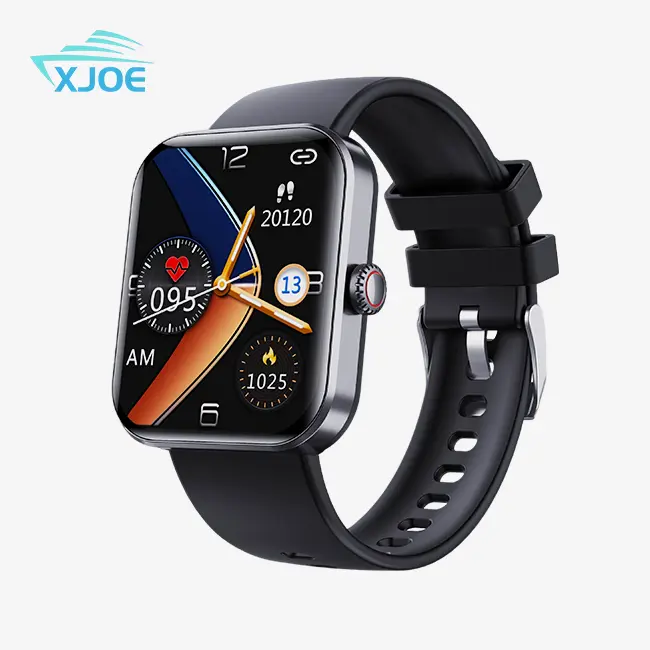
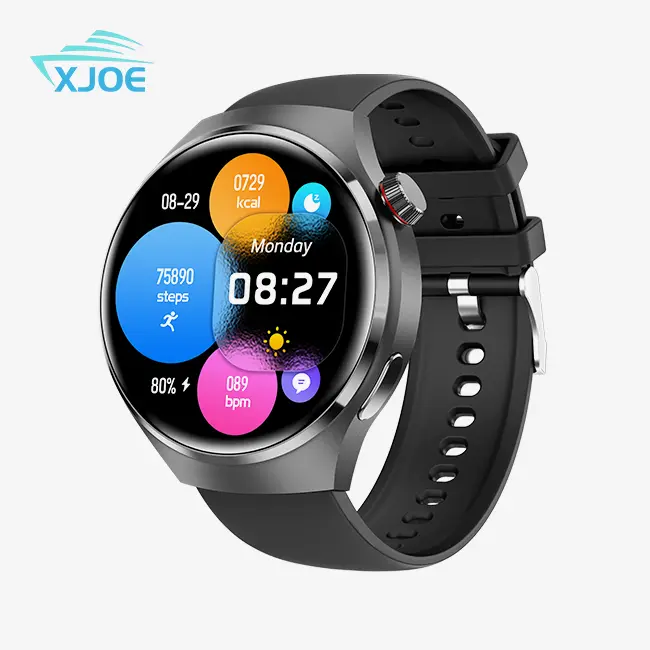
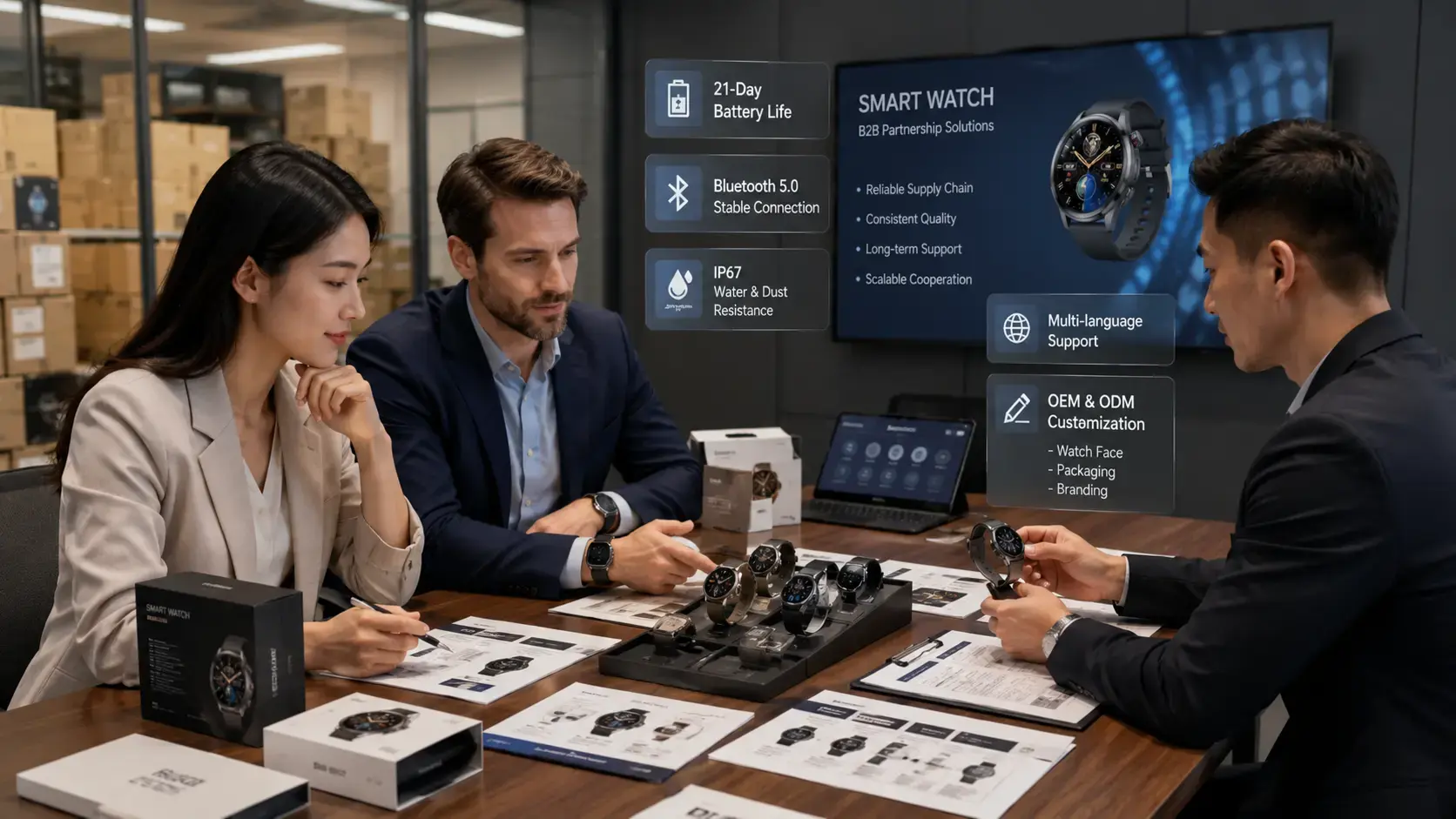
This 2026 model is one of the greatest for battery life and basic functionality. The device features a 1.53-inch round IPS colour screen with 360×360 pixel resolution, well-suited for reading notifications and health information without energy consumption. The JL7012 chipset handles Bluetooth 5.0 connections, sensor data processing, and screen display while using minimal power for lengthy runtimes.
The watch can display time, count steps, track sleep, and use other basic smart features for 21 days on its 300mAh battery. This performance level considers a key buying factor: gadgets that don't need to be charged and are worn constantly. Its IP67 certification and zinc alloy construction make it suitable for occupational hazards, including kitchens and warehouses.
Wireless charging eliminates connector wear, extending device life and reducing warranty claims. This device supports 28 firmware languages and many app languages, making it suitable for overseas markets and workforce deployments. Corporate buyers who work with international teams or stores that service immigrant communities benefit from this multilingualism.
It has gunmetal black and silver finishes and rubber straps. It looks professional and works in casual and business casual environments. Traditional watch lovers prefer the round shape over technical ones. This helps those who don't like "techy" gadgets use them.
Performance Comparison Across Use Cases
A lot of information is needed to judge battery life. In basic mode, a device that lasts 21 days might work for 7–10 days with middling use (regular alerts, daily exercise tracking, and frequent app syncs) and for 4–5 days with heavy use (screen on all the time, lots of notifications, and lots of interactions). When procurement teams know about these levels, they can help end users or buyers have fair standards.
Extreme endurance smartwatch devices often give up features like GPS tracking, mobile payment support, or full health sensors in order to make the battery last longer. This trade-off works for some groups of people, like seniors who need to be able to get in touch with emergency contacts and keep an eye on their basic activities, warehouse workers who need to be able to get notifications without having a smartphone, or people who are buying promotional items and want reliable items that won't make people complain about how often they charge.
The warranty and assistance system for a gadget affects how much it costs to own in total. In business-to-business settings, operating risk reduction is best provided by manufacturers who offer 12-month warranties, quick technical help, and over-the-air firmware changes. Software update promises make sure that devices are useful after they are first set up, protecting purchase investments against becoming obsolete too soon.
How to Choose the Right Endurance Smartwatch for Your Business Needs?
Battery life is one of several factors that determine whether a gadget is suitable for a certain business use. To be successful at procurement, technical skills must be matched with practical needs and end-user situations.
Aligning Device Features with Industry Requirements
Some traits are more significant in certain sectors. Healthcare organisations need devices that can consistently track behaviour and connect to electronic health data via RDFIT or a similar platform for remote patient monitoring systems. Clinicians benefit from accurate step counting and sleep pattern recognition, while a 21-day battery life makes charging devices easier for senior users or those with cognitive impairment.
Logistics and office jobs benefit from durable, reliable devices over thorough health tracking. Receiving task orders, job schedules, and alert messages on the wrist improves efficiency, while IP67 protection protects devices from severe conditions. Extended battery life eliminates issues with charging during a shift.
Office workers can improve their health with corporate fitness programmes that track sleep and steps. The iconic round design supports device use in professional environments. Multi-week battery life reduces the burden of charging every night from rival gadgets with 1-2 day battery lives, increasing engagement.
B2B Procurement Considerations
Price differences between bulk and shop purchases are significant. Volume discounts begin at 500 units for small price decreases and increase to 2,000 units for large ones. Procurement managers must ensure that prices include logo printing and unique packaging. These extras affect unit cost and minimum order quantity.
Read warranty terms carefully. Typically, a 12-month warranty covers manufacturing defects but not battery degeneration over 80% of its original capacity. When problems arise, knowing how claims work—whether gadgets are replaced or serviced, how long they take to return, and who pays for return shipping—helps things flow smoothly.
Return policies are crucial for Amazon FBA sellers and e-commerce firms testing new products. When testing the market for their products, manufacturers with reduced MOQs for first purchases or product swap possibilities, instead of harsh restocking fees, reduce buyers' risk. Established distributors may get attractive return conditions based on relationship history and order volume.
Customisation and Private Label Opportunities
Private label companies and special item customers demand customisation that typical consumers don't. Some manufacturers put the logo on the watch face, case back, or box. These choices affect product price and production time. Customised orders take 15–30 days longer than typical production; therefore, holiday or new product promotions must be planned accordingly.
Customising packaging can range from adding a logo to redesigning the box with bespoke inserts, instructions, and marketing materials. Knowing how much customisation a seller allows at different order levels can assist sourcing partners in matching brand image needs. With medium-volume orders, some manufacturers may not be able to afford elaborate packaging for high-end brands.
Large OEM/ODM software customisation agreements still allow custom watch faces, branding app experiences, and firmware updates. Deeper integrations require technical assistance and a minimum order of 5,000 units, making them more suitable for established brands than for entering new markets.
Comparing Endurance Smartwatches with Other Fitness and Regular Smartwatches
Figuring out where battery-focused devices fit in the bigger picture of wearable tech helps with figuring out where to use them and how to place them in the market.
Battery Life Versus Feature Richness Trade-Offs
A long battery life smartwatch with GPS tracking, mobile payments, and many apps lasts 18–48 hours on a charge. These gadgets are for those who prioritise features above charging. Active folks may track their exercises in detail, professionals can enhance productivity, and tech aficionados can explore new capabilities.
The 21-day battery-life devices we mentioned previously intentionally limit their features. GPS-free parts cost less and use less power. Receive alerts more easily (see and delete instead of replying), keeping you connected without using much power. This trade-off disappoints smartphone replacement fans but pleases those who are tired of charging their phones daily.
Centre: fitness trackers. Their batteries last 5–10 days, and they include more health tracking functions than basic monitors but fewer than full-featured devices. They're suitable for health-conscious people who value accurate activity data over notifications and apps.
Market Positioning for Different Customer Segments
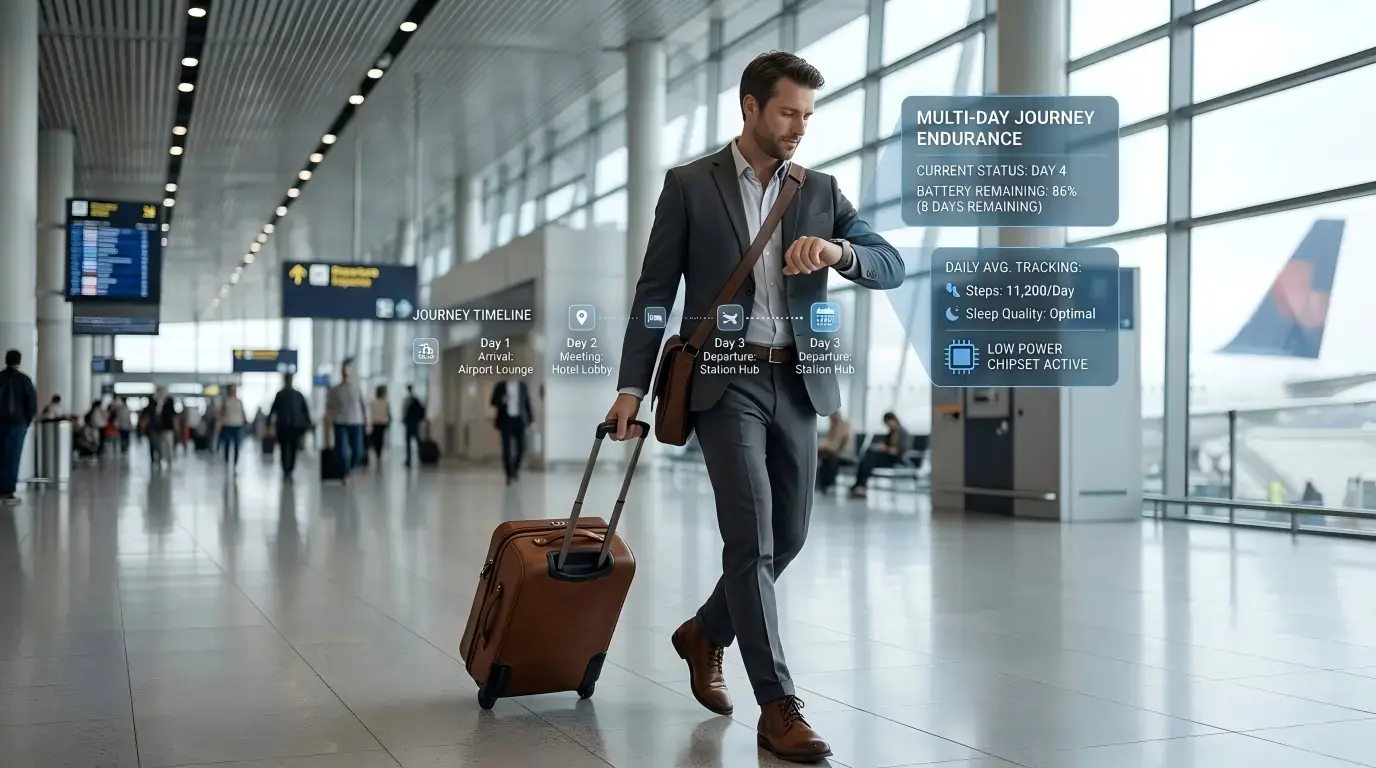
Amazon sellers and e-commerce firms must ensure their devices have customer-desired features. A 21-day battery life is a poor feature comparison for full-featured smartwatches. However, compared to conventional fitness trackers, it has longer battery life and smart messaging. Customers who are tired of charging their gadgets would appreciate a "worry-free wearing" and "perfect for travel" promotion.
Promotional item buyers benefit from longer battery lives. Gadgets that can go weeks without being charged produce positive brand associations, while corporate gifts that need to be charged weekly make negative ones. Classic appearance and changeable features promote brand integration without utilising too much technology that doesn't fit the company's image.
Wholesale wholesalers selling to retail shops should consider local tastes. Longer battery life is more critical in places with unstable electricity than in places with many recharge outlets. People who aren't tech-savvy enjoy low-maintenance devices.
Future Trends and Innovations in Endurance Smartwatch Battery Technology
Battery technology is always changing what wearables can do, and new developments promise even better performance that will be useful for planning future purchases.
Emerging Power Storage Technologies
Solid-state battery research has mostly been focused on bigger uses, but it has shown promise for gadgets by making batteries safer and more energy-dense. These technologies could make it possible to increase capacity by 30–40% while keeping the same size and weight. This could mean that devices that can work for 21 days could work for a month without getting bigger or heavier. Consumer gadgets won't be available for sale for another two to three years, so buying decisions in 2026 should focus on current lithium-ion technology while keeping an eye on progress on the next generation.
By adding photovoltaic materials to watch faces or bands, solar charge integration increases battery life by producing extra power. Current versions add 10–20% more runtime when they are exposed to good sunlight, which is useful for people who work outside but not so much for people who work inside. As the cost of materials goes down and conversion efficiency goes up, solar supplementation may become common in gadget types that are meant to be used outside.
Software Optimisation and Intelligent Power Management
Algorithm tweaks extend battery life without hardware upgrades. Predictive user behaviour machine learning models enable proactive power management. They can reduce sensor polling during sleep, lower display brightness before needed under stable illumination, or determine Bluetooth synchronisation based on prior usage trends. These firmware patches improve device performance after purchase, offering value to end customers and averting early obsolescence.
Adaptive power settings that adjust speed depending on battery life make it easier to use. When the battery is low, a smartphone can rapidly turn off unnecessary capabilities, prioritising time display and alarms above health tracking. People who forget to charge their smartphones or get caught on a vacation without a charger can use this method to keep them available.
RDFIT software for the highlighted gadget is updated regularly with new features and optimisations. High-quality manufacturers commit to software support after the sale, unlike merchants who stop supporting gadgets after the first batch. This provides buying teams with confidence in the gadgets' longevity.
Conclusion
Battery life is still one of the most important factors in determining the success of wearable tech, as it affects user happiness, return rates, and long-term use in both consumer and business settings. The smartwatches with the best battery life in 2026 are able to run for more than a week thanks to smart power management, carefully chosen components, and feature prioritisation that puts core usefulness over feature range. Understanding the technical factors that allow longer runtime—such as efficient chipsets, improved screens, and complex firmware—helps procurement professionals evaluate devices in a way that goes beyond what the marketing claims say.
The standard round design model that can run in basic mode for 21 days shows a useful mix between long battery life and basic outdoor smartwatch features. Its reliable health tracking, smart notifications, sturdy build, and low charging needs make it a good choice for a wide range of customers, from individuals who are tired of charging their phones every night to businesses that need low-maintenance devices for their employees. When it comes to B2B buyers looking to add to their inventory, find private label opportunities, or buy in bulk, products that prioritise battery life offer unique value in increasingly competitive markets.
FAQ
1. What factors most significantly impact smartwatch battery life?
The main things that drain the battery are the display, the chipset, and the number of times the sensors are polled. Displays that are always on use a lot more power than ones that use raise-to-wake. GPS tracking and continuous heart rate monitoring greatly increase usage compared to measures that are taken at set times. Baseline power draw during regular operation is affected by how well Bluetooth connects, especially BLE 5.0, compared to older standards.
2. How does the 21-day battery claim translate to real-world usage?
The 21-day number is based on basic mode use, which includes showing the time, counting steps, tracking sleep, and sending light notifications. Moderate daily activity, like checking messages several times a day, keeping track of one workout, and regularly syncing your apps, usually gives you 8 to 12 days. Heavy use with lots of screen time and messages may shorten the life to 5–7 days, which is still a lot longer than most smartwatches' performance.
3. What warranty coverage should B2B buyers expect for battery performance?
Under normal usage conditions, standard warranties usually cover 80% of the original capacity for 12 months. Most warranties don't cover damage caused by poor charging, exposure to high temperatures, or physical damage. When buying in bulk, business-to-business buyers should talk about options for longer warranties or repair terms that take into account how likely it is that a lot of units will be broken at once.
Partner with Xizhou for Your Endurance Smartwatch Supply Needs
To succeed in the market for wearable tech, you need more than just product knowledge. You also need a production partner who gets your business, meets your deadlines, and provides consistent quality that protects your brand's image. Xizhou focuses on offering dependable Endurance Smartwatch solutions to Amazon buyers, e-commerce brands, wholesalers, and private-label companies. These solutions are supported by strong R&D capabilities and strict quality control standards.
Our featured long-battery tracker can work for up to 21 days and has smart features and important health tracking features. It's just one of many options we offer. Our experienced team is here to help you every step of the way, whether you need low MOQ freedom for testing the market, custom logo printing and packing to make your brand stand out, or OEM/ODM development for specific product needs. We keep a lot of stock on hand so that we can quickly restock, and we also offer customisation services that turn common items into unique ones.
Get in touch to talk about your unique needs, ask for full specs, or set up a sample evaluation. Get in touch with our team at 13266508958@163.com to find out how Xizhou's production skills, low prices, and dedication to relationship success can help your business grow. You can find out more about our products at xjoec.com, which is why many big names trust us to supply their endurance smartwatches.
References
1. Chen, Y., & Wang, L. (2025). Power Management Strategies in Modern Wearable Devices: A Technical Review. Journal of Wearable Technology, 12(3), 145-162.
2. Global Smartwatch Industry Analysis Report (2026). Market Research Future Publications, Battery Life Consumer Preference Study.
3. Anderson, M. (2025). Comparative Analysis of Battery Technologies in Consumer Electronics. Electronics Engineering Quarterly, 34(2), 78-94.
4. International Wearable Device Standards Consortium (2025). IP Rating Guidelines and Real-World Durability Testing Protocols.
5. Thompson, R., & Kumar, S. (2026). Long-Term Device Adoption Factors in Corporate Wellness Programmes. Journal of Occupational Health Technology, 19(1), 23-41.
6. Battery Performance and User Satisfaction Correlation Study (2025). Consumer Electronics Association Annual Report on Wearable Technology Trends.