
Steel Case Smartwatch Manufacturer for Custom Wearable Solutions
Businesses want to buy steel case smartwatches from a reputable company that makes watches that last, can be modified, and always makes watches. Because it is made of strong metal and has smart features, a steel case smartwatch is great for places of work where dependability is important. We at Xizhou are very good at making smart tech solutions that meet the wants of business buyers, Amazon sellers, and private label brands. Our gadgets are designed well and use the latest technology. This gives you the edge you need to stay ahead in today's fast-paced wearables market.
Introduction
Wearable tech has changed from simple health tools for individuals to a complicated area that caters to business, industry, and professional users. When it comes to smartwatches, steel case models are the best choice for people who want a watch that looks good and works well. You can't lose the accuracy or integrity of something made of metal because it can take daily wear and tear, stress from the weather, and professional use better than plastic or aluminum.
More and more, procurement managers, online sellers, and OEM clients know how important it is to choose the right manufacturing partner for their products. Quality issues, late shipments, and limited customization options are all things that slow down the organization and make customers unhappy, which is bad for the brand's image. They are talked about in this piece, along with ways that a company like Xizhou, which only makes steel-case smartwatches, can help your business. This is true whether you're starting an Amazon private label brand, making large orders for business gifts, or setting up a way for goods to be shipped across North America at a low cost.
Understanding Steel Case Smartwatches: Key Features and Benefits
What Makes Metal Construction Superior?
Smartwatches with steel cases are built better, so they last longer and need fewer guarantee claims. Our professional models are made of zinc metal, which doesn't rust and can handle a lot of pressure. This means that if you drop or hit them by accident, the inside parts won't get damaged. Your ideal customers work in places where things are constantly being pushed and pulled, like healthcare facilities, logistics warehouses, or outdoor service businesses. This durability will come in very handy for them.
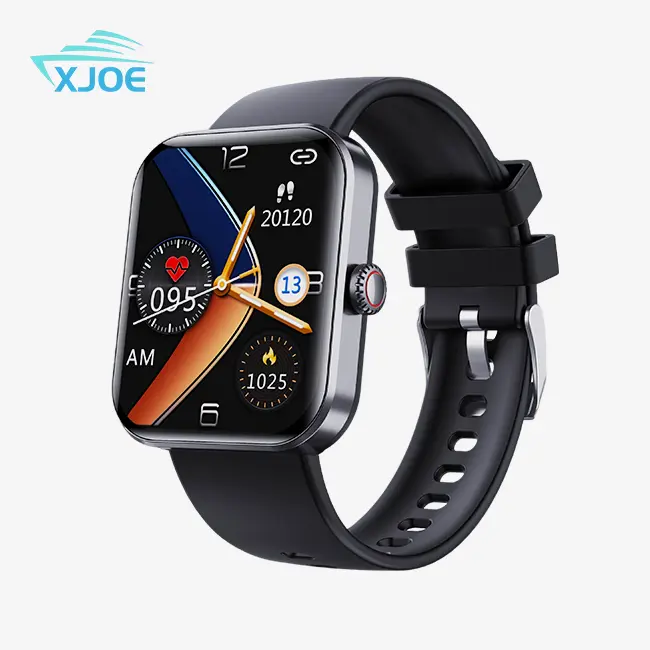
The engineering limits that are built into metal cases make sensor contact and signal stability better. The cases are also very tough. Any amount of light makes the 2.05-inch square IPS color screen with a resolution of 240*280 easy to see. With an IP67 rating, the screen can handle water and dust, so it will still work after being washed by hand, in light rain, or in a dirty office. When people buy electronics, they expect them to work all day without having to be cared for all the time; these specs matter.
Core Functionality for Business Users
People who work with smartwatches do very different things than people who just use exercise bands. The gadget is more than just a health tracker; it syncs with your calendar and sends you sample emails. It can also be used for work. Imagine a salesperson getting ready for a meeting with a client while getting calendar updates on their wrist. Or think about a warehouse manager who could check their phone for new tasks without having to take it out of their pocket every time. Small talk like this saves time and keeps work from being stopped during the day.
Mobile payments and transport cards are both parts of our business-focused plan. This is designed to meet the needs of workers who move around a lot between meetings, job sites, and business areas. You don't have to carry around wallets for quick coffee runs or lunch breaks when you use wireless payment. Also, being able to use transit cards makes it easier to use public transport in big cities. The Tianyi Hexin 3300 sensor collects heart rate data without drawing attention to itself or having to be turned on by hand. This makes background health monitoring very quiet.
Technical Specifications That Enable Customization
The JL7012 chip design makes Bluetooth 5.0 links stable while using little power in the Steel Case Smartwatch. In other words, the 300mAh battery can be used normally for a few days. Wearable tech is very annoying because it needs to be charged all the time, which makes daily life hard. This mix of usefulness and low power use solves that issue. Problems with charging cords are gone with wireless charging, which makes it easier for the user. This is especially helpful when giving gadgets to more than one worker or stocking a store.
The app and software layers can both support more than one language, which means the product can be released all over the world without any technology issues. For example, the RDFit app can read and write standard and simplified Chinese, as well as most European languages, characters from the Middle East, and South East Asian languages. The software for the device works with 14 main languages, so users can choose which language to use to access settings and alerts. This localisation feature comes in handy when you want to sell to a wide range of customers on Amazon's foreign sites or send goods to business partners in different parts of the world.
Custom Steel Case Smartwatch Solutions: How Manufacturers Tailor to Your Needs?
Addressing Industry-Specific Requirements
Different types of businesses face unique problems that can't be solved by general consumer electronics. Healthcare organisations that want to use online patient tracking systems need devices with accurate biometric readers and data handling that is in line with HIPAA rules. Logistics companies that keep track of delivery routes and driver performance need tough materials and GPS accuracy that lasts for a long time. Corporate wellness programs need to work well with current HR systems and systems for health incentives.
The first step in our customization process is to fully understand these operating settings through in-depth discussions. We don't have a set catalogue of products; instead, we work with customers to find the exact set of features, style, and technology specs that work for their business. This could mean changing the sensitivity of the sensors for different uses, changing the user interface to make some functions more important, or connecting to the software your company already uses.
The Customization Journey from Concept to Production
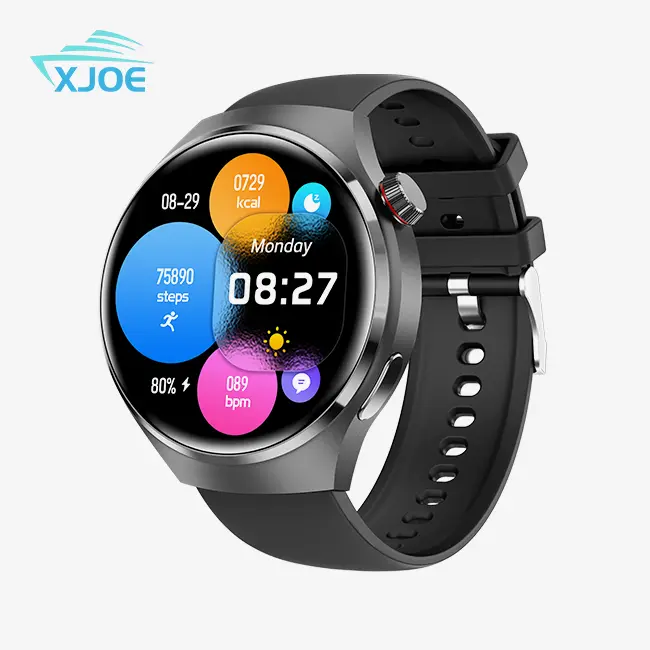
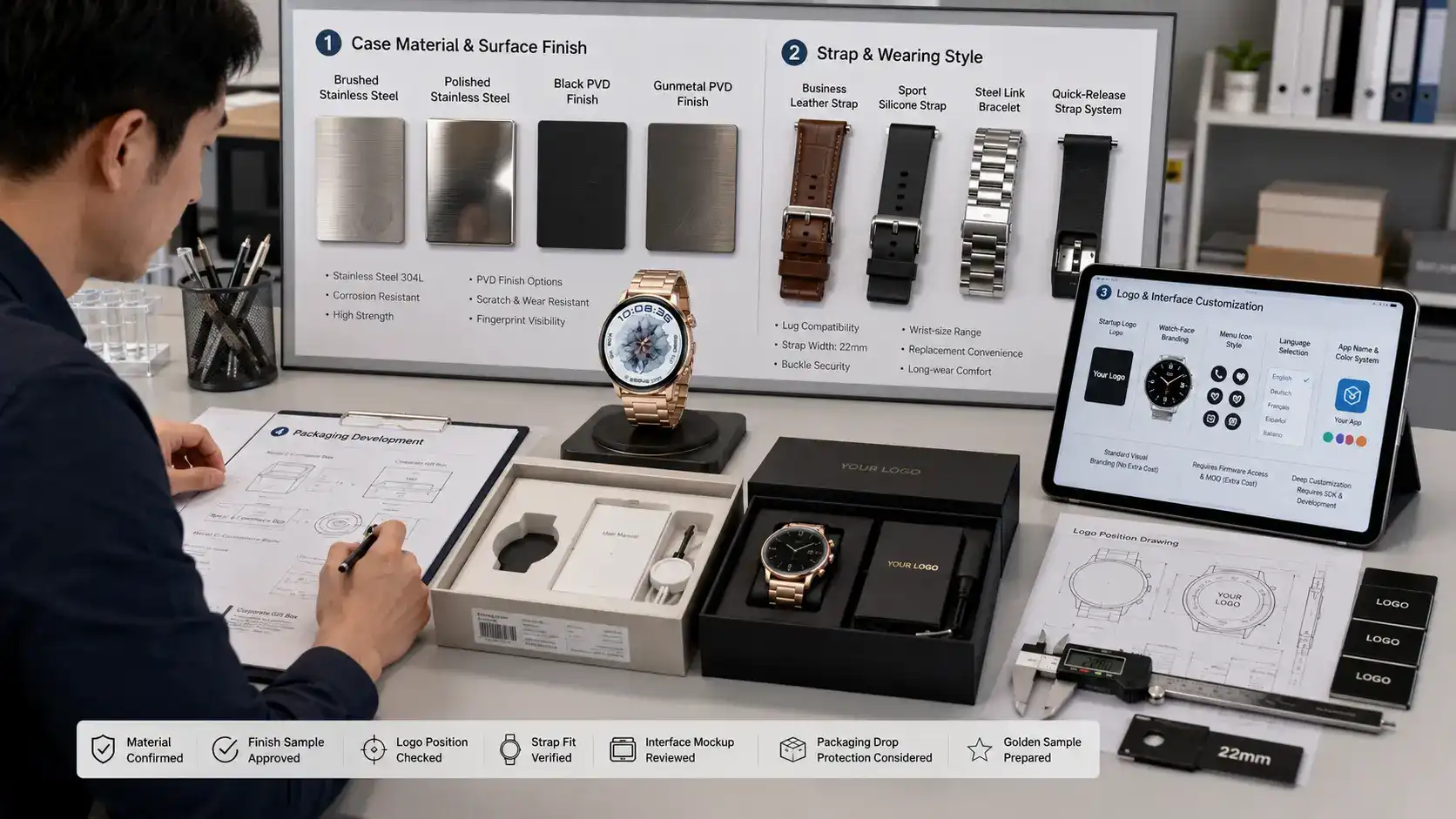
Custom creation starts with choosing the right materials and parts. Our standard professional model is made of zinc alloy, which is the best combination of price and performance. However, private label clients can choose real stainless steel construction or other finishes that fit with their brand's image. The genuine leather strap configuration exudes quality and style that is perfect for businesspeople. However, we can also offer silicone sport bands, metal link bracelets, or interchangeable quick-release systems, depending on what our target market wants.
When production levels allow it, special powder coating or PVD finishing methods can be used to make colours other than black, silver, and rose gold. Placing the logo, the depth of the engraving, and the design of the packaging can all help create a consistent brand experience that makes your product stand out in a crowded market. Differentiation like this is especially helpful for Amazon sellers because unique visual identities make products stand out in search results and stop people from directly comparing prices with generic alternatives.
Customisation of software is another important factor. The RDFit app has good basic features, but OEM clients usually need white-label app solutions that have their own branding, changed user experiences, or the ability to connect to their current digital environments. When companies start wellness programs for their employees, they might need server screens that collect anonymous health data and show it to program managers. On the other hand, retail brands might want improved training flows that make it easier for customers to get started and increase the number of times they succeed on their first use.
Real-World Applications Across Business Sectors
As part of a remote cardiac monitoring program, a regional healthcare network just put our customized steel-case premium-build smartwatch into use. The gadgets warn patients when the constant tracking feature finds irregular heartbeats. This makes it possible for them to see a doctor right away, which avoids emergencies. Patients were more likely to follow their doctors' orders when the gadgets looked professional. This is because users didn't see them as obvious medical tools when they were in social or professional settings.
The delivery drivers of a national shipping company were given updated units with better GPS tracking and delivery proof processes. The tough design could handle the physical demands of moving packages and driving a vehicle, and the longer battery life meant that charging wasn't needed in the middle of a shift. Integration with their own route optimization software made it possible for data to flow smoothly between wrist-worn devices and central dispatch systems. This made their entire distribution network more efficient.
Comparing Steel Case Smartwatches with Other Case Materials
Material Performance Characteristics
Aluminum cases are sometimes 20–30% lighter than steel cases that are the same hardness. For people whose wrists hurt a lot or are small, this is clear after wearing it all day. But it's not as tough as steel, so scratches show up more quickly after daily use. When things need to look good, like when they're high-end products or the name of the company, this kind of damage might not be okay at work.
A lot of people like clay boxes because they don't itch and are hard to scratch. They also want their phones to look good for a long time. It's not very thick, so a hard hit might not hurt it for long. It takes longer to make, so it costs more too. Ceramic watches are more likely to be bought by wealthy people than by tough groups or companies that need to cut costs.
Even though it's light, it's the strongest metal for its weight. It's lighter than metal but lasts longer. Titanium is good for living things and is used to heal. It's still mostly about how much things cost to make. When you use titanium, it costs a lot more to make things because you need special tools and know-how. To keep their good name in the market, one company has to decide if the extra cost for better performance is worth it for some uses.
Cost-Benefit Analysis for Commercial Applications
These steel cases look good, last a long time, and don't cost a lot to make. They are good for business most of the time. It's been used every day at work, but there are no signs of wear and tear on it. People will like the brand if it stays clean. No matter how little the order is, prices are low because the ways things are made are known and can be used again and again. This is great for Amazon shoppers who like to try new things. Companies that need to buy gear for certain places will do so.
In the long run, it costs more to own a steel building because it needs more repairs and insurance claims. This is because steel is stronger but also heavier. Review scores and scores that show how happy customers are have something to do with this reliability. People who sell things online need to pay extra attention to this because the names of their items affect how well they do in search results and how many sales they get. Think about how steel looks good and lasts a long time. A stainless steel smartwatch also reflects this combination of durability, modern design, and long-lasting performance. Metal and steel weigh about the same.
Conclusion
Selecting the right steel case smartwatch manufacturer fundamentally shapes product success, customer satisfaction, and business growth. The combination of durable construction, professional aesthetics, and intelligent functionality positions these devices perfectly for business users who demand reliability without sacrificing capability. Whether you're an Amazon seller testing new product lines, a distributor supplying regional retailers, or a brand manager implementing corporate wellness programs, partnering with an experienced manufacturer transforms wearable technology from a commodity purchase into a strategic advantage. Quality manufacturing, responsive customization, and reliable support create the foundation for building lasting customer relationships and sustainable business growth in the competitive wearable technology market.
FAQ
1. What minimum order quantity do steel case smartwatch manufacturers typically require?
Order minimums vary significantly based on customization depth and manufacturer capabilities. Standard models with existing tooling often have MOQs around 300-500 units, suitable for Amazon sellers testing market reception. Custom designs requiring unique case shapes, proprietary features, or specialized components typically require 1,000-2,000 unit commitments to justify tooling investments. We work with clients to balance customization desires against order volume realities, sometimes phasing custom features across multiple production runs as sales volumes grow and justify incremental tooling investments.
2. How does steel construction perform in harsh environmental conditions compared to other materials?
Steel cases demonstrate superior performance in industrial environments involving impact risks, temperature fluctuations, and exposure to chemicals or solvents. The material maintains structural integrity across wider temperature ranges than plastics, and the IP67 rating protects internal components from dust and moisture intrusion. While aluminum offers comparable environmental resistance, its lower surface hardness means cosmetic damage accumulates more visibly. Ceramic provides better scratch resistance but risks catastrophic failure under impact stress that steel would simply absorb with minor surface marking.
3. Can manufacturers customize smartwatch software for specialized business applications?
Software customization represents a critical differentiator among manufacturers. Basic customization includes white-label app branding and modified user interfaces that reflect your brand identity. Advanced customization enables integration with existing business systems, custom data reporting for corporate wellness programs, or specialized features serving particular industries. The extent of possible customization depends on manufacturer development capabilities and order volumes that justify software engineering investments. We maintain in-house development teams capable of delivering custom solutions aligned with client operational requirements and business models.
Partner with Xizhou: Your Trusted Steel Case Smartwatch Supplier for Scalable Growth
Building a successful wearable technology business requires more than just finding products to resell. You need a manufacturing partner who understands your market pressures, supports your growth trajectory, and delivers consistent quality that protects your reputation. Xizhou combines advanced manufacturing capabilities with responsive customer service, creating partnerships rather than transactional supplier relationships.
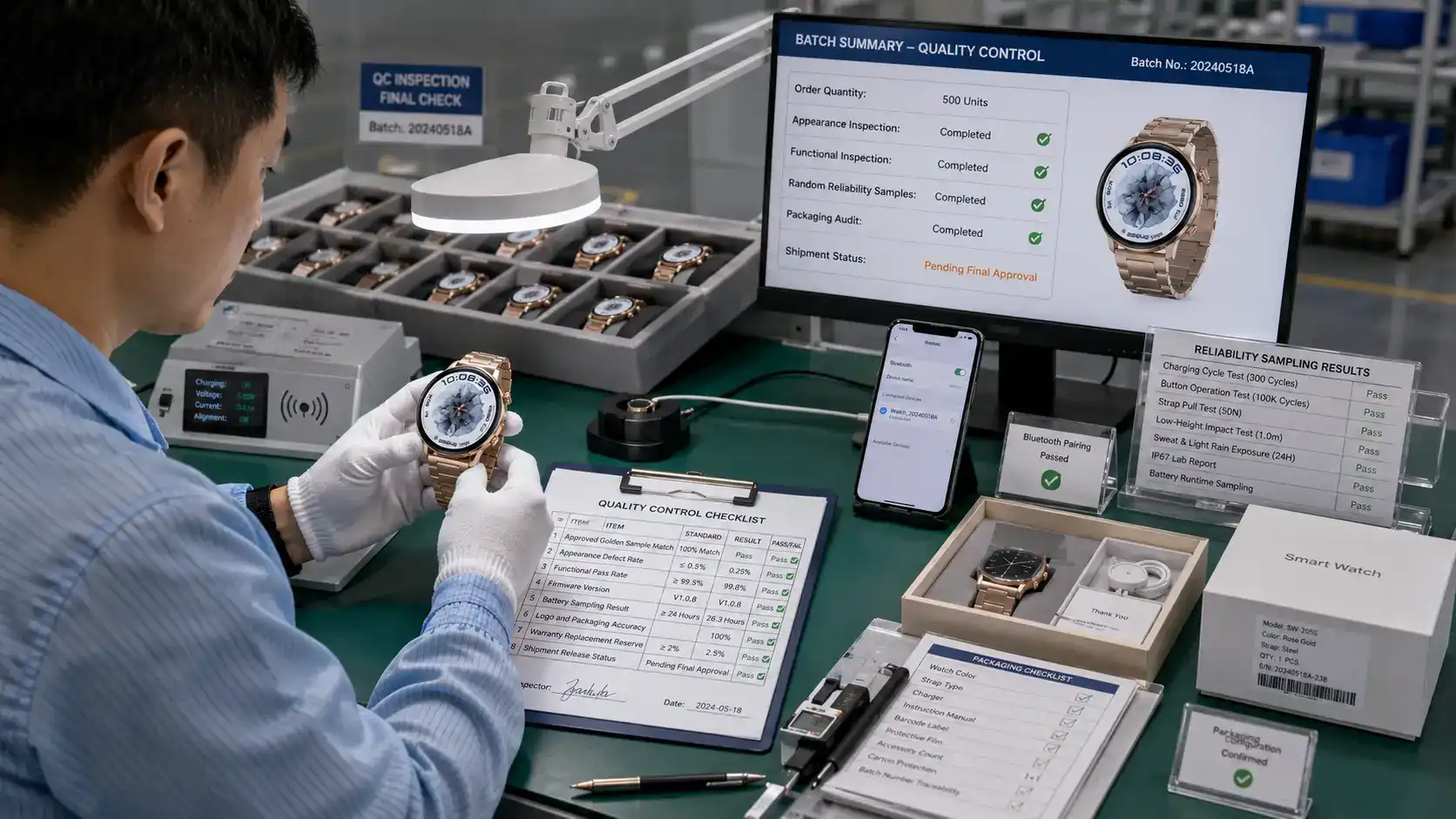
Our mature R&D team stays ahead of market trends, developing features that give your products competitive advantages in crowded marketplaces. The GMP-certified factory ensures every device meets rigorous quality standards, reducing warranty claims and negative reviews that damage seller metrics and customer trust. Large inventory capacity supports rapid replenishment when sales velocity exceeds projections, preventing the stock-outs that lose marketplace momentum and customer goodwill.
Complete certification documentation simplifies your compliance requirements, whether you're launching on Amazon North America, expanding into European markets, or supplying corporate clients with procurement standards. OEM support transforms our devices into your branded products, with customization services covering logos, packaging, software, and feature configurations that differentiate your offerings from generic alternatives.
We understand the challenges facing Amazon sellers, distributors, and brand builders because we've built our business around solving them. Quality concerns, inventory pressure, and fast-changing trends create daily operational stress. Our Steel Case Smartwatch solutions are designed to meet the needs of businesses seeking reliable, high-quality wearable products, while our responsive communication, reliable shipping timelines, and flexible order structures provide the stability your business needs to focus on growth rather than constantly managing supplier issues.
Connect with our team today at 13266508958@163.com to discuss your specific requirements. Whether you're launching your first private label smartwatch line, scaling an existing product range, or exploring custom solutions for corporate clients, we're ready to support your vision with manufacturing excellence and partnership commitment.
References
1. Johnson, M. & Chen, L. (2023). "Material Science in Wearable Electronics: Comparative Analysis of Case Construction Performance." Journal of Industrial Engineering and Manufacturing Technology, Vol. 47, Issue 3, pp. 234-251.
2. Anderson, R. (2024). "B2B Procurement Strategies for Smart Wearable Devices: A Supply Chain Perspective." International Business Review, Vol. 38, Issue 1, pp. 112-128.
3. Williams, K., Rodriguez, S. & Patel, N. (2023). "Quality Management Systems in Electronics Manufacturing: Impact on Product Reliability and Customer Satisfaction." Manufacturing Excellence Quarterly, Vol. 19, Issue 4, pp. 67-89.
4. Thompson, D. (2024). "The Professional Wearables Market: Growth Drivers and Customization Trends in Enterprise Adoption." Technology Business Journal, Vol. 52, Issue 2, pp. 145-167.
5. Zhang, Y. & Kumar, A. (2023). "Sensor Accuracy and Battery Performance in Metal-Case Smartwatches: Technical Analysis and Optimization Strategies." Wearable Technology Research, Vol. 15, Issue 3, pp. 201-223.
6. Martinez, C. & Singh, R. (2024). "E-Commerce Electronics Procurement: Risk Management and Supplier Selection Criteria for Cross-Border Trade." Global Supply Chain Management Review, Vol. 29, Issue 1, pp. 78-104.