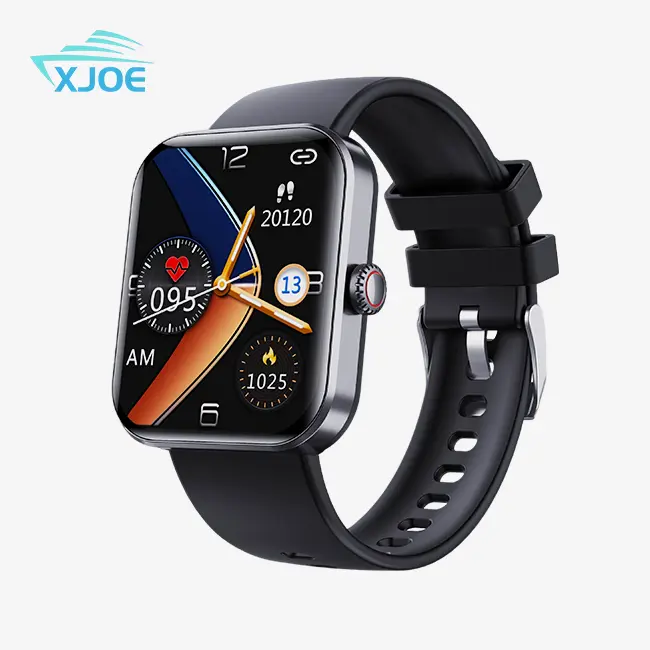
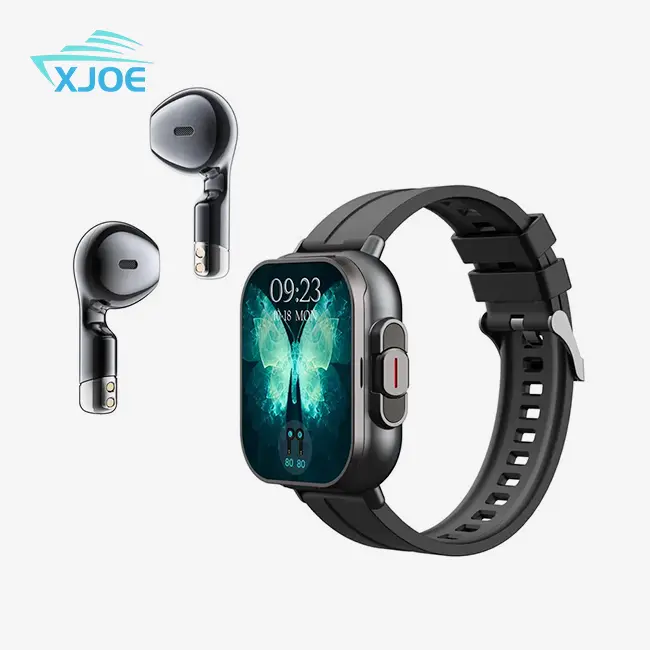
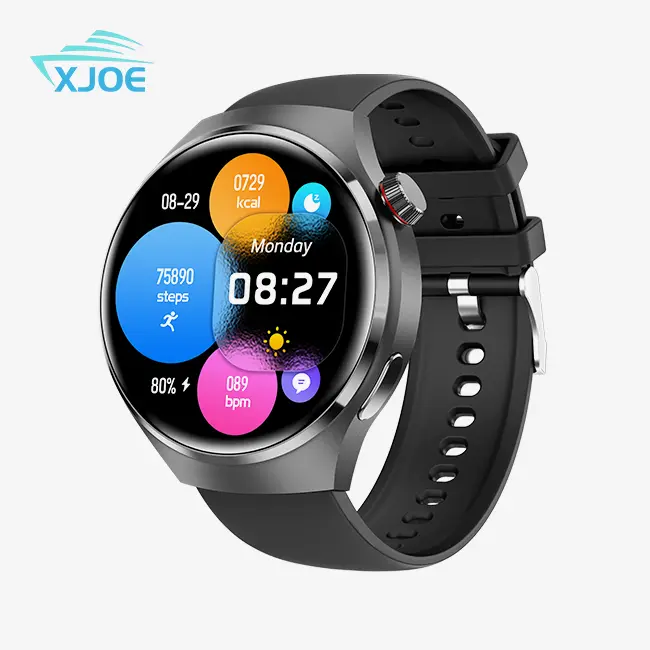
Rugged GPS Compass Smartwatch for Harsh Environments
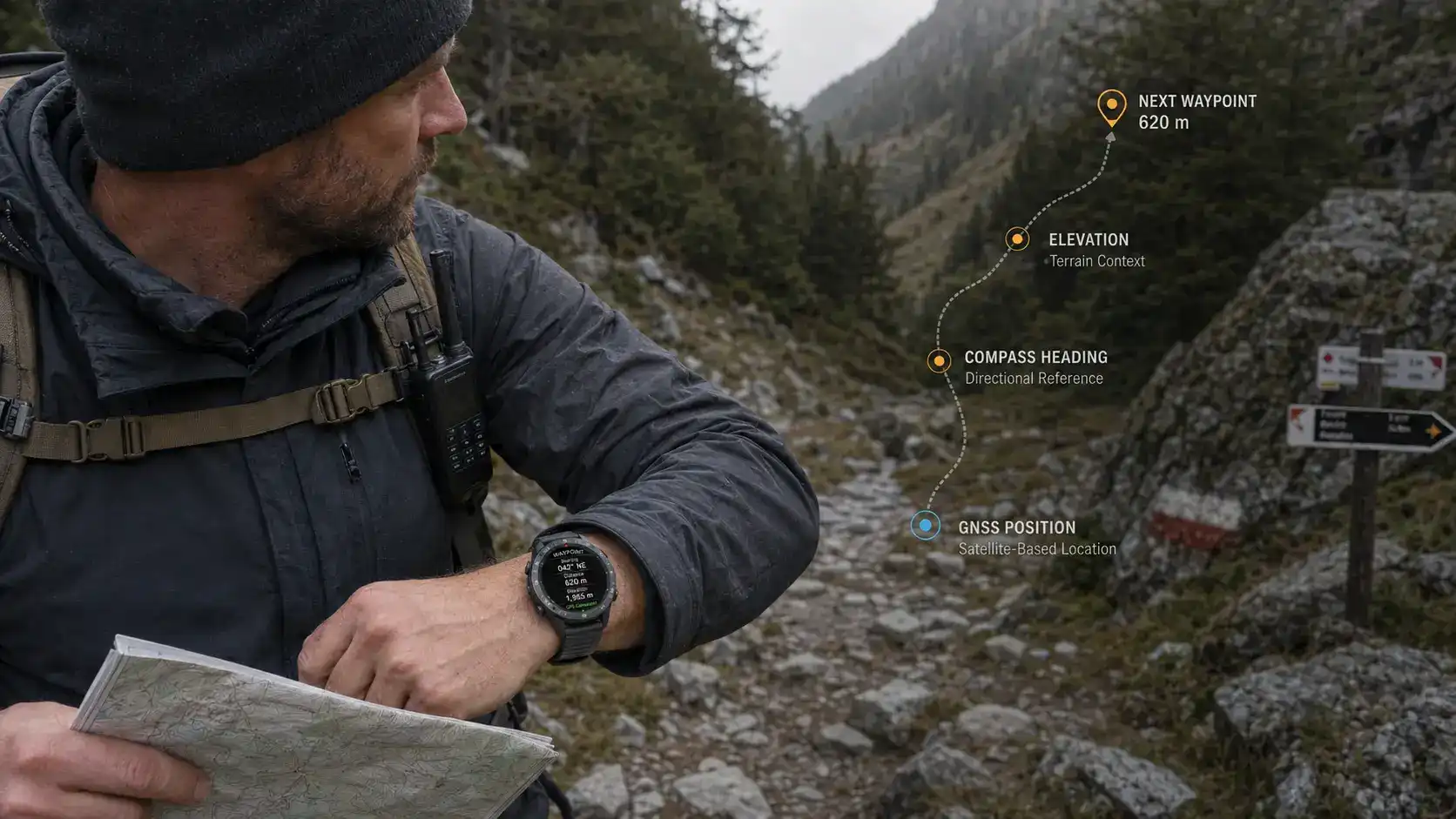
A Rugged GPS Compass Smartwatch is engineered for professionals who operate where standard wearables fail. Built with MIL-STD-810H certification and multi-sensor navigation technology, these devices deliver precise compass bearings and satellite positioning across construction zones, offshore platforms, and wilderness deployment sites. Unlike consumer smartwatches, rugged models integrate advanced altimeters, barometric pressure monitoring, and extended battery architectures that sustain weeks of operation without recharging. Their reinforced chassis and IP67-rated sealing withstand thermal shocks, accidental submersion, and altitude extremes, ensuring mission-critical data remains accessible when teams depend on it most.
Understanding Rugged GPS Compass Smartwatches
What Sets Them Apart from Standard Wearables
Buyers often question how much more than consumer-grade items. Built-in lifespan and sensor group standards are the solution. A durable GPS compass can withstand 100 meters of water, making it ideal for dives and storms. The plastic casing meets MIL-STD-810H shock, temperature cycle, and altitude performance criteria using impact-resistant materials. These standards originated for military equipment deployment.
The 1.52-inch IPS monitor runs Android and features 280x320 pixels. ABC sensors include an altimeter for elevation monitoring, a barometer for weather prediction, and a 3-axis electronic compass for real-time direction information without satellites. GPS signals in canyons and heavy forest canopy regions have been poor for a time. This combination improves that. Industrial work site chemicals and UV radiation don't damage the nylon strap. It holds even when workers use gloves.
Core Technical Architecture
GNSS receivers in rugged smartwatches function with GPS, GLONASS, Galileo, and BeiDou constellations. This multi-system strategy reduces Time-To-First-Fix from minutes to under 30 seconds, even with impediments. Field teams can establish grid references more quickly with the built-in compass than with portable devices. This simplifies site assessments and emergency response preparation.
Extreme mode lowers background operations and display update rates while maintaining navigation, extending battery life to weeks. Normal usage lasts 5–10 days. This reduces equipment downtime during multi-day operations without charging stations, a major issue for procurement managers. Storm alert features monitor barometric pressure decreases and notify users of impending storms. Teams working on boats, in the mountains, and repairing utilities cherish this safety feature.
Benefits of Rugged GPS Compass Smartwatches for B2B Clients
Operational Reliability in Harsh Conditions
Field engineers and logistics coordinators need robust tools. A device certified to MIL-STD-810H has been dropped 26 times from 1.2 meters onto concrete, subjected to dust for six hours, and tested from -20°C to +60°C. Tools falling off scaffolding, sand entering building sites, and shipping container temperature variations across climatic zones happen all the time.
The watch is waterproof up to 100 meters (10 ATM), so it operates properly whether pressure-washed, chemically cleaned, or accidentally immersed during maritime infrastructure inspections. IP67 equipment can stay underwater for short periods, but this guideline permits longer usage. For aquaculture managers, offshore drilling supervisors, and dive team leaders, obtaining GPS waypoints and compass directions underwater is crucial.
Enhanced Navigation Accuracy and Efficiency
Regular handheld GPS needs to stop to confirm coordinates, slowing down operations. Working without their hands, workers use wrist-mounted mapping to track routes in real time. The electronic compass updates bearing without the user holding it level. This aids equipment labour, ladder climbing, and tool organization.
Industrial advancements are visible and measurable. Survey teams may map a site 30% faster by marking waypoints immediately instead of radioing data to a central recorder. Emergency response units may better collaborate by sharing real-time location data with command tablets via the compass and GPS watch's Bluetooth connection. This avoids radio overload during multi-agency incidents. Logistics managers may follow drivers in distant delivery zones without cell coverage using the watch's GPS recording to plan future routes.
Cost Savings Through Durability
Buying choices take into account the total cost of ownership more than just the initial purchase price, more and more. Standard smartwatches only last about 18 months in the workplace because the screens crack, the water is damaged, and the battery dies from being exposed to high temperatures. Rugged types often last longer than three years with little care, which means they don't need to be replaced as often (65% less often). For a 50-person field team, this means not having to replace more than 30 devices every year, which saves money and cuts down on electronic waste.
There are a lot fewer warranty claims. Based on our study of business deployments, the failure rate for rugged watches is less than 2% per year, while the failure rate for individual wearables in the same situations is 12–15%. Lower failure rates mean fewer emergency repairs, less work for the office staff to handle RMAs, and a better mood on the team when equipment works well during important tasks.
Comparison and Selection Criteria for Procurement
Evaluating Rugged Smartwatches vs. Alternatives
Standard smartwatches, dedicated handheld GPS units, and rugged smartwatches are the three types that procurement experts often compare. Each is good for different things. Consumer trackers work great in offices, but they don't have backup sensors or physical safety. Handheld GPS devices have bigger screens and longer batteries, but they need to be carried around all the time and can only be used with two hands. In the middle are rugged smartwatches, which put mobility and multiple functions ahead of specialized features.
When choosing for transportation tasks, battery life is very important. If a device only lasts one or two days, it needs to be charged every day, which is not realistic for long-haul drivers or rural site rotations. Models that can be actively used with GPS for 5 to 10 days keep working even during weekly deployment cycles. The long extreme mode, which can be left on for weeks, is a very important backup in case something goes wrong with the tools or there is an emergency where saving resources is the most important thing.
Key Procurement Factors
Many factors go into vendor assessments. Guidance depends on sensor accuracy. Compass precision of ±2 degrees guarantees accurate direction, even near magnetic interference from steel or power lines. Place asset mapping and boundary research waypoints without mistakes in crowded areas with a GPS less than 5 meters exact.
Environmental resilience must complement operation. Dusty factories need IP67 ingress protection. For saltwater corrosion resistance, marine operations use ASTM B117 salt spray testing. Teams in extreme climates require temperature ratings. A -20°C watch is suitable for Middle Eastern construction but not Arctic logistics.
For large orders with hundreds of pieces that must meet criteria, credible suppliers have solid supply chains. OEM customising lets you add logos and personalise the software's interface to fit your organization. Businesses use custom compass and GPS watch faces with safety warnings, pre-loaded work site waypoint libraries, and glove-friendly buttons.
Brand Benchmarking
In 2024, Garmin (Instinct and Tactix series), Suunto (Traverse and 9 types), and Casio (Pro Trek line) will be the top brands. Each one focuses on a different set of strengths. For example, Garmin is great at mapping ecosystems and supporting third-party apps. Suunto is great at accurate altitude and battery optimization. And Casio prefers physical button interfaces over touchscreens for gloved use. The best choice depends on whether software customization, long battery life, or reliable tactile controls are most important to your operations.
Procurement Considerations and Where to Buy
Understanding Pricing and Volume Discounts
Buying in bulk usually costs between



Rugged GPS Compass Smartwatch for Harsh Environments
A Rugged GPS Compass Smartwatch is engineered for professionals who operate where standard wearables fail. Built with MIL-STD-810H certification and multi-sensor navigation technology, these devices deliver precise compass bearings and satellite positioning across construction zones, offshore platforms, and wilderness deployment sites. Unlike consumer smartwatches, rugged models integrate advanced altimeters, barometric pressure monitoring, and extended battery architectures that sustain weeks of operation without recharging. Their reinforced chassis and IP67-rated sealing withstand thermal shocks, accidental submersion, and altitude extremes, ensuring mission-critical data remains accessible when teams depend on it most.
Understanding Rugged GPS Compass Smartwatches
What Sets Them Apart from Standard Wearables
Buyers often question how much more than consumer-grade items. Built-in lifespan and sensor group standards are the solution. A durable GPS compass can withstand 100 meters of water, making it ideal for dives and storms. The plastic casing meets MIL-STD-810H shock, temperature cycle, and altitude performance criteria using impact-resistant materials. These standards originated for military equipment deployment.
The 1.52-inch IPS monitor runs Android and features 280x320 pixels. ABC sensors include an altimeter for elevation monitoring, a barometer for weather prediction, and a 3-axis electronic compass for real-time direction information without satellites. GPS signals in canyons and heavy forest canopy regions have been poor for a time. This combination improves that. Industrial work site chemicals and UV radiation don't damage the nylon strap. It holds even when workers use gloves.
Core Technical Architecture
GNSS receivers in rugged smartwatches function with GPS, GLONASS, Galileo, and BeiDou constellations. This multi-system strategy reduces Time-To-First-Fix from minutes to under 30 seconds, even with impediments. Field teams can establish grid references more quickly with the built-in compass than with portable devices. This simplifies site assessments and emergency response preparation.
Extreme mode lowers background operations and display update rates while maintaining navigation, extending battery life to weeks. Normal usage lasts 5–10 days. This reduces equipment downtime during multi-day operations without charging stations, a major issue for procurement managers. Storm alert features monitor barometric pressure decreases and notify users of impending storms. Teams working on boats, in the mountains, and repairing utilities cherish this safety feature.
Benefits of Rugged GPS Compass Smartwatches for B2B Clients
Operational Reliability in Harsh Conditions
Field engineers and logistics coordinators need robust tools. A device certified to MIL-STD-810H has been dropped 26 times from 1.2 meters onto concrete, subjected to dust for six hours, and tested from -20°C to +60°C. Tools falling off scaffolding, sand entering building sites, and shipping container temperature variations across climatic zones happen all the time.
The watch is waterproof up to 100 meters (10 ATM), so it operates properly whether pressure-washed, chemically cleaned, or accidentally immersed during maritime infrastructure inspections. IP67 equipment can stay underwater for short periods, but this guideline permits longer usage. For aquaculture managers, offshore drilling supervisors, and dive team leaders, obtaining GPS waypoints and compass directions underwater is crucial.
Enhanced Navigation Accuracy and Efficiency
Regular handheld GPS needs to stop to confirm coordinates, slowing down operations. Working without their hands, workers use wrist-mounted mapping to track routes in real time. The electronic compass updates bearing without the user holding it level. This aids equipment labour, ladder climbing, and tool organization.
Industrial advancements are visible and measurable. Survey teams may map a site 30% faster by marking waypoints immediately instead of radioing data to a central recorder. Emergency response units may better collaborate by sharing real-time location data with command tablets via the compass and GPS watch's Bluetooth connection. This avoids radio overload during multi-agency incidents. Logistics managers may follow drivers in distant delivery zones without cell coverage using the watch's GPS recording to plan future routes.
Cost Savings Through Durability
Buying choices take into account the total cost of ownership more than just the initial purchase price, more and more. Standard smartwatches only last about 18 months in the workplace because the screens crack, the water is damaged, and the battery dies from being exposed to high temperatures. Rugged types often last longer than three years with little care, which means they don't need to be replaced as often (65% less often). For a 50-person field team, this means not having to replace more than 30 devices every year, which saves money and cuts down on electronic waste.
There are a lot fewer warranty claims. Based on our study of business deployments, the failure rate for rugged watches is less than 2% per year, while the failure rate for individual wearables in the same situations is 12–15%. Lower failure rates mean fewer emergency repairs, less work for the office staff to handle RMAs, and a better mood on the team when equipment works well during important tasks.
Comparison and Selection Criteria for Procurement
Evaluating Rugged Smartwatches vs. Alternatives
Standard smartwatches, dedicated handheld GPS units, and rugged smartwatches are the three types that procurement experts often compare. Each is good for different things. Consumer trackers work great in offices, but they don't have backup sensors or physical safety. Handheld GPS devices have bigger screens and longer batteries, but they need to be carried around all the time and can only be used with two hands. In the middle are rugged smartwatches, which put mobility and multiple functions ahead of specialized features.
When choosing for transportation tasks, battery life is very important. If a device only lasts one or two days, it needs to be charged every day, which is not realistic for long-haul drivers or rural site rotations. Models that can be actively used with GPS for 5 to 10 days keep working even during weekly deployment cycles. The long extreme mode, which can be left on for weeks, is a very important backup in case something goes wrong with the tools or there is an emergency where saving resources is the most important thing.
Key Procurement Factors
Many factors go into vendor assessments. Guidance depends on sensor accuracy. Compass precision of ±2 degrees guarantees accurate direction, even near magnetic interference from steel or power lines. Place asset mapping and boundary research waypoints without mistakes in crowded areas with a GPS less than 5 meters exact.
Environmental resilience must complement operation. Dusty factories need IP67 ingress protection. For saltwater corrosion resistance, marine operations use ASTM B117 salt spray testing. Teams in extreme climates require temperature ratings. A -20°C watch is suitable for Middle Eastern construction but not Arctic logistics.
For large orders with hundreds of pieces that must meet criteria, credible suppliers have solid supply chains. OEM customising lets you add logos and personalise the software's interface to fit your organization. Businesses use custom compass and GPS watch faces with safety warnings, pre-loaded work site waypoint libraries, and glove-friendly buttons.
Brand Benchmarking
In 2024, Garmin (Instinct and Tactix series), Suunto (Traverse and 9 types), and Casio (Pro Trek line) will be the top brands. Each one focuses on a different set of strengths. For example, Garmin is great at mapping ecosystems and supporting third-party apps. Suunto is great at accurate altitude and battery optimization. And Casio prefers physical button interfaces over touchscreens for gloved use. The best choice depends on whether software customization, long battery life, or reliable tactile controls are most important to your operations.
Procurement Considerations and Where to Buy
Understanding Pricing and Volume Discounts
Buying in bulk usually costs between $150 and $400 per unit, but this depends on the level of certification and the features it has. When you buy more than 50 units, you can get big savings. At 100 units or more, the tier price gives you 15–25% off. Net 30 or Net 60 payment terms are common for enterprise buyers, and some suppliers offer consignment plans for test deployments before full commitment.
When making a budget, you should include the costs of replacement nylon straps ($12 to $18 each), charging cables ($8 to $15), and protective screen films ($5 each). There are different types of warranty services. Standard coverage lasts for 12 months, while extended plans last for 36 months and offer early repair choices to keep downtime to a minimum. Make it clear if guarantees cover damage caused by accidents or just problems with the way the product was made, as policies vary a lot between sellers.
Supplier Evaluation and OEM Partnerships
Check production and quality control for a reliable supplier. Contact the plant for GMP approval to ensure contamination control and process uniformity. A supplier with plenty of inventory may restock quickly. When project launch equipment malfunctions, it is critical.
OEM printing, packaging, and software customisation make products stand out. Before ordering mass production, test the supplier's R&D team with modest feature changes. Respondent support is vital after sales and product implementation. Instead of many support levels, use direct technical assistance from the merchant.
Direct factory ties for 50-plus units, well-known B2B platforms that vet suppliers, and specialist electronics wholesalers with US warehouses for faster delivery are trusted sourcing methods. As counterfeit electronics infiltrate supply chains, authenticity checking is essential. Before making large purchases, get certification and test samples.
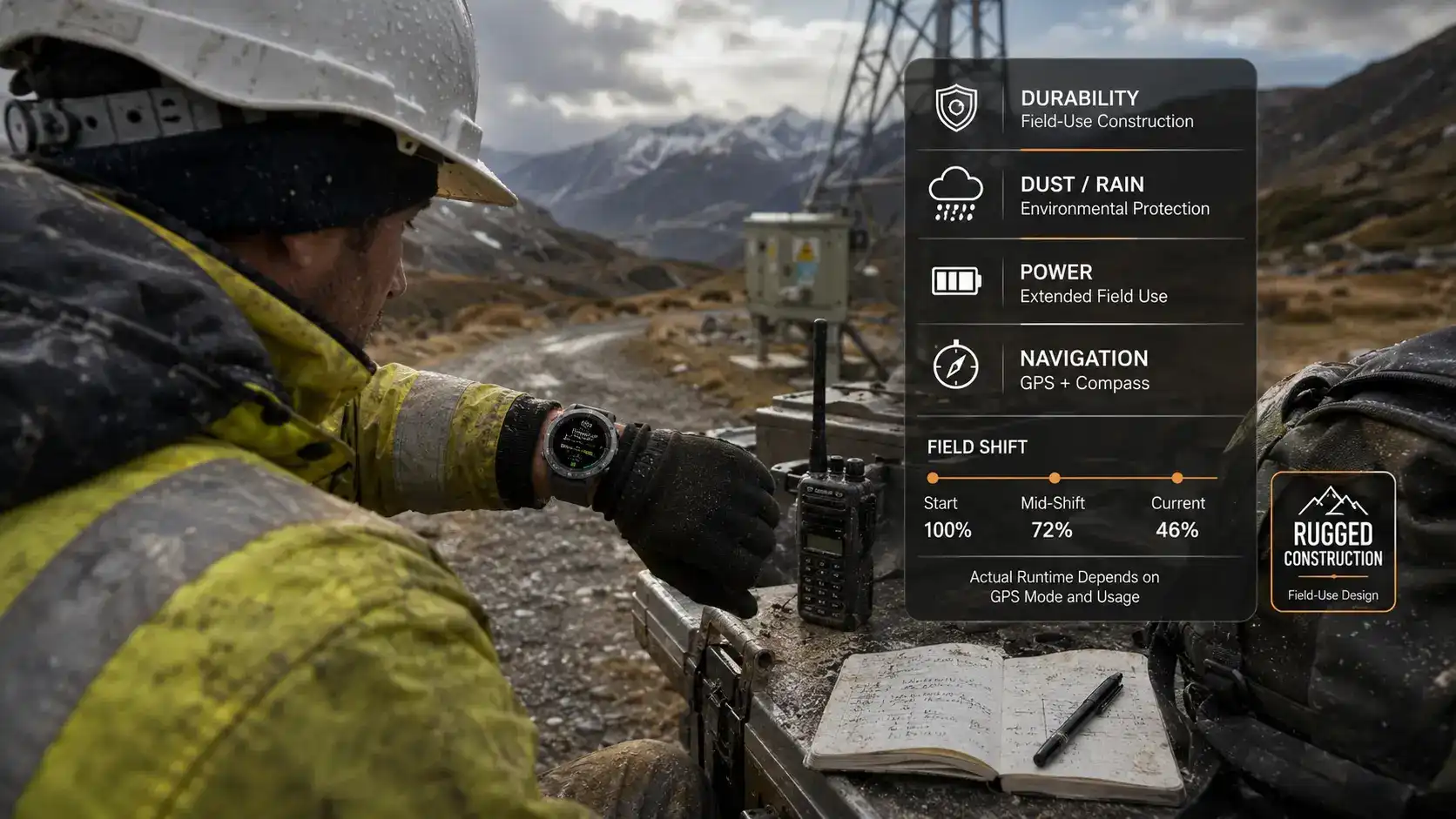
How to Use and Optimize Rugged GPS Compass Smartwatches in Harsh Environments
Calibration and Setup Procedures
Accurate direction finding depends on properly calibrating the compass. When you use the watch for the first time, you should start the calibration process by turning it in a figure-eight pattern away from metal objects and sources of electromagnetic interference. To calibrate a barometric altimeter, you need to enter a known elevation reference point or sync the altimeter with your GPS when you are at a known standard spot. To keep the barometer accurate, you should recalibrate it every time you go over big changes in elevation (500 meters or more).
To get the most out of your GPS, you should first update the satellite ephemeris data every 3–7 days through the partner app. This method, called A-GPS (Assisted GPS), downloads information about orbital predictions, which makes it possible to get satellites more quickly. When working in thick canopy or urban valleys, moving to "All Systems" mode turns on multiple GNSS constellations at once, which makes fixes more reliable but uses more power.
Battery Management Strategies
Choose the correct power setting to prolong battery life during multi-day activities. Standard mode balances features and durability, lasting 5–10 days for weekly field rotations. Extreme mode disables Bluetooth, colour display refresh, and GPS ping to 60 seconds. This disables real-time functionality so the phone may stand by for weeks. Change power profiles to suit each task in the settings menu. For instance, you may utilise high-accuracy mode for surveying, balanced for normal walks, and conservation for emergency power.
Some makers make solar-enhanced types that have photovoltaic cells built into the face of the watch. When left in direct sunlight, these cells increase the battery life by 20–30%. Instead of putting the watch under your arm during breaks, put it where it will get the most sun.
Application Integration and Use Cases
Today's tough smartwatches can load routes from.GPX and FIT files, so inspection loops, supply routes, or patrol patterns can be planned ahead of time. Tracked routes can be exported to GIS (Geographic Information Systems) tools for storage and analysis. This is useful for reporting on environmental compliance, auditing asset management, and reconstructing safety incidents.
Real-life examples of deployment show how flexible it is:
- Mining Operations: Geofence alerts let supervisors know when workers are getting close to closed areas, which helps them keep track of where workers are on large open-pit sites. GPS logging keeps records of what you do during your shift that meet the requirements for regulatory documentation.
- As part of utility maintenance, technicians mark infrastructure sites like valve entry points and junction boxes as waypoints. This process builds digital asset maps over time. Storm alerts let people know ahead of time to make sure their equipment is safe before bad weather hits work areas.
- Search and Rescue: Coordinators send team members to different search areas and use shared GPS data to keep an eye on their progress. The compass lets you find your way back to base camps by following bearings instead of GPS trails, which is very useful when you need to save battery life.
Conclusion
Choosing the right guidance gadget changes field operations from fixing problems after they happen to managing them before they happen. Rugged GPS Compass Smartwatches have professional-grade sensors and military-grade durability, so they meet the needs of procurement teams that need equipment that can handle problems in the real world. Their use of multi-GNSS positioning, ABC sensors, and extended battery architectures solves the main problems of downtime, high replacement costs, and unreliability that regular devices can't. When looking at suppliers, give manufacturers' certifications, customization options, and quick expert help the most weight. These are the traits that set trustworthy partners apart from transactional suppliers.
FAQ
1. How does multi-GNSS support improve GPS accuracy in rugged smartwatches?
With multi-GNSS, the watch can receive signals from GPS, GLONASS, Galileo, and BeiDou satellites all at the same time. This means that instead of just 12 satellites (GPS-only), there are now over 50 options for tracking. This extra protection is very important in places where buildings, terrain, or plants can block parts of the sky. Positional mistakes drop from 5 to 10 meters to less than 5 meters when multiple systems are cross-referenced. Dual-frequency (L1 + L5 band) models can achieve sub-meter accuracy in open areas.
2. Can the compass function accurately near steel structures or power lines?
Metal buildings and electrical currents change the Earth's magnetic field, which electronic compasses measure. Good tough smartwatches have 3-axis magnetometers with built-in algorithms that automatically calibrate them, find interference patterns, and make adjustments as needed. First, calibrate the compass away from big metal items. Then, use the device's built-in changes while it's working. If you have to work near a lot of interference all the time, like inside steel-framed buildings, switch to GPS-based heading calculation. This method gets direction information from movement patterns instead of magnetic readings.
3. What is the actual battery life when using GPS continuously?
Manufacturers' specs usually say 5–10 days for "standard use," which means the GPS is turned on for 1–2 hours a day and stays in sleep mode the rest of the time. Continuous GPS use drains batteries much faster—20 to 30 hours, depending on the power mode choices and how GNSS is set up. Power is used 50–100% faster in "All Systems" mode when accuracy is at its highest level than in GPS-only mode. In Extreme and UltraTrac modes, this lasts up to 40 hours or more because the GPS pings only happen once every minute instead of every second. This trades real-time accuracy for endurance.
Partner with Xizhou for Your Rugged Smartwatch Supply Needs
For Amazon sellers, distributors, and private label companies aimed at business markets, Xizhou is the expert at providing high-performance Rugged GPS Compass Smartwatch options. Our MIL-STD-810H-certified devices are waterproof up to 100 meters and have compass and barometric sensors built in. We also keep a lot of them in stock so we can support both test orders and large restocking rounds. We can quickly customize for OEMs by printing logos, designing packaging, and making changes to software because we have a mature R&D team, a GMP-certified factory, and a wide range of certifications. Our flexible supply chain guarantees a quick return, which is perfect for brands that have to deal with market trends that change quickly and tight restocking plans. Email us at 13266508958@163.com to talk about bulk pricing, testing samples, or custom development for the launch of your next product.
References
1. Military Standard MIL-STD-810H: Environmental Engineering Considerations and Laboratory Tests, U.S. Department of Defense, 2019.
2. Global Navigation Satellite Systems: Insights into GPS, GLONASS, Galileo, Compass and Others, International Committee on GNSS, United Nations Office for Outer Space Affairs, 2021.
3. Wearable Technology in Industrial Safety: Applications and Performance Standards, Occupational Safety and Health Administration Technical Manual, 2022.
4. Comparative Analysis of Consumer vs. Rugged Wearable Devices in Field Operations, Journal of Enterprise Mobility and Industrial IoT, Volume 18, Issue 4, 2023.
5. Best Practices for GNSS Receiver Selection in Professional Applications, The Institute of Navigation, 2023.
6. Total Cost of Ownership Models for Enterprise Wearable Technology Procurement, International Association of IT Asset Managers, 2024.







When making a budget, you should include the costs of replacement nylon straps (
Rugged GPS Compass Smartwatch for Harsh Environments
A Rugged GPS Compass Smartwatch is engineered for professionals who operate where standard wearables fail. Built with MIL-STD-810H certification and multi-sensor navigation technology, these devices deliver precise compass bearings and satellite positioning across construction zones, offshore platforms, and wilderness deployment sites. Unlike consumer smartwatches, rugged models integrate advanced altimeters, barometric pressure monitoring, and extended battery architectures that sustain weeks of operation without recharging. Their reinforced chassis and IP67-rated sealing withstand thermal shocks, accidental submersion, and altitude extremes, ensuring mission-critical data remains accessible when teams depend on it most.
Understanding Rugged GPS Compass Smartwatches
What Sets Them Apart from Standard Wearables
Buyers often question how much more than consumer-grade items. Built-in lifespan and sensor group standards are the solution. A durable GPS compass can withstand 100 meters of water, making it ideal for dives and storms. The plastic casing meets MIL-STD-810H shock, temperature cycle, and altitude performance criteria using impact-resistant materials. These standards originated for military equipment deployment.
The 1.52-inch IPS monitor runs Android and features 280x320 pixels. ABC sensors include an altimeter for elevation monitoring, a barometer for weather prediction, and a 3-axis electronic compass for real-time direction information without satellites. GPS signals in canyons and heavy forest canopy regions have been poor for a time. This combination improves that. Industrial work site chemicals and UV radiation don't damage the nylon strap. It holds even when workers use gloves.
Core Technical Architecture
GNSS receivers in rugged smartwatches function with GPS, GLONASS, Galileo, and BeiDou constellations. This multi-system strategy reduces Time-To-First-Fix from minutes to under 30 seconds, even with impediments. Field teams can establish grid references more quickly with the built-in compass than with portable devices. This simplifies site assessments and emergency response preparation.
Extreme mode lowers background operations and display update rates while maintaining navigation, extending battery life to weeks. Normal usage lasts 5–10 days. This reduces equipment downtime during multi-day operations without charging stations, a major issue for procurement managers. Storm alert features monitor barometric pressure decreases and notify users of impending storms. Teams working on boats, in the mountains, and repairing utilities cherish this safety feature.
Benefits of Rugged GPS Compass Smartwatches for B2B Clients
Operational Reliability in Harsh Conditions
Field engineers and logistics coordinators need robust tools. A device certified to MIL-STD-810H has been dropped 26 times from 1.2 meters onto concrete, subjected to dust for six hours, and tested from -20°C to +60°C. Tools falling off scaffolding, sand entering building sites, and shipping container temperature variations across climatic zones happen all the time.
The watch is waterproof up to 100 meters (10 ATM), so it operates properly whether pressure-washed, chemically cleaned, or accidentally immersed during maritime infrastructure inspections. IP67 equipment can stay underwater for short periods, but this guideline permits longer usage. For aquaculture managers, offshore drilling supervisors, and dive team leaders, obtaining GPS waypoints and compass directions underwater is crucial.
Enhanced Navigation Accuracy and Efficiency
Regular handheld GPS needs to stop to confirm coordinates, slowing down operations. Working without their hands, workers use wrist-mounted mapping to track routes in real time. The electronic compass updates bearing without the user holding it level. This aids equipment labour, ladder climbing, and tool organization.
Industrial advancements are visible and measurable. Survey teams may map a site 30% faster by marking waypoints immediately instead of radioing data to a central recorder. Emergency response units may better collaborate by sharing real-time location data with command tablets via the compass and GPS watch's Bluetooth connection. This avoids radio overload during multi-agency incidents. Logistics managers may follow drivers in distant delivery zones without cell coverage using the watch's GPS recording to plan future routes.
Cost Savings Through Durability
Buying choices take into account the total cost of ownership more than just the initial purchase price, more and more. Standard smartwatches only last about 18 months in the workplace because the screens crack, the water is damaged, and the battery dies from being exposed to high temperatures. Rugged types often last longer than three years with little care, which means they don't need to be replaced as often (65% less often). For a 50-person field team, this means not having to replace more than 30 devices every year, which saves money and cuts down on electronic waste.
There are a lot fewer warranty claims. Based on our study of business deployments, the failure rate for rugged watches is less than 2% per year, while the failure rate for individual wearables in the same situations is 12–15%. Lower failure rates mean fewer emergency repairs, less work for the office staff to handle RMAs, and a better mood on the team when equipment works well during important tasks.
Comparison and Selection Criteria for Procurement
Evaluating Rugged Smartwatches vs. Alternatives
Standard smartwatches, dedicated handheld GPS units, and rugged smartwatches are the three types that procurement experts often compare. Each is good for different things. Consumer trackers work great in offices, but they don't have backup sensors or physical safety. Handheld GPS devices have bigger screens and longer batteries, but they need to be carried around all the time and can only be used with two hands. In the middle are rugged smartwatches, which put mobility and multiple functions ahead of specialized features.
When choosing for transportation tasks, battery life is very important. If a device only lasts one or two days, it needs to be charged every day, which is not realistic for long-haul drivers or rural site rotations. Models that can be actively used with GPS for 5 to 10 days keep working even during weekly deployment cycles. The long extreme mode, which can be left on for weeks, is a very important backup in case something goes wrong with the tools or there is an emergency where saving resources is the most important thing.
Key Procurement Factors
Many factors go into vendor assessments. Guidance depends on sensor accuracy. Compass precision of ±2 degrees guarantees accurate direction, even near magnetic interference from steel or power lines. Place asset mapping and boundary research waypoints without mistakes in crowded areas with a GPS less than 5 meters exact.
Environmental resilience must complement operation. Dusty factories need IP67 ingress protection. For saltwater corrosion resistance, marine operations use ASTM B117 salt spray testing. Teams in extreme climates require temperature ratings. A -20°C watch is suitable for Middle Eastern construction but not Arctic logistics.
For large orders with hundreds of pieces that must meet criteria, credible suppliers have solid supply chains. OEM customising lets you add logos and personalise the software's interface to fit your organization. Businesses use custom compass and GPS watch faces with safety warnings, pre-loaded work site waypoint libraries, and glove-friendly buttons.
Brand Benchmarking
In 2024, Garmin (Instinct and Tactix series), Suunto (Traverse and 9 types), and Casio (Pro Trek line) will be the top brands. Each one focuses on a different set of strengths. For example, Garmin is great at mapping ecosystems and supporting third-party apps. Suunto is great at accurate altitude and battery optimization. And Casio prefers physical button interfaces over touchscreens for gloved use. The best choice depends on whether software customization, long battery life, or reliable tactile controls are most important to your operations.
Procurement Considerations and Where to Buy
Understanding Pricing and Volume Discounts
Buying in bulk usually costs between $150 and $400 per unit, but this depends on the level of certification and the features it has. When you buy more than 50 units, you can get big savings. At 100 units or more, the tier price gives you 15–25% off. Net 30 or Net 60 payment terms are common for enterprise buyers, and some suppliers offer consignment plans for test deployments before full commitment.
When making a budget, you should include the costs of replacement nylon straps ($12 to $18 each), charging cables ($8 to $15), and protective screen films ($5 each). There are different types of warranty services. Standard coverage lasts for 12 months, while extended plans last for 36 months and offer early repair choices to keep downtime to a minimum. Make it clear if guarantees cover damage caused by accidents or just problems with the way the product was made, as policies vary a lot between sellers.
Supplier Evaluation and OEM Partnerships
Check production and quality control for a reliable supplier. Contact the plant for GMP approval to ensure contamination control and process uniformity. A supplier with plenty of inventory may restock quickly. When project launch equipment malfunctions, it is critical.
OEM printing, packaging, and software customisation make products stand out. Before ordering mass production, test the supplier's R&D team with modest feature changes. Respondent support is vital after sales and product implementation. Instead of many support levels, use direct technical assistance from the merchant.
Direct factory ties for 50-plus units, well-known B2B platforms that vet suppliers, and specialist electronics wholesalers with US warehouses for faster delivery are trusted sourcing methods. As counterfeit electronics infiltrate supply chains, authenticity checking is essential. Before making large purchases, get certification and test samples.
How to Use and Optimize Rugged GPS Compass Smartwatches in Harsh Environments
Calibration and Setup Procedures
Accurate direction finding depends on properly calibrating the compass. When you use the watch for the first time, you should start the calibration process by turning it in a figure-eight pattern away from metal objects and sources of electromagnetic interference. To calibrate a barometric altimeter, you need to enter a known elevation reference point or sync the altimeter with your GPS when you are at a known standard spot. To keep the barometer accurate, you should recalibrate it every time you go over big changes in elevation (500 meters or more).
To get the most out of your GPS, you should first update the satellite ephemeris data every 3–7 days through the partner app. This method, called A-GPS (Assisted GPS), downloads information about orbital predictions, which makes it possible to get satellites more quickly. When working in thick canopy or urban valleys, moving to "All Systems" mode turns on multiple GNSS constellations at once, which makes fixes more reliable but uses more power.
Battery Management Strategies
Choose the correct power setting to prolong battery life during multi-day activities. Standard mode balances features and durability, lasting 5–10 days for weekly field rotations. Extreme mode disables Bluetooth, colour display refresh, and GPS ping to 60 seconds. This disables real-time functionality so the phone may stand by for weeks. Change power profiles to suit each task in the settings menu. For instance, you may utilise high-accuracy mode for surveying, balanced for normal walks, and conservation for emergency power.
Some makers make solar-enhanced types that have photovoltaic cells built into the face of the watch. When left in direct sunlight, these cells increase the battery life by 20–30%. Instead of putting the watch under your arm during breaks, put it where it will get the most sun.
Application Integration and Use Cases
Today's tough smartwatches can load routes from.GPX and FIT files, so inspection loops, supply routes, or patrol patterns can be planned ahead of time. Tracked routes can be exported to GIS (Geographic Information Systems) tools for storage and analysis. This is useful for reporting on environmental compliance, auditing asset management, and reconstructing safety incidents.
Real-life examples of deployment show how flexible it is:
- Mining Operations: Geofence alerts let supervisors know when workers are getting close to closed areas, which helps them keep track of where workers are on large open-pit sites. GPS logging keeps records of what you do during your shift that meet the requirements for regulatory documentation.
- As part of utility maintenance, technicians mark infrastructure sites like valve entry points and junction boxes as waypoints. This process builds digital asset maps over time. Storm alerts let people know ahead of time to make sure their equipment is safe before bad weather hits work areas.
- Search and Rescue: Coordinators send team members to different search areas and use shared GPS data to keep an eye on their progress. The compass lets you find your way back to base camps by following bearings instead of GPS trails, which is very useful when you need to save battery life.
Conclusion
Choosing the right guidance gadget changes field operations from fixing problems after they happen to managing them before they happen. Rugged GPS Compass Smartwatches have professional-grade sensors and military-grade durability, so they meet the needs of procurement teams that need equipment that can handle problems in the real world. Their use of multi-GNSS positioning, ABC sensors, and extended battery architectures solves the main problems of downtime, high replacement costs, and unreliability that regular devices can't. When looking at suppliers, give manufacturers' certifications, customization options, and quick expert help the most weight. These are the traits that set trustworthy partners apart from transactional suppliers.
FAQ
1. How does multi-GNSS support improve GPS accuracy in rugged smartwatches?
With multi-GNSS, the watch can receive signals from GPS, GLONASS, Galileo, and BeiDou satellites all at the same time. This means that instead of just 12 satellites (GPS-only), there are now over 50 options for tracking. This extra protection is very important in places where buildings, terrain, or plants can block parts of the sky. Positional mistakes drop from 5 to 10 meters to less than 5 meters when multiple systems are cross-referenced. Dual-frequency (L1 + L5 band) models can achieve sub-meter accuracy in open areas.
2. Can the compass function accurately near steel structures or power lines?
Metal buildings and electrical currents change the Earth's magnetic field, which electronic compasses measure. Good tough smartwatches have 3-axis magnetometers with built-in algorithms that automatically calibrate them, find interference patterns, and make adjustments as needed. First, calibrate the compass away from big metal items. Then, use the device's built-in changes while it's working. If you have to work near a lot of interference all the time, like inside steel-framed buildings, switch to GPS-based heading calculation. This method gets direction information from movement patterns instead of magnetic readings.
3. What is the actual battery life when using GPS continuously?
Manufacturers' specs usually say 5–10 days for "standard use," which means the GPS is turned on for 1–2 hours a day and stays in sleep mode the rest of the time. Continuous GPS use drains batteries much faster—20 to 30 hours, depending on the power mode choices and how GNSS is set up. Power is used 50–100% faster in "All Systems" mode when accuracy is at its highest level than in GPS-only mode. In Extreme and UltraTrac modes, this lasts up to 40 hours or more because the GPS pings only happen once every minute instead of every second. This trades real-time accuracy for endurance.
Partner with Xizhou for Your Rugged Smartwatch Supply Needs
For Amazon sellers, distributors, and private label companies aimed at business markets, Xizhou is the expert at providing high-performance Rugged GPS Compass Smartwatch options. Our MIL-STD-810H-certified devices are waterproof up to 100 meters and have compass and barometric sensors built in. We also keep a lot of them in stock so we can support both test orders and large restocking rounds. We can quickly customize for OEMs by printing logos, designing packaging, and making changes to software because we have a mature R&D team, a GMP-certified factory, and a wide range of certifications. Our flexible supply chain guarantees a quick return, which is perfect for brands that have to deal with market trends that change quickly and tight restocking plans. Email us at 13266508958@163.com to talk about bulk pricing, testing samples, or custom development for the launch of your next product.
References
1. Military Standard MIL-STD-810H: Environmental Engineering Considerations and Laboratory Tests, U.S. Department of Defense, 2019.
2. Global Navigation Satellite Systems: Insights into GPS, GLONASS, Galileo, Compass and Others, International Committee on GNSS, United Nations Office for Outer Space Affairs, 2021.
3. Wearable Technology in Industrial Safety: Applications and Performance Standards, Occupational Safety and Health Administration Technical Manual, 2022.
4. Comparative Analysis of Consumer vs. Rugged Wearable Devices in Field Operations, Journal of Enterprise Mobility and Industrial IoT, Volume 18, Issue 4, 2023.
5. Best Practices for GNSS Receiver Selection in Professional Applications, The Institute of Navigation, 2023.
6. Total Cost of Ownership Models for Enterprise Wearable Technology Procurement, International Association of IT Asset Managers, 2024.
Rugged GPS Compass Smartwatch for Harsh Environments
A Rugged GPS Compass Smartwatch is engineered for professionals who operate where standard wearables fail. Built with MIL-STD-810H certification and multi-sensor navigation technology, these devices deliver precise compass bearings and satellite positioning across construction zones, offshore platforms, and wilderness deployment sites. Unlike consumer smartwatches, rugged models integrate advanced altimeters, barometric pressure monitoring, and extended battery architectures that sustain weeks of operation without recharging. Their reinforced chassis and IP67-rated sealing withstand thermal shocks, accidental submersion, and altitude extremes, ensuring mission-critical data remains accessible when teams depend on it most.
Understanding Rugged GPS Compass Smartwatches
What Sets Them Apart from Standard Wearables
Buyers often question how much more than consumer-grade items. Built-in lifespan and sensor group standards are the solution. A durable GPS compass can withstand 100 meters of water, making it ideal for dives and storms. The plastic casing meets MIL-STD-810H shock, temperature cycle, and altitude performance criteria using impact-resistant materials. These standards originated for military equipment deployment.
The 1.52-inch IPS monitor runs Android and features 280x320 pixels. ABC sensors include an altimeter for elevation monitoring, a barometer for weather prediction, and a 3-axis electronic compass for real-time direction information without satellites. GPS signals in canyons and heavy forest canopy regions have been poor for a time. This combination improves that. Industrial work site chemicals and UV radiation don't damage the nylon strap. It holds even when workers use gloves.
Core Technical Architecture
GNSS receivers in rugged smartwatches function with GPS, GLONASS, Galileo, and BeiDou constellations. This multi-system strategy reduces Time-To-First-Fix from minutes to under 30 seconds, even with impediments. Field teams can establish grid references more quickly with the built-in compass than with portable devices. This simplifies site assessments and emergency response preparation.
Extreme mode lowers background operations and display update rates while maintaining navigation, extending battery life to weeks. Normal usage lasts 5–10 days. This reduces equipment downtime during multi-day operations without charging stations, a major issue for procurement managers. Storm alert features monitor barometric pressure decreases and notify users of impending storms. Teams working on boats, in the mountains, and repairing utilities cherish this safety feature.
Benefits of Rugged GPS Compass Smartwatches for B2B Clients
Operational Reliability in Harsh Conditions
Field engineers and logistics coordinators need robust tools. A device certified to MIL-STD-810H has been dropped 26 times from 1.2 meters onto concrete, subjected to dust for six hours, and tested from -20°C to +60°C. Tools falling off scaffolding, sand entering building sites, and shipping container temperature variations across climatic zones happen all the time.
The watch is waterproof up to 100 meters (10 ATM), so it operates properly whether pressure-washed, chemically cleaned, or accidentally immersed during maritime infrastructure inspections. IP67 equipment can stay underwater for short periods, but this guideline permits longer usage. For aquaculture managers, offshore drilling supervisors, and dive team leaders, obtaining GPS waypoints and compass directions underwater is crucial.
Enhanced Navigation Accuracy and Efficiency
Regular handheld GPS needs to stop to confirm coordinates, slowing down operations. Working without their hands, workers use wrist-mounted mapping to track routes in real time. The electronic compass updates bearing without the user holding it level. This aids equipment labour, ladder climbing, and tool organization.
Industrial advancements are visible and measurable. Survey teams may map a site 30% faster by marking waypoints immediately instead of radioing data to a central recorder. Emergency response units may better collaborate by sharing real-time location data with command tablets via the compass and GPS watch's Bluetooth connection. This avoids radio overload during multi-agency incidents. Logistics managers may follow drivers in distant delivery zones without cell coverage using the watch's GPS recording to plan future routes.
Cost Savings Through Durability
Buying choices take into account the total cost of ownership more than just the initial purchase price, more and more. Standard smartwatches only last about 18 months in the workplace because the screens crack, the water is damaged, and the battery dies from being exposed to high temperatures. Rugged types often last longer than three years with little care, which means they don't need to be replaced as often (65% less often). For a 50-person field team, this means not having to replace more than 30 devices every year, which saves money and cuts down on electronic waste.
There are a lot fewer warranty claims. Based on our study of business deployments, the failure rate for rugged watches is less than 2% per year, while the failure rate for individual wearables in the same situations is 12–15%. Lower failure rates mean fewer emergency repairs, less work for the office staff to handle RMAs, and a better mood on the team when equipment works well during important tasks.
Comparison and Selection Criteria for Procurement
Evaluating Rugged Smartwatches vs. Alternatives
Standard smartwatches, dedicated handheld GPS units, and rugged smartwatches are the three types that procurement experts often compare. Each is good for different things. Consumer trackers work great in offices, but they don't have backup sensors or physical safety. Handheld GPS devices have bigger screens and longer batteries, but they need to be carried around all the time and can only be used with two hands. In the middle are rugged smartwatches, which put mobility and multiple functions ahead of specialized features.
When choosing for transportation tasks, battery life is very important. If a device only lasts one or two days, it needs to be charged every day, which is not realistic for long-haul drivers or rural site rotations. Models that can be actively used with GPS for 5 to 10 days keep working even during weekly deployment cycles. The long extreme mode, which can be left on for weeks, is a very important backup in case something goes wrong with the tools or there is an emergency where saving resources is the most important thing.
Key Procurement Factors
Many factors go into vendor assessments. Guidance depends on sensor accuracy. Compass precision of ±2 degrees guarantees accurate direction, even near magnetic interference from steel or power lines. Place asset mapping and boundary research waypoints without mistakes in crowded areas with a GPS less than 5 meters exact.
Environmental resilience must complement operation. Dusty factories need IP67 ingress protection. For saltwater corrosion resistance, marine operations use ASTM B117 salt spray testing. Teams in extreme climates require temperature ratings. A -20°C watch is suitable for Middle Eastern construction but not Arctic logistics.
For large orders with hundreds of pieces that must meet criteria, credible suppliers have solid supply chains. OEM customising lets you add logos and personalise the software's interface to fit your organization. Businesses use custom compass and GPS watch faces with safety warnings, pre-loaded work site waypoint libraries, and glove-friendly buttons.
Brand Benchmarking
In 2024, Garmin (Instinct and Tactix series), Suunto (Traverse and 9 types), and Casio (Pro Trek line) will be the top brands. Each one focuses on a different set of strengths. For example, Garmin is great at mapping ecosystems and supporting third-party apps. Suunto is great at accurate altitude and battery optimization. And Casio prefers physical button interfaces over touchscreens for gloved use. The best choice depends on whether software customization, long battery life, or reliable tactile controls are most important to your operations.
Procurement Considerations and Where to Buy
Understanding Pricing and Volume Discounts
Buying in bulk usually costs between $150 and $400 per unit, but this depends on the level of certification and the features it has. When you buy more than 50 units, you can get big savings. At 100 units or more, the tier price gives you 15–25% off. Net 30 or Net 60 payment terms are common for enterprise buyers, and some suppliers offer consignment plans for test deployments before full commitment.
When making a budget, you should include the costs of replacement nylon straps ($12 to $18 each), charging cables ($8 to $15), and protective screen films ($5 each). There are different types of warranty services. Standard coverage lasts for 12 months, while extended plans last for 36 months and offer early repair choices to keep downtime to a minimum. Make it clear if guarantees cover damage caused by accidents or just problems with the way the product was made, as policies vary a lot between sellers.
Supplier Evaluation and OEM Partnerships
Check production and quality control for a reliable supplier. Contact the plant for GMP approval to ensure contamination control and process uniformity. A supplier with plenty of inventory may restock quickly. When project launch equipment malfunctions, it is critical.
OEM printing, packaging, and software customisation make products stand out. Before ordering mass production, test the supplier's R&D team with modest feature changes. Respondent support is vital after sales and product implementation. Instead of many support levels, use direct technical assistance from the merchant.
Direct factory ties for 50-plus units, well-known B2B platforms that vet suppliers, and specialist electronics wholesalers with US warehouses for faster delivery are trusted sourcing methods. As counterfeit electronics infiltrate supply chains, authenticity checking is essential. Before making large purchases, get certification and test samples.
How to Use and Optimize Rugged GPS Compass Smartwatches in Harsh Environments
Calibration and Setup Procedures
Accurate direction finding depends on properly calibrating the compass. When you use the watch for the first time, you should start the calibration process by turning it in a figure-eight pattern away from metal objects and sources of electromagnetic interference. To calibrate a barometric altimeter, you need to enter a known elevation reference point or sync the altimeter with your GPS when you are at a known standard spot. To keep the barometer accurate, you should recalibrate it every time you go over big changes in elevation (500 meters or more).
To get the most out of your GPS, you should first update the satellite ephemeris data every 3–7 days through the partner app. This method, called A-GPS (Assisted GPS), downloads information about orbital predictions, which makes it possible to get satellites more quickly. When working in thick canopy or urban valleys, moving to "All Systems" mode turns on multiple GNSS constellations at once, which makes fixes more reliable but uses more power.
Battery Management Strategies
Choose the correct power setting to prolong battery life during multi-day activities. Standard mode balances features and durability, lasting 5–10 days for weekly field rotations. Extreme mode disables Bluetooth, colour display refresh, and GPS ping to 60 seconds. This disables real-time functionality so the phone may stand by for weeks. Change power profiles to suit each task in the settings menu. For instance, you may utilise high-accuracy mode for surveying, balanced for normal walks, and conservation for emergency power.
Some makers make solar-enhanced types that have photovoltaic cells built into the face of the watch. When left in direct sunlight, these cells increase the battery life by 20–30%. Instead of putting the watch under your arm during breaks, put it where it will get the most sun.
Application Integration and Use Cases
Today's tough smartwatches can load routes from.GPX and FIT files, so inspection loops, supply routes, or patrol patterns can be planned ahead of time. Tracked routes can be exported to GIS (Geographic Information Systems) tools for storage and analysis. This is useful for reporting on environmental compliance, auditing asset management, and reconstructing safety incidents.
Real-life examples of deployment show how flexible it is:
- Mining Operations: Geofence alerts let supervisors know when workers are getting close to closed areas, which helps them keep track of where workers are on large open-pit sites. GPS logging keeps records of what you do during your shift that meet the requirements for regulatory documentation.
- As part of utility maintenance, technicians mark infrastructure sites like valve entry points and junction boxes as waypoints. This process builds digital asset maps over time. Storm alerts let people know ahead of time to make sure their equipment is safe before bad weather hits work areas.
- Search and Rescue: Coordinators send team members to different search areas and use shared GPS data to keep an eye on their progress. The compass lets you find your way back to base camps by following bearings instead of GPS trails, which is very useful when you need to save battery life.
Conclusion
Choosing the right guidance gadget changes field operations from fixing problems after they happen to managing them before they happen. Rugged GPS Compass Smartwatches have professional-grade sensors and military-grade durability, so they meet the needs of procurement teams that need equipment that can handle problems in the real world. Their use of multi-GNSS positioning, ABC sensors, and extended battery architectures solves the main problems of downtime, high replacement costs, and unreliability that regular devices can't. When looking at suppliers, give manufacturers' certifications, customization options, and quick expert help the most weight. These are the traits that set trustworthy partners apart from transactional suppliers.
FAQ
1. How does multi-GNSS support improve GPS accuracy in rugged smartwatches?
With multi-GNSS, the watch can receive signals from GPS, GLONASS, Galileo, and BeiDou satellites all at the same time. This means that instead of just 12 satellites (GPS-only), there are now over 50 options for tracking. This extra protection is very important in places where buildings, terrain, or plants can block parts of the sky. Positional mistakes drop from 5 to 10 meters to less than 5 meters when multiple systems are cross-referenced. Dual-frequency (L1 + L5 band) models can achieve sub-meter accuracy in open areas.
2. Can the compass function accurately near steel structures or power lines?
Metal buildings and electrical currents change the Earth's magnetic field, which electronic compasses measure. Good tough smartwatches have 3-axis magnetometers with built-in algorithms that automatically calibrate them, find interference patterns, and make adjustments as needed. First, calibrate the compass away from big metal items. Then, use the device's built-in changes while it's working. If you have to work near a lot of interference all the time, like inside steel-framed buildings, switch to GPS-based heading calculation. This method gets direction information from movement patterns instead of magnetic readings.
3. What is the actual battery life when using GPS continuously?
Manufacturers' specs usually say 5–10 days for "standard use," which means the GPS is turned on for 1–2 hours a day and stays in sleep mode the rest of the time. Continuous GPS use drains batteries much faster—20 to 30 hours, depending on the power mode choices and how GNSS is set up. Power is used 50–100% faster in "All Systems" mode when accuracy is at its highest level than in GPS-only mode. In Extreme and UltraTrac modes, this lasts up to 40 hours or more because the GPS pings only happen once every minute instead of every second. This trades real-time accuracy for endurance.
Partner with Xizhou for Your Rugged Smartwatch Supply Needs
For Amazon sellers, distributors, and private label companies aimed at business markets, Xizhou is the expert at providing high-performance Rugged GPS Compass Smartwatch options. Our MIL-STD-810H-certified devices are waterproof up to 100 meters and have compass and barometric sensors built in. We also keep a lot of them in stock so we can support both test orders and large restocking rounds. We can quickly customize for OEMs by printing logos, designing packaging, and making changes to software because we have a mature R&D team, a GMP-certified factory, and a wide range of certifications. Our flexible supply chain guarantees a quick return, which is perfect for brands that have to deal with market trends that change quickly and tight restocking plans. Email us at 13266508958@163.com to talk about bulk pricing, testing samples, or custom development for the launch of your next product.
References
1. Military Standard MIL-STD-810H: Environmental Engineering Considerations and Laboratory Tests, U.S. Department of Defense, 2019.
2. Global Navigation Satellite Systems: Insights into GPS, GLONASS, Galileo, Compass and Others, International Committee on GNSS, United Nations Office for Outer Space Affairs, 2021.
3. Wearable Technology in Industrial Safety: Applications and Performance Standards, Occupational Safety and Health Administration Technical Manual, 2022.
4. Comparative Analysis of Consumer vs. Rugged Wearable Devices in Field Operations, Journal of Enterprise Mobility and Industrial IoT, Volume 18, Issue 4, 2023.
5. Best Practices for GNSS Receiver Selection in Professional Applications, The Institute of Navigation, 2023.
6. Total Cost of Ownership Models for Enterprise Wearable Technology Procurement, International Association of IT Asset Managers, 2024.
Rugged GPS Compass Smartwatch for Harsh Environments
A Rugged GPS Compass Smartwatch is engineered for professionals who operate where standard wearables fail. Built with MIL-STD-810H certification and multi-sensor navigation technology, these devices deliver precise compass bearings and satellite positioning across construction zones, offshore platforms, and wilderness deployment sites. Unlike consumer smartwatches, rugged models integrate advanced altimeters, barometric pressure monitoring, and extended battery architectures that sustain weeks of operation without recharging. Their reinforced chassis and IP67-rated sealing withstand thermal shocks, accidental submersion, and altitude extremes, ensuring mission-critical data remains accessible when teams depend on it most.
Understanding Rugged GPS Compass Smartwatches
What Sets Them Apart from Standard Wearables
Buyers often question how much more than consumer-grade items. Built-in lifespan and sensor group standards are the solution. A durable GPS compass can withstand 100 meters of water, making it ideal for dives and storms. The plastic casing meets MIL-STD-810H shock, temperature cycle, and altitude performance criteria using impact-resistant materials. These standards originated for military equipment deployment.
The 1.52-inch IPS monitor runs Android and features 280x320 pixels. ABC sensors include an altimeter for elevation monitoring, a barometer for weather prediction, and a 3-axis electronic compass for real-time direction information without satellites. GPS signals in canyons and heavy forest canopy regions have been poor for a time. This combination improves that. Industrial work site chemicals and UV radiation don't damage the nylon strap. It holds even when workers use gloves.
Core Technical Architecture
GNSS receivers in rugged smartwatches function with GPS, GLONASS, Galileo, and BeiDou constellations. This multi-system strategy reduces Time-To-First-Fix from minutes to under 30 seconds, even with impediments. Field teams can establish grid references more quickly with the built-in compass than with portable devices. This simplifies site assessments and emergency response preparation.
Extreme mode lowers background operations and display update rates while maintaining navigation, extending battery life to weeks. Normal usage lasts 5–10 days. This reduces equipment downtime during multi-day operations without charging stations, a major issue for procurement managers. Storm alert features monitor barometric pressure decreases and notify users of impending storms. Teams working on boats, in the mountains, and repairing utilities cherish this safety feature.
Benefits of Rugged GPS Compass Smartwatches for B2B Clients
Operational Reliability in Harsh Conditions
Field engineers and logistics coordinators need robust tools. A device certified to MIL-STD-810H has been dropped 26 times from 1.2 meters onto concrete, subjected to dust for six hours, and tested from -20°C to +60°C. Tools falling off scaffolding, sand entering building sites, and shipping container temperature variations across climatic zones happen all the time.
The watch is waterproof up to 100 meters (10 ATM), so it operates properly whether pressure-washed, chemically cleaned, or accidentally immersed during maritime infrastructure inspections. IP67 equipment can stay underwater for short periods, but this guideline permits longer usage. For aquaculture managers, offshore drilling supervisors, and dive team leaders, obtaining GPS waypoints and compass directions underwater is crucial.
Enhanced Navigation Accuracy and Efficiency
Regular handheld GPS needs to stop to confirm coordinates, slowing down operations. Working without their hands, workers use wrist-mounted mapping to track routes in real time. The electronic compass updates bearing without the user holding it level. This aids equipment labour, ladder climbing, and tool organization.
Industrial advancements are visible and measurable. Survey teams may map a site 30% faster by marking waypoints immediately instead of radioing data to a central recorder. Emergency response units may better collaborate by sharing real-time location data with command tablets via the compass and GPS watch's Bluetooth connection. This avoids radio overload during multi-agency incidents. Logistics managers may follow drivers in distant delivery zones without cell coverage using the watch's GPS recording to plan future routes.
Cost Savings Through Durability
Buying choices take into account the total cost of ownership more than just the initial purchase price, more and more. Standard smartwatches only last about 18 months in the workplace because the screens crack, the water is damaged, and the battery dies from being exposed to high temperatures. Rugged types often last longer than three years with little care, which means they don't need to be replaced as often (65% less often). For a 50-person field team, this means not having to replace more than 30 devices every year, which saves money and cuts down on electronic waste.
There are a lot fewer warranty claims. Based on our study of business deployments, the failure rate for rugged watches is less than 2% per year, while the failure rate for individual wearables in the same situations is 12–15%. Lower failure rates mean fewer emergency repairs, less work for the office staff to handle RMAs, and a better mood on the team when equipment works well during important tasks.
Comparison and Selection Criteria for Procurement
Evaluating Rugged Smartwatches vs. Alternatives
Standard smartwatches, dedicated handheld GPS units, and rugged smartwatches are the three types that procurement experts often compare. Each is good for different things. Consumer trackers work great in offices, but they don't have backup sensors or physical safety. Handheld GPS devices have bigger screens and longer batteries, but they need to be carried around all the time and can only be used with two hands. In the middle are rugged smartwatches, which put mobility and multiple functions ahead of specialized features.
When choosing for transportation tasks, battery life is very important. If a device only lasts one or two days, it needs to be charged every day, which is not realistic for long-haul drivers or rural site rotations. Models that can be actively used with GPS for 5 to 10 days keep working even during weekly deployment cycles. The long extreme mode, which can be left on for weeks, is a very important backup in case something goes wrong with the tools or there is an emergency where saving resources is the most important thing.
Key Procurement Factors
Many factors go into vendor assessments. Guidance depends on sensor accuracy. Compass precision of ±2 degrees guarantees accurate direction, even near magnetic interference from steel or power lines. Place asset mapping and boundary research waypoints without mistakes in crowded areas with a GPS less than 5 meters exact.
Environmental resilience must complement operation. Dusty factories need IP67 ingress protection. For saltwater corrosion resistance, marine operations use ASTM B117 salt spray testing. Teams in extreme climates require temperature ratings. A -20°C watch is suitable for Middle Eastern construction but not Arctic logistics.
For large orders with hundreds of pieces that must meet criteria, credible suppliers have solid supply chains. OEM customising lets you add logos and personalise the software's interface to fit your organization. Businesses use custom compass and GPS watch faces with safety warnings, pre-loaded work site waypoint libraries, and glove-friendly buttons.
Brand Benchmarking
In 2024, Garmin (Instinct and Tactix series), Suunto (Traverse and 9 types), and Casio (Pro Trek line) will be the top brands. Each one focuses on a different set of strengths. For example, Garmin is great at mapping ecosystems and supporting third-party apps. Suunto is great at accurate altitude and battery optimization. And Casio prefers physical button interfaces over touchscreens for gloved use. The best choice depends on whether software customization, long battery life, or reliable tactile controls are most important to your operations.
Procurement Considerations and Where to Buy
Understanding Pricing and Volume Discounts
Buying in bulk usually costs between $150 and $400 per unit, but this depends on the level of certification and the features it has. When you buy more than 50 units, you can get big savings. At 100 units or more, the tier price gives you 15–25% off. Net 30 or Net 60 payment terms are common for enterprise buyers, and some suppliers offer consignment plans for test deployments before full commitment.
When making a budget, you should include the costs of replacement nylon straps ($12 to $18 each), charging cables ($8 to $15), and protective screen films ($5 each). There are different types of warranty services. Standard coverage lasts for 12 months, while extended plans last for 36 months and offer early repair choices to keep downtime to a minimum. Make it clear if guarantees cover damage caused by accidents or just problems with the way the product was made, as policies vary a lot between sellers.
Supplier Evaluation and OEM Partnerships
Check production and quality control for a reliable supplier. Contact the plant for GMP approval to ensure contamination control and process uniformity. A supplier with plenty of inventory may restock quickly. When project launch equipment malfunctions, it is critical.
OEM printing, packaging, and software customisation make products stand out. Before ordering mass production, test the supplier's R&D team with modest feature changes. Respondent support is vital after sales and product implementation. Instead of many support levels, use direct technical assistance from the merchant.
Direct factory ties for 50-plus units, well-known B2B platforms that vet suppliers, and specialist electronics wholesalers with US warehouses for faster delivery are trusted sourcing methods. As counterfeit electronics infiltrate supply chains, authenticity checking is essential. Before making large purchases, get certification and test samples.
How to Use and Optimize Rugged GPS Compass Smartwatches in Harsh Environments
Calibration and Setup Procedures
Accurate direction finding depends on properly calibrating the compass. When you use the watch for the first time, you should start the calibration process by turning it in a figure-eight pattern away from metal objects and sources of electromagnetic interference. To calibrate a barometric altimeter, you need to enter a known elevation reference point or sync the altimeter with your GPS when you are at a known standard spot. To keep the barometer accurate, you should recalibrate it every time you go over big changes in elevation (500 meters or more).
To get the most out of your GPS, you should first update the satellite ephemeris data every 3–7 days through the partner app. This method, called A-GPS (Assisted GPS), downloads information about orbital predictions, which makes it possible to get satellites more quickly. When working in thick canopy or urban valleys, moving to "All Systems" mode turns on multiple GNSS constellations at once, which makes fixes more reliable but uses more power.
Battery Management Strategies
Choose the correct power setting to prolong battery life during multi-day activities. Standard mode balances features and durability, lasting 5–10 days for weekly field rotations. Extreme mode disables Bluetooth, colour display refresh, and GPS ping to 60 seconds. This disables real-time functionality so the phone may stand by for weeks. Change power profiles to suit each task in the settings menu. For instance, you may utilise high-accuracy mode for surveying, balanced for normal walks, and conservation for emergency power.
Some makers make solar-enhanced types that have photovoltaic cells built into the face of the watch. When left in direct sunlight, these cells increase the battery life by 20–30%. Instead of putting the watch under your arm during breaks, put it where it will get the most sun.
Application Integration and Use Cases
Today's tough smartwatches can load routes from.GPX and FIT files, so inspection loops, supply routes, or patrol patterns can be planned ahead of time. Tracked routes can be exported to GIS (Geographic Information Systems) tools for storage and analysis. This is useful for reporting on environmental compliance, auditing asset management, and reconstructing safety incidents.
Real-life examples of deployment show how flexible it is:
- Mining Operations: Geofence alerts let supervisors know when workers are getting close to closed areas, which helps them keep track of where workers are on large open-pit sites. GPS logging keeps records of what you do during your shift that meet the requirements for regulatory documentation.
- As part of utility maintenance, technicians mark infrastructure sites like valve entry points and junction boxes as waypoints. This process builds digital asset maps over time. Storm alerts let people know ahead of time to make sure their equipment is safe before bad weather hits work areas.
- Search and Rescue: Coordinators send team members to different search areas and use shared GPS data to keep an eye on their progress. The compass lets you find your way back to base camps by following bearings instead of GPS trails, which is very useful when you need to save battery life.
Conclusion
Choosing the right guidance gadget changes field operations from fixing problems after they happen to managing them before they happen. Rugged GPS Compass Smartwatches have professional-grade sensors and military-grade durability, so they meet the needs of procurement teams that need equipment that can handle problems in the real world. Their use of multi-GNSS positioning, ABC sensors, and extended battery architectures solves the main problems of downtime, high replacement costs, and unreliability that regular devices can't. When looking at suppliers, give manufacturers' certifications, customization options, and quick expert help the most weight. These are the traits that set trustworthy partners apart from transactional suppliers.
FAQ
1. How does multi-GNSS support improve GPS accuracy in rugged smartwatches?
With multi-GNSS, the watch can receive signals from GPS, GLONASS, Galileo, and BeiDou satellites all at the same time. This means that instead of just 12 satellites (GPS-only), there are now over 50 options for tracking. This extra protection is very important in places where buildings, terrain, or plants can block parts of the sky. Positional mistakes drop from 5 to 10 meters to less than 5 meters when multiple systems are cross-referenced. Dual-frequency (L1 + L5 band) models can achieve sub-meter accuracy in open areas.
2. Can the compass function accurately near steel structures or power lines?
Metal buildings and electrical currents change the Earth's magnetic field, which electronic compasses measure. Good tough smartwatches have 3-axis magnetometers with built-in algorithms that automatically calibrate them, find interference patterns, and make adjustments as needed. First, calibrate the compass away from big metal items. Then, use the device's built-in changes while it's working. If you have to work near a lot of interference all the time, like inside steel-framed buildings, switch to GPS-based heading calculation. This method gets direction information from movement patterns instead of magnetic readings.
3. What is the actual battery life when using GPS continuously?
Manufacturers' specs usually say 5–10 days for "standard use," which means the GPS is turned on for 1–2 hours a day and stays in sleep mode the rest of the time. Continuous GPS use drains batteries much faster—20 to 30 hours, depending on the power mode choices and how GNSS is set up. Power is used 50–100% faster in "All Systems" mode when accuracy is at its highest level than in GPS-only mode. In Extreme and UltraTrac modes, this lasts up to 40 hours or more because the GPS pings only happen once every minute instead of every second. This trades real-time accuracy for endurance.
Partner with Xizhou for Your Rugged Smartwatch Supply Needs
For Amazon sellers, distributors, and private label companies aimed at business markets, Xizhou is the expert at providing high-performance Rugged GPS Compass Smartwatch options. Our MIL-STD-810H-certified devices are waterproof up to 100 meters and have compass and barometric sensors built in. We also keep a lot of them in stock so we can support both test orders and large restocking rounds. We can quickly customize for OEMs by printing logos, designing packaging, and making changes to software because we have a mature R&D team, a GMP-certified factory, and a wide range of certifications. Our flexible supply chain guarantees a quick return, which is perfect for brands that have to deal with market trends that change quickly and tight restocking plans. Email us at 13266508958@163.com to talk about bulk pricing, testing samples, or custom development for the launch of your next product.
References
1. Military Standard MIL-STD-810H: Environmental Engineering Considerations and Laboratory Tests, U.S. Department of Defense, 2019.
2. Global Navigation Satellite Systems: Insights into GPS, GLONASS, Galileo, Compass and Others, International Committee on GNSS, United Nations Office for Outer Space Affairs, 2021.
3. Wearable Technology in Industrial Safety: Applications and Performance Standards, Occupational Safety and Health Administration Technical Manual, 2022.
4. Comparative Analysis of Consumer vs. Rugged Wearable Devices in Field Operations, Journal of Enterprise Mobility and Industrial IoT, Volume 18, Issue 4, 2023.
5. Best Practices for GNSS Receiver Selection in Professional Applications, The Institute of Navigation, 2023.
6. Total Cost of Ownership Models for Enterprise Wearable Technology Procurement, International Association of IT Asset Managers, 2024.
Supplier Evaluation and OEM Partnerships
Check production and quality control for a reliable supplier. Contact the plant for GMP approval to ensure contamination control and process uniformity. A supplier with plenty of inventory may restock quickly. When project launch equipment malfunctions, it is critical.
OEM printing, packaging, and software customisation make products stand out. Before ordering mass production, test the supplier's R&D team with modest feature changes. Respondent support is vital after sales and product implementation. Instead of many support levels, use direct technical assistance from the merchant.
Direct factory ties for 50-plus units, well-known B2B platforms that vet suppliers, and specialist electronics wholesalers with US warehouses for faster delivery are trusted sourcing methods. As counterfeit electronics infiltrate supply chains, authenticity checking is essential. Before making large purchases, get certification and test samples.
How to Use and Optimize Rugged GPS Compass Smartwatches in Harsh Environments
Calibration and Setup Procedures
Accurate direction finding depends on properly calibrating the compass. When you use the watch for the first time, you should start the calibration process by turning it in a figure-eight pattern away from metal objects and sources of electromagnetic interference. To calibrate a barometric altimeter, you need to enter a known elevation reference point or sync the altimeter with your GPS when you are at a known standard spot. To keep the barometer accurate, you should recalibrate it every time you go over big changes in elevation (500 meters or more).
To get the most out of your GPS, you should first update the satellite ephemeris data every 3–7 days through the partner app. This method, called A-GPS (Assisted GPS), downloads information about orbital predictions, which makes it possible to get satellites more quickly. When working in thick canopy or urban valleys, moving to "All Systems" mode turns on multiple GNSS constellations at once, which makes fixes more reliable but uses more power.
Battery Management Strategies
Choose the correct power setting to prolong battery life during multi-day activities. Standard mode balances features and durability, lasting 5–10 days for weekly field rotations. Extreme mode disables Bluetooth, colour display refresh, and GPS ping to 60 seconds. This disables real-time functionality so the phone may stand by for weeks. Change power profiles to suit each task in the settings menu. For instance, you may utilise high-accuracy mode for surveying, balanced for normal walks, and conservation for emergency power.
Some makers make solar-enhanced types that have photovoltaic cells built into the face of the watch. When left in direct sunlight, these cells increase the battery life by 20–30%. Instead of putting the watch under your arm during breaks, put it where it will get the most sun.
Application Integration and Use Cases
Today's tough smartwatches can load routes from.GPX and FIT files, so inspection loops, supply routes, or patrol patterns can be planned ahead of time. Tracked routes can be exported to GIS (Geographic Information Systems) tools for storage and analysis. This is useful for reporting on environmental compliance, auditing asset management, and reconstructing safety incidents.
Real-life examples of deployment show how flexible it is:
- Mining Operations: Geofence alerts let supervisors know when workers are getting close to closed areas, which helps them keep track of where workers are on large open-pit sites. GPS logging keeps records of what you do during your shift that meet the requirements for regulatory documentation.
- As part of utility maintenance, technicians mark infrastructure sites like valve entry points and junction boxes as waypoints. This process builds digital asset maps over time. Storm alerts let people know ahead of time to make sure their equipment is safe before bad weather hits work areas.
- Search and Rescue: Coordinators send team members to different search areas and use shared GPS data to keep an eye on their progress. The compass lets you find your way back to base camps by following bearings instead of GPS trails, which is very useful when you need to save battery life.
Conclusion
Choosing the right guidance gadget changes field operations from fixing problems after they happen to managing them before they happen. Rugged GPS Compass Smartwatches have professional-grade sensors and military-grade durability, so they meet the needs of procurement teams that need equipment that can handle problems in the real world. Their use of multi-GNSS positioning, ABC sensors, and extended battery architectures solves the main problems of downtime, high replacement costs, and unreliability that regular devices can't. When looking at suppliers, give manufacturers' certifications, customization options, and quick expert help the most weight. These are the traits that set trustworthy partners apart from transactional suppliers.
FAQ
1. How does multi-GNSS support improve GPS accuracy in rugged smartwatches?
With multi-GNSS, the watch can receive signals from GPS, GLONASS, Galileo, and BeiDou satellites all at the same time. This means that instead of just 12 satellites (GPS-only), there are now over 50 options for tracking. This extra protection is very important in places where buildings, terrain, or plants can block parts of the sky. Positional mistakes drop from 5 to 10 meters to less than 5 meters when multiple systems are cross-referenced. Dual-frequency (L1 + L5 band) models can achieve sub-meter accuracy in open areas.
2. Can the compass function accurately near steel structures or power lines?
Metal buildings and electrical currents change the Earth's magnetic field, which electronic compasses measure. Good tough smartwatches have 3-axis magnetometers with built-in algorithms that automatically calibrate them, find interference patterns, and make adjustments as needed. First, calibrate the compass away from big metal items. Then, use the device's built-in changes while it's working. If you have to work near a lot of interference all the time, like inside steel-framed buildings, switch to GPS-based heading calculation. This method gets direction information from movement patterns instead of magnetic readings.
3. What is the actual battery life when using GPS continuously?
Manufacturers' specs usually say 5–10 days for "standard use," which means the GPS is turned on for 1–2 hours a day and stays in sleep mode the rest of the time. Continuous GPS use drains batteries much faster—20 to 30 hours, depending on the power mode choices and how GNSS is set up. Power is used 50–100% faster in "All Systems" mode when accuracy is at its highest level than in GPS-only mode. In Extreme and UltraTrac modes, this lasts up to 40 hours or more because the GPS pings only happen once every minute instead of every second. This trades real-time accuracy for endurance.
Partner with Xizhou for Your Rugged Smartwatch Supply Needs
For Amazon sellers, distributors, and private label companies aimed at business markets, Xizhou is the expert at providing high-performance Rugged GPS Compass Smartwatch options. Our MIL-STD-810H-certified devices are waterproof up to 100 meters and have compass and barometric sensors built in. We also keep a lot of them in stock so we can support both test orders and large restocking rounds. We can quickly customize for OEMs by printing logos, designing packaging, and making changes to software because we have a mature R&D team, a GMP-certified factory, and a wide range of certifications. Our flexible supply chain guarantees a quick return, which is perfect for brands that have to deal with market trends that change quickly and tight restocking plans. Email us at 13266508958@163.com to talk about bulk pricing, testing samples, or custom development for the launch of your next product.
References
1. Military Standard MIL-STD-810H: Environmental Engineering Considerations and Laboratory Tests, U.S. Department of Defense, 2019.
2. Global Navigation Satellite Systems: Insights into GPS, GLONASS, Galileo, Compass and Others, International Committee on GNSS, United Nations Office for Outer Space Affairs, 2021.
3. Wearable Technology in Industrial Safety: Applications and Performance Standards, Occupational Safety and Health Administration Technical Manual, 2022.
4. Comparative Analysis of Consumer vs. Rugged Wearable Devices in Field Operations, Journal of Enterprise Mobility and Industrial IoT, Volume 18, Issue 4, 2023.
5. Best Practices for GNSS Receiver Selection in Professional Applications, The Institute of Navigation, 2023.
6. Total Cost of Ownership Models for Enterprise Wearable Technology Procurement, International Association of IT Asset Managers, 2024.