

Outdoor Light Smartwatch Applications in Tourism Markets
The tourism industry is evolving fast, and wearable technology is quietly becoming one of its most valuable tools. An outdoor light smartwatch is no longer just a fitness gadget — it is a functional safety device, a health companion, and a navigation aid rolled into one lightweight wrist-worn unit. For Amazon sellers, distributors, OEM brands, and procurement buyers sourcing products for tourism-related markets, understanding how these devices perform in real travel environments can meaningfully shape your product strategy and purchasing decisions.
Understanding Outdoor Light Smartwatches and Their Tourism Relevance
What Makes Them Different From Standard Wearables
An outdoor light smartwatch is designed to work well in places where regular smartwatches don't, like on rocky trails, high-altitude hikes, trips along the coast, and overnight camping routes. A regular fitness tracker can keep track of your steps and sleep, but it usually doesn't have the tough case, long battery life, or easy-to-read screens that are needed for travel. Outdoor tourism devices combine health monitoring, environmental awareness, and navigational help into a single, durable design. This makes them very appealing to B2B buyers who are looking to sell to adventure travelers.
Tourism companies are giving smart gadgets to guided groups more and more so that they can keep an eye on participants' health, send tips, and communicate through connected platforms. Beyond the individual guest, the usefulness goes beyond that and becomes a benefit for tour companies as well.
Technical Specifications That Matter in Tourism Procurement
Key Hardware Attributes Procurement Teams Should Evaluate
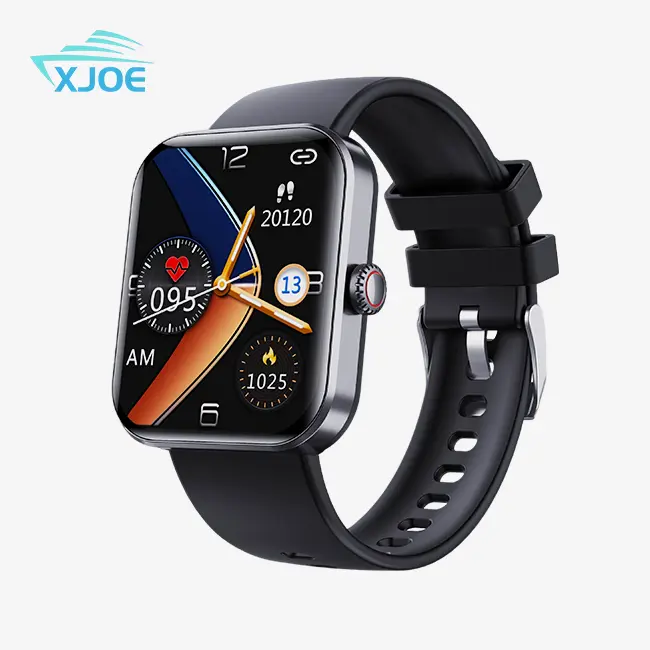
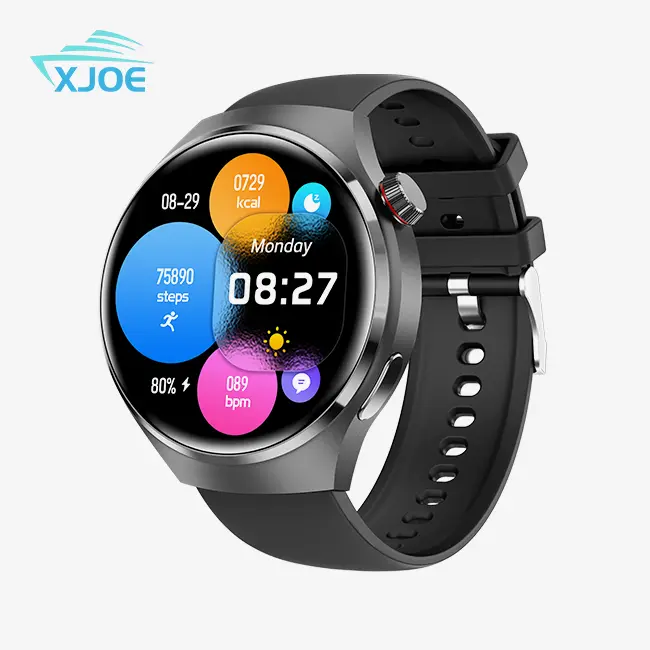
When looking for the best outdoor wrist watch smart tech for tourist markets, the technical specs of a device directly show how well it will work in the real world. As an example of the kind of specification profile that buyers of goods should compare products to, the Xizhou outdoor light smartwatch:
- Screen Size: 44–49mm AMOLED, 360×360 resolution — A bigger AMOLED screen with a lot of pixels makes it easier to read in direct sunlight, which can be hard on trails and in open spaces.
- Water Resistance: IPX67 rated — This rating confirms protection against dust ingress and submersion up to 1 meter for 30 minutes. This rating covers most water-related tourist activities, such as crossing rivers and being out in the rain.
- Battery Life: 5–10 days — Batteries that last more than one day don't need to be charged every day during long tours, which is hard to do in remote areas.
- Charging Method: Magnetic charging — Magnetic links keep charging ports from wearing out and let you charge small items faster in the field.
- Case Material: Alloy with steel strap, snap-button buckle — The metal case is strong enough to handle impacts while also being light, and the steel strap doesn't rust when it comes into contact with sweat, saltwater, or mud.
All of these specs answer the most important question about buying things outside: will the item last? The strict quality control rules and factory-level certifications in Xizhou make it clear that the answer is always yes.
Built-In LED Flashlight: An Often-Overlooked Feature
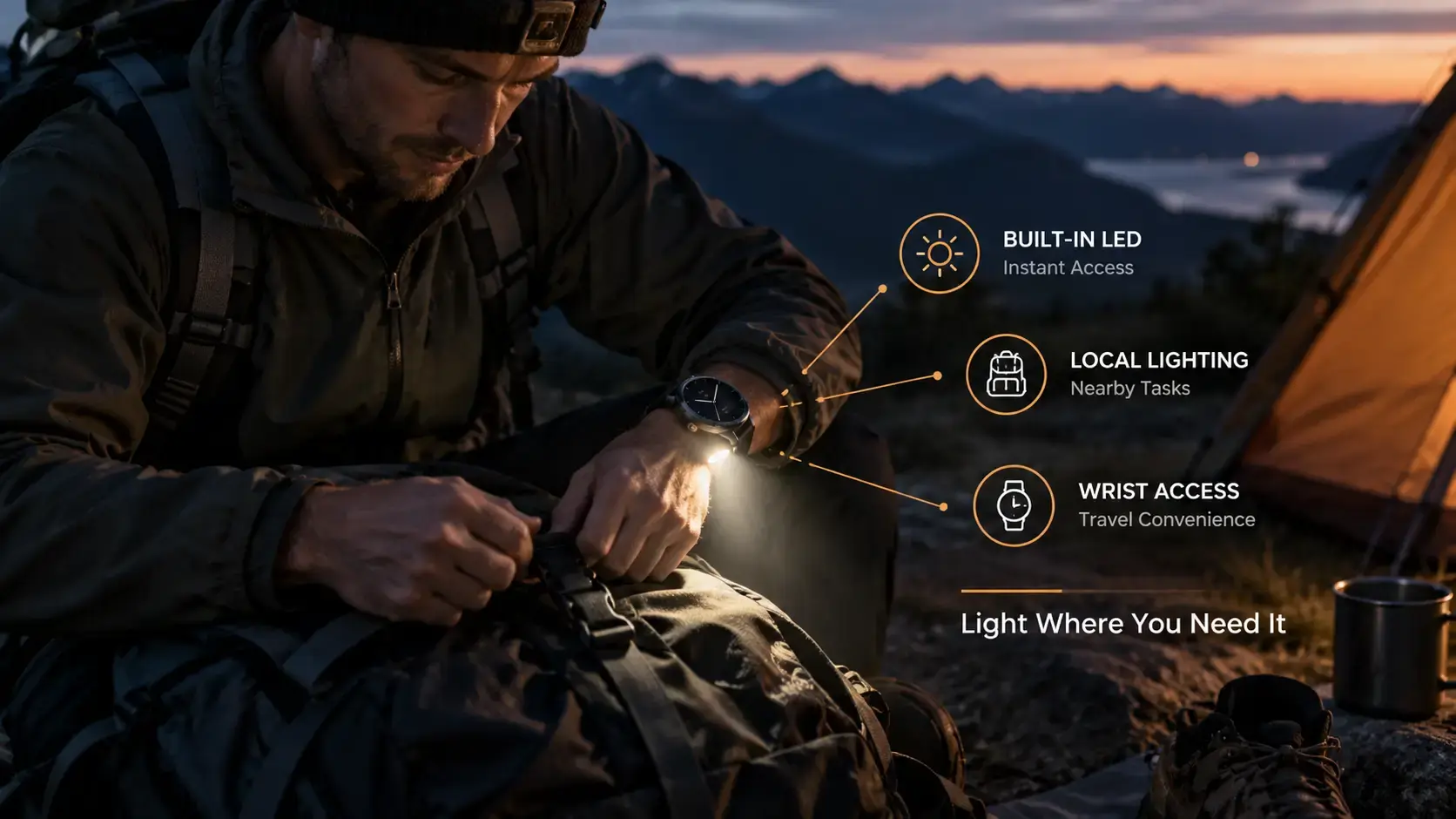
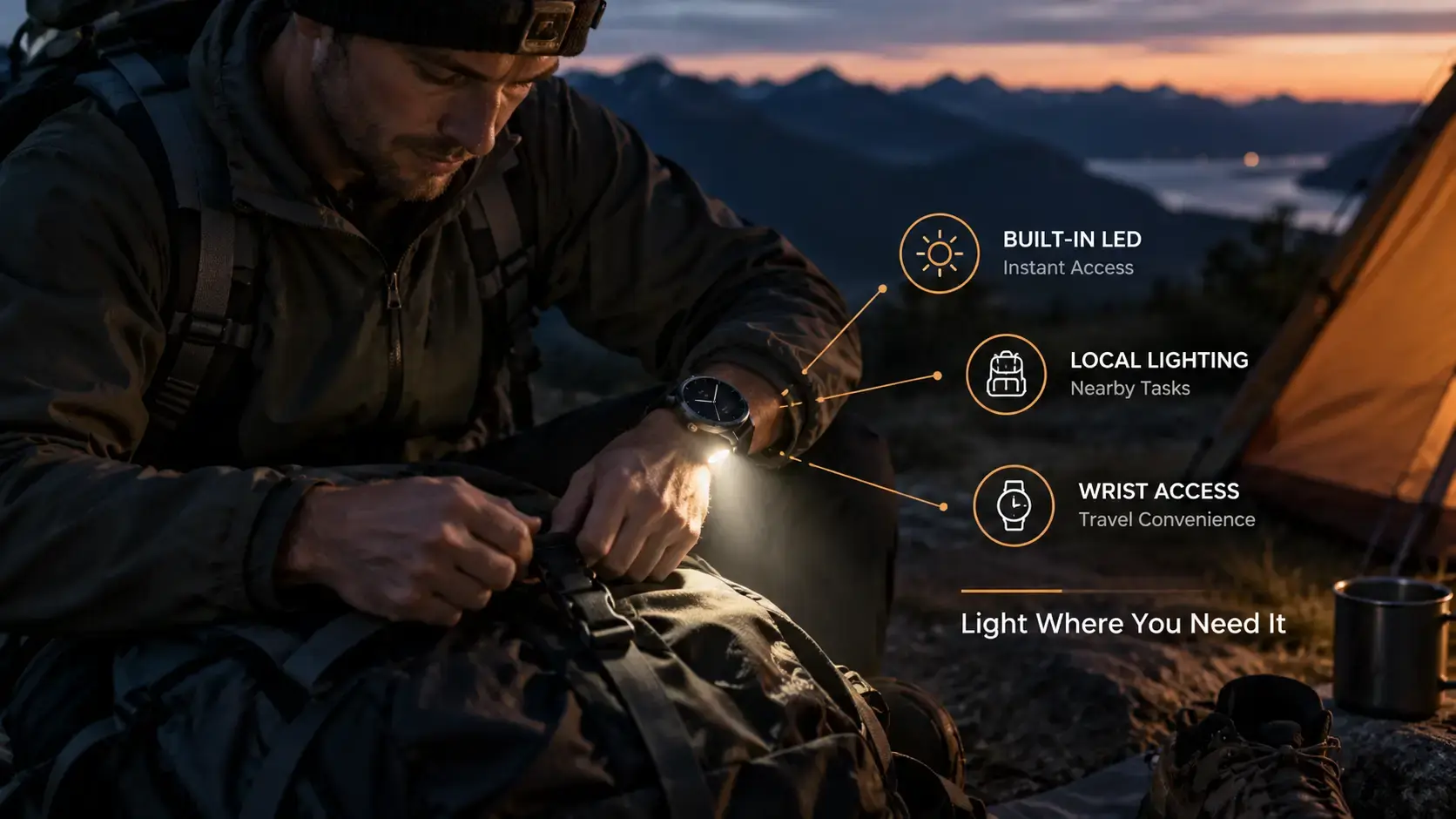
The built-in LED flashlight is a very useful feature for tourists that is often overlooked when products are compared. Wrist-mounted lights are very useful for hikes at night, cave explorations, and trips that start early in the morning because they let guides and tourists carry their gear without using their hands. This one feature sets the smartwatch apart from dozens of others in the same price range and makes for a gripping sales story on both Amazon listings and Shopify product pages.
Comparative Analysis for Tourism Market Positioning
How Xizhou's Offering Fits the Competitive Landscape
The premium outdoor smartwatch market is dominated by well-known brands like Garmin and Suunto. For example, Garmin's Instinct 2 Solar costs more than $350, and Suunto's outdoor range often costs more than $400. Professional athletes and serious mountain climbers buy these brands. The Apple Watch Ultra is even more expensive and is aimed at lifestyle-premium customers.
There is a market gap in the mid-market tourist area, where people want durable, health-capable, GPS-enabled wearables that are affordable and allow OEM branding and extensive customization. In this way, Xizhou's outdoor light smartwatch offerings have a clear advantage over their competitors. Xizhou lets Amazon FBA sellers and private label brands get into the tourism wearable market without the risk of losing money that comes with reselling premium brands. This is possible because the MOQ is flexible and OEM logo printing and packaging can be customized.
Dropshipping companies and TikTok Shop brands can directly deal with inventory pressure and keep up with trends thanks to the low market prices and quick restocking options. These are two of the biggest problems in cross-border e-commerce.
Optimizing Procurement Decisions in Tourism Markets
Matching Device Selection to Tourism Segment
Wearable tech needs to be made for specific types of travel, and smart buying connects product specs to end-user context. In real life, segmentation looks like this:
- Adventure tourism (hiking, trekking, cycling): Make sure the device is tough, the GPS works well, and the battery lasts a long time. Xizhou's outdoor light smartwatch has an IPX67 rating and a battery life of 5 to 10 days, which are perfect for multi-day outdoor programs.
- Guided group tours: Heart rate tracking, step counting, and sleep analysis are some of the health monitoring features that help tour companies to keep an eye on the participants' health throughout the programs. This is even more useful when it's connected to health management tools.
- Eco-tourism and nature reserves: The lightweight design makes long walks less tiring. Real-time notification connectivity lets guides talk to each other without having to use their phones.
- Urban tourism and city exploration: The AMOLED screen's brightness and real-time notification support make it easier to find your way around and stay connected in crowded cities.
Purchasing managers who work with suppliers in these areas benefit from working with a maker that can handle both small test orders and scalable bulk delivery. Xizhou's supply model is built around this flexibility.
Future Trends and Innovations in Outdoor Light Smartwatches for Tourism
What B2B Buyers Should Anticipate
The category of outdoor light smartwatches is growing quickly, and strategies for buying should take this into account. Better battery chemistry, like hybrid solar-assisted charging, is making it possible for batteries to work for longer than 14 days in low-power modes. Single-frequency GPS is being replaced by multi-band GNSS units, which offer sub-meter precision in dense forest and canyon settings.
Health insights that use AI are making a real difference. Biometric measures and external data like altitude, temperature, and UV index are starting to be linked by devices to create health alerts that make sense in the context of the user. Within the next product cycle, this function could go from being an optional extra for tourist companies that run high-altitude programs to a safety requirement.
Sustainability issues are also becoming more important in the buying process. Buyers for eco-friendly tourist brands are increasingly looking for sellers who keep records on where their materials come from, set standards for repairability, and cut down on unnecessary packaging. Because Xizhou is dedicated to using environmentally friendly manufacturing methods, it can work well with procurement programs that focus on sustainability.
Conclusion
The structural needs of the global tourist market are really well met by the outdoor light smartwatch group. From companies that organize adventure treks to those that run tours in cities, the need for durable, health-related, connected gadgets is growing along with travelers' standards. For business-to-business buyers, the buying opportunity is real, and the market is at a good time, whether they are buying for Amazon, building a private label brand, or providing trade channels. The most important thing you can do to take advantage of that chance is to choose a dependable manufacturer with proven quality controls, OEM capabilities, and flexible order structures.
FAQ
1. How do outdoor smartwatches improve tourist safety?
Wearable devices that can connect to your heart rate monitor and send real-time alerts let tour operators keep an eye on the health of participants while they are doing physically demanding activities. GPS-enabled models let you share your location even when there isn't a lot of coverage using an outdoor light smartwatch.
2. What battery life should procurement buyers expect?
A battery life of 5–10 days with mixed use is a good benchmark for devices made for tourists. The Xizhou outdoor light smartwatch works within this range when the AMOLED screen and health tracking are turned on.
3. Can these devices integrate with tour management software platforms?
A lot of smart wearables that can be used outside have Bluetooth connectivity that works with mobile health and planning apps. During the product evaluation phase, buyers should make sure that the API works with the software ecosystem they are using.
4. Is IPX67 sufficient for most tourism environments?
IPX67 covers resistance to dust and short submersion, which is good for rain, water sports, and humid places. For long-term underwater use or diving, devices with a higher ATM rating are better.
Partner With Xizhou for Your Outdoor Light Smartwatch Supply
Xizhou makes trendy wearable electronics and can do both OEM and ODM production. They also have strict quality control and can ship items all over the world quickly. Our outdoor light smartwatch source features are designed to help your growth at every stage, whether you are an Amazon FBA seller trying out a new SKU, a distributor taking on bigger orders, or a private label brand making a line of products for tourists. Reach us at 13266508958@163.com to explore our product catalog and request a customized quote.
References
1. World Tourism Organization (UNWTO). Global Report on Adventure Tourism. UNWTO, 2014.
2. Grand View Research. Smart Wearable Market Size, Share & Trends Analysis Report. Grand View Research, 2023.
3. Deloitte Insights. Technology in Tourism: Digital Transformation Across the Travel Sector. Deloitte, 2022.
4. International Journal of Hospitality Management. Wearable Technology Adoption in Tourism Contexts. Elsevier, 2021.
5. Statista Research Department. Wearable Technology – Global Revenue and Unit Shipment Forecasts. Statista, 2023.
6. Journal of Travel Research. Smart Devices and Tourist Experience Enhancement: An Empirical Study. SAGE Publications, 2022.