

How Athletic GPS Smartwatch Connectivity Supports Modern Sports Training
Modern sports training has changed significantly over the past decade, and connectivity sits at the center of that shift. An athletic GPS smartwatch is no longer just a timekeeping tool — it is a data hub that links athletes, coaches, and performance platforms in real time. For B2B buyers including Amazon FBA sellers, OEM brands, wholesalers, and distributors, understanding how connectivity drives training outcomes directly informs smarter product sourcing decisions. This guide walks through the technology, the market, and what to look for when procuring connected GPS wearables at scale.
Understanding Athletic GPS Smartwatch Connectivity and Its Role in Sports Training
Connectivity is what makes sensor data into performance information that can be used. Without it, a GPS watch is just a logbook on its own.
How Bluetooth and Wireless Protocols Work Together
Most new GPS sports watches are built around Bluetooth Low Energy (BLE 5.0). It sends data to partner apps while using little power, which is why it's the best protocol for constant sync while training. When paired with a smartphone, BLE lets you stream live metrics, send notifications, and update firmware without having to physically connect the two devices.
Multi-GNSS Positioning and Its Impact on Training Accuracy
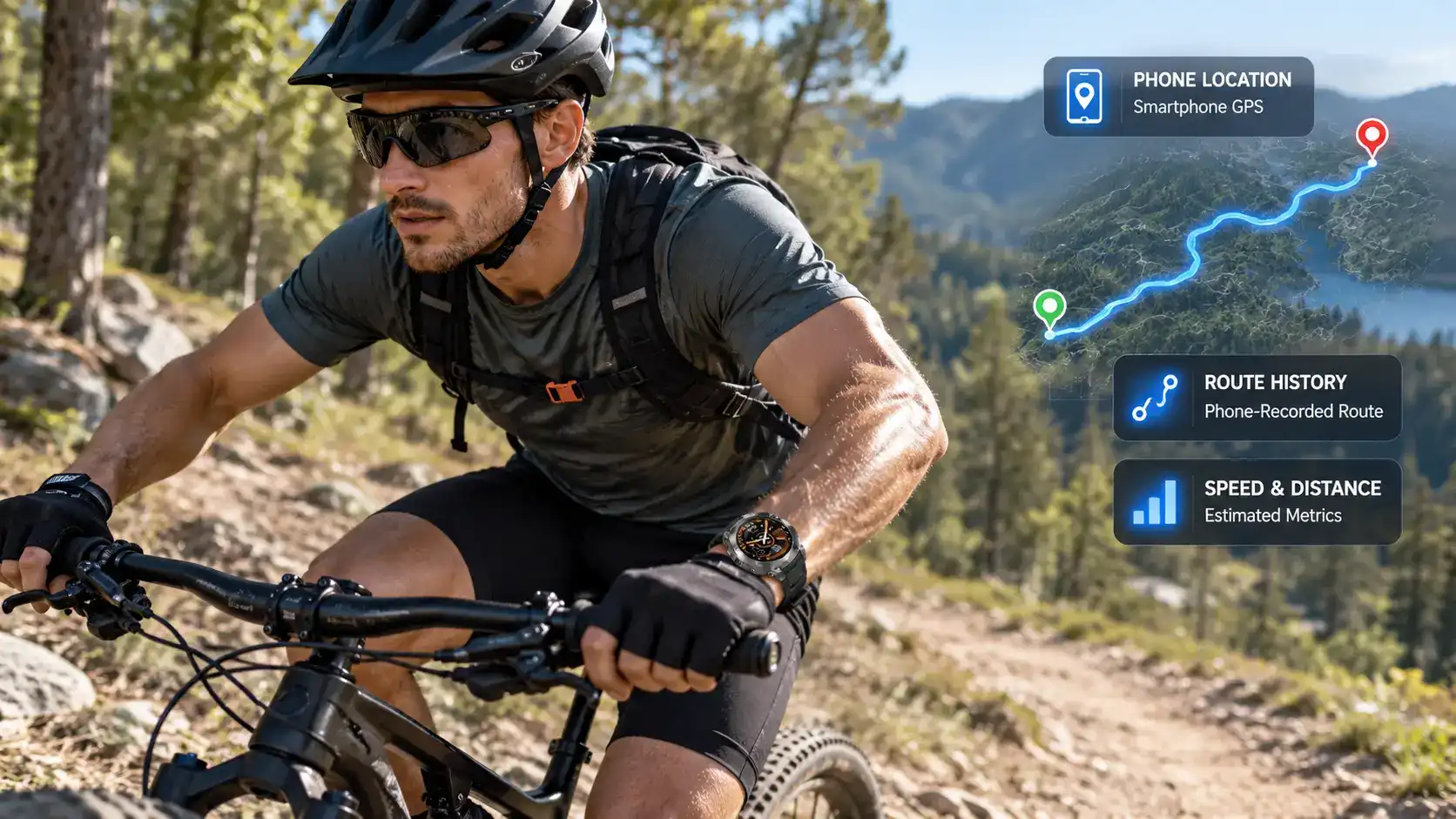
Multi-GNSS technology gets signals from GPS, GLONASS, Galileo, and BeiDou all at the same time. Positional error drops from the usual 5–10 meters to less than 2 meters when used in open areas with this cross-constellation method. This level of accuracy makes sure that every segment, split, and path is logged fairly for trail runners, cyclists, and triathletes. Coaches use this information to make sure that their training plans work.
App Integration and Cloud Data Exchange
Wearable GPS devices that are connected to the internet send training data to the cloud using apps that work with them. Apps like RDFIT let users see a record of their workouts, set training zones, and share their data with teachers. For B2B clients, being able to use apps that work with more than 30 languages, such as English, Spanish, German, Japanese, and Arabic, makes the market for any private label or distribution product much bigger.
Core Features and Performance Metrics Enabled by Connectivity
A GPS female sports watch that is linked to the internet can give you more than just step counts. The data it produces is only as good as the hardware and wireless setup that make it work.
Here are the main performance factors that should be looked at for procurement:
- Multi-GNSS chip accuracy: The JL7012 chip supports multi-constellation positioning, giving consistent location data across outdoor environments — forests, mountains, and urban routes included. Positional data feeds directly into pace, distance, and elevation calculations.
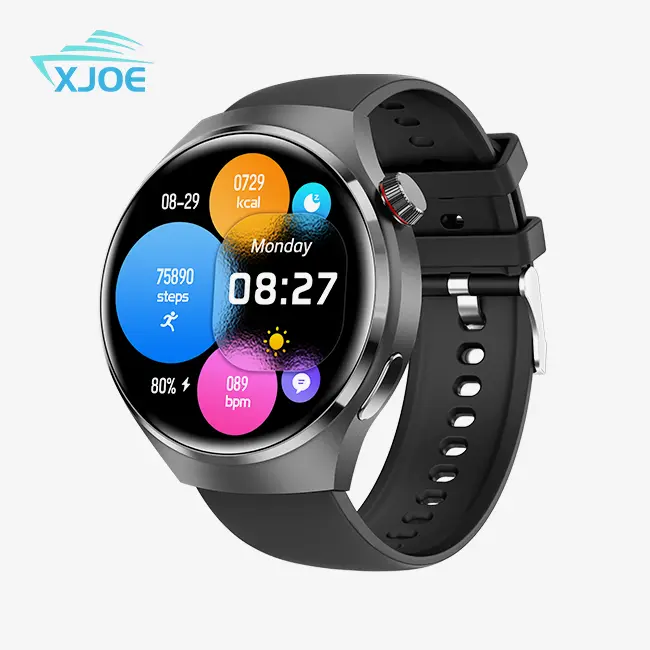
- High-brightness 1.53-inch IPS display (360×360 resolution): Visibility during outdoor workouts is a practical necessity. A high-nit round IPS screen ensures that metrics remain readable under direct sunlight — something standard LCD panels often fail at during midday training sessions.
- BLE 5.0 connectivity with wireless charging: BLE 5.0 reduces latency during data sync and improves connection stability. Combined with wireless (magnetic) charging, the device eliminates port wear — a common failure point in sports wearables subjected to sweat and water exposure.
- IP67 water and dust resistance: IP67 certification means the device withstands submersion up to 1 meter for 30 minutes. This rating satisfies the requirements of swimmers, cyclists in rain, and outdoor field athletes.
- 410mAh battery with zinc alloy casing: The zinc alloy build provides structural durability under physical impact. A 410mAh battery supports extended training sessions and multi-day use when GPS polling intervals are optimized.
These hardware standards give sellers direct faith in the product. When B2B buyers add a device that has been tested for IP67 protection and multi-GNSS accuracy, the chance of getting bad reviews from customers because it doesn't work well drops by a lot.
Comparison of Leading Athletic GPS Smartwatch Brands and Models
There are both well-known brands and new OEM-ready options in the GPS sports watch market. Procurement teams can find the right sourcing tier by knowing where each segment fits in the market.
Garmin and Suunto: The Professional Tier
Garmin and Suunto are the biggest names in professional endurance sports. The Forerunner and Fenix lines from Garmin support multiple GNSS bands, ANT+, and a lot of third-party apps. Suunto's Vertical and Race models are geared toward mountain climbers and put a lot of emphasis on barometer altitude. Prices for both brands are high—usually $300 to $900 at retail—which keeps them out of reach for the mass market.
Apple, Fitbit, and Coros: Mid-Range Connectivity Focus
Apple Watch Ultra 2 gives people who care about their lifestyles wireless access and accurate dual-frequency GPS. The Coros Pace 3 and Apex 2 have great GPS longevity and are priced in the middle range, which makes them competitive for sales on Amazon and Shopify. Fitbit's Charge 6 is more geared toward general health than sport-specific GPS use, and it's not as accurate when used outside.
OEM-Ready GPS Wearables: The B2B Opportunity
OEM-ready GPS watches give Amazon sellers, TikTok Shop brands, and private label distributors a big margin edge. With BLE 5.0 and multi-GNSS support, devices made on the JL7012 chip offer competitive specs at a fraction of the cost of name-brand products. This level gives B2B buyers the best return on their investment because the minimum order quantity is variable, logo printing is available, packaging can be localized, and software can be used in 28 languages.
How to Effectively Integrate GPS Smartwatch Connectivity Into Your Procurement Strategy
To get a lot of connected GPS female sports watches, you need a clear plan. It's not just the technology specs that matter; it's also how reliable the provider is and how quickly they can respond to changes in the market.
Define Your Product Tier and Target Market First
B2B buyers should find out if the product is aimed at professional athletes, fitness fans, or people who are just generally health-conscious. Different groups have different needs when it comes to GPS precision, screen quality, and app depth. An IP67-rated multi-GNSS device with a bright screen and firmware support for 28 languages is good for a wide range of foreign retailers and works well for Amazon FBA sales that are aimed at more than one area.
Evaluate Connectivity Specs as Core Sourcing Criteria
The version of Bluetooth, the number of GNSS constellations it can support, and the quality of the companion app are all must-haves. BLE 5.0 pairs devices faster, has a longer range (up to 40 meters), and uses less power than BLE 4.2. Single-system devices can't work in tough environments, but multi-GNSS devices with JL7012 processing can. These specs keep seller reviews safe by lowering the number of complaints about performance in the field.
Build Replenishment Cycles Around Trend Velocity
GPS wearables are a type of product that changes quickly. Grand View Research estimates that the world market for GPS watches was worth $2.1 billion in 2023 and will continue to grow at a rate of over 10% per year until 2030. When a source keeps their stock stable and turns around orders quickly, sellers can take advantage of seasonal demand spikes without worrying about running out of stock.
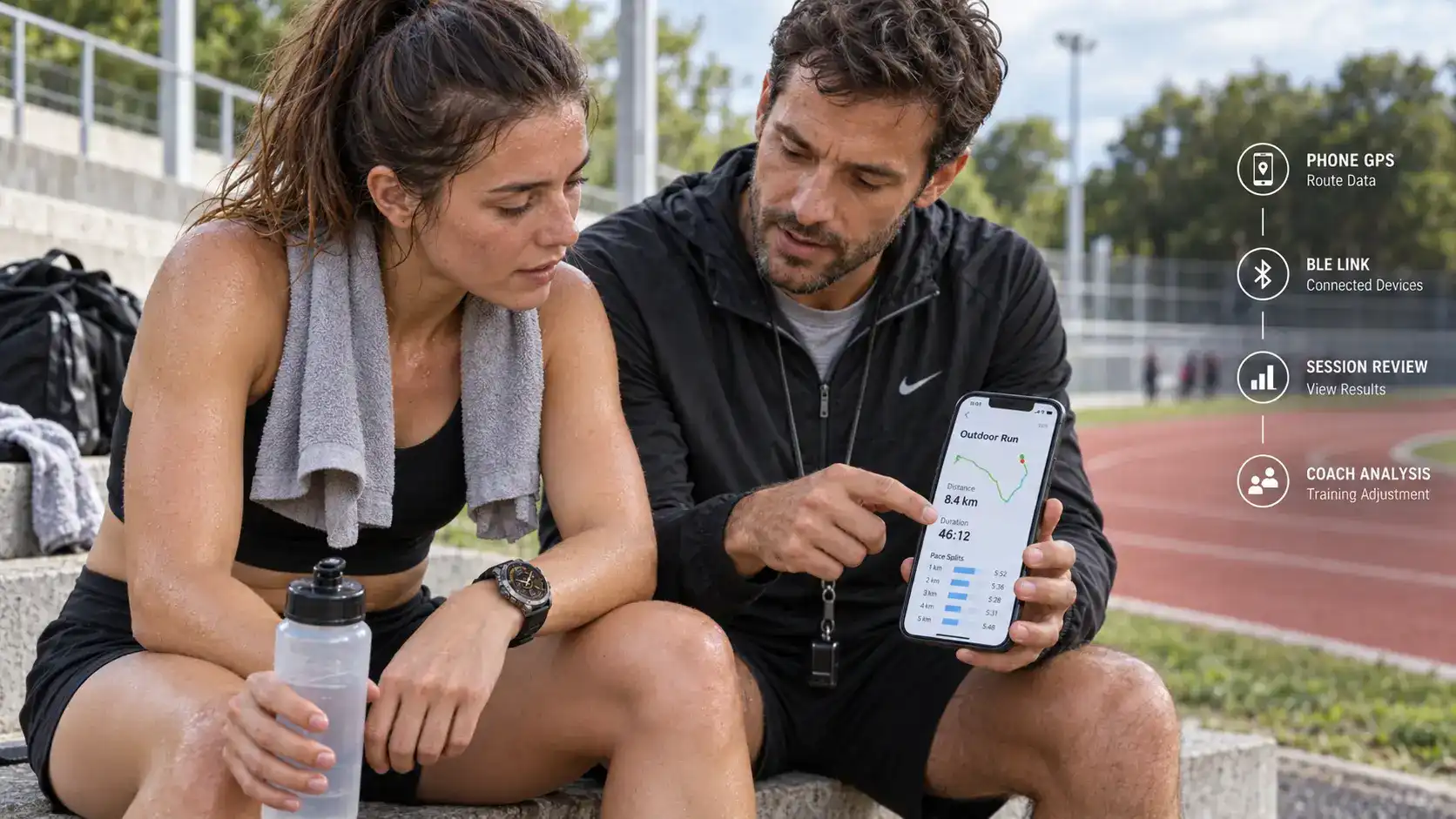
Real-World Applications: Connectivity in Action
Connected GPS devices have been useful in a number of business-to-business (B2B) settings.
Cycling Team Remote Coaching
A bicycle club in the area bought IP67 multi-GNSS watches for its training program. With BLE-synced data flowing into a central coaching dashboard, coaches could look at each rider's route accuracy and pace splits without having to meet with them in person. Athletes said they were more accountable over the course of a 12-week season because their training load was changed remotely based on real-time data.
OEM Private Label Launch on Amazon
An OEM maker and a new electronics brand worked together to make a private-label GPS sport watch for trail runners in the US market. The device had a zinc alloy case, multi-GNSS location, and unique packaging. Within 90 days of being listed, the product was ranked in the top 20 of its Amazon subcategory. This was due to good reviews about location accuracy and a clean unboxing experience.
Distributor Bundling Strategy
A supplier of consumer electronics raised the average order value by putting together sets of GPS watches with new silicone straps and charge pads that work wirelessly. By choosing a device that already had wireless charging built in, the dealer made it easy for an extension to be attached. In a single quarter, bundle SKUs did 34% better than individual unit entries.
Conclusion
In sports devices, athletic GPS smartwatch connectivity has gone from being a nice-to-have tool to something that everyone expects. If a business-to-business buyer knows how BLE 5.0, multi-GNSS accuracy, partner app depth, and hardware reliability all work together, they can make better purchases. Like the JL7012-powered GPS sport watch, which has an IP67 rating, a 1.53-inch high-brightness display, wireless charging, and software that can be used in 28 languages, it meets the technical requirements for listing in the US market. It's the difference between a product that sells consistently and one that doesn't, whether you get it from an OEM supplier or one with stable inventory and quick customization support.
FAQ
1. How does an athletic GPS smartwatch sync with a smartphone?
BLE 5.0 is used by most new GPS sport watches to connect to a companion app. Once the devices are paired, they automatically share training data like routes, pace, and distance at the end of each practice. For example, the RDFIT app can do this on both iOS and Android, and it has more than 30 language versions to serve different regions.
2. What is the difference between a GPS smartwatch and a standard fitness tracker?
With a GPS sport watch, you can record your outdoor routes with pinpoint accuracy thanks to satellite tracking. Most fitness trackers use accelerometers to count steps but don't really map out your position. Multi-GNSS tracking gives information that accelerometer-based devices just can't match for trail running, cycling, or any other outdoor sport.
3. Does using multi-GNSS mode drain battery faster?
Yes, using more power when all satellite systems are active at the same time than when GPS is the only system active. But improved chip designs like the JL7012 handle this by changing the duty cycle, which means that the battery lasts for full training sessions.
4. Is IP67 sufficient for swimming?
IP67 means that it can withstand being submerged up to 1 meter for up to 30 minutes. It can handle splashing, rain, and short swims, but not long periods of time in deep water. Dedicated race or open-water swim apps usually need devices that are 10 ATM or 5 ATM-rated.
5. What MOQ is typical for private label GPS watches?
MOQ is different for each seller, but many OEMs allow low-MOQ test runs of 50–200 units to make sure the new product works, with bulk prices starting at 500 units or more.
Partner With Xizhou for Your Next GPS Smartwatch Sourcing Cycle
Xizhou makes sports GPS athletic GPS smartwatches that meet the high standards of the US market. We support Amazon sellers, wholesalers, and private label brands at every stage. Our R&D team is highly experienced, our factories follow GMP standards, and we keep a lot of stock on hand. We also offer full OEM customization, which includes printing logos, designing boxes, and adding firmware in 28 languages. As a well-known company that makes sports GPS smartwatches, we back up every order with quick delivery and helpful customer service after the sale. You can email us at 13266508958@163.com to ask about prices and examples.
References
1. Grand View Research. (2023). GPS Smartwatch Market Size, Share & Trends Analysis Report. Grand View Research.
2. Stoggl, T., & Sperlich, B. (2014). Polarized training has greater impact on key endurance variables than threshold, high-intensity, or high-volume training. Frontiers in Physiology, 5, 33.
3. Shcherbina, A., et al. (2017). Accuracy in wrist-worn, sensor-based measurements of heart rate and energy expenditure in a diverse cohort. Journal of Personalized Medicine, 7(2), 3.
4. Witte, T. H., & Wilson, A. M. (2004). Accuracy of non-differential GPS for the determination of speed over ground. Journal of Biomechanics, 37(12), 1891–1898.
5. Garmin Ltd. (2022). Annual Report and Product Technology Overview. Garmin Ltd.
6. IDC. (2023). Worldwide Wearables Market Quarterly Update. International Data Corporation.