

High Temp Warning Band real-time thermal warning mechanism explained
Our High Temp Warning Band uses innovative sensor technology to provide real-time thermal warnings to safeguard users from heat threats in demanding conditions. This smart wearable monitors ambient and skin temperature and vibrates and flashes when readings surpass acceptable limits. This gadget, with a lightweight silicone strap and robust ABS housing, monitors temperature from 0°C to 50°C, making it important for outdoor workers, athletes, and anybody exposed to high temperatures. The clever alarm system warns users before heat stress becomes dangerous.
Understanding High Temp Warning Bands: Functionality and Specifications
Wearables that check the temperature have changed a lot over the years, from simple signs to complex machines that can stop heat-related accidents before they happen. The first thing we'll look into is the basic technology that makes these life-saving tools work.
Core Temperature Detection Technology
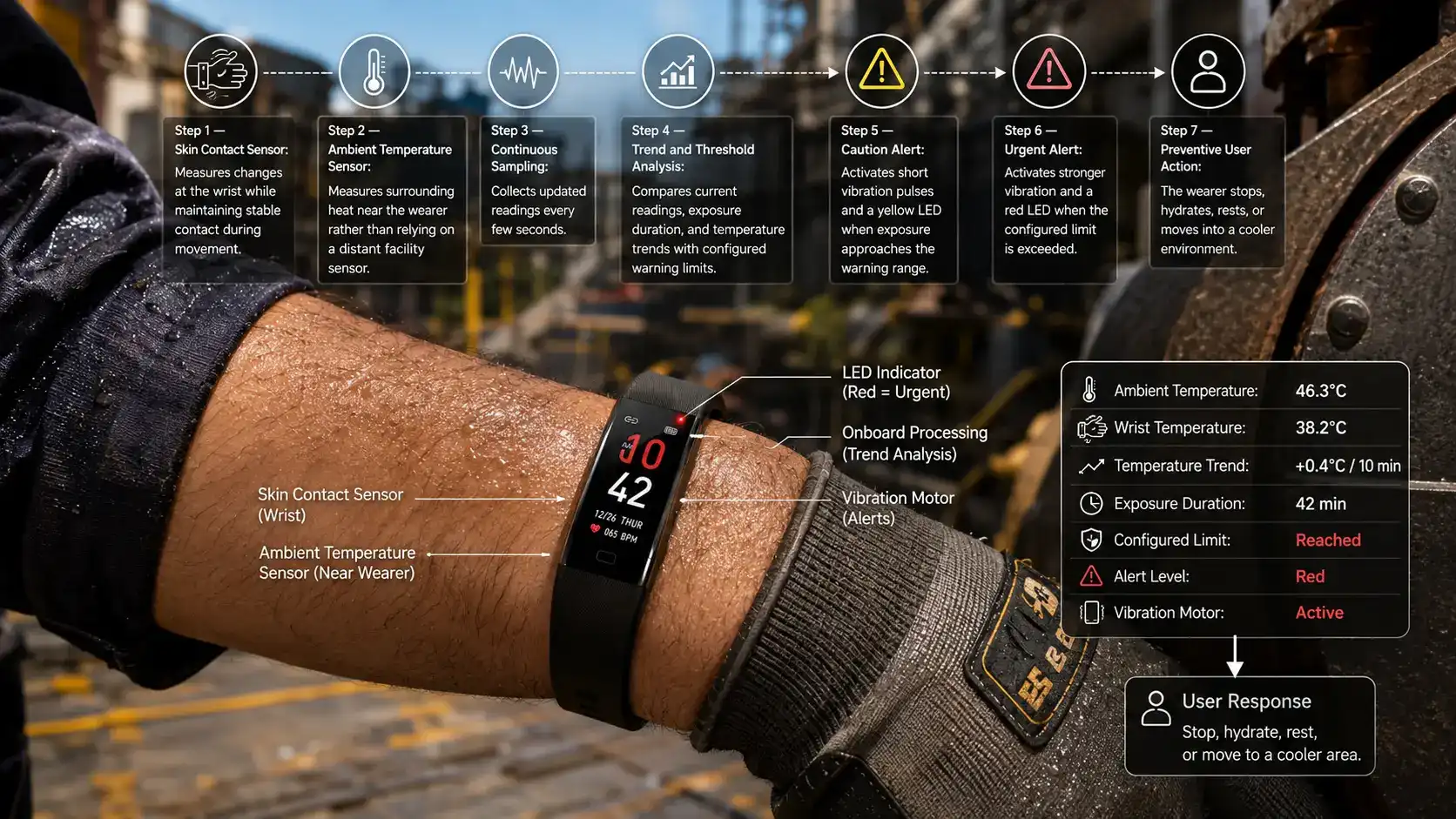
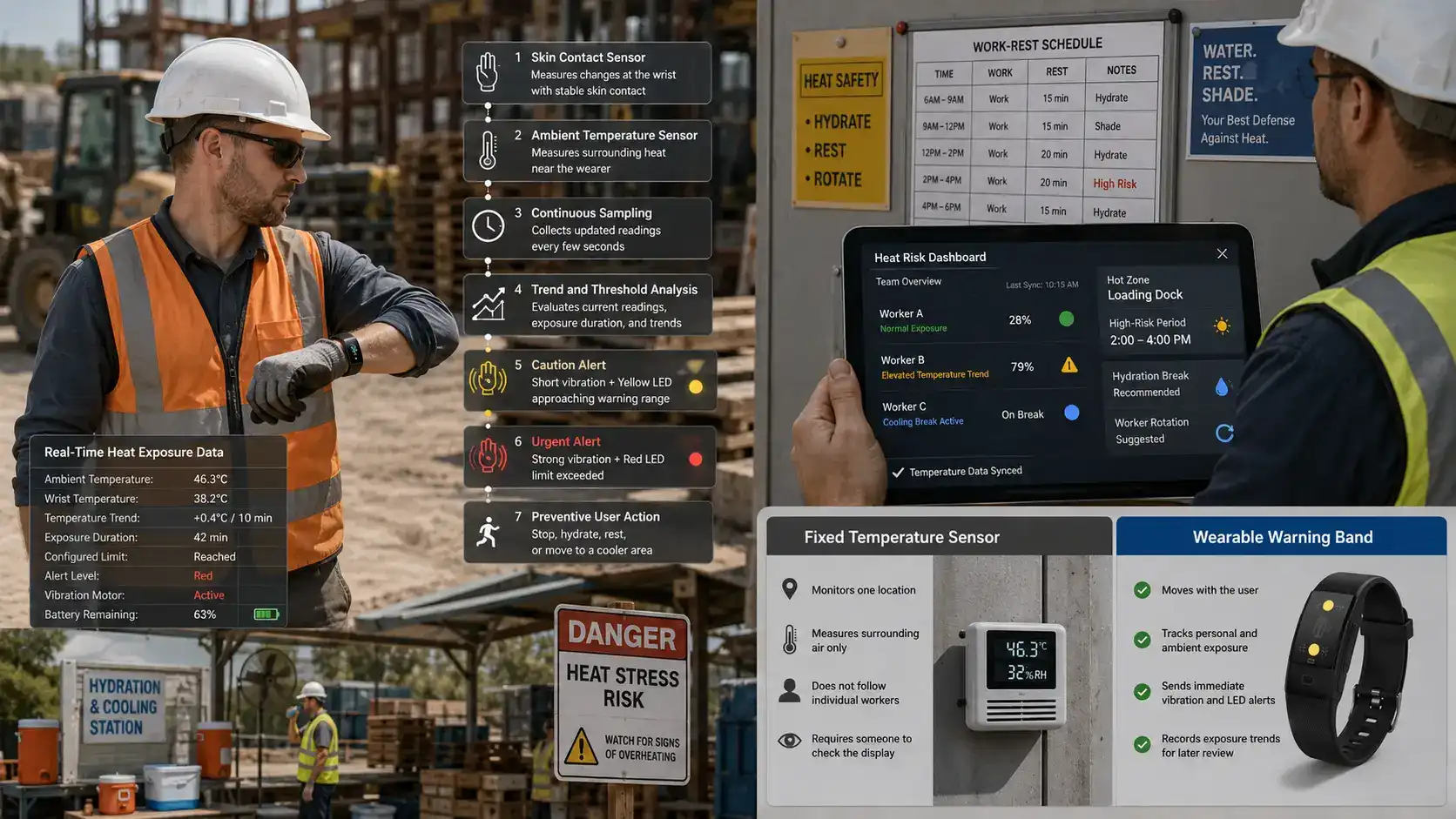
For thermal data collection, the High Temp Warning Band uses a dual-sensor design. A contact sensor detects skin temperature precisely against the skin. Ambient sensors monitor temperature from the outside. This two-monitoring method distinguishes heat stress inside and outside the body, providing relevant alerts and revealing the real risk.
The silicone strap's thermal conductivity improves sensor accuracy without impacting comfort when worn for extended periods. Data can flow because medical-grade silicone stays in contact with the skin even when it moves, unlike hard plastic. During 8-hour work shifts or long outdoor days, the 30-gram design keeps wrists fresh.
Alert Activation Mechanisms
The device activates a multi-modal warning system when temperature data approaches danger. First, soft vibration pulses discreetly communicate without interfering with work or sports. LED signs flash yellow for danger zones and red for urgent attention. On a construction site or while working out, single-mode alerts may not be heard, but this layered alert system ensures users get alerts.
The 120mAh battery can track for five days with normal use, so you won't run out of power mid-shift. Magnetic charging technology lets you recharge quickly without cables while taking a break.
Technical Specifications for B2B Evaluation
Procurement teams need success metrics for thermal safety options. The gadget operates even when soaked from perspiration, rain, or industrial spills thanks to its IP67 water protection rating. Multinational workers may modify the 250mm band to accommodate various wrist sizes.
It supports iOS 10.0+ and Android 6.0+, making it compatible with workplace safety management solutions. With the capacity to record data, safety managers may look at patterns of temperature exposure and discover high-risk professions or periods when additional safety procedures need to be performed.
Comparing Thermal Safety Solutions: High Temp Warning Band Vs. Alternatives
To choose the right thermal tracking technology, you need to know how wearable warning bands compare to other options and standard safety tools. This comparison sheds light on decision factors that are important in a variety of operational settings.
Wearable Bands Versus Fixed Temperature Sensors
Traditional temperature sensors that are mounted to equipment or the walls of a building offer location-specific information, but they can't keep track of how much each individual is exposed. When a warehouse worker walks from climate-controlled storage to open loading docks, the temperature varies in ways that stationary sensors can't pick up. When individuals wear bands, they may obtain a tailored risk assessment no matter where they are.
Fixed sensors also slow down interpretation because workers have to actively check displays instead of getting alerts automatically. This need for extra attention raises the risk of oversight when mentally demanding tasks are being done. Automated device messages close this gap by sending direct alerts to the person who is most at risk.
Active Monitoring Versus Passive Indicators
Disposable thermal warning strips change color when exposed to heat. Few things happen on dormant gadgets. They record contact without warning. When the color changes, the wearer may be experiencing heat stress.
Checking regularly, the High Temp Warning Band can forecast what will happen. Alerts sound before temperatures soar dangerously. This provides you time to act, unlike passive indications. This proactive strategy avoids issues rather than writing them down.
Cost-Benefit Analysis for Procurement Teams
Smart wearable bands cost more than disposable indicators; therefore, procurement is more scrutinized. Lifecycle analysis teaches different things. Reusable High Temp Warning Bands last 12–18 months and are safer than hundreds of single-use signs.
Workplace heat disease costs money in medical bills, workers' comp claims, and missed productivity. Indirect expenses include reporting the disease to the authorities and damaging the company's image. Usually, the expense of offering complete teams proactive monitoring tools is paid by the cost of averting only one major heat stress episode.
Buying in bulk saves distributors money when serving several customer locations. Large orders may be customized by putting your branding on the bands or box. This enables you to resell it for more. By tailoring specs to a particular market niche, OEMs may reduce costs even further using Xizhou.
Installation, Calibration, and Maintenance of High Temp Warning Bands
Paying attention to the right way to set up and maintain a gadget is important for getting the most out of its performance and usefulness. When thermal protection is most important, these practices make sure that the system works reliably.
Initial Setup and Mobile App Pairing
Use the included magnetic wire to completely charge the band before turning on the device. People may link their phones with Bluetooth via the iOS App Store and Google Play partner app. Initial setup requires users to provide their age, weight, and heat tolerance. This allows the system to establish body-specific alarm levels.
Real-time temperature data and exposure graphs are shown in the app. Field team safety managers may utilize admin accounts to analyze aggregated data and identify trends that need operational changes. This function helps with company fitness programs and workplace safety data.
Calibration for Accuracy Maintenance
Temperature sensors are calibrated by normal usage; however, severe circumstances or physical impacts may need recalibration. The mobile software compares device data to a reliable reference temperature. Put both devices together for five minutes to observe any measurement change.
Most industrial users seldom require field recalibration, but this function guarantees quality in high-stakes safety scenarios. ISO safety management system users want documented calibration records to demonstrate compliance during audits.
Routine Cleaning and Care Protocols
Silicone straps collect perspiration, dust, and other outdoor debris when worn consistently. Weekly washing with water and mild soap maintains the material and prevents skin irritation. The IP67 water resistance enables you to clean the item in water without destroying it. Avoiding strong chemical cleansers preserves sensor accuracy and silicone life.
Keeping gadgets in cool areas between use saves batteries. Extreme cold or heat shortens lithium-ion batteries' five-day lifespan. Distribution centers should store items between 15°C and 25°C for optimal longevity.
Replace devices with reduced power life, damaged LEDs, or inconsistent notifications. Proper gadget recycling prevents battery pollution. Many local wholesalers provide trade-in schemes that enable you to obtain credit for new equipment and discard old ones.
Industrial Applications and Benefits of High Temp Warning Bands
Examples of how thermal warning technology is used in the real world show how useful it is in many different areas. These apps show how to solve problems in a way that B2B buyers looking at safety spending can understand.
Construction and Outdoor Work Environments
Construction sites expose workers to heat from direct sunshine, reflective surfaces, and strenuous physical effort that generates heat. Summer roofing teams on black asphalt surfaces encounter tough circumstances. Warning bands allow site managers to mandate cooling breaks based on high-risk team-wide temperature data.
A commercial roofing business in Arizona supplied 45-person teams High Temp Warning Bands and integrated alarm data into project management systems. Temperature monitoring changed the work schedule to relocate heavier duties to the cooler mornings. This process adjustment reduced heat-related events by 73% year over year while maintaining the project schedule.
Manufacturing and Warehouse Operations
Even climate-controlled industries have hot places where equipment, ovens, and loading docks contact outside air. When workers switch temperature zones, their bodies are under a lot of stress attempting to maintain their core temperatures. During these adjustments, automatic notifications warn of overheating.
Food-producing plants have particular issues. Some industrial areas must be kept cold, and food packaging equipment generates a lot of heat. A Midwest food distributor thermally tracked all 200 warehouse workers and discovered that forklift users were overheated since their vehicles' engines were nearby. This data led to targeted ventilation modifications in high-traffic aisles, demonstrating how wearable data drives fact-based enhancements.
Athletic Training and Outdoor Sports Programs
Coaches and sports leaders who run outdoor training programs are responsible for making sure athletes stay safe in the heat. In addition to the standard heat index measures, warning bands give objective physiological data. When multiple team members get alerts for high temperatures during practice, coaches don't have to wait for each athlete to self-report distress; they can use group cooling protocols instead.
University sports departments use thermal tracking for summer conditioning programs. This has led to written safety rules that lower the schools' liability risk. Parents expect schools to use more advanced safety technology, which makes High Temp Warning Bands a recruiting tool that shows how committed a program is to all of its athletes' well-being.
Emergency Response and Public Safety Operations
First responders like firefighters, paramedics, and police officers work in hot situations while wearing a lot of safety gear. Traditional monitoring of heat stress relies on checking for symptoms by hand, which is a reactive method that doesn't work well in emergency situations that change quickly. Wearable High Temp Warning Bands that are part of the department's safety rules let incident leaders keep an eye on the exposure of their teams in real time.
In Texas, a city fire department gave 120 firefighters warning bands that connected their gear to incident command tablets. During structural fire reactions, leaders are now automatically notified when firefighters are getting close to heat exhaustion levels. This lets firefighters be sent to recovery areas before they get too tired. Because of this system improvement, there were no heat-related accidents on the job during two busy summer seasons.
Corporate Wellness and Employee Health Programs
Companies that are ahead of the curve know that heat stress can happen during commutes, lunch breaks, and meetings outside. Companies that give High Temp Warning Bands as part of their fitness programs show that they care about their employees' health in more ways than just giving them perks. Along with exercise tracking and health screening programs, wearable temperature data is now part of more complete wellness systems.
Tech companies with outdoor campus areas give their workers devices to use when they walk between buildings or work together outside. This feature makes workers happier at work and collects useful information about the microclimate on campus, which helps with landscape planning and investments in shade structures.
Procurement and Supplier Guidance for High Temp Warning Bands
To navigate the thermal safety wearables supply chain, you need to know how the market works, how to spot poor quality, and how to find relationship options that offer long-term benefits beyond the initial buy.
Evaluating Supplier Credentials and Certifications
To manufacture high-quality thermal monitoring devices, employ materials accurately and precisely. B2B purchasers should prioritize ISO 9001-certified vendors. This ensures manufacturing standards are consistent across order batches. Medical silicone licenses ensure skin-contact materials are biocompatible. This prevents many users from becoming allergic.
An independent testing facility must verify IP water resistance ratings. Reputable manufacturers will offer permission papers if requested. CE and FCC electromagnetic compatibility regulations apply to electronics. This prevents gadgets from damaging workplace or industrial electronics.
Complete international safety and quality certifications are held by Xizhou. These are supported by production-wide quality control procedures. After manufacture, our GMP-certified factory batches test each item to ensure it fulfills performance criteria before shipping to the warehouse.
Understanding Pricing Structures and Volume Benefits
The price per unit of High Temp Warning Bands changes a lot depending on how many are ordered, what customisations are needed, and how well the seller is known. Sample price models help buyers make budgets for purchases:
Small purchases that are good for pilot projects or niche uses cost more per unit because of the costs of setting up and handling them. When compared to small orders, mid-range orders usually save 20–30% on costs. This makes them good for departmental deployments or testing retail inventory. Large volume agreements allow wholesalers and business buyers to get prices directly from manufacturers that are often 40–50% lower than small number costs. This is good for buyers who need to arm large teams.
Different suppliers have different minimum order quantities. For example, some manufacturers need big commitments, which can make it hard for small businesses or trial programs to get started. Xizhou's MOQ policies are open enough to meet the needs of a wide range of buyers, from new online stores testing the market to established carriers placing container-load orders.
Customization and Private Label Opportunities
In competitive marketplaces, product customization distinguishes brands for a wearable heat stress monitor. Private label creation via OEM relationships brands generic safety items like the wearable heat stress monitor. You may put your brand on device casings, create your own packaging, tweak mobile app functionality, and adjust alert levels to fit industry demands.
Unique branding helps Amazon and Shopify sellers stand out. Although more expensive, private label High Temp Warning Bands increase brand awareness and client confidence. Xizhou's customization team has extensive expertise aiding partners with design requirements, samples, and market launch strategies.
Giving staff electronics as presents or benefits gives firms branding opportunities that set them apart. Custom packaging with business messaging may make safety gear distinctive.
Lead Times and Inventory Management
For supply chain planning to operate, individuals require realistic production and delivery dates. Most standard product purchases from current stock ship within 3–5 business days, making urgent or restocking requirements straightforward. The sample must be authorized before manufacturing begins for bespoke orders with new branding or specs. These orders take 30–45 days.
Distribution managers should be aware of seasonal demand shifts. Late spring orders spike as firms prepare for summer. Building relationships with suppliers and placing advance purchases might help you prevent stockouts during peak demand. Xizhou stocks several basic SKU variants to fulfill requests even amid heavy demand.
International shipping requires more deadlines. Ocean freight from Asian industrial centers to North American ports takes 20–30 days, although large purchases are cheaper. While air freight delivers in 5–7 days, each item costs extra. This is suitable for seasonal inventories or rapid replacements.
Building Strategic Supplier Partnerships
Transactional buying relationships are only concerned with fulfilling orders right away, losing out on chances to work together to create value. Strategic partnerships with manufacturers like Xizhou give you access to benefits like priority production scheduling during times of high demand, early access to new products, collaborative product development tailored to specific market segments, and dedicated account management that responds to your needs.
Long-term partnerships let suppliers put money into learning about the businesses of buyers, predicting their needs, and offering solutions before they happen. When distributors work closely with makers, they learn about new technologies and market trends that help them make smart decisions and stay ahead of the competition.
Conclusion
High Temp Warning Bands are a big step forward in personal safety technology. They turn the reaction to heat illness into proactive risk avoidance. The High Temp Warning Band and other devices with dual-sensor architecture, multi-modal warning systems, and mobile connectivity offer full safety in a wide range of settings, including work, sports, and daily life. When looking at their purchasing options, business-to-business buyers should know about technical specifications, maintenance needs, and possible uses. Choosing good devices and building relationships with dependable suppliers that can meet long-term operating needs are both important for a successful rollout. As safety standards for the workplace change and climate change makes heat-related risks worse, investing in advanced thermal monitoring technology shows that you are following the rules and really care about the well-being of your employees.
FAQ: Common Questions About High Temp Warning Bands
1. What temperature range activates the warning alerts?
The High Temp Warning Band checks temperatures between 0°C and 50°C and lets you set your own alert levels. By default, alerts are sent when the temperature outside or on the skin goes above 37.5°C, which can be a sign of heat stress. Through the mobile app, users can change these thresholds based on their own personal heat tolerance and activity needs.
2. Can these devices be reused across multiple workers?
Devices can handle multiple user profiles, which makes them good for shift-based work where people switch out equipment. The rubber strap can handle the regular cleaning and germ-killing that comes with sharing something. Companies that use shared devices should set up rules for cleanliness and make sure that equipment is rotated on a regular basis so that there is enough time to charge between rounds.
3. What certifications should I prioritize when selecting suppliers?
Give more weight to sellers who have ISO 9001 quality management certification and can show proof of their IP rating from independent testing labs. Make sure that medical-grade silicone meets biocompatibility guidelines for products that will come into contact with skin. Electronic parts should meet the electromagnetic safety standards set by the CE and FCC. Reliable suppliers provide clear certification paperwork that shows they are committed to quality and following the rules throughout the entire manufacturing process.
Partner with Xizhou for Your Thermal Safety Solutions
Shenzhen Xizhou E-commerce Co., Ltd. uses cutting-edge AI technology and precise manufacturing to make High Temp Warning Bands that meet high standards for quality and performance. Our experienced research and development team is always improving the accuracy of sensors and alert algorithms to make sure that devices provide reliable safety in a wide range of situations. Being an experienced High Temp Warning Band maker, we help Amazon sellers, distributors, and private label brands by offering open MOQ policies, quick customisation services, and clear communication throughout the whole process of buying.
Our GMP-certified factory and large inventory reserves make sure that your orders are filled reliably and on time, whether you need small amounts for testing the market or full containers for established distribution networks. Professionals in purchasing are free to contact us if they need thorough product specifications, help with customisation, or price quotes for large orders. Email our team at 13266508958@163.com to learn more about how Xizhou's thermal tracking tools can help your customers meet their safety goals and improve your product line.
References
1. National Institute for Occupational Safety and Health. (2018). Criteria for a Recommended Standard: Occupational Exposure to Heat and Hot Environments. Centers for Disease Control and Prevention Publication.
2. American Industrial Hygiene Association. (2020). Heat Stress Management and Prevention: Guidelines for Workplace Safety Programs. AIHA Press.
3. International Organization for Standardization. (2017). ISO 7243:2017 Ergonomics of the Thermal Environment — Assessment of Heat Stress Using the WBGT Index. ISO Standards Catalog.
4. Occupational Safety and Health Administration. (2019). OSHA Technical Manual: Section III, Chapter 4 – Heat Stress. U.S. Department of Labor.
5. Casa, D.J., et al. (2015). National Athletic Trainers' Association Position Statement: Exertional Heat Illnesses. Journal of Athletic Training, 50(9), 986-1000.
6. Brotherhood, J.R. (2008). Heat Stress and Strain in Exercise and Sport. Journal of Science and Medicine in Sport, 11(1), 6-19.