

Can an ECG Health Smartwatch Improve Heart Accuracy?
Medical Disclaimer: The information in this piece is only meant to be used for learning and business purposes. ECG smartwatches are health tools and shouldn't be used instead of seeing a doctor for evaluation or treatment. For medical advice, you should always talk to a trained medical worker. An ECG Health Smartwatch can accurately monitor your heartbeat compared to basic fitness trackers because it has electrocardiogram sensors built in to pick up electrical heart signals. These devices can pick up on irregular beats, arrhythmias, and other heart events that normal optical heart rate monitors miss if they are set up and worn correctly. Studies on clinical validation show that good ECG wearables are as reliable as single-lead medical ECG devices. This makes them useful for keeping an eye on people's hearts all the time in corporate wellness programs, remote patient monitoring systems, and markets for health-conscious consumers. How accurate it is depends on the quality of the sensors, how smart the algorithms are, and how well the skin is touched during the measurement.
Understanding ECG Health Smartwatches and Their Core Technologies
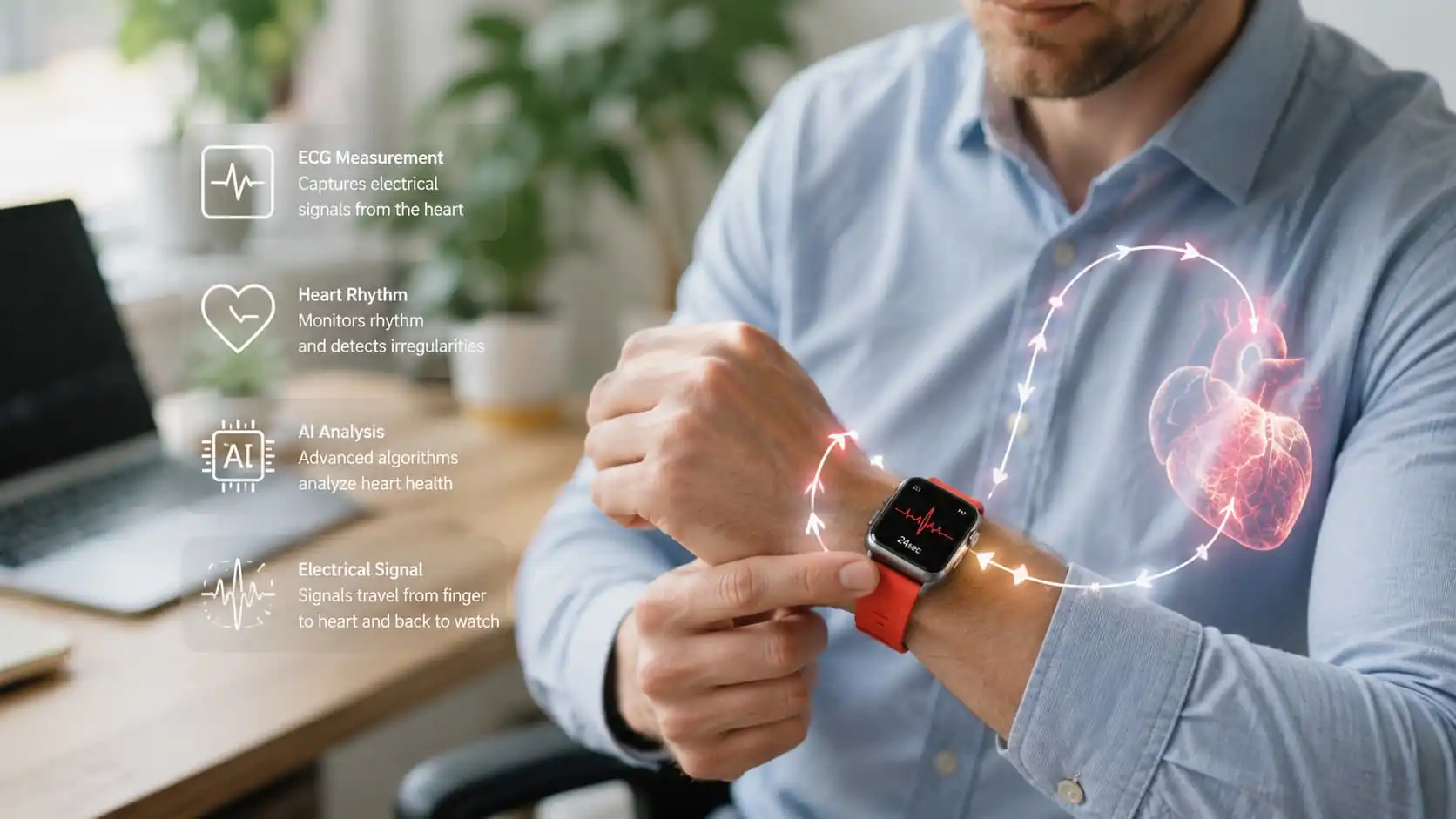
Miniaturized medical-grade devices and consumer technology have come together to make modern ECG Health Smartwatches. ECG Health Smartwatches use bioelectric sensors to directly record the heart's electrical activity, while standard fitness bands only use photoplethysmography (PPG) to measure heart rate by absorbing light. Because of this basic difference, they can find problems with the heart rate that optical monitors can't.
How ECG Sensors Work in Wearable Devices
Smartwatches that have a heartbeat feature usually have conductive probes made of stainless steel or built into the case and crown of the watch. When someone wearing the device puts their finger on the marked electrode, an electrical connection is made across the chest, and a single-lead ECG is recorded, similar to Lead I in a clinical setting. To get clean cardiac rhythms, advanced signal processing methods get rid of noise caused by movement, muscle action, and electromagnetic interference.
New developments have added constant background monitoring by adding extra electrodes to the watch band. This allows passive ECG recording while doing daily tasks without the user having to do anything. This constant method makes it much more likely that short-lived heart events that might happen without warning will be caught.
Evolution from Clinical ECG to Consumer Wearables
Traditional 12-lead ECG machines in hospitals can do a full study of the heart, but they need specific tools, trained staff, and a clinical setting. Portable Holter monitors were the first step toward downsizing. These were followed by patch-based records and, finally, smartwatches that can do both ECG and other everyday tasks.
This change is due to better low-power chipsets, more complex machine learning methods for figuring out what signals mean, and regulatory routes that let wellness-focused cardiac tracking happen outside of standard medical settings. As a result, heart health technology is now more widely available and strikes a balance between clinical accuracy and user ease. This creates B2B possibilities for use in employee wellness programs, insurance risk assessment platforms, and preventive healthcare networks.
Can ECG Health Smartwatches Improve Heart Accuracy?
When companies look at smart health technology, the question of accuracy is at the heart of their buying choices. Random heart checks during yearly physicals or one-time clinical visits don't tell us much about how the heart works when people are doing normal things, sleeping, or under stress. ECG Health Smartwatches that do continuous ECG tracking get around this problem by collecting thousands of data points from a person's body in a wide range of bodily states.
Clinical Validation and Real-World Performance
Several peer-reviewed studies have compared the accuracy of ECG smartwatches to the best medical tools available. According to studies published in cardiovascular journals, the most popular consumer ECG trackers have more than 95% sensitivity rates for finding atrial fibrillation when compared to 12-lead ECG records that are done at the same time. Specificity rates—the percentage of times that regular rhythms are properly identified—usually fall between 85 and 90%. This means that there is a low but noticeable false positive rate that needs to be taken into account when planning the deployment.
The accuracy goes up a lot when devices use AI algorithms that have been taught on collections of data from a wide range of populations. Machine learning models can tell the difference between real heart problems and glitches that are caused by movement, bad electrode contact, or changes in the body that aren't linked to heart disease. When looking for ECG wearables, businesses should focus on providers whose devices have been clinically validated by a third party, rather than just believing what the maker says.
Understanding Clinical Boundaries and Limitations
Electronic cardiac monitoring ECG Health Smartwatches are very good at finding rhythm problems, but they aren't as good as a full medical diagnosis. A single-lead ECG can't check for all heart problems; complex arrhythmias, myocardial infarctions, and anatomical heart problems usually need more than one lead to be analyzed. Instead of being testing tools, the gadgets are used for screening and early warning systems.
Measurement quality is affected by things in the environment. Motion effects are caused by physical action, and skin conductivity drops in cold temperatures, which makes it harder to pick up signals. People who have shakes or very dark tattoos on their wrists may have trouble being accurate. When these devices are used in fitness programs at work, B2B buyers should set clear follow-up procedures for when readings aren't normal. They should work with occupational health services or telemedicine platforms to make sure that reports are handled correctly.
Key Features of ECG Health Smartwatches Beneficial for B2B Procurement
When looking at smartwatch choices for use in businesses, healthcare systems, or sales, it's important to know about feature sets that go beyond basic ECG functionality. Complementary health sensors, long-term functionality, and environmental compatibility are all parts of the overall value offering that decide long-term success.
Advanced Health Monitoring Beyond ECG
These days, cardiac gadgets have many biosensors that work together to give a full picture of the heart. Monitoring blood oxygen saturation (SpO2) can help find hypoxemia caused by breathing problems or sleep apnea, symptoms that often happen together with heart disease. Devices that constantly measure SpO2 during sleep can find breathing problems that raise the risk of heart disease. This is useful for workplace wellness situations where sleep health impacts output and healthcare costs.
Heart rate variability (HRV) research can help you understand how the autonomic nervous system works and how to handle stress. A higher HRV usually means better cardiovascular health and stress response, while a lower HRV could mean overtraining, long-term stress, or an upcoming sickness. When B2B clients use wearables in employee health programs, they can use pooled HRV data to find out how stressful the workplace is and how well wellness interventions are working without having to name specific people.
Some more modern types now have temperature sensors, skin conductance monitors, and even pulse wave analysis for guessing blood pressure. The addition of multiple biomarkers makes the device more useful in a wide range of situations, from improving athletic performance in workplace exercise tasks to managing chronic diseases in health system remote tracking programs.
Battery Life and Operational Durability
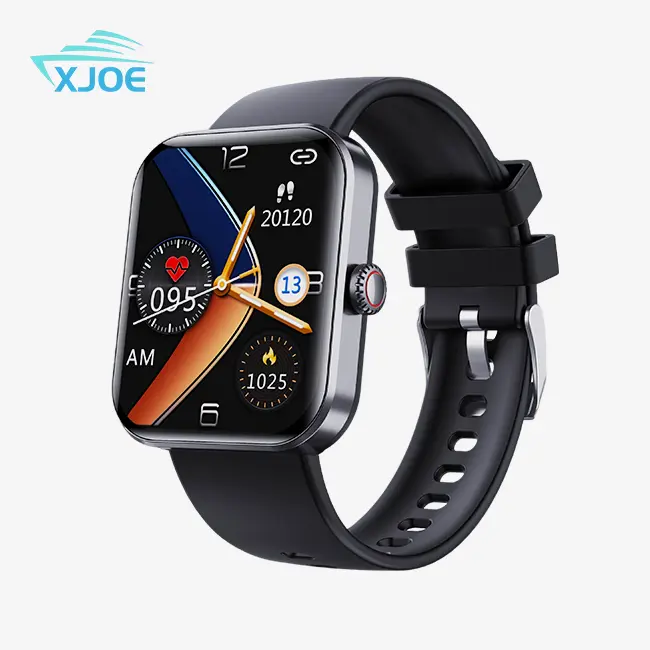
When businesses install devices, they need them to work reliably for long periods of time. When a smartwatch needs to be charged every day, it causes problems for the user, which lowers the rate of obedience. The featured ECG Health Smartwatch has a battery life of 10 days, which is a lot longer than many competitors, who need to be charged every 1 to 2 days. This longer runtime is especially useful for activities in the field, long trips, or people who don't have easy access to charging stations.
Because the JL7012 chip is power-efficient and has a 300mAh battery capacity, it is possible to continuously monitor health by measuring ECG, tracking SpO2, and recording exercise without having to charge the device often. When compared to private dock systems, magnetic charging makes it easier for users to charge their devices, which lowers the number of lost charger reports in business settings.
In B2B situations, physical longevity is just as important. The zinc metal build makes it resistant to impact without being as heavy as stainless steel. Sapphire glass protects the 1.5-inch high-resolution display (360x360 pixels) from scratches while working in factories, playing outside, or just wearing it every day. IP67 water and dust protection means it will work when you wash your hands, it rains, or it's dusty, but it's not waterproof or rated for swimming. With these specs, the device can be used by a wide range of people, including those in business fitness programs, manufacturing settings, and healthcare settings.
Integration Capabilities and Software Ecosystem
The RDFIT companion app collects ECG readings, SpO2 measures, exercise metrics, and sleep analysis, and acts as a hub for all the data. When companies look at wearables for health systems or business fitness platforms, they should check to see if the devices have an API, what data export formats are available, and if they meet interoperability standards. Electronic health records, population health management systems, and third-party data tools work better with devices that support FHIR (Fast Healthcare Interoperability Resources) or other health information sharing protocols.
Support for 28 languages makes global deployments possible without any problems with localization. This is especially helpful for foreign companies, international NGOs working on health issues, and online sellers trying to reach a wide range of customers. The device's BLE 5.0 connectivity makes pairing with a smartphone easy and reliable, and its ability to work with both iOS and Android systems means it can reach the most people.
Comparing ECG Health Smartwatches: A Guide for B2B Buyers
When making a procurement choice, technical requirements, vendor reliability, and the total cost of ownership must all be carefully considered. Knowing your competitors' strengths and weaknesses can help you find the best answers for different deployment situations.
Device Categories and Accuracy Trade-offs
The wearables market is split into different groups, each with its own accurate rating and best uses:
- Medical-Grade ECG Smartwatches: These gadgets go through strict approval processes (FDA approval in the US, CE marking in Europe) to make medical claims like finding atrial fibrillation. They usually get the most accurate results, but they cost a lot and may have features that aren't needed for most health uses. When healthcare workers set up remote monitoring programs, they usually need this amount of certification in order to get reimbursed.
- Wellness-Focused ECG Wearables: These ECG Health Smartwatches offer clinical-grade ECG accuracy for health reasons without being certified as medical devices. They are in the middle of medical devices and basic fitness trackers. This is the type of gadget that is being shown. It offers professional ECG and SpO2 monitoring at a price that is easy for business wellness funds, retail outlets, and consumer health users to afford. Since medical devices don't need to be registered, regulations are easier for business-to-business buyers. However, tracking quality stays high enough for health education and early notice of problems.
- Fitness Trackers with Optical HR Only: Simple fitness bands with PPG sensors can't really measure your ECG. They're good for keeping track of your heart rate during activity, but they miss rhythm problems and don't give you a way to find out if you have heart problems. Even though the prices are lower, B2B buyers who are interested in cardiovascular health outcomes should stay away from this group.
Critical Evaluation Criteria for Enterprise Procurement
Besides sensor skills, there are other things that affect the success of a deployment:
- Sensor Quality and Calibration: Signal quality is affected by the material of the electrodes, where they are placed, and the size of the contact area. Stainless steel electrodes are very good at conducting electricity, and making sure that the electrodes are the right size for the skin is important. Large operations are harder to maintain when there are devices that need to be recalibrated often. The highlighted smartwatch was made so that it works consistently without needing to be calibrated all the time. This lowers the total cost of ownership.
- Data Security and Privacy Compliance: Healthcare data is subject to strict rules, such as HIPAA in the US and GDPR in Europe. Buyers in the business world need to make sure that wearable platforms secure data sent and stored, offer tools for managing user consent, and, if needed, offer business partner agreements. In some places, the placement of cloud servers is important for data sovereignty rules. It is important for vendors to be clear about their security design and safety certifications.
- Warranty and After-Sales Support: When an enterprise deploys hundreds or thousands of devices, they need quick technical help and insurance terms that are easy to understand. Check to see what the provider can do for large replacements, ways to get software updates to users, and user support tools. Businesses starting wearable health programs can rest easy knowing that Xizhou will provide quick and helpful after-sales service. Technical teams are on hand to quickly solve any problems that come up with distribution and answer any questions about the products.
- Customization and Branding Options: Private label options let healthcare systems, insurance companies, and business fitness programs use labeled products that strengthen their brand. OEM deals allow for more flexibility, such as making your own watch faces, app interfaces, and data reporting screens. Xizhou's customization services are very flexible and can handle anything from simple image printing to full software adaptation. This means that they can meet the branding needs of both new wellness brands and well-known healthcare organizations.
Price-Value Analysis for Business Buyers
Cost factors include more than just unit prices; they also include the total cost of the program. A $50 device that needs to be replaced every eight months because the battery dies costs more in the long run than a $80 device that lasts two or more years. The featured smartwatch has a 10-day battery life, which means that people are less likely to leave their devices while they're charging. This increases program participation rates, which justifies the slightly higher original investment.
A lot of the time, deals to buy in bulk offer big savings per unit. Buyers should talk about different price levels based on how much they want to order, and they should also think about making long-term promises to reorder. Low minimum order numbers let you test the market before making big promises. This is especially helpful for Amazon sellers, Shopify brands, and dropshipping businesses that want to make sure their products are a good fit for their customers. Xizhou's MOQ policies are open enough to support clients with a range of business models and stages of growth. They can handle both small orders for testing purposes and large company deployments.
How to Effectively Use and Deploy ECG Health Smartwatches in B2B Settings
To be successful, deployment needs more than just choosing the right devices. How well wearable programs meet their health improvement goals depends on how well users are involved, how well data is managed, and how well results are measured.
Corporate Wellness Program Integration
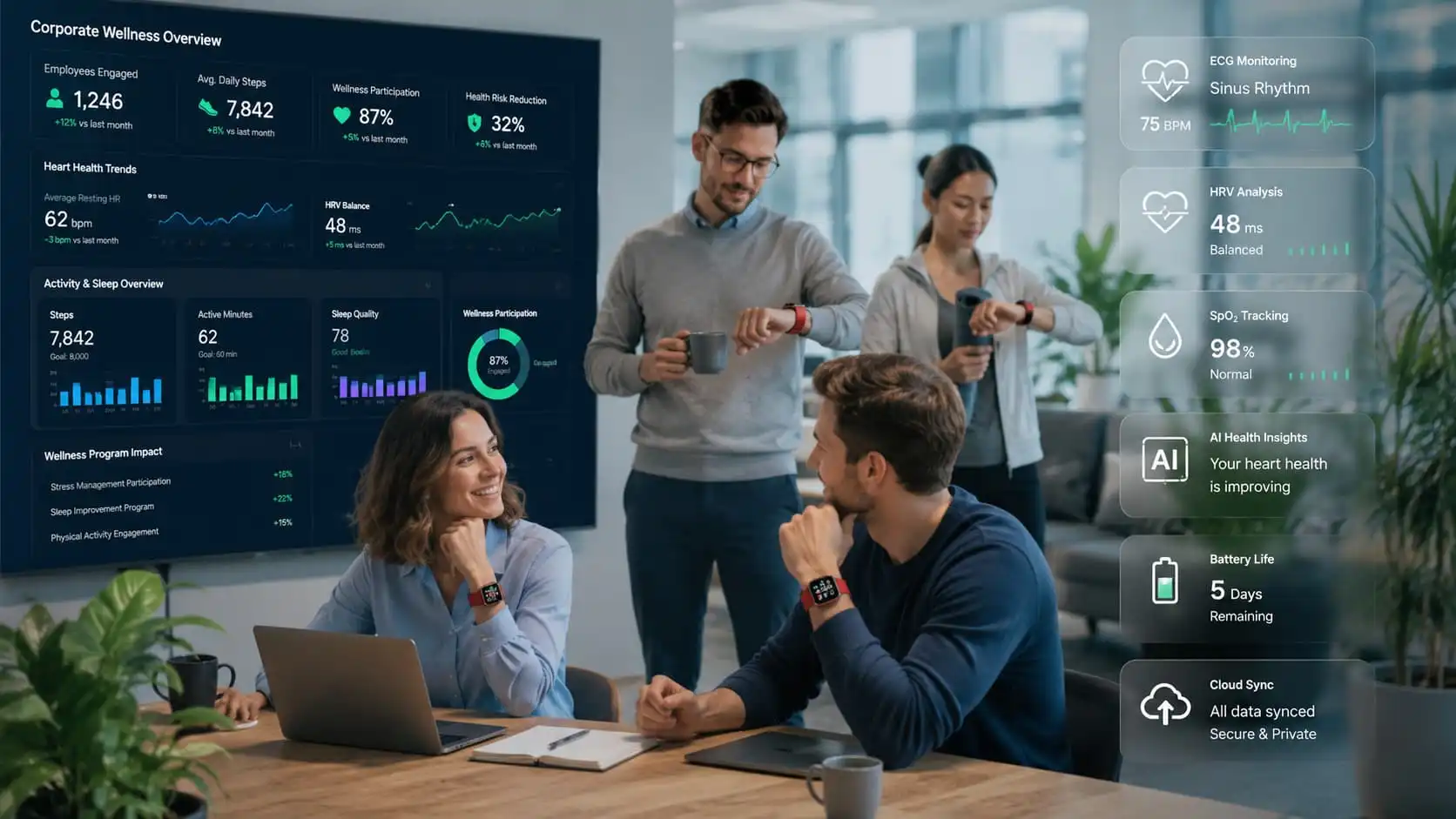
Wearable tech is being used more and more in employee fitness programs to promote health knowledge and healthy habits. With ECG features, ECG Health Smartwatches can track your heart rate in the workplace, where it was only possible in clinical situations before. Heart health problems can be used as a theme in programs that encourage workers to meet daily exercise goals while the device quietly checks for rhythm problems.
It works best when there is clear information about data privacy, participation that is optional, and rights to secrecy. Employees need to know what kinds of data their boss can see (usually compiled, anonymized measures) and what kinds of data about their own health are kept secret. Incentive structures, like premium savings, fitness points, or recognition programs, make people more likely to adopt without forcing them to.
The device's 28-language support makes it easier to use in foreign activities, and the simple interface means that less training is needed. Human Resources offices can hand out quick-start tools that explain how to measure an ECG, check SpO2, and use an app. Periodic involvement efforts, like monthly heart health tips, personal success awards, or team tasks, keep people using the app after the novelty wears off.
Healthcare System and Remote Monitoring Applications
Wearable tech is being used more and more by healthcare workers to handle chronic diseases, keep an eye on patients after they've been discharged, and keep an eye on high-risk patients. ECG Health Smartwatches let cardiologists keep an eye on their patients even when they're not in the office for a short time. They can record heart activity during patients' daily activities, which is when symptoms usually show up.
Remote patient tracking programs that use ECG wearables cut down on hospital readmissions by finding problems early, before they get so bad that they need to be treated right away. Patients who are healing from heart procedures can be watched from afar, and when alarming numbers show, an automatic system will call for help from the clinical team. This plan creates value for payers, providers, and patients at the same time by improving results and lowering the costs of healthcare services.
Clinical processes are sped up when they are connected to electronic health record systems. Patients don't have to report their symptoms or compliance by hand; instead, objective ECG data comes directly into medical records, where doctors can look for patterns and trends that are troubling. In healthcare operations, where vendor technical skills vary a lot, interoperability standards and safe data transmission methods become necessary but not optional.
Community Health Initiatives and Public Wellness Programs
Affordable ECG Health Smartwatches can be used by public health groups, neighborhood clinics, and charity health programs to screen people who don't get enough care for their hearts. Traditional cardiac monitoring involves trips to the doctor and expensive tools, which makes it harder for people in rural areas, those who are poor, and places that don't have a lot of healthcare facilities to get care.
Field health programs are easier to run when sturdy gadgets with long battery lives are used. Devices that can work well in a variety of environments and don't need a lot of charging facilities can be used in remote areas. The IP67 grade and long-lasting crystal glass make it possible to use it in tough conditions, like at mobile screening events or health posts in rural areas.
Community health workers with simple training can hand out devices, show users how to use them, and collect data during regular check-ins. When results aren't normal, they are sent to clinical partners to confirm the diagnosis and start treatment. This screening model finds atrial fibrillation, hypotension, and other heart problems that people might not get screened for with a regular ECG, which has a big effect on public health.
Conclusion
ECG Health Smartwatches are a big step forward in making cardiac tracking more available. They bring clinical-grade rhythm analysis to everyday devices that you can wear. There are big changes in technology that make these fitness trackers more accurate than others. Optical heart rate monitors can't pick up on bioelectric ECG sensors' heart signals. When bought from reputable companies with tested technology, these gadgets are useful for business wellness programs, remote patient tracking systems, and apps that make people more aware of their health.
B2B procurement decisions should balance accurate specifications, operational durability, ecosystem integration capabilities, and total cost considerations. The featured ECG Health Smartwatch delivers professional-grade monitoring, extended battery life, and multilingual global deployment capability at price points suitable for various business models from e-commerce resellers to enterprise wellness programs. Success requires thoughtful implementation strategies addressing user engagement, data privacy, and clinical integration rather than simply distributing devices and hoping for health outcomes.
FAQ
1. How reliable are ECG readings from smartwatches compared to clinical devices?
Clinical confirmation tests show that quality ECG smartwatches are more accurate than 95% at finding atrial fibrillation compared to medical-grade 12-lead ECG systems. The single-lead test picks up enough of the heart's electrical activity to reliably find rhythm problems, but it can't look at all the heart problems that can be seen on full multi-lead clinical ECGs. Positioning the device correctly and making good skin contact have a big effect on the quality of reading.
2. What heart conditions can ECG smartwatches detect?
These gadgets are very good at finding rhythm problems like atrial fibrillation, bradycardia (slow heart rate), tachycardia (fast heart rate), and some arrhythmia patterns. They are not diagnosing tools, but rather screening tools that lead to more medical testing. Conditions that need to check the health of heart muscles, the details of electrical conduction pathways, or structural problems usually need more in-depth clinical tests than what a monitor can do.
3. What factors should B2B buyers prioritize when selecting an ECG smartwatch supplier?
Experts in buying things should look at records of clinical validation, records of legal compliance, data security design, guarantee terms, and the ability of OEMs to make changes. Businesses that want to grow need to know how responsive their suppliers are when it comes to technology help, minimum order quantities, and the ability to make more products. Businesses that want to get into or grow in the health wearables market can work with companies like Xizhou that offer full after-sales service, open design, and well-documented quality control processes.
Partner with Xizhou for Reliable ECG Health Smartwatch Supply
Xizhou is known for its high-quality AI-powered smart wearables that blend advanced health tracking with strong manufacturing. Professional tracking of heart rate and SpO2 is possible with our ECG Health Smartwatch, which has a 10-day battery life, durable sapphire glass, and support for 28 languages around the world. It's perfect for Amazon sellers trying out new goods, business wellness buyers, and healthcare system procurement teams.
We have low minimum order amounts for testing the market, as well as bulk prices for projects that are already up and running. Our experienced R&D team and GMP-certified production center help with our OEM/ODM services, which include unique branding, packaging design, and software adaptation. Your time-to-market and buying risk are lowered by having complete legal paperwork and helpful technical support.
Whether you're an electronics distributor looking for dependable ECG Health Smartwatch suppliers, a direct-to-consumer brand releasing private label wellness products, or a corporate buyer setting up health programs for employees, Xizhou has the quality products, customization options, and partnership dependability your business needs.
Contact our team at 13266508958@163.com to talk about your unique needs, ask for product samples, or look into your options for buying in bulk.
References
1. Bumgarner JM, Lambert CT, Hussein AA, et al. "Smartwatch Algorithm for Automated Detection of Atrial Fibrillation." Journal of the American College of Cardiology, 2018; 71(21):2381-2388.
2. Perez MV, Mahaffey KW, Hedlin H, et al. "Large-Scale Assessment of a Smartwatch to Identify Atrial Fibrillation." New England Journal of Medicine, 2019; 381:1909-1917.
3. Koshy AN, Sajeev JK, Nerlekar N, et al. "Smart Watches for Heart Rate Assessment in Atrial Arrhythmias." International Journal of Cardiology, 2018; 266:124-127.
4. Guo Y, Wang H, Zhang H, et al. "Mobile Photoplethysmographic Technology to Detect Atrial Fibrillation." Journal of the American College of Cardiology, 2019; 74(19):2365-2375.
5. Steinhubl SR, Waalen J, Edwards AM, et al. "Effect of a Home-Based Wearable Continuous ECG Monitoring Patch on Detection of Undiagnosed Atrial Fibrillation." JAMA, 2018; 320(2):146-155.
6. Turakhia MP, Desai M, Hedlin H, et al. "Rationale and Design of a Large-Scale, App-Based Study to Identify Cardiac Arrhythmias Using a Smartwatch: The Apple Heart Study." American Heart Journal, 2019; 207:66-75.